Quick answer: which angola vaccinations required for entry
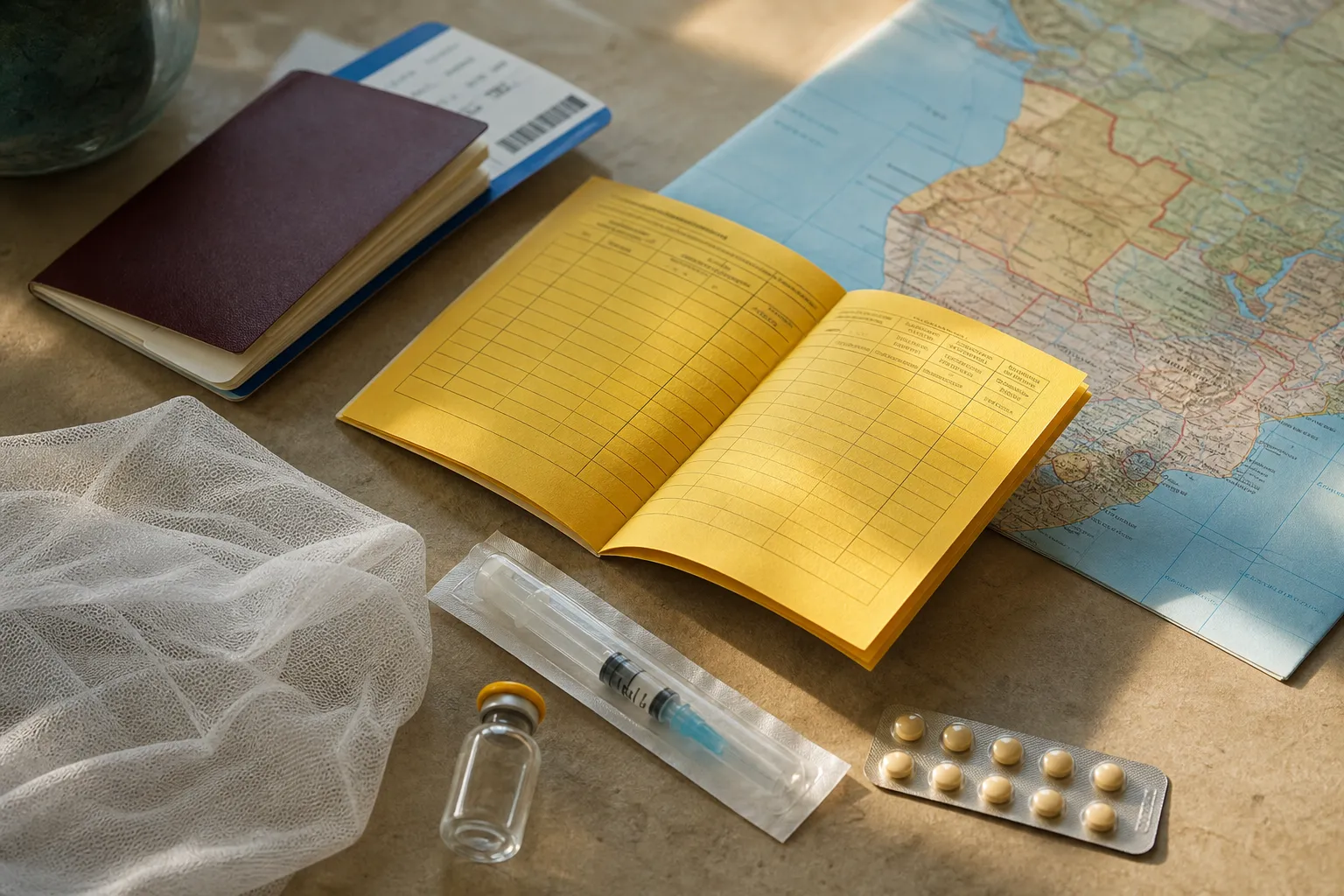
Yellow fever is the only vaccination legally required to enter Angola. Every traveler aged 9 months or older must show a valid International Certificate of Vaccination or Prophylaxis (ICVP), also called the yellow booklet, at the border [1]. Beyond that, doctors strongly recommend hepatitis A, hepatitis B, typhoid, rabies, polio booster and up-to-date routine vaccines, plus malaria pills. Always check the current rules with a travel clinic before you fly.
This article is general travel information, not medical advice. Book a consultation with a travel clinic or your GP at least 6 to 8 weeks before departure. In Belgium the Institute of Tropical Medicine (ITG) and in the Netherlands the LCR-network are the reference points.
Key takeaways
- Yellow fever vaccination is mandatory for entry into Angola from 9 months of age and the certificate is valid for life [1].
- Malaria is present year-round across the whole country, so antimalarial tablets are essential [1].
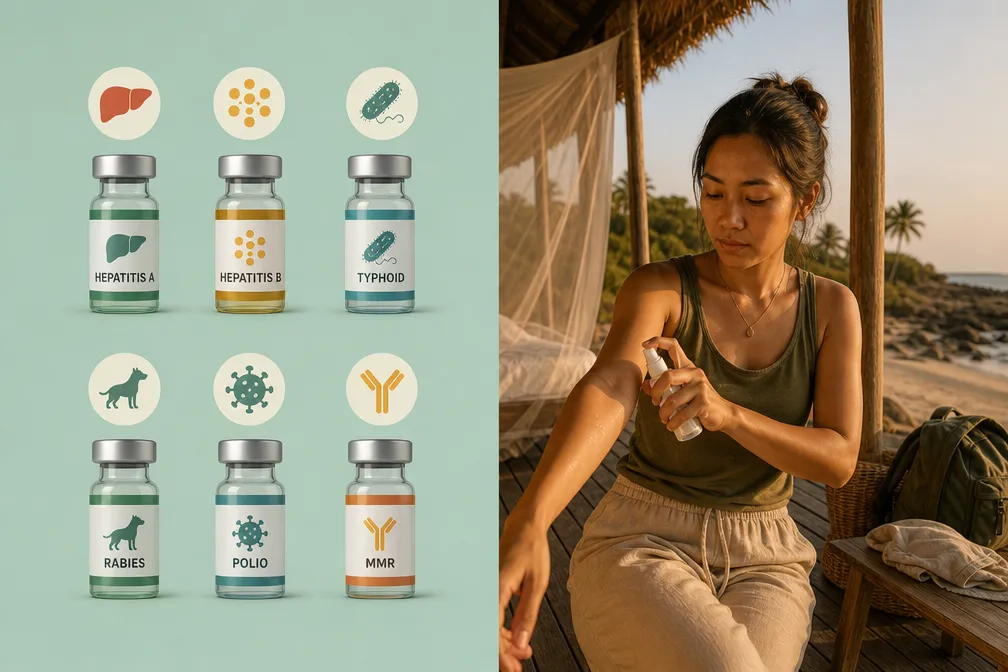
- Hepatitis A, hepatitis B, typhoid, rabies and a polio booster are the most commonly advised extras [1].
- Tap water is not safe to drink anywhere in Angola, including Luanda [2].
- Get vaccinated at least 10 days before travel so the yellow fever certificate is valid on arrival [1].
- Medical care is limited outside Luanda, making solid travel insurance with medical evacuation strongly recommended [3].
- Children need age-appropriate vaccines, and infants under 9 months should generally avoid Angola.
What vaccinations do I need to travel to Angola?
You need one mandatory vaccine (yellow fever) plus a personalised list of recommended vaccines based on your age, health, itinerary and how long you stay. For a two-week city-and-safari trip, most travellers end up with yellow fever, hepatitis A, typhoid, an updated tetanus/diphtheria/polio booster, and malaria prophylaxis in their travel bag.
Here is the practical split most Belgian and Dutch travel clinics use:
| Vaccine | Status for Angola | Typical validity |
|---|---|---|
| Yellow fever | Mandatory for entry [1] | Lifelong (single dose) |
| Hepatitis A | Strongly recommended [1] | ~25 years after 2 doses |
| Hepatitis B | Recommended [1] | Long-term after full series |
| Typhoid | Recommended, especially rural areas [1] | ~3 years |
| Rabies (pre-exposure) | Consider for longer/rural trips [1] | Boosters as advised |
| Polio (booster) | Recommended for adults [1] | Once as adult booster |
| Routine (MMR, DTP, varicella, flu) | Keep up to date [1] | Varies |
Always confirm your personal list with a certified travel doctor. Rules and recommendations change, and your medical history matters.
Is the yellow fever vaccine required for Angola?
Yes. Yellow fever is the one vaccine Angolan border officials can actually refuse you entry over. The World Health Organization lists Angola as a country with a vaccination requirement, and the U.S. CDC confirms that all travellers aged 9 months and older need proof [1].
Key facts about the yellow fever rule:
- The vaccine must be given at least 10 days before arrival for the certificate to be valid [1].
- Proof is the International Certificate of Vaccination or Prophylaxis (ICVP), the yellow booklet stamped by an approved centre.
- A single dose provides lifetime protection and lifetime certificate validity under current WHO guidance.
- Infants under 9 months should not receive the vaccine; consider postponing travel.
- If you have a medical contraindication (see the allergy section below), your travel doctor can issue a formal exemption letter on the ICVP.
Border staff can and do check the yellow booklet, especially on arrival at Luanda. Do not travel without it.
Which vaccines are mandatory vs recommended for Angola?
Only yellow fever is mandatory. Everything else is recommended based on your risk profile, but “recommended” here really means “you should almost certainly get it”. These are the standard extras for Angola according to the CDC [1]:
- Hepatitis A: transmitted via food and water, easy to catch even in decent restaurants.
- Hepatitis B: sensible for anyone staying longer, doing volunteer/medical work, or receiving tattoos, piercings or medical care.
- Typhoid: important for trips outside Luanda and for street-food lovers.
- Rabies (pre-exposure): consider if you’ll cycle, hike, work with animals, visit remote areas, or travel with children.
- Polio: adults who completed the childhood series usually get one lifetime IPV booster because wild and vaccine-derived poliovirus have been reported in Angola in recent years [1].
- Routine: MMR, DTP, varicella, influenza and COVID-19 as per your national schedule.
Decision rule: if you’re going beyond Luanda (Benguela, Lubango, Malanje for the Kalandula Falls, Namibe, Cabinda), assume you need the full recommended list.
How much does the yellow fever vaccination cost?
Prices vary by country and clinic, and they change often, so I won’t quote a specific euro figure here. In both the Netherlands and Belgium you’ll pay a consultation fee plus the vaccine itself, and some health insurers reimburse part of the cost.
What to do instead of guessing:
- Check the price list on the ITG website (wanda.be) in Belgium or via an LCR-affiliated clinic in the Netherlands.
- Ask your health insurance (mutualiteit/zorgverzekeraar) which travel vaccines are partially reimbursed.
- Budget for a full “travel health package” (consultation + several vaccines + malaria pills) rather than one line item.
If you’re building your overall trip budget, our guide on travelling to Angola walks through the bigger cost picture.
Where can I get vaccinated before traveling to Angola?
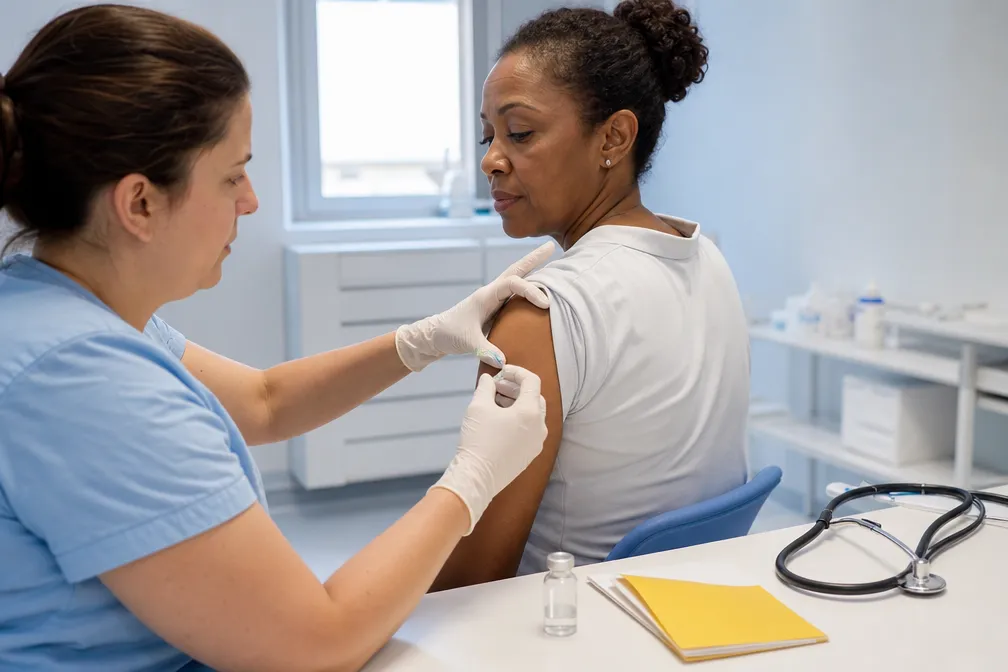
Go to a certified yellow fever vaccination centre. Only these centres can issue the internationally recognised ICVP booklet that Angolan border officials accept.
- Belgium: Institute of Tropical Medicine (ITG) Antwerp, plus a network of approved travel clinics and some GPs listed on wanda.be.
- Netherlands: LCR-registered travel clinics, GGD locations, and some GP practices that are authorised to give the yellow fever stamp.
- Book early: popular clinics fill up in peak season (May to October, the best time to visit Angola).
Can I get vaccinated at my local clinic or do I need a travel clinic?
For yellow fever, you generally need a designated travel clinic or authorised GP because only they can issue the ICVP. For hepatitis A, typhoid or a tetanus booster, many regular GPs can help. The advantage of a dedicated travel clinic is a proper risk assessment: they’ll look at your route, season, age, medications and health conditions, and adjust the advice.
Choose a travel clinic if: you’re visiting rural Angola, travelling with kids, pregnant, immunocompromised, staying longer than 3 weeks, or combining Angola with other African countries.
How long before my trip should I get vaccinated?
Ideally 6 to 8 weeks before departure, and no later than 10 days before for yellow fever. Some vaccines need multiple doses spaced weeks apart (hepatitis B, rabies), and your body needs time to build immunity.
A realistic timeline:
- 8 weeks out: book your travel clinic appointment.
- 6 weeks out: first consultation, first shots, start rabies series if needed.
- 4 weeks out: follow-up doses, discuss malaria prophylaxis.
- 10+ days out: yellow fever certificate becomes valid.
- 1-2 days before: start antimalarials that require a lead-in (some regimens).
Left it late? Go anyway. Even a last-minute visit is better than none, and some vaccines still offer partial protection.
What if I’m allergic to the yellow fever vaccine?
If you have a genuine contraindication (severe egg allergy, certain immune conditions, some medications, or being under 9 months old), a travel doctor can issue a medical exemption on the ICVP. This is a formal letter, not a personal note, and it’s the only exemption Angolan border officials may accept.
Important caveats:
- An exemption doesn’t remove the yellow fever risk in Angola, only the paperwork requirement.
- Entry with an exemption is at the discretion of border officials; some travellers are still turned away or quarantined.
- Discuss the risk/benefit honestly with your travel doctor before booking.
Do kids need different vaccinations for Angola than adults?
Yes. Children follow a modified schedule based on age and their national childhood immunisation record.
- Under 9 months: yellow fever vaccine is not given, which effectively means Angola is not recommended for infants.
- 9 months and older: yellow fever becomes required, same as adults [1].
- Routine vaccines: MMR, DTP, polio, hepatitis B and varicella should be up to date, sometimes brought forward.
- Malaria: children are at higher risk of severe malaria. Paediatric antimalarials exist but dosing is weight-based, so see a doctor.
- Rabies pre-exposure: often more strongly advised for kids because they pet stray animals and don’t always report bites.
Always consult a paediatric travel clinic for children.
Is a malaria vaccine available, or just antimalarial pills?
For travellers to Angola, prevention still relies on antimalarial tablets and mosquito-bite protection, not a vaccine. The newer malaria vaccines (RTS,S and R21) are being rolled out for young children living in high-transmission African regions, not for short-term visitors.
For Angola, the CDC lists these prescription options: atovaquone-proguanil, doxycycline, mefloquine, or tafenoquine [1]. Each has different dosing schedules, side effects and cost. Only a doctor can advise which suits you.
Practical anti-mosquito tips that matter as much as the pills:
- Use repellent with DEET (30-50%) or icaridin (20%) on exposed skin.
- Sleep under a treated mosquito net outside top-end hotels.
- Wear long sleeves and trousers at dusk.
- Choose accommodation with air conditioning or screens where possible.
Malaria risk exists nationwide, year-round [1], including in Luanda and coastal areas like Benguela and Lobito.
What health risks should I know about in Angola besides vaccinations?
Vaccines cover part of the picture. Other real risks include:
- Traveller’s diarrhoea from food and water (see the water section below).
- Dengue and other mosquito-borne illnesses beyond malaria; the same bite protection applies.
- Schistosomiasis in freshwater lakes and slow rivers, so skip swimming in fresh water.
- Road accidents, statistically the biggest risk for most tourists in Africa.
- Heat and dehydration, especially inland during the dry season.
- Limited medical infrastructure outside Luanda [3].
For a broader risk overview see our guide on is Angola safe.
Do I need proof of vaccination to enter Angola?
Yes, for yellow fever. Angolan border officials can ask to see your yellow ICVP booklet on arrival, and travellers without it have been denied entry or vaccinated on the spot in the past. For other vaccines and for COVID-19, requirements have varied over time, so check with the Angolan embassy, the SME (Serviço de Migração e Estrangeiros) or your national travel advisory shortly before you fly.
Practical tips:
- Carry the physical yellow booklet, not just a photo.
- Keep a scanned backup in your email and phone.
- Store it with your passport and Angola visa guide documents.
Is it safe to travel to Angola if I’m not fully vaccinated?
No, not really. You can be legally refused entry without a yellow fever certificate, and the recommended vaccines protect you from illnesses that are genuinely common in the region. Skipping malaria prophylaxis in a country with year-round P. falciparum transmission is particularly risky [1].
If time is short, prioritise in this order:
- Yellow fever (legally required).
- Malaria prophylaxis + bite protection.
- Hepatitis A + typhoid (food/water route).
- Routine boosters (tetanus, MMR, polio).
- Hepatitis B and rabies for longer or rural trips.
Also make sure you have travel insurance that covers medical evacuation, since serious cases often need transfer to South Africa or Europe [3]. Many Belgian and Dutch insurers offer specific Africa-cover packages. Affiliate disclosure: some travel insurance and booking links elsewhere on this site are affiliate links (rel=“sponsored nofollow”). We only recommend products we’d use ourselves.
Is it safe to drink tap water in Angola?
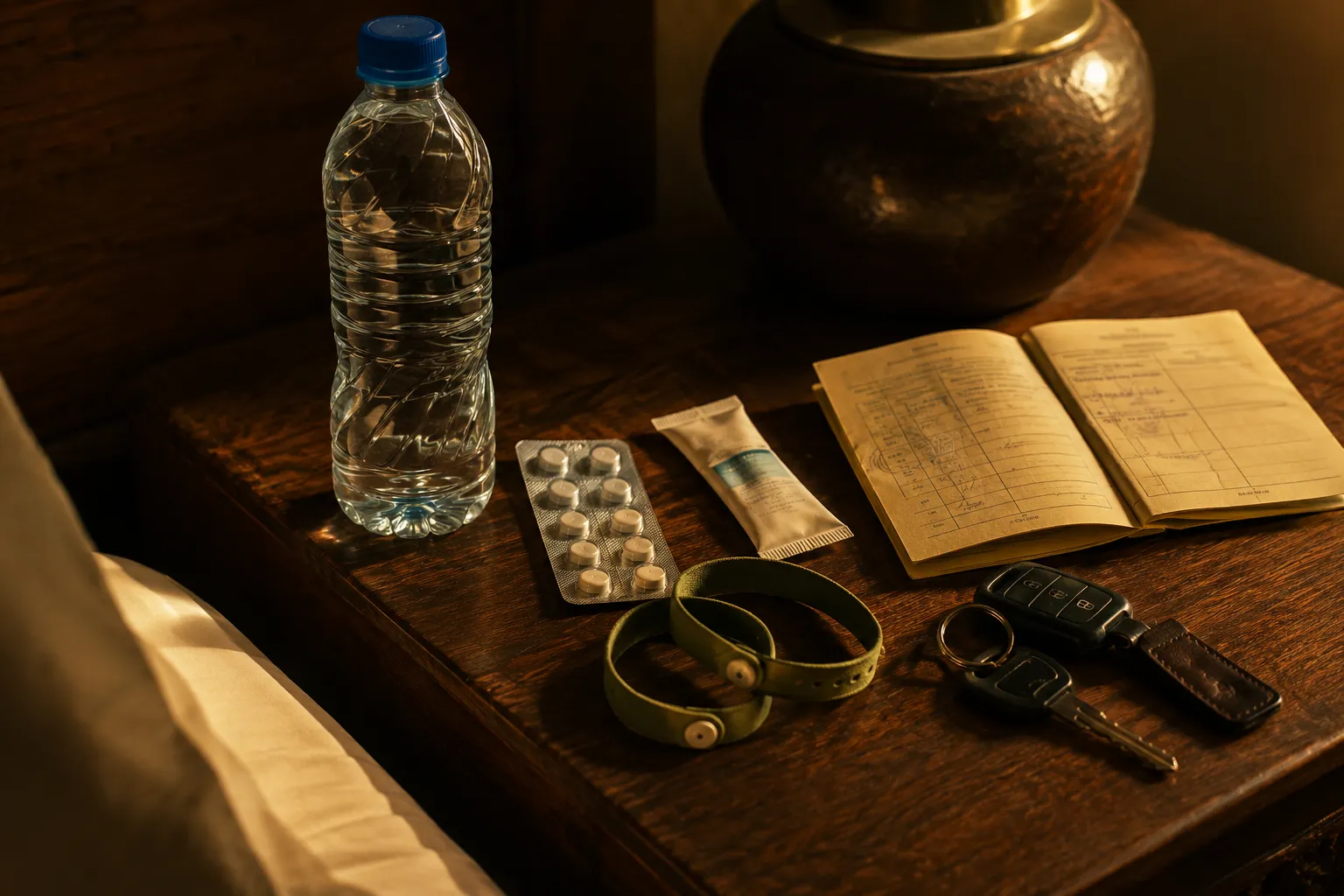
No. Do not drink tap water anywhere in Angola, including in Luanda hotels [2]. Stick to sealed bottled water, boiled water, or water treated with a reliable filter or purification tablets.
Simple rules:
- Drink sealed bottled water only; check the seal is intact.
- Avoid ice cubes unless you’re certain they’re from purified water.
- Brush teeth with bottled water on rural trips; in good Luanda hotels most travellers use tap water for brushing without issues, but the strict advice is to use bottled.
- Eat food that’s cooked and served hot; peel fruit yourself.
- Wash hands frequently or use alcohol gel.
What to pack for health
A basic Angola health kit:
- Yellow ICVP booklet + passport + insurance card
- Prescription antimalarials in original packaging
- DEET/icaridin repellent
- Rehydration salts (ORS)
- Anti-diarrhoea medication and broad-spectrum antibiotic if your doctor prescribes one
- Plasters, antiseptic, blister care
- Sun cream (SPF 30+) and lip balm with SPF
- Personal prescriptions with a doctor’s note
- Hand sanitiser
- Small first aid kit
When to see a travel clinic
Book an appointment as soon as your trip is confirmed, ideally 6 to 8 weeks ahead. Bring your vaccination history, a rough itinerary (Luanda only, or also Mussulo, Kissama, Lubango, Cabinda?), your travel dates and any medical conditions or medications.
For personalised advice consult:
- WHO International Travel and Health (who.int)
- Institute of Tropical Medicine Antwerp (wanda.be) for Belgium
- LCR / GGD travel advice for the Netherlands
- Your GP or a certified travel clinic
Conclusion: next steps for a healthy Angola trip
Getting the angola vaccinations required sorted is honestly one of the easier parts of planning a trip here. Book a travel clinic 6 to 8 weeks out, get the yellow fever shot, discuss malaria pills, and stock up on hepatitis A/B, typhoid and a polio booster if your doctor agrees. Pack a solid health kit, drink only bottled water, and buy travel insurance with medical evacuation.
From there you can focus on the fun part: building an Angola itinerary, timing it with the best time to visit Angola, and sorting your Angola visa guide. Stay safe, and enjoy the country.
Free help from our team in Angola
A health question about your trip?
Ask us about the practical side, such as where you can get help locally. For vaccinations and medication, your doctor or travel clinic always has the final say.
- Local team in Angola
- No obligation, nothing to pay
- Reply by email or WhatsApp
Want to keep this guide? We email you the key points with a link to every section.
Frequently asked questions
Do I need a yellow fever vaccine for Angola?
Yes. Yellow fever vaccination is required for all travellers aged 9 months and older, and you must show the yellow ICVP certificate on arrival. It must be given at least 10 days before travel.
What vaccinations are recommended for Angola?
Beyond mandatory yellow fever, the CDC recommends hepatitis A, hepatitis B, typhoid, rabies (for higher-risk trips), a polio booster, and up-to-date routine vaccines like MMR, DTP and varicella.
Is malaria a risk in Angola?
Yes, nationwide and year-round, mostly *Plasmodium falciparum*. Take prescription antimalarials and use insect repellent, long clothing and mosquito nets. A doctor will pick the best regimen for you.
Is it safe to drink tap water in Angola?
No. Tap water is not considered safe anywhere in Angola, including Luanda. Drink sealed bottled water, avoid ice cubes made from tap water, and eat food that is thoroughly cooked.
How far in advance should I get vaccinated for Angola?
Book a travel clinic appointment 6 to 8 weeks before departure. Yellow fever must be administered at least 10 days before arrival for the certificate to be valid.
Do children need different vaccinations for Angola than adults?
Yes. Children follow age-appropriate schedules, yellow fever is not given under 9 months (so Angola is not recommended for young infants), and paediatric malaria pills are weight-based. Always see a paediatric travel clinic.