Angola runs on two clocks, not four. There is the dry season (locally called cacimbo) and the rainy season, and picking the right one turns a difficult overland trip into an easy one. If you want the short version: aim for June to September.
Quick Answer: When Is the Best Time to Visit Angola?
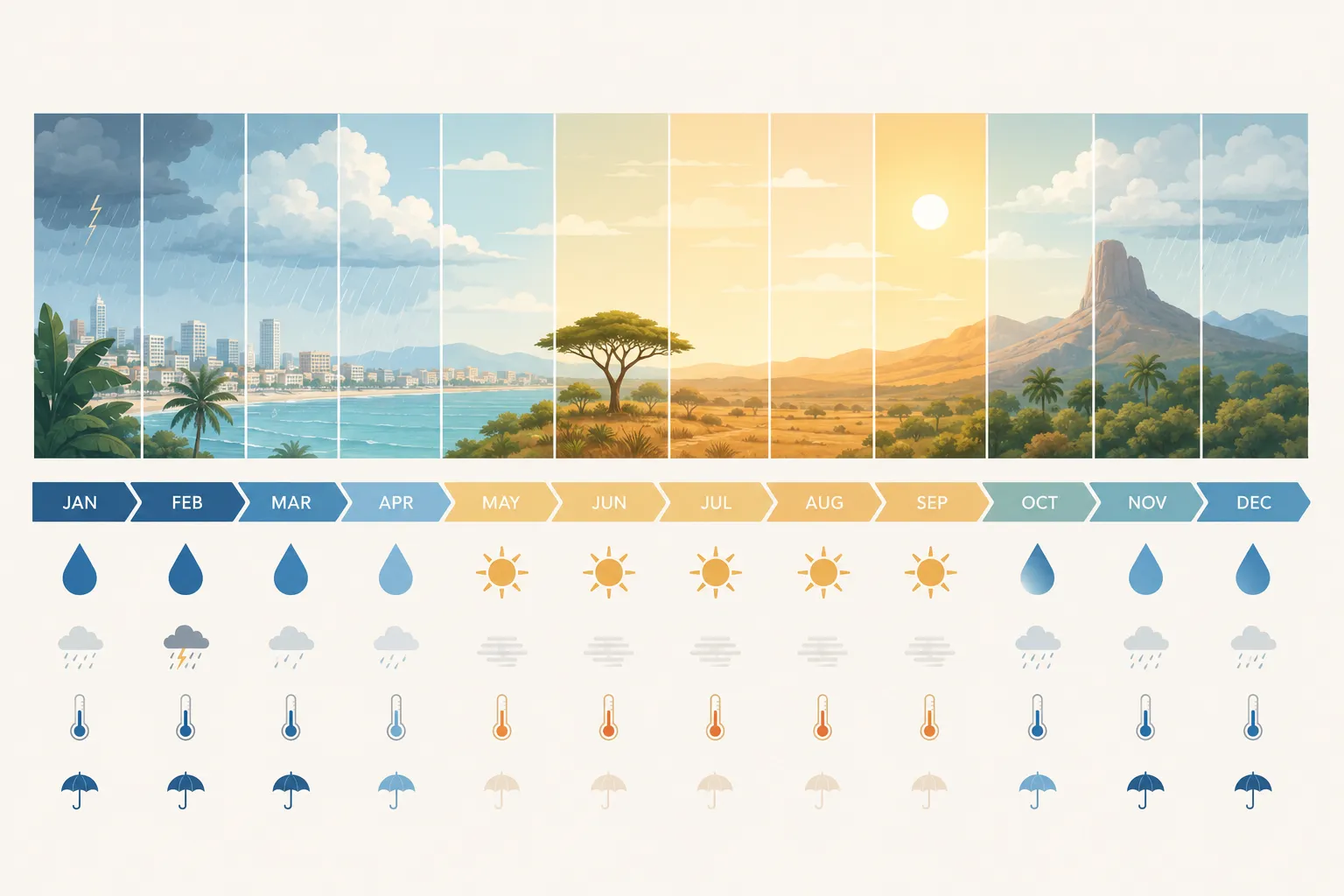
The best time to visit Angola is the dry season, roughly May to October, with June, July and August as the sweet spot. Rainfall is minimal, roads are passable, humidity is lower and wildlife viewing in parks like Kissama is easier. The rainy season (November to April) brings heat, thunderstorms and blocked dirt roads, especially in the interior.[1][2][7]
Key Takeaways
- May to October is the dry season (cacimbo) and the recommended travel window.[7]
- June to August offers the coolest, driest, most reliable weather.[3][5]
- November to April is the rainy season, with peak downpours from January to March.[2][6]
- The north and interior are wetter; the south and coast are drier year-round.[4][6]
- Luanda’s main rains fall roughly February to April; the rest of the year is manageable.[6][10]
- April and October are useful shoulder months for flexible travellers.[1][5]
- Angola is warm year-round: annual average around 27 °C, but altitude matters a lot.[7][10]
- A yellow fever vaccination is generally required, and malaria is present across the country. Check current rules.
What’s the Weather Like in Angola by Month?
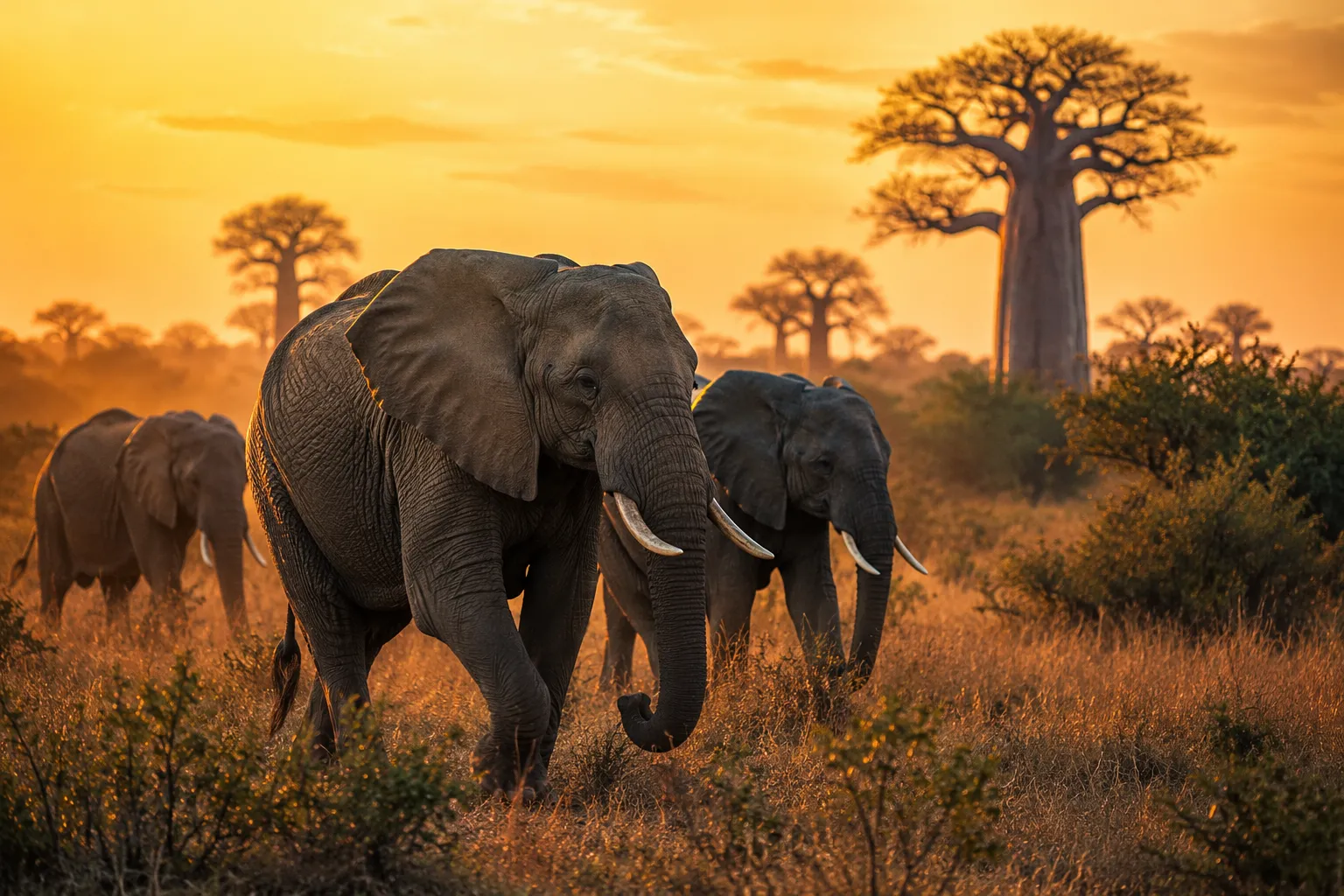
Angola’s weather splits neatly into two halves of the year, with regional variations layered on top. Here’s a compact monthly overview based on national climate data and travel guides.[2][6][7]
| Month | Season | Typical Weather | Travel Rating |
|---|---|---|---|
| Jan | Rainy (peak) | Hot, humid, heavy showers | Poor |
| Feb, Mar | Rainy (peak) | Thunderstorms, flooded roads | Poor |
| Apr | Late rains | Improving, still wet | Fair |
| May | Early dry | Cooler, drying out | Good |
| Jun, Aug | Dry (cacimbo) | Mild, minimal rain, some fog | Excellent |
| Sep | Late dry | Warm, still dry | Very good |
| Oct | Transition | Warming, first storms possible | Fair to good |
| Nov, Dec | Early rains | Hot, humid, afternoon showers | Fair |
Average annual temperature sits near 27 °C according to government climate data, though highland areas like Lubango are noticeably cooler and the far south stays hot and dry.[7][10]
Dry Season (Cacimbo) Explained
The dry season, known locally as cacimbo, runs approximately from May to September, sometimes stretching into October. Rainfall drops to near zero in most regions, humidity falls, and daytime temperatures become more comfortable. This is the primary window for overland travel, hiking and wildlife trips.[2][4][8]
A quirk of cacimbo: it isn’t just dry, it’s often foggy and cloudy, especially along the coast and in some highland zones. Mornings can start grey and cool before clearing by midday. Visibility can drop briefly but road travel is rarely affected, and daytime temperatures stay pleasant compared with the sticky heat of the rainy months.[2][4][11]
Choose cacimbo if you want to:
- Drive between provinces without getting stuck
- Visit interior parks like Cangandala or Iona
- Do a coastal road trip through Benguela and Lobito
- Combine multiple regions in one itinerary
For a broader planning overview, our guide on travelling to Angola walks through logistics, entry rules and route ideas.
Rainy Season: What to Expect
The rainy season stretches from about October to April, with the heaviest rainfall typically falling January to March. Expect hot, humid afternoons, dramatic thunderstorms and short but intense downpours. Some rural dirt roads become impassable, especially in the north and northeast where the wet season starts earliest and lasts longest.[1][2][6][8]
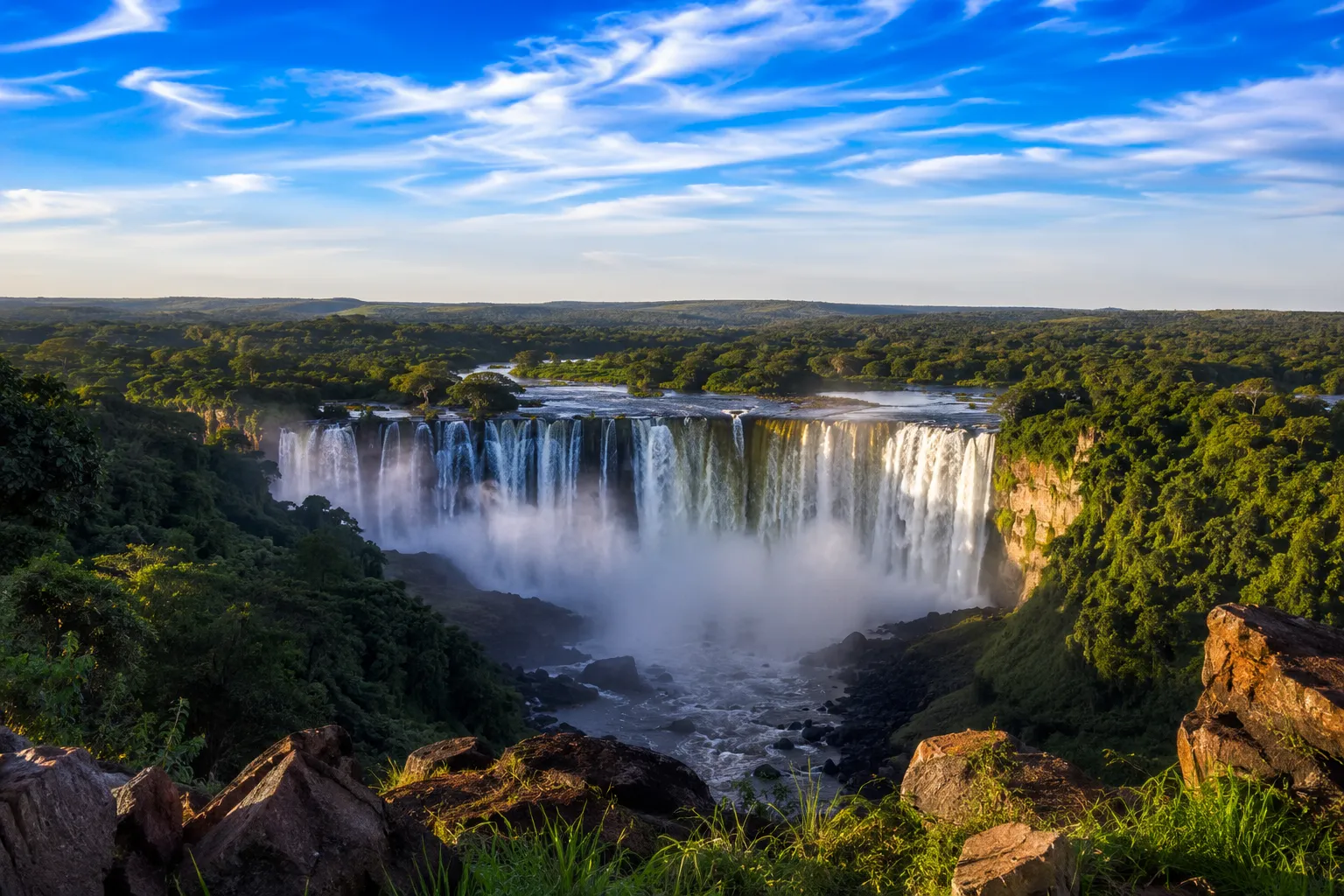
That said, rainy season isn’t a lockout. Rain usually falls in bursts rather than all day. Landscapes are green and lush, waterfalls like Kalandula are at their most powerful, and prices for flights and hotels tend to soften. If you’re flexible and stick to paved routes and coastal towns, a rainy-season trip can still work.
Interestingly, parts of Angola experience a short dry break called pequeno cacimbo (little cacimbo) between late December and early February, offering a brief window of more stable weather within the wet season.[4][8]
When Is Rainy Season in Angola?
The main rainy season in Angola runs from October to April, with regional variation. In the north and northeast (Uíge, Malanje, Lundas) rains can begin in September and continue into April. In the south (Huíla, Namibe, Cunene), rains usually start later, around November, and end earlier, often by February.[4][6][13]
Peak rainfall nationally hits between January and March, when flooding, road washouts and delayed flights are all realistic risks in interior regions.[2][6]
Regional Differences Across Angola
Angola is huge, over 1.2 million km², and the climate isn’t uniform. Where you go changes when you should go.
Coast (Luanda, Benguela, Lobito): Moderated by the cold Benguela Current. Luanda’s main rainy period is short, roughly February to April, and the rest of the year stays relatively dry. Coastal cities can be visited nearly year-round with sensible planning.[6][10] For city-specific advice, see our guide to Luanda.
Southern coast (Namibe, Iona): Almost desert. Very little rain in any month. Great for year-round travel, though summer heat can be intense.[14][15]
Highlands (Lubango, Huíla): Cooler thanks to altitude. Nights in dry season can drop into single digits °C. Pack a fleece.
Northern and interior provinces (Malanje, Cabinda, Lundas): Wettest zones. Stick to May to September if you want to see Kalandula Waterfalls without road drama, though the falls are visually more dramatic just after peak rains.
Cabinda exclave: Tropical and wet. Follow current travel advice carefully; the security situation here differs from the rest of the country. Check your government’s official travel advice before travelling.
Best Season to Visit Angola for Wildlife and Safari
For wildlife and safari, aim for late dry season, August to October. Water sources shrink, vegetation thins, and animals concentrate around remaining waterholes, making them easier to spot. This is the top window for Kissama National Park and Iona.[1][3][5]
In the wet season, animals disperse into thick bush and gravel roads inside parks can become impassable. Bird watching, however, peaks in the rainy months when migratory species arrive.
Rule of thumb: For mammals, go dry (June, October). For birds, waterfalls and green landscapes, go late rainy season (March, April).
Cheapest Time to Visit Angola
The cheapest time to visit Angola is generally the rainy season, especially January to March, when demand from business travellers and tourists dips. Flights on TAAG and international carriers into Luanda tend to soften, and hotel rates in the capital can be more negotiable.
Luanda has long ranked among the world’s most expensive cities for expats, so shoulder season savings matter. That said, don’t chase the cheapest fare into peak February floods, you’ll spend the savings on rerouting.
Better value windows:
- Late April to early May: Rains easing, dry season pricing not yet in effect
- Early November: Just before rains intensify
Is It Safe to Travel to Angola Right Now?
Angola is generally safer today than its reputation suggests, but conditions vary by region and change over time. Petty crime in Luanda, extra caution in Cabinda, and residual landmine risk in some rural areas are the main concerns. Always check current advice from your foreign ministry before booking.
Check your government’s official travel advice (for example the UK FCDO or the US State Department). We keep a general overview in our is Angola safe article, but the official sources are always more current.
Practical safety tips:
- Avoid displaying valuables in Luanda, especially at night
- Use registered taxis or arranged transfers
- Stick to marked paths in remote areas (landmine legacy)
- Get comprehensive travel insurance covering medical evacuation
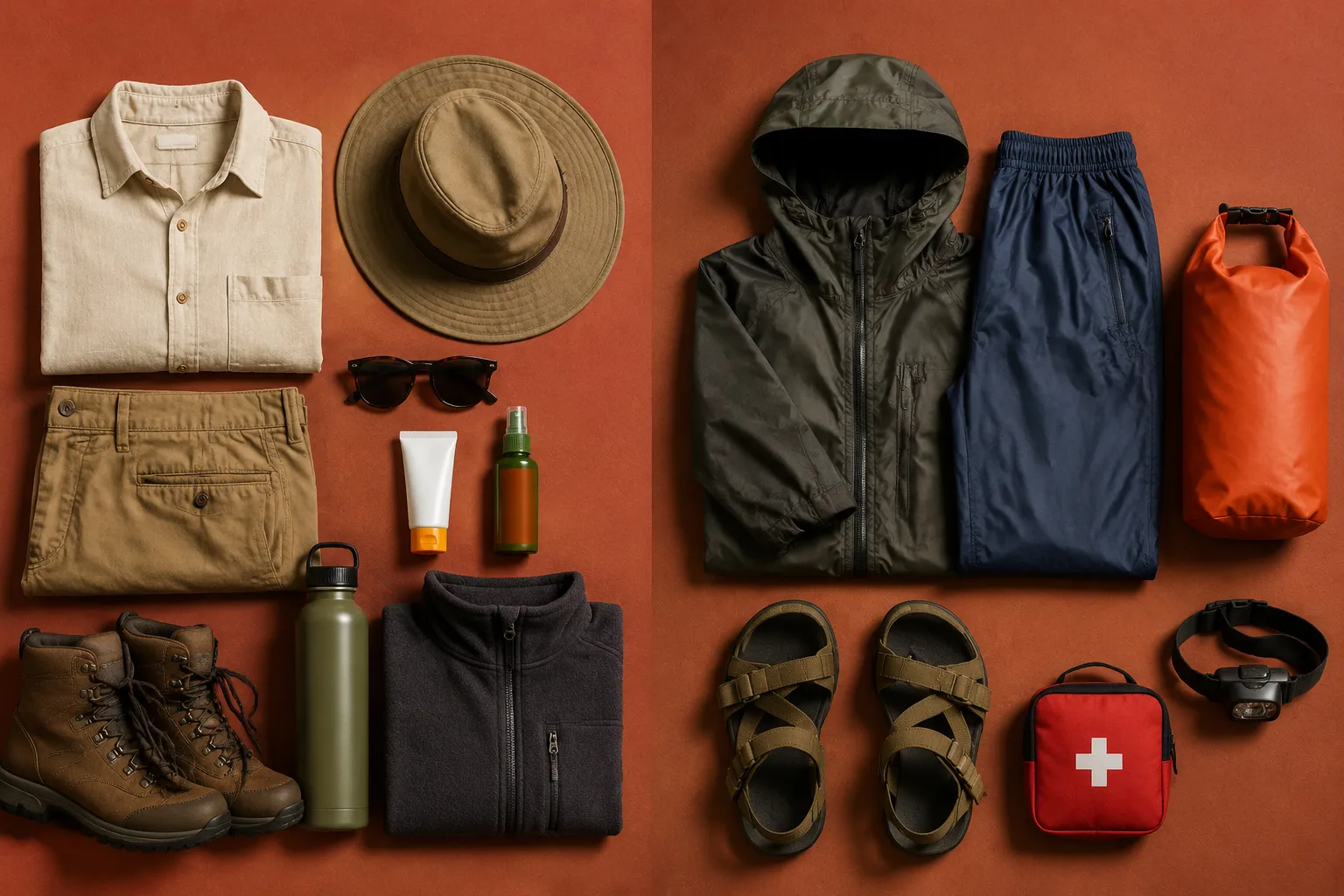
What to Pack for an Angola Trip
Packing depends on season and region. Here’s a practical split.
Dry season (May, October):
- Light, breathable layers for warm days
- Fleece or light jacket for cool cacimbo mornings and highland nights
- Sunglasses, wide-brim hat, high-SPF sunscreen
- Insect repellent (malaria zone, year-round)
- Sturdy walking shoes
- Refillable water bottle (do not drink tap water)
Rainy season (November, April):
- Compact rain jacket and quick-dry trousers
- Waterproof dry bag for electronics
- Sandals plus closed shoes
- Headlamp (power outages)
- Stronger insect repellent, mosquito activity peaks
Universal: EU-type C/F plugs (220V/50Hz), unlocked phone or eSIM, copies of passport and yellow fever certificate, and cash in kwanza for smaller towns since card acceptance is limited.
How Hot Does It Get in Angola?
Angola is warm year-round but rarely extreme. Coastal Luanda averages 24 to 30 °C most of the year, with rainy-season days feeling hotter due to humidity. Interior lowlands can push into the mid-30s in the hot rainy season. Highland areas like Lubango are much milder, often 15 to 25 °C by day and cool at night.[7][10]
The far south around Namibe is desert-hot in summer months but dry heat, more tolerable than humid northern conditions.
When Do Tourists Usually Visit Angola?
Most international tourists come during the June to September dry season, overlapping with European summer holidays and the most comfortable Angolan weather. Business travel to Luanda runs year-round but concentrates outside the peak rainy months.
Tourism volumes remain modest compared with neighbours like Namibia, so even in peak season you won’t find crowds at Kalandula or Iona. That’s part of the appeal.
Is Angola Good for First-Time Visitors?
Angola is best suited to experienced or adventurous travellers, not classic first-time Africa tourists. Infrastructure is uneven, Portuguese is essential in most places, and independent logistics can be complex. First-timers do best with a guided tour or private driver, focusing on Luanda plus one or two headline sights like Kissama or Kalandula.
If you want a wider bucket list, browse our full list of things to do in Angola.
What Can You Do in Angola During Dry Season?
The dry season unlocks nearly the entire country. Popular dry-season activities include:
- Overland routes from Luanda south through Benguela, Lobito and on to Lubango and Namibe
- Waterfalls and rock formations in Malanje (Kalandula, Pedras Negras)
- National parks including Kissama, Iona and Cangandala
- Serra da Leba pass and Tundavala gorge near Lubango
- Beach time at Mussulo lagoon, Cabo Ledo and Baía Azul
- City exploration in Luanda: Fortaleza de São Miguel, Ilha do Cabo, the Marginal
Best Time to See Angola’s National Parks
For Kissama, Iona and Cangandala, the ideal window is August to October. Vegetation is thin, animals gather near water, and access roads are dry. Kissama is the easiest option from Luanda for a short wildlife day trip.[5]
For the palanca negra, Angola’s iconic giant sable antelope, Cangandala and the Luando reserve in Malanje are the strongholds. Access is best in dry months.
How Long Should I Spend in Angola?
Plan a minimum of 10 to 14 days to see Angola meaningfully. A quick sampler might be:
- 7 days: Luanda plus a Kissama or Mussulo add-on
- 10-14 days: Luanda, Malanje (Kalandula), coast down to Benguela
- 3 weeks: Full loop including Lubango, Namibe and Iona
Distances are long and internal flights are limited, so don’t underestimate travel time.
Do I Need Vaccinations Before Visiting Angola?
Yes. A yellow fever vaccination is generally required for entry into Angola, and malaria prophylaxis is strongly recommended because malaria is present throughout the country year-round. Routine vaccinations should be up to date, and hepatitis A, typhoid and sometimes rabies are commonly advised.
Do not rely on this article for medical decisions. Consult the Institute of Tropical Medicine (wanda.be) in Belgium or LCR in the Netherlands, and check the WHO country page. Book your consult at least 4-6 weeks before departure.
Conclusion: Plan Around Cacimbo
If you take one thing from this guide, take this: build your Angola trip around cacimbo, May to October, with June to August as the ideal core. It’s the difference between an easy, memorable journey and a logistical struggle. Shoulder months (April, October) work if you’re flexible; deep rainy season is for coastal-only itineraries or the truly adventurous.
Your next steps:
- Lock in your travel window (aim for June, September)
- Check the latest visa and yellow fever rules with official sources
- Book flights into Luanda well in advance for dry season
- Plan a realistic route, don’t try to see everything
Free help from our team in Angola
Know when you want to go?
Tell us your travel month and what you want to see. We tell you what the weather means for your route and plan the trip around it.
- Local team in Angola
- No obligation, nothing to pay
- Reply by email or WhatsApp
Want to keep this guide? We email you the key points with a link to every section.
Frequently asked questions
What is the best month to visit Angola?
July is the classic pick: driest, coolest, most comfortable for travel across the country.
When is the rainy season in Angola?
Roughly October to April, with heaviest rain from January to March. Northern regions are wetter and start earlier than the south.
Is Angola hot all year round?
It's warm year-round but not uniformly hot. Coastal and highland areas are milder, especially during cacimbo. Interior lowlands in the rainy season are the hottest and most humid.
Can I visit during rainy season?
Yes, if you focus on Luanda, the coast and paved routes. Interior overland travel is difficult and some parks close or become inaccessible. Waterfalls are more dramatic.
What is cacimbo?
Cacimbo is the local name for Angola's dry season, roughly May to September. It's characterised by little to no rain, cooler temperatures and often morning fog or low cloud along the coast.
Does weather affect safari visibility?
Yes, significantly. Dry-season safaris offer better wildlife viewing because animals concentrate near water and thinner vegetation makes them easier to spot. Wet season means dispersed animals and thicker bush.