Most first-time visitors to Angola should not self-drive. That’s the honest answer, and starting there will save you money, stress, and possibly a bent bumper. But if you want the freedom of your own vehicle, or you’re planning a long southern loop through Namibe and Lubango, a rental can absolutely work. This guide walks you through when car rental Angola makes sense, when a car with a driver is smarter, and how to actually get on the road safely.
Quick Answer
Car rental in Angola is available in Luanda and a handful of other cities, but for most tourists the sensible option is a rental with a driver rather than self-drive. Roads range from decent tarred highways to broken urban streets and rough rural tracks, police checkpoints are frequent, and signage is limited. If you do self-drive, expect to need your home licence plus an International Driving Permit, a credit card in your name, and a 4x4 for anything outside main corridors. Angola drives on the right.
Key Takeaways
- A driver is often the smarter choice. Chauffeur-driven rental is common, affordable relative to the risk, and removes the biggest headaches: navigation, checkpoints, and city driving.
- You need an IDP. Get an International Driving Permit before you leave home. You cannot obtain one in Angola.
- Minimum age is usually 23, sometimes 21 with a surcharge, and a credit card in the driver’s name is required for the deposit.
- Book from NBJ, not LAD. Since March 2026, Luanda’s commercial flights run from the new Dr. Antonio Agostinho Neto International Airport (NBJ). Old LAD is no longer where you collect a rental car.
- Roads split sharply by region. Main corridors are fine. Rural routes need a 4x4, especially in the rainy season (roughly November to April).
- Never drive after dark outside cities, and never leave cleared roads in areas with residual landmine risk.
- Fuel has been cheap historically, but subsidy reform is changing prices. Check current rates on arrival.
Should you rent a car in Angola at all?
For most travellers, no. Angola is not a place where you land, grab keys, and cruise off like you would in Portugal or Namibia. The country works better with a local driver or a guided tour, especially on a first visit.
Consider self-drive only if you tick several of these boxes:
- You’ve driven in African countries before (Namibia, Mozambique, rural South Africa).
- You’re comfortable with Portuguese basics or travelling with someone who is.
- You have at least ten days and a flexible itinerary.
- You’re heading beyond Luanda, where a car actually earns its keep.
- You can handle a 4x4 on unpaved roads.
If most of those don’t apply, hire a car with a driver, or join a small-group trip. Our Angola tours overview breaks down the guided-versus-independent choice in more detail, and Getting Around Angola covers alternatives like domestic flights, taxis, and long-distance buses.
Self-drive versus hiring a car with a driver
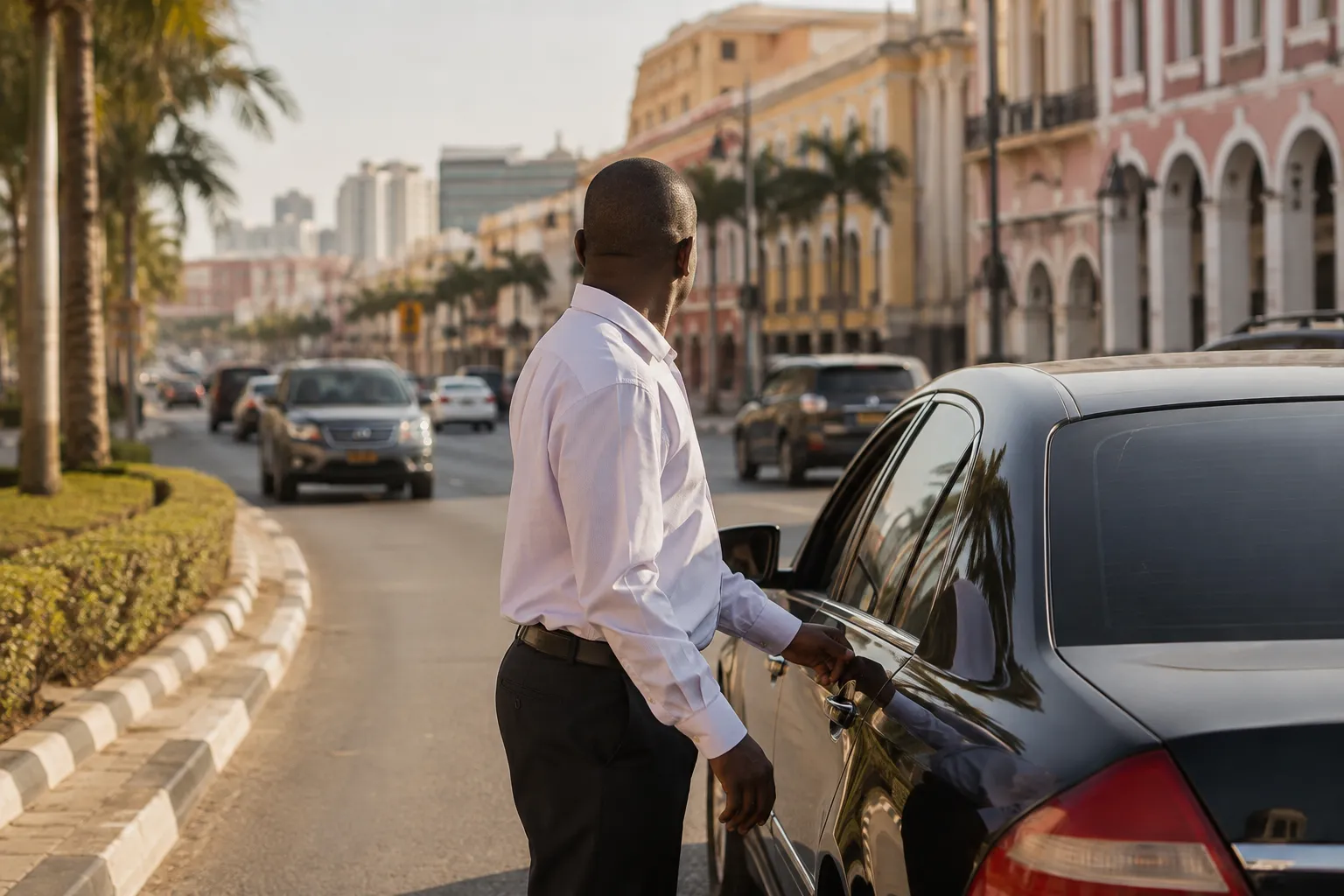
A chauffeur-driven car costs more per day than a bare rental, but by the time you add fuel, tolls, insurance excess, and the mental cost of navigating unfamiliar roads, the gap narrows fast. The driver also handles checkpoints, parking, and finding places, which is genuinely valuable.
| Factor | Self-drive | With a driver |
|---|---|---|
| Daily cost | Lower base rate | Higher, but bundled |
| Language barrier | Your problem | Handled |
| Checkpoints | You negotiate | Driver handles |
| Navigation | GPS + luck | Local knowledge |
| Freedom to stop | Total | Very high (just ask) |
| Best for | Experienced Africa drivers | Most first-time visitors |
Choose self-drive if you want maximum flexibility, you’re doing a long road trip like a southern loop, and you’re confident on rough roads. Choose a driver if you’re staying mostly urban, you have limited time, or the idea of a nighttime breakdown in rural Angola gives you pause.
What documents and paperwork do I need to rent a car in Angola?
You’ll need four things at the rental desk: your home driving licence, an International Driving Permit, your passport with a valid Angolan visa or entry stamp, and a credit card in your name for the deposit. Debit cards are usually not accepted for the hold.
The essentials:
- Home country driving licence (valid, not expired).
- International Driving Permit (IDP). This is a paper booklet that translates your licence. Rental desks and police both expect to see it. Get it from your home country’s automobile association before travelling. You cannot obtain one in Angola.
- Passport with valid Angolan entry. Check current visa rules in our Angola visa guide or via the official e-visa portal, because rules change often.
- Credit card in the main driver’s name. Deposits can be substantial, especially for 4x4s.
- Return flight or onward travel proof, occasionally requested.
If you plan to cross a land border in the rental, tell the company at booking. Most rentals are restricted to Angola only, and cross-border authorisation is a separate document.
Do I need an International Driving Permit to rent a car in Angola?
Yes. In practice you need both your home licence and an IDP. The IDP is essentially a translation of your licence into multiple languages, including Portuguese, and it’s what a traffic officer at a checkpoint will actually read. Without it, expect longer stops, potential fines, and possibly being turned away at the rental counter.
Get the IDP from the automobile association in your country of residence (in the US, AAA; in the UK, the AA or the Post Office; in other countries, the equivalent motoring club). It typically costs a small fee, is issued the same day, and is valid for one year.
Can tourists rent cars in Angola, and where do you rent?
Yes, tourists can rent cars in Angola. The market is smaller and more expensive than in neighbouring Namibia or South Africa, but international brands like Europcar and Avis operate here alongside local firms. Most rental desks are in Luanda, with limited options in Lubango, Benguela, Lobito, and Namibe.
Where you’ll find rentals:
- Luanda city offices. Most international brands have city branches. This is where selection is widest.
- Dr. Antonio Agostinho Neto International Airport (NBJ). Since March 2026, this is where you land in Luanda. Pick-up here is convenient but usually more expensive than a city office. Do not go to the old LAD airport, which no longer handles commercial flights.
- Hotel arrangements. Larger hotels can arrange chauffeur-driven vehicles, often through partner firms. This is the easiest route for a driver-included booking.
- Regional cities. Lubango and Benguela have small local operators. Book ahead as fleets are limited.
For a broader look at logistics on the ground, our transport in Angola guide covers taxis, domestic flights, and the intercity bus network.
How much does it cost to rent a car in Angola?
Angola is not a budget rental destination. Expect prices well above what you’d pay in South Africa or Namibia for a comparable vehicle, and expect chauffeur-driven day rates to add a driver fee, meals, and sometimes accommodation on multi-day trips. Because rates fluctuate with the kwanza and with fuel policy changes, we don’t quote hard figures here. Get written quotes from two or three companies before committing.
What’s typically included in a car rental Angola quote:
- Basic third-party liability insurance (usually mandatory).
- A daily kilometre allowance (sometimes unlimited, sometimes capped).
- VAT.
What’s usually extra:
- Collision Damage Waiver (CDW) and Theft Protection. Base insurance leaves a large excess.
- Additional driver.
- Young driver surcharge (under 25).
- Cross-border fees.
- One-way drop-off.
- Child seats.
- Airport pick-up surcharge.
For a fuller picture of what a trip costs beyond the car, see our Angola trip cost breakdown.
What insurance do I need, and what happens after an accident?
Take the fullest insurance the rental company offers, then check what your credit card or travel policy adds on top. Angola is not a place to skimp on cover. The basic package is legally required but leaves a huge excess, meaning a small bump could cost you thousands. Add Collision Damage Waiver, Theft Protection, and if available a “super cover” that reduces the excess to zero or near-zero.
If you have an accident or breakdown:
- Stop, if it’s safe. Turn on hazards. Put out a warning triangle if you have one.
- Do not move the vehicles until police arrive, unless they’re blocking traffic dangerously.
- Call the rental company’s emergency number (kept in the glove box or on the key fob) and your insurer.
- Wait for the traffic police (Polícia Nacional). You need an official police report for any insurance claim.
- Take photos of both vehicles, the road, and any relevant signs.
- Get contact details of the other driver and any witnesses.
- Do not sign anything you don’t understand. If documents are only in Portuguese, note that on the paper before signing.
For minor scrapes with no injuries, the process is quicker but you still need a report to avoid being charged for the damage. Keep your rental agreement and IDP on you at all times.
Choosing the right vehicle, and when a 4x4 is not optional
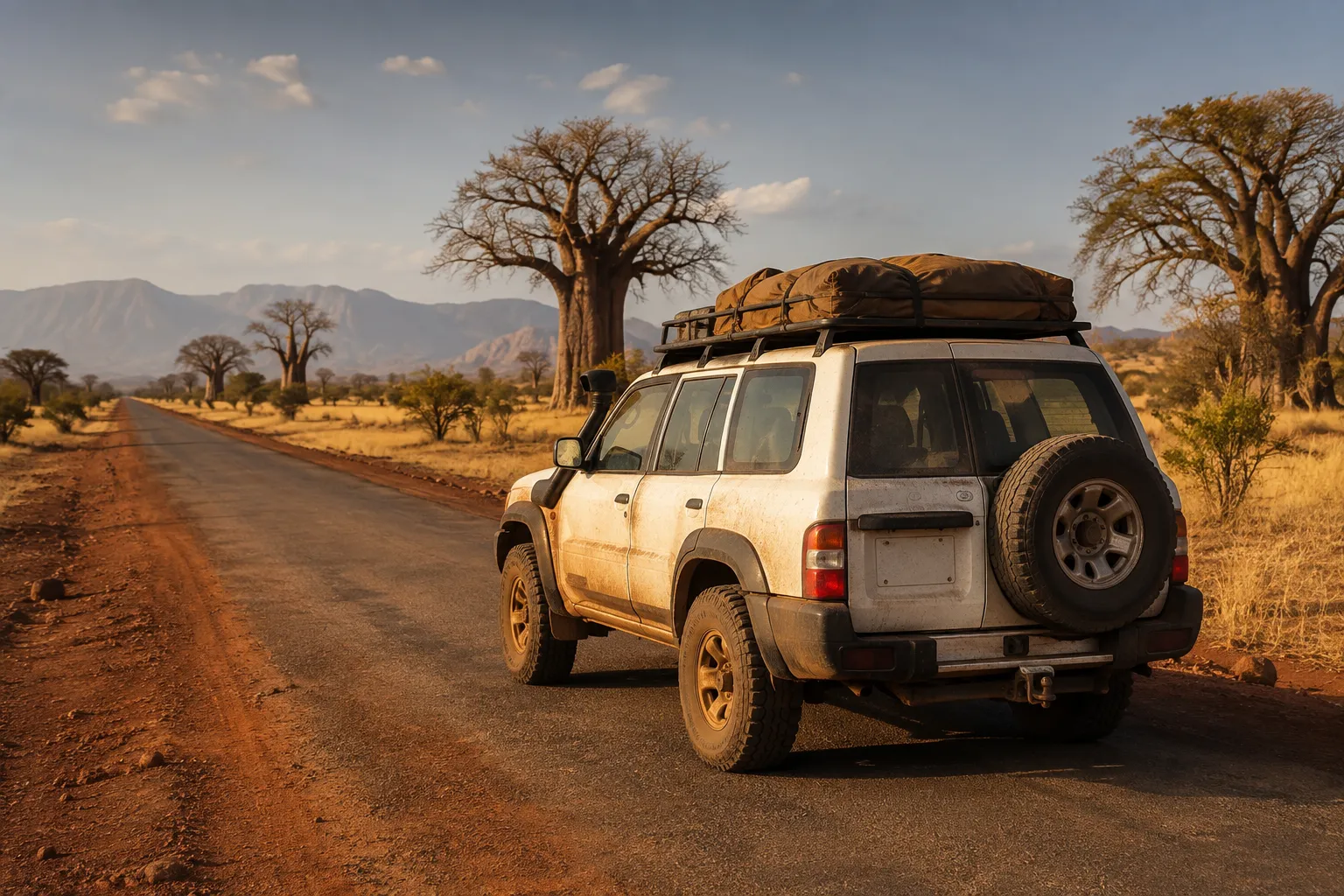
For city driving and main-corridor trips (Luanda to Benguela, for instance), a standard sedan or compact SUV is fine. The moment you leave paved roads, you want a proper 4x4 with decent ground clearance. This is not a “nice to have” for the south or for Kalandula, it’s essential.
Rule of thumb:
- Sedan or small SUV: Luanda, Benguela, Lobito, main highways.
- High-clearance 2WD: Some inland tarred routes with occasional rough patches.
- 4x4 (Toyota Hilux, Land Cruiser, Fortuner): Anywhere off tar. Definitely for Kissama National Park, Namibe province, Iona, or any rainy-season rural travel.
Automatic transmission is available but limited, especially in 4x4s. Book early if you can’t drive manual, and expect to pay more. Diesel is common on larger vehicles.
Road conditions by region
Angola’s road network improved massively in the two decades after the war ended in 2002, but quality still varies wildly. Here’s the honest picture in 2026:
- Luanda city: Congested, aggressive, potholed in places, poorly marked. Perfectly drivable but stressful for first-timers.
- Luanda to Benguela (coastal EN100): Largely tarred and in reasonable shape. One of the country’s best drives.
- Luanda to Malanje (for Kalandula Falls): Mostly tarred, with rougher sections. Doable in a 2WD in dry season.
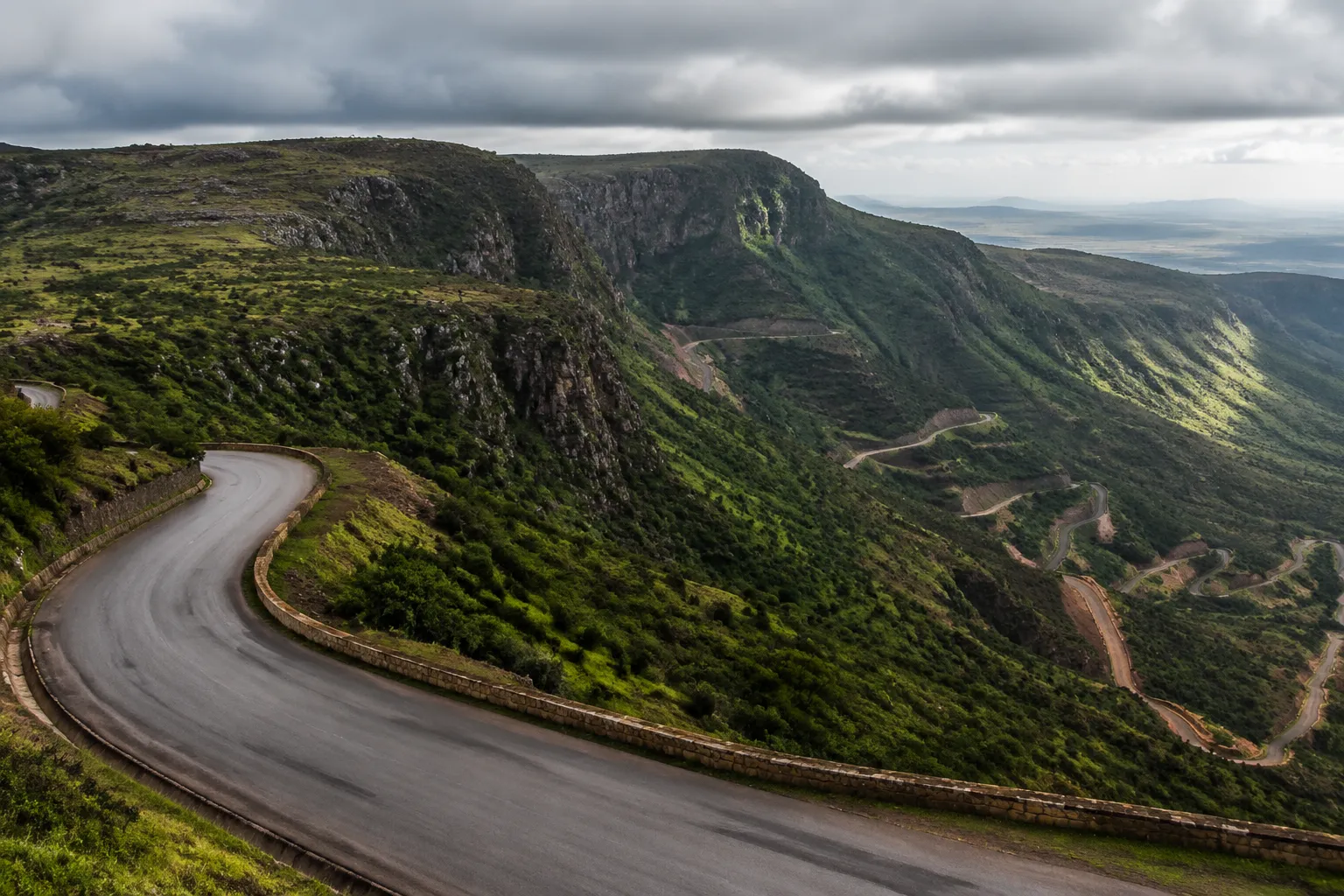
- Lubango and the south (Huíla, Namibe): Main routes are tarred and scenic. The Serra da Leba pass is famous. Side roads to Iona or coastal escarpments need a 4x4.
- Rural east and interior: Unpaved, slow, and often washed out in the wet season. 4x4 with local knowledge.
- Cabinda exclave: Roads are variable and travel advisories are stricter here. Check current guidance from the US State Department or UK FCDO.
Rainy season, roughly November to April, changes everything outside cities. Rivers rise, dirt roads turn to mud, and bridges occasionally wash out. If you’re travelling in this window, allow buffer days and check conditions locally before setting off. See our best time to visit Angola for seasonal context.
The rules and the driving culture
Angola drives on the right-hand side of the road, which will be intuitive for most European and North American drivers. Speed limits are generally 50 km/h in towns, 100 km/h on open roads, and 120 km/h on some highways, but signage is inconsistent. Seatbelts are mandatory. Zero tolerance for drink driving is the safe assumption.
Beyond the formal rules, the real culture is what matters:
- Roundabouts (rotundas): Traffic already on the roundabout has priority, but this isn’t always respected. Be assertive but not aggressive.
- Overtaking: Common, sometimes reckless, especially by trucks and taxis. Give oncoming vehicles room to pull back in.
- Motorbikes and mototaxis (kupapatas): Everywhere in cities and smaller towns. They weave, they don’t signal, they appear in your blind spot. Assume one is next to you at all times.
- Candongueiros (informal minibus taxis): Blue and white shared taxis. They stop suddenly, pull out without warning, and often drop passengers in the middle of a lane. Give them space.
- Police checkpoints: Frequent, especially on intercity routes. Slow down, greet the officer politely, hand over your documents (licence, IDP, rental agreement, passport copy). Most stops are routine. If asked for money without a clear reason, stay polite, play dumb, and ask for a receipt. Most officers will wave you on.
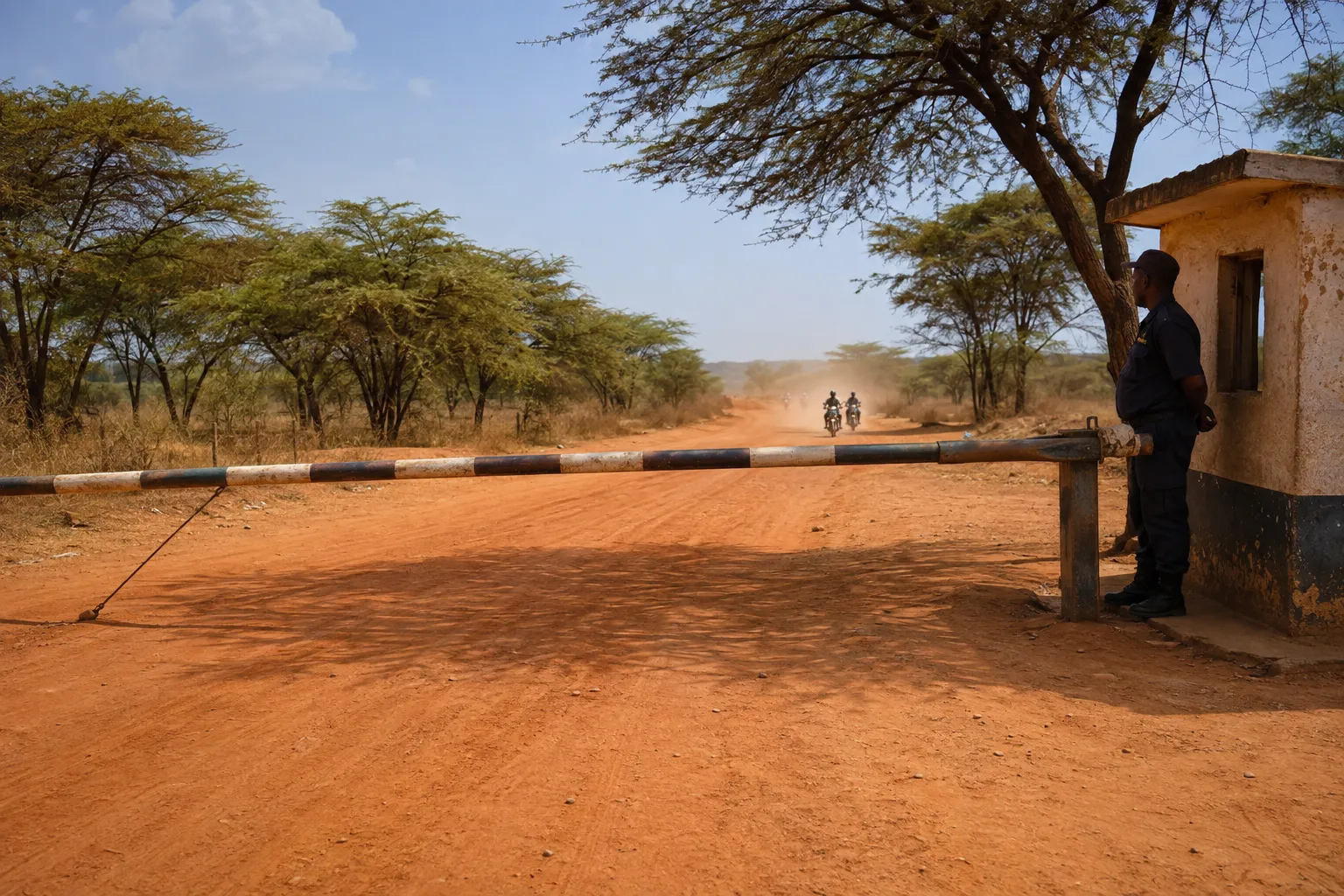
- Night driving: Avoid outside cities. Unlit vehicles, animals on the road, and pedestrians in dark clothing make it genuinely dangerous.
Fuel, tolls, and parking
Fuel has historically been very cheap in Angola due to state subsidies, but the government has been gradually reforming subsidies, so prices have been rising and continue to change. Check current rates when you arrive. Petrol (gasolina) and diesel (gasóleo) are widely available in cities and on main routes, less so in remote areas. Carry a jerry can if you’re going deep rural, and fill up whenever you pass a station.
Payment at fuel stations is often cash only outside major cities. Small notes help. Bring plenty of kwanza.
Tolls exist on a few upgraded highways but are minor. Keep small change accessible.
Parking in Luanda is chaotic. Use hotel parking where possible, or paid guarded lots (arrumadores, informal parking attendants, are common and expect a small tip). Never leave valuables visible in the car.
Is it safe to drive and rent a car in Angola?
Driving in Angola is manageable if you’re prepared, but it carries risks that are higher than in Europe or North America. The main threats are road conditions, other drivers, and, in some rural areas, residual landmine risk from the civil war. Serious accidents are more common than in wealthier countries. Crime targeting drivers is possible in Luanda traffic (keep doors locked, windows up in slow traffic, valuables out of sight).
Non-negotiables:
- Never drive off cleared roads or tracks in rural areas where landmines may remain. Stick to marked routes.
- Never drive after dark outside urban areas.
- Always carry all documents.
- Keep the rental company’s emergency number saved and offline.
- Register your trip with your government’s travel advisory service before travel.
For a fuller safety picture, see our Is Angola Safe guide, and always check the current advisory from the US State Department, UK FCDO, or your equivalent.
Routes that are genuinely enjoyable to drive
If self-drive still appeals, here are the routes that reward the effort:
- Luanda to Benguela and Lobito along the coast. Tarred, scenic, doable in a day.
- Lubango loop: Serra da Leba pass, Tundavala gorge, Cristo Rei viewpoint. Mountain roads, cool air, dramatic drops.
- The southern desert run from Lubango down to Namibe and toward Iona. This is the road-trip highlight of Angola. Our southern Angola road trip guide covers it in detail.
- Luanda to Kalandula Falls via Malanje. Long day, but the falls are worth it.
- Miradouro da Lua and Cabo Ledo, an easy half-day south of Luanda on decent tar.
Conclusion
Renting a car in Angola is possible, sometimes rewarding, and often not the best call. The honest recommendation for most visitors is a chauffeur-driven vehicle or a small-group tour, saving self-drive for experienced Africa travellers on longer trips. If you do rent, get your IDP before you leave home, take full insurance, pick a 4x4 for anything beyond main corridors, avoid night driving outside cities, and be patient at checkpoints.
Your next steps:
- Decide honestly: self-drive or driver? Re-read the comparison table.
- If self-drive, apply for your IDP now.
- Get quotes from two or three rental firms with full insurance included.
- Read our southern Angola road trip or Kissama National Park guides for route ideas.
- Check the current travel advisory from your government within a week of departure.
Drive carefully, stay flexible, and enjoy one of Africa’s least-visited and most rewarding countries.
Free help from our team in Angola
Rather not drive yourself in Angola?
Checkpoints, road conditions and Luanda traffic make a driver the easier choice for most visitors. Tell us your route and dates and we arrange a car with driver, or a rental car if you prefer.
- Local team in Angola
- No obligation, nothing to pay
- Reply by email or WhatsApp
Want to keep this guide? We email you the key points with a link to every section.
Frequently asked questions
Can you rent a car at Luanda airport?
Yes. Since March 2026, Luanda's commercial flights operate from Dr. Antonio Agostinho Neto International Airport (NBJ), and major rental companies have desks there. The old Quatro de Fevereiro (LAD) is no longer used for scheduled passenger flights, so make sure your booking specifies NBJ.
What are the age requirements for renting a car in Angola?
The minimum age is usually 23, though some companies rent to drivers aged 21 with a young-driver surcharge. Most also require at least one to two years of licence holding. A few 4x4 categories may set the minimum at 25.
Are automatic transmission cars available for rent in Angola?
Yes, but selection is limited, particularly for 4x4s and larger SUVs. If you can't drive manual, book well in advance and confirm the transmission in writing.
How far in advance should I book a rental car in Angola?
Book at least two to four weeks ahead in dry season (May to October), and earlier for 4x4s or automatics. Fleets are smaller than in neighbouring countries, and popular categories sell out.
What are the best car rental companies in Angola?
International names include Europcar and Avis, alongside local operators. Rather than picking on brand alone, compare written quotes on total price including full insurance, check what the excess actually is after CDW, and read recent reviews. For chauffeur-driven bookings, ask your hotel for their preferred partner.
Do I need a special permit for a 4x4 or off-road driving?
No special permit, but rental agreements usually restrict you to "roads and recognised tracks." Driving on beaches, in dunes, or genuinely off-piste often voids your insurance. Read the contract.
Can I drive from Angola into Namibia or another neighbouring country?
Rarely allowed by default. You need explicit written permission from the rental company, a cross-border authorisation document, and additional insurance. Most companies restrict rentals to Angola only.
Is Uber available in Luanda?
Ride-hail apps have come and gone in Luanda. Availability changes, so check on arrival. When they work, they're a good alternative to renting in the city itself.