Quick answer: is Angola safe to visit?
Yes, Angola is generally safe to visit for tourists who prepare well and stick to sensible areas. Most trips to Luanda, Benguela, Lubango and the main tourist regions pass without incident. The main risks are petty crime in cities, road accidents, health issues like malaria and cholera, and specific regions to avoid (Cabinda province outside Cabinda city, and the DR Congo border area). Governments including the US, UK and the Netherlands currently advise increased caution rather than avoiding the country [1][2][8].
Key takeaways
- Angola has a Level 2 travel advisory from the US State Department: exercise increased caution [1].
- Cabinda province (outside Cabinda city) and the Lunda-Norte border with DR Congo are the main “avoid” zones [2][8].
- Petty crime, road accidents and health risks (malaria, cholera) are bigger threats than violent crime for tourists [1][5].
- Angola’s homicide rate (around 4.1 per 100,000) is below the African average [9].
- Luanda is manageable with the right neighborhood choice and a trusted driver.
- Solo female travellers can visit, but should book accommodation carefully and avoid walking alone at night.
- Travel insurance with medical evacuation cover is strongly recommended.
- Always check the official advisory of your home country before you fly, since the situation can shift.
Short answer: is Angola dangerous?
Angola isn’t a war zone, and it isn’t Somalia. It’s a middle-tier African destination in terms of safety, with a moderate risk score around 6.5 out of 10 according to independent trackers [7]. The civil war ended in 2002, and the country has been politically stable for over two decades.
That said, “safe” doesn’t mean “no risk.” Angola is still a developing country with visible inequality, uneven policing outside major cities, and pockets where tourists genuinely shouldn’t wander. Approach it like you would a first trip to a large Latin American capital: alert, insured, and with a local contact.
Rule of thumb: if you’re comfortable travelling in cities like Johannesburg, São Paulo or Nairobi, you’ll be fine in Luanda. If those cities intimidate you, hire a driver and stick to organised tours.
For broader context on planning, see our full guide on travelling to Angola.
What are the main safety risks in Angola for tourists?
The realistic risks, ranked by how likely they are to affect you:
- Petty theft and pickpocketing, markets, crowded streets in Luanda, ATMs at night.
- Road traffic accidents, Angola recorded 481 accidents, 91 deaths and 618 injuries in just the first 15 days of January 2026 [4].
- Health risks, malaria (year-round, whole country), an active cholera outbreak in Luanda and nearby provinces [5], and yellow fever (vaccination usually required).
- Scams and corruption, occasional shakedowns at unofficial checkpoints, inflated “tourist prices”.
- Regional risks, kidnapping and separatist activity in rural Cabinda, unexploded landmines in a few remote rural areas.
- Civil unrest, occasional protests in Luanda, usually announced in advance [5].
Violent crime targeting tourists is uncommon but not unheard of. The Angolan National Police reported 2,162 arrests and 24 firearms seized in a two-week enforcement operation in mid-2026, which gives a sense of active policing efforts [3].
Which cities in Angola are safest to visit?
Most tourist-friendly cities are reasonably safe with basic precautions. Ranked by my own experience and consistent traveller feedback:
| City | Safety feel | Best for |
|---|---|---|
| Lubango | High | Mountains, Serra da Leba, Cristo Rei |
| Benguela | High | Colonial coast, beaches |
| Namibe (Moçâmedes) | High | Iona National Park gateway |
| Lobito | Medium-high | Beaches, port town vibe |
| Luanda | Medium | Culture, food, nightlife |
| Cabinda city | Medium (with care) | Business travel, not tourism |
Lubango and Benguela consistently feel the most relaxed. Read more about each in our guides to Benguela and Lubango.
How does Angola compare to other African countries for safety?
Angola sits in the middle of the pack. It’s safer than the DR Congo, Cameroon or the Sahel countries, and roughly comparable to Mozambique or Zambia. It’s less “tourist-polished” than Namibia, Botswana or Rwanda, but the raw crime numbers aren’t dramatically worse.
Angola ranks around 115th out of 195 countries globally on safety, with a homicide rate below the African average [9]. The bigger challenge isn’t crime, it’s infrastructure: fewer English speakers, less-developed tourism services, higher costs.
What do I need to know about crime in Luanda?
Luanda’s crime is overwhelmingly opportunistic, not violent. The pattern I’ve seen and heard repeatedly:
- Snatch theft of phones, bags and watches, especially in traffic and near ATMs.
- Distraction scams around Mercado do Roque Santeiro and busy junctions.
- Vehicle break-ins if you leave valuables visible.
- Late-night incidents in poorly lit neighbourhoods.
Safer neighborhoods to stay in: Miramar, Talatona, Ingombota (near Marginal), Alvalade. These are where diplomats, expats and higher-end hotels cluster.
Practical rules:
- Don’t wear a Rolex or flash a new iPhone on the street.
- Use hotel or app-based taxis (Yango operates in Luanda), not random cars.
- Withdraw cash inside banks or malls, never at street ATMs after dark.
- Keep a photocopy of your passport on you, leave the original in the hotel safe.
More context on the capital in our Luanda travel guide.
Are there any travel warnings for Angola right now?
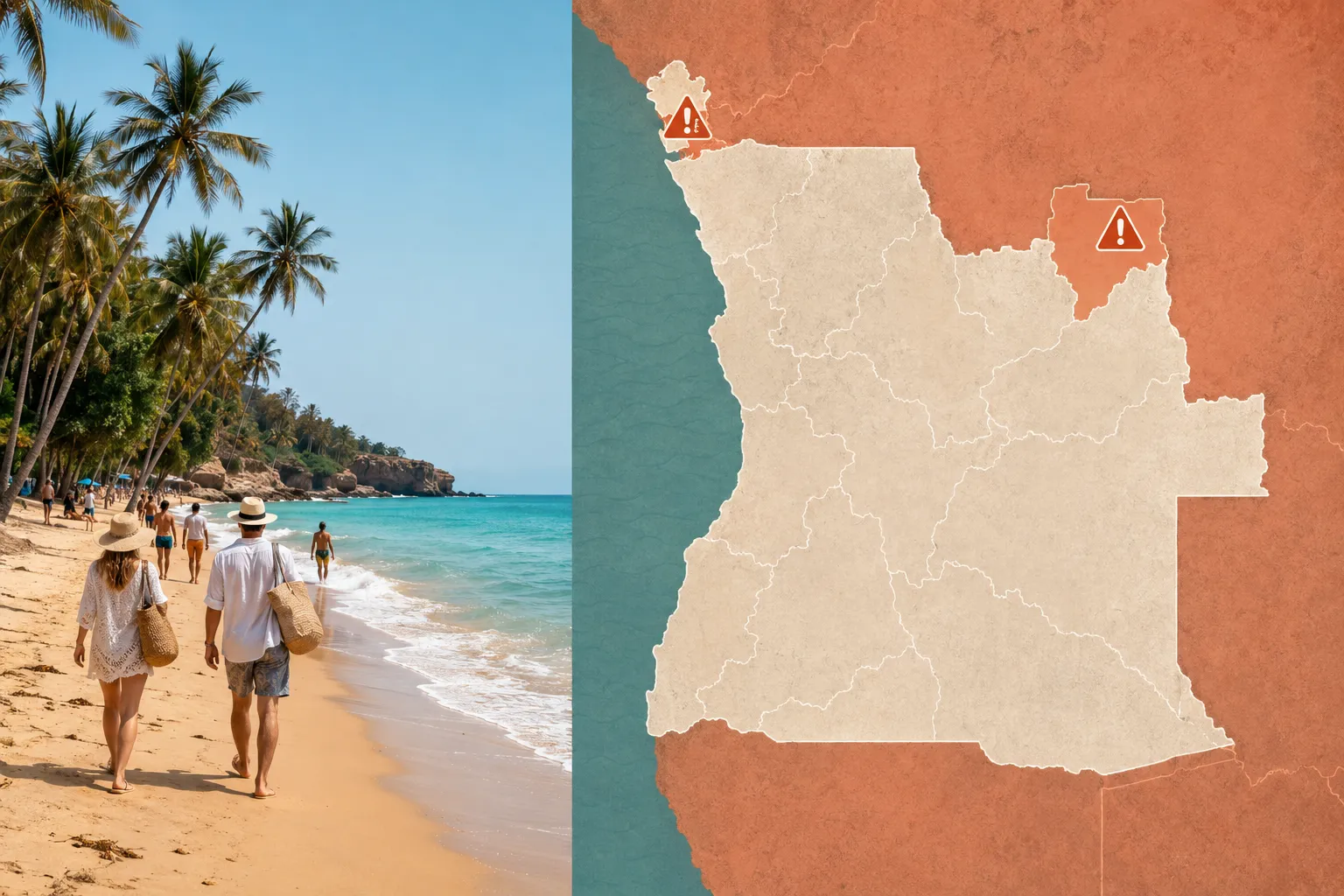
Yes, but they’re regional, not country-wide. As of 2026:
- United States (State Department): Level 2, exercise increased caution due to crime, health, civil unrest and landmines [1].
- United Kingdom (FCDO): advises against all but essential travel to Cabinda province, excluding Cabinda city, because of separatist activity and kidnapping risk [2].
- Australia (Smartraveller): high degree of caution nationally, do not travel to parts of Cabinda [5].
- Netherlands: advises against non-essential travel to Cabinda and the DR Congo border in Lunda-Norte [8].
Always check the official government advisory of your own country within a week of your flight, because these change.
What’s the best time of year to visit Angola safely?
The dry, cooler season from May to October is safest and most comfortable. Reasons:
- Roads are dramatically better without rain (fewer washouts, fewer accidents).
- Malaria risk is lower in the drier months.
- Kalandula Falls and Kissama National Park are more accessible.
- Waterborne disease risk drops.
The rainy season (November to April) isn’t off-limits, but flooding, muddy roads and higher disease risk make it a harder trip. See our detailed breakdown in best time to visit Angola.
Do I need security escorts or guides in Angola?
For most tourists, no armed escort is needed. What you do want:
- A trusted driver-guide who speaks Portuguese and knows the region.
- A local fixer or tour operator for long overland trips (Kalandula, Iona, Cabinda).
- Hotel pickup at the airport, not a walk-up taxi.
Choose a licensed local operator if you’re driving into rural Malanje, southern Namibe or anywhere near a border. Solo driving is doable in the south (Lubango, Benguela) but risky in the north-east.
What health and safety precautions should I take in Angola?
Health is genuinely the biggest practical risk, not crime. Bare-minimum precautions:
- Yellow fever vaccination, usually required for entry (verify with your travel clinic).
- Malaria prophylaxis, the whole country is a malaria zone.
- Cholera awareness, Angola has active outbreaks in 2026, especially in Luanda [5]. Drink only bottled or boiled water, avoid ice from unknown sources, and eat cooked food.
- Routine vaccines up to date: hepatitis A/B, typhoid, tetanus.
- Travel insurance with medical evacuation, non-negotiable. Angolan private hospitals in Luanda are decent, but for anything serious you’ll want evacuation to South Africa or Europe.
I always book insurance that specifically covers medical repatriation and adventure activities for Africa trips. It’s a small cost compared with a medevac flight. Check current requirements in our vaccinations in Angola guide and with the WHO or your national travel clinic.
Disclosure: some links on this site are affiliate links (rel=“sponsored nofollow”). If you book travel insurance or a tour through them, we may earn a small commission. It never costs you extra and never influences our advice.
Is it safe for solo travellers or women to visit Angola?
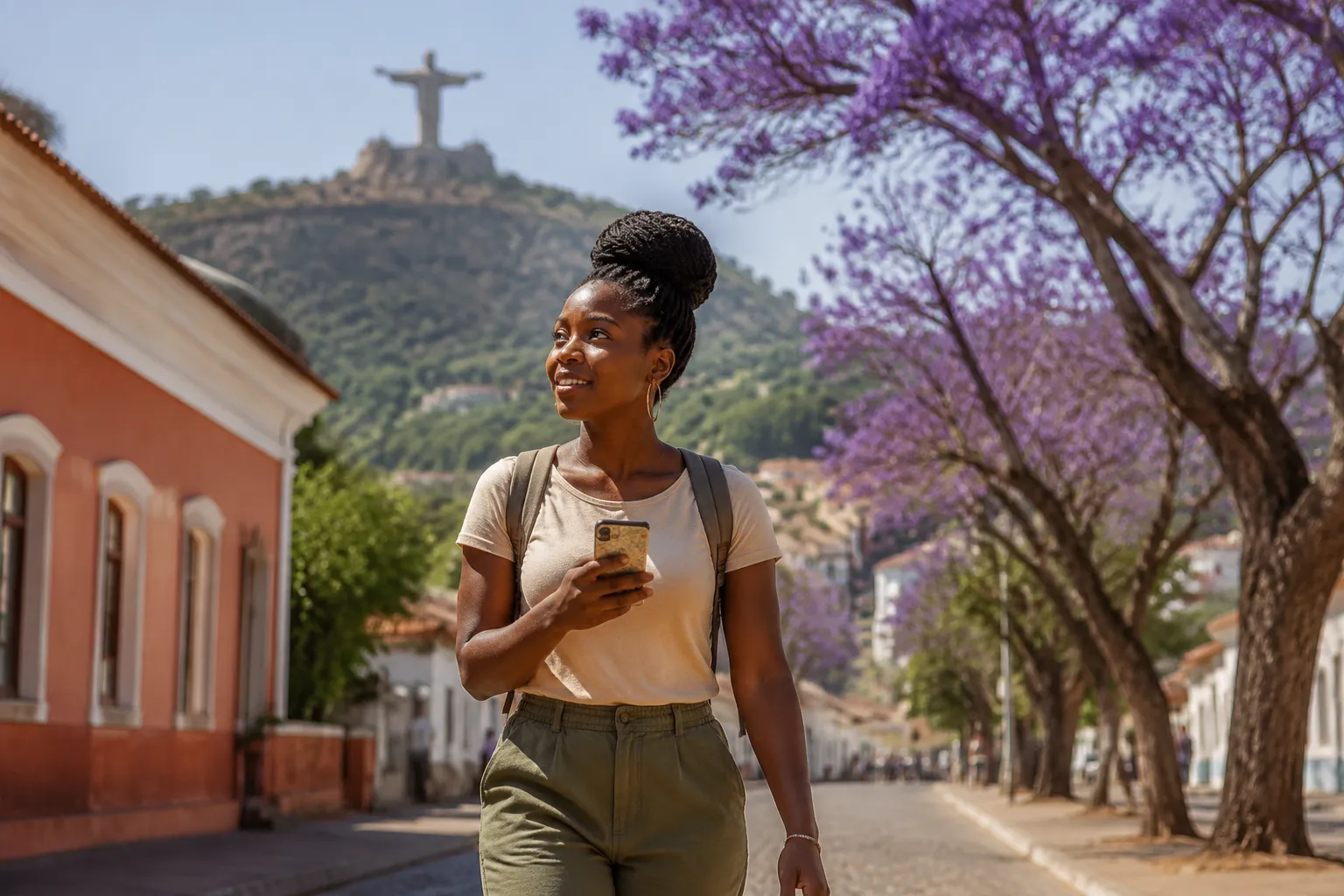
Yes, with caveats. Angola isn’t a common solo-female backpacker destination, so you’ll stand out, especially outside Luanda. Reports from solo female travellers are mostly positive, and street harassment is generally milder than in North Africa, but the practical constraints are real.
Solo female traveller checklist:
- Book accommodation with 24-hour reception in a safe neighbourhood.
- Avoid walking alone after dark, even short distances.
- Dress modestly outside beach resorts, Angolans dress smartly.
- Use pre-arranged transport rather than hailing taxis at night.
- Keep a working local SIM (buy an Angolan eSIM or a Unitel SIM on arrival).
- Learn a few Portuguese phrases; English is rarely spoken outside hotels.
Group tours and organised itineraries are the easiest entry point. Our Angola itinerary suggestions include operator-friendly routes.
What areas of Angola should tourists avoid?
Short list of “don’t go” zones:
- Rural Cabinda province (outside Cabinda city itself), separatist activity, kidnapping risk [2].
- Lunda-Norte border area with DR Congo, banditry, illegal mining zones [8].
- Any unmarked rural areas near former conflict zones, residual landmine risk. Stick to established roads.
- Isolated beaches and coastal roads after dark.
- Informal settlements (musseques) in Luanda without a local guide.
Everything else in the main tourism belt (Luanda, Kwanza-Sul, Benguela, Namibe, Huíla, Malanje) is fine with basic precautions.
How reliable is public transportation in Angola?
Honestly? Not great for tourists. Angola’s public transport is a mix of:
- Candongueiros (blue-and-white minibus taxis), cheap, chaotic, not recommended for tourists.
- Long-distance buses (Macon, SGO), functional between major cities but slow.
- Domestic flights on TAAG, the safest way to cover long distances.
- App-based taxis (Yango, Heetch) in Luanda, the practical everyday choice.
- Rental cars with driver, the standard middle-class option.
Road accidents are one of the top risks; the January 2026 statistics of 91 deaths in just 15 days speak for themselves [4]. Avoid intercity driving at night, always.
What’s the cost of hiring a private driver for safety in Angola?
Rates vary widely and change fast, so I won’t quote exact numbers. As a general guide in 2026:
- Luanda city driver (full day): mid-range daily rate, expect to pay significantly more than in neighbouring countries because Luanda is one of the world’s most expensive cities.
- Multi-day tour with 4x4 and English-speaking guide: premium pricing, but essential for Kalandula, Iona or Namibe trips.
- Airport transfers via hotel: almost always worth it on arrival.
Get two or three written quotes in advance from licensed operators. Ask what’s included (fuel, driver meals, accommodation, park fees). Confirm the vehicle has working seatbelts and air conditioning. See our practical tips in Angola travel tips.
Do locals recommend specific neighbourhoods to stay in?
Yes. In Luanda, locals and long-term expats consistently point to:
- Miramar, leafy, embassy district, quiet.
- Talatona, modern, planned, malls and business hotels.
- Ilha do Cabo, beachfront, restaurants, walkable in daylight.
- Ingombota / Marginal area, central, walkable, good hotels.
Neighbourhoods to be more cautious in after dark: Sambizanga, Cazenga, Rangel, Roque Santeiro area. These are working-class districts, not off-limits, but not where you want to wander with a camera.
Outside Luanda, most tourist-oriented hotels are in safe central areas by default.
What should I do if I encounter trouble while visiting Angola?
Stay calm, don’t resist a mugging, and know your contacts:
- Emergency numbers: 113 (police), 112 (general), 115 (medical).
- Contact your embassy, Belgian embassy in Luanda covers Belgian nationals; Dutch citizens are served via the embassy or the consular helpline.
- File a police report (BO) if anything is stolen; you’ll need it for insurance.
- Call your travel insurance 24-hour line before authorising any medical treatment beyond first aid.
- Move to a busy, well-lit area if you feel unsafe on the street.
For any legal or medical situation, defer to your embassy and the official advisory rather than random online forums.
Angola safety snapshot
Quick risk overview
| Risk | Level | Where |
|---|---|---|
| Petty theft | Medium | Luanda, markets |
| Road accidents | High | Nationwide, especially at night |
| Malaria & cholera | High | Nationwide |
| Kidnapping | High | Rural Cabinda only |
| Violent crime vs tourists | Low | Rare, mostly opportunistic |
Sources: US State Dept 2026, UK FCDO 2026, Smartraveller 2026.
Conclusion: should you visit Angola?
If you’re a curious, prepared traveller who’s comfortable with a developing-country destination, Angola is absolutely worth visiting in 2026. The safety picture is manageable, the crowds are almost non-existent, and you’ll see landscapes and cities that 99% of travellers never do.
Your next steps:
- Read your government’s current advisory this week.
- Book travel insurance with medical evacuation cover.
- Sort your visa via the Angola visa guide and pick your route with our Angola itinerary suggestions.
- Book a licensed local driver or operator for anything outside the main cities.
- Visit your travel clinic 6-8 weeks before departure for vaccines and malaria prophylaxis.
Angola isn’t the easiest African trip you’ll ever plan, but it’s one of the most rewarding.
Free help from our team in Angola
Still unsure whether Angola is safe for your trip?
Ask the people who are there. Tell us where and when you are going and what worries you, and we give you an honest answer. If you prefer, a guide or driver from our own team travels with you.
- Local team in Angola
- No obligation, nothing to pay
- Reply by email or WhatsApp
Want to keep this guide? We email you the key points with a link to every section.
Frequently asked questions
Is Angola safe for tourists?
Yes, for most tourists Angola is safe with sensible precautions. Petty crime, road accidents and health issues are the main risks, not violent crime against visitors. Avoid rural Cabinda and the DR Congo border area.
Is Angola safe for solo female travellers?
Yes, but it's a more advanced destination. Book vetted accommodation, avoid walking alone at night, dress modestly, and consider organised tours for your first trip.
What is Angola's crime rate like?
Angola's homicide rate is around 4.1 per 100,000 people, below the African average and lower than many Latin American countries. Petty theft is more common than violent crime.
Are there dangerous animals in Angola?
Realistically, the biggest threat is the mosquito (malaria). Large wildlife in national parks like Kissama and Iona is managed and rarely a threat to tourists on organised visits.
Is Angola safe for American and European tourists?
Yes. Americans and Europeans travel to Angola regularly for business and tourism without incident. Follow the same precautions any traveller would in a developing country.
Where can I find the official travel advisory?
Check your own government's official site: [US State Department](https://travel.state.gov/en/international-travel/travel-advisories/angola.html), [UK FCDO](https://www.gov.uk/foreign-travel-advice/angola), and the Dutch government's official travel advice for Dutch travellers. Belgian citizens should check their own foreign ministry.
References
- [1] Angola Travel Advisory
- [2] Angola Foreign Travel Advice
- [3] Apreendidas 24 Armas de Fogo e Detidos Mais de Mil Cidadãos em Todo...
- [4] Polícia Regista Mais de 400 Acidentes e 91 Mortes nos Primeiros 15...
- [5] Angola - Smartraveller
- [6] Angola Population
- [7] Is It Safe To Travel - Angola
- [8] Angola - Nederland Wereldwijd
- [9] Angola Crime Statistics
- [10] Angola Travel Advisory