Quick Answer
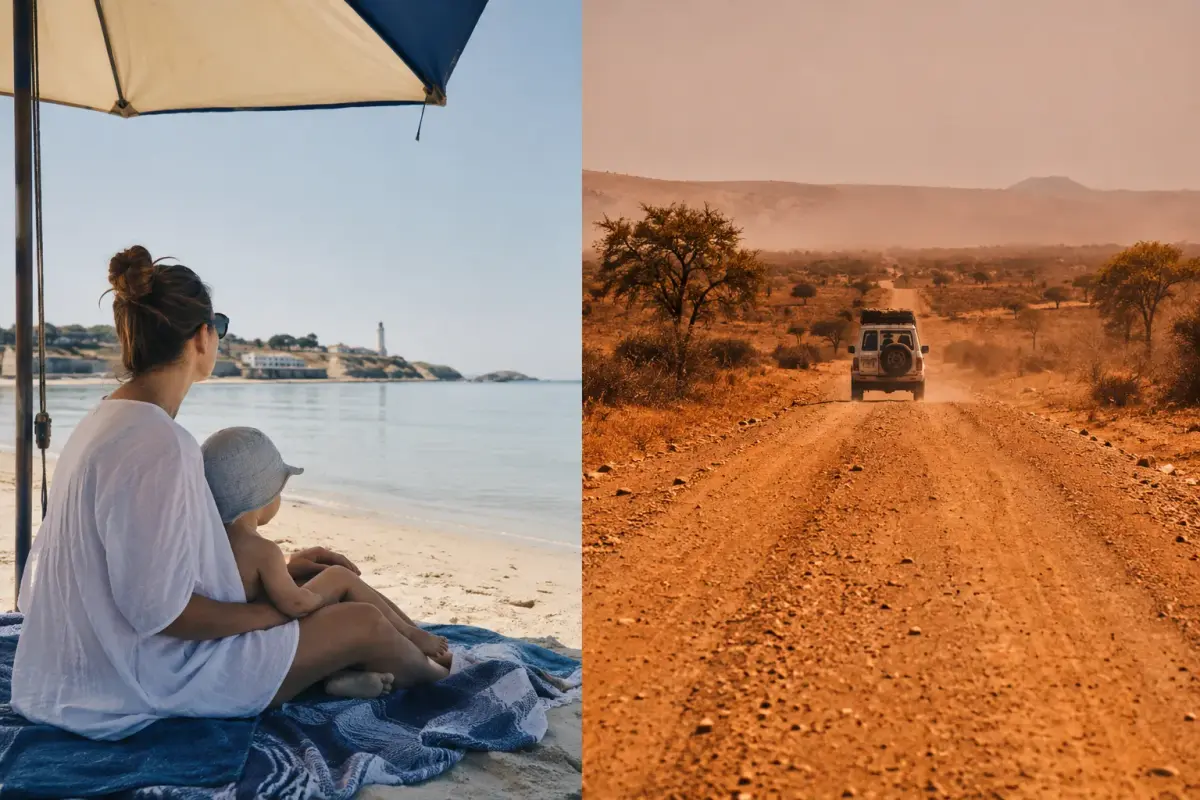
Family travel in Angola with kids is workable but demanding, and the two things that decide the outcome are your children’s ages and your route. Angola is not a dangerous place for families, but it is a country of long distances, strong heat, patchy medical infrastructure outside Luanda and year-round malaria risk, so the coast around Luanda, Mussulo and Benguela is far easier than an inland road trip. Every child travelling needs a travel clinic appointment for malaria prevention, routine vaccines and the yellow fever certificate rules. Expat families do raise children in Luanda successfully, so this is a planning problem, not a no-go.
Key Takeaways
- Malaria is the single biggest health consideration. It is present across much of Angola, children are at higher risk of severe illness, and the parasite is chloroquine-resistant, so chloroquine is not valid prophylaxis. Paediatric dosing must come from a travel clinic.
- A yellow fever certificate is a standard entry requirement, including for children above the usual age threshold. Confirm the current rules and the exact age cut-off with a travel clinic before booking.
- No fresh water swimming. Schistosomiasis (bilharzia) is present, so keep children out of lakes, ponds and rivers. Chlorinated pools and the sea are fine.
- Coast beats interior with under-sixes. Benguela, Lobito and the Mussulo lagoon involve short transfers and pools. Kalandula, Lubango and Iona involve very long drives.
- Travel advisories matter for route planning. The UK government advises against all but essential travel to Cabinda Province, except Cabinda city, and the US advisory of 5 March 2026 sits at Level 2 with a specific recommendation to reconsider travel to greater Luanda because of crime.
- Bring what you depend on. Nappies, formula and specific baby products are not reliably available outside Luanda.
- Verify hotel facilities, do not assume. Larger Luanda hotels often have family rooms and pools, sometimes childcare, but confirm in writing.
- Portuguese is the working language. English is spoken in international hotels and by some guides, rarely elsewhere.
- Budget for a mid to high-cost trip. Luanda has appeared for years in rankings of the most expensive cities for expatriates, and internal flights, guides and hotels add up.
- Medical evacuation cover is a serious question, not a formality, once you leave the capital.
Is Angola Safe for Families With Children?
Angola is broadly safe for families in the ordinary sense: the risks are crime in urban areas, road safety, heat and disease, rather than any specific threat to children. Petty crime in Luanda calls for the same urban caution you would use in any large capital city, and there are regions to avoid entirely.
What the advisories say as of August 2026:
- The UK government advises against all but essential travel to Cabinda Province (except Cabinda city) because of separatist activity, targeted attacks on foreigners and kidnap risk, and against all but essential travel within 1 km of the DRC border in Lunda Norte because of insecurity and banditry.
- The US advisory issued 5 March 2026 keeps Angola at Level 2, Exercise Increased Caution, flagging crime, health issues, civil unrest and landmines, and it specifically recommends reconsidering travel to the greater Luanda metropolitan area due to high levels of crime.
That Luanda note deserves attention precisely because families usually base themselves there. It does not mean the city is off limits, and thousands of foreign families live in it. It does mean you plan differently: private or pre-arranged transport instead of walking with children after dark, low-visibility jewellery and phones, no valuables on show at traffic lights, and hotel or compound-based evenings.
The practical rule for families: treat Angola as a country where you build a controlled bubble around young children, then step outside it deliberately, rather than improvising as you go.
Two further points. Residual landmine risk exists in some rural areas, largely cleared but not zero, which is a strong reason to keep children on established paths, tracks and cleared beaches rather than exploring open bush. And road traffic, not crime, is the most statistically ordinary danger for visiting families anywhere in the region, so child seats and daylight driving matter. For a fuller breakdown, see our guide to whether Angola is safe for travellers right now.
Is Angola Good for Babies and Toddlers, or Better for Older Kids?
Angola suits children aged roughly seven and up considerably better than babies and toddlers. The reason is not danger but tolerance: older children handle long transfers, heat, repellent routines and unfamiliar food, and they get something out of the sights.
Choose Angola with under-fives only if you are relocating, visiting family, or staying put on the coast in one hotel with a pool. In that setup it is very manageable.
Reconsider Angola with under-fives if your plan involves multi-day inland driving, camping, or several domestic flights. Long unshaded travel days plus malaria prophylaxis timing plus limited paediatric care outside the capital is a lot of stacked risk for a holiday.
Ages 7 to 12 are the sweet spot. Old enough for boat trips, waterfalls and wildlife, young enough to be enchanted by all of it, and able to follow bite-prevention rules without a fight.
Teenagers do well too, especially if there is surf, diving, photography or football involved.
What Vaccinations Do Kids Need for Angola, and What About Malaria?
Children need a travel clinic appointment ideally six to eight weeks before departure, covering routine childhood vaccinations, the yellow fever certificate requirement and malaria prevention. This article gives general precautions only. Dosing, drug choice and the yellow fever age threshold must come from a qualified travel health provider.
Yellow fever. A yellow fever certificate is a standard entry requirement for Angola, including for children above the usual minimum age. The age cut-off and any exemption certificate procedure change, so confirm the current position with a travel clinic and your own government’s travel advisory before you book flights.
Malaria. This is the decisive medical issue for family travel in Angola with kids.
- Malaria is present across much of the country, including areas families visit.
- Children are at higher risk of severe illness than adults.
- The parasite is chloroquine-resistant, so chloroquine is not a valid prophylaxis for Angola.
- Paediatric prophylaxis must be prescribed and weight-dosed by a clinic. Never split adult tablets to improvise a child’s dose.
- Any fever in a child during the trip or in the weeks after returning is a medical emergency until malaria has been ruled out. Say “we have been to Angola” first, every time.
Bite prevention carries equal weight to tablets:
- Repellent containing 20 to 50 percent DEET, applied to exposed skin, reapplied as directed, and checked with your clinic for the youngest children.
- Long sleeves and long trousers at dawn and dusk, when the mosquitoes that transmit malaria bite.
- An insecticide-treated mosquito net over each child’s bed, tucked in, even in air-conditioned rooms.
- Rooms with intact screens and working air conditioning where possible.
Water and swimming. Schistosomiasis (bilharzia) is present in Angola. Children should not swim, paddle or wade in fresh water such as lakes, ponds, dams or rivers. Chlorinated pools and the open sea are fine. Do not drink tap water: use sealed bottled or properly treated water, including for brushing teeth and mixing formula.
Add basic traveller’s diarrhoea planning, oral rehydration sachets, sun protection and a small paediatric first aid kit. Our overview of vaccinations and health preparation for Angola covers the broader picture, and cover matters too: read up on what Angola travel insurance should include, paying attention to medical evacuation, because specialist paediatric care outside Luanda is limited.
Do Kids Need Visas to Visit Angola?
Yes, children need their own entry permission and their own passport, with the same requirements as adults. Angola has substantially eased entry in recent years, including an e-visa system and visa-free tourist entry for a number of nationalities, but the rules and permitted stay lengths change, so verify the current position with the official Angolan immigration portal and your own government’s travel advisory before booking.
Extra paperwork points that specifically affect families:
- Passport validity for every child, including infants, with enough remaining months beyond your travel dates.
- Single-parent or guardian travel: carry a birth certificate and, where one parent is absent, a notarised consent letter. Border officials in the region commonly ask.
- Different surnames between parent and child are worth documenting.
- Yellow fever certificates for each family member who needs one, kept with the passports.
Common mistake: applying for the adults and assuming a baby travels on a parent’s document. It does not.
What Is the Best Time of Year to Take Kids to Angola?
The best window for family travel in Angola with kids is the dry, cooler season from roughly May to October, and within that, June to September is the most comfortable. Less rain, lower humidity, fewer mosquitoes in many areas and far better road conditions.
| Season | Months | What it means with children |
|---|---|---|
| Dry and cooler (cacimbo influence on the coast) | May to October | Best overall. Passable roads, comfortable beach days, easier wildlife viewing |
| Shoulder | April, November | Mixed. Some rain, greener landscapes, fewer visitors |
| Rainy and hot | November to April | Harder. Heavy downpours, humidity, mud on rural roads, higher heat stress |
Coastal areas benefit from the cool Benguela current, so Luanda, Benguela and Namibe stay milder than the interior. The Huíla highlands around Lubango are genuinely fresh, which some families find a relief with small children. Whatever the month, plan the day around the heat: outdoors early, pool or indoors from late morning to mid-afternoon, back out before sunset while remembering that dusk is a bite-prevention moment.
How Long Should a Family Trip to Angola Be?
Plan 10 to 14 days for a first family holiday, and no less than a week. Angola is a big country with long distances and limited internal transport, so short trips get eaten by transfers.
Three realistic shapes:
- 7 to 8 days, coast only. Luanda plus the Mussulo lagoon plus a day trip south. Easiest option with under-sixes.
- 10 to 12 days, coast plus one region. Luanda, then a domestic flight to Benguela and Lobito for beaches, then home. This is the best balance for most families.
- 14 days or more, adding the interior. Kalandula waterfalls in Malanje, or the Lubango highlands and Serra da Leba. Suitable for children roughly nine and up who cope with 6 to 8 hour drives.
Decision rule: if your children are under six, one or two bases across the whole trip. If they are over nine, three bases maximum. Nobody enjoys packing every second night in 30 degree heat.
Best Family-Friendly Hotels and Resorts in Angola
The most family-workable accommodation is concentrated in Luanda and along the coast, where larger hotels often offer family rooms, swimming pools and occasionally childcare or kids’ activities. Verify exactly what is provided rather than assuming, because listings and reality diverge and staffing changes.
Ask these questions before you book, in writing:
- Are interconnecting or family rooms genuinely available for your dates, and what is the maximum occupancy?
- Is there a fenced or supervised pool, and is it chlorinated and maintained?
- Are cots, high chairs and a kettle or bottle-warming option available?
- Do rooms have working air conditioning and intact window screens? Can you use your own mosquito net?
- Is there on-site catering late in the evening, for the day your flight lands at an awkward hour?
- Is there a reliable arrangement for airport transfer, rather than you finding a taxi with tired children?
For the coast, Benguela and its surrounding beaches offer the calmest family rhythm in the country, and our roundup of the best beaches in Angola helps you match a stretch of sand to your children’s swimming ability. Relocating families typically end up in serviced apartments or gated compounds in Luanda, where the pool, generator and security arrangements matter more than the decor.
What Activities Can Kids Do in Angola?
Angola’s family activities are mostly outdoors and water-based, with a strong side order of wildlife and dramatic landscape. There are few purpose-built children’s attractions, so the trip works best when built around beaches, boats and short excursions.
Ideas that land well with children:
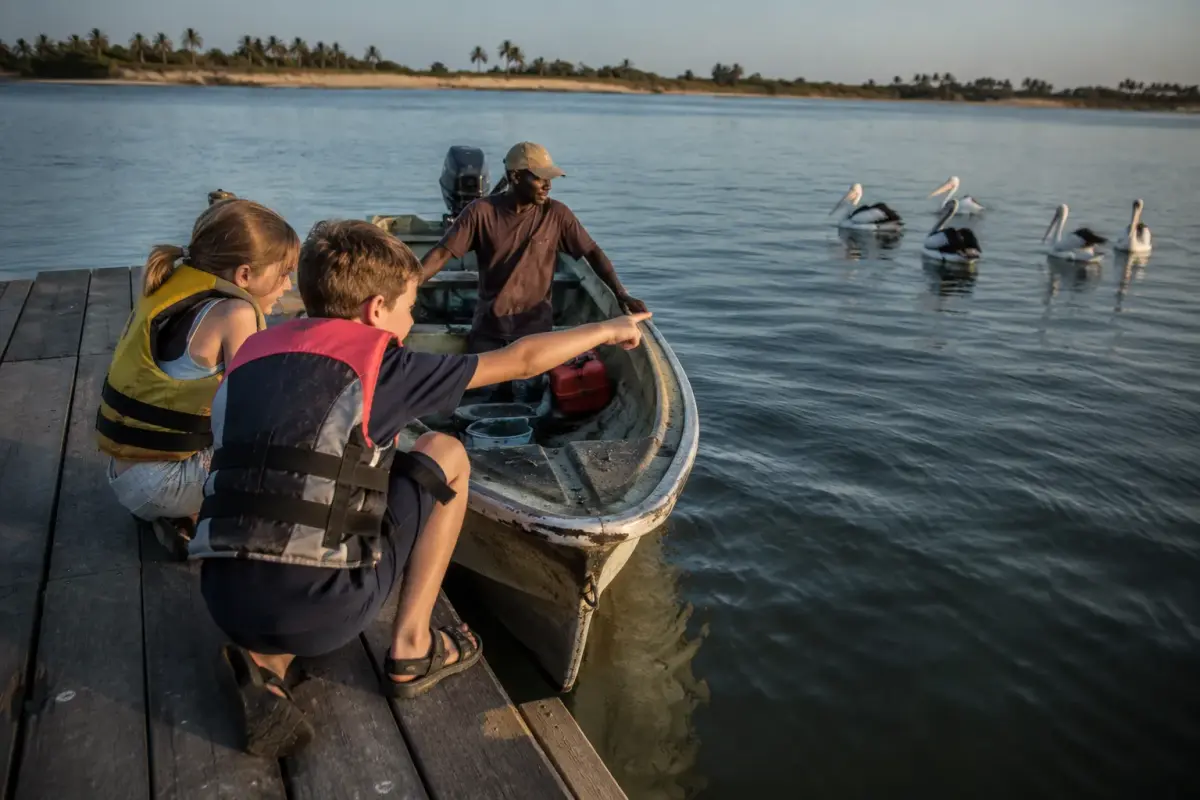
- Boat trip to the Mussulo lagoon near Luanda, with sheltered shallow water, sandbanks and birdlife. Excellent for younger children.
- Beach days around Benguela and Lobito, including calm bays where small swimmers can stand up.
- Wildlife spotting in Kissama, the most accessible park from the capital and a manageable overnight or long day out. Our guide to Kissama National Park safaris explains what you realistically see.
- The Miradouro da Lua viewpoint south of Luanda, a lunar-looking erosion landscape that children find genuinely strange and that requires no hiking.
- Fortaleza de São Miguel and the Marginal promenade in Luanda, for cannons, sea views and a run around.
- Kalandula waterfalls in Malanje, spectacular and loud, with viewpoints that need close supervision because railings are limited.
- Football and music. Angolans are warm with children, and a ball in a park does more for connection than any guided tour. Semba and kuduro are everywhere, and older kids often love a dance lesson.
Skip any activity that involves fresh water contact, however inviting it looks. That rules out river paddling below waterfalls.
How Do You Get Around Angola With Young Children?
For families, the two workable options are pre-arranged private vehicles with a driver and domestic flights between the main cities. Self-driving is possible for experienced expatriates but adds stress, and public minibuses are not suitable for small children.
- Private driver or a car with a driver. Best value for time, safest with children, and it means someone else deals with checkpoints, fuel stops and navigation.
- Domestic flights. Use them to skip the punishing Luanda to Benguela or Luanda to Lubango legs. Schedules change, so build in buffer days and never book a same-day international connection.
- Child car seats are not standard. If you need one, bring it. Rental and transfer providers rarely supply them reliably.
- Long-drive discipline. Break drives every two hours, carry more water than seems necessary, bring shade for windows, and travel in daylight. Rural night driving with unlit vehicles and livestock is a real hazard.
- Journey times, not distances. Road quality varies enormously. A 300 km leg can take five hours or nine.
Edge case worth naming: if a child gets carsick, a long inland loop over mountain passes such as Serra da Leba will define your holiday. Fly instead.
What Is the Food Like in Angola for Picky Eaters?
Angolan food is generally kid-friendly in structure: grilled fish and chicken, rice, beans, plantain, potatoes and bread appear on most menus, and the cuisine is not heavily spiced with chilli by default. Picky eaters usually survive well on the coast.
Reliable options for children:
- Grilled fish and prawns, plentiful along the Atlantic coast
- Muamba de galinha, the national chicken dish, mild in most versions
- Funge, a smooth cassava or maize staple that some children like and others reject outright
- Calulu and kizaca, more adventurous, worth offering
- Rice, beans, chips, fresh bread and tropical fruit as the universal fallback
- Portuguese-influenced bakeries and cafés in Luanda, Benguela and Lubango
Practical rules: stick to cooked, hot food, peel your own fruit, be cautious with salads and ice made from tap water, and use bottled or treated water throughout. Outside Luanda, imported branded snacks and specific baby foods are unreliable, so carry a stash. In restaurants, portions are often large and sharing is normal, which suits families.
Are There English Speakers in Angola to Help Tourists?
Portuguese is the official language and the one that actually gets things done. English is spoken in international hotels, by some tour guides and drivers, and among parts of the expatriate business community, but you should not count on it in shops, pharmacies, clinics or on the road.
For families, that has three consequences:
- Book guides and drivers who confirm they speak English. It is worth paying for.
- Carry written Portuguese phrases for medical situations, including your children’s allergies, current medication and the sentence explaining that you have been in a malaria area.
- Download offline translation and a Portuguese phrasebook before you fly. Alongside Portuguese, Bantu languages such as Umbundu, Kimbundu, Kikongo and Chokwe are widely spoken.
A little Portuguese from a child gets an outsized welcome. Angolans tend to be notably warm towards families, and “bom dia” from a seven-year-old opens doors.
How Much Does It Cost to Travel to Angola With a Family?
Angola is a mid to high-cost destination, not a budget one. Luanda has for years featured in rankings of the world’s most expensive cities for expatriates, and family travel there carries real costs: international flights, domestic flights or a private driver, hotels with pools, guides, and imported groceries.
The main budget lines to plan, without invented figures:
- Flights for each family member, usually the largest single item. Children rarely travel much cheaper on long-haul.
- Accommodation in Luanda, where hotel rates skew business-traveller high. Coastal towns are usually gentler.
- Transport, either domestic flights or a driver with a vehicle, charged by the day.
- Guides and park fees for excursions such as Kissama or Kalandula.
- Travel insurance with strong medical and evacuation cover, priced by the family.
- Contingency, at least 10 to 15 percent, for a changed flight or an unplanned clinic visit.
Cash matters: card acceptance is limited outside larger hotels and city centres, so carry kwanza for daily spending and check current exchange arrangements with an official source before travelling.
What Are Common Travel Mistakes Families Make in Angola?
The most damaging mistakes are medical and logistical, not cultural. Nearly all of them are avoidable at the planning stage.
- Improvising malaria prevention. Splitting adult tablets, relying on chloroquine, or skipping prophylaxis because “it is only a week”. All three are dangerous with children.
- Treating bite prevention as optional. Tablets alone are not the strategy. Nets, covered skin at dusk and repellent complete it.
- Letting children paddle in a river or lake. Bilharzia does not care that it looked clean.
- Underestimating drive times and building an itinerary that has children in a vehicle for six of every ten daylight hours.
- Arriving without nappies, formula or a familiar medicine. Availability outside Luanda is unreliable.
- Assuming hotel childcare exists because a website implies it.
- Ignoring regional advisories, particularly for Cabinda Province and border zones, when planning a route.
- Booking a tight same-day connection onto a domestic flight.
- Buying insurance without checking medical evacuation and paediatric cover.
What to Pack for Kids Travelling to Angola
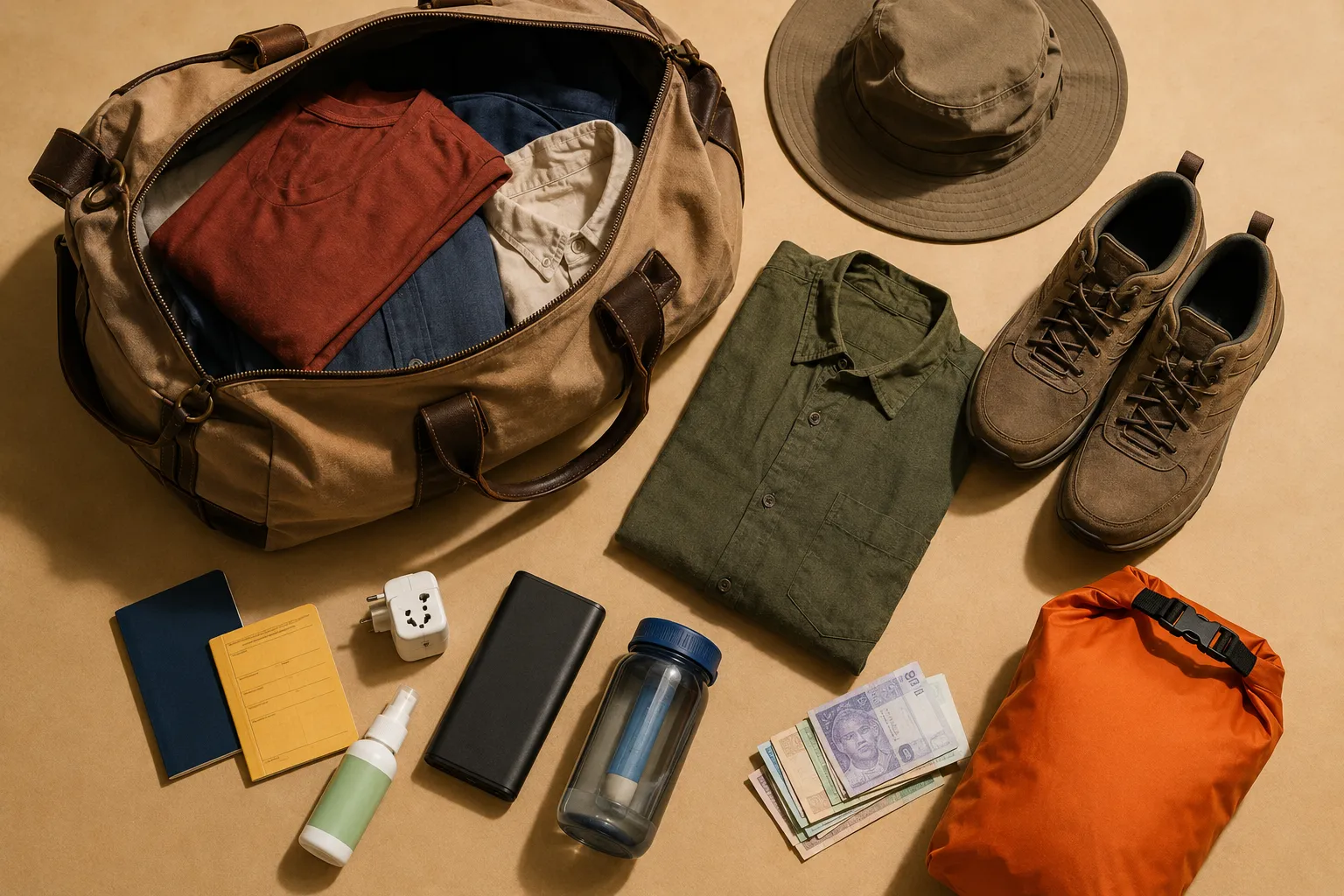
Pack for heat, mosquitoes, sun and medical self-sufficiency, and assume you cannot buy a specific brand once you leave the capital.
Health and protection
- Prescribed paediatric malaria prophylaxis, in original packaging, with the prescription
- Insecticide-treated mosquito net per child, plus a repair patch
- Repellent with 20 to 50 percent DEET, quantity checked with your clinic for young children
- High-factor sunscreen, wide-brimmed hats, UV swim shirts
- Oral rehydration sachets, thermometer, plasters, antiseptic, any regular medication in duplicate
- Copies of vaccination records and yellow fever certificates
Clothing and gear
- Long-sleeved lightweight tops and long trousers for dawn and dusk
- Closed shoes plus water shoes for rocky beaches
- Car seat if you need one, and a lightweight carrier rather than a pushchair for uneven ground
- Refillable bottles and a filter or purification method
Baby specifics
- Nappies, wipes, formula and familiar food pouches in the quantities you actually need, since these are not reliably available outside Luanda
- Sterilising tablets and a bottle brush
Our full Angola packing list covers the adult side and the electrical details, including the 220V supply and European C and F plug types.
Conclusion
Family travel in Angola with kids rewards planning and punishes improvisation. The country is not hostile to children, and the welcome families receive is one of its real pleasures, but Angola asks more of parents than a package destination: long distances, real heat, a malaria question that must be answered properly, and medical infrastructure that thins out fast once you leave the capital.
Your next four steps:
- Book a travel clinic appointment six to eight weeks out for every child, covering malaria prophylaxis, routine vaccines and the yellow fever certificate rules.
- Check your own government’s travel advisory and plan your route around the current regional warnings before paying for anything.
- Choose the coast if your children are young. Benguela, Lobito and Mussulo over an inland loop, with two bases maximum and 10 to 14 days total.
- Sort insurance with genuine medical and evacuation cover, and confirm hotel family facilities in writing rather than trusting a website.
Get those four right and Angola becomes what it should be for a family: empty beaches, strange lunar landscapes, elephants an hour from a capital city, and children who come home talking about a country almost none of their classmates could point to on a map.
References Angola - https://www.gov.uk/foreign-travel-advice/angola Angola - https://travel.state.gov/en/international-travel/travel-advisories/angola.html Travel Advisories - https://travel.state.gov/en/international-travel/travel-advisories.html Angola - https://govdiff.njk.onl/update/2026-05-28T11:50:00+01:00/www.gov.uk/foreign-travel-advice/angola
Free help from our team in Angola
Planning Angola with kids?
Tell us the ages of your children and what you want to do. We plan shorter drives, family-friendly hotels and a guide from our own team who is used to travelling with children.
- Local team in Angola
- No obligation, nothing to pay
- Reply by email or WhatsApp
Want to keep this guide? We email you the key points with a link to every section.
Frequently asked questions
Is Angola safe for children specifically?
Angola presents no child-specific threat, but the general risks apply more sharply to children: malaria, heat, road safety and limited paediatric care outside Luanda. Follow your own government's travel advisory, avoid Cabinda Province beyond the city and the DRC border zone in Lunda Norte, and apply normal big-city caution in Luanda.
Can babies take malaria tablets for Angola?
Some prophylaxis options exist for infants and young children, but choice and dosing depend on weight and age and must be prescribed by a travel clinic. Never split adult tablets. Chloroquine is not effective in Angola because the parasite is chloroquine-resistant.
Do children need a yellow fever certificate for Angola?
A yellow fever certificate is a standard entry requirement, and it applies to children above the usual minimum age. The exact threshold and any exemption process should be confirmed with a travel clinic and the official Angolan requirements before you book.
Can kids swim in Angola?
Yes, in the sea and in chlorinated swimming pools. No, in fresh water. Lakes, rivers, ponds and dams carry schistosomiasis (bilharzia) risk, so keep children out of them entirely, including for paddling.
Where is easiest for a first family trip to Angola?
The coast. Luanda as a base with the Mussulo lagoon nearby, then Benguela and Lobito for calm beaches. Short transfers, hotels with pools and cooler air make this considerably easier than an inland circuit to Kalandula or Lubango.
Is Angola suitable for a family relocation with school-age children?
Many expatriate families live in Luanda with children, so it is clearly viable. The practical work is in schooling, housing with reliable power and water, healthcare arrangements including evacuation cover, and a household malaria routine that everyone follows year-round.