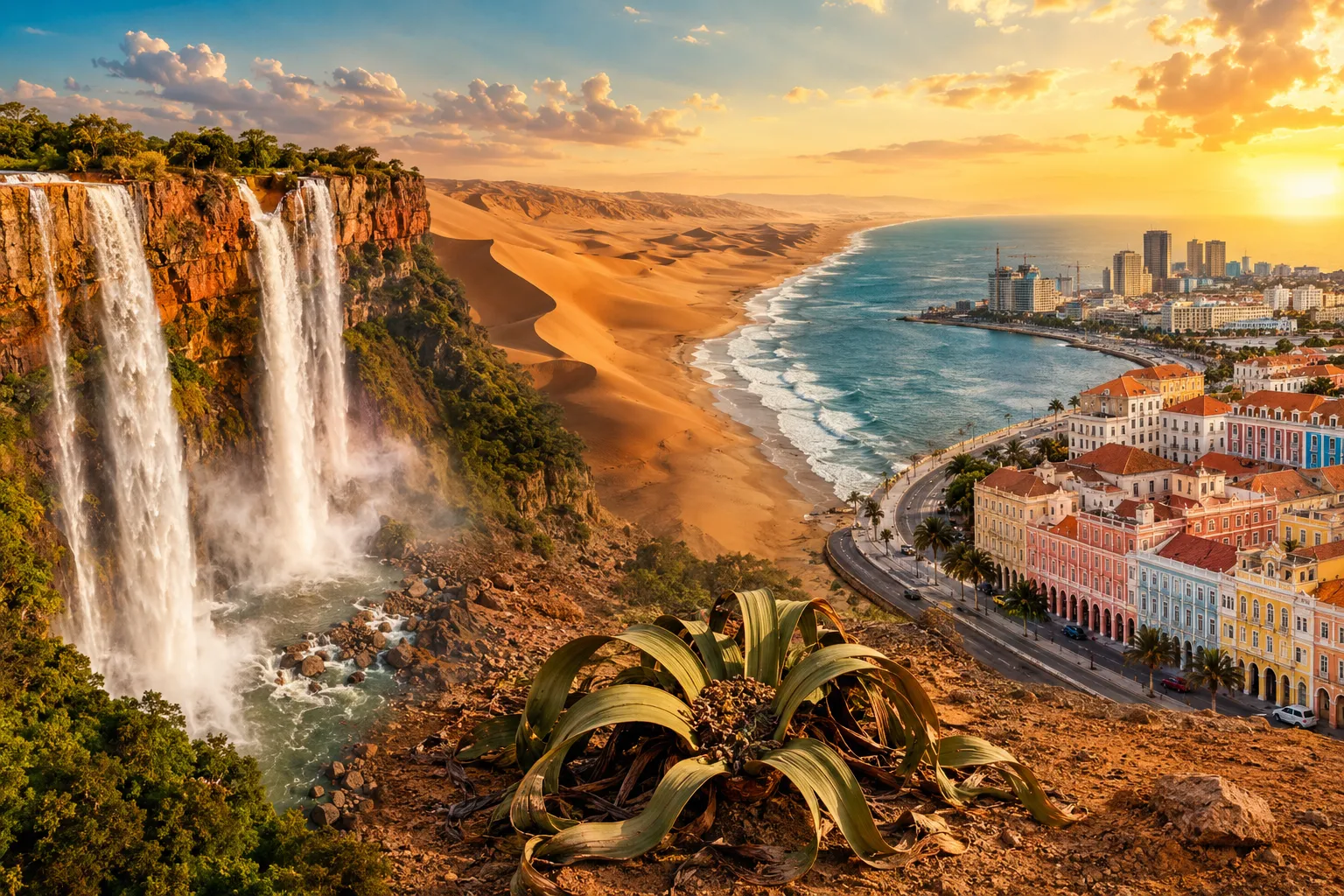
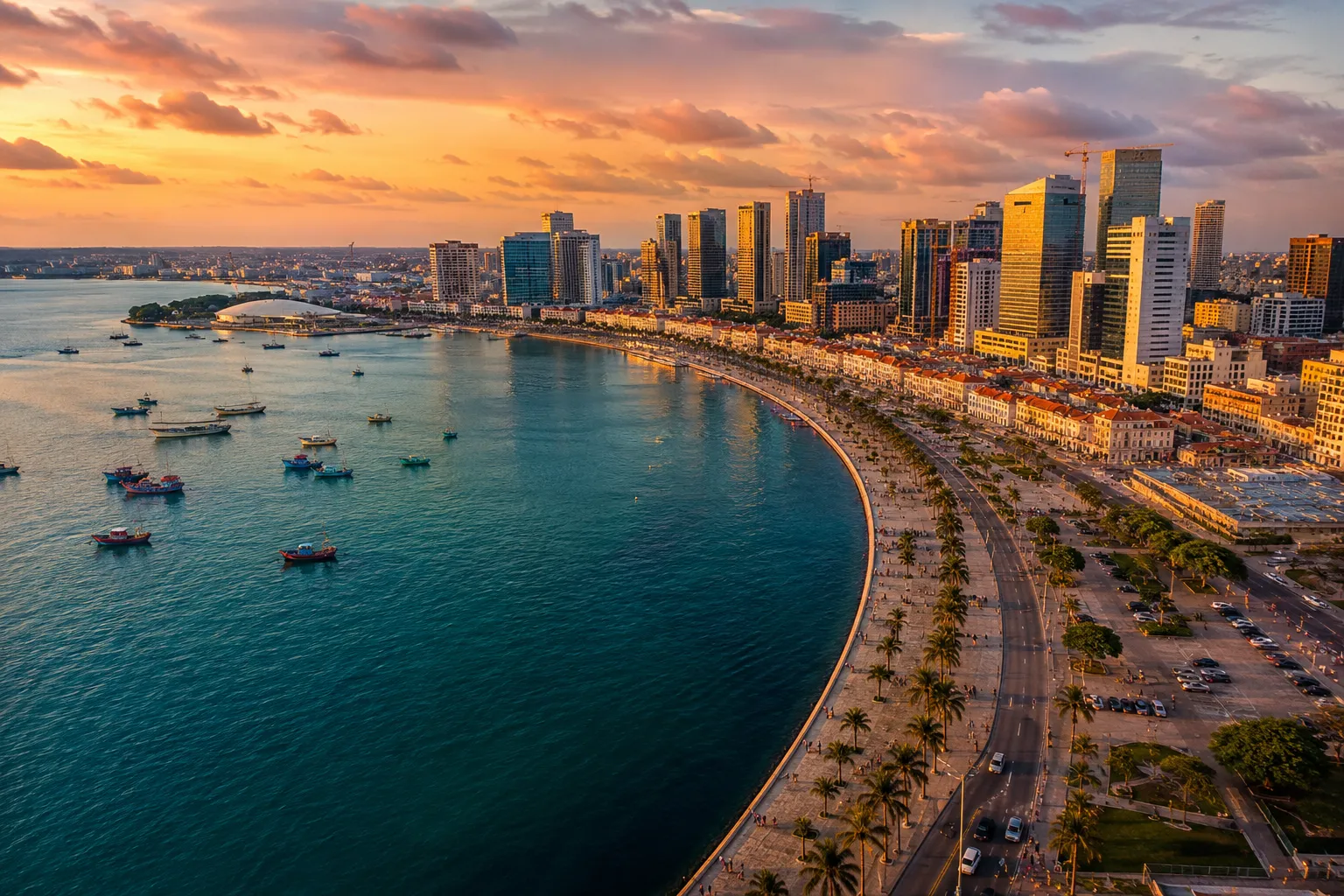
Luanda is one of the most expensive cities on the African continent, yet it stays surprisingly under the radar for most European travellers. That gap between price tag and awareness is exactly what makes this Angolan capital such a curious destination in 2026: sky-high oil-money towers next to pastel Portuguese façades, empty white beaches thirty minutes from downtown, and a music scene (kizomba, semba, kuduro) that shaped half the dance floors in Lisbon and Brussels.
This luanda travel guide is written for Dutch and Belgian travellers who want the honest version: what it costs, whether it’s safe, how many days you actually need, and what’s worth your time once you land.
Quick Answer
Luanda is Angola’s coastal capital and the main entry point for any trip to the country. Plan for 2 to 4 days, budget more than you would for most African capitals (Luanda is genuinely pricey), visit between May and October for dry weather, and always check the current visa and vaccination rules before booking. English is limited, so a few Portuguese phrases help enormously.
Key Takeaways
- Best time to visit: May to October (dry season, 23 to 28°C, low humidity) [3]
- Length of stay: 2 to 4 days is enough for the city itself; add days for Mussulo, Cabo Ledo or Kissama
- Budget level: High by African standards; mid-range hotels roughly 50,000 to 120,000 Kz per night [2]
- Currency: Angolan kwanza (AOA); carry cash, cards work mainly in upscale places [5]
- Safety: Generally fine in main areas by day, be cautious after dark and avoid informal neighbourhoods without a local [4]
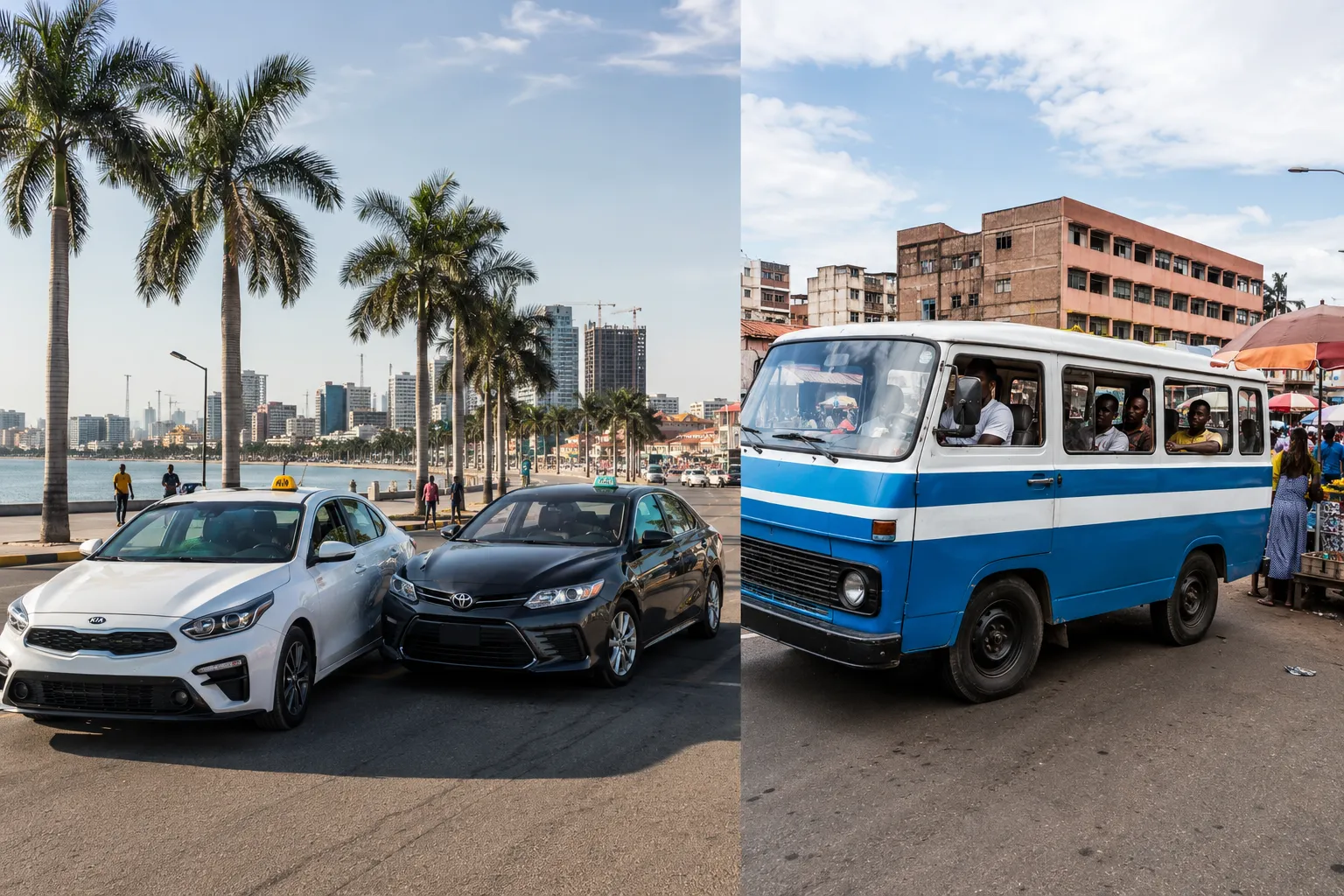
- Transport: Use registered taxis or ride-hailing apps, not the blue-and-white candongueiro minibuses [1]
- Language: Portuguese; English is rare outside hotels [7]
- Vaccinations: Yellow fever is typically required; malaria prophylaxis strongly advised (verify with a travel clinic)
- Visa: Many EU nationalities enjoy visa-free or e-visa access, but rules change; always verify
Why Visit Luanda
Luanda rewards curious travellers, not checklist tourists. It’s the beating heart of Angola: a chaotic, glamorous, contradictory city where cranes tower over colonial forts and street vendors sell grilled corn next to designer boutiques.
Come here for the atmosphere, not the polish. Highlights include:
- Portuguese colonial heritage in the old town (Baixa) and Fortaleza de São Miguel
- Atlantic beaches on Ilha de Luanda and, just outside town, Mussulo and Cabo Ledo
- Music and nightlife: the birthplace of kizomba and semba
- A launch pad for the rest of Angola: Kalandula, Kissama, Benguela, Lubango
If it’s your first trip to the country, pair this guide with our broader piece on travelling to Angola for the full picture.
What’s the Best Time to Visit Luanda?
The best time to visit Luanda is the dry season, from May to October, when temperatures sit between 23 and 28°C and humidity drops noticeably [3]. Skies are clear, mosquitoes are less aggressive, and day trips to Mussulo or Kissama are far more enjoyable.
The rainy season runs roughly November to April. It’s not a washout (showers are often short and heavy), but humidity climbs, roads flood, and dirt tracks outside the city become tricky. If you visit then, expect green landscapes and fewer crowds, but plan flexibly.
For a deeper dive on seasons across the country, see our guide to the best time to visit Angola.
How Many Days Should I Spend in Luanda?
Two to four days is the sweet spot for most travellers. One day for the historic core (Fortaleza, Marginal, Baixa), one day for a beach or island trip (Mussulo or Ilha de Luanda), and one to two days as a buffer for museums, food and nightlife.
Choose your length like this:
- 1 to 2 days: Layover or start of a longer Angola trip
- 3 to 4 days: Standard city stay with one day trip
- 5+ days: Only if you’re using Luanda as a base for multiple excursions or business
Beyond four days the city gets expensive fast, and Angola’s real magic (Kalandula, Lubango, Namibe) waits elsewhere.
Getting There and Around
Are There Direct Flights to Luanda From Major Cities?
Yes, though “direct” mostly means from Lisbon. TAAG Angola Airlines and TAP Portugal fly non-stop from Lisbon to Luanda almost daily. From the Netherlands and Belgium there are no direct flights: typical routings go via Lisbon, Paris (Air France), Brussels (Brussels Airlines seasonally, verify current schedule), Istanbul (Turkish Airlines) or Addis Ababa (Ethiopian).
Luanda’s international airport is Dr. António Agostinho Neto International (NBJ), about 40 km southeast of the centre. Since March 2026 it handles all scheduled commercial flights; the older Quatro de Fevereiro (LAD) no longer does. Allow 45 to 90 minutes for the drive into town.
Affiliate disclosure: Some links in this guide are affiliate links (marked with rel=“sponsored nofollow”). If you book through them we may earn a small commission at no extra cost to you.
You can compare current routes and fares via our booking partner for flights to Luanda. Always check TAAG’s official site as well for local promotions.
How Do I Get Around Luanda: Public Transport vs Taxis?
Skip the public buses and candongueiros. For tourists, the safe and practical options are registered taxis and ride-hailing apps [1]. Angola Expert and other local sources specifically advise foreign visitors to avoid the blue-and-white minibuses due to poor maintenance and accident risk [1].
Your realistic transport options:
- Ride-hailing apps (Yango, Heetch, T’Leva): most convenient, cashless, English-friendly interfaces
- Hotel taxis: pricier but reliable, especially at night
- Rental with driver: common for full-day trips or airport transfers
- Self-drive: not recommended unless you know the city; traffic is aggressive and signage limited
Traffic jams (locally called engarrafamentos) are legendary. Give yourself buffer time, especially between 7 to 9am and 5 to 8pm.
Is Luanda Expensive? A Cost Breakdown
Yes, Luanda is expensive, and it has been ranked among the world’s costliest cities for expats for years. That said, savvy travellers can keep things reasonable.
Rough daily budget (mid-range, 2026 estimates):
| Category | Mid-range estimate (per day) |
|---|---|
| Hotel (3-star, private room) | 50,000 to 120,000 Kz (~€55 to €135) [2] |
| Restaurant meals | 18,000 to 50,000 Kz (~€20 to €55) [2] |
| Local transport (taxis/apps) | 10,000 to 25,000 Kz |
| Attractions / museums | Low; often free or symbolic fee |
Exchange rates fluctuate; check the Banco Nacional de Angola for current kwanza rates before you go.
How Expensive Is Luanda Compared to Other African Cities?
Luanda is consistently more expensive than Nairobi, Cape Town, Accra or Dakar for hotels, restaurants and imported goods. Prices are closer to Lagos or Libreville. Blame limited domestic production, high import dependency and an oil-driven expat economy.
Money-saving tips:
- Eat where locals eat (small restaurantes populares, not hotel restaurants)
- Skip mini-bar and hotel laundry
- Use ride-hailing apps instead of hotel-arranged transfers
- Withdraw kwanza from ATMs in the city rather than exchanging at the airport [5]
What Currency Do I Need and Where to Exchange Money?
You need Angolan kwanza (AOA). Bring some euros or US dollars as a backup, but plan to withdraw kwanza from ATMs once in the city, where rates are better than at the airport [5].
- Visa and Mastercard work at major hotels, upscale restaurants and larger supermarkets [5]
- Many smaller places are cash only
- ATMs (called Multicaixa) are common in Luanda; less reliable elsewhere in Angola
- Notify your bank before travel to avoid card blocks
For deeper practical detail see our article on money in Angola.
Is Luanda Safe for Tourists Right Now?
Luanda is generally safe in the main tourist and business areas during daytime, but requires normal big-city street smarts and extra caution after dark [4]. The main risks are opportunistic theft (phone snatching, bag grabs), scams, and traffic accidents, not violent crime against tourists.
Sensible safety rules:
- Don’t flash phones, jewellery or wads of cash
- Use registered taxis or apps, especially at night [4]
- Avoid musseques (informal settlements) unless with a trusted local guide
- Keep a photocopy of your passport; carry the original only when needed
- Watch out for aggressive driving as a pedestrian
For up-to-date official guidance, always check your government’s official travel advice (for example the UK FCDO or the US State Department) before departure. For a fuller picture, read our dedicated overview: is Angola safe.
Top Things to Do in Luanda
The must-see attractions in Luanda are the Fortaleza de São Miguel, the Marginal promenade (Baía de Luanda), Ilha do Cabo, the National Slavery Museum, and a day trip to Mussulo Island [6][3].
City highlights:
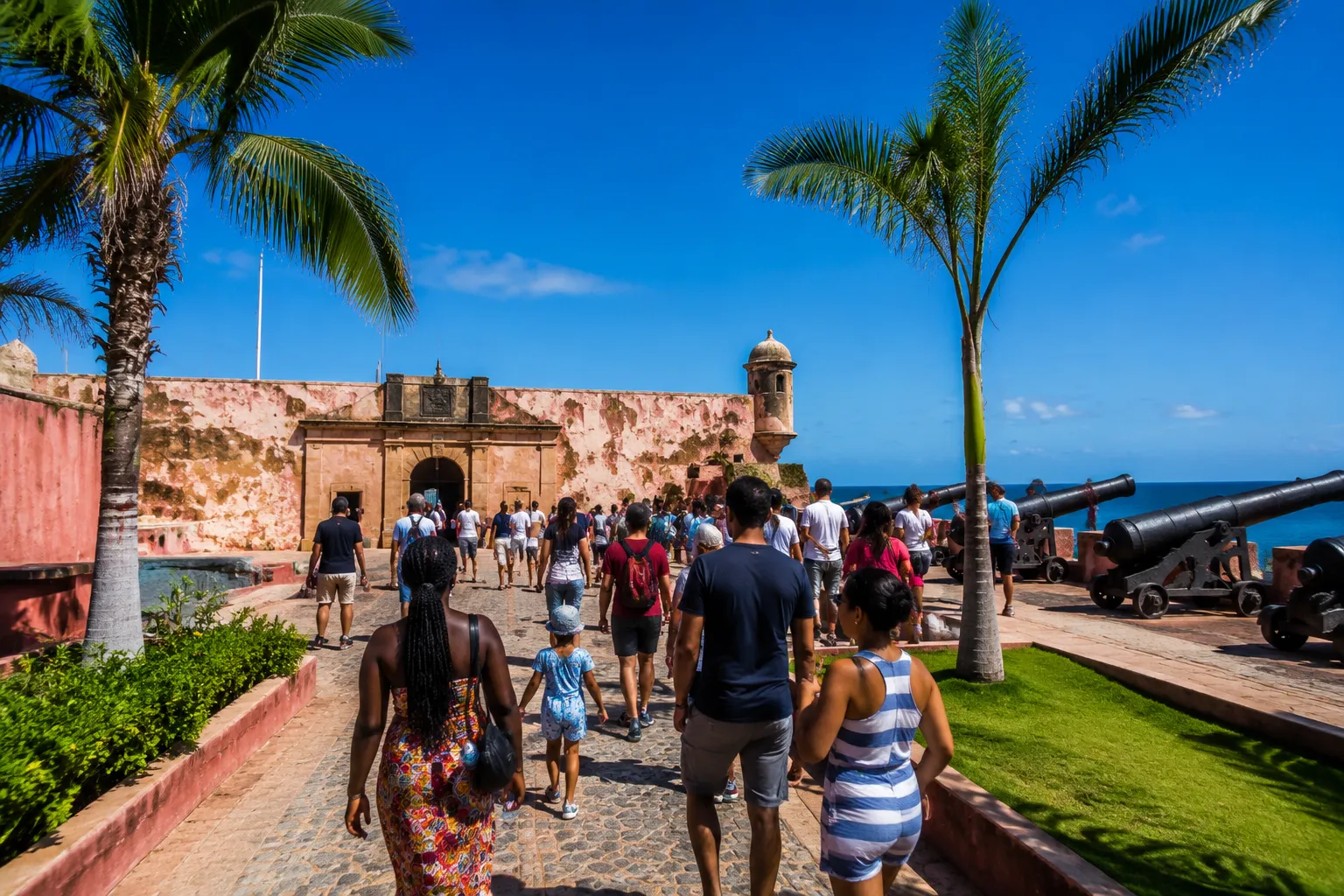
- Fortaleza de São Miguel: 16th-century Portuguese fort with sweeping bay views and a military museum
- Marginal (Avenida 4 de Fevereiro): palm-lined seafront promenade, perfect at sunset
- Baixa de Luanda: colonial old town, pastel façades, colonial-era churches
- Museu Nacional da Escravatura: small but powerful museum on the transatlantic slave trade [6]
- Mercado do Benfica: crafts, wood carvings and textiles (better prices than downtown)
- Ilha do Cabo / Ilha de Luanda: sandbar with beach bars and nightlife [6]
Day trips from Luanda:
- Mussulo: lagoon peninsula, reachable by boat, white sand and calm water [3]
- Cabo Ledo: surf beach roughly 2 hours south [3]
- Miradouro da Lua: “moon landscape” viewpoint on the road to Cabo Ledo
- Kissama (Quiçama) National Park: closest safari option, wildlife reintroduced through Operação Arca de Noé [3]
For excursions and guided tours you can browse options through our partner for Angola tours and day trips. Cross-reference with local operators once on the ground.
More inspiration in our overview of things to do in Angola.
Where to Stay: Best Neighborhoods in Luanda
The best neighbourhoods for tourists are Ingombota (central, near the Marginal), Miramar (upscale, embassies, sea views), and Alvalade (leafy, residential, quieter). Business travellers often stay in Talatona, a modern district south of the centre.
| Area | Best for | Vibe |
|---|---|---|
| Ingombota / Baixa | First-time visitors | Central, walkable, historic |
| Miramar | Comfort seekers | Upscale, quiet, sea views |
| Alvalade | Longer stays | Residential, cafés |
| Talatona | Business trips | Modern, malls, hotels |
| Ilha de Luanda | Nightlife | Beach bars, restaurants |
Mid-range three-star hotels typically run 50,000 to 120,000 Kz per night [2]. International chains (Intercontinental, Epic Sana, Radisson Blu) are pricier but reliable for first-time visitors. Compare hotels in Luanda by area, star class and guest rating, including our list of the best hotels in Luanda. Always read recent reviews.
What’s the Food Scene Like in Luanda?
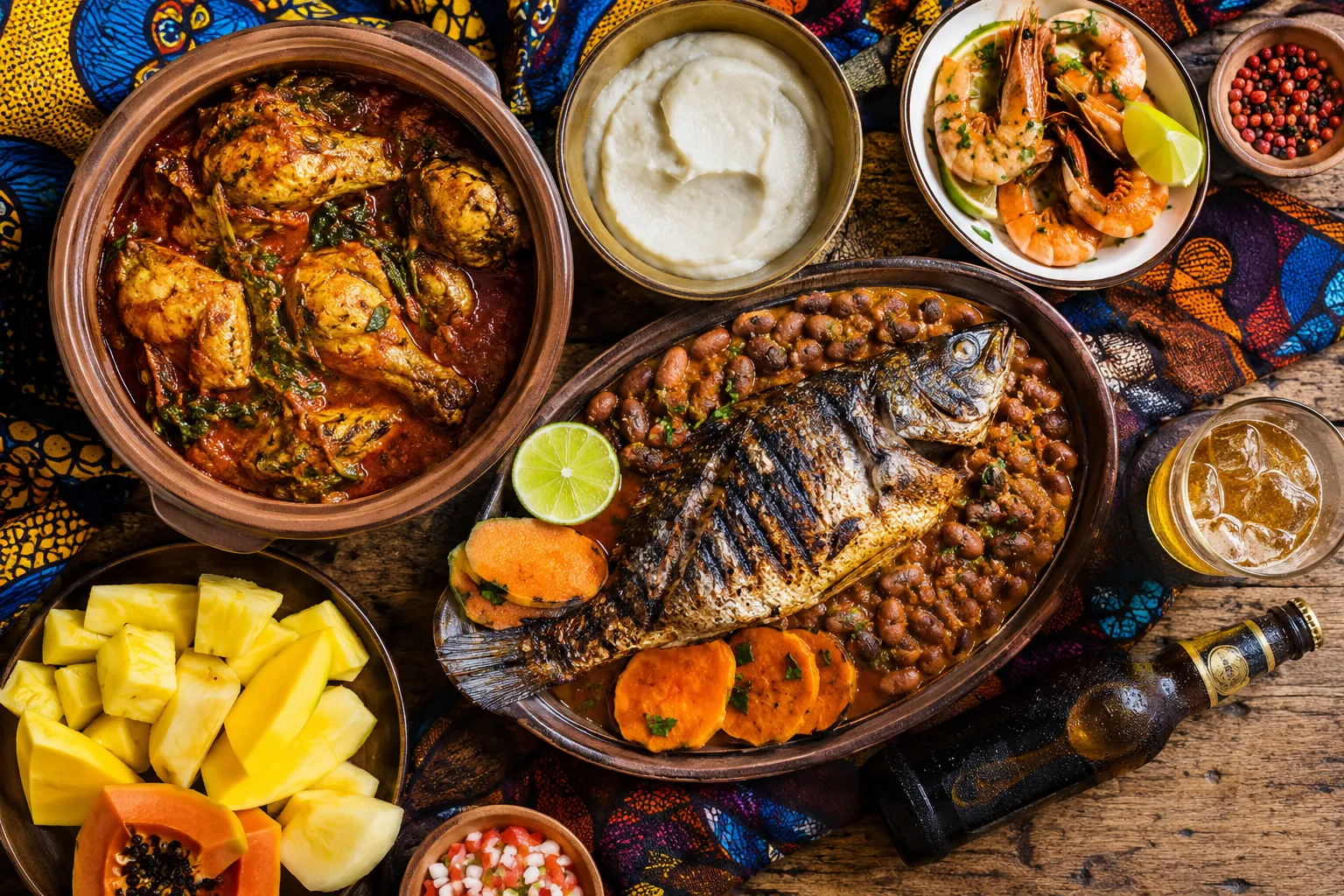
Luanda’s food scene is a mix of Angolan classics, Portuguese heritage, and fresh Atlantic seafood. The city takes eating seriously, and long lunches are a genuine local institution.
Dishes to try:
- Muamba de galinha: national dish, chicken stew with palm oil, okra and chilli [7]
- Mufete: grilled fish platter with beans, sweet potato and cassava
- Funge: cassava or corn porridge, the staple side
- Calulu: dried fish or meat stew with vegetables
- Kizaca: cassava leaves, often served with palm oil
Seafood in Luanda is excellent and often better value than meat dishes. Try prawns, garoupa (grouper) or lobster on Ilha do Cabo. Nightlife runs late: kizomba and semba clubs get going after 11pm, and locals dress up. For a full culture primer see culture of Angola.
Do I Need a Visa to Visit Luanda?
Angola has significantly relaxed its visa policy in recent years. Many nationalities, including several EU countries, can now enter visa-free for short tourist stays, and others use a straightforward e-visa system. However, rules change frequently, and the exact days and fees depend on your passport.
Always verify with two official sources before booking:
- Serviço de Migração e Estrangeiros (SME) and Angola’s official e-visa portal
- Your foreign ministry (for example the UK FCDO or the US State Department)
For a country-specific breakdown for Dutch and Belgian travellers, see our updated Angola visa guide page.
What Should I Pack for Luanda’s Weather and Culture?
Pack for tropical warmth, occasional formality, and mosquitoes. Locals dress well: shorts and flip-flops are for the beach, not the city.
Essentials:
- Lightweight breathable clothing (linen, cotton)
- Modest, smart-casual outfit for restaurants and nightlife
- Light rain jacket if travelling November to April
- Strong insect repellent (DEET) and long sleeves for evenings
- Sunscreen SPF 30+, sunglasses, hat
- Universal adapter (plug types C and F, 220V/50Hz)
- Copy of yellow fever certificate and travel insurance details
- Small first-aid kit and any prescription meds in original packaging
What’s the Internet and Phone Service Like in Luanda?
Mobile coverage in Luanda is generally solid, with 4G widely available and 5G expanding in central areas. Main operators are Unitel and Africell. You can buy a local SIM (bring your passport) or use an eSIM for convenience.
Wi-Fi in mid-range and upscale hotels is decent but not always fast. Public Wi-Fi is rare. If you rely on connectivity, arrange a data plan in advance through an Angola eSIM provider before landing.
Practical Tips Before You Go
A few final things worth knowing:
- Language: Portuguese only, essentially. Download an offline Portuguese pack in Google Translate [7]
- Tipping: 5 to 10% in restaurants is appreciated but not mandatory
- Water: Do not drink tap water; stick to bottled
- Photography: Avoid photographing government buildings, military and police
- Health: Bring proof of yellow fever vaccination; consult a travel clinic (ITG Antwerp, LCR) about malaria prophylaxis. See vaccinations in Angola
- Healthcare: Private clinics in Luanda are reasonable but expensive; comprehensive travel insurance is essential [4]
- Time zone: WAT (UTC+1); same as Belgium/Netherlands in winter, 1 hour behind in summer
Building a broader trip? See our sample Angola itinerary for how Luanda fits with Kalandula, Benguela and Lubango.
Conclusion
Luanda isn’t a soft-landing city. It’s expensive, in-your-face and rewards travellers who arrive with patience, a few Portuguese phrases, and a willingness to look past the rough edges. Get those right, and you’ll find a capital with genuine soul: colonial forts above turquoise water, kizomba floors that don’t sleep, and some of the most generous hospitality on the continent.
Your next steps:
- Verify your visa status and vaccination requirements with official sources
- Pick your travel window (aim for May to October)
- Book flights via Lisbon and pre-book at least the first two nights
- Set up ride-hailing apps and an eSIM before departure
- Plan a day trip to Mussulo or Kissama to see beyond the city
For the wider picture, continue with our guides on travelling to Angola, is Angola safe, and things to do in Angola. Boa viagem.
Free help from our team in Angola
Planning a trip to Luanda?
Tell us when you arrive and how long you stay. We can meet you at the airport, arrange a driver for the city and plan day trips with a guide from our own team.
- Local team in Angola
- No obligation, nothing to pay
- Reply by email or WhatsApp
Want to keep this guide? We email you the key points with a link to every section.
Frequently asked questions
Is Luanda expensive to visit?
Yes. Luanda has ranked among the world's most expensive cities for expats for years. Expect to pay European or above-European prices for mid-range hotels and restaurants, roughly 50,000 to 120,000 Kz per hotel night and 18,000 to 50,000 Kz per day for dining. You can cut costs by eating local and using ride-hailing apps.
Is Luanda safe for tourists?
Luanda is generally safe in main tourist and business areas during the day, with normal precautions. Petty crime (bag snatching, phone theft) is the main risk. Avoid informal neighbourhoods without a local guide, use registered taxis after dark, and don't display valuables. Always check your government's current travel advice.
How many days do you need in Luanda?
Two to four days is enough for most travellers. One day for the historic centre and Marginal, one for a beach or island trip like Mussulo, and one or two flex days. Longer only makes sense if you're using Luanda as a base for excursions or on business.
What is Luanda known for?
Luanda is known as Angola's capital and largest city, its oil-driven economy, its Portuguese colonial architecture, its Atlantic beaches on Ilha do Cabo and Mussulo, and as the birthplace of kizomba and semba music. It's also famous for being one of the most expensive cities in Africa.
Can you get around Luanda without a car?
Yes, easily, using ride-hailing apps (Yango, Heetch, T'Leva) and registered taxis. Public minibuses (candongueiros) are not recommended for foreign visitors due to safety concerns. Walking works in some central areas like the Marginal, but traffic is aggressive and distances between neighbourhoods are large.
What is the best time to visit Luanda?
May to October, during the dry season, is the best time to visit Luanda. Temperatures sit between 23 and 28°C, humidity is lower, and outdoor activities and beach trips are far more pleasant. November to April is warmer and wetter, but still visitable.