Angola just became Africa’s fastest-growing tourist destination, with international arrivals jumping roughly 28% in 2025 alone and UN Tourism ranking it fourth worldwide for growth.[4][9] That’s not marketing fluff, it’s a genuine shift, and it means the country is finally opening up to travelers who want something raw, coastal, wild, and largely uncrowded.
Quick answer: the best things to do in Angola
The best things to do in Angola are visiting Kalandula Falls in Malanje (one of Africa’s largest waterfalls), going on safari in Kissama National Park, island-hopping around Mussulo near Luanda, watching the sunset over Miradouro da Lua, and diving into the semba and kizomba culture of Luanda. Add Lubango’s Serra da Leba pass and the Atlantic beaches of Benguela if you have more than a week.
Key takeaways
- Angola combines waterfalls, savanna safari, 1,600 km of Atlantic coast, and Portuguese colonial cities in one country.
- The dry season (May to October) is the best time for reliable roads and wildlife viewing.
- Most EU nationals, including confirmed Dutch passport holders, currently get visa-free short stays under Angola’s 2023 visa waiver; check the official list on evisa.ao to confirm other nationalities, including Belgian passport holders.[9]
- Luanda is one of the world’s most expensive cities, but rural travel is far cheaper.
- Yellow fever vaccination is generally required for entry; malaria prophylaxis is strongly advised.
- 10 to 14 days is a solid first-trip length. A weekend gets you Luanda plus Mussulo only.
- Independent travel is possible but a local driver or small-group tour massively simplifies logistics.
What are the top tourist attractions in Angola?
The headline attractions are Kalandula Falls, Kissama National Park, Mussulo, Miradouro da Lua, Serra da Leba, Tundavala Gap, and the coastal cities of Benguela and Lobito. Angola’s tourism ministry actively promoted these same icons at ITB Berlin 2026, where the country was Official Host and won “Best Destination and Diverse Landscapes of the Year.”[3][6]
Here’s how I’d rank them for a first visit:
- Kalandula Falls (Malanje) - the visual showstopper
- Kissama National Park - accessible safari from Luanda
- Mussulo lagoon - beach day trip
- Miradouro da Lua - otherworldly viewpoint
- Lubango & Serra da Leba - mountains and dramatic passes
- Benguela & Lobito - colonial coast, Baía Azul, Praia Morena
- Cangandala - the endangered giant sable antelope, Angola’s national symbol
For a deeper dive per site, see our overview of things to do in Angola.
Kalandula Falls: is it worth the trip?
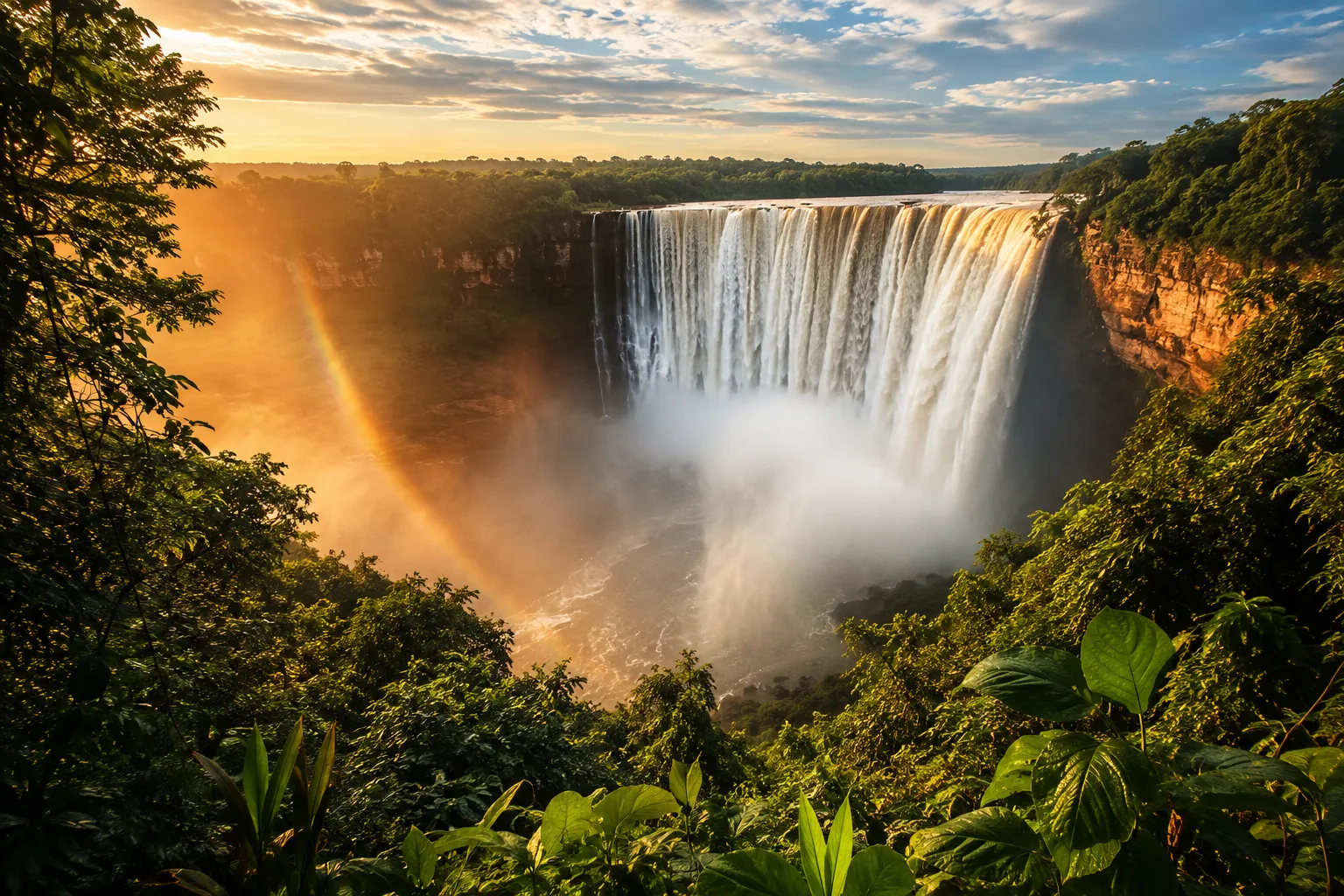
Yes, absolutely. Kalandula Falls in Malanje province drops around 105 meters across a horseshoe roughly 400 meters wide, making it one of the largest waterfalls by volume in Africa. In the wet season the roar and mist are enormous; in the dry season the flow is calmer but you get better light and safer viewpoints.
Practical notes:
- Getting there: About 360 km east of Luanda by road, roughly 7 to 9 hours depending on conditions. Many travelers overnight in Malanje town.
- Nearby: Combine with the surreal Pedras Negras de Pungo Andongo (black rock formations linked to Queen Njinga’s legend).
- Best time: March to May for maximum flow, June to September for easier logistics.
More detail on this site is on our Kalandula Falls page.
“Kalandula is the kind of place where you stop taking photos after ten minutes and just sit. There’s no railing, no ticket booth, no crowd. Just water and rock.”
Kissama National Park safari: can you really go on safari in Angola?
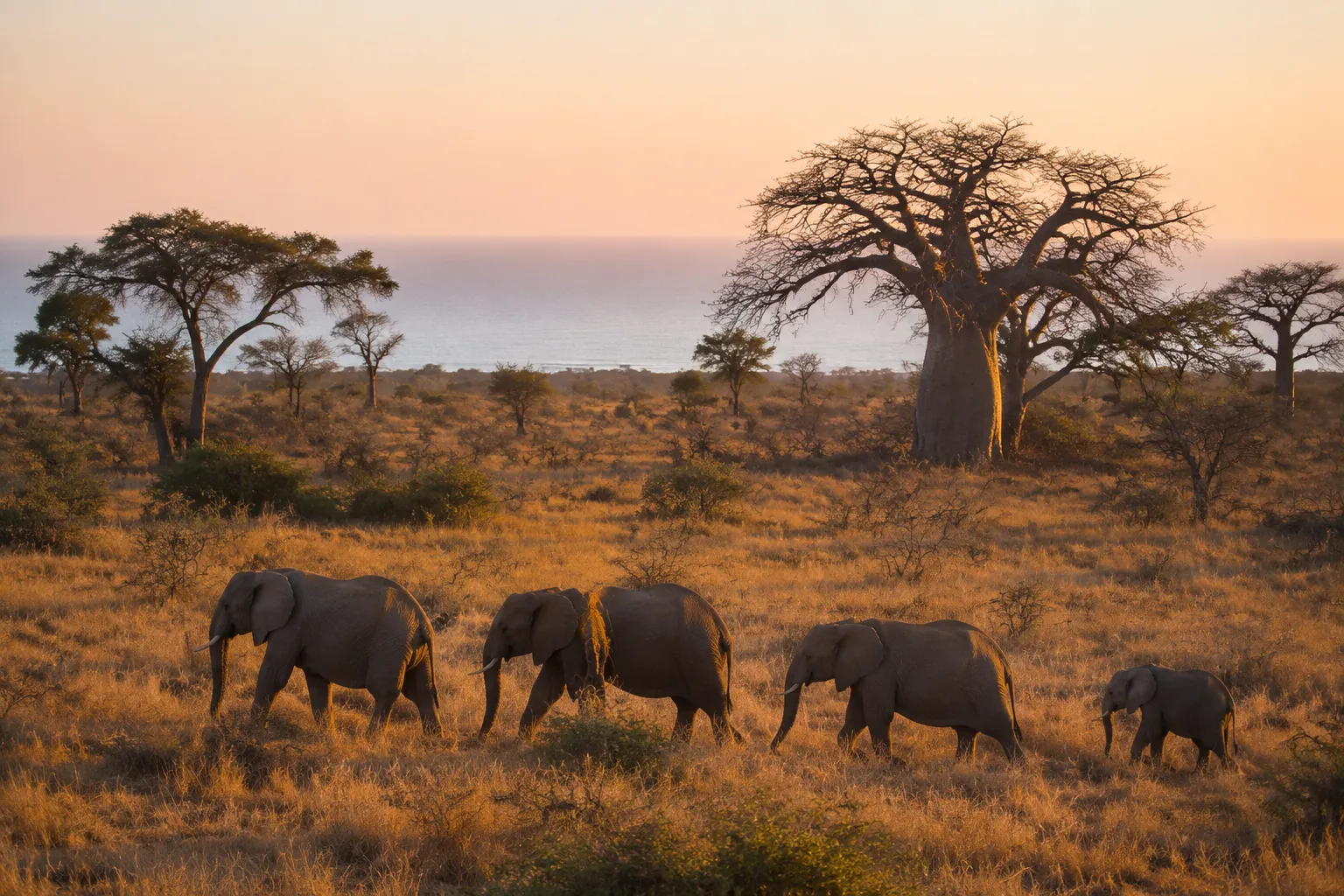
Yes. Kissama (Quiçama) National Park sits about 70 km south of Luanda and is the most accessible safari destination in the country. After the civil war, wildlife was reintroduced through Operação Arca de Noé (Noah’s Ark Operation) in the early 2000s, bringing elephants, giraffes, and antelope back from neighbouring countries.
What you can realistically see: elephants, roan antelope, kudu, wildebeest, waterbuck, and abundant birdlife. Predator sightings are rare. It’s not the Serengeti, and honestly that’s part of the appeal, you often have the tracks to yourself.
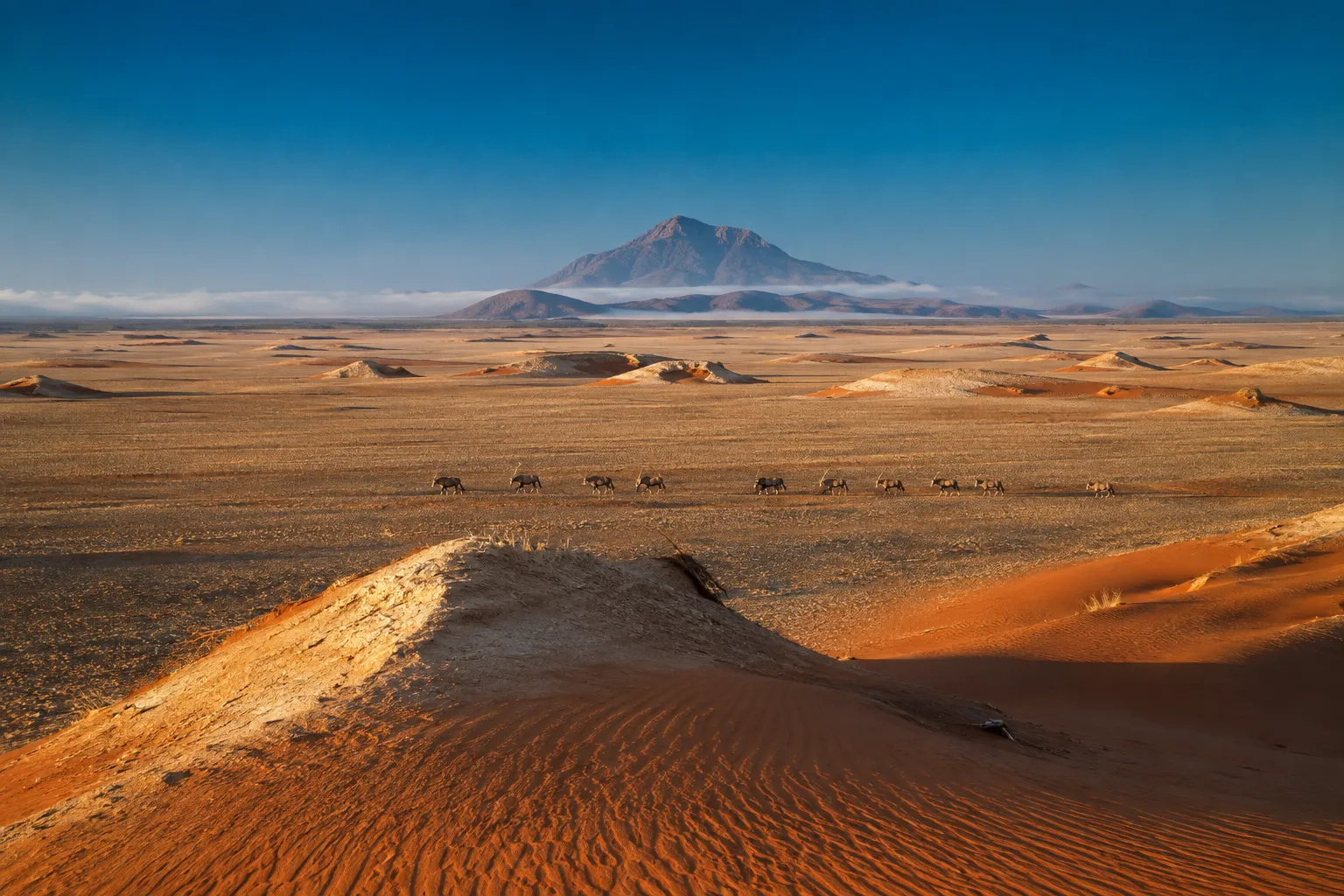
Choose Kissama if you want a day or overnight trip from Luanda. Choose Iona National Park (Namibe) if you want desert landscapes, welwitschia plants, and a genuine expedition feel, it’s Angola’s largest park but requires 4x4 and multi-day planning. Read more on Kissama National Park and the wider national parks of Angola.
Beaches: Mussulo, Benguela and beyond
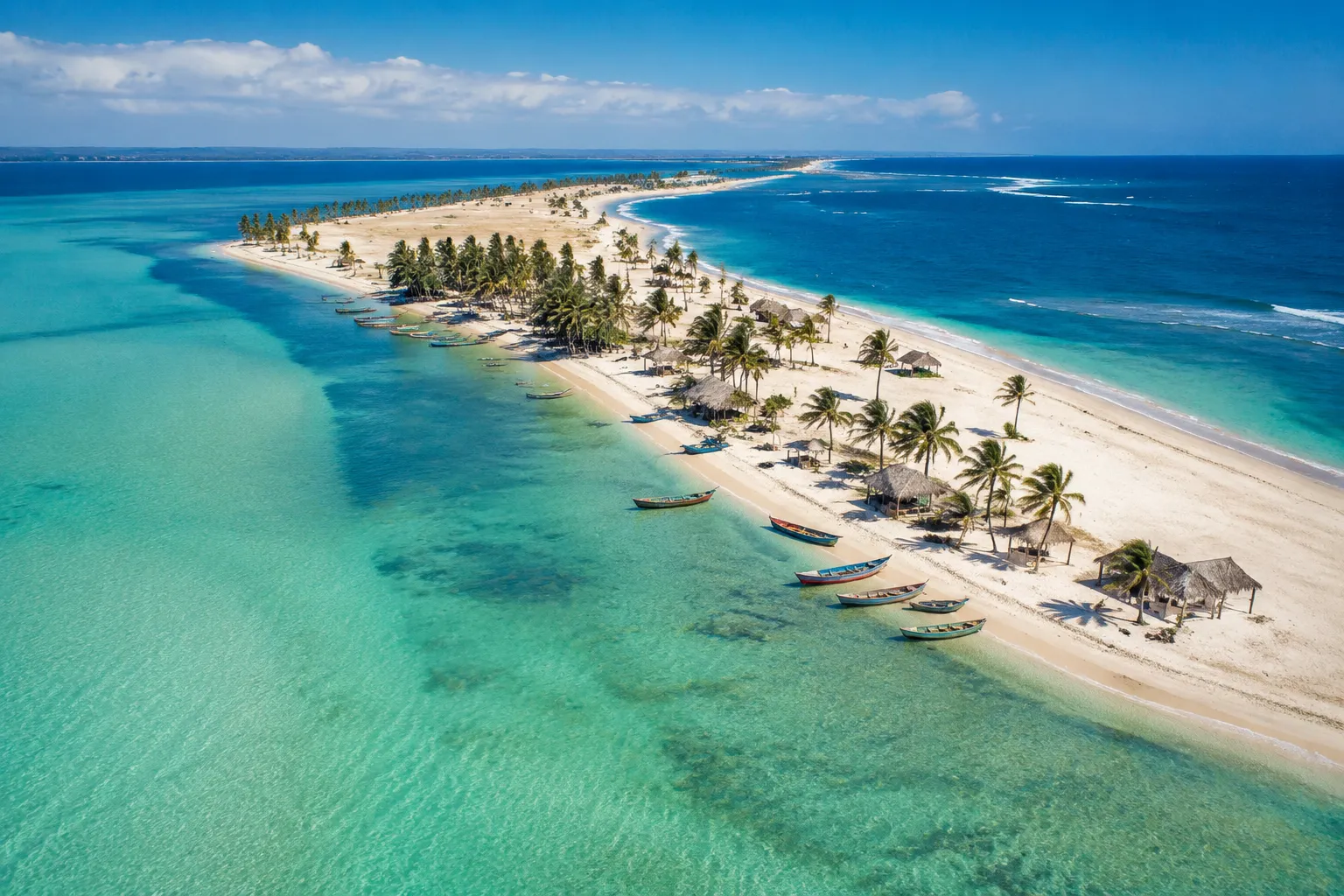
Mussulo is a long sandy peninsula and lagoon just south of Luanda, reachable only by boat (about 20 minutes from Ilha do Cabo). It’s where Luandans go on weekends: calm turquoise water, seafood shacks, kitesurfing, and beach clubs. Weekdays are noticeably quieter.
Beyond Mussulo, the standouts are:
- Cabo Ledo (about 120 km south of Luanda) - surfers’ favorite, long left-hand point break.
- Praia Morena & Baía Azul near Benguela - broad beaches, calmer water thanks to the cold Benguela current.
- Praia da Caota & Praia da Restinga near Lobito - the sandbar peninsula is stunning from the air.
- Namibe coast - where desert meets ocean, dramatic and empty.
The cold Atlantic current keeps water temperatures moderate, so it’s swimmable but not Caribbean-warm. See our full guide to the beaches in Angola.
Miradouro da Lua: the moon landscape
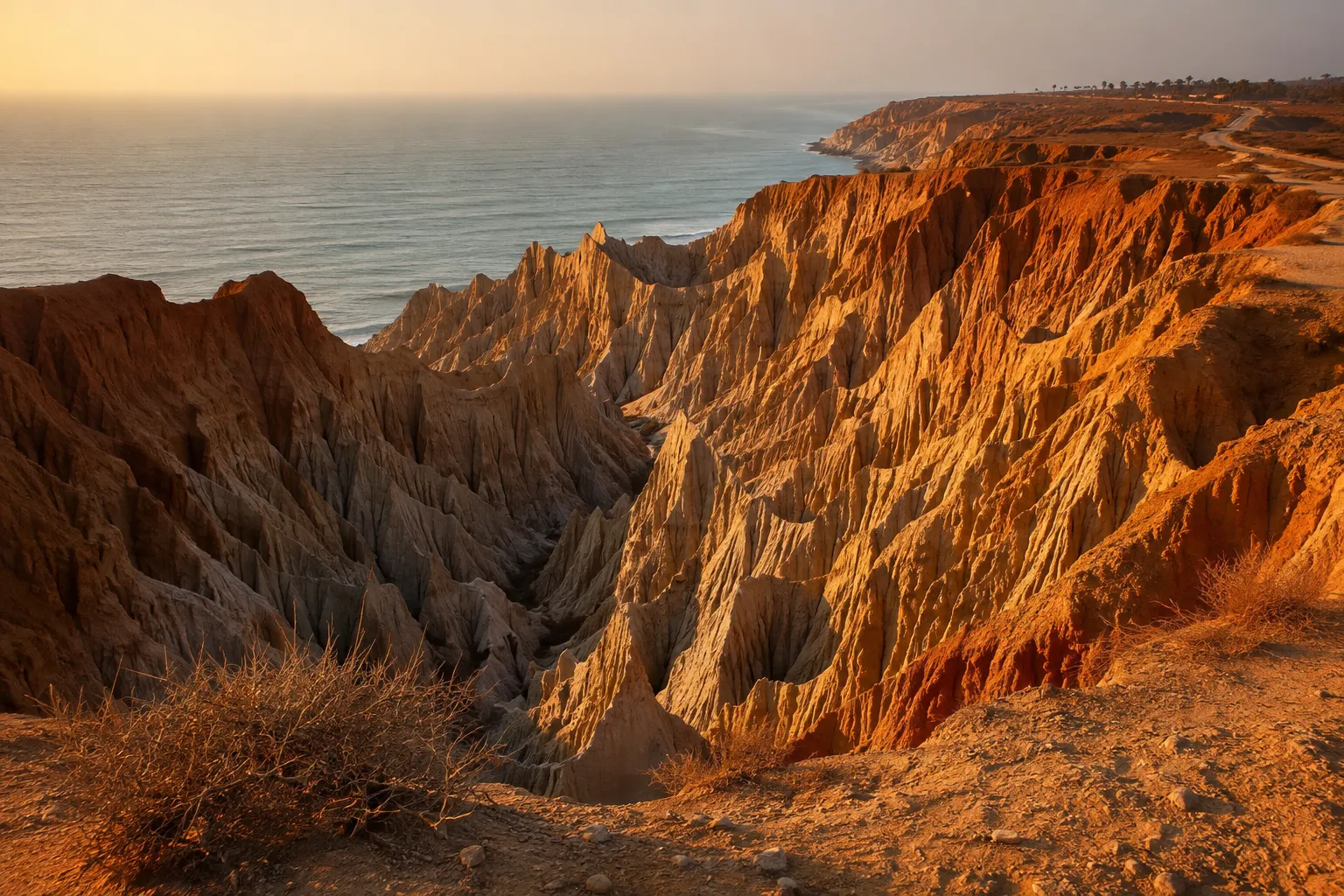
Miradouro da Lua (“Moon Viewpoint”) is a wind-eroded cliff panorama about 40 km south of Luanda on the road to Cabo Ledo. The landscape looks genuinely lunar: pale ridges, deep canyons, zero vegetation. It’s free, unfenced, and takes maybe 30 minutes to appreciate properly.
Go late afternoon for the best light. Combine it with a Cabo Ledo beach stop or a Kissama day trip and you’ve got one of the best single-day itineraries in the country.
Cultural experiences in Luanda: what is there to do specifically?
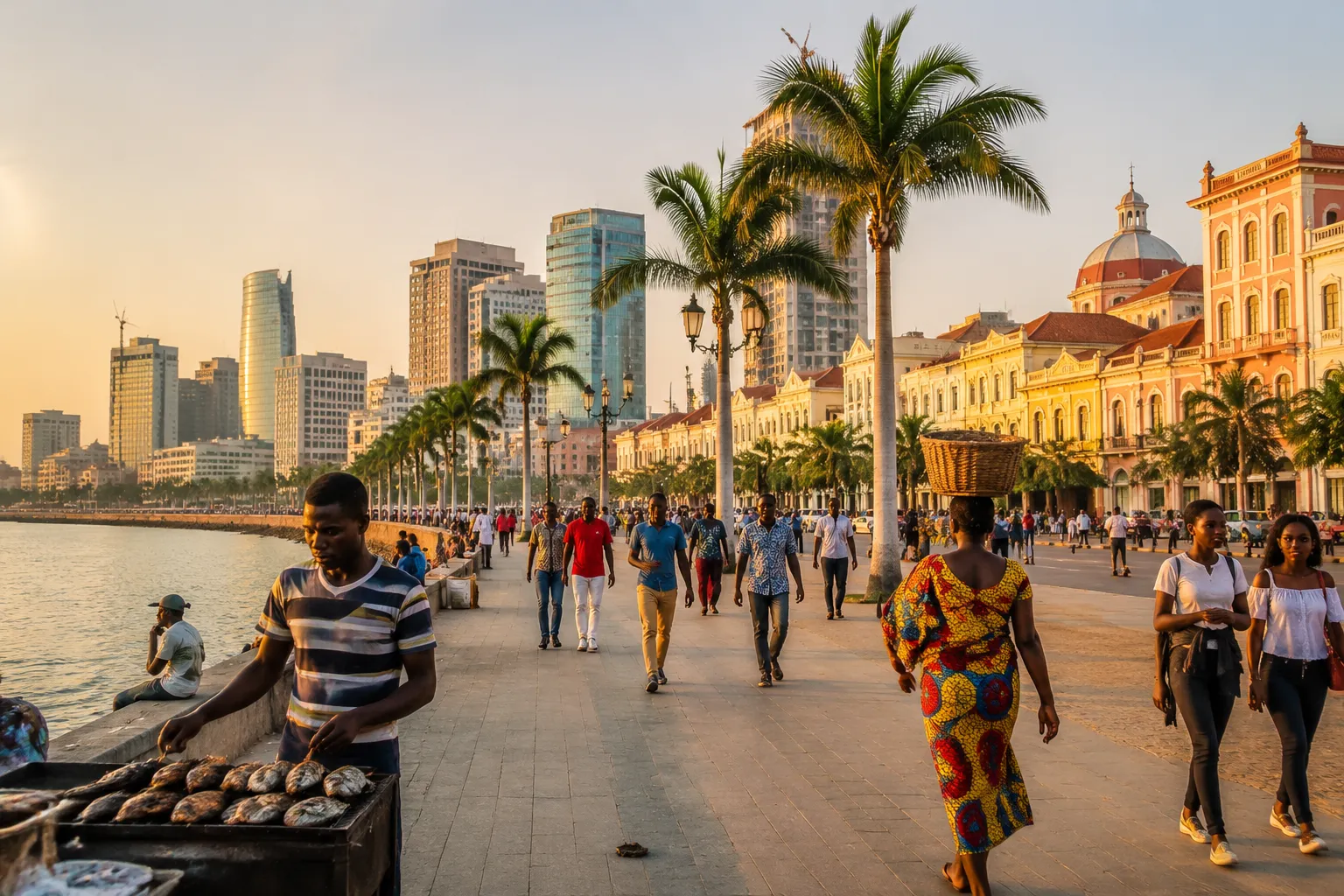
Luanda offers Fortaleza de São Miguel (a 16th-century Portuguese fort now housing the Museum of the Armed Forces), the Marginal promenade, Ilha do Cabo, the National Museum of Slavery, and a nightlife scene built on semba and kizomba. It’s chaotic, expensive, and genuinely fascinating.
Don’t miss:
- Fortaleza de São Miguel - views over the bay, tiled panels of Portuguese history
- Mercado do Benfica - crafts, wooden masks, Chokwe art
- A kizomba night in Ilha, this dance was born here
- Museu Nacional da Escravatura - sobering, essential context
- Muamba de galinha at a local restaurant, chicken in palm oil, Angola’s national dish
For neighborhoods, transport tips, and where to stay, our detailed Luanda guide covers it in depth. Also worth reading: the culture of Angola and Angolan cuisine.
Off-the-beaten-path picks
If you’ve done the greatest hits, here’s what most tourists miss:
- Tundavala Gap near Lubango: a 1,000-meter cliff drop, arguably the most dramatic viewpoint in southern Africa.
- Serra da Leba pass: hairpin mountain road, iconic Angolan postcard.
- Cangandala National Park: the only place on earth to see the palanca negra gigante (giant sable antelope) in the wild, Angola’s national symbol.
- Mayombe rainforest in Cabinda: dense equatorial jungle, but check the current travel advisory carefully.
- Benguela Railway heritage route: the historic line from Lobito once connected to the Congo copper belt.
- Namibe Desert: welwitschia plants over 1,000 years old, coastal dunes meeting the Atlantic.
Best time to visit Angola
The dry season from May to October is the best time to visit for most travelers. Roads are passable, humidity is lower, and wildlife concentrates around water sources. Coastal temperatures are pleasant (20 to 26°C), and the highlands around Lubango can get chilly at night.
- May to August: cool, dry, dusty. Best for parks and road trips.
- September to October: warming up, still dry. Great compromise.
- November to April: rainy season. Kalandula is at peak flow but roads to Malanje can be rough.
Full breakdown: best time to visit Angola.
How much does it cost to visit Angola?
Angola isn’t cheap. Luanda has ranked for years among the world’s most expensive cities for expats, and mid-range hotels in the capital routinely cost 150 to 300 USD per night. Outside Luanda, prices drop sharply.
Rough daily budgets (verify at time of booking):
| Traveler type | Daily budget (USD, excl. flights) |
|---|---|
| Backpacker (guesthouse, shared transport) | 60 to 90 |
| Mid-range (3-star hotel, driver) | 150 to 250 |
| Comfort (4-star, private guide, domestic flights) | 300 to 500+ |
Government-mobilized tourism investment under PLANATUR (around 7 trillion AOA, roughly €8.23 billion) is starting to expand mid-tier options, but change is gradual.[9][14] Read money in Angola for currency and payment realities.
Is it safe to travel to Angola right now?
Angola is generally safe for tourists in 2026, with the main risks being petty crime in Luanda, road conditions outside cities, and higher-risk advisories for Cabinda province. Always check your government’s current travel advisory before booking. Consult your government’s official travel advisory, for example the UK FCDO or the US State Department.
Practical safety notes:
- Don’t flash valuables in Luanda, especially at night.
- Use registered taxis or ride-hail apps rather than street cabs.
- Some rural areas still have residual landmine risk, stay on marked paths.
- Malaria is present countrywide, take prophylaxis.
Full context on our is Angola safe page.
What’s the difference between Luanda and the rest of Angola?
Luanda is dense, expensive, cosmopolitan, and coastal, essentially a Lusophone Atlantic capital with African rhythms. The rest of Angola is dramatically slower, cheaper, wilder, and more traditional. You genuinely have not seen Angola until you’ve left Luanda.
Rural Angola: unpaved roads, extended-family villages, Umbundu and Kimbundu spoken more than Portuguese, spectacular empty landscapes. Bring cash, patience, and low expectations for wifi.
Can you visit Angola without a tour guide?
Yes, but it’s harder than in Kenya or South Africa. English is limited, road signage is inconsistent, and public transport between regions is unreliable. If you speak Portuguese and are an experienced Africa traveler, independent travel works. Otherwise, hire a driver-guide for at least the multi-day upcountry sections. Booking a small-group tour or a private driver through a reputable operator saves days of frustration.
Affiliate disclosure: some tour and accommodation links on this site are affiliate links (rel=“sponsored nofollow”). We only recommend operators we’d use ourselves and never invent prices or availability.
What do people usually miss when visiting Angola?
Most first-time visitors overload Luanda and skip the south. The Lubango-Namibe-Iona axis is where Angola’s landscapes get truly spectacular, Serra da Leba, Tundavala, welwitschia deserts, and empty Atlantic beaches. Also frequently missed: Cangandala for the giant sable, and the surf/kite scene at Cabo Ledo.
How many days do you need in Angola?
- 3 to 4 days: Luanda + Mussulo + Miradouro da Lua. Weekend-plus format.
- 7 days: Add Kissama safari and Kalandula Falls.
- 10 to 14 days: Add Lubango, Serra da Leba, Tundavala, and Benguela coast.
- 3 weeks: Add Iona, Namibe desert, and possibly Cabinda.
Sample routes: Angola itinerary.
What’s the best way to get around Angola?
Domestic flights on TAAG Angola Airlines are the fastest way to cover the country’s long distances; a private driver with 4x4 is best for regional exploration; self-drive is only for the experienced. The road network is improving but still patchy outside main corridors.
- Luanda to Lubango: fly (about 1h20) versus 15+ hours driving.
- Luanda to Malanje (Kalandula): drive, no reliable commercial flights.
- Luanda to Benguela: fly or drive the coastal road (about 7 hours).
Is Angola good for budget travelers or luxury travel?
Angola currently suits mid-range and adventurous travelers better than either extreme. True luxury infrastructure exists mainly in Luanda (Epic Sana, Intercontinental-tier hotels), while dedicated backpacker infrastructure is thin. Mid-range travelers with a driver-guide get the best value.
What cultural experiences should I do in Angola?
- Learn to dance (or watch) kizomba in Luanda
- Eat muamba de galinha, funge, and calulu
- Visit the Museu Nacional da Escravatura
- Buy Chokwe wooden masks directly from artisans
- Attend Carnaval de Luanda (February/March)
- Listen to semba live, this is where samba’s roots partly trace back
Common mistakes tourists make in Angola
- Assuming English is widely spoken (it isn’t, learn basic Portuguese).
- Trying to pay everywhere by card (carry kwanza).
- Underestimating drive times.
- Skipping yellow fever vaccination proof (you’ll be denied entry).
- Booking Luanda hotels last-minute (they’re expensive and fill up).
- Ignoring the south, which is the scenic highlight.
Do I need vaccinations to visit Angola?
Yellow fever vaccination is generally required for entry into Angola, and malaria prophylaxis is strongly recommended for the entire country. Also update routine vaccines (tetanus, hepatitis A/B, typhoid). Consult the World Health Organization and your national travel-health service (LCR in the Netherlands, ITG/wanda.be in Belgium) at least 6 weeks before departure. See vaccinations in Angola for the full checklist. Requirements can change, always verify before travel.
Planning around these highlights
A workable first-timer plan: fly into Luanda, base there 2 nights, do Kissama and Miradouro da Lua as day trips, then take an internal flight to Lubango for the mountains, drive down to Namibe/coast, and loop back via Benguela. Add Kalandula as a separate 2 to 3 day extension from Luanda since it’s east, not south.
Book flights, yellow fever vaccine, and e-visa first. Everything else can wait. For the full pre-departure checklist, see travelling to Angola and Angola visa guide.
Conclusion: your next steps
Angola in 2026 is where places like Namibia or Mozambique were 20 years ago: mostly empty, occasionally difficult, and genuinely rewarding for travelers willing to plan properly. Start with a 10-day route covering Luanda, Kissama, Kalandula, and Lubango. Verify your visa status, book your yellow fever shot, and reach out to a licensed local operator for the upcountry legs.
Your action list:
- Check the current visa/e-visa rules on the official Angolan migration portal.
- Book yellow fever vaccination and malaria prophylaxis via a travel clinic.
- Read Angola travel tips and pick your itinerary length.
- Reserve Luanda accommodation early, it’s the priciest part of the trip.
- Learn 20 words of Portuguese. Locals appreciate the effort enormously.
Free help from our team in Angola
Want these highlights in one trip?
Tell us how many days you have and what you want to see most. We turn it into a route with transport, guides and hotels.
- Local team in Angola
- No obligation, nothing to pay
- Reply by email or WhatsApp
Want to keep this guide? We email you the key points with a link to every section.
Frequently asked questions
What are the top attractions in Angola?
Kalandula Falls, Kissama National Park, Mussulo lagoon, Miradouro da Lua, Serra da Leba, Tundavala Gap, and the historic center of Luanda. These are the ones Angola itself promoted as headline sights at ITB Berlin 2026.
Can you go on safari in Angola?
Yes. Kissama National Park (south of Luanda) is the easiest option, with elephants, antelope, and birdlife reintroduced after the war. Iona National Park in the south offers a bigger, wilder expedition.
What are the best beaches in Angola?
Mussulo (near Luanda), Cabo Ledo (surfing), Praia Morena and Baía Azul in Benguela, and the empty stretches along the Namibe coast. The Benguela current keeps water cool but clean.
Is Kalandula Falls worth visiting?
Yes, especially between March and May when the flow peaks. It's one of Africa's largest waterfalls, uncrowded, and the surrounding Malanje region includes Pungo Andongo's black rock formations.
What is there to do in Luanda specifically?
Fortaleza de São Miguel, the Marginal promenade, Ilha do Cabo, Mercado do Benfica, Museu Nacional da Escravatura, kizomba nightlife, and eating muamba de galinha at a local restaurant.
Are national parks accessible to tourists?
Kissama is very accessible (day trip from Luanda). Iona, Cangandala, and Bicuar require more planning, ideally a 4x4 and a local operator. Roads and park infrastructure are improving under Angola's national tourism plan.
References
- [1] allAfrica
- [2] Angola Leisure Tourism Increase 2025
- [3] Angola Tourism Rises Berlin
- [4] 28 Percent Growth In International Arrivals - UN Tourism Ranks Ango...
- [5] Angola Quissama National Park
- [6] Tourism Is Angola's Green Oil - Minister Marcio Daniel Sets The Cou...
- [9] Angola's Tourism Horizon: A New Frontier For Investment In Africa
- [10] Angola Government Hopes To Boost Cruise Tourism Numbers By 2027