Angola redrew its own map in 2024. What used to be 18 provinces became 21, with three brand-new administrative units carved out of existing ones. If you’re planning a trip and Googling old guidebooks, you’re probably working with outdated info. This guide fixes that.
Quick Answer
Angola has 21 provinces as of 2024, following an administrative reform that split off three new ones: Icolo e Bengo, Cuando, and Moxico Leste. The capital, Luanda, sits in Luanda Province on the Atlantic coast. The main tourist provinces are Luanda, Benguela, Huíla, Namibe, Malanje, Zaire, and Huambo. Each province is further divided into municipalities (municípios) and communes (comunas)[1][4].
Key Takeaways
- Angola has 21 provinces since the 2024 reform (previously 18)[1][3].
- The three new provinces are Icolo e Bengo, Cuando, and Moxico Leste, split from Bengo, Cuando Cubango, and Moxico respectively[1].
- Luanda Province hosts the capital and is the country’s economic heart.
- Moxico (even after being split) remains the largest province by area.
- Provinces bordering the DR Congo include Cabinda, Zaire, Uíge, Lunda Norte, and Lunda Sul.
- Cunene and Namibe share the southern border with Namibia.
- Below the province level: municipalities, then communes, then neighbourhoods or villages[8].
- Best tourist provinces: Luanda, Benguela, Huíla, Namibe, Malanje, Zaire, Huambo.
How many provinces does Angola have?
Angola currently has 21 provinces. The count went from 18 to 21 in 2024, when the National Assembly approved the creation of three new provinces to improve local governance and public service delivery in remote regions[1][3].
Before 2024, the country had 18 provinces, a structure that dated back decades and was largely inherited from the late colonial and early post-independence periods. The 2024 reform is the most significant administrative overhaul since independence in 1975.
What are all the provinces of Angola?
Here’s the complete list of the 21 Angolan provinces, with capitals and a quick note on what each is known for. I’ve grouped them by region so it’s easier to picture the country.
Coastal provinces (Atlantic west)
| Province | Capital | Known for |
|---|---|---|
| Cabinda | Cabinda | Oil-rich exclave, Mayombe rainforest |
| Zaire | M’banza-Congo | UNESCO-listed former Kongo Kingdom capital |
| Bengo | Caxito | Agriculture, Kissama access |
| Luanda | Luanda | National capital, beaches, nightlife |
| Icolo e Bengo (new, 2024) | Catete | Split from Bengo; rural, near Kissama |
| Kwanza Sul | Sumbe | Beaches, coffee, fishing towns |
| Benguela | Benguela | Colonial architecture, Praia Morena |
| Namibe | Moçâmedes | Iona National Park, desert meets ocean |
Central highlands and interior
| Province | Capital | Known for |
|---|---|---|
| Huambo | Huambo | Cool climate, colonial city, plateau scenery |
| Bié | Kuito | Central plateau, agriculture |
| Huíla | Lubango | Cristo Rei, Serra da Leba, Tundavala |
| Kwanza Norte | N’dalatando | Coffee country, forests |
| Malanje | Malanje | Kalandula waterfalls, Pungo Andongo rocks |
Northern provinces
| Province | Capital | Known for |
|---|---|---|
| Uíge | Uíge | Coffee, tropical forest, DRC border |
| Lunda Norte | Dundo | Diamond mining |
| Lunda Sul | Saurimo | Diamonds, Chokwe culture |
Eastern and southern provinces
| Province | Capital | Known for |
|---|---|---|
| Moxico | Luena | Vast savanna, Zambezi source area |
| Moxico Leste (new, 2024) | Cazombo | Split from Moxico; remote east |
| Cuando Cubango | Menongue | Wilderness, part of KAZA transfrontier area |
| Cuando (new, 2024) | Mavinga | Split from Cuando Cubango; remote |
| Cunene | Ondjiva | Namibia border, Himba communities |
The three newest provinces (Icolo e Bengo, Cuando, and Moxico Leste) are still building out their administrative infrastructure in 2026, so don’t be surprised if signage, maps, or older sources still show the pre-2024 layout[1].
Which province is the capital of Angola in?
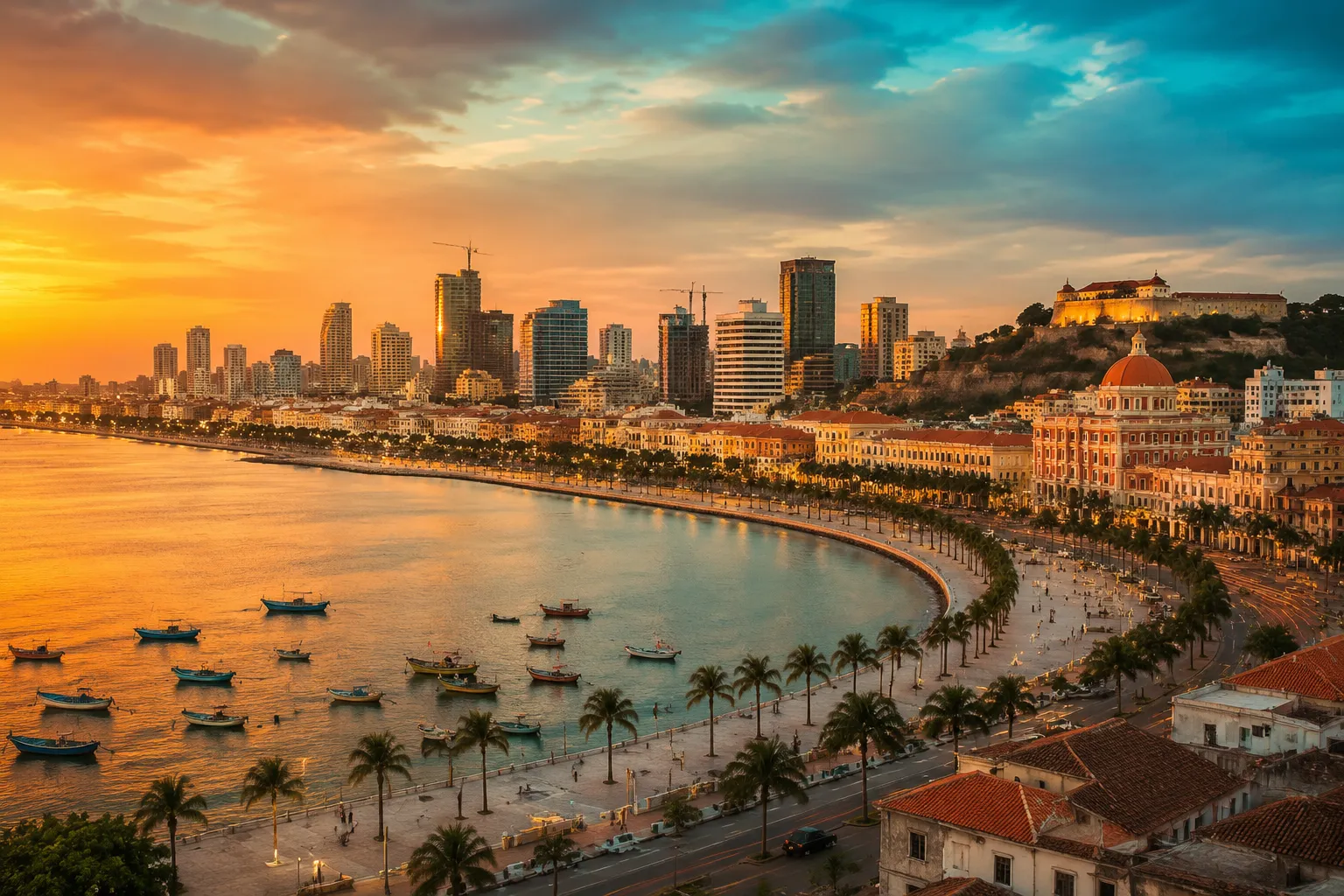
The capital, Luanda, sits in Luanda Province on the Atlantic coast in the north-central part of the country. Luanda Province is the smallest by area but by far the most populated and economically dominant[4].
For more on the city itself, see our full guide to Luanda.
What is the largest province in Angola by area?
Moxico remains the largest province by area, even after the 2024 split that created Moxico Leste. Before the reform, Moxico covered roughly 223,000 km². Post-split, both Moxico and Moxico Leste together still form the biggest chunk of Angolan territory, mostly sparse savanna in the east[1][5].
Cuando Cubango (before the Cuando split) was the second-largest and remains one of the most wilderness-heavy provinces.
Most populated province in Angola
Luanda Province is by far the most populated, home to roughly a quarter of Angola’s population. Estimates put Luanda’s metropolitan population at over 8 million people, packed into the smallest provincial territory. After Luanda, Huambo, Benguela, and Huíla rank next in population[4][7].
“Luanda alone accounts for a disproportionate share of Angola’s population and economic output, no other province comes close.”
What provinces border the Democratic Republic of Congo?
Angola shares a long northern and eastern border with the DRC. The provinces along that border are:
- Cabinda (the exclave, entirely surrounded by DRC and the Republic of Congo)
- Zaire
- Uíge
- Lunda Norte
- Lunda Sul (partial)
- Moxico (northeastern edge)
Cabinda is separated from the rest of Angola by a narrow strip of DRC territory, which is why it counts as an exclave[1][7].
What provinces border Namibia?
Two provinces sit on Angola’s southern border with Namibia:
- Cunene (main border crossing at Santa Clara/Oshikango)
- Namibe (southwest, along the Atlantic-to-desert border)
This is the most-used land route for overlanders coming up from Namibia. If you’re planning a self-drive Angola itinerary, these two provinces are usually your entry point.
Which Angolan provinces have the most natural resources?
Angola’s wealth is concentrated in a handful of provinces, and it shapes everything from infrastructure to who lives where.
- Cabinda: offshore oil (produces the majority of Angola’s crude).
- Zaire and Kwanza Norte: onshore oil and gas.
- Lunda Norte and Lunda Sul: diamonds, some of the largest reserves in Africa.
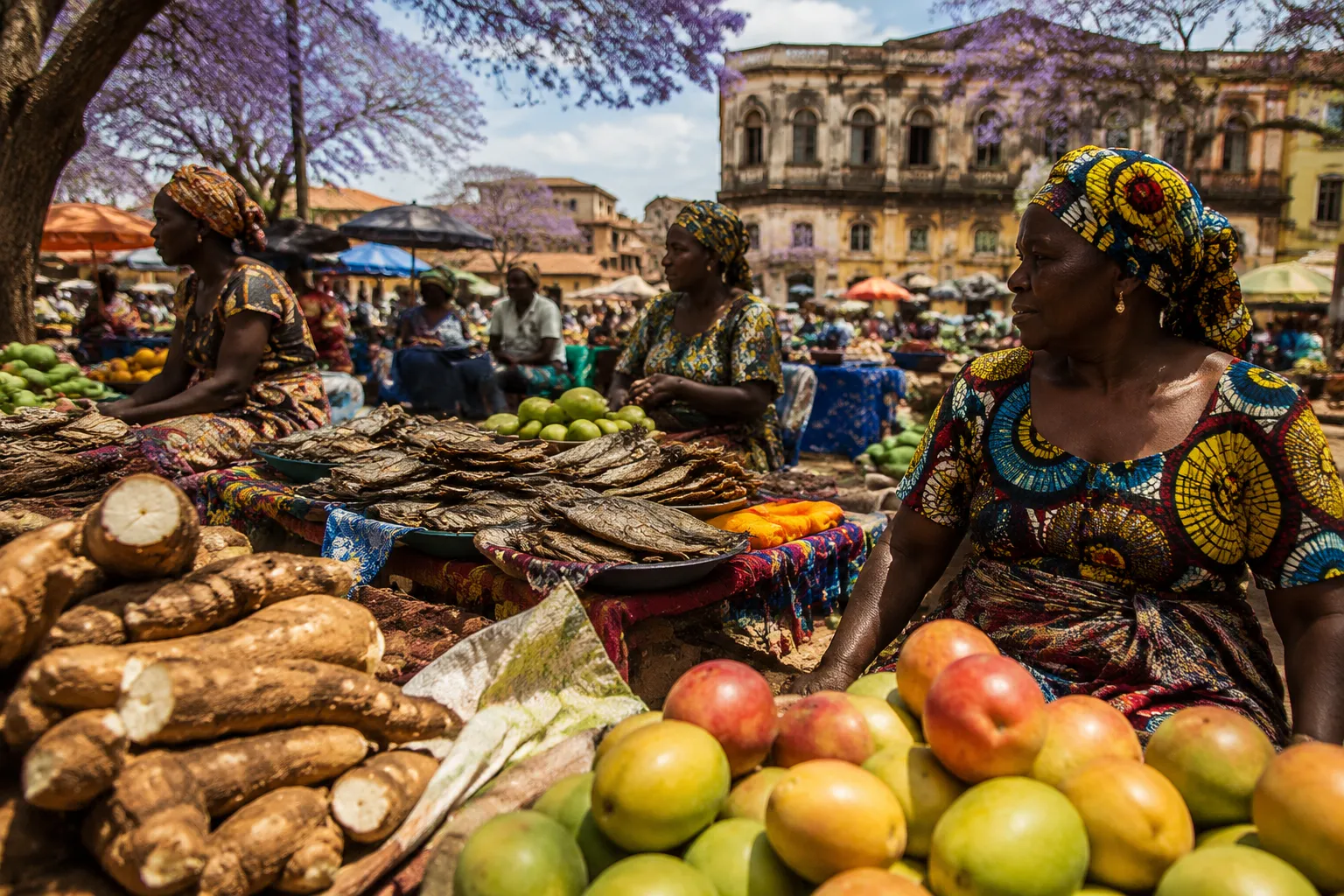
- Huambo, Bié, Malanje: agriculture (coffee, maize, cassava).
- Namibe and Benguela: fishing and marine resources.
- Moxico: timber and untapped minerals[6].
Ironically, resource-rich provinces aren’t always the most developed. Cabinda produces enormous oil revenue but has historically seen limited local reinvestment.
What is the difference between provinces and municipalities in Angola?
Provinces (províncias) are the top administrative level, headed by a governor appointed by the president. Municipalities (municípios) sit one level below, and communes (comunas) sit below those. It’s a three-tier system:
- Província (21 total), governed by a Governador Provincial.
- Município (roughly 164 nationally, adjusting after the 2024 reform), headed by a Administrador Municipal.
- Comuna, the smallest formal unit, then neighbourhoods (bairros) or villages (aldeias)[8][9].
Think of it like: province = state, municipality = county, commune = town or district.
How are Angola’s provinces divided administratively?
Each province is subdivided into municipalities, and each municipality into communes. Governors are appointed by the president, not elected, which is a point of ongoing political debate. Municipal elections have been discussed for years but haven’t been fully implemented nationwide as of 2026 (verify current status)[8].
Provincial governments handle regional planning, health, education infrastructure, and local security coordination, but real fiscal power stays largely centralised in Luanda.
Best provinces to visit in Angola for tourism
If you have limited time, focus on these seven provinces. They cover the best mix of scenery, culture, and infrastructure:
- Luanda, arrival point, beaches, Mussulo lagoon, nightlife, colonial history. Start here. See our Luanda travel guide.
- Benguela, colonial coastal city, Praia Morena, easy beach days. Combine with Lobito.
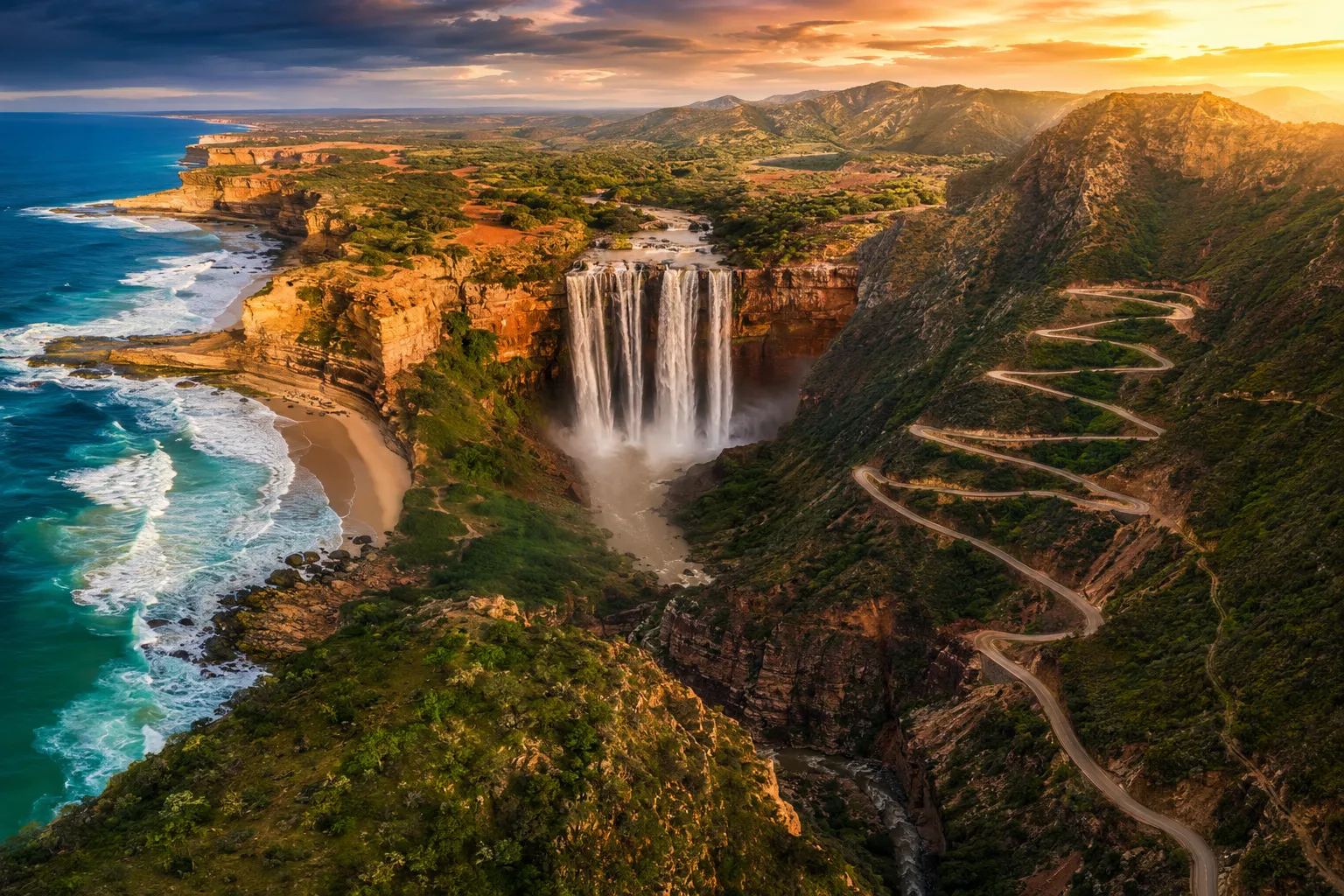
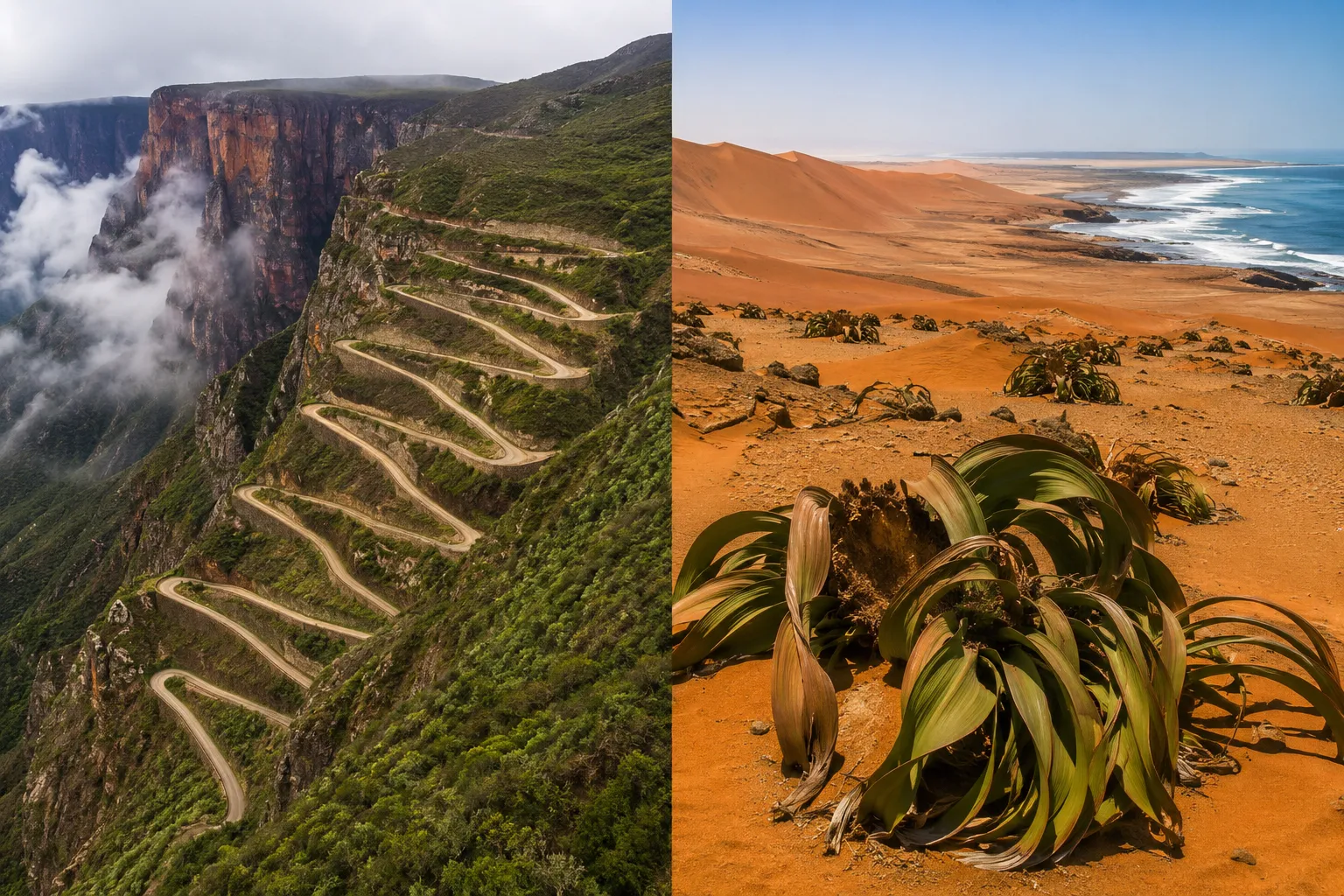
- Huíla, Lubango, Serra da Leba, Tundavala Gap, Cristo Rei statue.
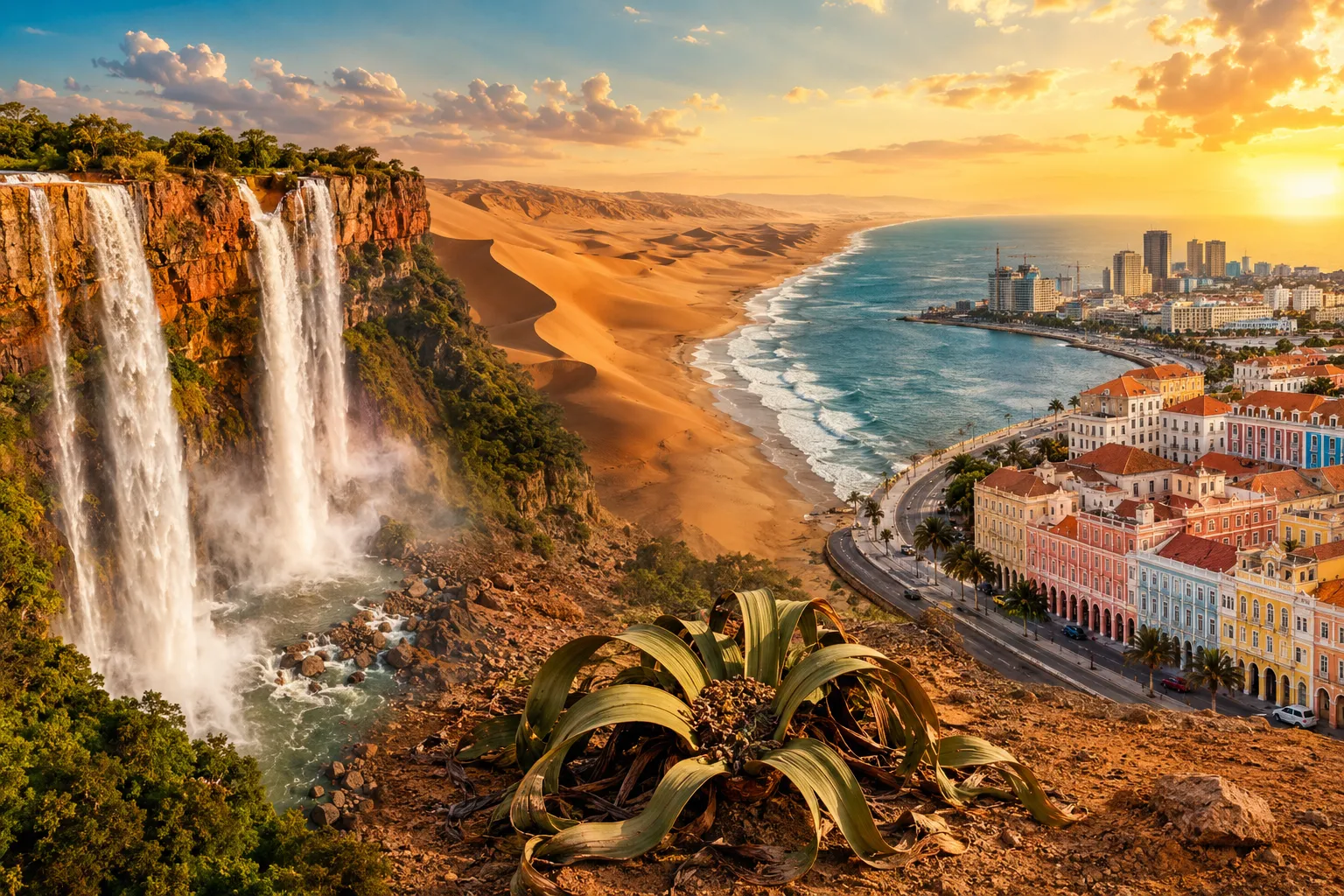
- Namibe, Iona National Park, desert meets Atlantic, welwitschia plants.
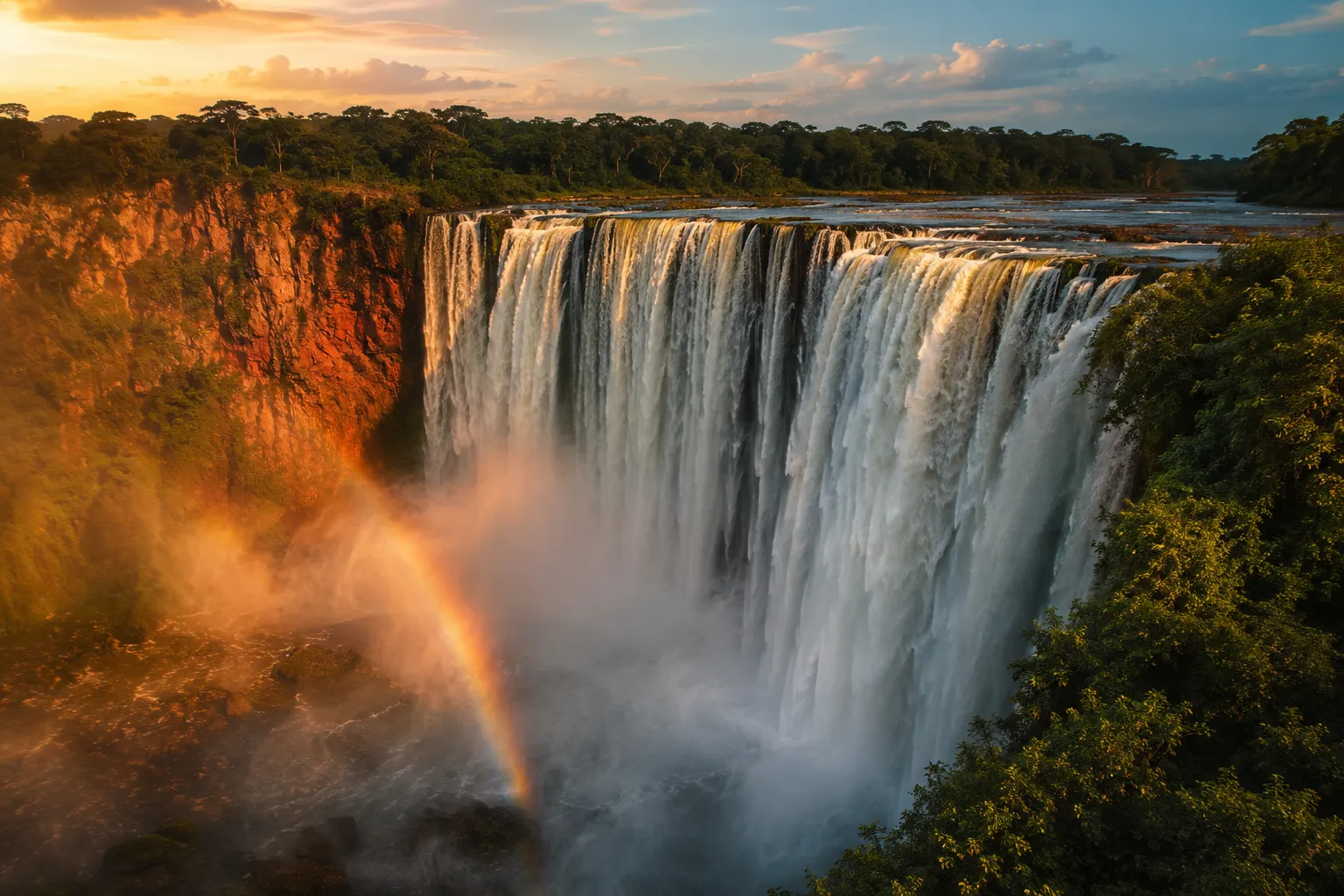
- Malanje, Kalandula waterfalls (one of Africa’s largest) and the Pungo Andongo rock formations.
- Zaire, M’banza-Congo, UNESCO World Heritage site of the former Kongo Kingdom.
- Huambo, cool highland climate, colonial architecture, gateway to the central plateau.
For a full list of highlights across these provinces, see our Angola attractions guide.
Which provinces in Angola have the most development?
Development is heavily concentrated along the coast and in a few interior hubs. Luanda, Benguela, Huíla (Lubango), and Huambo have the best infrastructure: paved roads, reliable(ish) electricity, hospitals, and international-standard hotels.
The eastern provinces (Moxico, Moxico Leste, Cuando, Cuando Cubango) and parts of the north remain sparsely developed, with long dirt roads, limited fuel stops, and basic accommodation. This isn’t necessarily bad news for adventurous travellers, but it does mean you need to plan fuel, water, and comms carefully.
How did Angola’s provincial boundaries change over time?
Angola’s administrative map has been redrawn several times:
- Colonial era: Portuguese Angola was organised into districts, restructured multiple times.
- 1975 (independence): the new republic reorganised the territory into 18 provinces, keeping most of the late colonial boundaries[1].
- 1980s, 2010s: minor tweaks, mostly to municipality lines.
- 2024: the biggest change since independence, adding three new provinces (Icolo e Bengo, Cuando, Moxico Leste) to bring the total to 21[1][3].
The stated reasons for the 2024 reform were better governance in vast, remote regions, faster service delivery, and closer administration to citizens in areas that were previously days of travel from the provincial capital.
What is life like in rural Angolan provinces compared to Luanda?
The gap is enormous. Luanda is one of the most expensive cities in the world for expats, with luxury towers, imported goods, and heavy traffic. Rural provinces like Cuando, Moxico Leste, or interior Cunene have subsistence agriculture, limited electricity, poor road networks, and Portuguese often spoken alongside local Bantu languages (Umbundu, Kimbundu, Chokwe, Kikongo).
For travellers, this contrast is part of the appeal. You can start your trip with cocktails on the Ilha do Cabo and end it watching sunset over an untouched savanna in the east. But it also means the practical realities (fuel, cash, medical care) shift fast once you leave the main corridors. Read our guides on is Angola safe and Angola travel advice before heading into remote provinces.
Conclusion
Angola’s 21 provinces cover a country the size of Western Europe, from oil-rich Cabinda in the north to the desert coast of Namibe in the south. For most travellers, seven provinces (Luanda, Benguela, Huíla, Namibe, Malanje, Zaire, Huambo) offer the best combination of scenery, infrastructure, and cultural depth.
Your next steps:
- Read our guide to the attractions in Angola for scenery, culture, and practical prep.
- Pick 2-3 provinces to focus on, based on your interests (coast, mountains, waterfalls, wildlife).
- Book flights early via TAAG Angola Airlines or connecting European carriers.
- Double-check the current entry requirements at the official SME e-visa portal before you fly.
Angola rewards travellers who plan carefully. Get the basics right and the country opens up in ways few African destinations still can.
Province explorer
Filter Angola's 21 provinces by location and how developed they are for tourism.
- LuandaDeveloped for tourismCapital and hub: the bay, museums, nightlife and the island of Mussulo nearby.Luanda guide
- BenguelaDeveloped for tourismColonial coastal city with beaches, plus the port city of Lobito with the famous Restinga peninsula.Benguela guide
- NamibeDeveloped for tourismWhere desert meets ocean: the town of Moçâmedes, the Namib desert and Iona National Park.Namibe guide
- HuílaDeveloped for tourismHighlands around Lubango, with the Tundavala gorge and the Serra da Leba pass as icons.Lubango guide
- MalanjeDeveloped for tourismHome of the Kalandula Falls and the Black Rocks of Pungo Andongo.Malanje guide
- CabindaEmergingAn exclave between the two Congos, with the Maiombe rainforests. Practically reachable only by plane.Cabinda guide
- HuamboEmergingThe central highlands; once "Nova Lisboa", today a city being rebuilt, with a mild climate.Huambo guide
- Icolo e BengoEmergingA new province (2024) around Catete, split off from Luanda; the new international airport is here too.
- BengoEmergingRight around the capital region; rivers, lagoons and part of the Kissama area.Kissama guide
- Cuanza SulEmergingA coastal province between Luanda and Benguela, with waterfalls (Cachoeiras de Binga) and a coffee history.
- ZaireFor pioneersA northern coastal province with Mbanza Kongo, a UNESCO World Heritage Site at the heart of the old Kingdom of Kongo.Mbanza Kongo guide
- Cuanza NorteFor pioneersGreen interior along the Cuanza river; barely any tourist infrastructure yet.
- UígeFor pioneersA coffee province in the north, hilly and green; for seasoned travellers.
- BiéFor pioneersThe geographical heart of Angola, on the central plateau around Cuíto.
- MoxicoFor pioneersA vast east with the sources of the Zambezi; since 2024 split into Moxico and Moxico Leste.
- Moxico LesteFor pioneersA new eastern province (2024) around Cazombo, on the upper reaches of the Zambezi.
- CuandoFor pioneersA new province (2024) in the far south-east; wilderness towards the Okavango systems.
- CubangoFor pioneersAround Menongue; together with Cuando this formed the province of Cuando Cubango until 2024.
- CuneneFor pioneersA border province with Namibia, home to the Himba and Mucubal communities among others.
- Lunda NorteFor pioneersA diamond region in the north-east; culturally rich (Tchokwe), yet almost untouched by tourism.
- Lunda SulFor pioneersThe southern Lunda province around Saurimo; savannah and rivers, still without tourist routes.
Since the 2024 reorganisation, Angola has 21 provinces (previously 18). The labels "developed", "emerging" and "for pioneers" are our editorial assessment of the tourist infrastructure, not an official classification. Start your exploration withthe finest sights.
Free help from our team in Angola
Not sure which part of Angola to visit?
Tell us what you like and how much time you have. We suggest the regions that fit and plan a route between them.
- Local team in Angola
- No obligation, nothing to pay
- Reply by email or WhatsApp
Want to keep this guide? We email you the key points with a link to every section.
Frequently asked questions
Q: How many provinces does Angola have in 2026?
A: 21 provinces, following the 2024 administrative reform that created Icolo e Bengo, Cuando, and Moxico Leste.
Q: Which is the smallest province in Angola?
A: Luanda Province is the smallest by area but the most populated.
Q: Do I need a separate visa for Cabinda?
A: No, Cabinda uses the same Angolan visa as the rest of the country, but reach it by flight from Luanda. Check the [Angola visa](/angola-visa/) guide for the latest rules.
Q: Which Angolan provinces are safest for tourists?
A: Luanda, Benguela, Huíla, Namibe, and Malanje are generally considered safe for tourism. Cabinda has historically had stricter travel advisories. Always check your government's current travel advice.
Q: Can I drive between all 21 provinces?
A: In theory yes, but road quality varies enormously. Coastal and central provinces have paved main roads; eastern provinces often require 4x4 and self-sufficiency.
Q: Are the three new provinces (2024) worth visiting?
A: Not yet for most travellers. Icolo e Bengo is close to Kissama and accessible, but Cuando and Moxico Leste are remote wilderness areas better suited to experienced overland travellers.