Quick Answer
Angola splits neatly into six travel regions: the Capital and central coast (Luanda, Mussulo, Kissama), the North (Cabinda, Uíge, Mbanza Kongo), the Central Highlands (Huambo, Bié), the South and desert (Huíla, Namibe, Cunene), the Coast beyond Luanda (Benguela, Lobito), and the wild East (Lundas, Moxico). First-time visitors usually combine Luanda with Malanje (Kalandula Falls) and the southern highlands around Lubango. Between May and October is the best time to travel, and most EU, UK, US, Canadian and Australian passport holders can now enter visa-free or via e-visa (verify before you fly).
Key Takeaways
- Angola is roughly twice the size of France with over 1,600 km of Atlantic coastline and huge regional variety.
- The country is having a genuine tourism moment: visa rules were relaxed and international arrivals are climbing sharply in 2025-2026 [2][8].
- Luanda is the gateway; almost every itinerary starts here.
- Malanje (Kalandula Falls) and Huíla/Namibe (Serra da Leba, Tundavala, Iona) are the two must-see natural regions.
- Benguela and Lobito offer the easiest beach add-on with colonial-era charm.
- The east and Cabinda are for adventurous, experienced travellers only.
- Best window: May to October (dry, cooler, better roads).
- Budget: expect prices closer to Western Europe than to neighbouring African countries.
Why Angola Is Suddenly on the Travel Radar
Angola spent decades off the tourism map. That’s changing fast. The government approved roughly 449 million USD in coastal tourism infrastructure in 2024, opened up visa access for dozens of nationalities, and debuted at major fairs like FITUR 2026 and ITB Berlin to court international visitors [4][7][10]. Leisure arrivals grew significantly in 2025, with Portugal, South Africa and China leading the surge in eco and luxury travel [2][8].
For travellers, this means better flights, more hotels, and a country that still feels genuinely undiscovered [1]. Now is the sweet spot: infrastructure is improving, but the crowds haven’t arrived.
“Untouched, wild, welcoming” is how Euronews recently described Angola’s tourism potential [1]. That captures it well.
For the practical basics before you go, plan your trip to Angola carefully first.
Best Places to Visit in Angola for First Time Travelers
If it’s your first trip, stick to a proven triangle: Luanda, Malanje (Kalandula), and Lubango/Namibe. These three regions cover the country’s essential contrasts (city, waterfall, desert-highland) and have the best flight and road connections.
A classic 10 to 14 day first-timer route:
- Luanda (3 nights): city, Fortaleza, Ilha, Mussulo day trip.
- Kissama National Park (1 night): easy safari, 2.5 hrs south of Luanda.
- Malanje / Kalandula Falls (2 nights): fly or drive to see the falls and Pungo Andongo rocks.
- Lubango and Serra da Leba (2 nights): cooler climate, Cristo Rei, Tundavala viewpoint.
- Namibe and Iona (2-3 nights): desert, welwitschia plants, Atlantic dunes.
More detail on the country’s headline sights lives on our Angola attractions page.
What to Do in Luanda and the Central Coast
Luanda is loud, hot, expensive, and unavoidable. It’s also where you’ll find the best food, the biggest history, and easy escapes to beaches and wildlife.
Top things to do in Luanda:
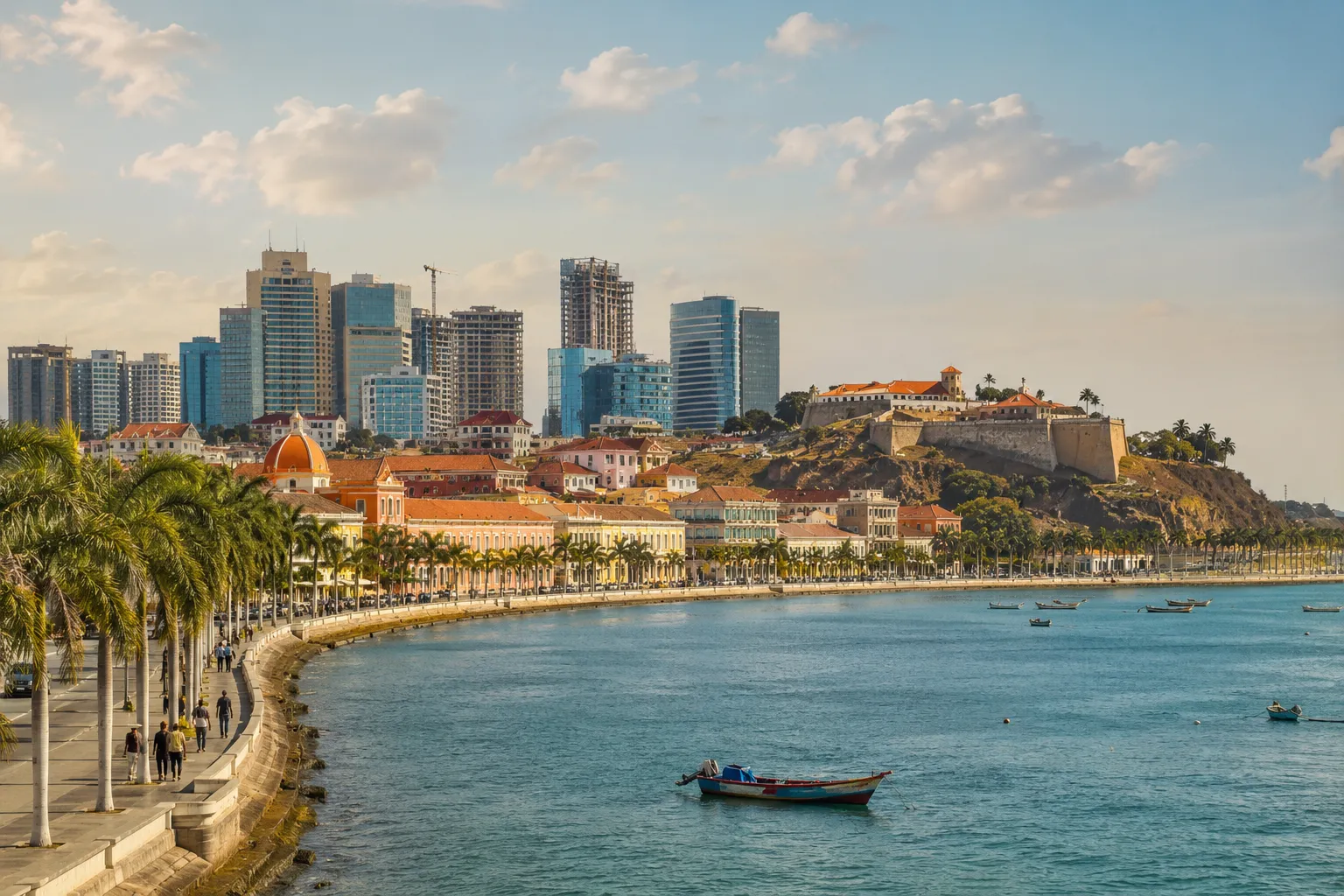
- Walk the Marginal waterfront promenade at sunset.
- Visit Fortaleza de São Miguel (1576) for city views and the military museum.
- Head to Ilha do Cabo for seafood and beach bars.
- Take a boat to Mussulo, a sandy peninsula-lagoon perfect for a lazy day.
- Do a half-day at Miradouro da Lua, the “moon landscape” cliffs south of the city.
- Add a night in Kissama National Park to see elephants and antelope.
Full breakdown on the capital: Luanda travel guide and Kissama National Park.
The North: Cabinda, Uíge and Mbanza Kongo
The north is lush, historic, and complicated. This region includes Uíge (rainforest, coffee), Zaire province with Mbanza Kongo (UNESCO World Heritage site, former capital of the Kongo Kingdom), and the Cabinda exclave (oil, the Mayombe rainforest, separated from the rest of Angola by a strip of DR Congo).
Best for: history buffs, seasoned Africa travellers, birders.
Access: Domestic flights from Luanda to Cabinda and Mbanza Kongo. Roads are rough.
Reality check: Several Western foreign ministries advise stricter caution for Cabinda due to sporadic security incidents. Verify current advice via your government’s travel advisory before planning. See our note on is Angola safe.
Central Highlands: Huambo and Bié
Cooler, greener, calmer. The central plateau sits between 1,500 and 2,000 metres, so temperatures are pleasant year-round. Huambo is Angola’s second-largest city, with wide colonial-era boulevards and a slower pace. Bié province is agricultural and forested.
Best for: travellers who want to escape coastal heat and see everyday Angolan life away from tourists.
Access: The rebuilt Benguela Railway runs from Lobito through Huambo eastward, one of Africa’s great rail journeys in the making. Domestic flights also serve Huambo.
Highlights: rail journey, highland scenery, coffee country, honest local markets.
Malanje: Kalandula Falls and Rock Country
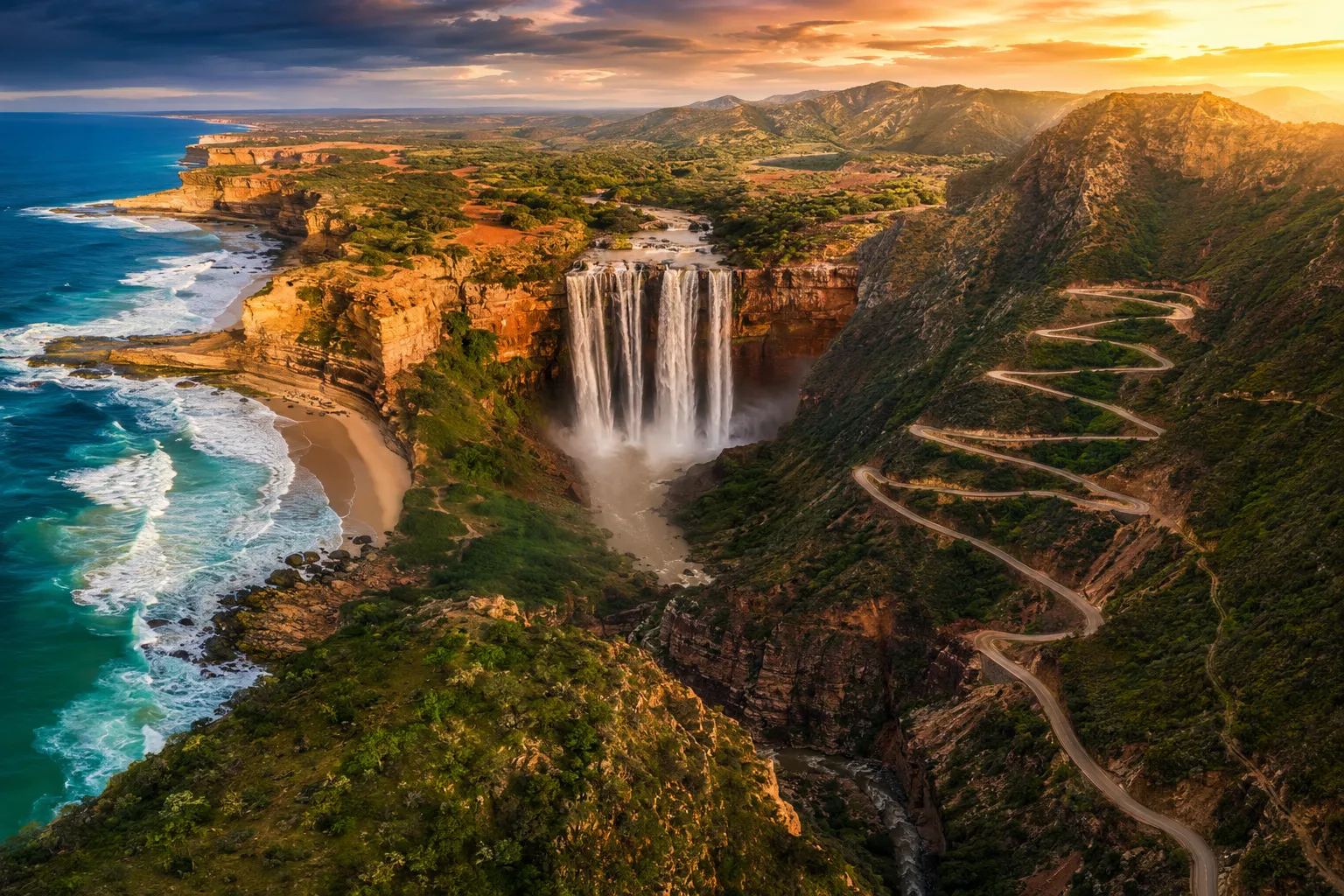
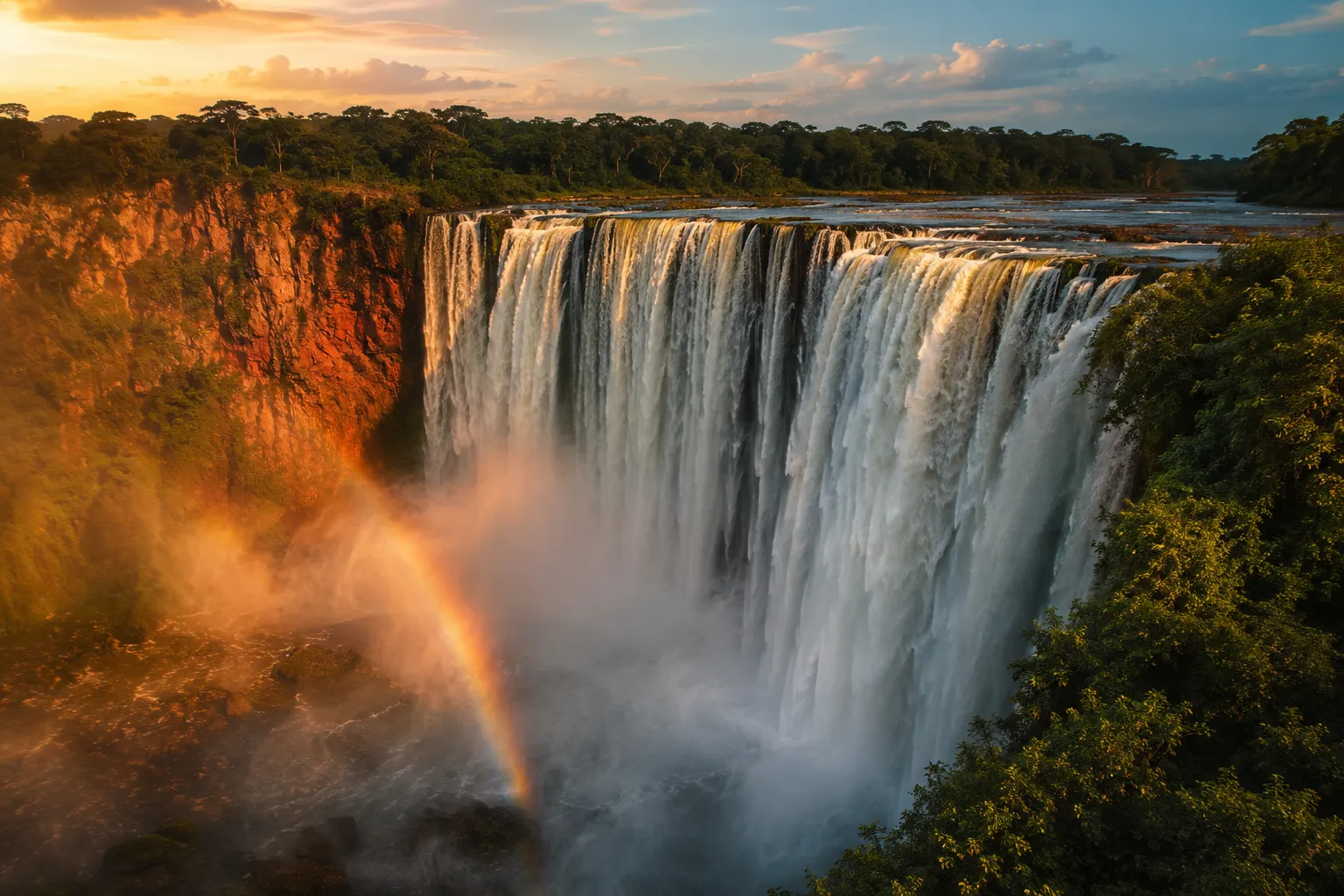
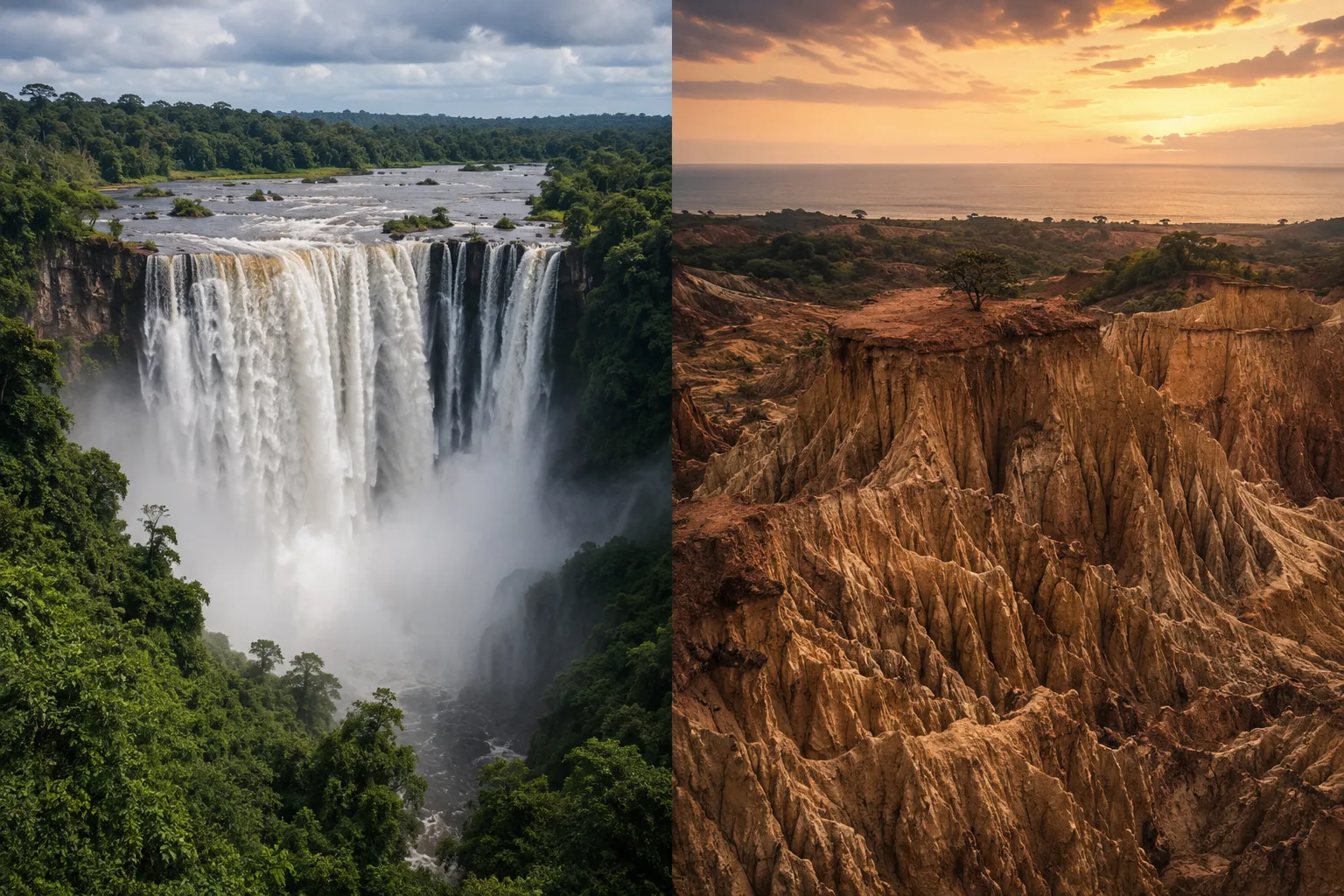
If you see one natural wonder in Angola, make it Kalandula. At roughly 105 metres high and 400 metres wide, it’s one of the largest waterfalls in Africa by volume, and vastly less visited than Victoria or Murchison [1].
Combine it with:
- Pedras Negras de Pungo Andongo: dramatic black rock formations with royal Kongo history.
- Cangandala National Park: last refuge of the critically endangered palanca negra gigante (giant sable antelope), Angola’s national symbol.
Access: ~380 km east of Luanda by road (6-8 hrs) or short domestic flight to Malanje city. Best in the wet-to-dry transition (April, June) when falls are full but roads are drivable.
Deep dive: Kalandula Falls and Palanca Negra.
Southern Angola: Huíla, Namibe and the Desert
This is my favourite region. The south feels like Namibia’s better-kept sibling.
Huíla province (Lubango as base):
- Cristo Rei statue overlooking Lubango.
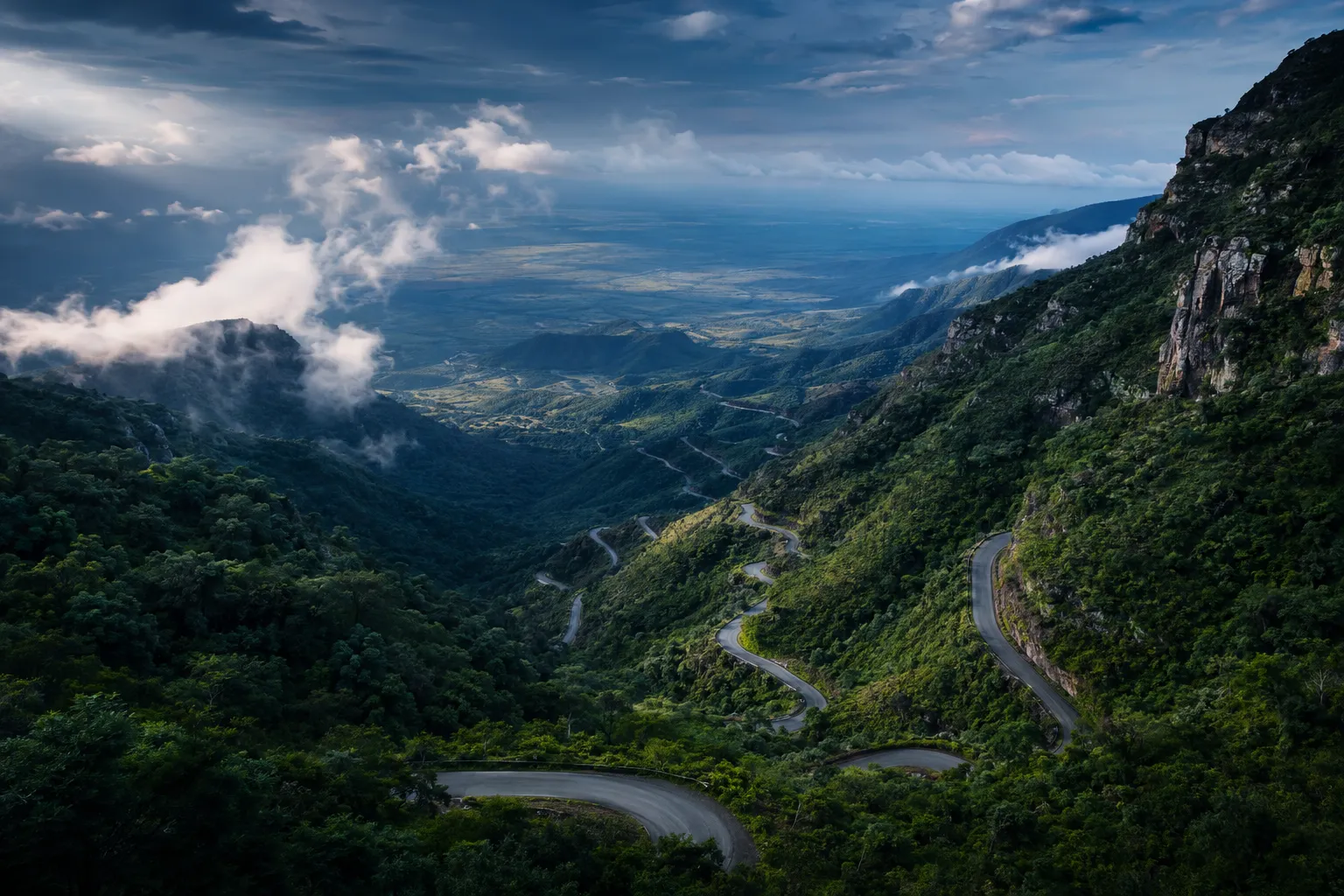
- Serra da Leba mountain pass: the switchback road on every Angolan postcard.
- Tundavala Gap: a 1,000-metre escarpment drop into the desert plains.
Namibe province:
- Namibe town: former Portuguese fishing port, Art Deco buildings, good seafood.
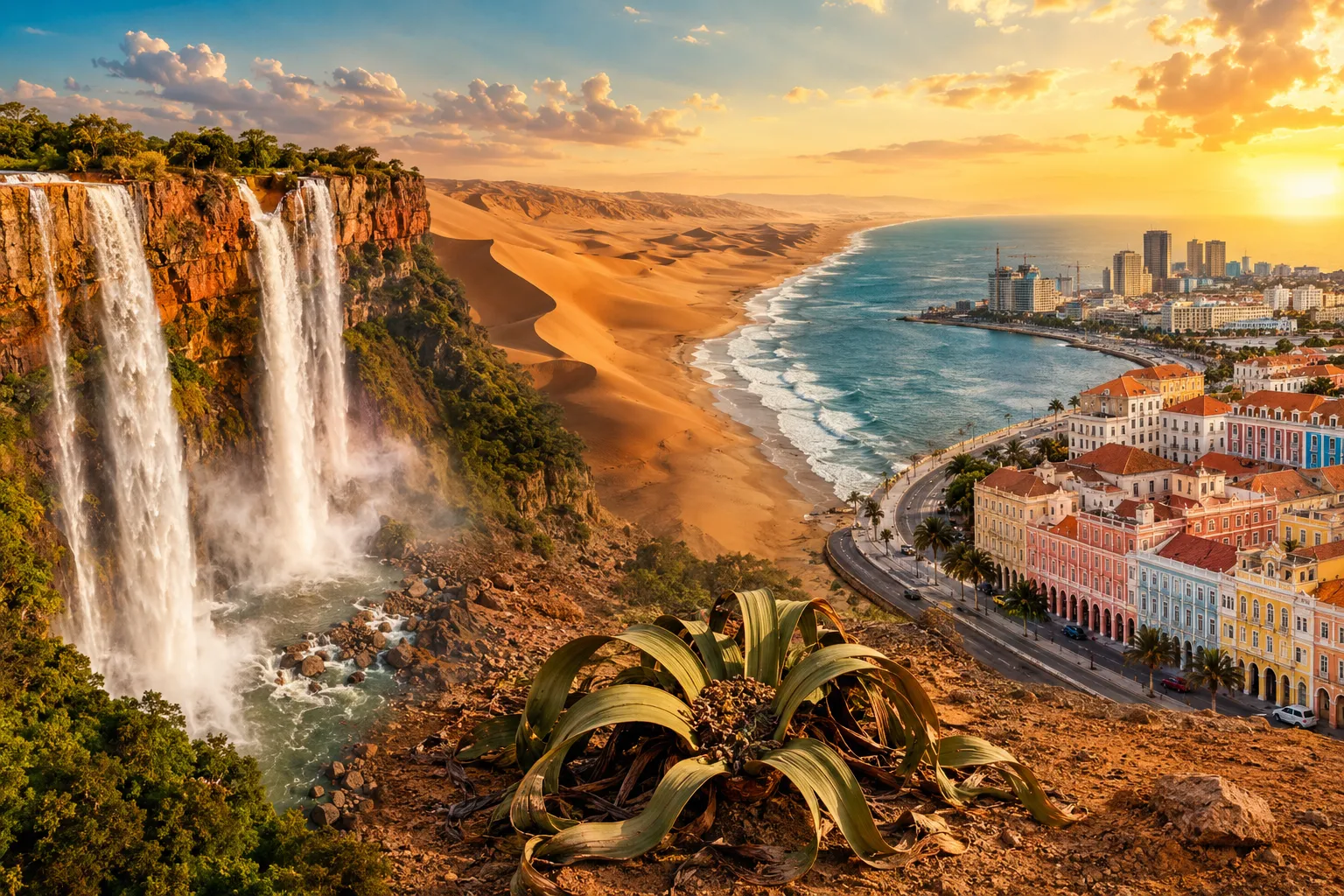
- Iona National Park: Angola’s largest, where the Namib Desert meets the Atlantic. Home to the ancient welwitschia plant (some over 1,000 years old).
- Flamingo Bay and shipwreck coast.
Cunene province: semi-nomadic Himba and Mucubal communities near the Namibian border. Visit with a responsible local guide only.
Best for: landscape photographers, desert lovers, self-drive adventurers.
Coast Beyond Luanda: Benguela and Lobito
Six hours south of Luanda by road (or a quick flight), Benguela and Lobito are the country’s easy beach escape.
- Benguela: pastel colonial architecture, palm-lined avenues, Praia Morena and Baía Azul beaches.
- Lobito: natural sandbar peninsula (Restinga), deep-water port, terminus of the historic Benguela Railway and the modern Lobito Corridor trade route.
Best for: beach add-on, colonial history, easy first trip beyond Luanda.
The Wild East: Lundas and Moxico
Lunda Norte, Lunda Sul, Moxico: diamond country, deep miombo woodland, the source of the Zambezi River, and the shores of Lake Dilolo. This is Angola at its wildest and least developed.
Best for: experienced expedition travellers, researchers, adventure tour operators.
Access: flights to Saurimo or Luena, then long overland journeys. Not recommended for independent travellers without local support.
When Is the Best Time to Visit Angola
May to October. This is the dry, cooler season across most of the country. Roads are passable, humidity is low in Luanda, and the highlands are crisp.
- November to April: rainy season. Kalandula is at maximum flow (spectacular) but roads to it can flood.
- Coast (Luanda, Benguela): cooled year-round by the Benguela Current, so beach days are pleasant even in “winter”.
- Highlands (Lubango, Huambo): nights get chilly (10-15°C) in July.
More detail: best time to visit Angola.
How to Get Around Angola Safely
Fly for long distances, hire a driver for regions, avoid night driving.
- Domestic flights (TAAG and smaller carriers) connect Luanda to Cabinda, Huambo, Lubango, Namibe, Malanje, Saurimo, Luena.
- Roads: main tarred routes (Luanda, Lobito, Lubango) are decent. Secondary roads deteriorate fast.
- Rental cars: possible but 4x4 with driver is safer and more common.
- Trains: the Benguela Railway (Lobito, Huambo, Luena) is being modernised and is a highlight in itself.
- Landmine legacy: stick to marked roads and paths in rural areas.
Is Angola Safe for Tourists Right Now
Angola is generally safe for tourists in the main destinations, but street-level petty crime in Luanda requires normal city smarts. Cabinda has stricter travel advisories from several Western governments. Check your government’s travel advisory before booking (2026, verify). Full context in our guide: is Angola safe.
Angola vs Other African Countries: Which Is Better to Visit
Angola is not a substitute for Kenya’s Big Five safaris or Morocco’s medinas. It’s a different proposition entirely.
| If you want… | Consider Angola | Consider instead |
|---|---|---|
| Classic Big Five safari | No | Kenya, Tanzania, South Africa |
| Desert + Atlantic coast | Yes (Iona) | Namibia |
| Colonial Lusophone culture | Yes | Mozambique, Cape Verde |
| Huge waterfalls, low crowds | Yes (Kalandula) | Zambia (Victoria Falls) |
| Beach resort holiday | Limited | Zanzibar, Seychelles |
| Off-the-map adventure | Yes | Chad, CAR |
Choose Angola if: you’ve already done the East and Southern Africa classics and want something rawer, Portuguese-speaking, and genuinely uncrowded.
What Is Angola Known For in Tourism
Angola is known for: Kalandula Falls, the Serra da Leba pass, the Namib meeting the Atlantic in Iona, its Portuguese colonial architecture, the giant sable antelope, and its music (semba, kizomba, kuduro). Increasingly it’s also known as one of Africa’s next-frontier destinations for luxury eco travel [8].
Can You Visit Angola as a Solo Traveler
Yes, but plan carefully. Luanda, Benguela, Lobito and Lubango are manageable solo. The east and Cabinda are not recommended solo. Portuguese language skills help enormously (English is limited outside upmarket hotels). Consider joining a small-group operator for Kalandula, Iona and highland regions.
Cheapest Places to Visit in Angola
Nowhere in Angola is truly cheap by African standards. Luanda ranks among the most expensive cities in the world for expats. The best value regions are:
- Benguela and Lobito: mid-range hotels, affordable seafood.
- Lubango: cheaper than the coast, great highland guesthouses.
- Huambo: local prices, few tourist markups.
Angola Travel Budget: How Much Does It Cost
Rough daily budgets (2026, verify current rates via Banco Nacional de Angola):
- Backpacker (very tough here): 80-120 USD/day
- Mid-range independent: 200-350 USD/day
- Comfort with driver/guide: 400-700 USD/day
- Luxury lodges (Iona, Kissama): 800+ USD/day
International flights from Europe to Luanda typically run 700-1,300 EUR return. Domestic flights are a significant additional cost. See money in Angola for currency and payment tips.
Angola Visa Requirements for Tourists
Angola dramatically simplified access in recent years. As of 2026:
- Many EU nationalities, UK, US, Canadian, Australian passport holders can enter visa-free for short tourism stays OR use the online e-visa portal.
- Rules change often. Always verify on the official Serviço de Migração e Estrangeiros (SME) e-visa portal before booking.
- A yellow fever vaccination certificate is typically required. Verify current requirements via the WHO or your national travel health service.
Full details: Angola visa and Angola vaccinations and health.
How Many Days Do You Need in Angola
- 5-7 days: Luanda + Kissama + Mussulo. Enough for a taste.
- 10-14 days: add Kalandula and either Lubango or Benguela. This is the sweet spot for most travellers.
- 3 weeks: full loop including Iona desert, Namibe, and highland time.
- 1 month+: add the east or Cabinda for expedition travellers.
What Do Locals Recommend Visiting in Angola
Ask an Angolan and the answers are consistent: Kalandula, Serra da Leba, Miradouro da Lua, and a lazy weekend at Mussulo. Foodies will push you toward Benguela for the best seafood, and toward Ilha in Luanda for late-night muamba de galinha and grilled fish. For music lovers, a semba night in Luanda beats any museum.
Learn more about the country’s food and music on our culture of Angola page.
Conclusion: How to Choose Your Angola Region
Start with the triangle: Luanda, Malanje, Lubango/Namibe. That combination delivers city, waterfall, and desert-highland in 10 to 14 days and shows you why Angola is quietly becoming one of Africa’s most talked-about destinations [7][9]. Add Benguela or Lobito if you want beach time. Save Cabinda and the east for a second trip once you know the country.
Next steps:
- Verify visa and vaccination requirements via the official Angola e-visa portal and your national travel health service.
- Read our Angola attractions guide for more inspiration.
- Pick your regions using the table above and start pricing flights for the May, October window.
Angola rewards travellers who arrive curious and flexible. Go before everyone else figures it out.
Province explorer
Filter Angola's 21 provinces by location and how developed they are for tourism.
- LuandaDeveloped for tourismCapital and hub: the bay, museums, nightlife and the island of Mussulo nearby.Luanda guide
- BenguelaDeveloped for tourismColonial coastal city with beaches, plus the port city of Lobito with the famous Restinga peninsula.Benguela guide
- NamibeDeveloped for tourismWhere desert meets ocean: the town of Moçâmedes, the Namib desert and Iona National Park.Namibe guide
- HuílaDeveloped for tourismHighlands around Lubango, with the Tundavala gorge and the Serra da Leba pass as icons.Lubango guide
- MalanjeDeveloped for tourismHome of the Kalandula Falls and the Black Rocks of Pungo Andongo.Malanje guide
- CabindaEmergingAn exclave between the two Congos, with the Maiombe rainforests. Practically reachable only by plane.Cabinda guide
- HuamboEmergingThe central highlands; once "Nova Lisboa", today a city being rebuilt, with a mild climate.Huambo guide
- Icolo e BengoEmergingA new province (2024) around Catete, split off from Luanda; the new international airport is here too.
- BengoEmergingRight around the capital region; rivers, lagoons and part of the Kissama area.Kissama guide
- Cuanza SulEmergingA coastal province between Luanda and Benguela, with waterfalls (Cachoeiras de Binga) and a coffee history.
- ZaireFor pioneersA northern coastal province with Mbanza Kongo, a UNESCO World Heritage Site at the heart of the old Kingdom of Kongo.Mbanza Kongo guide
- Cuanza NorteFor pioneersGreen interior along the Cuanza river; barely any tourist infrastructure yet.
- UígeFor pioneersA coffee province in the north, hilly and green; for seasoned travellers.
- BiéFor pioneersThe geographical heart of Angola, on the central plateau around Cuíto.
- MoxicoFor pioneersA vast east with the sources of the Zambezi; since 2024 split into Moxico and Moxico Leste.
- Moxico LesteFor pioneersA new eastern province (2024) around Cazombo, on the upper reaches of the Zambezi.
- CuandoFor pioneersA new province (2024) in the far south-east; wilderness towards the Okavango systems.
- CubangoFor pioneersAround Menongue; together with Cuando this formed the province of Cuando Cubango until 2024.
- CuneneFor pioneersA border province with Namibia, home to the Himba and Mucubal communities among others.
- Lunda NorteFor pioneersA diamond region in the north-east; culturally rich (Tchokwe), yet almost untouched by tourism.
- Lunda SulFor pioneersThe southern Lunda province around Saurimo; savannah and rivers, still without tourist routes.
Since the 2024 reorganisation, Angola has 21 provinces (previously 18). The labels "developed", "emerging" and "for pioneers" are our editorial assessment of the tourist infrastructure, not an official classification. Start your exploration withthe finest sights.
Free help from our team in Angola
Not sure where to go in Angola?
Tell us what you like and how much time you have. We suggest the regions that fit and plan a route between them, with transport and guides.
- Local team in Angola
- No obligation, nothing to pay
- Reply by email or WhatsApp
Want to keep this guide? We email you the key points with a link to every section.
Frequently asked questions
Do I need Portuguese to travel in Angola?
It helps enormously. English is spoken in top hotels and tour operators in Luanda; elsewhere, basic Portuguese phrases go a long way.
Is Kalandula worth the trip from Luanda?
Yes, easily. Fly or drive to Malanje and stay one to two nights. It's the country's most spectacular natural sight and still uncrowded.
Can I self-drive in Angola?
Technically yes, but most travellers hire a driver or 4x4 with guide. Fuel, road quality and signage vary widely.
When is Kalandula Falls at its most powerful?
Late in the rainy season, around March to May, when water volume peaks but access roads are still drivable.
Is Cabinda safe for tourism?
It's an exclave with a different security context. Several Western governments advise extra caution. Verify current advice with your government's travel advisory before planning.
What currency should I bring?
The Angolan kwanza (AOA). Bring USD or EUR cash to exchange; card acceptance is limited outside major hotels. Check current rates at Banco Nacional de Angola.
References
- [1] Untouched, wild, welcoming: Angola's hidden tourism gem
- [2] Angola Leisure Tourism Increase 2025
- [4] Angola Approves $449M For Coastal Tourism Infrastructure
- [5] Angola: What the country hopes to achieve with its tourism ambitions
- [7] Angola Tourism Rises Berlin
- [8] Angola Tourism Boom: Portugal, South Africa and China drive surge
- [9] Angola Builds On Berlin Momentum Ahead Of Global Tourism Forum In L...
- [10] Angola Debuts At FITUR 2026