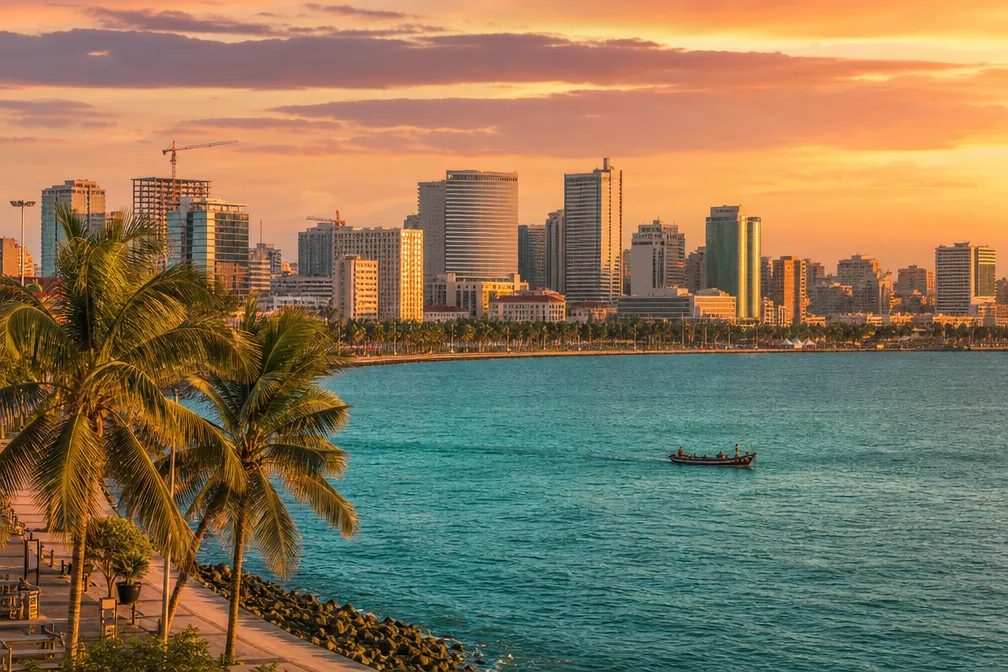
Angola has a reputation as one of Africa’s pricier destinations, and that reputation is largely deserved. Luanda regularly appears in global rankings of the most expensive cities for expats, and imported goods, hotel rooms, and even a simple pizza can shock travelers used to Southeast Asia or East Africa. But the full picture is more nuanced: with smart planning, a two-week trip can still land in a reasonable budget range.
Quick Answer: What does an Angola trip really cost?
Expect a realistic angola travel cost of roughly US$60-90 per day for backpackers, around US$140 per day mid-range, and US$450+ per day for luxury travel, excluding international flights [1][2]. Flights from Europe often run higher than to neighboring countries, and Luanda is the single biggest budget driver. Always verify current prices before booking, since costs shift with exchange rates and fuel.
Key Takeaways
- Angola is generally more expensive than most African destinations, especially in Luanda.
- Daily budgets range from about US$60 (basic) to US$450+ (luxury) per person [2].
- Flights from Amsterdam or Brussels via Lisbon or Addis Ababa are the largest single cost for many travelers.
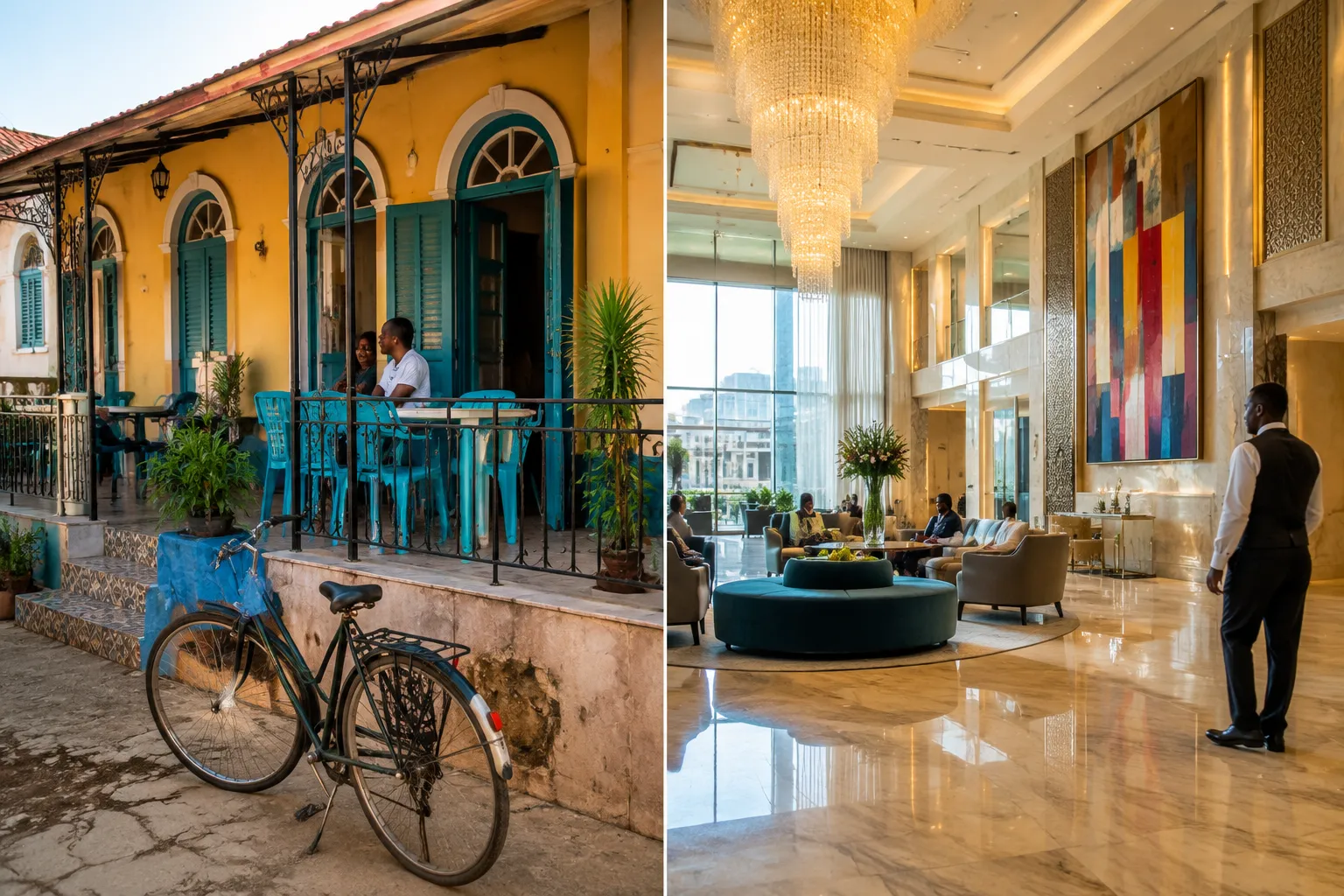
- Accommodation ranges from US$20-50 for guesthouses to US$150-300+ for luxury hotels [3].
- Food costs vary widely: US$3-5 for street food, US$25-40 mid-range, US$70+ fine dining [4].
- The dry season (May to October) is the best time to visit and also the busiest.
- Visa rules have relaxed for many nationalities including EU passport holders; always check the official portal.
- The biggest savings come from traveling with a group, cooking your own food, and avoiding taxis in Luanda.
Is Angola expensive compared to other African countries?
Yes. Angola is widely considered one of the more expensive countries in sub-Saharan Africa to visit, mainly because of Luanda’s high hotel rates, imported food, and limited budget infrastructure. Compared to Namibia, Zambia, or Tanzania, you’ll often pay more for a similar hotel standard, and self-drive or budget backpacker circuits are less developed.
That said, once you leave Luanda, prices drop noticeably. Local meals, minibus transport, and family-run guesthouses in Benguela, Lubango, or Namibe are far more affordable than the capital suggests. For more context on the country in general, see our guide on travelling to Angola.
Average income in Angola: why tourist prices feel high
The average income in Angola is modest compared with what visitors often pay in Luanda. The World Bank puts Angola’s gross national income (GNI) per person at US$2,860 for 2025 (Atlas method), up from US$2,850 in 2024, and GDP per person at about US$3,130 in 2025 [8]. These are national averages, so they say little about what a typical household earns, but they show the gap with international hotel and restaurant prices.
That gap is why Angola can feel like a two-speed country. Hotels and restaurants aimed at business visitors in Luanda are priced for an international market, while local markets, street food and guesthouses are much cheaper. To see the full range, compare places to stay in every class on our Angola hotels page, from cheap hotels in Luanda to the top-rated international hotels.
How much does it cost to visit Angola per day?
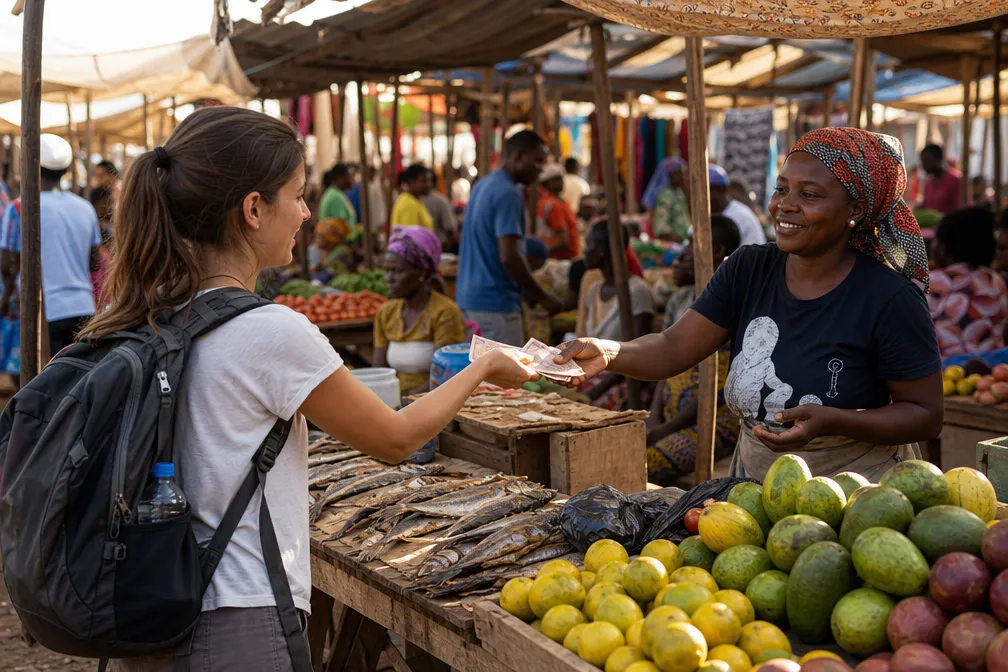
Here’s a realistic breakdown based on published traveler estimates [1][2][4]:
| Traveler style | Daily budget (USD) | What it covers |
|---|---|---|
| Backpacker | $60-90 | Guesthouses, street food, shared transport |
| Mid-range | ~$140 | 3-star hotels, mixed dining, taxis |
| Comfort | $250-400 | 4-star hotels, guided tours, some flights |
| Luxury | $450+ | 5-star hotels, fine dining, private transfers |
These numbers exclude international flights, visa fees, insurance, and vaccinations. Luanda pushes the average up; smaller cities pull it down.
“Angola rewards patience and preparation. The moment you leave Luanda, the country starts to feel affordable again.”
Angola visa cost and requirements
Angola dramatically simplified its visa process in recent years. Many nationalities, including most EU passport holders and confirmed Dutch passport holders, can enter visa-free for short tourist stays; check the official list on evisa.ao to confirm your own nationality, including Belgian passport holders. Others qualify for an e-visa through the official portal of the Serviço de Migração e Estrangeiros (SME). Fees and validity change often, so always verify on the official Angolan e-visa portal before booking.
Practical tips:
- Check the current rules on the official SME e-visa portal and your government’s official travel advice (for example the UK FCDO or the US State Department).
- Have proof of onward travel, accommodation, and a yellow fever vaccination certificate ready.
- Budget a modest amount for the e-visa if it applies to you, but do not trust old blog posts quoting exact fees. See our dedicated Angola visa guide for the latest overview.
Flights to Angola: price comparison
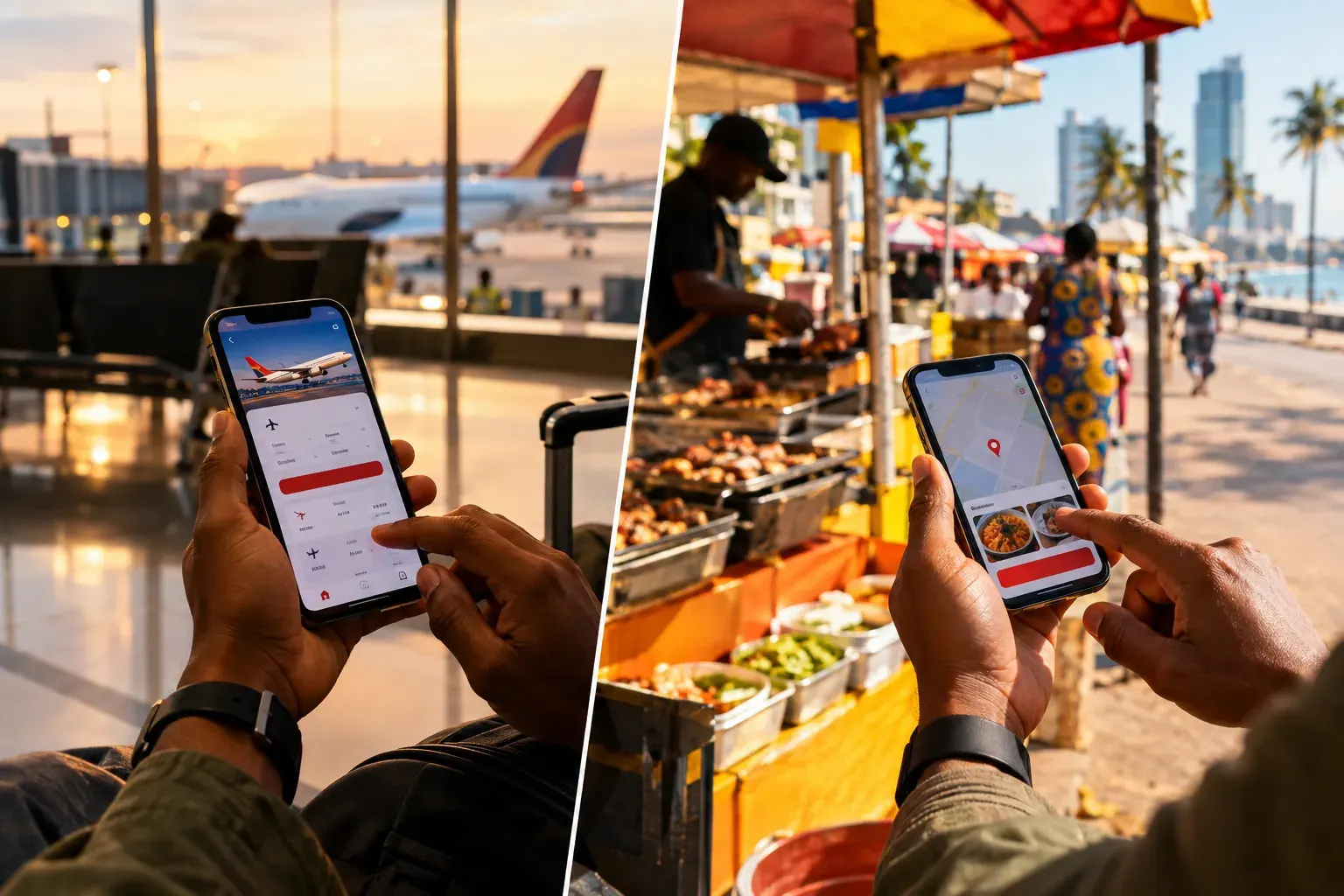
Direct flights from the Netherlands or Belgium to Luanda are rare. Most routings go via Lisbon (TAP), Addis Ababa (Ethiopian), Istanbul (Turkish), or Paris (Air France). TAAG Angola Airlines also operates long-haul flights from Lisbon.
Rough guidance on flight prices (verify live, they swing a lot):
- Low season, flexible dates: often the cheapest window, especially February to April.
- Peak season (July, August, December): expect noticeably higher fares.
- Booking window: 2-4 months in advance usually offers the best balance of price and availability.
Disclosure: some outbound booking links on this site are affiliate links (rel=“sponsored nofollow”). We earn a small commission if you book, at no extra cost to you.
For flight and hotel searches, I usually start with a major aggregator like Skyscanner or Booking.com to compare fares and cancellation policies, then cross-check directly with TAAG. More on getting there in our flights to Angola article.
Budget vs luxury accommodation in Angola
Angola’s accommodation market is polarized: lots of business-class hotels in Luanda, a growing mid-range in coastal cities, and simple guesthouses everywhere else.
Typical price bands [3]:
- Budget guesthouses and pensões: roughly US$20-50 per night. Basic room, fan or weak AC, often shared bathrooms in the cheapest options.
- Mid-range hotels: US$50-150 per night. AC, Wi-Fi, breakfast included, often the sweet spot in Benguela, Lobito, and Lubango.
- Luxury hotels in Luanda: US$150-300+ per night. International chains, sea views, secure parking, restaurants.
Booking direct with smaller guesthouses can be cheaper than online, but you’ll usually need Portuguese. For a deeper dive, see our accommodatie Angola overview.
How much to spend on food in Angola
Food is where you have the most control over your Angola travel budget. Local eateries serve generous portions of national dishes like muamba de galinha, funge, and calulu for very little, while imported ingredients at Western restaurants in Luanda push prices up sharply.
Rough per-meal ranges [4]:
- Street food and local eateries: US$3-5
- Casual mid-range restaurants: US$10-20
- Nice sit-down restaurants: US$25-40
- Fine dining in Luanda: US$70+
Bottled water is a non-negotiable expense (tap water is not safe to drink). Budget a few dollars a day for water alone. Explore more in our Angolan cuisine guide.
Transport and getting around
Transport is the trickiest part of the cost of travel in Angola. Domestic distances are huge, roads vary in quality, and public transport is not designed for tourists.
Your options:
- Domestic flights (TAAG): fastest way between Luanda and Lubango, Namibe, or Cabinda. Not cheap, but often worth it for a 2-week trip.
- Long-distance buses (Macon, SGO): much cheaper, but slow and best for travelers with time and some Portuguese.
- Candongueiros (minibuses) and taxis: affordable in-city, but confusing without local help. In Luanda, ride-hailing apps are increasingly common.
- Car rental with driver: expensive but often the most practical for reaching Kalandula or Kissama.
See our getting around Angola guide for detailed logistics.
Angola activities and entrance fees
Entrance fees are one of the pleasant surprises of Angola. Most attractions are cheap or free by international standards.
- Fortaleza de São Miguel (Luanda): modest entry fee.
- Kissama (Quiçama) National Park: park entry plus vehicle fee; guides recommended.
- Kalandula Waterfalls: small entry fee, but the real cost is transport from Malanje or Luanda.
- Miradouro da Lua: free viewpoint south of Luanda.
- Serra da Leba pass and Tundavala (Lubango): free to visit, hire a local driver.
Guided tours to remote spots like Iona National Park or the Palanca Negra habitat in Malanje are pricier, mainly due to fuel and 4x4 logistics. See things to do in Angola for what’s worth prioritizing.
Angola travel insurance cost
Travel insurance is non-negotiable for Angola, and it’s usually one of the smaller line items on your trip budget. Expect roughly €30-80 for a two-week policy from a Dutch or Belgian insurer, more if you’re older or want extensive medical evacuation cover.
Look for:
- Medical evacuation to Europe or South Africa (crucial given limited local hospitals outside Luanda).
- Coverage for adventure activities if you plan hiking or diving.
- Cancellation cover given the risk of last-minute flight changes.
Consult your insurer directly and cross-check with your government’s official travel advice (for example the UK FCDO or the US State Department) for Angola.
Sample budgets: 10-day trip breakdown
Here’s a rough sketch of what a 10-day trip might look like per person, excluding international flights:
| Category | Backpacker | Mid-range | Comfort |
|---|---|---|---|
| Accommodation | $250 | $700 | $1,800 |
| Food & drink | $150 | $400 | $700 |
| Transport (in-country) | $200 | $500 | $1,200 |
| Activities & entry | $80 | $200 | $400 |
| Misc (SIM, water, tips) | $70 | $150 | $250 |
| Total (~10 days) | ~$750 | ~$1,950 | ~$4,350 |
Add international flights (typically €700-1,400 return from NL/BE, verify live) and insurance on top. For a longer itinerary, see our Angola itinerary suggestions.
How to travel to Angola on a tight budget
You can trim the Angola daily budget meaningfully with a few habits:
- Skip Luanda hotels where possible. Stay one or two nights, then head out.
- Eat where locals eat. A plate of funge with fish at a neighborhood eatery is a fraction of hotel restaurant prices.
- Travel in the shoulder season (May or October) to avoid peak fares.
- Book flights early and stay flexible on dates.
- Share transport. Group up with other travelers for 4x4 hires to Kalandula or Iona.
- Get an eSIM on arrival for data instead of expensive hotel Wi-Fi or roaming.
- Carry cash. ATM fees add up, and many places don’t take cards.
Hidden costs when traveling to Angola
Watch for these budget-busters that don’t show up in most guides:
- Airport transfers in Luanda: can be surprisingly steep, especially at night.
- Bottled water everywhere: a small but constant drain.
- Tips for guides, drivers, and hotel staff: budget 5-10% of service costs.
- Domestic flight rebookings: TAAG schedule changes happen; keep buffer time.
- Import-heavy toiletries: bring your own sunscreen, tampons, contact lens fluid.
- Photography permits at some sites.
Cheapest time to visit Angola
The cheapest time to visit Angola is generally during the rainy season, from November to April, when hotel occupancy dips and flight prices soften. The trade-off is muddy roads (especially near Kalandula and inland parks) and higher humidity.
For most travelers, the shoulder months of May and October offer the best balance: dry weather starting or ending, fewer crowds, and better flight deals than peak July, August. See our detailed best time to visit Angola breakdown.
How long should you stay in Angola on a budget?
For a first visit, 10 to 14 days is the sweet spot. Less than a week and the flight cost per day becomes painful; more than two weeks pushes the total budget into serious territory unless you slow down and stay in cheaper coastal towns.
A common budget-friendly split:
- Days 1-3: Luanda and Mussulo
- Days 4-7: Benguela and Lobito by bus or domestic flight
- Days 8-10: Lubango, Serra da Leba, Tundavala
- Days 11-14: Kalandula and back to Luanda (or extend to Namibe)
What’s included in Angola tour packages?
Organized tours to Angola are still relatively niche and typically include: domestic flights or 4x4 transport, guide, accommodation, most meals, park entry fees, and airport transfers. International flights, visas, tips, drinks, and travel insurance are almost always excluded. Prices vary wildly, so ask for a detailed inclusion list in writing before booking.
Best value for money in Angola
The best-value experiences tend to be:
- Kalandula Waterfalls day trip from Malanje: raw, uncrowded, unforgettable.
- Serra da Leba viewpoint near Lubango: free, dramatic, iconic.
- Ilha de Luanda seafood lunch: affordable local seafood with Atlantic views.
- Benguela beach days at Praia Morena or Baía Azul.
- Miradouro da Lua sunset stop on the drive south of Luanda.
Conclusion
Angola isn’t a cheap destination, but it’s not out of reach either. The angola travel cost depends heavily on how much time you spend in Luanda and how comfortable you need to be. A well-planned two-week trip can range from about US$1,500 for a lean backpacker to US$6,000+ for comfort travel, plus flights.
Your next steps:
- Check the current Angola visa guide rules and yellow fever requirements.
- Compare flights 2-4 months out and lock in dates.
- Build your rough itinerary using our Angola itinerary guide.
- Sort out cash and cards with the Angola currency and money guide.
- Book insurance and, if wanted, an eSIM before departure.
The country rewards travelers who prepare. Get the basics right and Angola turns from “intimidatingly expensive” into “genuinely memorable.”
Angola trip cost calculator
Pick your travel style, nights and group size and see a budget that adds up, in your currency.
Estimated total
-
-
- On the ground-
- -
- Accommodation-
- Food & drink-
- In-country transport-
- Activities & entry fees-
- SIM, water, tips-
- International flightsNot entered. Add a fare in step 3 to include it.
- -
- Travel insurance30 to 80 euro per person for two weeks, scaled to your trip
- -
- Estimated total
- -
Indicative split, derived from the sample budgets in our cost guide. The five lines add up exactly to the on-the-ground figure.
Our cost guide publishes no category split for luxury travel, so we show the total only.
Not in this estimate
- Visa: many nationalities enter visa-free or use the e-visa; fees change, so check the official portal. See our Angola visa guide.
- Domestic flights: fares vary and we do not estimate them. SeeTAAG Angola Airlines and ourroute guides to decide where flying is worth it.
- Vaccinations: a yellow fever certificate is standard. Seevaccinations and health.
Five ways to bring this number down
- Leave Luanda quickly. One or two nights in the capital, then head out: the same hotel standard costs far less in Benguela, Lobito or Lubango.
- Eat where locals eat. A plate of funge with fish at a neighbourhood eatery costs a fraction of a hotel restaurant.
- Travel in May or October. Shoulder season: dry weather, fewer crowds and better fares than July, August and December.
- Share transport. Group up with other travellers for 4x4 hires to Kalandula or Iona.
- Carry cash and get an eSIM. ATM fees and hotel Wi-Fi add up; card acceptance outside Luanda is limited.
More in our Angola trip cost guide.
These are planning figures, not quotes. The daily budgets and the category split come from ourAngola trip cost guide; they exclude visa fees and domestic flights. Luanda pushes the average up; smaller cities pull it down. Euro and pound figures are converted from US dollars at an indicative rate (Wise (live rate), 25 July 2026). Some links above are affiliate links, marked as sponsored. We earn a small commission if you book, at no extra cost to you.
Free help from our team in Angola
Want a real quote for your trip?
Averages only get you so far. Tell us your dates, travel style and what you want to see, and we send a plan with a price for your trip.
- Local team in Angola
- No obligation, nothing to pay
- Reply by email or WhatsApp
Want to keep this guide? We email you the key points with a link to every section.
Frequently asked questions
Is Angola expensive to visit?
Yes, Angola is one of the more expensive African destinations, mainly because of Luanda's hotel and food prices. Outside the capital, costs drop significantly.
What is a realistic daily budget for Angola?
Around US$60-90 for backpackers, US$140 for mid-range, and US$450+ for luxury travelers per day, excluding international flights.
How much are flights to Angola from the Netherlands or Belgium?
Return fares typically range from €700 to €1,400 depending on season and routing, but always verify live prices. Most flights connect via Lisbon or Addis Ababa.
How much does accommodation cost in Angola?
Budget guesthouses run US$20-50, mid-range hotels US$50-150, and luxury properties US$150-300+ per night.
Is food expensive in Angola?
Local food is cheap (US$3-5 per meal), but restaurants catering to tourists and expats in Luanda are expensive, easily US$25-40 or more per meal.
What is the average income in Angola?
The World Bank puts Angola's gross national income per person at US$2,860 for 2025 (Atlas method), and GDP per person at about US$3,130. These are national averages, not typical wages, but they explain why international hotels and restaurants in Luanda feel expensive compared with local prices.
How can I save money in Angola?
Leave Luanda quickly, eat local, travel in shoulder season, share transport with other travelers, and book flights well in advance. Carry cash for smaller towns.