Quick answer
Angola weather is tropical but far less sticky than most visitors expect, because the cool Benguela current tempers the coast. The country has two seasons: a dry, mild “cacimbo” from roughly May to September, and a hot, humid rainy season from October to April. Temperatures typically range from 17°C to 30°C depending on region and altitude [1].
Key takeaways
- Angola has two seasons, not four: dry (cacimbo) and wet.
- The best travel window is May to September, when it is dry and cooler.
- The coast is cooler than you’d expect thanks to the Benguela current.
- The central highlands (Lubango, Huambo) can drop below 10°C at night in July.
- The north is the wettest region; the south is semi-arid to desert.
- Rainfall is highest between March and April in most of the country [1].
- There is no hurricane or cyclone risk in Angola.
- Climate change is producing stronger droughts and floods in recent years [2][3].
Angola’s climate overview
Angola sits in southern Africa with about 1,600 km of Atlantic coastline, and its climate is shaped by three big factors: latitude, altitude, and the cold Benguela current running up the coast. The result is a country that is officially tropical, but feels very different depending on where you stand [1].
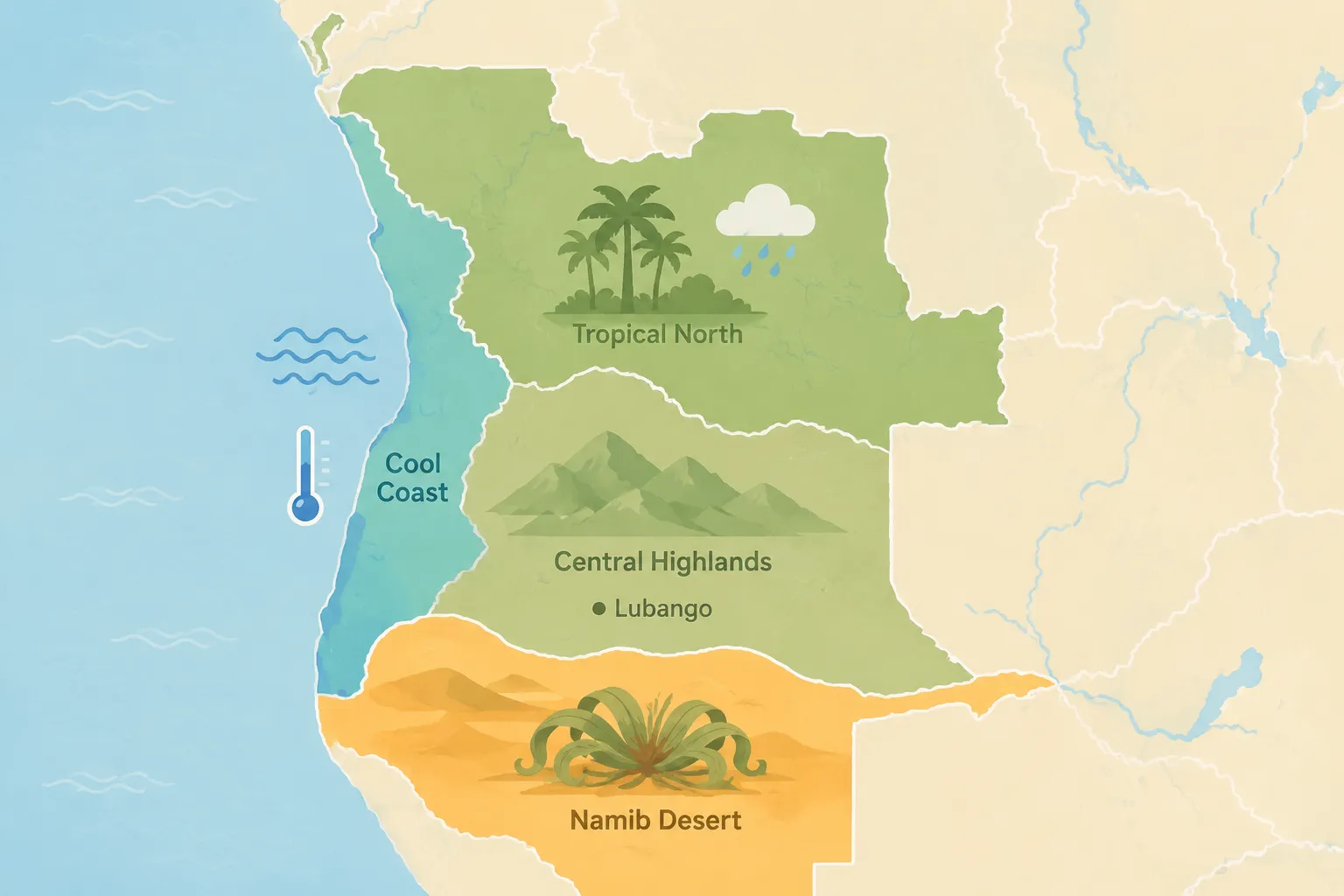
Broadly, you can split Angola into four climate zones:
- Coastal strip (Luanda, Benguela, Namibe): warm, relatively dry, tempered by cool ocean air.
- Northern interior (Uíge, Cabinda, Malanje): tropical, humid, high rainfall.
- Central highlands (Huambo, Bié, Huíla/Lubango): temperate, mild days, cool nights.
- Southwestern desert (Namib in Namibe province): arid, minimal rainfall, big temperature swings.
Average annual rainfall ranges from under 100 mm in the far south to over 1,200 mm in the north [1]. If you’re still deciding when to go, our detailed best time to visit Angola guide walks through the trade-offs by month and region.
What is the dry season (cacimbo)?
The dry season, known locally as cacimbo, runs from about May to September. This is Angola’s cooler, sunnier, less humid half of the year, and it is the season most travellers aim for. Rainfall is rare, humidity drops, and skies are often clear inland.
A few things to know about cacimbo:
- Along the coast, mornings can start with a cool grey mist burning off by late morning.
- Nights in the highlands can be genuinely cold (single digits Celsius).
- Roads to national parks like Kissama and Iona are at their most passable.
- Wildlife viewing improves as animals gather near shrinking water sources.
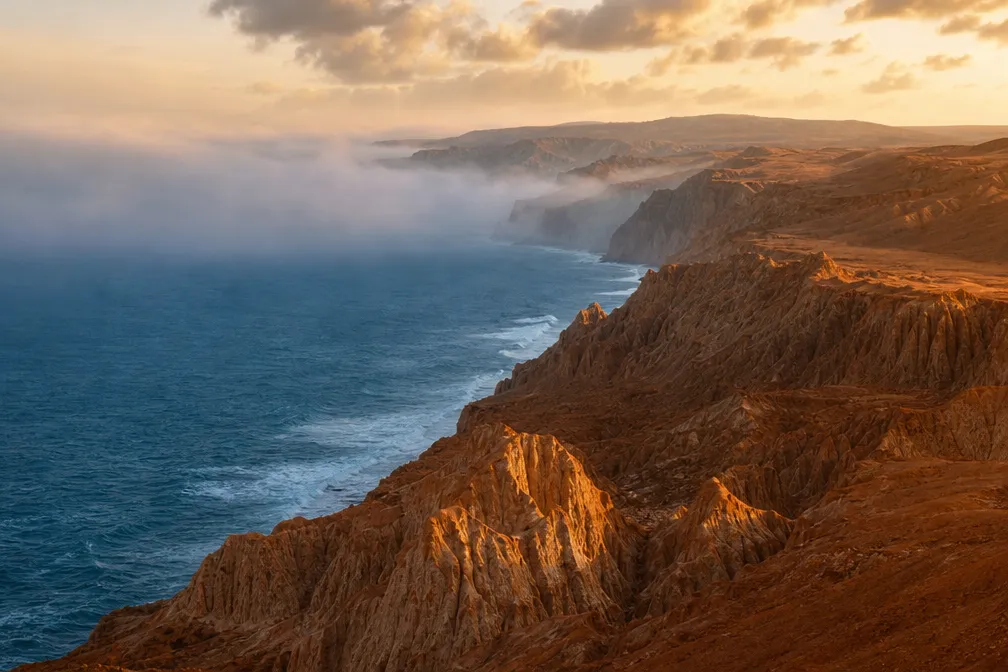
The word “cacimbo” actually refers to that low coastal mist and fog that hangs around in the dry months. It looks moody, but it means comfortable travel weather.
Cacimbo is the traveller’s friend: dry roads, cooler air, better wildlife sightings, and a coast that feels almost Mediterranean.
What is the rainy season in Angola?
The rainy season runs from roughly October to April, with the heaviest downpours typically in March and April across most of the country [1]. It doesn’t rain all day, every day. Expect afternoon thunderstorms, high humidity, and warm nights.
When is the rainy season heaviest?
- October, November: first rains, still relatively light.
- December, February: a short drier lull in some regions (called the “small dry season” in the north).
- March, April: peak rainfall, dramatic thunderstorms.
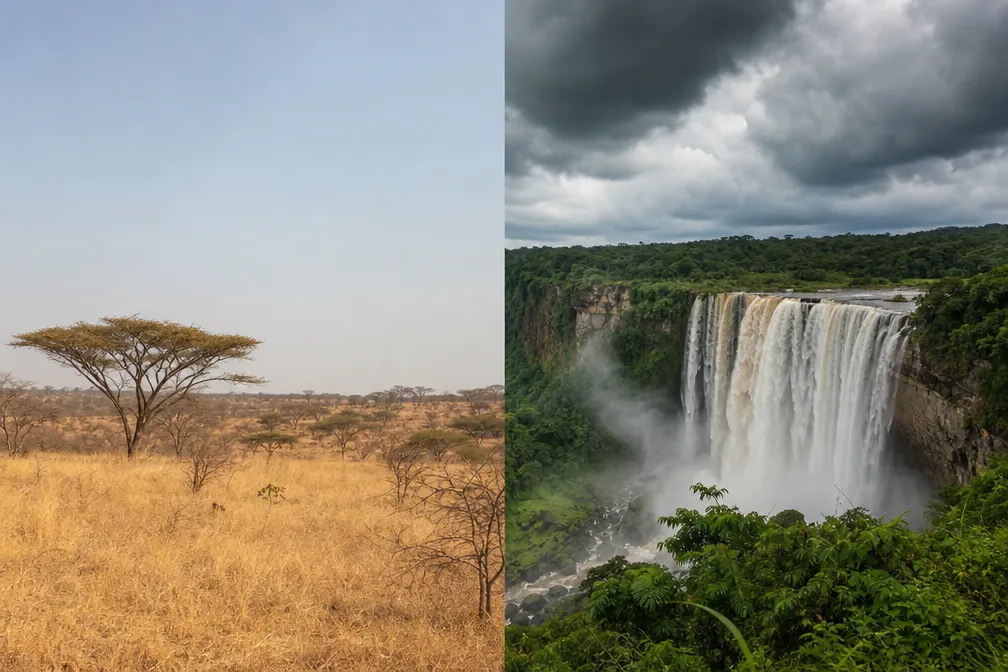
The rainy season isn’t a no-go period, but it changes what’s possible. Dirt roads to remote sights like the Kalandula Falls can turn to mud, and some river crossings become tricky. On the upside, the country is spectacularly green, waterfalls are at full power, and photography is stunning.
In 2025, northern Angola experienced significant flooding that displaced thousands of people [3], while southern provinces simultaneously faced severe drought [2]. This is the new normal to plan around: check regional conditions before you commit to a route.
Temperatures by region
Angola’s temperatures vary more by altitude than by season. Here’s the shape of it, based on long-term averages [1]:
Coast (Luanda, Benguela, Namibe)
The coast is warm but not scorching. In Luanda, temperatures usually sit between 20°C and 30°C year-round, with the hottest months from February to April [1]. Benguela and Namibe are cooler and drier thanks to the Benguela current, often 18°C to 28°C. Ocean water stays cool even in summer, which surprises many first-time visitors to the beaches in Angola.
Central highlands (Huambo, Lubango, Huíla)
This is Angola’s most temperate zone. Average temperatures range from about 13°C to 25°C [1]. Days in cacimbo (June, August) are pleasantly warm and sunny; nights can drop close to freezing on the highest plateaus. If you’re heading to Serra da Leba or Tundavala, pack a proper fleece.
Northern interior (Uíge, Malanje, Cabinda)
Hot and humid, with the highest rainfall in the country. Expect 22°C to 30°C most of the year, with heavy rains from October through April and lush rainforest conditions in Cabinda’s Mayombe.
Southern desert (Namib, Iona)
Arid and dramatic. Days can climb well above 30°C, nights can drop below 10°C, and rainfall may be less than 100 mm per year [1]. This is welwitschia and dune country.
Is Angola hot and humid year round?
No, Angola is not uniformly hot and humid. The coast is warm but tempered by cool ocean air, the highlands are mild, and the south is dry. Only the northern interior fits the stereotype of “tropical Africa” year-round.
Humidity peaks during the rainy season (October, April), especially in Luanda and the north. During cacimbo, humidity drops sharply and the air feels crisp, particularly inland.
How hot does it get in Luanda in summer?
Luanda’s hottest stretch is February to April, when daytime highs regularly reach 30°C to 32°C with high humidity [1]. It’s warm rather than extreme, but the humidity makes it feel heavier. Ocean breezes help, and the sea itself stays refreshingly cool.
If you’re spending time in the capital, our Luanda reisgids covers where to catch that breeze and how locals handle the heat.
Does Angola get cold at night?
Yes, parts of Angola get genuinely cold at night, especially in the central highlands during cacimbo. Around Lubango and Huambo, nighttime temperatures in June and July can dip to 5°C to 10°C, occasionally lower on exposed plateaus.
The coast stays mild year-round (rarely below 18°C at night in Luanda). But if your itinerary includes highland stops, bring layers. Many guesthouses do not have heating.
Angola weather month by month
Here’s a compact overview. Treat these as general ranges and always check a live forecast before you travel.
| Month | Luanda | Lubango | Season | Notes |
|---|---|---|---|---|
| Jan | 24-30°C | 14-25°C | Wet | Hot, humid, storms |
| Feb, Apr | 25-32°C | 14-25°C | Wet peak | Heaviest rains |
| May | 22-28°C | 11-24°C | Transition | Rains ease |
| Jun, Aug | 18-25°C | 6-22°C | Dry (cacimbo) | Best travel window |
| Sep | 20-27°C | 10-26°C | Late dry | Warming, still dry |
| Oct, Nov | 23-29°C | 13-27°C | Early wet | First storms |
| Dec | 24-30°C | 14-26°C | Wet | Warm, humid, green |
What’s the difference between dry and wet season in Angola?
The dry season (May, September) is cooler, less humid, has clear skies, and offers the best road access. The wet season (October, April) is hotter and more humid, with intense afternoon storms, dramatic green landscapes, and full waterfalls but tougher road conditions [1].
Choose based on your priorities:
- Choose dry season if you want wildlife, easy travel, hiking, and beach time with less humidity.
- Choose wet season if you want lush scenery, powerful waterfalls, and don’t mind rain delays.
Can you visit Angola in September or is it too wet?
September is one of the best months to visit Angola. It sits at the tail end of cacimbo: still dry, warm days, cool-ish nights, and the landscape hasn’t fully browned out yet. Rains usually don’t return in earnest until October or early November.
If you’re planning a route, our sample Angola itinerary works especially well between June and September.
What causes extreme weather in Angola?
Angola’s most notable extremes are droughts in the south and floods in the north, both intensified by climate variability and, increasingly, climate change. The World Bank has approved major climate resilience projects in response [6], and the UNDP has flagged the need for early warning systems and climate-smart agriculture [7].
In practical travel terms: extreme weather rarely disrupts city visits, but it can affect rural routes, agricultural regions, and internal flights during the worst of the wet season.
Is there hurricane or cyclone risk in Angola?
No. Angola lies outside the tropical cyclone belt. Unlike Mozambique or Madagascar on Africa’s east coast, Angola faces the Atlantic and does not experience hurricanes or cyclones. The main weather hazards are heavy rainfall, localised flooding, and drought.
Is Angola safe to visit during harmattan winds?
The harmattan (dry, dusty trade winds from the Sahara) mostly affects West Africa north of the equator. Angola sits south of that zone and is not meaningfully affected. You may notice hazy skies during cacimbo from coastal fog and dust, but this is not the harmattan and poses no real safety issue. For general safety questions, check is Angola safe and your government’s official travel advice (for example the UK FCDO or the US State Department).
How does Angola weather compare to other African countries?
Angola’s climate is closest to northern Namibia (cool coast, dry interior) and southern DR Congo (tropical north). Compared to popular safari destinations:
- Cooler coast than Mozambique or Tanzania.
- More rainfall in the north than Namibia or Botswana.
- No cyclone risk, unlike East Africa.
- Milder highlands than the low-lying Congo Basin.
What to pack for an Angola trip
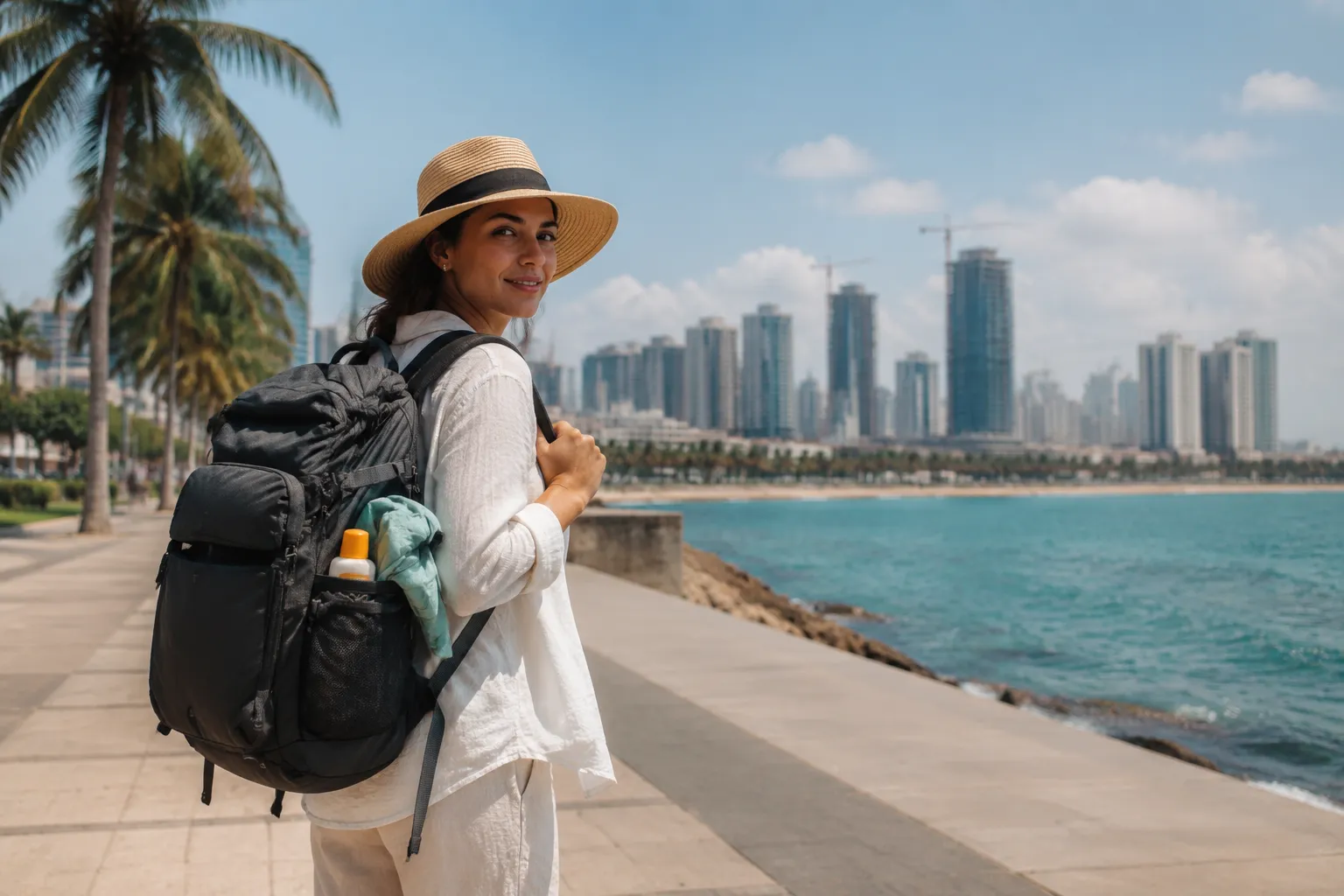
Pack for a tropical climate with cool surprises. My short list:
- Light, breathable clothing in cotton or linen
- A warm layer (fleece or light jacket) for highlands and evening coast breezes
- Light rain shell if travelling October to April
- Sun protection: hat, sunglasses, SPF 30+
- Insect repellent with DEET (malaria is present countrywide, see vaccinations in Angola)
- Sturdy walking shoes for uneven terrain
- Swimwear, the ocean is cool but swimmable
Do I need rain gear for Angola in every month?
No. From June to August, rain is extremely unlikely nationwide, and a rain jacket is basically dead weight. In shoulder months (May, September), pack a light shell just in case. From October to April, rain gear is essential, especially in the north and central highlands.
What the weather means for your trip
Weather shapes almost every part of an Angola itinerary. A few concrete implications:
- Wildlife in Kissama and Iona: best in cacimbo (June, September) when animals congregate near water.
- Kalandula Falls: most powerful late in the wet season (March, April), but road access improves in the dry.
- Beach time in Mussulo or Baía Azul: pleasant year-round; warmest February, April.
- Highland hiking around Lubango: best June, August, but pack warm layers.
- Photography: dry season for wildlife, wet season for landscape drama and green scenery.
For a full list of what to build your trip around, see our things to do in Angola overview.
Conclusion
Angola weather is more varied and more manageable than most travellers assume. If you go between May and September, you’ll get sunny days, cool nights, and open roads. If you go between October and April, expect green landscapes, dramatic storms, and warm humidity, especially in the north.
Your next steps:
- Pick a rough month based on the season logic above.
- Cross-check with our best time to visit Angola guide for region-specific timing.
- Match your dates to sights using the things to do overview.
- Verify current conditions and travel advisories close to departure.
Whatever month you choose, Angola rewards travellers who plan around its rhythms rather than fighting them.
Free help from our team in Angola
Planning around the weather?
Tell us your travel month and where you want to go. We tell you what to expect there and plan a route that suits the season.
- Local team in Angola
- No obligation, nothing to pay
- Reply by email or WhatsApp
Want to keep this guide? We email you the key points with a link to every section.
Frequently asked questions
What is the weather like in Angola?
Tropical but varied. The coast is warm and tempered by cool ocean currents, the highlands are mild, and the north is humid. Two seasons: dry (May, September) and wet (October, April).
Is Angola hot all year?
Not everywhere. Coastal cities stay warm year-round, but the central highlands can be cool, and highland nights in July can drop below 10°C.
When is the rainy season?
Roughly October to April, with peak rainfall in March and April across most of the country.
What is cacimbo?
Cacimbo is Angola's cool, dry season from about May to September. The word also refers to the coastal mist typical of these months. It's the best time to visit.
Does the weather differ by region?
Yes, significantly. The coast is mild, the north is tropical and wet, the highlands are temperate, and the south is arid to desert-like.
What is the coldest month in Angola?
July is generally the coolest month, especially in the central highlands where nighttime temperatures can dip near freezing on higher plateaus.
References
- [1] Climate Data Historical
- [2] Angola Drought Situation Report No 1 2025
- [3] Angola Floods Situation Report No 2 2025
- [4] FAO Angola
- [5] UNFCCC Angola National Adaptation Plan
- [6] World Bank Approves $250 Million Project to Enhance Angola's Climat...
- [7] Angola Must Invest in Early Warning Systems and Climate-Smart Agric...