Quick answer
Namibe is a coastal province in southern Angola where the Namib Desert crashes straight into the Atlantic Ocean. Its capital, Moçâmedes (still widely called Namibe), sits about 1,200 km south of Luanda and serves as the gateway to Iona National Park, ancient welwitschia plants, and some of southern Africa’s most surreal dune-and-sea landscapes[5][10].
Key takeaways
- Location: Southwest Angola, bordering Namibia, capital city Moçâmedes (Namibe).
- Signature landscape: The Namib Desert meets the cold Atlantic, creating rare fog-desert ecosystems.
- Star attraction: Iona National Park, Angola’s largest, roughly 15,150 km²[1].
- Best time to visit: Dry season, May to October, cooler nights and passable tracks.
- Getting there: TAAG flight from Luanda (~2 hours) or a long overland drive via Lubango.
- Character: Remote, arid, adventurous. Not a beach-resort destination in the traditional sense.
- Big news for 2026: Angola approved a €449 million tourism infrastructure package targeting Namibe’s coastal zones[12].
Why visit Namibe
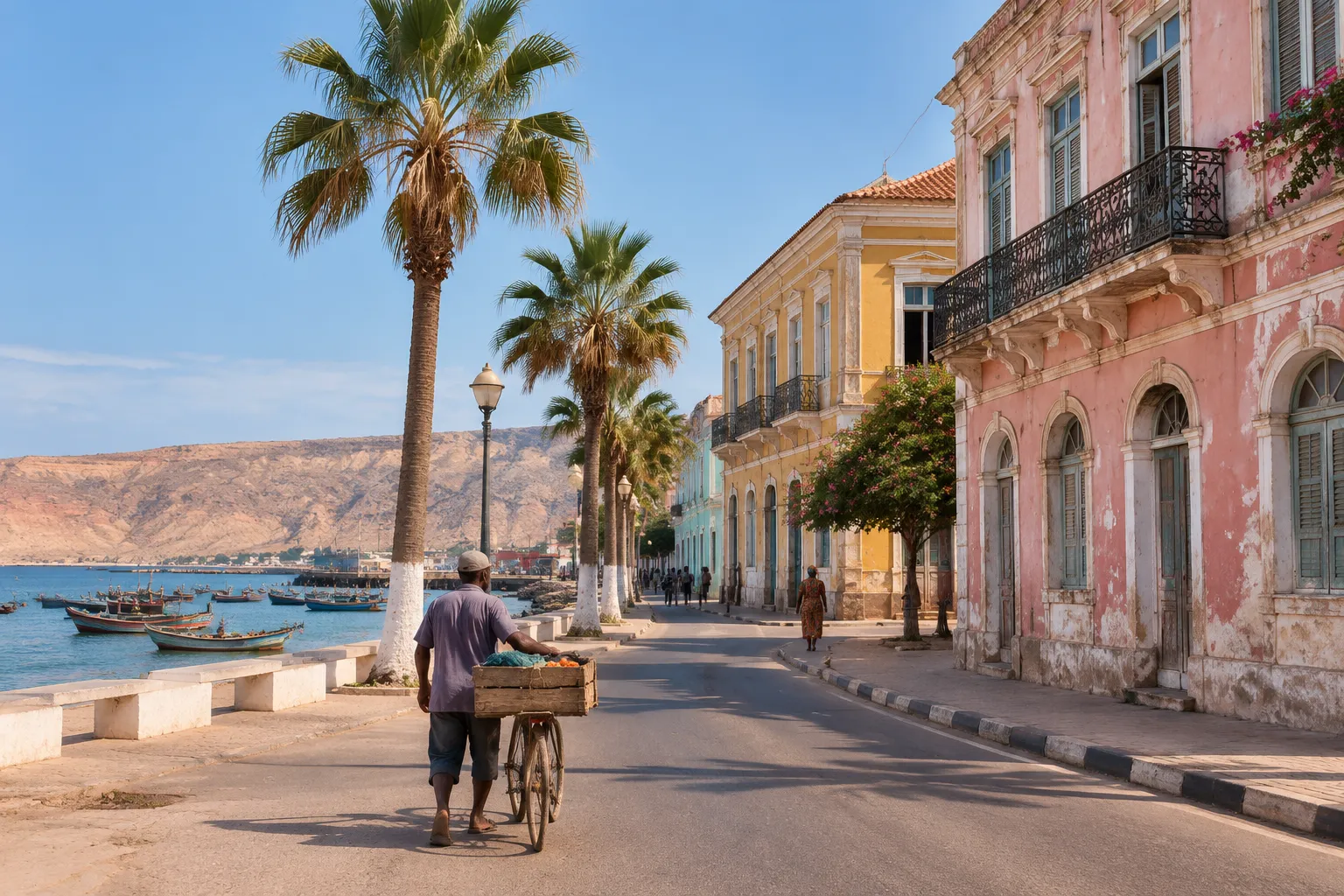
Namibe is for travelers who want raw, empty, other-worldly scenery instead of polished resorts. This is where you drive for hours seeing nothing but ochre dunes, gravel plains, and the cold blue Atlantic on your right. The province combines desert, ocean, mountains, rock art, and Portuguese colonial history in a way no other part of Angola does.
A few reasons it stands out:
- The desert meets the sea. The Namib is one of the oldest deserts on earth, and here it literally spills into the ocean.
- Genuine wilderness. Iona National Park has almost no infrastructure. You need a proper 4x4 and self-sufficiency[6].
- Rock art and history. The Tchitundo-Hulo rock paintings are among the most significant in southern Africa[5].
- Almost no tourists. You’ll often have entire beaches and dune fields to yourself.
- Adventure sports. Overlanding, 4x4 expeditions, fishing on the Kunene River, and desert camping[4][6].
“One road in and one road out.” That’s how experienced overlanders describe the coastal track through Iona. Come prepared, or don’t come at all.
If you’re planning a broader trip, Namibe pairs beautifully with Lubango in the highlands. Together they form the classic southern Angola loop.
What is Namibe known for
Namibe is best known for three things: the Namib Desert reaching the Atlantic coast, Iona National Park with its welwitschia plants and oryx, and the historic Portuguese port city of Moçâmedes. It’s also gaining fame as the Atlantic endpoint of the emerging “Namibe Corridor,” a logistics and tourism route linking inland southern Africa (Victoria Falls, the Okavango) to the Angolan coast[7][12].
Locally, the province is celebrated for its fishing industry, colonial-era architecture, and dramatic scenery around Baía dos Tigres and the Arco Mountains[5].
Where is Namibe located in Angola
Namibe Province occupies Angola’s southwest corner, bordering Namibia to the south and the Atlantic Ocean to the west. The provincial capital, Namibe city (Moçâmedes), sits on the coast roughly 1,200 to 1,300 km south of Luanda and about 200 km west of Lubango via the Serra da Leba pass[5]. Iona National Park lies about 200 km south of the city, between the ocean and the Cunene and Curoca rivers[1][10].
The town of Moçâmedes
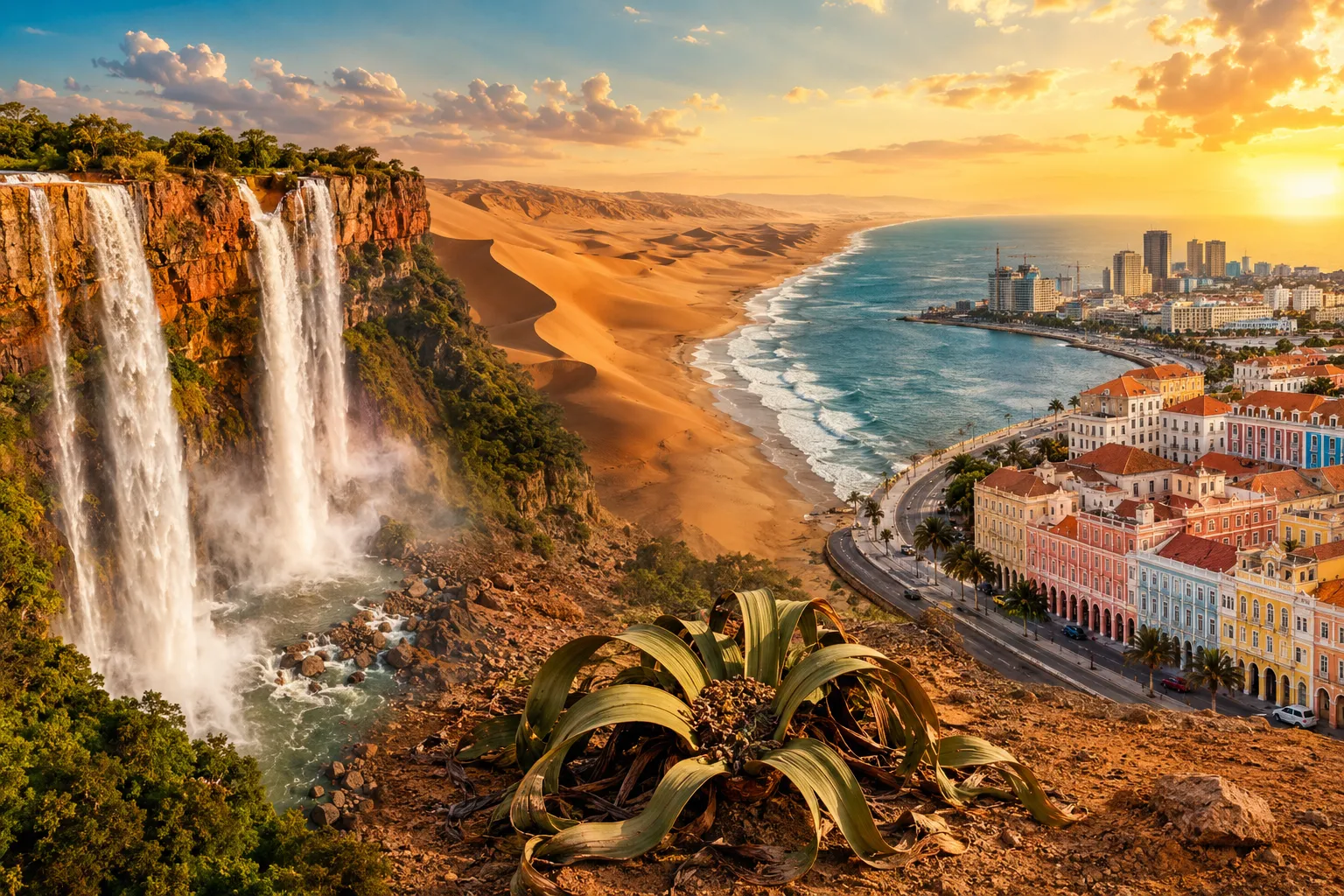
Moçâmedes, officially renamed Namibe during the socialist era and now often used interchangeably, is a quietly beautiful Portuguese colonial town on a wide bay. Founded in 1840 by settlers from Madeira, it retains pastel-painted buildings, a small cathedral, a fishing port, and a wide oceanfront promenade.
What to do in town:
- Walk the Marginal and the old customs building
- Visit the small regional museum
- Eat grilled fish and seafood stew at a beachfront restaurant
- Watch flamingos at the nearby salt flats
- Use it as a base for Iona, Baía dos Tigres, and the Arco Mountains[5][11]
It’s compact, walkable, and refreshingly free of the traffic that defines Luanda.
The Namib Desert and the welwitschia
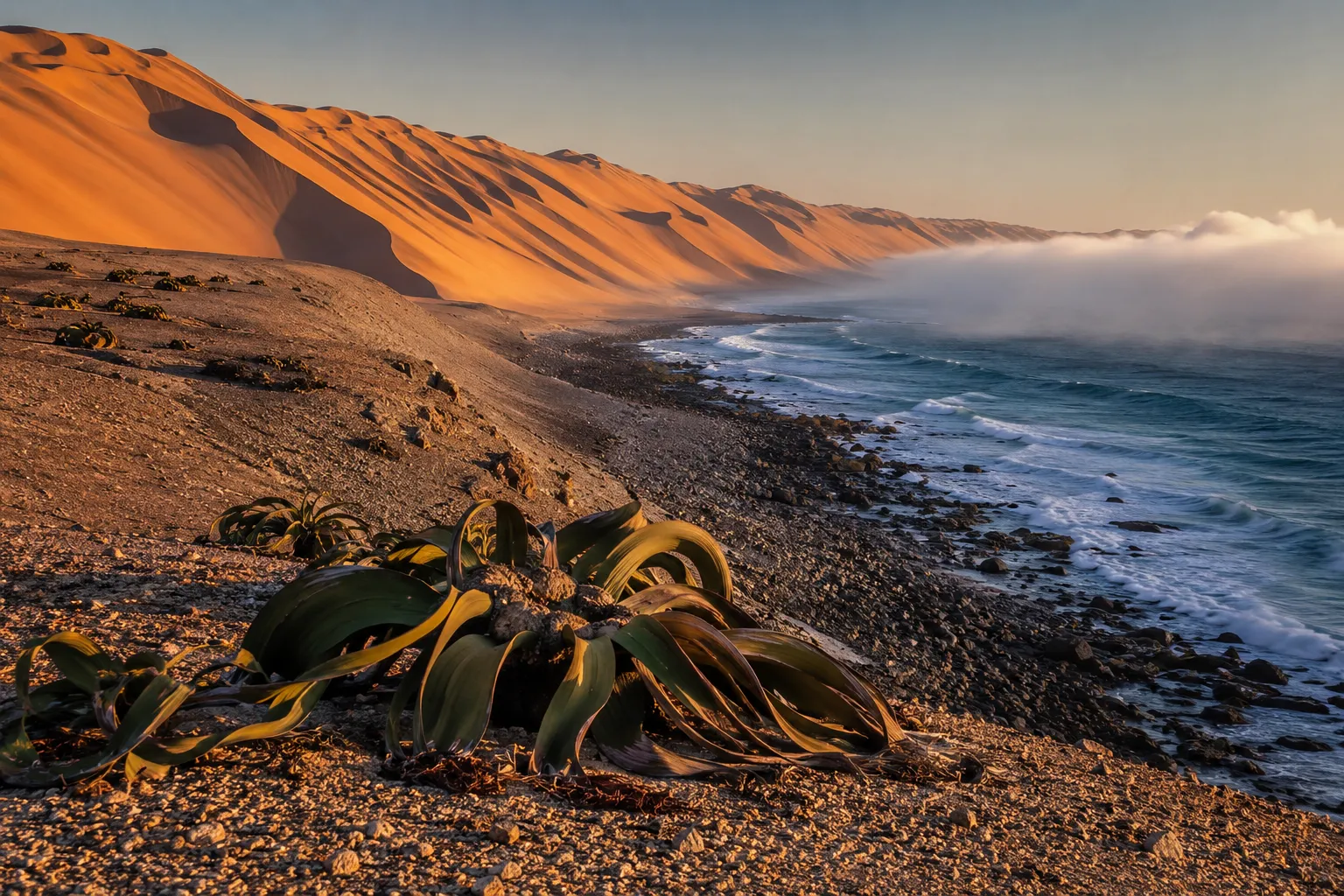
The Namib is one of the oldest and driest deserts on the planet, and its northern reach extends all through Namibe Province. Along the coast you get shifting dunes, sudden fog banks pushed in by the cold Benguela Current, and gravel plains stretching to the horizon.
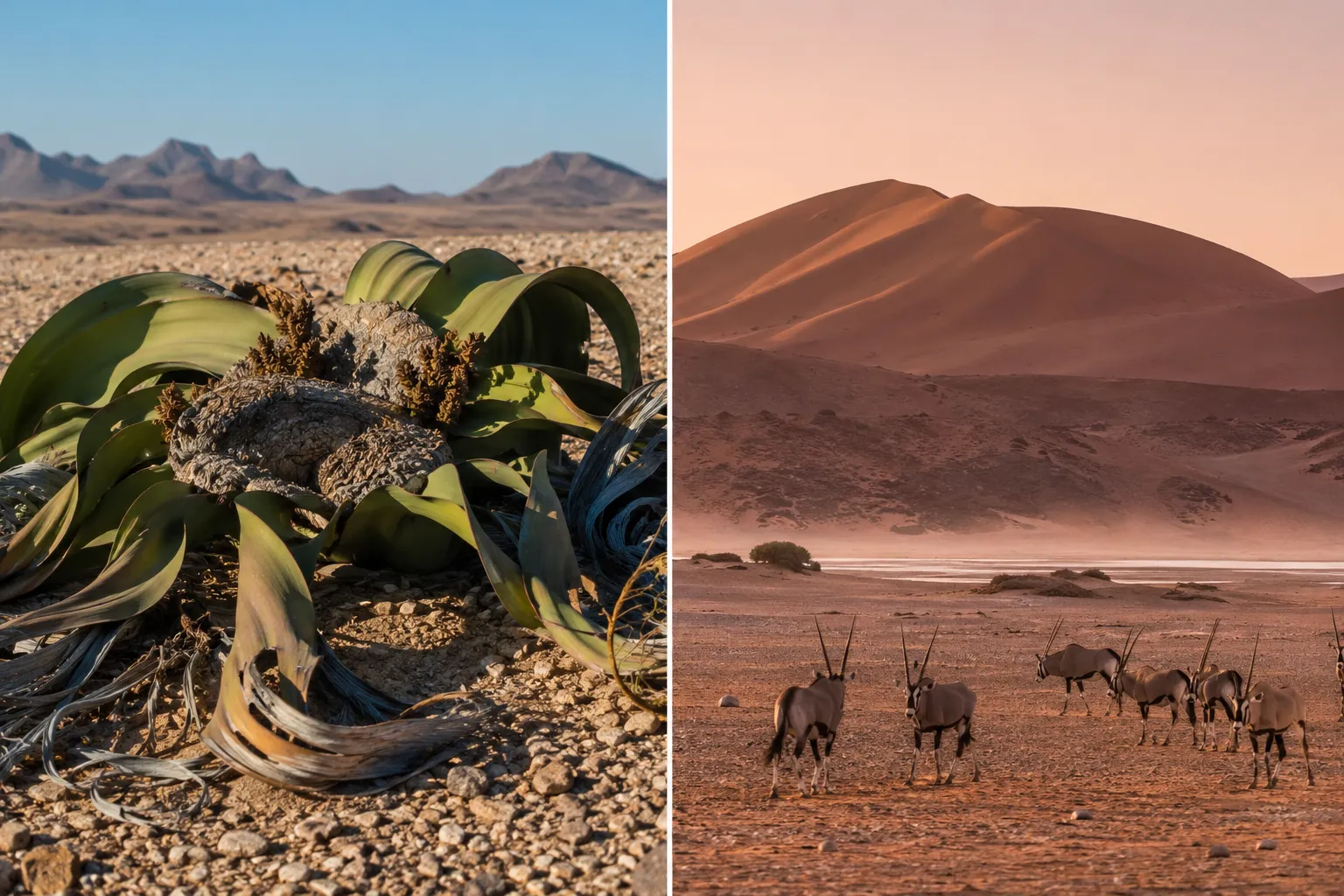
The star plant here is the welwitschia mirabilis, a bizarre living fossil that can survive over 1,000 years with just two leaves that grow continuously. Some specimens in Iona are believed to be well over 1,500 years old. They look like crumpled green-brown octopuses collapsed on the desert floor. Nowhere else in the world grows them the way Namibe does[3][10].
Iona National Park
Iona is Angola’s oldest and largest national park, covering roughly 15,150 km² in southern Namibe Province between the Atlantic and the Cunene River[1][3]. Think of it as the Angolan side of what would become Skeleton Coast National Park across the border in Namibia. Same desert, same fog, same emptiness.
What you’ll find in Iona:
- Towering red dunes near the Kunene River mouth
- Hartmann’s Valley with its wild mountain zebras
- Vast gravel plains dotted with ancient welwitschia
- The Kunene River gorge and Foz do Cunene at the river mouth
- Oryx, springbok, ostrich, and jackal
- A rugged 150 km stretch of Atlantic coastline[3][8][10]
Access is serious. The park is essentially undeveloped. There are no lodges inside, no fuel stations, no shops. You need a well-equipped 4x4, spare fuel, water, recovery gear, and ideally two vehicles. Access is via a single coastal 4x4 track from Moçâmedes through Tombwa, or via interior tracks from Pediva[6]. Angola’s biodiversity institute lists Salojamba, Ponte Albina, Espinheira and Pediva as the main visitor focal points, with safaris, camping and river excursions as the typical activities[10].
If you’re not an experienced overlander, hire a specialized operator out of Namibe or Lubango. It’s the sensible choice.
Things to do in Namibe
Here’s a realistic shortlist of what most travelers actually do in the province[4][5][11]:
- 4x4 expedition into Iona National Park (multi-day, guided or self-drive)
- Visit the Tchitundo-Hulo rock paintings in the desert interior
- Boat trip to Baía dos Tigres, a former island fishing town swallowed by dunes
- See the shipwreck “Welwitschia” on a lonely stretch of coast
- Hike or drive to the Arco Mountains and their natural rock arch
- Flamingo watching at the salt flats near Moçâmedes
- Fish or swim at Praia das Miragens and the beaches south of town
- Sample local seafood at Moçâmedes restaurants (grilled corvina, seafood muamba)
- Drive the Serra da Leba pass en route to or from Lubango
For a broader list of options across the country, see things to do in Angola.
Namibe beaches and coastal attractions
The Namibe coast is dramatic rather than tropical. The Benguela Current makes the Atlantic here cold, often 15 to 18°C, so this isn’t Zanzibar. What you get instead is wild empty beaches with dunes tumbling into the sea, fog-shrouded mornings, and world-class fishing. Praia das Miragens, the beaches south of Tombwa, and the sands around Baía dos Tigres are the most talked-about spots[5][11]. Swimming is possible but bracing. Photography, walking, and fishing are the real draws.
How to get to Namibe from Luanda
You have two realistic options: fly or drive. Most travelers fly.
By air: TAAG Angola Airlines operates direct flights from Luanda to Namibe (Yuri Gagarin Airport), roughly 2 hours. This is by far the easiest option[5]. Book on the official TAAG site.
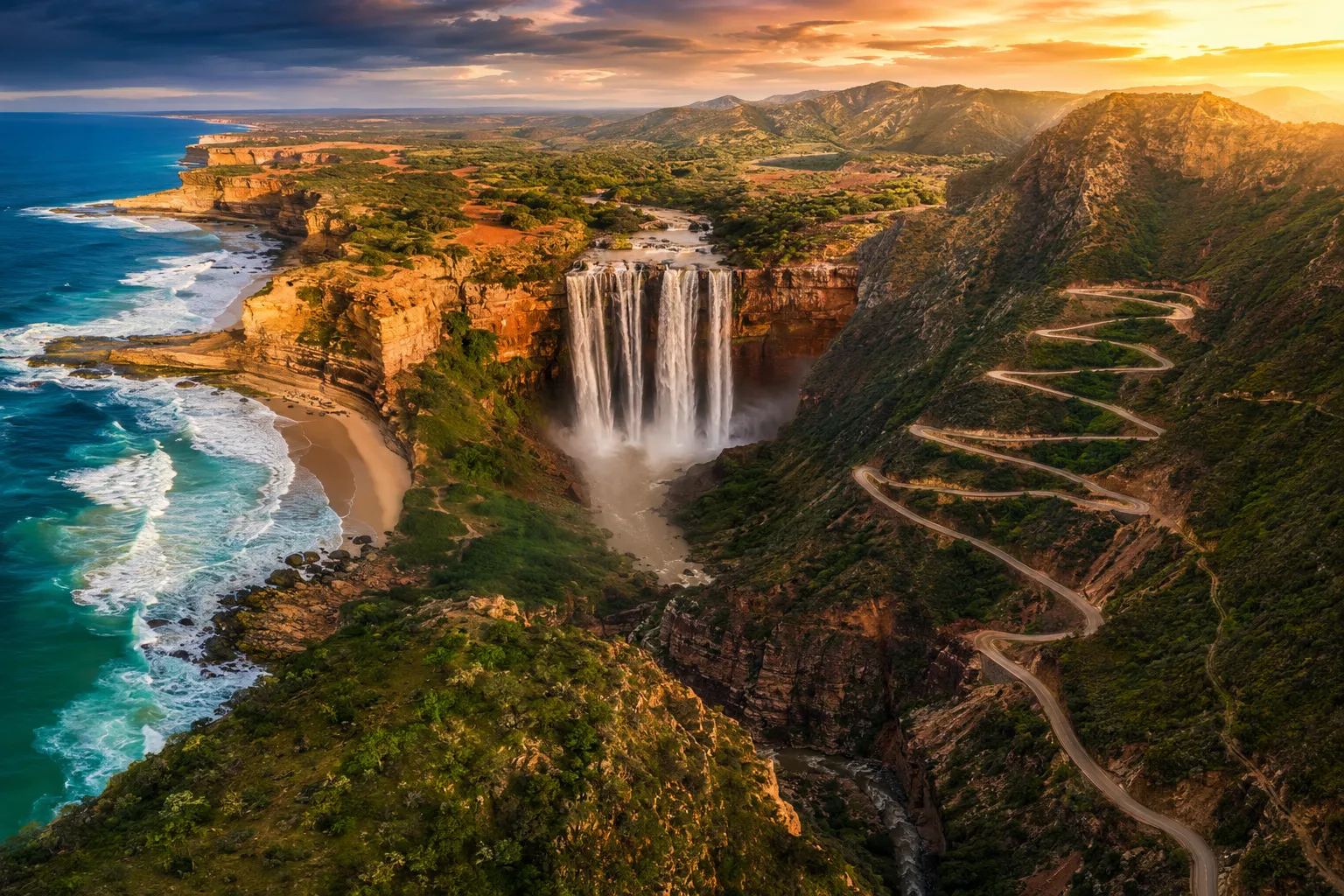
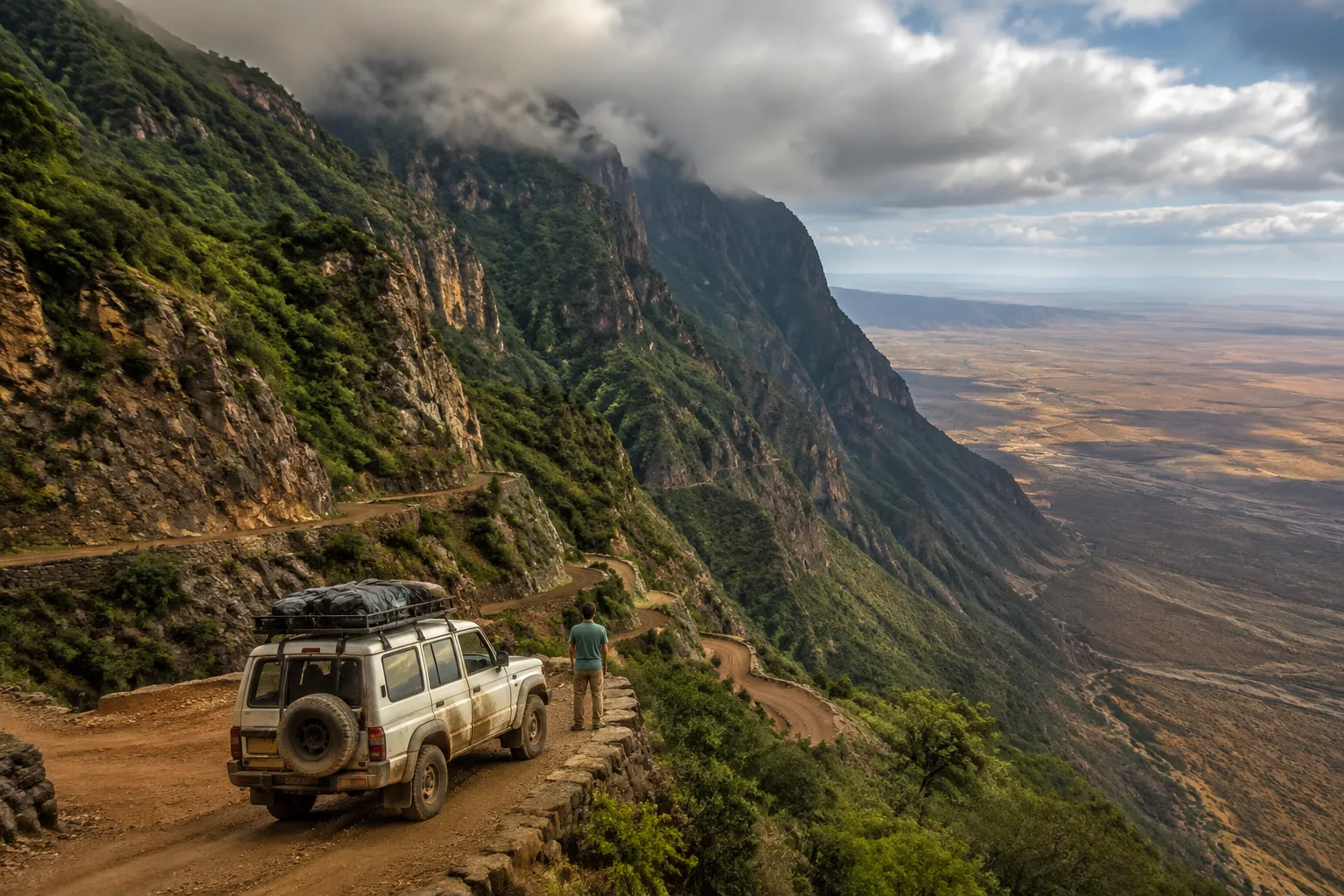
By road: The overland route is around 1,200 to 1,400 km depending on the exact path, typically driven in 2 to 3 days. The standard route goes Luanda → Sumbe → Lobito → Benguela → Lubango → Namibe. From Lubango to Namibe you descend the spectacular Serra da Leba pass, one of the most photographed roads in Africa, then cross about 200 km of increasingly arid terrain. Expect a full driving day (5 to 7 hours) for the Lubango, Namibe leg alone.
Road conditions vary. The main highways are mostly paved but with rough patches. Anything off the main routes needs 4x4. See our guide on getting around Angola for practical logistics.
Namibe accommodation and where to stay
Namibe is not a resort destination. Expect a modest selection of hotels and guesthouses concentrated in Moçâmedes city, plus a handful of eco-camps and lodges near the coast. Current tourism data lists roughly 6 hotels, 9 attractions and 3 sit-down restaurants in the immediate provincial capital area[5]. Options include mid-range business hotels along the Marginal, small family-run guesthouses, and increasingly, tented camps for overlanders heading into Iona.
Practical tips:
- Book ahead in the dry season (May, October). Rooms are limited.
- Bring cash (kwanza). Card acceptance outside the main hotels is patchy.
- Ask about generators. Power can be inconsistent.
- For Iona, plan on camping or staying in Tombwa before entering the park[6].
You can compare and book Namibe hotels through your preferred booking platform. Search hotels in Namibe here.
Namibe weather and climate
Namibe has a hot arid desert climate. Days are warm to hot year-round, nights can be surprisingly cool, and rainfall is minimal, often less than 50 mm per year in Moçâmedes. The cold Benguela Current keeps coastal air cooler than you’d expect, with frequent morning fog[5].
Rough seasonal breakdown:
| Season | Months | Conditions |
|---|---|---|
| Cool dry | May, Aug | 15-25°C, coastal fog, best for travel |
| Warm dry | Sep, Oct | 20-30°C, clear skies |
| Hot | Nov, Mar | 25-35°C+, occasional brief rain inland |
| Transition | Apr | Warm, mostly dry |
Best time to visit Namibe
The best time to visit Namibe is May to October, the cool dry season. Days are pleasant, nights are cool, tracks into Iona are passable, and there’s virtually no rain to worry about[4][5]. July and August are the peak months for overland expeditions. If you’re combining Namibe with Lubango and the Kalandula waterfalls in Malanje, this same dry-season window works country-wide.
Is Namibe safe for tourists
Namibe is generally considered one of the calmer provinces in Angola. Petty crime exists in Moçâmedes but is less of an issue than in Luanda. The main risks are practical rather than criminal:
- Remoteness: In Iona, help is far away. Travel with two vehicles or a guide.
- Landmines: Rare residual risk in some rural areas. Stay on established tracks.
- Border zones: Areas near the Cunene River and Namibian border can require permits.
- Roads: Long, empty, sometimes rough. Drive daylight hours only.
Always check the current advice from your foreign ministry (for example the UK FCDO or the US State Department) before travel. For general safety context, see our overview on travelling to Angola.
Namibe vs other Angola destinations
Quick comparison for planning:
| Destination | Vibe | Best for |
|---|---|---|
| Luanda | Big coastal capital | Culture, food, arrival hub |
| Benguela/Lobito | Warm-water beach cities | Relaxed coast, colonial history |
| Lubango | Mountain highlands | Cool climate, Serra da Leba, Cristo Rei |
| Namibe | Desert-meets-ocean | Adventure, wilderness, Iona |
| Malanje | Interior/waterfalls | Kalandula, Pungo Andongo |
Namibe wins on landscape and solitude. It loses on nightlife, cuisine variety, and accessibility. Most travelers combine it with Lubango for a full southern loop. See our sample Angola itinerary for how to sequence them.
Namibe local culture and history
Moçâmedes was founded in 1840 by Portuguese-speaking settlers, many from Madeira, and grew as a fishing and shipping port. The town’s colonial layout, tile-covered facades, and small churches still reflect that era. The wider region is home to Bantu-speaking communities including the Herero, Mucubal, and Himba near the Namibian border, all with rich pastoralist traditions, distinctive dress, and ancestral ties to the desert landscape.
Cuisine leans heavily on seafood: grilled fish, seafood muamba, and the national favorite muamba de galinha show up on local menus, alongside funge (cassava porridge). Music has a slower, more coastal feel than Luanda’s semba scene, but kizomba is universal.
What’s the cost of visiting Namibe
Angola is not a cheap destination, and Namibe reflects that. Rough indicative ranges (verify at booking):
- Flight Luanda, Namibe (TAAG, return): mid-range international short-haul equivalent
- Mid-range hotel in Moçâmedes: comparable to a mid-tier European business hotel
- Meal at a local restaurant: modest and affordable
- 4x4 rental with driver/guide: expensive, this is the biggest cost item
- Guided Iona expedition (multi-day): premium adventure-travel pricing
Budget travelers can keep costs down by flying in, staying in guesthouses, and eating local. Iona and remote coastal trips push the budget up quickly because of vehicle and logistics costs.
Namibe wildlife and nature reserves
Iona National Park is the headline reserve, home to oryx (gemsbok), springbok, mountain zebra, ostrich, jackal, brown hyena and desert-adapted flora including the welwitschia[3][10]. The Kunene River corridor supports crocodiles and diverse birdlife. Along the coast, you’ll see flamingos, cormorants, and seabirds thriving on the cold, productive Benguela Current waters.
Marine life offshore includes dolphins and, seasonally, whales. Iona is being rewilded and monitored as part of Angola’s broader conservation push, though visitor infrastructure remains minimal[9][10].
Conclusion and next steps
Namibe is Angola’s wildest, most cinematic province. Empty desert coastlines, ancient welwitschias, colonial port towns, and a national park the size of a small country. It’s not easy travel, and that’s exactly the point.
Your next steps:
- Pick your window in the May, October dry season.
- Book a Luanda, Namibe TAAG flight, or plan the overland route via Lubango.
- Decide DIY vs guided for Iona. If in doubt, go guided.
- Verify current visa and health requirements with official sources before you fly.
- Read our Angola itinerary to slot Namibe into a bigger trip.
Namibe rewards travelers who prepare, respect the landscape, and are willing to trade comfort for wonder. Go now, before the €449 million infrastructure package[12] changes it forever.
Free help from our team in Angola
Planning a trip to Namibe and Iona?
The desert coast needs a 4x4 and someone who knows the tracks. Tell us your dates and we arrange the vehicle, a guide from our own team and where to sleep.
- Local team in Angola
- No obligation, nothing to pay
- Reply by email or WhatsApp
Want to keep this guide? We email you the key points with a link to every section.
Frequently asked questions
Where is Namibe?
Namibe is a coastal province in southwestern Angola, bordering Namibia and the Atlantic. Its capital, Moçâmedes (Namibe city), sits about 1,200 km south of Luanda.
What is Namibe known for?
Namibe is known for the Namib Desert meeting the Atlantic Ocean, Iona National Park, ancient welwitschia plants, Portuguese colonial architecture in Moçâmedes, and rock art at Tchitundo-Hulo.
What is a welwitschia?
The welwitschia mirabilis is a rare desert plant native to Namibe and Namibia. It has just two leaves that grow continuously for centuries, and individual plants can live well over 1,000 years.
Can I visit Iona National Park?
Yes, but it's a serious undertaking. Iona has almost no visitor infrastructure. You'll need a 4x4, self-sufficiency, and ideally a guided expedition from Moçâmedes or Lubango.
How do I get to Namibe?
The easiest way is a direct TAAG flight from Luanda (about 2 hours). Overland, it's a 2 to 3 day drive via Lubango and the Serra da Leba pass.
Best time to visit Namibe?
May to October, the cool dry season. Days are pleasant, tracks are drivable, and there's almost no rain.