Quick Answer
Huambo is Angola’s second-largest city and the capital of Huambo Province, sitting at around 1,700 meters altitude on the Planalto Central. Founded in 1912 as Nova Lisboa, it offers a mild highland climate, Portuguese colonial architecture, and access to the historic Benguela Railway. Reaching Huambo from Luanda takes roughly one hour by plane or a full day by road.
Key Takeaways
- Location: Central Angola, ~600 km southeast of Luanda, on the Planalto Central at ~1,700 m altitude [1][4].
- Historical name: Nova Lisboa (1928 to 1975); briefly considered as a future capital during colonial times [1][8].
- Climate: Cooler and drier than the coast; two clear seasons (dry May to September, wet October to April) [3][7].
- Getting there: TAAG flights from Luanda (~1 hour) or long road/rail journey via the Benguela Railway.
- Highlights: Colonial architecture, Cathedral of São José, agricultural markets, and highland landscapes.
- Safety: Generally calmer than Luanda for petty crime; standard travel precautions apply. Verify current advice before travel.
- Best for: Travelers wanting to see Angola beyond Luanda, history buffs, and rail enthusiasts.
Why Visit Huambo
Huambo is worth visiting if you want to experience Angola’s highland heartland, away from Luanda’s coastal bustle. The city combines Portuguese colonial history, a cool climate, and a laid-back provincial feel that surprises most first-time visitors. It also serves as a natural base for exploring the wider Planalto Central and the historic railway corridor.
Most travelers who add Huambo to an Angola itinerary do so for three reasons:
- A break from the heat. The altitude keeps temperatures pleasant year-round.
- Colonial-era architecture that survived (and was rebuilt after) the civil war.
- The Benguela Railway experience, connecting inland Angola to the Atlantic coast at Lobito.
“Huambo feels like a different country from Luanda. Slower, greener, and cooler, and that’s exactly the point.”
What Is Huambo, Angola Known For
Huambo is best known as Angola’s central highlands city and former colonial capital-in-waiting, Nova Lisboa. It’s also famous for the Benguela Railway terminus, its agricultural output (maize, coffee, potatoes), and its role as an educational and cultural hub in central Angola [1][8].
Key associations:
- Nova Lisboa legacy: Portuguese authorities once planned to move Angola’s capital here [1][8].
- Agriculture: The fertile Planalto is Angola’s breadbasket for grains and coffee.
- Rail transport: Western terminus of the domestic Benguela Railway network.
- Civil war history: Heavily contested during the 1975-2002 conflict; now rebuilt.
Where Is Huambo Located in Angola
Huambo lies in central Angola, roughly 600 kilometers southeast of Luanda, on the Planalto Central (Central Plateau). It’s the capital of Huambo Province and sits at approximately 12°46′S latitude and 15°44′E longitude, at about 1,700 meters above sea level [1][4].
Neighboring provinces and reference points:
- North: Kwanza Sul
- West: Benguela Province (and the Atlantic coast city of Benguela)
- South: Huíla (Lubango)
- East: Bié
The city’s altitude and interior location are the two most important geographic facts for travelers. They shape everything from the weather to how you get there.
History: From Nova Lisboa to Today
Huambo was founded in 1912 by Portuguese colonial governor José Mendes Ribeiro Norton de Matos and renamed Nova Lisboa (“New Lisbon”) in 1928, reflecting plans to eventually make it Angola’s capital [1][8]. That plan never materialized, and after independence in 1975 the city reverted to its original name, Huambo.
The 20th century was rough. During the Angolan Civil War (1975-2002), Huambo was fiercely contested between MPLA and UNITA forces and suffered major destruction, particularly in the mid-1990s. Since peace in 2002, reconstruction has restored much of the colonial center, though signs of the war are still visible if you know where to look.
For deeper background on the country’s past, see our overview of the history of Angola.
Huambo Culture Today
Culturally, Huambo is a center of Ovimbundu identity, with Umbundu widely spoken alongside Portuguese. Music, markets, and church life are all central to daily rhythms. The city hosts universities and seminaries, giving it a younger, student-driven energy.
The Highland Climate: Huambo Weather Year-Round
Huambo has a subtropical highland climate that’s noticeably cooler and drier than coastal Angola. Expect warm days, cool nights, a wet summer (October to April), and a dry, sometimes chilly winter (May to September) [3][7].
Typical patterns:
| Season | Months | Daytime temp | Notes |
|---|---|---|---|
| Cool & dry | May, Aug | 20-25°C | Chilly nights, sometimes below 10°C |
| Warming, dry | Sep | 25-28°C | Dusty, clear skies |
| Wet & warm | Oct, Apr | 22-27°C | Afternoon thunderstorms, lush green |
Pack a light jacket even in the dry season, highland nights get cold, and many hotels don’t have heating.
Huambo Altitude and Geography
At roughly 1,700 meters (about 5,600 feet), Huambo sits high enough that you may feel mild altitude effects on arrival, especially if you flew in from sea-level Luanda [4]. The surrounding Planalto Central is characterized by rolling hills, granite outcrops, savanna, and patches of miombo woodland.
The elevation is a big part of why Huambo feels so different from the coast: cooler air, clearer skies, and a landscape that reminds many visitors more of eastern Africa’s highlands than the tropical Atlantic.
Things to See and Colonial Architecture
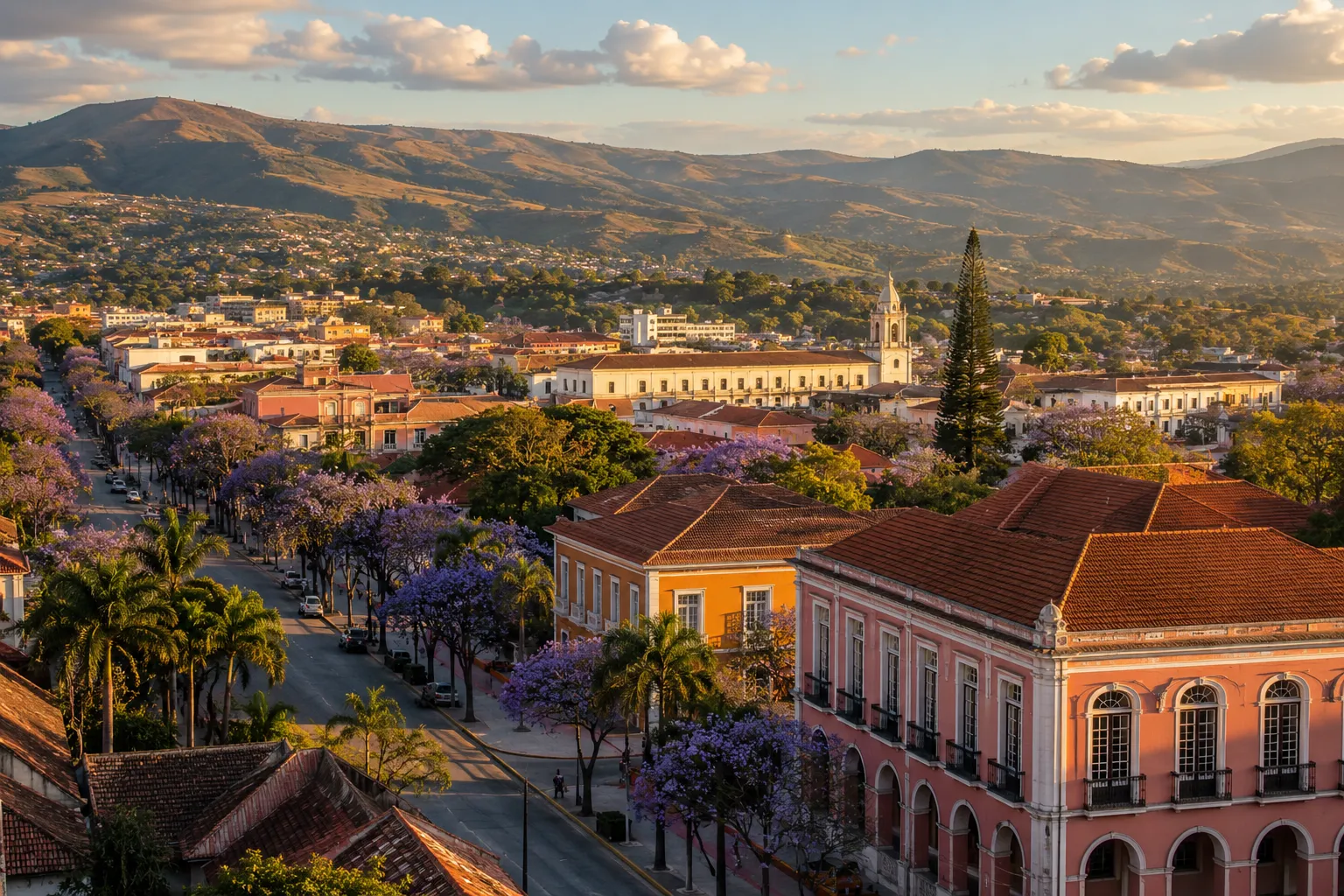
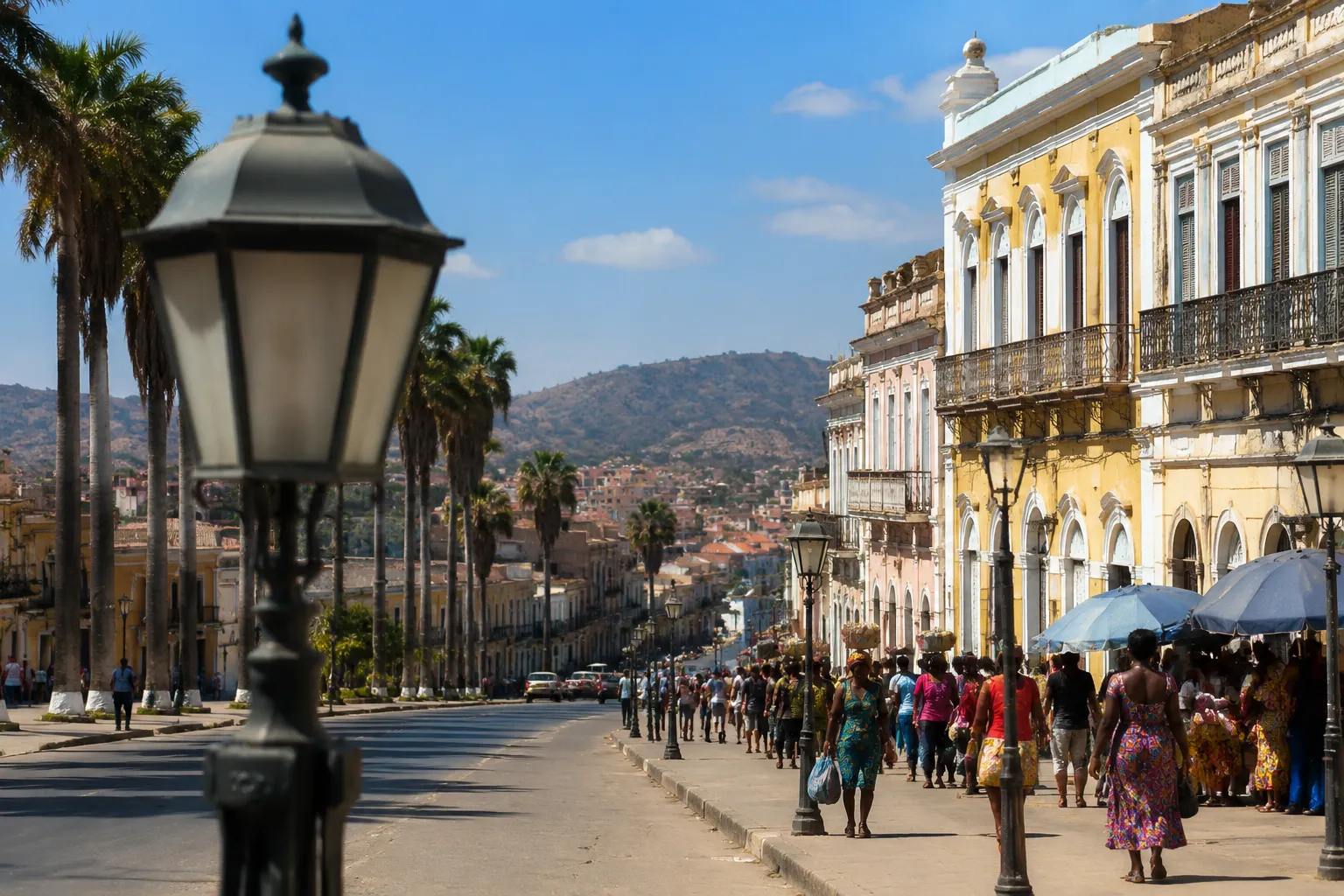
Huambo’s main attractions are its walkable colonial center, religious architecture, and surrounding highland landscapes. It’s not a museum-heavy city, the appeal is atmosphere, street life, and easy day trips.
Top things to do:
- Catedral de São José, the main Catholic cathedral, a Huambo landmark.
- Governor’s Palace and administrative center, restored Portuguese-era buildings.
- Grande Hotel da Huíla area and the old railway station district.
- Municipal Market (Mercado), best place to see everyday Ovimbundu life.
- Nature outside town, waterfalls, rivers, and highland viewpoints on day trips.
- Cristo Rei of Huambo, hilltop statue with city views.
For a broader list across the country, browse our guide to things to do in Angola.
The Benguela Railway (Caminho de Ferro de Benguela)
The Benguela Railway, or CFB, is one of Africa’s great colonial railway lines, linking the Atlantic port of Lobito with the Democratic Republic of Congo border via Huambo. Reconstructed after the civil war with Chinese investment, it now carries passengers and cargo through some of Angola’s most scenic highland country.
What to know as a traveler:
- Passenger service operates between Lobito, Benguela, Huambo and beyond. Schedules change, verify at the station.
- The scenery climbing from the coast up to the Planalto is genuinely spectacular.
- Comfort levels vary by class; bring water, snacks, and patience.
- The route is central to the wider Lobito Corridor trade project.
If rail travel isn’t your thing, see our guide to getting around Angola for alternatives.
Where to Stay and Eat: Huambo Accommodation and Food
Huambo’s hotel scene is modest but adequate, centered on a handful of mid-range business-style hotels plus simpler guesthouses. Restaurants lean toward Portuguese and Angolan classics, with strong local produce from the surrounding farmland.
Accommodation guidance:
- Mid-range hotels: Options like Hotel Ekuikui II and Nino Konis Santana-style business hotels in the center. Expect functional rooms, breakfast included, and inconsistent Wi-Fi.
- Budget: Pensões and small guesthouses for backpacker budgets.
- Upper end: Limited; the best rooms fill fast during business travel weeks.
Affiliate disclosure: some hotel booking links on this site are affiliate links marked rel="sponsored nofollow". You pay nothing extra; we may earn a small commission. Compare Huambo hotels through your preferred booking platform and always check recent reviews.
Local food and restaurants:
Huambo eats well by Angolan highland standards. Try:
- Muamba de galinha, Angola’s national chicken stew.
- Funge, cassava or maize porridge, the staple side.
- Calulu, dried fish or meat stew with greens.
- Grilled meats and fresh vegetables, the Planalto’s agricultural strength shows on the plate.
For more on national dishes, read our piece on Angolan cuisine.
How to Get to Huambo From Luanda
You can reach Huambo from Luanda by air in about one hour on TAAG Angola Airlines, or by road in roughly 8 to 12 hours depending on traffic and stops. There’s also rail access from the coast via the Benguela Railway.
Options at a glance:
- By air: Daily TAAG flights to Albano Machado Airport (NOV). Fastest and most reliable. Verify schedules on TAAG’s site.
- By road: The EN230/EN140 route via Kwanza Sul. Long day, mixed road quality; a 4x4 is preferable in the rainy season.
- By rail: Not from Luanda directly, but from Lobito/Benguela on the CFB.
Planning flights? Start with our overview of flights to Angola and flights to Angola.
Huambo vs Luanda: Which City to Visit
Choose Luanda if you want Angola’s economic capital, beaches, nightlife, and museums. Choose Huambo if you want cooler weather, colonial highland atmosphere, and a slower, more authentic provincial experience. Ideally, do both.
Quick decision guide:
- Short trip, first time in Angola → Luanda + one day trip (Mussulo or Kissama).
- 10+ days, want variety → Luanda + Huambo + Lobito/Benguela.
- Cooler climate preference or rail interest → prioritize Huambo.
See our sample Angola itinerary for how to combine both.
Is Huambo Safe for Tourists
Huambo is generally considered calmer than Luanda regarding petty crime, but standard travel precautions still apply: avoid displaying valuables, don’t walk alone at night, and use registered transport. Occasional local unrest, such as taxi strikes, can disrupt movement [10]. Always check official travel advice before departure.
Practical safety tips:
- Carry photocopies of your passport and visa.
- Use hotels’ recommended taxis or ride-hailing where available.
- Avoid rural off-track walking in areas with residual landmine risk.
- Follow current advice from your country’s foreign ministry (for example the UK FCDO or the US State Department) and Human Rights Watch country reporting [2].
More on the general picture: is Angola safe.
Best Time to Visit Huambo
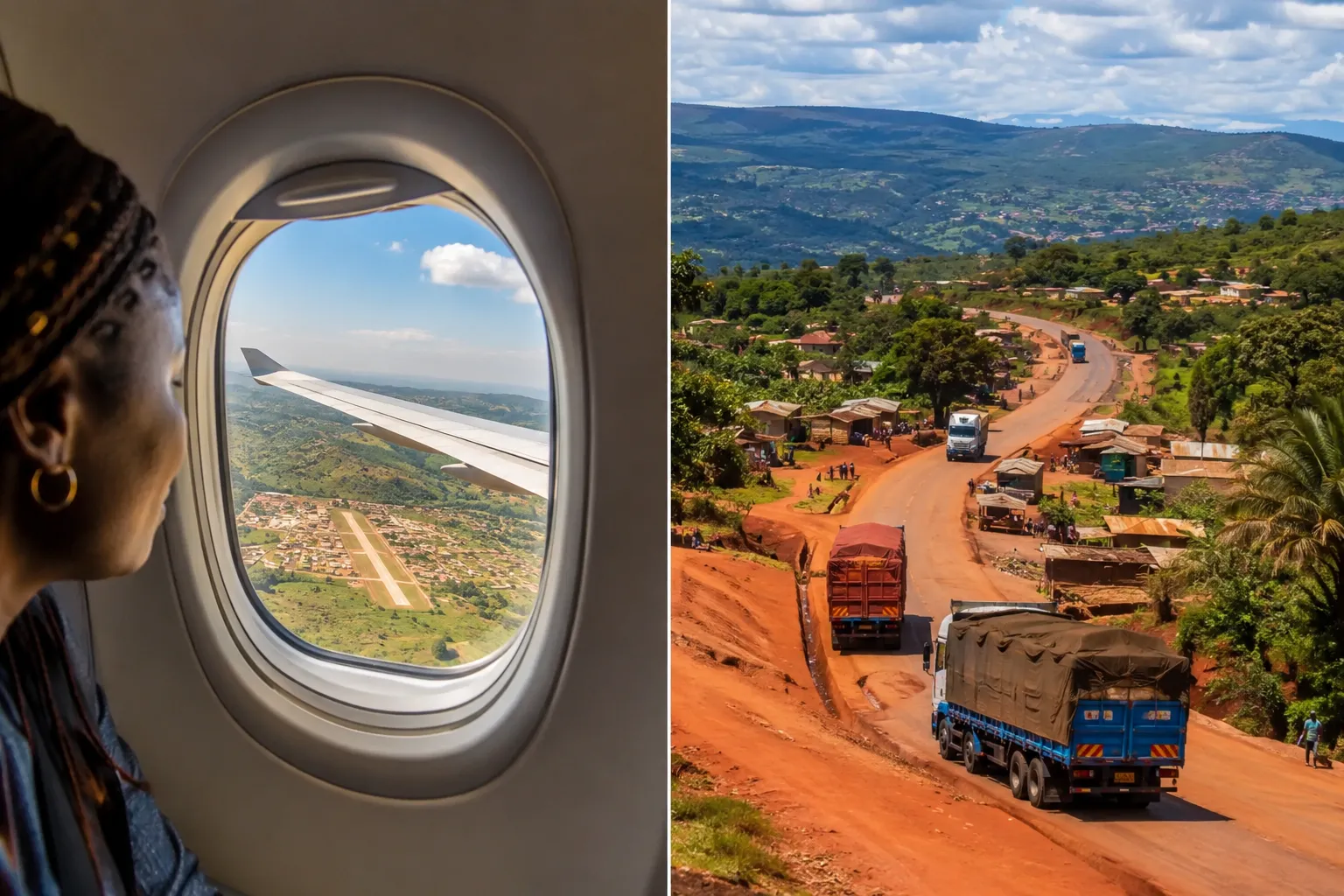
The best time to visit Huambo is during the dry season, from May to September, when days are sunny, roads are reliable, and highland skies are clear. Nights are cool, so bring layers. Avoid the peak of the rainy season (December to March) if you plan road travel.
Month-by-month cheat sheet:
- May, July: Cool, dry, excellent visibility. Prime time.
- August, September: Warmer, still dry, but dusty.
- October, November: First rains, landscape turns green.
- December, March: Wettest months; scenic but road conditions worsen.
- April: Transition; often still wet.
For nationwide timing, check the best time to visit Angola.
How Much Does It Cost to Visit Huambo
Costs in Huambo are lower than in Luanda but still not cheap by African standards. Expect mid-range hotels around a similar level to secondary cities elsewhere in southern Africa, with domestic flights being the biggest single expense. Prices change frequently, verify current rates with providers.
Budget guidance (indicative, in USD equivalent):
- Mid-range hotel: roughly $70-130/night
- Simple guesthouse: $30-60/night
- Meal at a local restaurant: $10-20
- Domestic flight Luanda, Huambo (return): typically $200-350 on TAAG
- Taxi around town: short rides a few dollars; negotiate or use apps where possible
Always confirm with the operator and check exchange rates via the Banco Nacional de Angola before budgeting.
Conclusion
Huambo rewards travelers who want to see the Angola locals actually live in, cool highland air, jacaranda-lined streets, a rebuilt colonial center, and the rhythm of a railway city. It pairs beautifully with Luanda and the coast for a fuller picture of the country.
Next steps:
- Check current flight schedules on TAAG from Luanda to Albano Machado airport.
- Verify visa rules and vaccinations via official Angolan sources and your national travel advisory.
- Sketch a route: consider combining Huambo with Benguela and Lobito via the CFB railway.
- Book a mid-range hotel a few weeks ahead; confirm cancellation terms.
- Pack layers, the highland nights are cooler than you’d expect.
Free help from our team in Angola
Planning a trip to Huambo?
Tell us why you are going and for how long. We arrange transport from Luanda, a guide who knows the highlands and a place to stay.
- Local team in Angola
- No obligation, nothing to pay
- Reply by email or WhatsApp
Want to keep this guide? We email you the key points with a link to every section.
Frequently asked questions
Where is Huambo?
Huambo is in central Angola, capital of Huambo Province, roughly 600 km southeast of Luanda on the Planalto Central at about 1,700 m altitude.
What is Huambo known for?
Its former identity as Nova Lisboa, its Portuguese colonial architecture, the Benguela Railway, and its role as Angola's agricultural and highland cultural center.
What was Nova Lisboa?
Nova Lisboa ("New Lisbon") was Huambo's colonial name from 1928 to 1975, chosen because Portuguese authorities considered making it Angola's future capital.
What is the climate like in Huambo?
Subtropical highland: warm sunny days, cool nights, a dry season from May to September and a wet season from October to April.
How do I get to Huambo from Luanda?
Fly TAAG to Albano Machado Airport in about one hour, drive 8-12 hours by road, or arrive by rail from the coast via the Benguela Railway.
Is Huambo worth visiting?
Yes, especially on longer trips. It shows a very different Angola from Luanda, cooler, greener, historically layered, and calmer.