Quick answer
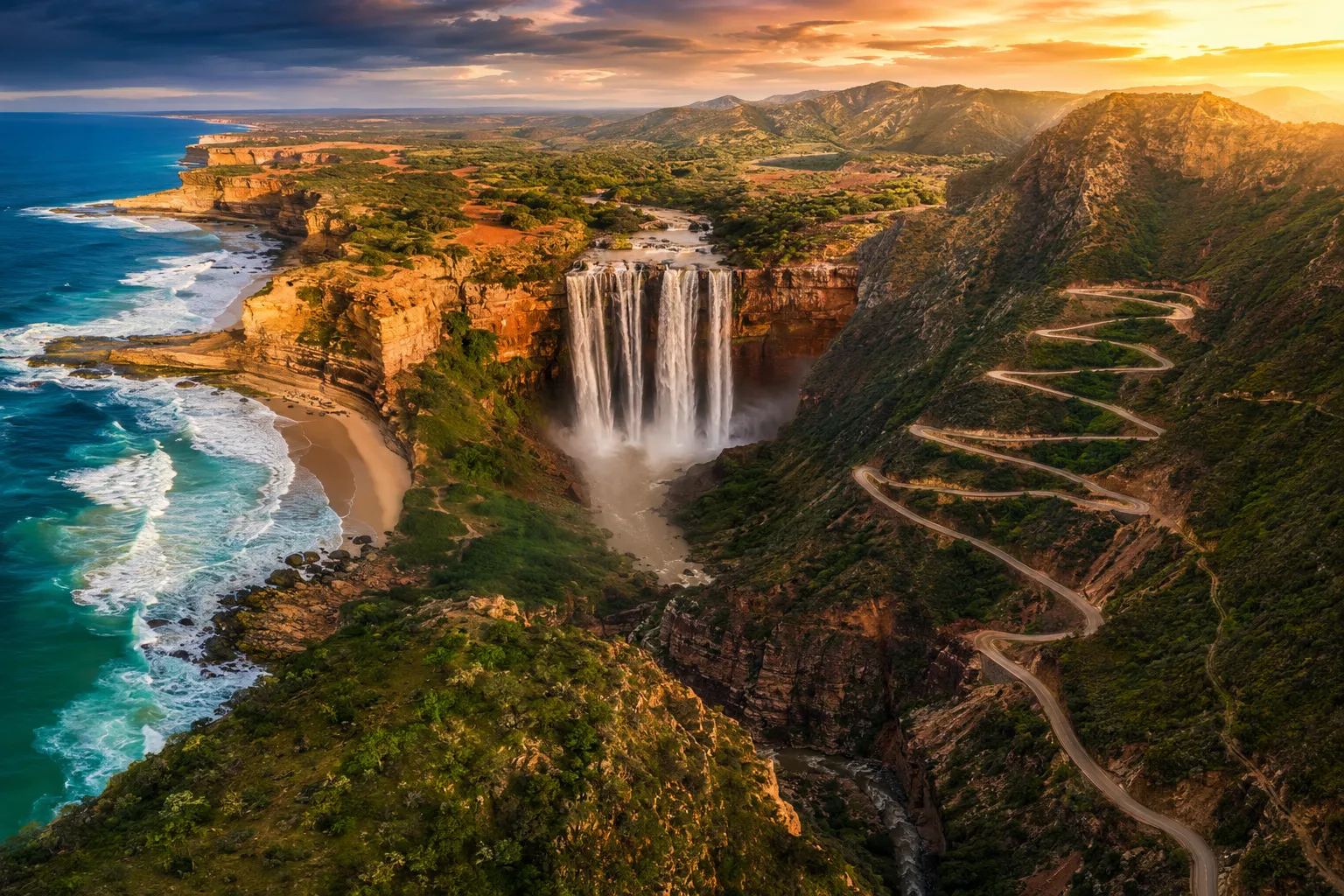
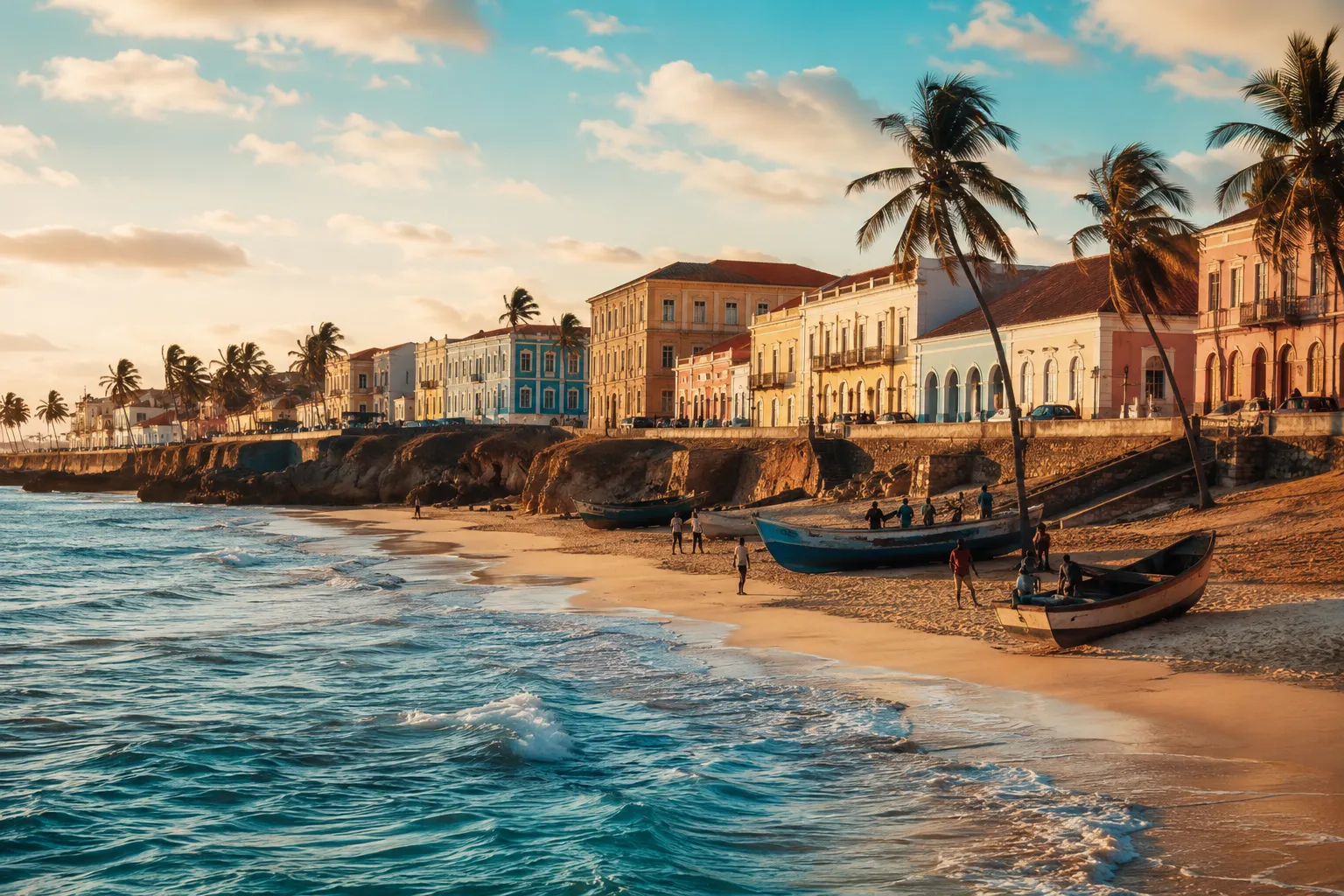
Benguela is a laid-back coastal city in western Angola, about 600 km south of Luanda, known for pastel Portuguese colonial architecture, warm Atlantic beaches like Praia Morena and Baía Azul, and a strong fishing culture. It’s one of the country’s most rewarding stops, easy to combine with neighboring Lobito for a relaxed 3 to 5 day beach and history escape.
Key takeaways
- Benguela sits on Angola’s central coast and pairs perfectly with Lobito, just 30 km north.
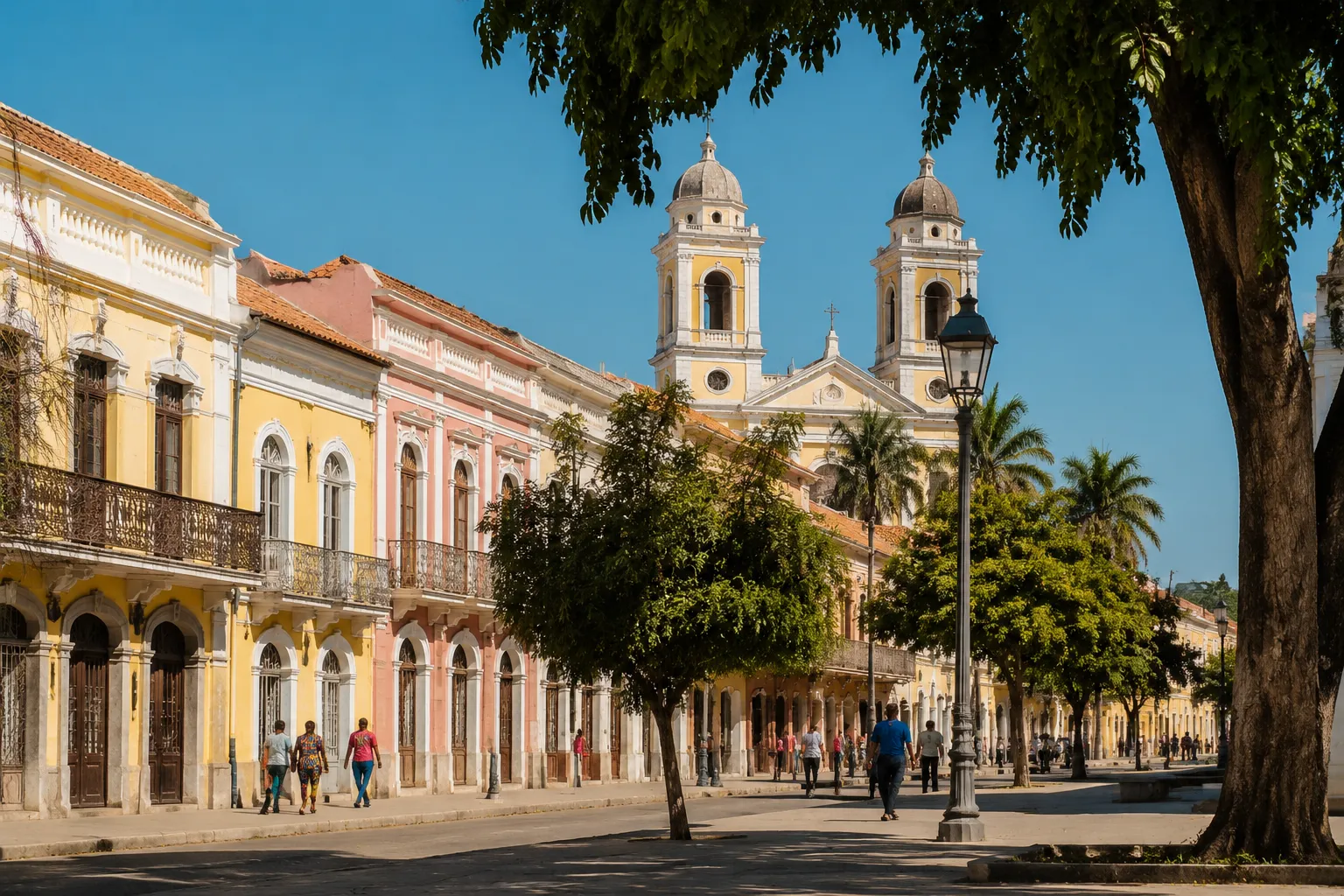
- The city’s colonial core includes the São Filipe Cathedral and the historic Benguela Railway Station.
- Praia Morena, Baía Azul, and Praia da Caotinha are the most-visited beaches [1][3].
- Easiest access from Luanda: a short TAAG flight to Catumbela Airport (about 15 km from the city) [4].
- Cool Atlantic breezes from the Benguela Current keep the climate mild year-round.
- The dry season (May to October) is the best time to visit.
- Benguela is generally safer and more relaxed than Luanda, but standard urban precautions still apply [5].
Why visit Benguela
Benguela offers something Luanda doesn’t: space to breathe. The pace is slower, the beaches are cleaner, and the colonial center feels intact rather than swallowed by high-rises. If you want to see a side of Angola that mixes Portuguese heritage, Atlantic surf, and everyday coastal life, this is the city where it all clicks.
I’d argue Benguela is the single best introduction to Angola for a first-time visitor. It’s manageable, photogenic, and the seafood is genuinely excellent. It also serves as a natural base for exploring the wider central coast, including Lobito’s sandspit and the road south toward Namibe.
For the bigger picture on planning your trip, see our overview of travelling to Angola and the broader list of things to do in Angola.
What is Benguela Angola known for
Benguela is known for three things: colonial-era architecture, warm sandy beaches, and a fishing economy that shapes daily life. The city was founded by the Portuguese in 1617 as São Filipe de Benguela and grew into one of West Africa’s most important Atlantic ports [2].
Today, its identity blends that history with a strong local culture of music, seafood cuisine, and street life along the Marginal. It’s also the terminus of the Benguela Railway (Caminho de Ferro de Benguela), historically one of Africa’s most ambitious rail projects, connecting the Atlantic to the copper belt of the DRC and Zambia.
Benguela Angola history and colonial architecture
Benguela’s colonial history is layered and, at times, painful. The city was a major hub of the transatlantic slave trade, with thousands of enslaved Africans forcibly shipped from its shores to Brazil and the wider Americas. The building where captives were once held before embarkation now houses the National Museum of Archaeology, a somber but essential stop [1].
Architecturally, the historic center is remarkably intact. Key sights include:
- Sé Catedral de São Filipe de Benguela: the twin-towered cathedral anchoring the old town.
- Palácio do Governo: the colonial-era government palace.
- Estação Ferroviária de Benguela: the grand old railway station, a landmark of the Lobito corridor [2].
- Rua Sacadura Cabral and the Marginal: pastel facades, wrought-iron balconies, and shaded arcades.
A slow morning walking tour of the center, ideally before 10 a.m. when the light is soft and the heat manageable, is one of the best experiences in the city.
The best beaches in Benguela Angola
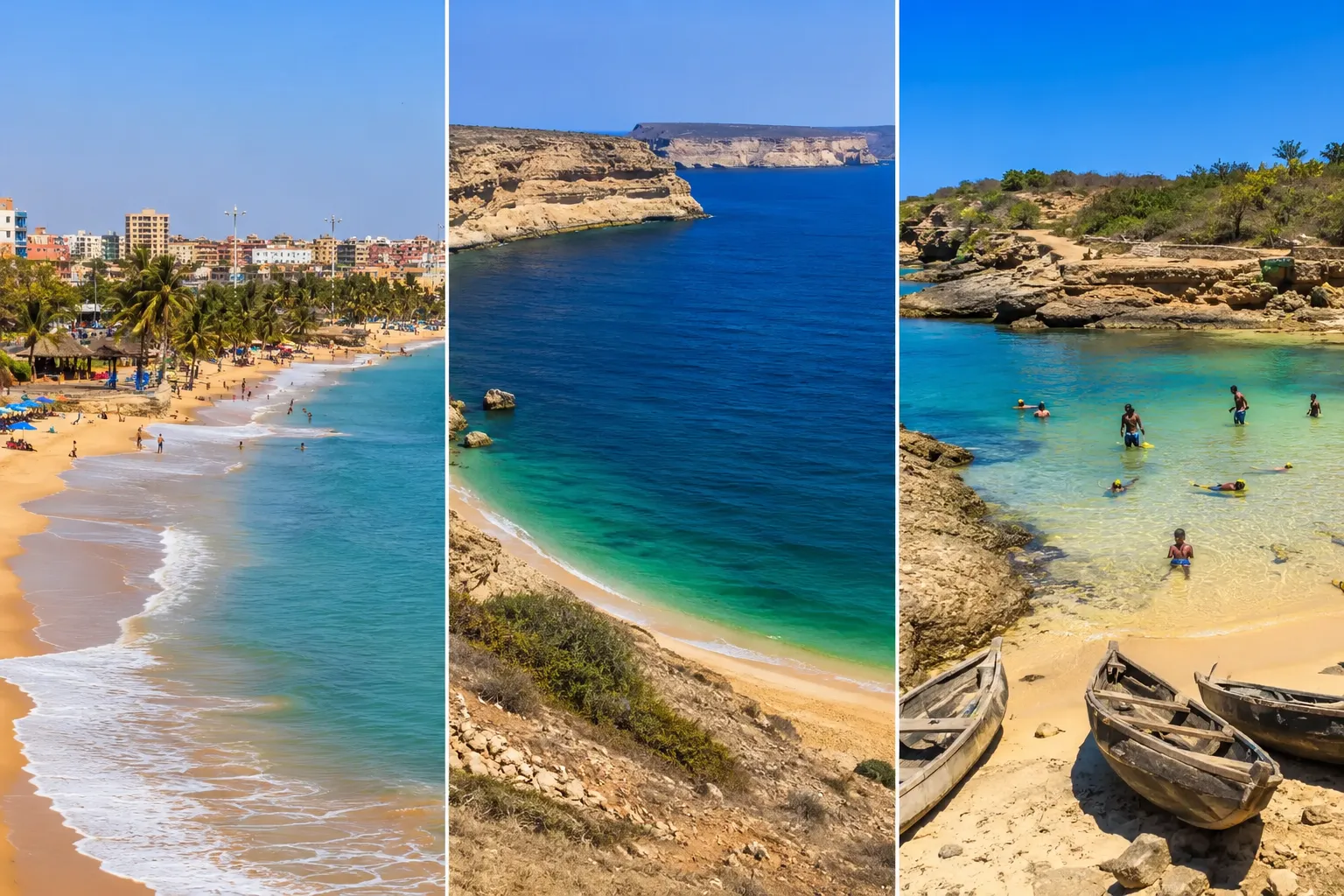
The best beaches in Benguela are Praia Morena in the city itself, Baía Azul about 20 km south, and the small cove of Praia da Caotinha even further south [1][3]. Each has its own character.
Praia Morena
Praia Morena is Benguela’s postcard beach: a long strip of golden sand with a paved promenade, restaurants, and shade [1]. It’s busy on weekends with families and joggers, quiet on weekday mornings. Historically, this is also where enslaved people were forced onto ships, so it carries deep significance beyond its beauty [1].
Baía Azul
Baía Azul (“Blue Bay”) lives up to its name. Deep sapphire water, rocky headlands, and pale sand make it the most scenic spot in the province. It’s popular for a day trip and simple seafood lunches at rustic beach shacks.
Praia da Caotinha
A tiny sheltered cove with calm, clear water. Caotinha is the best spot near Benguela for snorkeling and sport fishing [3]. Bring your own gear.
For more coastal inspiration across the country, see our roundup of the most beautiful beaches in Angola.
Things to do in Benguela Angola
Beyond the beaches, Benguela rewards travelers who slow down. Here’s what I’d prioritize:
- Walking tour of the colonial center (2 to 3 hours).
- National Museum of Archaeology to understand the slave-trade history [1].
- Sunset on the Marginal with grilled fish and a cold Cuca beer.
- Day trip to Baía Azul and Caotinha by taxi or organized tour.
- Fish market at dawn near the port, chaotic and photogenic.
- Live semba or kizomba at a local bar on the weekend.
- Trip to Lobito’s Restinga sandspit, just 30 minutes north.
“Benguela feels like a coastal Portuguese town that took a wrong turn and ended up in Africa, in the best possible way.”
If you want a local guide, boat trip, or a curated day tour, booking through a reputable operator is worth it. (Affiliate disclosure: some links on this site are affiliate links marked rel=“sponsored nofollow”. We only recommend services we’d use ourselves, and prices are never invented.)
Where to stay in Benguela Angola
Benguela has a modest but solid range of accommodation, from mid-range beach hotels along the Marginal to smaller guesthouses in the historic center. Options are more limited than in Luanda, so book ahead in the dry season.
General guidance:
- Beachfront hotels near Praia Morena: convenient, walking distance to restaurants.
- City-center guesthouses: better for exploring colonial architecture on foot.
- Lobito resorts: consider staying on the Restinga if you want a more resort-style feel.
You can compare current availability and rates through major hotel booking platforms, see our tips on accommodation in Angola for what to expect in terms of standards and pricing. (Affiliate links may apply, rel=“sponsored nofollow”.)
Benguela Angola local food and restaurants
Benguela’s food scene is coastal Angolan at its best: fresh fish, prawns, and lobster, often grilled simply and served with funge (cassava porridge), rice, or fried banana. Signature dishes to try:
- Calulu de peixe: dried and fresh fish stewed with vegetables and palm oil.
- Muamba de galinha: Angola’s national chicken stew.
- Grilled garoupa or corvina: local Atlantic fish, often the catch of the day.
- Cataplana-style seafood: a Portuguese-influenced shellfish stew.
Wash it down with Cuca or Nocal beer, or a fresh baobab juice (mukua). For a deeper dive into national dishes, see our guide to the Angolan cuisine.
How to get to Benguela from Luanda
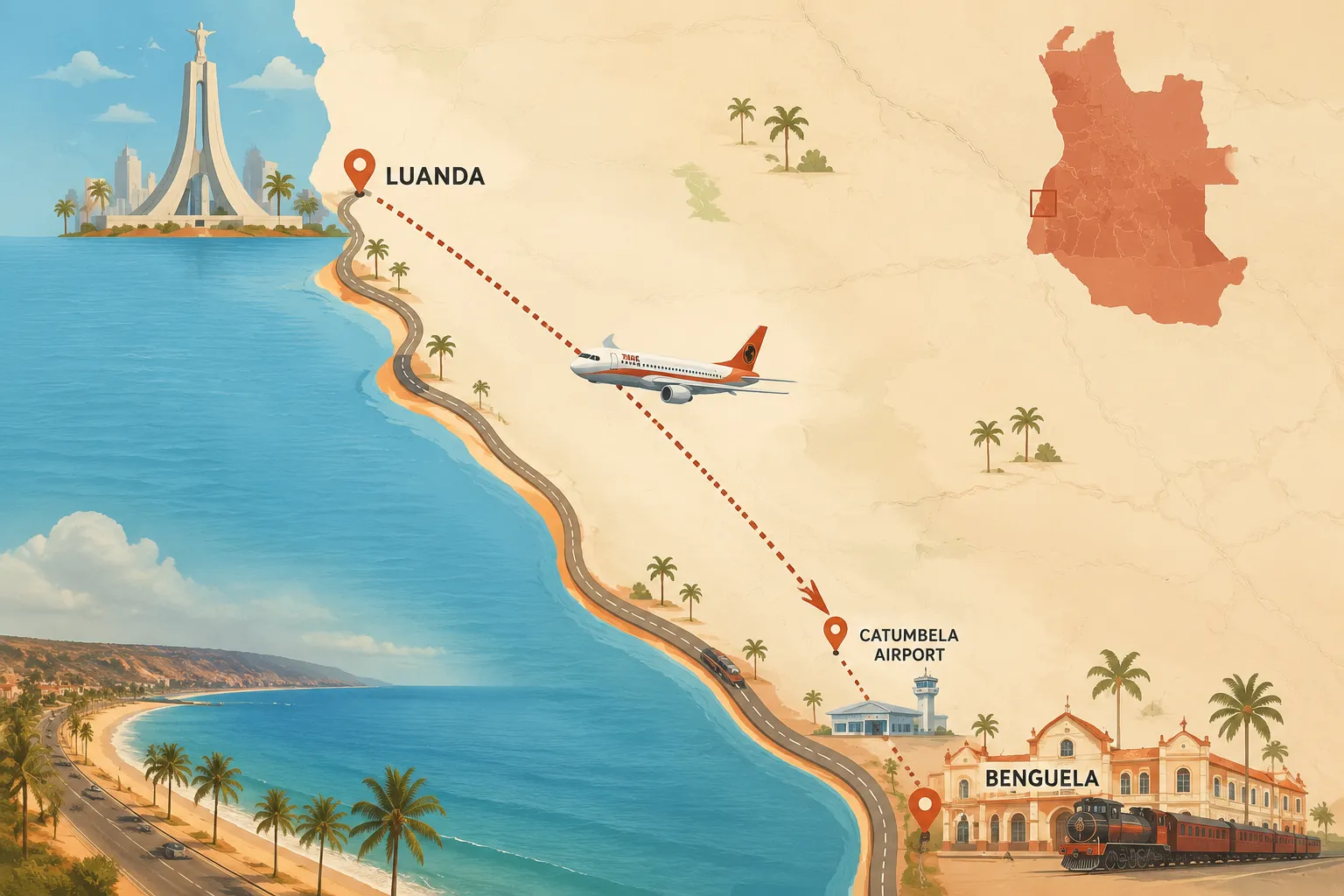
The fastest way to get from Luanda to Benguela is a domestic flight with TAAG Angola Airlines to Catumbela Airport (CBT), about 15 km from the city. Flight time is roughly 1 hour [4].
Your options at a glance:
| Mode | Approx. duration | Notes |
|---|---|---|
| Flight (TAAG, NBJ to CBT) | ~1 hour | Fastest, most reliable option [4] |
| Car / private driver | ~8 to 10 hours | ~600 km via EN100 coastal road |
| Long-distance bus | ~10 to 12 hours | Cheapest, less comfortable |
| Train (Benguela Railway) | Regional only | Serves inland provinces, not from Luanda |
The road distance from Luanda is roughly 550 to 600 km, and driving time varies with traffic leaving Luanda and road conditions. Most travelers fly; overland is for those with time. See getting around Angola for the wider transport picture.
For flight status and schedules, check TAAG Angola Airlines directly.
Benguela Angola weather, climate and best time to visit
Benguela has a mild, semi-arid coastal climate, cooled by the cold Benguela Current offshore. It rarely gets uncomfortably hot, and rainfall is low compared to inland Angola.
- Dry season (May to October): cooler, less humid, clear skies. Best time to visit.
- Wet season (November to April): warmer, occasional short rains, greener landscapes.
Water temperatures stay swimmable year-round, though the Atlantic here is cooler than most people expect thanks to the current. For a country-wide overview, see the best time to visit Angola.
Is Benguela safe for tourists
Benguela is generally considered safer and more relaxed than Luanda, and most visits are trouble-free. Praia Morena and the city center are active with families and visitors during the day [5]. That said, standard precautions apply.
Sensible rules:
- Avoid empty beaches and quiet streets after dark.
- Keep valuables out of sight; don’t flash phones or cash.
- Use registered taxis or arranged transfers at night.
- Carry a copy of your passport, not the original.
For the latest official guidance, always check your government’s official travel advisory (for example the UK FCDO or the US State Department) before you go, and read our practical piece on is Angola safe.
Benguela vs Luanda: which is better to visit
Short answer: visit both, but expect very different experiences. Luanda is the big, expensive, chaotic capital with the best museums and nightlife. Benguela is the calm coastal counterweight: cheaper, prettier, and easier to walk.
Choose Luanda if you want museums, nightlife, business, or you only have 2 to 3 days.
Do both if you have a week or more, which most travelers should.
More on the capital in our full Luanda guide.
Benguela tourism infrastructure and combining with Lobito
Tourism infrastructure in Benguela is developing but still modest. You’ll find comfortable hotels, working ATMs (though card acceptance is patchy outside big hotels), taxis, and a handful of tour operators. English is not widely spoken; basic Portuguese phrases go a long way [2].
Benguela pairs naturally with Lobito, just 30 km north. Lobito’s Restinga is a long, thin sandspit lined with restaurants and resorts, and its port is a major hub of the Lobito Corridor rail and trade route. A common itinerary:
- Day 1 to 2: Benguela city, colonial walk, Praia Morena
- Day 3: Baía Azul and Caotinha day trip
- Day 4 to 5: Lobito, Restinga beach, seafood dinner
- Day 5 to 6: Return via Catumbela or continue south to Namibe
See our dedicated pages on Lobito and building an Angola itinerary that includes both cities.
Benguela fishing industry and economy
Benguela’s economy leans heavily on its port, fishing industry, and administrative role as provincial capital [2]. The coastal waters are among the most productive in the South Atlantic, thanks to the nutrient-rich upwelling of the Benguela Current, which supports large stocks of sardine, mackerel, and hake.
For travelers, this matters in two ways: the seafood you eat is genuinely local and fresh, and the working fishing harbor is one of the most authentic places to spend an early morning in the city.
Conclusion and next steps
Benguela is where Angola stops feeling intimidating and starts feeling irresistible. Colonial architecture, warm beaches, excellent seafood, and a manageable pace make it the ideal first stop after Luanda, or the highlight of a longer central-coast trip.
Next steps:
- Pick your dates in the dry season (May to October).
- Check your Angola visa and vaccination requirements via official sources.
- Book a TAAG flight from Luanda to Catumbela.
- Reserve 2 to 3 nights in Benguela and add 1 to 2 nights in Lobito.
- Read our full Angola itinerary guide to slot Benguela into a wider itinerary.
Free help from our team in Angola
Planning a trip to Benguela?
Tell us when you want to go. We arrange the flight or drive from Luanda, a guide from our own team for the coast and the colonial centre, and a place to stay.
- Local team in Angola
- No obligation, nothing to pay
- Reply by email or WhatsApp
Want to keep this guide? We email you the key points with a link to every section.
Frequently asked questions
Where is Benguela?
Benguela is a coastal city and provincial capital in western Angola, on the Atlantic Ocean, about 600 km south of Luanda.
What is Benguela known for?
Portuguese colonial architecture, warm sandy beaches (Praia Morena, Baía Azul, Caotinha), a strong fishing industry, and its role as the historic terminus of the Benguela Railway.
Are the beaches good?
Yes. Praia Morena is the main city beach, Baía Azul offers striking deep-blue water, and Caotinha is a small cove ideal for snorkeling and sport fishing.
How do I get to Benguela?
The easiest way is a 1-hour TAAG flight from Luanda to Catumbela Airport, about 15 km from the city. Driving from Luanda takes 8 to 10 hours.
Is Benguela safe?
Generally yes, and calmer than Luanda. Stick to daylight for beach visits, keep valuables discreet, and check current official travel advice before you go.
Can I combine Benguela with Lobito?
Absolutely. Lobito is only 30 km north and the two cities are almost always visited together on a 3 to 5 day central coast itinerary.