Quick Answer
Solo travel in Angola is realistic but demanding. The hard parts are cost, the Portuguese language barrier, thin tourism infrastructure and slow transport, not an unusually high risk of violence against tourists. Angola’s eVisa system has made independent trips far more feasible than a decade ago, and coastal cities like Benguela, Lobito and Namibe are widely reported as calmer and easier than Luanda. Expect hotels and guesthouses rather than hostels, and expect to meet very few other travellers.
Key Takeaways
- Angola is a competent-traveller destination, not a beginner one. It rewards people who have already handled a few logistically messy countries.
- Portuguese is the single biggest obstacle. English is rare outside Luanda’s international hotels and the oil sector.
- Being alone costs you real money. You cannot split car hire, a driver, or a double room, and Angola is already an expensive country.
- Luanda has a genuine petty crime and opportunistic robbery problem. Standard urban discipline applies: phone away, no walking at night, arranged transport only.
- Base yourself on the coast if you want the gentlest introduction to independent travel here.
- The eVisa changed things. Many nationalities can now apply online rather than fighting for a consular appointment.
- Solo women do travel Angola successfully. Expect attention and staring; expect to plan transport and accommodation more carefully than a man would.
- Budget more days than distance suggests. Roads, breakdowns and slow checkpoints eat itineraries.
Is solo travel in Angola actually realistic?
Yes, for a traveller with some experience, patience and a functional grasp of Portuguese. Angola is not dangerous in a way that makes solo travel reckless; it is difficult in a way that makes solo travel expensive and occasionally frustrating.
The honest framing is this: almost everything that makes Angola hard is logistical.
- There is no traveller trail to slot into. No hostel noticeboard, no shared jeep to the next town full of other foreigners.
- Tourism infrastructure is thin outside Luanda and a handful of coastal and highland towns. Booking platforms cover a fraction of what actually exists.
- Information is scarce and ages badly. Opening hours, park access and road conditions change without any online update.
- Distances are large and roads vary from excellent new tarmac to genuinely rough.
Angola punishes rigid plans and rewards travellers who can lose a day without losing their temper.
Choose Angola as a solo trip if: you have travelled independently in Africa or Latin America before, you speak or can learn basic Portuguese, and you have a budget with slack in it.
Choose something else first if: this would be your first trip outside Europe or North America, you need reliable public transport, or your budget assumes hostel dorms and street food only.
What does it cost to travel solo in Angola?
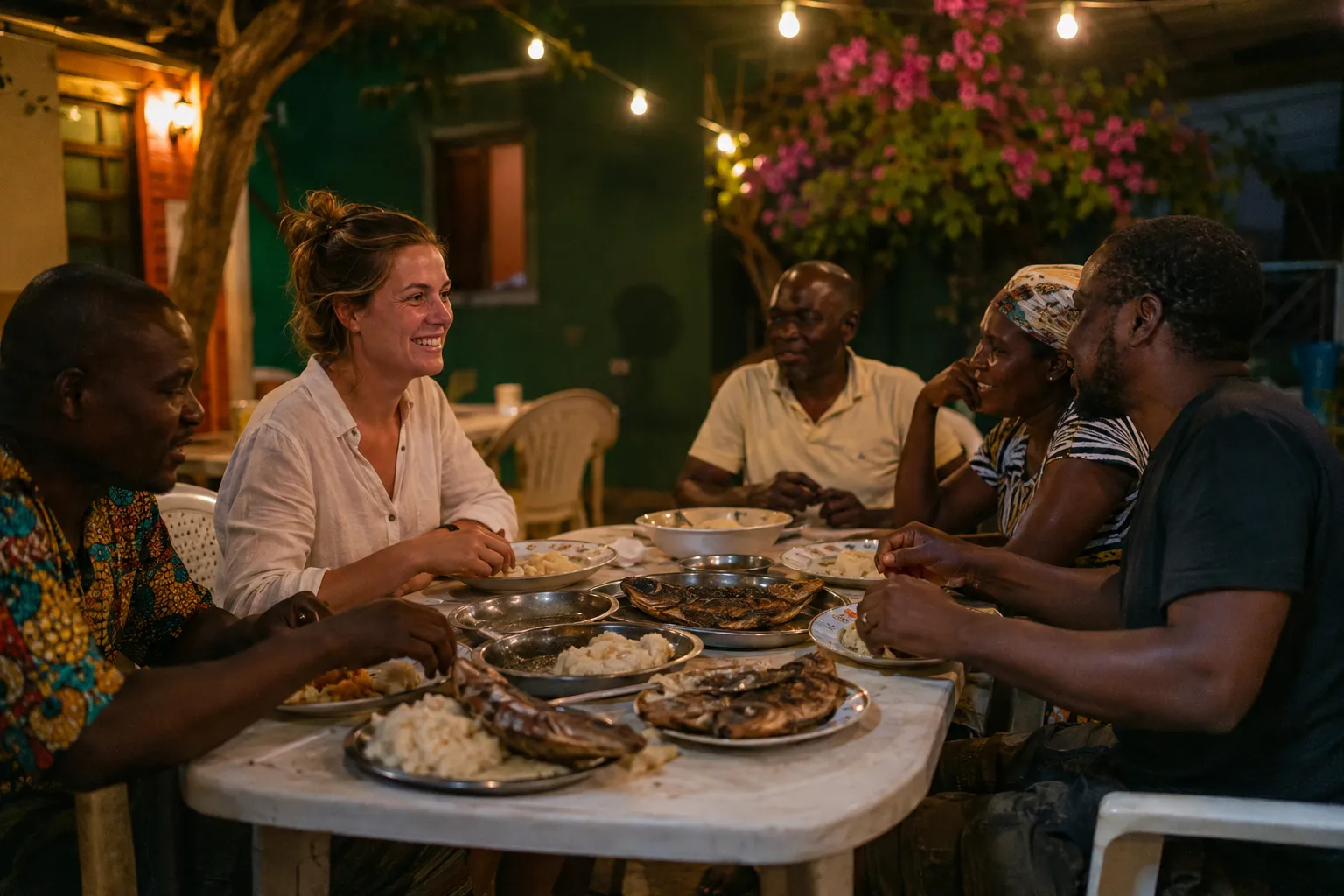
Being alone is the most expensive way to see Angola. Luanda has appeared for years near the top of global cost-of-living rankings for expatriates, and the price level filters through to visitors. Solo travellers lose every cost-splitting option that makes Angola affordable for pairs and small groups.
Where the solo penalty bites hardest:
| Expense | Shared between two or more | Alone |
|---|---|---|
| Car hire with 4x4 | Split down the middle | Full daily rate on you |
| Driver or guide for a day trip | Halved or better | Full fee |
| Hotel room | Twin or double split | Same room, single payer |
| Domestic flight | No saving either way | No saving either way |
| Long-distance transfers to sights like Kalandula | Split | Full |
A single day trip with a hired vehicle can quietly become the largest line in a solo budget. For a full breakdown of what a trip here actually absorbs, see the detailed guide to what an Angola trip costs.
Practical ways to soften the solo premium:
- Use domestic flights for the long hops and hire vehicles only for short local excursions.
- Base yourself in one or two towns and do day trips instead of a rolling road trip.
- Ask your guesthouse to arrange the driver. Hotel-brokered transport is often cheaper than an agency and far safer than improvising.
- Share where you can. If another traveller or an expatriate is going the same way, split it. Opportunities are rare but they exist.
- Eat where Angolans eat. Local restaurants serving funge, calulu and grilled fish cost a fraction of hotel dining.
Do I need to speak Portuguese for solo travel in Angola?
Effectively yes. Portuguese is Angola’s official language, and English is rare outside international hotels in Luanda and the oil industry. Alongside Portuguese, Bantu languages including Umbundu, Kimbundu, Kikongo and Chokwe are widely spoken. For a solo traveller with nobody to fall back on, the language gap is the biggest daily obstacle, larger than crime or roads.
What Portuguese actually buys you:
- Negotiating a fare or a room rate without being quoted a fantasy price
- Understanding a police officer or soldier at a checkpoint
- Asking whether a road, park gate or ferry is open today
- Being read as a curious visitor rather than an unreadable stranger
Minimum viable preparation before you fly:
- Numbers, prices and bargaining phrases
- Directions, transport vocabulary and “how much to go to…”
- Food and allergy words
- Medical basics and how to ask for help
- Offline translation with the Portuguese pack downloaded, plus a paper backup
A common mistake is assuming Brazilian Portuguese study is enough. It helps a great deal, but Angolan Portuguese has its own accent and vocabulary, and comprehension usually lags behind your speaking for the first few days.
What are the visa requirements for solo travellers to Angola?
Angola operates an eVisa system for many nationalities, and some travellers can enter visa-free for short tourist stays. This shift is the main reason independent, unguided travel became practical at all. Rules change, so confirm the current position with Angola’s official migration service before booking anything.
Points that matter specifically for solo travellers:
- Accommodation proof. Applications commonly ask where you are staying. Have a confirmed booking for at least the first nights, even if you plan to improvise afterwards.
- Onward travel. Keep your return or onward ticket accessible on arrival.
- Yellow fever. Proof of yellow fever vaccination is generally required for entry. Verify with a travel health clinic well ahead, since the certificate needs time to become valid.
- Print everything. Solo travellers have nobody to hold a phone while they dig through a bag. Paper copies of your visa approval, insurance and booking speed up every counter.
Full current detail sits in our Angola visa guide. Check the official portal for your nationality as the final word, since 2026 requirements can differ from what blogs describe.
Is Angola safe for solo travellers?
Angola is not defined by violence against tourists, but Luanda has a serious petty crime and opportunistic robbery problem, and that shapes solo behaviour more than anything else. Outside the capital, especially in coastal cities, travellers consistently report a calmer atmosphere. Our full assessment lives in the dedicated guide to whether Angola is safe to visit, so this section covers the solo-specific practicalities only.
The non-negotiables for a solo traveller in Luanda:
- No phone in your hand on the street. Phone snatching is the classic incident. Check maps indoors or in a vehicle.
- No walking after dark. This is not caution theatre. Arrange transport, even for short distances.
- Arranged transport, not hailed transport. Have your hotel call a car. Do not flag down unmarked vehicles.
- Carry a decoy amount of cash and leave the rest in the room safe with your passport copy.
- Do not photograph government buildings, police, military sites or ports. This causes trouble quickly.
- Stay on established tracks in rural areas. Landmine clearance has come a long way, but residual risk exists off-road in some regions. Never shortcut across unknown ground.
- Check your own government’s travel advisory before you go, particularly for the Cabinda exclave, which frequently carries stricter advice than the rest of the country.
Edge case worth planning for: solo travellers get sick alone. A fever in a town with no English-speaking clinic is the scenario most likely to end a trip badly. Malaria is present throughout Angola, prophylaxis is standard advice, and no tap water should be drunk.
Do I need travel insurance for Angola?
Yes, without exception. Solo travellers carry the whole risk of a medical event with nobody to advocate for them, and quality private care is concentrated in Luanda. Insurance with medical evacuation cover is the single most important purchase after your flight.
Look specifically for:
- Medical evacuation and repatriation, with a named 24-hour assistance line
- Cover that pays providers directly or reimburses fast, since local clinics may want payment upfront
- Adventure activity cover if you plan on surfing, hiking Tundavala or diving
- Trip disruption cover, because domestic flight and road delays are routine
Compare what to look for in our guide to travel insurance for Angola, and store the policy number offline as well as online.
When is the best time to visit Angola as a solo traveller?
The dry, cooler season from roughly May to October is the best window, and it matters more for solo travellers than for groups. Dry roads mean fewer breakdowns, more reliable access to waterfalls and parks, and less chance of being stranded somewhere with no accommodation options and no travel companion to problem-solve with.
- May to October (dry season): best road conditions, easier park access, calmer travel logistics. Coastal cities are pleasantly cool thanks to the Benguela current, and the Huíla highlands around Lubango are mild.
- November to April (rainy season): dramatic green landscapes and fuller waterfalls, but unsealed roads deteriorate, some routes become impassable, and mosquito exposure rises.
Decision rule: if this is your first solo trip to Angola, travel in the dry season. Save the rainy season for a second visit when you already know how the country works.
Which cities and regions are best for solo travel in Angola?
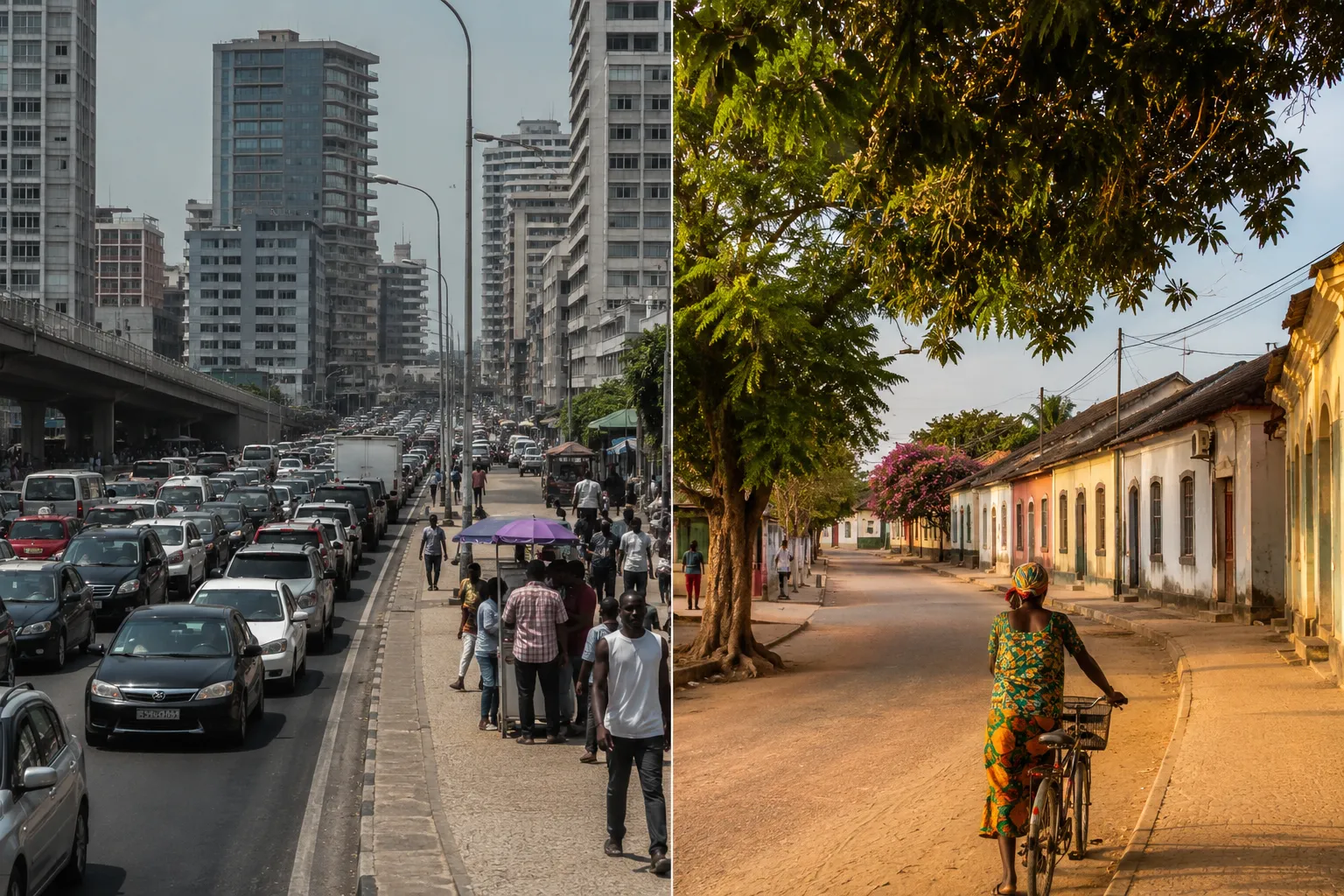
Base yourself on the coast. Benguela, Lobito and Namibe are widely reported as calmer, more walkable and considerably easier for independent travel than Luanda, which is best treated as an arrival point and a two or three day city stop rather than a base.
| Place | Solo suitability | Why |
|---|---|---|
| Luanda | Moderate, high vigilance | Flights, embassies, banks, nightlife, Fortaleza de São Miguel and the Marginal, but the most petty crime |
| Benguela | Good | Relaxed colonial coastal town, walkable centre, beaches like Praia Morena |
| Lobito | Good | Port town on a sand spit, quiet streets, gateway to the Benguela railway |
| Namibe | Good | Desert-meets-ocean base for Iona National Park approaches |
| Lubango / Huíla | Good | Highland climate, Serra da Leba pass, Tundavala gorge, Cristo Rei |
| Malanje | Moderate | Kalandula waterfalls and Pedras Negras, but transport needs arranging |
| Cabinda | Not recommended solo | Frequently carries stricter travel advice; check your own government’s advisory |
Start with Luanda for arrival logistics, then move to Benguela to actually relax into the trip. The contrast in atmosphere between the two is the thing most first-time visitors mention.
Is it easy to get around Angola without a car?
It is possible but slow and language-dependent. There is no tourist-oriented bus network. Independent movement usually means domestic flights between regions, shared minibuses (candongueiros) and collective taxis locally, plus the Benguela railway for a memorable but time-consuming inland leg.
How the options stack up for someone travelling alone:
- Domestic flights: the practical backbone for long distances. Book ahead and expect schedule changes.
- Candongueiros and collective taxis: cheap, ubiquitous, crowded, and require Portuguese plus tolerance for waiting until full. Keep bags on your lap and valuables out of sight.
- Long-distance buses: exist between major cities, but timetables are informally communicated and depots can be chaotic.
- Benguela railway: a genuine experience for the Lobito to inland run, slow and not a way to save time.
- Hired car with driver: the most reliable option for reaching Kalandula, Kissama or Miradouro da Lua, and the one where being solo hurts your wallet most.
- Self-drive: viable for confident drivers, but urban traffic, checkpoints and fuel planning are all real work.
Full detail on routes, road conditions and vehicle options is in our guide to getting around Angola.
Common mistake: planning a Luanda to Kalandula to Lubango to Namibe loop in ten days without a driver. The distances are enormous and the itinerary collapses on day three.
What are the cheapest accommodation options for solo travellers?
Expect hotels, small pensões and guesthouses. Hostel and backpacker infrastructure in Angola is very thin, so budget planning that assumes dorm beds will not survive contact with reality.
Realistic budget approach:
- Pensões and residenciais: small, locally run guesthouses in provincial towns, usually the cheapest safe option. Often not on booking platforms; ask locally or phone ahead.
- Mid-range city hotels: the default in Luanda and Benguela. Choose ones with 24-hour reception and secure parking or a gated entrance.
- Guesthouses on the coast: Benguela, Lobito and the Mussulo area have small-scale options that are far better value than Luanda equivalents.
- Camping and surf lodges: exist around spots like Cabo Ledo but are seasonal and limited.
Selection criteria that matter more when you are alone: staffed reception at night, a lockable room safe, a location you can be dropped at directly, and staff willing to call a trusted driver for you. Those four things are worth paying a little more for.
Is Angola good for solo female travellers?
Many women have travelled Angola alone without incident while taking sensible precautions. The realistic expectation is not danger, but persistent attention: staring, comments and repeated conversational approaches, more so in Luanda and in nightlife settings than in quieter coastal towns. That attention is tiring rather than automatically threatening, and it is manageable with planning.
Practical guidance:
- Dress. Angolan women in cities dress fashionably and often quite boldly, so there is no strict code. Still, mid-length skirts or trousers with covered shoulders draw less comment in provincial towns, at churches and at markets. Beachwear stays at the beach.
- Transport. Arranged cars through your accommodation, every time, especially after dark. Avoid crowded candongueiros alone at night. Sit in the back and share your journey details with someone.
- Accommodation. Prioritise staffed reception, interior corridors rather than external ground-floor doors, and a location where a car can drop you at the entrance. Arrive in daylight when possible.
- Deflection lines. A calm, firm “não, obrigada” and continuing to walk works. Many women find that mentioning a husband or a partner meeting them shortly ends persistent approaches quickly. Wearing a ring is a low-cost tactic.
- Nightlife. Angola’s semba, kizomba and kuduro scene is one of its joys, but go with people you have come to trust, not alone, and keep control of your own drink and your own way home.
- Contact. A local SIM or eSIM with data is a safety tool, not a convenience. Being able to call your hotel or a driver changes your options.
The honest summary: Angola asks more logistical planning from a solo woman than Namibia or Ghana would, and gives back a country almost no other traveller she knows has seen.
How do you meet other travellers in Angola?
You mostly do not meet other travellers, so plan to meet Angolans instead. There is no hostel scene, no traveller bar circuit and no established backpacker route, and you may go days without seeing another independent visitor.
What actually works:
- Guesthouse and hotel staff. The most consistent source of introductions, advice and trusted drivers.
- Local guides. Hiring a guide for a day in Malanje or Namibe often turns into invitations and connections far beyond the itinerary.
- Live music and dance venues. Semba and kizomba nights are social by design.
- Markets and restaurants. Ordering funge, calulu or muamba de galinha with a few words of Portuguese starts conversations reliably.
- Diving, surfing and fishing operators. Small communities of Angolans and long-term expatriates who know everything about local logistics.
- Expatriate networks. Luanda’s international community is large, and professional or church-linked gatherings are open to visitors.
Angolan hospitality is genuinely warm and often surprises first-time visitors. Portuguese is the key that unlocks it, which brings the language point full circle.
A sample approach for a first solo trip
This is a shape rather than a fixed itinerary, built for around 12 to 14 days with realistic travel time.
- Days 1 to 3, Luanda. Arrive, adjust, use arranged transport only. Fortaleza de São Miguel, the Marginal, the Ilha. Buy a local SIM. Confirm onward flights in person if you can.
- Day 4, day trip south. Miradouro da Lua and Cabo Ledo with a driver arranged through your accommodation.
- Days 5 to 8, Benguela and Lobito. Fly or drive south. Slow down. Walk the town, spend beach days, eat seafood. This is where solo travel in Angola becomes enjoyable rather than merely manageable.
- Days 9 to 11, Lubango and Huíla. Serra da Leba, Tundavala, cooler highland air.
- Days 12 to 14, buffer and return. Either continue to Namibe for desert and coast, or bank the days against delays and head back to Luanda unhurried.
Alternative for shorter trips: Luanda plus Benguela and Lobito only, for seven days. Fewer moves, less transport risk, more actual experience of the country.
Conclusion
Solo travel in Angola is a fair trade: harder work and higher cost in exchange for a country almost nobody in your circle will have seen. The difficulty is administrative and financial, not primarily about danger. Get the language, the budget and the transport right and the rest tends to fall into place, helped along by hospitality that consistently exceeds expectations.
Your next steps:
- Start Portuguese now, even 15 minutes a day, focusing on numbers and transport.
- Confirm current entry rules for your nationality on the official Angolan portal and in our Angola visa guide.
- Read the full Angola safety assessment and check your own government’s travel advisory.
- Book insurance with medical evacuation cover before your flights.
- Plan a coastal base rather than a rolling road trip, and build in two spare days.
Free help from our team in Angola
Travelling to Angola on your own?
Ask us anything about travelling solo. If you want company for the harder parts, a guide or driver from our own team can travel with you for a day or the whole trip.
- Local team in Angola
- No obligation, nothing to pay
- Reply by email or WhatsApp
Want to keep this guide? We email you the key points with a link to every section.
Frequently asked questions
How many days do you need for a solo trip to Angola?
Ten to fourteen days is the sweet spot for a first solo visit, covering Luanda, one coastal base and the Lubango highlands. Seven days works if you limit yourself to Luanda plus the Benguela and Lobito coast. Anything shorter leaves no buffer for transport delays.
Can you travel Angola solo without speaking Portuguese?
It is possible in Luanda's international hotels and with a pre-booked guide, but genuinely difficult independently. English is rare outside those settings. Learning basic Portuguese before you go improves your safety, your prices and your experience more than any other single preparation.
Is Luanda safe to walk around alone?
Central areas are walkable in daylight with your phone out of sight and minimal valuables. Walking at night is not advised for anyone, alone or otherwise. Use transport arranged by your hotel instead, and check your own government's travel advisory for current guidance.
Are there hostels in Angola for solo backpackers?
Hostel infrastructure is very thin. Plan on hotels, small pensões and guesthouses, and budget accordingly. This also means far fewer chance meetings with other travellers than in most African destinations.
What should you avoid as a solo traveller in Angola?
Walking at night, hailing unmarked vehicles, using your phone openly on Luanda streets, photographing military or government sites, drinking tap water, travelling off established tracks in rural areas, and travelling to Cabinda without checking current advisories.
What are the most common mistakes solo travellers make in Angola?
Underestimating the budget, over-packing the itinerary with long overland legs, skipping Portuguese preparation, assuming cards will be accepted outside major hotels, and expecting a backpacker scene that does not exist.