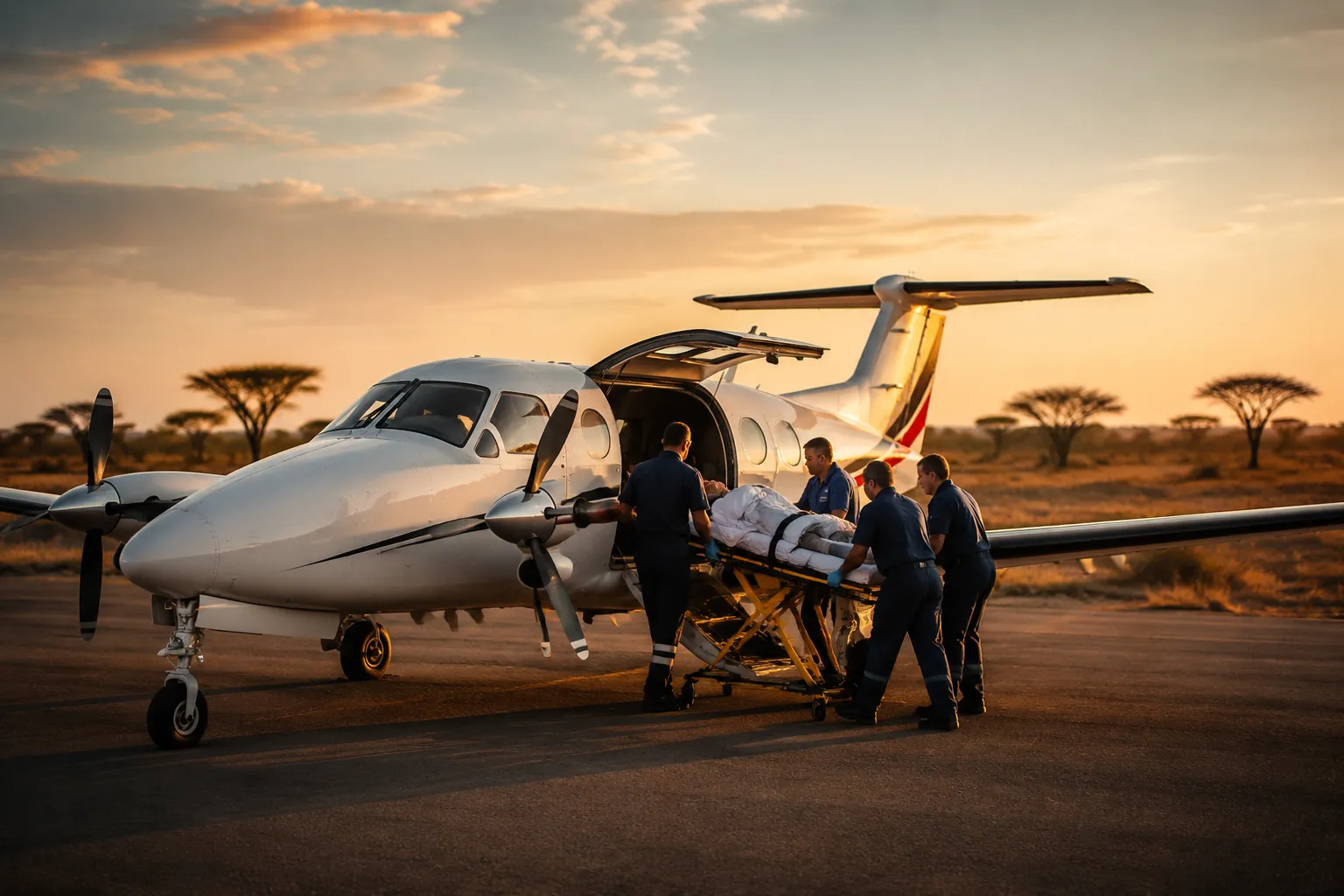
A serious motorbike accident on the road to Lubango, or a bout of severe malaria in a small town in Malanje, does not end with a local hospital stay. In practice, it ends with an air ambulance flying you to Johannesburg, Lisbon or home, and a bill that can run from tens of thousands of US dollars into six figures. That is the single reason to think carefully about angola travel insurance before you fly.
Quick answer
Travel insurance is not a legal entry requirement for Angola in 2026, but going without it is a genuinely bad idea. The one piece of cover that matters most is emergency medical evacuation and repatriation, because serious cases are flown out of the country. Look for a policy with high medical limits, explicit evacuation cover, a 24/7 assistance line that works from Angola, and any adventure activities you actually plan to do.

Key takeaways
- Angola does not require travel insurance for entry. A yellow fever vaccination certificate is the mandatory health document.
- The most important benefit for Angola is emergency medical evacuation, not lost baggage.
- Private clinics in Luanda are the best option for care. Outside the capital, options are limited.
- Hospitals often expect payment up front or written proof of cover before treating you.
- The US State Department advisory for Angola explicitly recommends supplemental insurance that covers medical evacuation.
- Travel against your government’s advisory (for example to parts of Cabinda under warning) can void your cover.
- Adventure activities, pre-existing conditions and alcohol-related incidents are common exclusions. Read the wording.
- This article is general guidance, not financial advice. Always read the full policy document before you buy.
Do you need travel insurance for Angola?
No, travel insurance is not a formal entry requirement for Angola. Immigration will not ask for a policy at the airport. What they do want is a valid visa or visa-free entry stamp and, in most cases, proof of yellow fever vaccination.
That said, “not required” is not the same as “not needed.” Angola sits in a category where I would treat insurance as effectively non-optional for any responsible traveler:
- Medical infrastructure is uneven. Serious trauma or specialist care usually means evacuation.
- Cash and card systems are patchy. You may need to pay for treatment on the spot.
- Distances are large. A road accident 400 km from Luanda is a very different problem than one in Europe.
If you are still working through the basics of your trip, our guides to the Angola visa and e-visa requirements and current Angola travel advice are a good starting point before you shop for a policy.
Why evacuation cover is the part that matters
For Angola, emergency medical evacuation is the single most important line item in any policy. If something serious happens, whether that is a car crash, a heart attack, a diving incident on the coast or a severe case of malaria, you will very likely be flown to a hospital in South Africa, Portugal or your home country.
Published estimates for private international air ambulance flights from sub-Saharan Africa commonly run from around USD 30,000 to well over USD 100,000, depending on distance, aircraft type and medical crew. Nobody pays that out of pocket comfortably.
What medical care in Angola is actually like
Direct answer: outside a handful of private clinics in Luanda, medical care in Angola is limited, and public trauma and ambulance services are not something to rely on.
In Luanda you can access private clinics that handle most routine issues, basic emergencies and stabilization. They generally expect payment in cash, by card or via a recognized insurer with direct billing. Outside the capital, facilities range from basic to very basic, and specialist care is rarely available.
Practical implications:
- Ambulances are not a reliable network. In an emergency you often reach a clinic by private car or taxi.
- Blood supplies, advanced imaging and ICU beds are limited.
- Pharmacies in cities stock common medicines, but bring anything specific with you.
- Malaria is present countrywide. Do not skip vaccinations and antimalarial planning.
Because of this, a good insurer’s 24/7 assistance line is worth as much as the money on the policy. Someone who can call a Luanda clinic, guarantee payment and coordinate an evacuation flight is genuinely life-changing.
What to look for in a policy: an Angola checklist
Direct answer: for Angola, favor policies with high medical limits, explicit evacuation cover, adventure activity add-ons if relevant, and a working 24/7 assistance line. Trip cancellation matters, but it is secondary.
Use this checklist when you compare policies:
| Cover element | Why it matters for Angola | Sensible thing to check |
|---|---|---|
| Emergency medical | Private clinic bills, hospitalization | High limit, ideally in the millions |
| Medical evacuation and repatriation | Serious cases fly out of the country | Named as a specific benefit, high or unlimited limit |
| 24/7 assistance line | Coordinating care, guarantees of payment | Multilingual, reachable from Angola |
| Repatriation of remains | Rare, but essential to include | Explicitly listed |
| Trip cancellation and interruption | Flights to Angola are expensive to rebook | Covers illness, family emergencies, insolvency |
| Baggage and delay | Long routings via Lisbon, Addis, Doha | Reasonable per-item and total limits |
| Adventure activities | Surfing, diving, off-road, hiking | Named activity list you actually plan to do |
| Personal liability | If you injure someone or damage property | Included as standard |
Two extra things I always check for Angola specifically:
- Does the insurer arrange direct billing to the clinic, or do I pay and claim back? For a small bill this is fine. For a hospital admission it is not.
- Is there a country exclusion or advisory clause? Some policies exclude countries with elevated travel warnings on certain regions.
Angola travel insurance vs standard plans
Direct answer: a “standard” European or North American holiday policy sold for a beach week in Spain is usually not enough for Angola. You want a plan positioned for worldwide travel including Africa, with explicit evacuation cover.
Where standard plans fall short:
- Medical limits are often capped at levels fine for the EU but low for private care and evacuation out of Africa.
- Evacuation is sometimes bundled at a low sub-limit rather than a headline benefit.
- Adventure activities are excluded by default.
- Some cheap plans exclude “high-risk” destinations entirely, which can quietly include parts of Angola.
Plans marketed for expats, aid workers, business travelers to Africa or serious adventure travelers tend to be structured more sensibly for this trip, even if you are only going for two weeks. The type of plan matters more than the brand name.
What is usually NOT covered
Direct answer: most policies exclude a familiar list of situations. Assume these are out unless the wording explicitly says otherwise.
Common exclusions to watch for:
- Pre-existing medical conditions that were not declared and medically screened.
- High-risk activities: motorbike riding without a license, scuba below certain depths, mountaineering, off-piste driving, some watersports.
- Travel against official advice from your government (for example the US State Department, UK FCDO, Global Affairs Canada or Smartraveller).
- Alcohol or drug-related claims, including accidents where you were intoxicated.
- Unattended belongings, especially in a vehicle or on a beach.
- Cash losses beyond a low sub-limit.
- Claims without documentation: police reports, medical records, original receipts.
- Business or paid work if you bought a leisure policy.
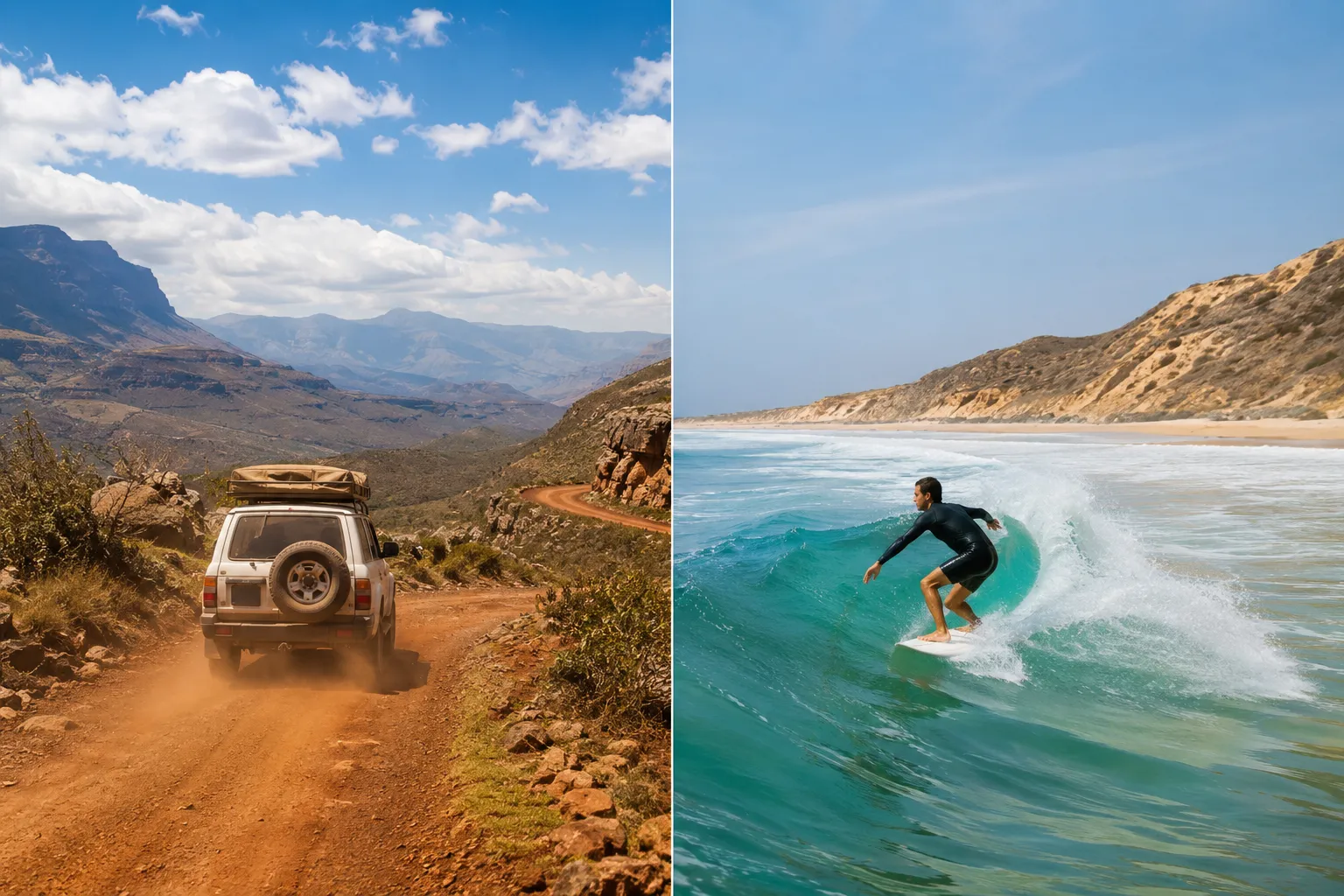
If you plan to surf, dive, hike or explore national parks like Kissama, check the activity list before you buy. Our overview of a safari and wildlife trip in Angola gives a sense of the activities you may want covered.
Travel advisories, Cabinda and how they affect your cover
Direct answer: many insurers align their cover to your home government’s travel advisory. If your government advises against travel to a specific region and you go anyway, claims from that region can be denied.
For Angola in 2026, several governments maintain heightened warnings for parts of Cabinda province and border areas, while considering the rest of the country broadly open for travel. Always check your government’s current advisory before you go. If you plan to visit the Cabinda exclave, read the advisory language carefully and ask your insurer in writing whether the region is covered under your plan.
The same logic applies if the situation changes while you are already in country. If your government upgrades a warning during your trip, that can affect ongoing cover. This is another reason to keep a working phone, an eSIM or local SIM, and the insurer’s assistance number saved offline. For general safety context, see our practical guide on whether Angola is safe to visit.
Can you buy travel insurance after arriving in Angola?
Direct answer: sometimes, but options are narrower and cover is usually weaker. Buying before departure is far better.
A minority of international insurers do sell “post-departure” or “already traveling” policies, mostly aimed at digital nomads, expats and long-term travelers. They typically come with:
- A waiting period before medical cover kicks in (often 48 hours to several days).
- Exclusions for anything that happened before you bought the policy.
- Higher premiums than a plan bought at home.
If you have already landed in Luanda without cover, it is still worth buying something rather than staying uninsured, but do not assume every provider will accept you.
Insurance for longer stays, expats and business travel
Direct answer: for stays over 4 to 8 weeks, or for people living and working in Angola, a standard holiday policy is the wrong product. You want an international health plan or a long-stay travel plan.
Options to consider by profile:
- Backpackers and long-term travelers: nomad-style plans with monthly billing and worldwide cover.
- Expats and assignees: full international private medical insurance (IPMI) with outpatient, inpatient and evacuation.
- Business travelers: corporate travel policies, ideally with security and political evacuation add-ons.
- Volunteers and NGO staff: specialist policies that cover fieldwork and remote locations.
Business travelers should also check that their Angola business visa and any work permits align with the policy definition of “business travel.” A leisure policy will not cover a paid work injury.
How to make a claim from Angola
Direct answer: call the insurer’s 24/7 assistance line before or as soon as possible after the incident, get everything in writing, and keep every receipt.
A practical sequence that works:
- Get safe and get treated. Health first, paperwork later.
- Call the assistance line. Give the policy number, location, and a short description. Ask them to confirm cover and, if needed, arrange direct billing.
- Report to police for theft, assault or road accidents. You will need a written report.
- Keep original documents: medical records, prescriptions, invoices, receipts, discharge letters, boarding passes, taxi receipts to and from hospital.
- Photograph everything, including damaged property or the scene where it happened.
- Notify your embassy if the incident is serious. They cannot pay bills, but they can help.
- Submit the claim within the deadline in the policy (often 30 to 60 days).
If a clinic asks for payment up front and your insurer has not confirmed direct billing yet, pay by credit card if you can. It is easier to claim back and gives you a second layer of consumer protection.
Angola travel insurance cost and what drives the price
Direct answer: premiums for Angola trips vary widely by age, trip length, medical limits and add-ons, so I will not invent numbers. What I can tell you is what makes prices go up or down.
Main cost drivers:
- Age of the traveler. Premiums rise steeply after 65.
- Trip length. A 10-day trip and a 90-day trip are very different products.
- Medical and evacuation limits. Higher limits cost more but matter most in Angola.
- Deductible or excess. A higher excess lowers premium, but you pay more per claim.
- Adventure add-ons. Surfing, diving, motorbiking, mountaineering.
- Country of residence. Insurers price by home market and healthcare system.
- Pre-existing conditions. Declaring and covering them raises the premium, but not declaring them can void the policy.
Get at least three quotes from different types of provider: a mainstream travel insurer from your home country, a specialist worldwide or nomad insurer, and, if relevant, an international health plan. Compare like-for-like limits, not just headline price. If you are still budgeting the trip overall, our Angola trip cost guide puts insurance in context alongside flights, hotels and transport.
What happens if you skip insurance entirely?
Direct answer: for minor issues, probably nothing. For a serious incident, you are personally on the hook for medical bills, evacuation costs and any disruption to your trip.
Realistic scenarios without cover:
- A stomach bug: you pay a private clinic in Luanda in cash. Painful but survivable.
- A broken leg from a fall in the highlands: local stabilization, then a long, expensive process of getting you to proper care at your own cost.
- A road accident with head injury: emergency evacuation coordinated privately, five to six-figure bill, complex logistics.
- A death in the family back home while you are traveling: cancelled flights, rebooking fees, no reimbursement.
You are essentially self-insuring. That is a valid choice only if you can genuinely absorb the worst-case bill.
A quick decision rule
Choose your Angola travel insurance this way:
- Short leisure trip, low-risk activities: worldwide travel plan with high medical and evacuation limits, from a reputable insurer.
- Adventure trip with surfing, diving, off-road, hiking: same, plus a named adventure activities pack.
- Long stay over 2 months, remote work, volunteering: nomad-style long-stay plan or dedicated expat plan.
- Full relocation, employment in Angola: international private medical insurance, not a travel policy.
In every case, read the policy wording. The summary page is marketing. The wording is the contract.
Comparison at a glance
Conclusion: how I would approach it
If I were booking an Angola trip tomorrow, I would spend more time on the insurance decision than on picking a hotel. The order of priorities is simple:
- Confirm my Angola visa or e-visa and yellow fever certificate.
- Check my government’s current travel advisory, especially for Cabinda.
- Get three quotes for policies with high medical and evacuation limits.
- Add adventure activity cover if I planned to surf, dive, hike or ride.
- Save the 24/7 assistance number offline and share the policy with a family member at home.
- Read the full wording, not just the summary.
Angola rewards travelers who prepare properly. The wildlife, the coastline, the music, the food, all of it opens up once the logistics are handled. Insurance is not the exciting part of that preparation, but for this destination it is the one line item where cutting corners can genuinely change your life. Buy the right cover, then go enjoy the trip. For more practical planning, see our Angola travel advice hub and our getting around Angola guide.
This article is general information, not financial or medical advice. Always read the full policy wording, and confirm current entry, health and advisory requirements with official sources before you travel.
Want to keep this guide? We email you the key points with a link to every section.
Frequently asked questions
Is travel insurance required for Angola?
No. Travel insurance is not a formal entry requirement for Angola in 2026. A yellow fever vaccination certificate is mandatory. Immigration and airline staff will not ask to see an insurance policy, but going without cover is not recommended.
What does Angola travel insurance usually cover?
A good plan covers emergency medical treatment, hospitalization, emergency medical evacuation and repatriation, trip cancellation and interruption, baggage loss and delay, personal liability, and 24/7 assistance. Adventure activities and pre-existing conditions usually need to be added or declared.
What is the best travel insurance for Angola?
There is no single "best" provider. The best plan is one with high medical and evacuation limits, cover for any adventure activities you plan to do, a 24/7 assistance line you can actually reach, and clear wording on regional exclusions. Compare at least three quotes from different provider types.
How much does travel insurance to Angola cost?
Premiums depend on age, trip length, medical limits, excess and add-ons, so any single figure is misleading. Expect to pay more than a similar-length trip to Europe because of the evacuation risk profile. Get quotes tailored to your exact dates, age and activities.
Can I get travel insurance after I have already arrived in Angola?
Sometimes. A small number of insurers, mostly nomad-focused ones, sell policies to travelers already abroad. Expect a waiting period before medical cover starts and exclusions for anything that happened before purchase. Buying before you fly is much better.
Does travel insurance cover yellow fever or malaria in Angola?
If you fall ill from a disease like malaria during the trip, standard medical cover usually applies, subject to the policy wording. What insurance does not do is replace vaccinations. Yellow fever vaccination is a legal entry requirement, and skipping it can also void health cover. See our Angola vaccinations and health guide.
Are pre-existing conditions covered on Angola travel insurance?
Only if you declare them and the insurer accepts them, sometimes for an extra premium. Undeclared pre-existing conditions are one of the most common reasons claims get rejected. If in doubt, declare it and get the answer in writing.
Will my policy still work if my government issues a travel warning for part of Angola?
It depends on the wording. Many insurers exclude claims from regions where your home government advises against travel. Cabinda has appeared in advisories at various times. Check the wording and, if your itinerary changes, contact the insurer.
How do I make a travel insurance claim from Angola?
Call the 24/7 assistance line as soon as you can, get everything in writing, and keep original medical records, receipts, police reports and photos. Submit the claim within the deadline stated in the policy, usually 30 to 60 days after returning home.