Quick Answer
Backpacking Angola on a budget is possible at roughly 45 to 65 US dollars a day if you sleep in simple pensões, eat street food and use long-distance buses instead of private transfers. Allow 50 to 100 a day to travel comfortably. Angola is not a cheap country by African standards, and Luanda in particular is expensive because of the oil economy. What you get in exchange is a big, beautiful country with almost no other travellers in it, and functional Portuguese is close to essential to make the low-budget version work.
Key Takeaways
- Daily cost: roughly 45 to 65 USD per day on a tight backpacker budget; 50 to 100 USD for breathing room. All figures here are indicative for 2026 and change with the kwanza exchange rate.
- Accommodation reality: true backpacker hostels barely exist. You will be staying in pensões and residenciais: fan, thin sheets, often a shared bathroom. Dorm-style beds, where they exist, run about 15 to 25 USD outside Luanda and 20 to 35 in the capital.
- Biggest single saving: long-distance buses and shared taxis instead of private drivers, in the region of 70 to 85 percent cheaper.
- Booking sites cover very little. Walking to a residencial near the bus station, paying cash and negotiating down from the first quoted price is how it actually works.
- Language: Portuguese matters more here than in almost any other African backpacking destination, because you deal with bus touts, guesthouse owners and market vendors, not hotel receptions.
- Food is the good news. Street grills and market stalls are cheap and genuinely tasty. A beer from a roadside kiosk is around 1 to 1.50 USD.
- One week realistically covers the coast plus one inland climb: Luanda, Benguela and Lobito, then Lubango.
- Cheapest season is the rainy period from roughly November to April, but roads suffer and some tracks become impassable.
How much does it cost to backpack Angola per day?
Plan on 45 to 65 US dollars a day for a genuinely lean trip, and 50 to 100 a day if you want a private room, occasional taxis and a restaurant meal. That is high for African backpacking and low for Angola, where business travellers routinely spend ten times as much in Luanda.
Here is how a lean day tends to break down. Treat every number as an indicative range, not a quote.
| Daily item | Lean budget (USD) | Comfortable (USD) |
|---|---|---|
| Bed in a pensão or dorm-style room | 15 to 25 (20 to 35 in Luanda) | 30 to 60 |
| Street food and market meals | 6 to 12 | 15 to 30 |
| Local transport and shared taxis | 3 to 8 | 8 to 20 |
| Long-distance bus (averaged over the week) | 5 to 10 | 5 to 10 |
| Water, SIM data, small extras | 4 to 8 | 8 to 15 |
| Entry fees and occasional guide | 0 to 5 | 5 to 25 |
The trap is not the daily spend. It is the days you lose in Luanda waiting for something, because Luanda is where the budget breaks.
Two structural costs sit outside that table: the flight in, and any national park entry or vehicle hire you need to reach a specific sight. For a fuller picture of what a whole trip adds up to, see the detailed Angola trip cost and budget breakdown.
Decision rule: if you cannot cover 60 USD a day plus flights and insurance, spend fewer days in Angola rather than trying to shave the daily figure. Cutting the days is safer than cutting the food and transport budget.
What currency does Angola use, and where do you exchange money?
Angola uses the Angolan kwanza (AOA). Cash is still king outside big hotels and shopping centres, so a backpacker needs a working cash plan before leaving Luanda.
Practical points that hold up in 2026:
- Card acceptance is limited away from Luanda, Benguela and Lobito. Assume cash for guesthouses, buses, markets and street food.
- ATMs (multicaixa) exist in provincial capitals but can be empty, offline or capped at low withdrawal limits. Never let your cash reserve run to zero before a long bus leg.
- Bring clean, undamaged US dollars or euros as a backup and change them at banks or licensed exchange offices. Rates from informal street changers may look better but carry obvious risk.
- The kwanza moves. Check the current rate against the official rate published by Angola’s central bank before you accept a “good” offer.
Common mistake: arriving with only a card and no cash buffer, then paying inflated airport or hotel rates for the first two nights simply because nothing else is payable by card.
Do you need a visa to backpack in Angola?
Most likely you will need either a visa exemption or an e-visa, and the rules have changed repeatedly in recent years. Angola liberalised entry significantly, and many nationalities including most EU passport holders can now enter for tourism without a pre-arranged visa for a limited stay, but this is exactly the kind of detail you must verify before booking.
- Check the current position with Angola’s Serviço de Migração e Estrangeiros (SME) and the official e-visa portal, plus your own government’s travel advisory.
- Where an e-visa applies, apply well ahead of departure and travel with a printed copy.
- Expect to be asked for proof of onward travel and accommodation at immigration, even if the formal requirement is unclear. A booked first night solves this cheaply.
- Yellow fever vaccination is normally required for entry. Confirm the current requirement with an official health source such as the World Health Organization or a travel clinic.
Start with the current Angola visa and e-visa requirements guide, then confirm on the official portal, because visa rules are the single most time-sensitive item in this article.
What is the cheapest time to visit Angola?
The cheapest window is the rainy season, roughly November to April, when demand is lower and rooms are easier to negotiate. The best travelling window is the dry, cooler season from about May to October, which is also when buses run more reliably and dirt roads stay passable.
- May to October (dry): better roads, better wildlife viewing, cooler coast. Slightly higher room prices in popular spots, but far fewer wasted days.
- November to April (rain): cheaper and greener, waterfalls at full force, but flooded roads, cancelled minibus runs and higher malaria risk.
- Avoid the days around Independence Day (11 November) and Christmas and New Year for transport, when domestic flights and buses fill with Angolans travelling home.
Decision rule for budget travellers: if your route is coastal and paved, the rainy season saves money. If you plan anything inland on unsealed roads, the savings evaporate the first time you lose two days to a washed-out track.
What is the cheapest way to get around Angola?
Long-distance buses and shared taxis. Switching from private transfers or a hired 4x4 to public transport is the single biggest saving available to a backpacker in Angola, in the region of 70 to 85 percent.
How it works in practice:
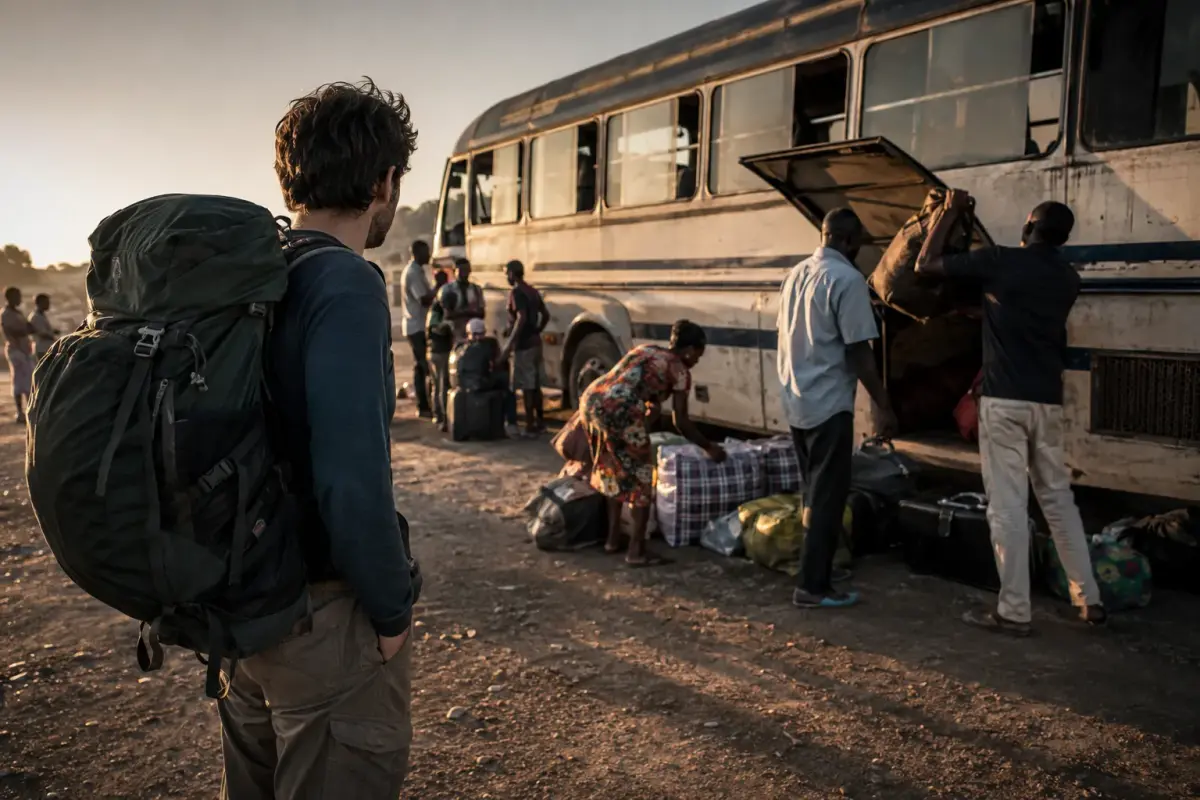
- Long-distance coaches connect Luanda with the main coastal cities and provincial capitals. They usually leave early in the morning from a terminal on the city edge, not the centre.
- Candongueiros (blue and white shared minibuses) and shared taxis cover shorter hops and city routes. They leave when full, not on a timetable.
- Domestic flights on the national carrier are the exception worth paying for. One internal flight can save you 15 to 20 hours of bus and a night’s accommodation, which changes the maths on a seven-day trip.
- Buy tickets at the terminal the day before where possible, and arrive early. Do not rely on published schedules found online.
Timetables and operators change, so confirm departures locally rather than trusting anything printed. Our guide to getting around Angola by bus, minibus and shared taxi covers the mechanics in more depth.
Edge case: if two or three of you are travelling together, a negotiated shared taxi for an awkward leg (for example the climb up to a viewpoint) can cost the same per head as a minibus and save half a day. Split costs beat solo purity.
Where do budget backpackers actually sleep in Luanda and other cities?
There is no meaningful hostel scene in Angola. The budget option is the pensão or residencial: a simple room, a fan, thin sheets and often a shared bathroom. Dorm-style beds, where they exist at all, run roughly 15 to 25 USD outside Luanda and 20 to 35 in the capital.
What this means for how you book:
- Booking platforms list very little. They are useful for your first Luanda night only, mainly to have an address for immigration.
- The working method: arrive, walk or take a short taxi to the streets around the bus terminal or market, ask for a pensão or residencial, look at the room, then negotiate down from the first quoted price and pay cash.
- Ask to see the room first, every time. Check the fan, the water and whether the door locks from inside.
- Luanda is the expensive outlier. Two nights in the capital can cost what four nights cost in Benguela. Build the itinerary so Luanda is short.
- In smaller towns, church guesthouses and small family-run places sometimes fill the gap. Availability is local knowledge, so ask rather than search.
Common mistake: treating Luanda as a base and doing day trips out of it. Sleeping where you travel is cheaper than commuting from the most expensive city in the country.
A realistic one-week route for backpacking Angola on a budget
The honest one-week route follows the coast, because that is where the buses actually run, then makes one climb inland to the Huíla plateau. Below is a version that works on public transport without leaving you on a bus every second day. Journey times are approximate and depend on road works, weather and how long the bus waits to fill.
| Day | Where | Move | Rough travel time |
|---|---|---|---|
| 1 | Luanda | Arrive, orientate | Airport to city 45 to 90 min |
| 2 | Luanda | Fortaleza, Marginal, Ilha | Local transport only |
| 3 | Luanda to Benguela | Long-distance coach south | 10 to 14 hours |
| 4 | Benguela and Lobito | Beaches, shared taxi hops | 30 to 60 min between them |
| 5 | Benguela to Lubango | Coach inland and uphill | 7 to 10 hours |
| 6 | Lubango | Cristo Rei, Tundavala, Serra da Leba | Half to full day locally |
| 7 | Lubango to Luanda | Domestic flight (recommended) | About 1.5 hours flying |
Days 1 and 2: Luanda, kept short
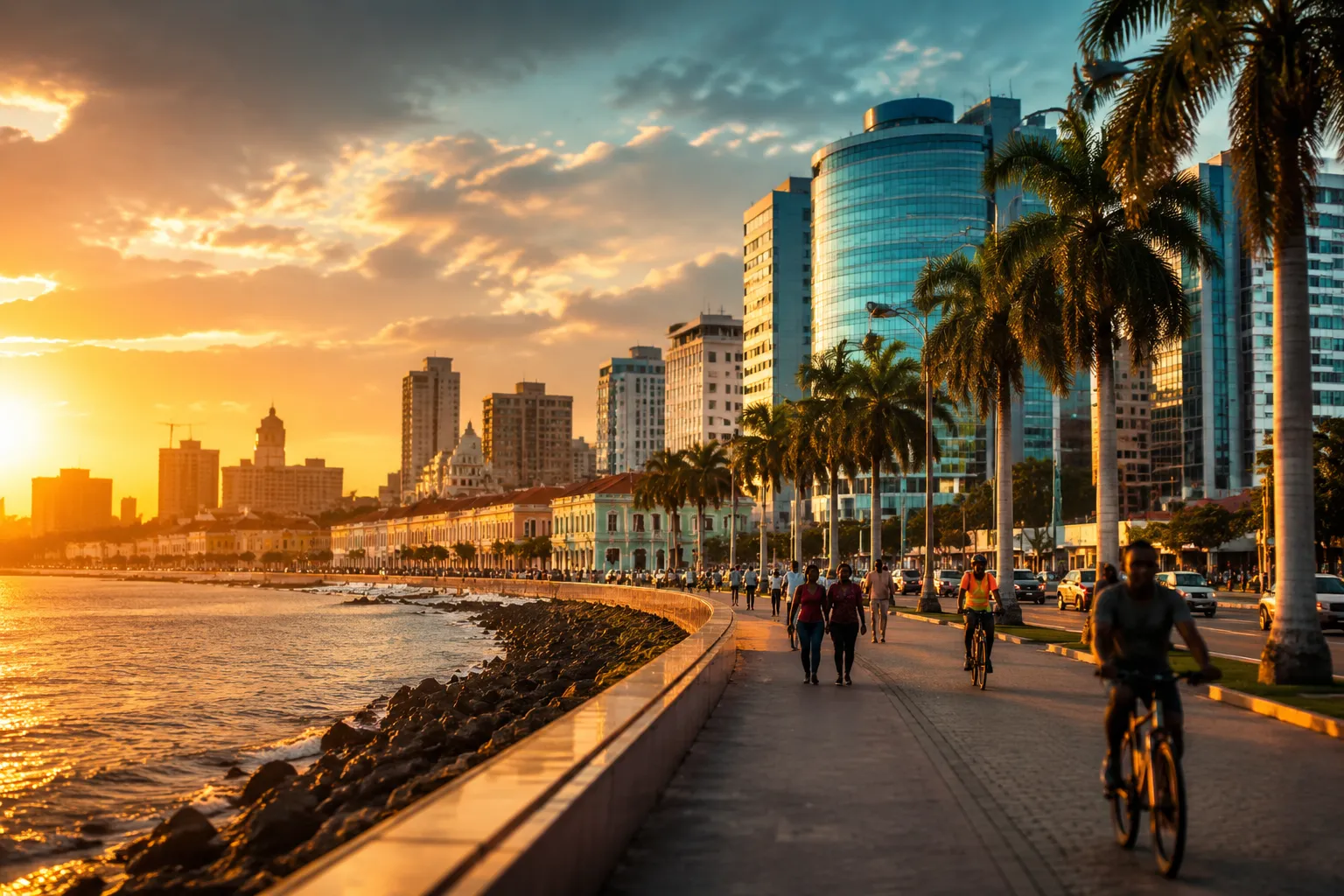
Luanda is the arrival point and the budget’s weak spot. Use it for the Fortaleza de São Miguel, a walk along the Marginal promenade and an afternoon on Ilha do Cabo. Eat at market grills rather than restaurants on the waterfront, where prices are aimed at the oil industry.
Day 3: the long coastal bus south
The Luanda to Benguela coach is a full travelling day, roughly 10 to 14 hours for around 700 km through Sumbe. Book at the terminal the day before, bring water and snacks, and accept that you will arrive after dark. This single leg is where you feel the trade-off: the bus costs a small fraction of a private transfer.
Days 4 and 5: Benguela and Lobito
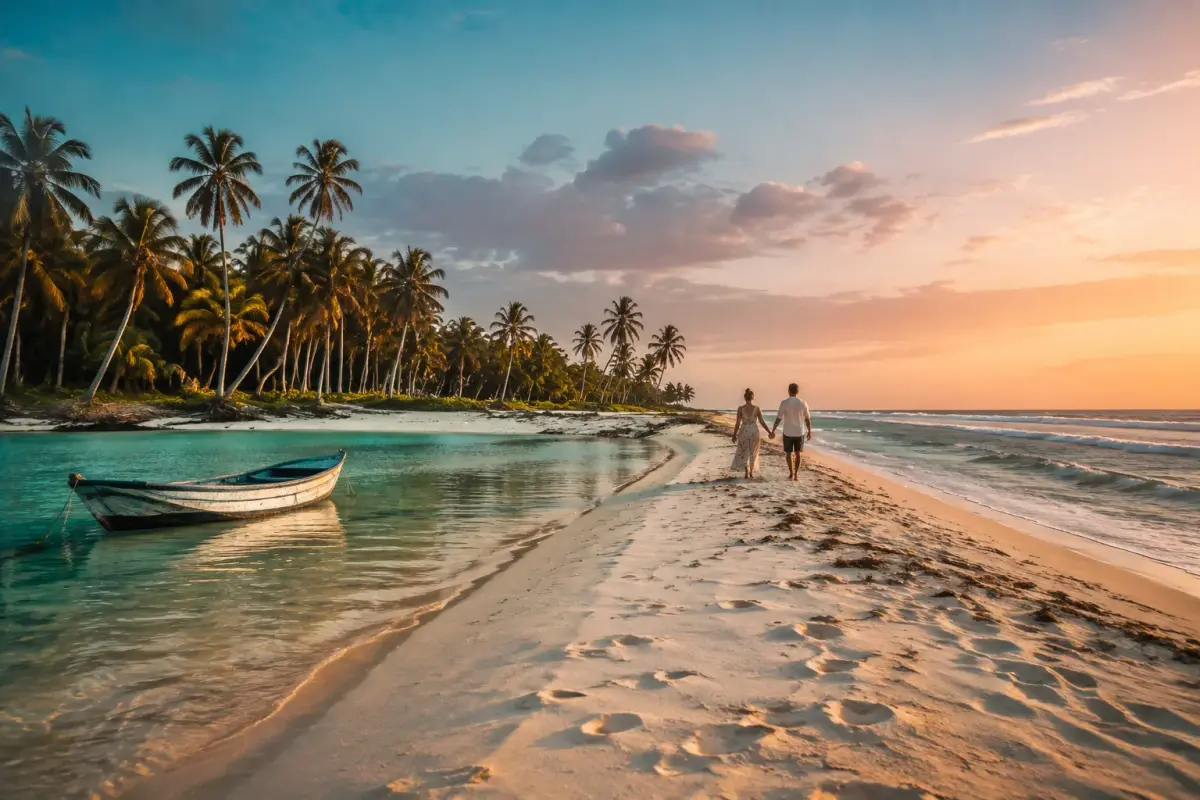
This is the sweet spot of a budget trip. Benguela and Lobito are relaxed, walkable colonial-era coastal cities with real beaches, cheap fish and rooms at a fraction of Luanda prices. Praia Morena, Baía Azul and the Restinga sandspit at Lobito fill a day easily. See what the city offers in our guide to Benguela.
Days 6: Lubango and the Huíla highlands
The bus from Benguela climbs to Lubango in roughly 7 to 10 hours. The air is cooler and drier up here. The Cristo Rei statue, the Tundavala escarpment and the Serra da Leba hairpin pass are the reasons people come. Tundavala and Serra da Leba need wheels: share a taxi with other travellers or negotiate a half-day rate with a local driver. Our Lubango and Huíla travel guide explains the layout.
Day 7: fly back, do not bus back
Backtracking Lubango to Luanda by road costs you an entire day plus a night. A one-way domestic flight is the one splurge that genuinely saves money on a seven-day itinerary. Book it before you leave Luanda, since seats sell out.
If you have more time: add Namibe and the edge of Iona National Park after Lubango, or swing inland from Luanda to the Kalandula waterfalls in Malanje. Neither fits comfortably in seven days on public transport.
What are the best free and cheap things to do in Angola?
Most of Angola’s best experiences cost nothing beyond getting there: coastline, escarpments, markets and street music. Paid attractions are few, which suits a backpacker.
- Free or near-free: the Luanda Marginal at sunset, Fortaleza de São Miguel’s viewpoint, Praia Morena and Baía Azul, the Tundavala gorge, watching the Serra da Leba pass from above, city markets in any provincial capital.
- Cheap with shared transport: the Miradouro da Lua moonscape south of Luanda, the Restinga at Lobito, Mussulo by public boat rather than private charter.
- Worth the entry fee: a national park visit if wildlife matters to you, though Angolan parks require a vehicle and are not budget-friendly on public transport.
- Culture for free: semba and kizomba spill out of bars and kiosks at weekends. Sitting with a 1 to 1.50 USD kiosk beer and listening is one of the country’s real pleasures.
What is the best budget food for backpackers in Angola?
Street food is the backbone of a cheap trip in Angola, and it is good. Grilled fish and chicken, cassava, beans, rice and funge from a market stall or roadside grill will feed you for a few dollars.
- Look for: muamba de galinha (chicken in palm oil), calulu (dried fish stew), funge (cassava or maize porridge), kizaca (cassava leaves), grilled fresh fish on the coast.
- Cheap and safe habits: eat where locals queue, choose food cooked in front of you, skip pre-cut fruit and raw salads, and never drink tap water.
- Bread and pastéis from a padaria make the cheapest breakfast in the country.
- Avoid restaurants attached to international hotels in Luanda unless you have budgeted for them specifically. The price gap between a market grill and a hotel dining room in the capital is enormous.
Can you backpack Angola safely as a solo traveller?
Yes, many people do, but Angola asks more of a solo backpacker than most destinations: petty crime in Luanda, limited English, and long journeys with little infrastructure in between. Angolans are, by consistent report, welcoming and helpful, and violent crime against tourists is not the typical pattern.
Sensible ground rules:
- Avoid arriving in a new city after dark. This is the most useful single habit on the whole trip.
- Carry little and show less. Phones and camera bodies in the open in central Luanda attract attention.
- Take registered or app-based taxis at night rather than walking, even short distances.
- Cabinda often carries stricter advisories than the rest of the country. Check your own government’s travel advisory before including it.
- Stay on established roads and paths in rural areas. Landmine clearance has come a long way, but residual risk exists in some regions.
- Register your trip with your own government’s service if one is offered, and carry a copy of your passport separately.
Read our practical assessments in is Angola safe to visit and the dedicated solo travel in Angola guide, and always cross-check with your own government’s travel advisory before departure.
How do you get travel insurance for Angola on a budget?
Buy a policy that explicitly covers Angola, includes medical evacuation and covers your actual activities. This is not the line item to cut, because serious medical care often means evacuation to South Africa or Europe.
- Check three things: Angola listed in the covered countries, an emergency evacuation limit high enough to be meaningful, and coverage for public bus and minibus transport.
- Cheaper approaches: annual multi-trip policies if you travel more than twice a year, and backpacker-specific policies that cover long single trips at a lower monthly rate.
- Read the exclusions on motorbike riding, unsupervised hiking and civil unrest.
- Keep the emergency number offline on your phone and on paper.
Is Angola cheaper than other southern African countries?
No. Angola is generally more expensive than Namibia, Zambia, Malawi or Mozambique for the same style of travel, and dramatically more expensive than the classic East African backpacking route. Luanda has appeared for years near the top of global rankings of expensive cities for expatriates.
The reasons are structural: an economy shaped by oil, a small tourism sector with almost no competition at the budget end, imported goods and no hostel network to drive prices down. What you buy with the extra cost is emptiness. Popular sights in Namibia may hold fifty travellers. In Angola you may be the only visitor at the same class of attraction.
Choose Angola if you value being somewhere genuinely untouristed and can handle Portuguese and improvisation. Choose Namibia or Malawi instead if the daily cost per experience is your main criterion.
Is backpacking northern or southern Angola cheaper?
Southern Angola generally works out cheaper per day, mostly because it puts distance between you and Luanda. The north and the capital region carry the oil economy’s price level; the south and the Huíla highlands have lower room rates and cheaper food.
- North (Luanda, Bengo, Malanje, Cabinda): highest accommodation costs, most expensive food, but shorter distances between sights around Luanda. Malanje and the Kalandula waterfalls are affordable to reach but usually need hired transport for the final stretch.
- South (Benguela, Namibe, Huíla): cheaper rooms, cheap fish, better value overall, but much longer bus legs and lower frequency on some routes. Reaching Iona National Park without a vehicle is close to impractical.
- Net effect: the south saves you money per night and costs you money per kilometre. Over a week the south usually still wins.
How many days do you need to backpack Angola properly?
Seven days covers the coast plus one inland highlight and is a real trip, not a rushed one, provided you fly one leg. Ten to fourteen days is where Angola starts to open up, and three weeks lets you add the desert south or the Malanje interior without living on buses.
- 7 days: Luanda, Benguela and Lobito, Lubango. Fly one leg.
- 10 to 12 days: add Namibie’s coast at Namibe, or Kalandula waterfalls and Pungo Andongo.
- 14 to 21 days: add a national park with hired transport, or the far south towards Iona.
- Under 5 days: stay near Luanda. Long-distance bus legs will consume the trip otherwise.
Conclusion: what to do next
Angola rewards preparation more than it rewards frugality. The country is not cheap, the budget infrastructure other African destinations offer barely exists here, and the daily figure of 45 to 65 US dollars only holds if you commit to buses, pensões and market food. The payoff is real: coastline, escarpments and cities where you may not meet another traveller all week.
Practical next steps:
- Verify entry rules first with Angola’s SME and the official e-visa portal, and check your own government’s travel advisory in the same sitting.
- Book a travel clinic appointment for yellow fever and malaria prophylaxis at least six weeks before departure.
- Fix the shape of the week before you fly: two nights Luanda, two Benguela and Lobito, two Lubango, one domestic flight back.
- Buy the insurance with evacuation cover, and save the emergency number offline.
- Learn functional Portuguese numbers, directions and prices. This is the cheapest upgrade available to your entire trip.
- Set a cash plan: kwanza for the road, hard currency in reserve, and never let both run low at once.
Then go, while Angola still feels like this.
Free help from our team in Angola
Backpacking Angola and want a local on call?
You can do this route on your own. If you want a hand with the tricky parts, such as the airport, the bus south or a guide for a day, tell us what you need.
- Local team in Angola
- No obligation, nothing to pay
- Reply by email or WhatsApp
Want to keep this guide? We email you the key points with a link to every section.
Frequently asked questions
Is backpacking Angola on a budget actually possible without Portuguese?
It is possible but significantly harder and more expensive. At this budget level you negotiate room rates, find bus terminals and order food from people who rarely speak English. Even 200 words of Portuguese changes what you pay.
What is the single biggest way to cut costs in Angola?
Using long-distance buses and shared taxis instead of private transfers or a hired car with driver, which saves in the region of 70 to 85 percent on transport.
Can I book budget accommodation in Angola online in advance?
Only partly. Booking platforms cover a fraction of Angolan guesthouses. Book your first night in Luanda online for peace of mind and immigration purposes, then find pensões on the ground.
How much cash should a backpacker carry between cities in Angola?
Enough kwanza for your next bus leg plus two to three nights of accommodation and food, since ATMs can be offline or empty in provincial towns. Keep a small reserve of clean US dollars or euros separately.
Do I need a guide to backpack Angola independently?
No, not for cities and coastal towns. You will want a local driver or organised transport for national parks and viewpoints like Tundavala, where public transport does not go.
Is Luanda worth spending time in on a tight budget?
Two nights is usually right. The Fortaleza, the Marginal and Ilha do Cabo are worth seeing, but the capital's accommodation and restaurant prices will eat a backpacker budget faster than anywhere else in the country.