Quick answer
Angola is not a conventional honeymoon country. There are no overwater villas, no couples-spa circuit, and almost nothing packaged for romance. What it does deliver is real privacy: empty Atlantic beaches, a 30 km sand peninsula, mountain escarpments that drop a kilometre into nothing, and the near certainty that nobody in your wedding party has been there. Ten days is the sweet spot, and the dry season, roughly May to October, is the comfortable window.
If you want effortless luxury with a turndown service and a sunset cocktail waiting, book Zanzibar or the Seychelles. If you want space, silence and a story, keep reading.
Key takeaways
- Angola suits adventurous, low-maintenance couples. Comfort exists, but you have to organise it yourself rather than buy it as a package.
- A 10-day route works best: Luanda (2 nights), Mussulo (3 nights), Lubango (3 nights), Namibe (2 nights).
- Dry season, May to October, means cooler coast, clearer mountain views and passable roads.
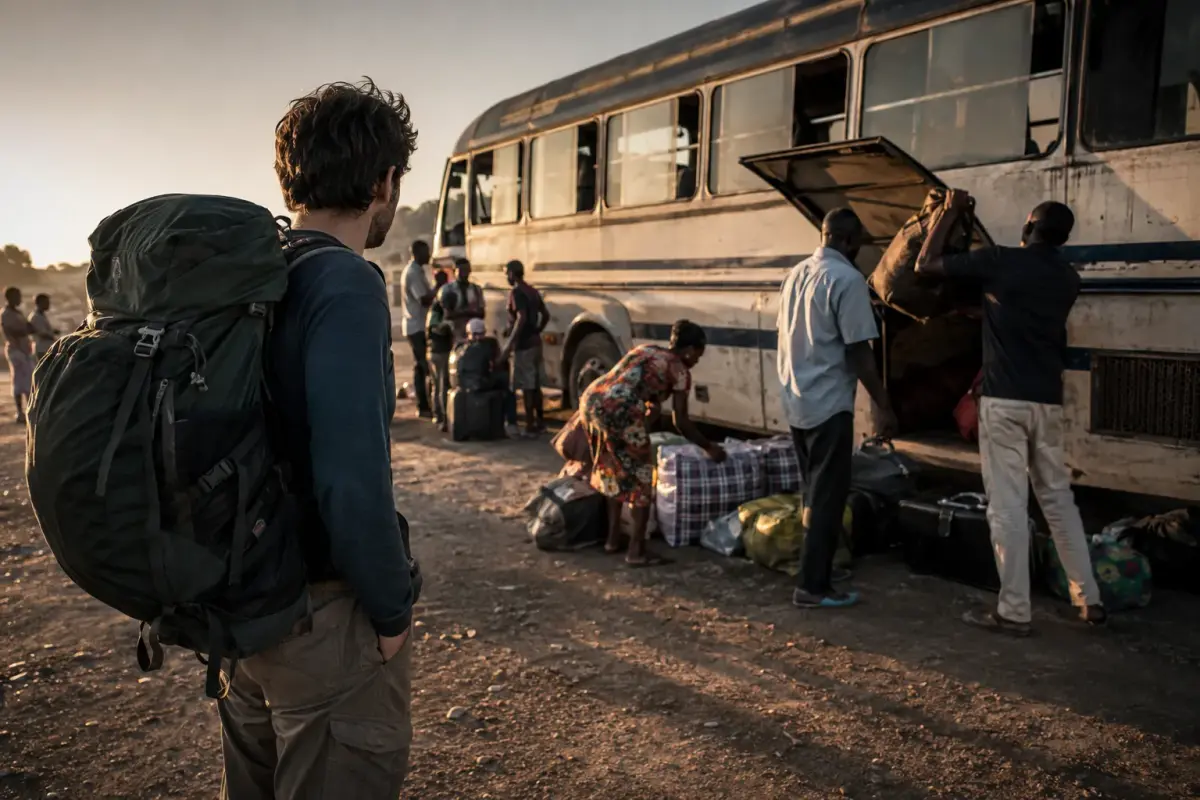
- Fly internally. Luanda to Lubango is a short flight versus a punishing multi-day drive.
- Budget more than you expect. Luanda regularly appears among the most expensive cities in the world for expatriates, and internal flights plus drivers add up.
- Yellow fever vaccination is normally required for entry and malaria exists nationwide. Confirm with a travel clinic before booking.
- Entry rules have been relaxed in recent years, including visa-free tourism for many nationalities, but rules change. Verify with the Angolan migration service or an Angolan embassy.
- Portuguese is essential. English is barely spoken outside hotels and tour operators.
- Wildlife is recovering, not abundant. Come for landscapes and coast, not for a Big Five safari.
Is Angola good for a honeymoon, or should you go elsewhere?
Angola is good for a specific kind of honeymoon: one where the point is being somewhere unusual together, not being pampered. Choose Angola if you both travel well, tolerate long transfers, and would rather have an empty beach than a beach with a swim-up bar. Choose elsewhere if either partner would be unhappy without reliable air conditioning, English-speaking staff and a spa menu.
A blunt comparison:
| What matters to you | Angola | Zanzibar, Mauritius, Seychelles |
|---|---|---|
| Privacy and empty beaches | Excellent | Limited in high season |
| Packaged romance | Almost none | Extensive |
| Ease of booking | Manual, patchy online availability | One click |
| Cost for the comfort received | Poor value | Better value |
| Landscape drama | Outstanding | Modest |
| Story value | Very high | Low |
The common mistake is booking Angola because it looks cheap and exotic. It is exotic. Cheap it is not. Angola rewards curiosity, not bargain hunting.
Angola is the honeymoon for couples who are already comfortable travellers and want their first trip as a married couple to be an adventure they narrate for the next thirty years.
When should you go?
The dry, cooler season from roughly May to October is the better window. Skies are clearer in the highlands, coastal humidity drops, and unpaved roads in the south are far more reliable. The rainy season, roughly November to April, brings heat, heavy afternoon downpours and occasional washed-out tracks.
Practical notes for each half of this itinerary:
- Coast (Luanda, Mussulo, Namibe): pleasant in dry season, cooled by the Benguela current. Namibe can be foggy in the mornings, which is atmospheric rather than annoying.
- Highlands (Lubango, Tundavala): noticeably milder, sometimes genuinely cool at night. Pack a fleece, which surprises most first-timers.
- Edge case: if your wedding date locks you into January or February, keep the trip coast-heavy and shorten the southern leg. Full details in the guide to the best time to visit Angola.
How many days do you need?
Ten days is the realistic minimum for a honeymoon that includes both coast and southern landscapes. Seven days forces you to pick one or the other. Fourteen days lets you add Benguela and Lobito, or the Kalandula waterfalls inland, without rushing.
- 7 days: Luanda plus Mussulo, or Luanda plus the south. One region only.
- 10 days: the route below. Two flights, two distinct landscapes, no daily repacking.
- 14 days: add Benguela and Lobito on the coast, or Malanje province for the waterfalls.
Decision rule: if your combined long-haul travel time exceeds 20 hours each way, do not attempt Angola in under 10 days. Jet lag plus internal transfers will eat the trip.
The 10-day route
This itinerary front-loads the city, then slows down for beach time, then finishes with landscape. Two internal flights keep it humane.
| Days | Base | Why you are there | Transfer |
|---|---|---|---|
| 1 to 2 | Luanda | Arrival, fortress, waterfront, first dinner | Airport transfer, 30 to 60 min |
| 3 to 5 | Mussulo | Lagoon, surf beach, doing nothing | Boat from Luanda, under 1 hour |
| 6 to 8 | Lubango | Serra da Leba pass, Tundavala escarpment | Flight from Luanda, roughly 1.5 hours |
| 9 to 10 | Namibe | Desert meeting the Atlantic | Road from Lubango, half a day |
Days 1 to 2: Luanda, land softly
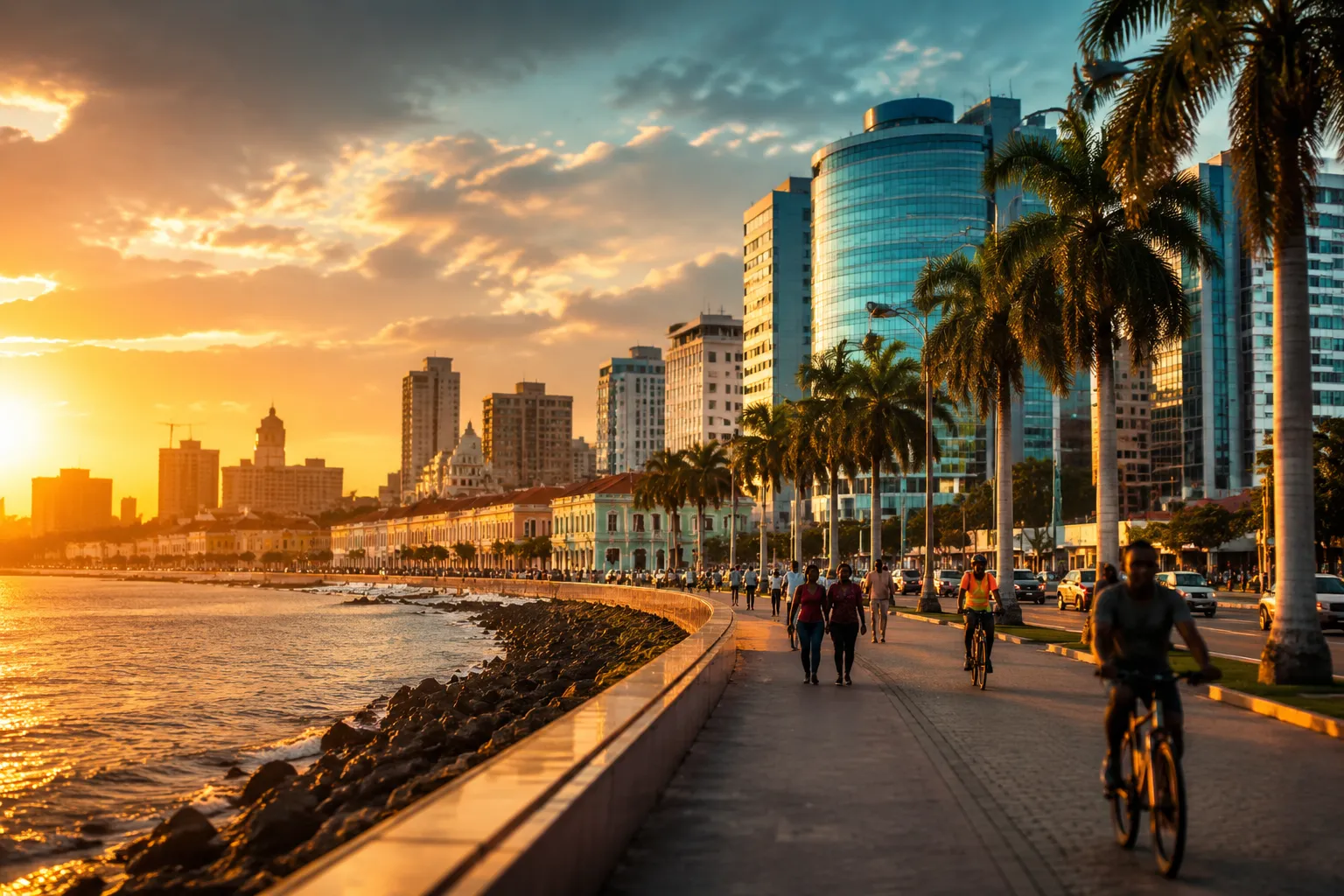
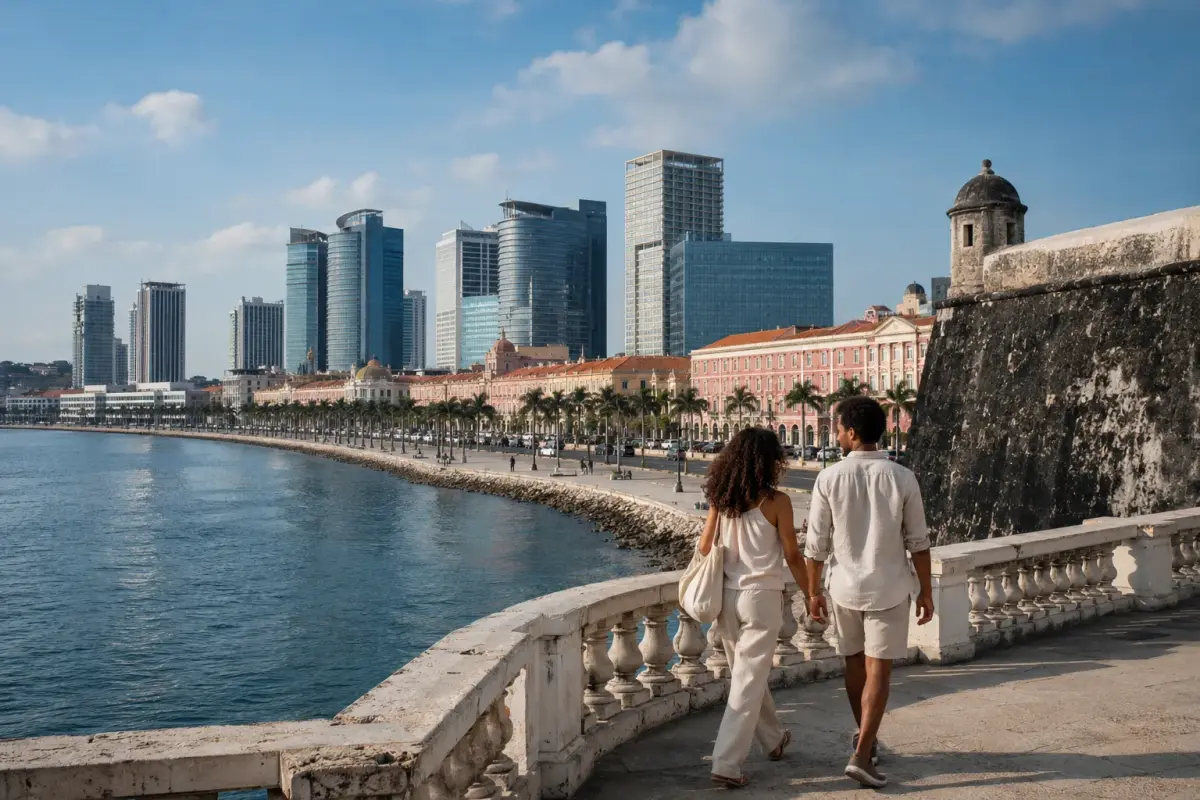
Give yourselves two nights in the capital before anything else. Long-haul arrivals into Luanda are tiring and the city takes adjustment. Walk the Marginal waterfront in the late afternoon, visit the Sao Miguel fortress for the harbour view, and eat seafood without ambition on the first night. Traffic is heavy, so plan two activities per day, not five.
Days 3 to 5: Mussulo, the closest Angola gets to a honeymoon beach
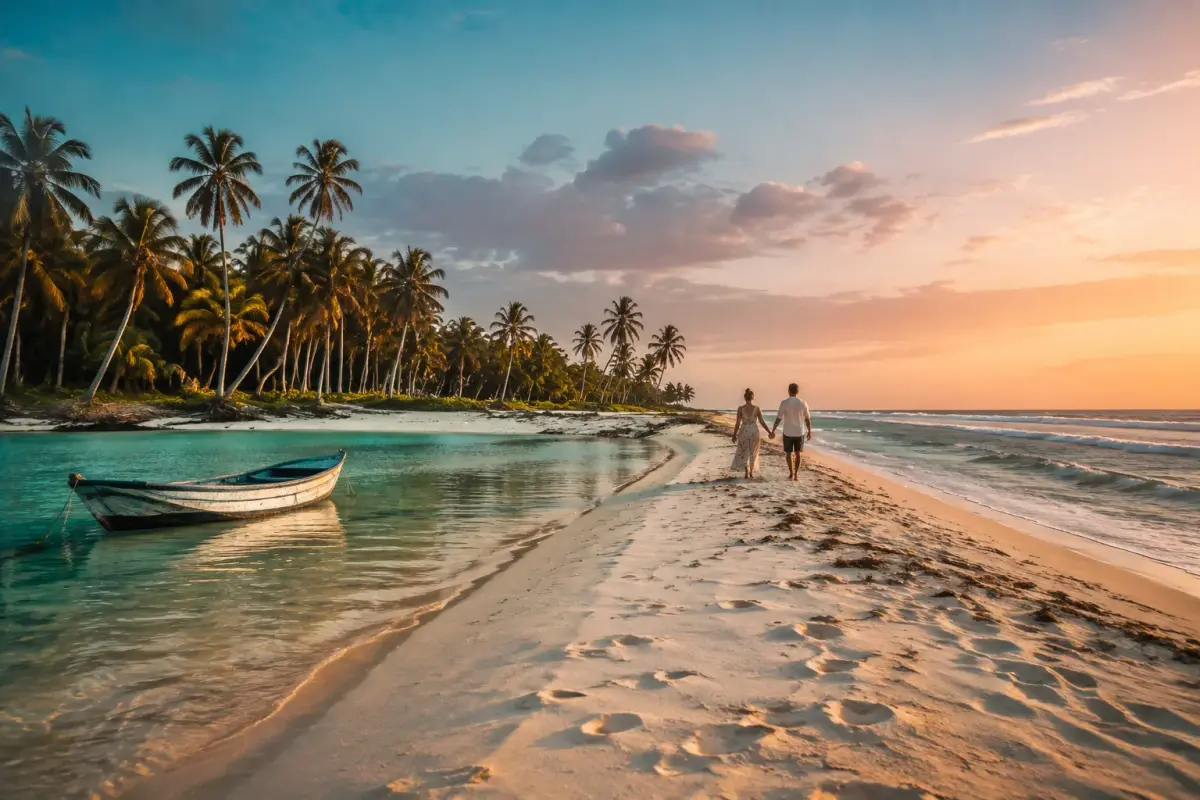
Mussulo is the heart of the romantic half of the trip. It is a long sandy peninsula opposite Luanda, roughly 30 km long and only about 3 km wide, with calm shallow lagoon water on the inner side and open Atlantic surf on the outer. You reach it by boat from Luanda. This is where the capital goes at weekends, so aim to be there midweek if you want quiet.
Accommodation ranges from resorts with pools and private beach access to simple guesthouses and rented villas. Book well ahead: it is popular and options are finite. Read up first in the Mussulo travel guide and the round-up of Angola’s best beaches.
Three nights is right. Walk the sandbar at dawn when it is genuinely empty, swim on the lagoon side, watch the sun drop into the Atlantic on the ocean side, and accept that dinner will be grilled fish and it will be excellent.
Days 6 to 8: Lubango and the escarpment
Fly from Luanda to Lubango. This is the day with a logistics cost: you take a boat back to Luanda, then a domestic flight of roughly an hour and a half. Build in buffer, because Angolan domestic schedules shift.
Lubango sits in the cooler Huila highlands. Two set pieces dominate:
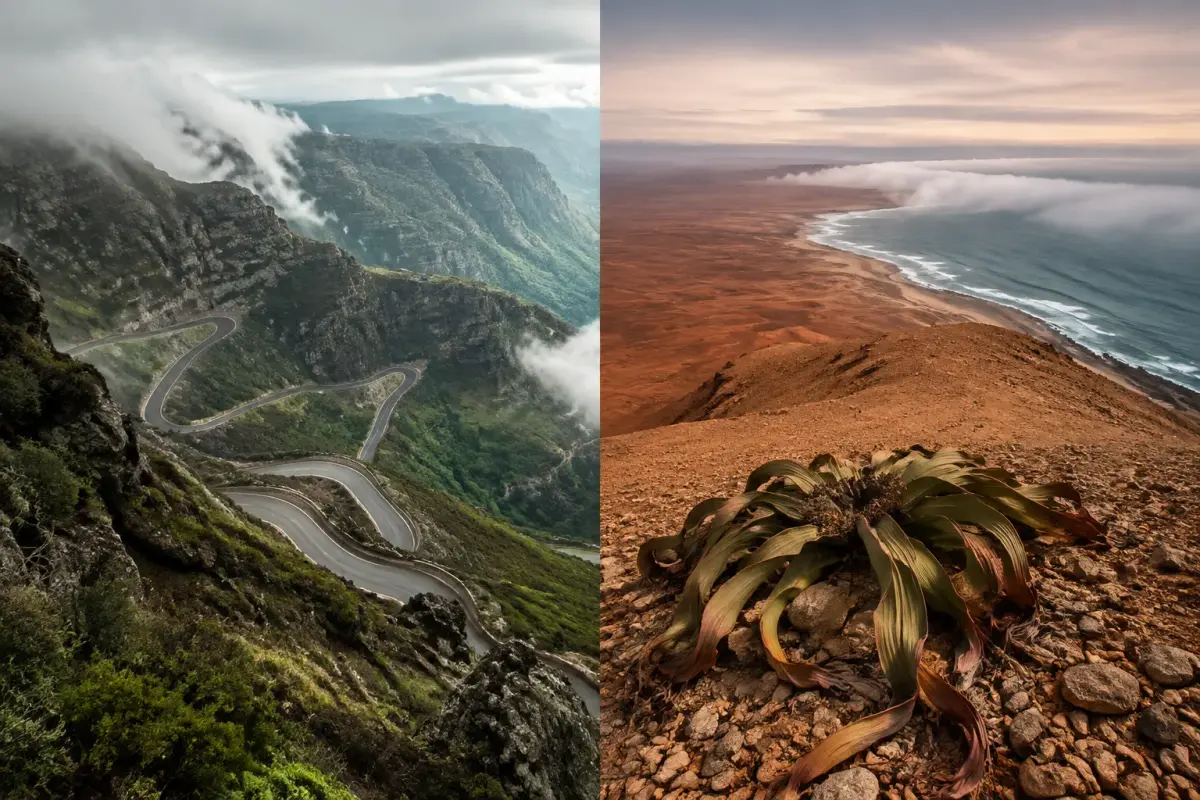
- Serra da Leba pass: the switchback mountain road descending toward the coastal plain, best seen from the viewpoint above, and best in the morning before cloud rolls in.
- Tundavala: a gap in the escarpment where the plateau ends and the ground falls away for hundreds of metres. Go late afternoon, take a jacket, and stay for the light.
Use the Lubango destination guide and the Tundavala viewpoint guide to plan timings and hire a driver in advance.
Days 9 to 10: Namibe, desert and cold ocean
From Lubango, drive down through the pass to Namibe province. Expect roughly half a day on the road with stops, which is part of the point: the descent from green highland to red desert plain is one of the most dramatic transitions in southern Africa.
Namibe is where the desert meets the Atlantic. Fog, gravel plains, ancient welwitschia plants and long stretches of coast with nobody on them. Two nights is enough for a taste. The Namibe travel guide covers what is reachable without a full expedition vehicle. Then fly home from Namibe if a schedule works, or return via Lubango to Luanda.
Are there romantic hotels in Angola?
There is comfortable accommodation in Angola, but there is no honeymoon hotel industry. Luanda has international-standard business hotels, Mussulo has beach resorts with pools and private beach access alongside guesthouses and rentable villas, and Lubango and Namibe have solid mid-range hotels and lodges. What you will not find is a property built around couples, with spa packages, private dining set-ups and honeymoon turndown.
How to compensate:
- Rent a villa on Mussulo rather than a hotel room. Privacy beats amenities here.
- Ask directly when booking whether a quiet room, a sea view or a late breakfast is possible. Requests are often granted informally.
- Do not expect online booking coverage to be complete. Email and phone still matter, and confirmations sometimes need chasing.
- Book Mussulo and Lubango early, especially around Angolan public holidays.
What can couples actually do together?
The activities are outdoors, unstructured and mostly free. Angola’s romance is scenery and space, not organised experiences.
- Long empty beach walks on the Mussulo sandbar at sunrise
- Swimming and paddling on the calm lagoon side, bodyboarding on the Atlantic side
- Boat trips around the Mussulo lagoon and mangrove channels
- Sunset at Tundavala and morning photography at Serra da Leba
- Learning a few kizomba steps in Luanda, where the dance originated
- Coastal drives in Namibe with stops wherever it looks good
- Fresh seafood dinners on terraces facing the ocean
Edge case: if one of you wants a structured itinerary with bookable excursions, hire a local operator to build the southern leg. Independent travel here is possible but slower.
Can you combine it with a safari?
Not at the level of Kenya, Tanzania, Botswana or South Africa. Angola’s wildlife populations were devastated by decades of civil war that ended in 2002, and recovery is ongoing. Kissama National Park near Luanda was restocked in the early 2000s through the Operacao Arca de Noe translocation project and offers a genuine but modest game drive. Iona in Namibe province is the largest park and is about desert landscape rather than dense game.
Come for the scenery and add wildlife as a bonus. If a safari is central to the honeymoon, pair a few Angola days with a neighbouring country instead of expecting Angola to deliver both.
Visas, health and safety
Angola has relaxed tourist entry substantially in recent years, including an e-visa system and visa-free entry for many nationalities for short stays. Because these rules have changed more than once, verify your own situation before booking flights, using the Angolan migration service, the official e-visa portal, or an Angolan embassy or consulate.
Health requirements matter here too. Yellow fever vaccination is normally required for entry, and malaria is present throughout the country, so prophylaxis is generally advised. Check current guidance with a travel clinic. Do not skip travel insurance that covers medical evacuation.
On safety, petty crime is the main risk and it concentrates in Luanda, particularly at night and around crowded areas. Mussulo, Lubango and Namibe are generally calmer. The Cabinda exclave often carries stricter warnings, and it is not a honeymoon destination.
Practical rules that cover most situations:
- Use hotel-arranged or app-based transport at night in Luanda, not street taxis
- Leave the good jewellery at home, including the new rings if they are conspicuous
- Carry a photocopy of your passport and leave the original in the hotel safe
- Stay on established tracks and roads in rural areas, since a residual landmine risk remains in parts of the country
- Read your own government’s travel advisory shortly before departure, and again a week before you fly
What is the food like?
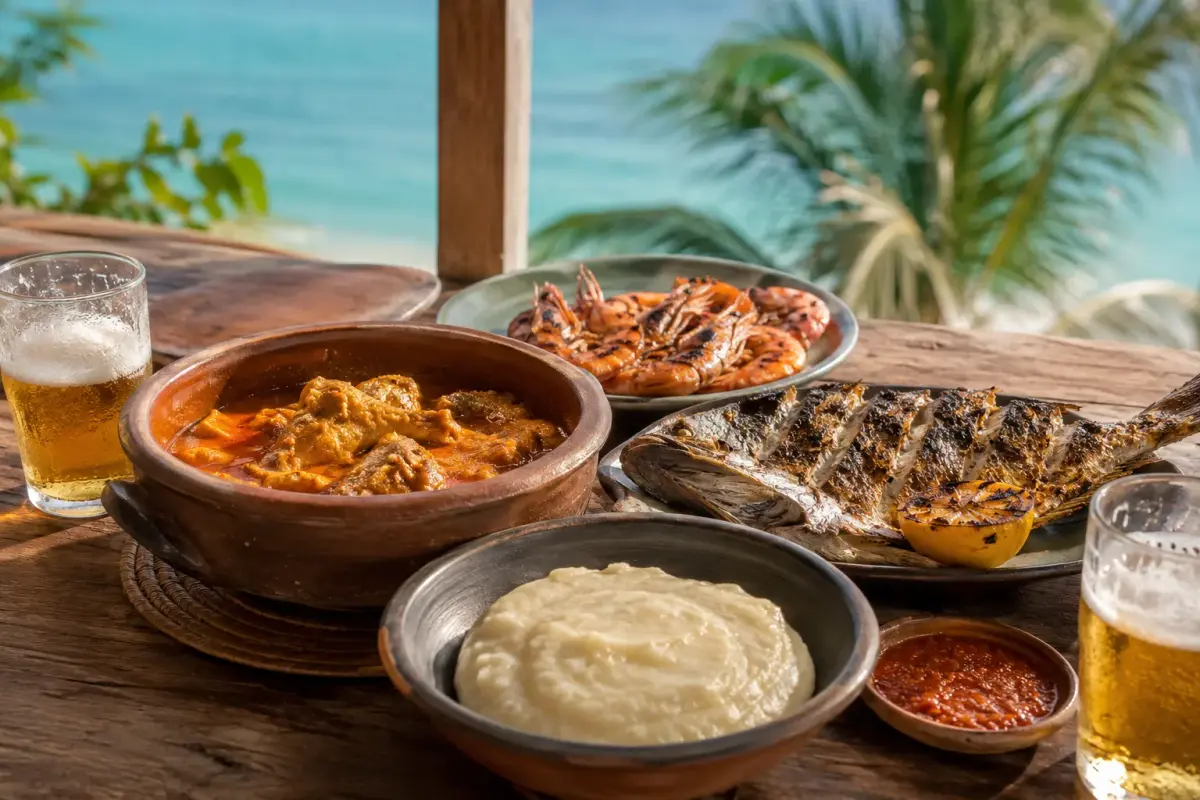
Angolan food is Portuguese-influenced, palm oil rich and very good on the coast. Expect grilled fish, prawns, clams and octopus near the sea, and hearty stews inland. Muamba de galinha, chicken in palm oil sauce, is usually served with funge, a firm cassava or maize dough. Calulu and kizaca are worth ordering.
Where to eat, by type rather than by name:
- Luanda: hotel restaurants for reliability, seafood places along the waterfront and on Ilha for atmosphere
- Mussulo: resort and beach restaurants, mostly grilled fish, often the best meals of the trip
- Lubango: simple Angolan and Portuguese restaurants, grilled meat, good coffee
- Namibe: fish straight off the boats
Drink bottled or treated water everywhere, including for brushing teeth.
Getting between the stops
Fly between regions and hire a driver within them. Angola is large, over 1.2 million square kilometres, and long-distance driving eats days. Luanda to Lubango by road is a serious undertaking; by air it is a short domestic flight.
- Internal flights: the backbone of any 10-day route. Book early, reconfirm, and never plan a same-day connection onto an international flight
- Driver with vehicle: the practical way to do Serra da Leba, Tundavala and the Namibe coast. Self-driving is possible but demanding, and Portuguese helps enormously
- Boats: the only way to Mussulo, arranged through your accommodation or from Luanda’s marina area
- Taxis and ride apps: fine in Luanda, limited elsewhere
What will it cost?
The currency is the Angolan kwanza. Angola is more expensive than most travellers expect, largely because Luanda has ranked for years among the priciest cities in the world for expatriates, and because internal flights, drivers and beach accommodation carry real costs. Card acceptance is decent in Luanda hotels and larger businesses but unreliable outside cities, so carry cash.
Rather than quote figures that go stale, work with a structure:
- Fixed costs: international flights, two internal flights, boat transfers
- Accommodation: the largest variable, driven mostly by your Mussulo choice
- Transport on the ground: drivers for the southern leg, taxis in Luanda
- Daily spend: meals, water, entrance fees, tips
- Contingency: add 15 to 20 percent, because plans in Angola shift
For current cost ranges and daily budget bands, use the detailed Angola trip cost breakdown.
What to pack
Pack for three climates: humid coast, cool highlands and dry desert. That surprises couples who assume Angola is uniformly hot.
Clothing
- Light breathable layers for the coast, plus one fleece or jacket for Tundavala evenings
- Two swimsuits each, a rash vest for Atlantic surf, and a sun hat
- Modest smart-casual outfit for a nice dinner in Luanda
- Closed walking shoes for escarpment viewpoints and gravel
Practical
- High-factor sunscreen and strong insect repellent
- Malaria prophylaxis, prescription medicines in original packaging, plus vaccination certificates
- Power adapter for European plug types C and F, 220V
- Power bank, headlamp, dry bag for boat transfers
- Cash in a mix of denominations plus one backup card
- A Portuguese phrasebook or offline translation app, since English is little spoken
Conclusion
An Angola honeymoon is a trade. You give up guaranteed comfort, easy booking and honeymoon extras. You get a 30 km sandbar where you can walk for an hour without meeting anyone, a mountain pass that looks engineered by someone showing off, a desert that runs straight into a cold ocean, and a shared story that nobody else at the dinner table can match.
Next steps, in order:
- Pick your window in the May to October dry season and confirm it works for both of you.
- Verify entry requirements with the Angolan migration service or an Angolan embassy, and book a travel clinic appointment for yellow fever, malaria advice and routine vaccinations.
- Lock the two internal flights before anything else, since these constrain the whole route.
- Book Mussulo early, choosing between a resort with private beach access and a rented villa depending on how much privacy matters.
- Arrange a driver for the Lubango and Namibe leg through your accommodation or a local operator.
- Recheck your own government’s travel advisory a week before departure and buy insurance that covers medical evacuation.
Do that, and Angola stops being a gamble and becomes what it should be: a quiet, spectacular start to married life in a country almost nobody you know has seen.
Free help from our team in Angola
Planning your honeymoon in Angola?
Tell us your dates and what kind of trip you picture. We plan the route from Luanda and Mussulo to Lubango and Namibe, with comfortable hotels and private transport.
- Local team in Angola
- No obligation, nothing to pay
- Reply by email or WhatsApp
Want to keep this guide? We email you the key points with a link to every section.
Frequently asked questions
Is Angola safe for a honeymoon couple?
Generally yes, with normal urban caution. Petty theft in Luanda is the main risk, while Mussulo, Lubango and Namibe are calmer. Avoid the Cabinda exclave and check your own government's travel advisory before you travel.
What is the best month for an Angola honeymoon?
Any month from May to October. These dry-season months bring cooler coastal weather, clearer highland views and more reliable roads in the south.
How do you get there?
There are no direct flights from most of Europe or North America. Most couples connect through a European or African hub into Luanda, then use domestic flights internally. Plan a recovery night in Luanda on arrival.
Do people speak English in Angola?
Rarely outside hotels and tour operators. Portuguese is the official language, alongside Bantu languages such as Umbundu, Kimbundu and Kikongo. Learn basic Portuguese greetings and numbers.
Can you do this itinerary without a tour operator?
Yes, if you are confident travellers with some Portuguese and flexible plans. Many couples use an operator only for the southern leg, where drivers and local knowledge make the biggest difference.
Is Mussulo an island or a peninsula?
It is a long sandy peninsula opposite Luanda, roughly 30 km long and about 3 km wide, though it is often called an island. Calm lagoon on the inner side, Atlantic surf on the outer, reached by boat.
Is it cheaper than a classic honeymoon destination?
No. Angola is expensive for the comfort you receive, mostly because of Luanda prices and internal flights. Go for the experience, not to save money.