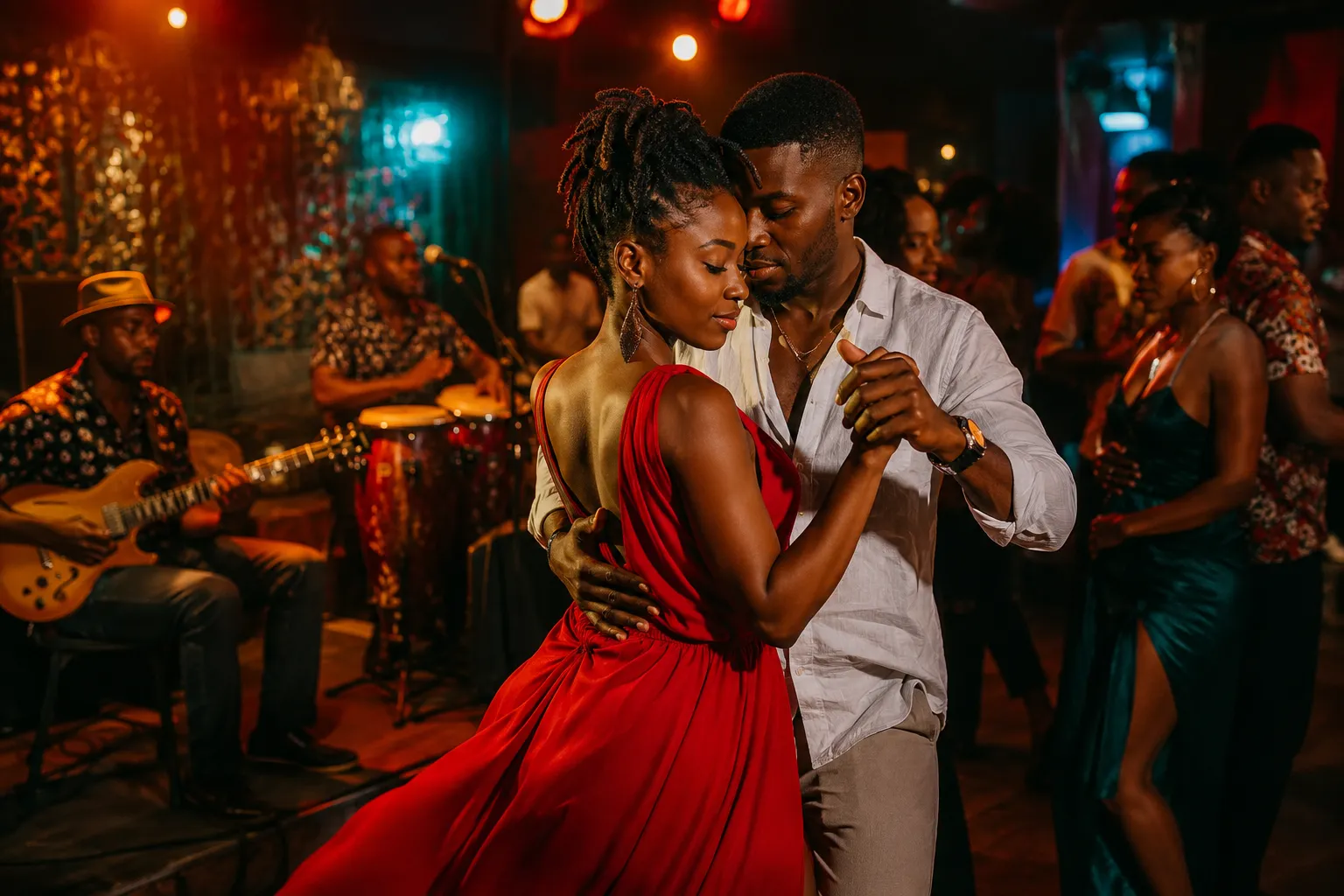
Long before kizomba filled dance floors in Paris, Lisbon and New York, it was born on the sweaty terraces of Luanda in the late 1970s and 1980s, a slow, hip-driven cousin of the older Angolan semba. And while the world was learning to sway close, the kids of Luanda’s musseques were already inventing something faster, louder and more rebellious: kuduro. Together, these three sounds tell you almost everything about modern Angola.
Quick Answer: What Are Kizomba, Semba and Kuduro?
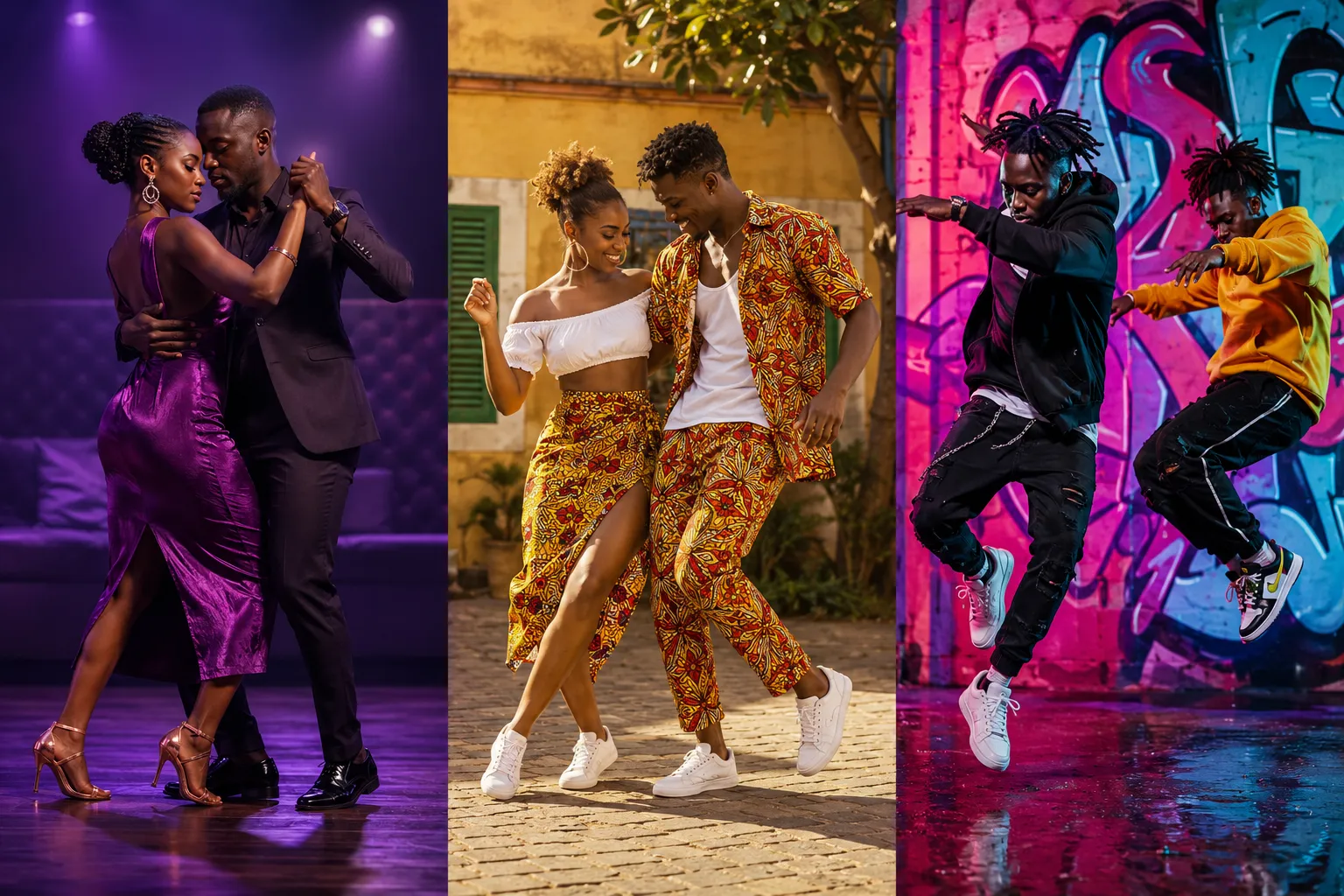
Semba is the old root: an upbeat Angolan partner dance and music style from the mid-20th century that helped shape Brazilian samba. Kizomba is its slow, sensual grandchild, born in Luanda around 1980, mixing semba with Cape Verdean zouk and Caribbean rhythms. Kuduro is the youngest sibling: fast, electronic, hip-hop-tinged street music and dance from Luanda’s suburbs in the late 1980s and 1990s. All three are Angolan, all three are dance music, and all three are still very much alive.
Key Takeaways
- Semba came first, kizomba grew out of it in the late 1970s to early 1980s, and kuduro emerged in the late 1980s and 1990s.
- Kizomba is slow (around 60 to 80 BPM), semba is bouncy and mid-tempo, kuduro is fast (around 130 to 145 BPM).
- All three are Angolan, sung mostly in Portuguese, with strong Bantu musical roots.
- Kizomba is a close partner dance; kuduro is mostly solo or group; semba is a lively partner dance with playful separations.
- Luanda is the best place to hear all three live, especially on the Ilha de Luanda and in the city’s bars and clubs.
- Kizomba went global after 2000 through Portugal, France and Latin dance scenes.
- Etiquette matters: ask before you invite someone to dance, and follow the local lead.
What’s the difference between kizomba, semba and kuduro?
The short version: tempo, mood and body contact. Semba is fast and playful, kizomba is slow and intimate, kuduro is explosive and athletic. They share Angolan DNA but feel completely different on the floor.
| Style | Origin (approx.) | Tempo | Dance format | Vibe |
|---|---|---|---|---|
| Semba | 1950s Angola | Mid-fast | Partner, playful | Joyful, cheeky |
| Kizomba | Late 1970s to 1980s Luanda | Slow (60 to 80 BPM) | Close partner | Sensual, smooth |
| Kuduro | Late 1980s to 1990s Luanda | Fast (130 to 145+ BPM) | Solo or group | Energetic, urban |
A useful decision rule: if the couple is glued together and moving slowly, it’s kizomba. If they’re bouncing apart and back with big smiles and quick footwork, it’s semba. If people are throwing shapes solo with sharp arm and leg movements, it’s kuduro.
Where did kizomba originate from?
Kizomba originated in Luanda, Angola, in the late 1970s and early 1980s. The word “kizomba” comes from Kimbundu (one of Angola’s Bantu languages) and roughly means “party” or “celebration.” Musicians blended traditional semba with the zouk sound coming from the French Caribbean (via groups like Kassav’) and Cape Verdean coladeira, then slowed it all down.
Angola had just come out of its independence war in 1975 and was heading into a long civil war, and kizomba became the sound of urban nightlife: intimate, slow, and a welcome escape. Early figures associated with the style include Eduardo Paim, often called one of the fathers of kizomba, along with artists like Bonga (more on the semba side) who kept Angolan musical identity alive during exile.
Kizomba vs semba: which came first?
Semba came first, by a wide margin. Semba was already popular in Angola in the 1950s and 1960s, and it directly influenced kizomba, which only emerged around 1980. So kizomba is the child, not the parent.
Semba is often described as an ancestor of Brazilian samba too, carried across the Atlantic during the transatlantic slave trade. The word “semba” itself refers to the “umbigada,” the belly-to-belly touch that appears in many Bantu circle dances. If you want a sense of how deeply this music is tied to Angolan identity, our guide to the culture of Angola puts it in a wider context.
Is semba the same as kizomba?
No. They’re related but clearly different. Semba is faster, more bouncy, and has playful moments where the partners separate, spin, and tease each other. Kizomba is slower, more grounded, and stays in a close embrace almost the whole time.
Musically, semba uses more traditional instrumentation (guitars, dikanza scraper, percussion) and has a distinct off-beat feel. Kizomba leans into synthesizers, drum machines and a smoother, slower groove. If a track makes you want to grin and skip, it’s probably semba. If it makes you want to close your eyes and sway, it’s kizomba.
What does kizomba music sound like?
Kizomba music sounds like a slow, romantic slow-dance track with a syncopated Caribbean-tinged rhythm and warm Portuguese-language vocals. Think 60 to 80 BPM, soft synths, a laid-back drum pattern that leans on the second beat, and melodic bass lines.
Typical elements:
- Slow, steady kick-drum pattern with a lazy snare
- Smooth synth pads and electric piano
- Melodic bass, often prominent
- Vocals in Portuguese (sometimes Kimbundu), usually about love, longing, or nightlife
- Occasional acoustic guitar or Cape Verdean-style flourishes
Modern offshoots like urban kiz and ghetto zouk push the tempo and production further into R&B territory, which is why some Angolan purists still distinguish “kizomba tradicional” from what’s played in European dance schools.
How to dance kizomba for beginners
Start with three things: posture, connection, and the basic step. Kizomba is a lead-and-follow dance in a close embrace, so most of the communication happens through the chest and hips, not the hands.
The absolute beginner basic:
- Stand chest-to-chest with your partner, slight offset to the right.
- Lead’s left hand holds the follow’s right hand at about shoulder height, relaxed.
- Lead’s right hand rests on the follow’s shoulder blade or upper back.
- Step side-together-side (2 counts), then forward or back (2 counts). That’s your “basic 1” and “basic 2.”
- Keep the knees soft, weight over the balls of the feet, and listen to the music, don’t rush.
Common beginner mistake: trying to add flashy moves before the walk feels smooth. Kizomba rewards patience. A clean basic done well looks better than ten sloppy turns.
Semba dance steps: the basics
Semba’s basic is a quick-quick-slow triple step, often described as “1-2-3, pause” with a small hip bounce on each beat. Partners hold each other more openly than in kizomba, and there’s more space for playful footwork.
A simple starter pattern:
- Step in place with a slight side-to-side hip motion on beats 1 and 2
- Take a small forward or back step on beat 3
- Keep the upper body relaxed but the knees soft and bouncy
- Add cheeky separations and quick spins as you get comfortable
Semba is faster and less forgiving of tension than kizomba. Smile, breathe, and let the bounce come from the knees.
Kuduro dance moves and tutorial basics
Kuduro literally means “hard bum” in Portuguese (“cu duro”), and the dance lives up to the name: it’s fast, punchy, and full of sharp isolations. It’s mostly a solo or group dance, born on the streets of Luanda, and it borrows from breakdance, house, and traditional Angolan movements.
Signature kuduro moves you’ll see:
- Sharp arm punches and elbow angles
- Fast footwork with heel-toe and side-to-side hops
- Hip rotations and knee drops
- Athletic freezes and floor moves (in the more acrobatic street style)
- Group formations with call-and-response
The most famous kuduro track globally is probably “Danza Kuduro” by Don Omar and Lucenzo (2010), which borrowed the sound but not really the Angolan attitude. For the real thing, look up artists like Tony Amado (often credited as the inventor of kuduro), DJ Znobia, Nagrelha & Os Lambas, and Cabo Snoop.
How to tell kuduro apart from kizomba
If you’re in a Luanda club and unsure what’s playing, use these quick tells:
- Tempo test: if you can barely walk to the beat, it’s kuduro. If it feels like a slow heartbeat, it’s kizomba.
- Body test: are people locked together? Kizomba. Are they moving solo with sharp arms and legs? Kuduro.
- Vocals: kizomba lyrics are usually sung and romantic. Kuduro often features shouted, rapped, or chanted vocals in Portuguese slang.
- Production: kizomba is smooth and warm. Kuduro is punchy, distorted, and electronic.
Where to hear kizomba, semba and kuduro live in Luanda
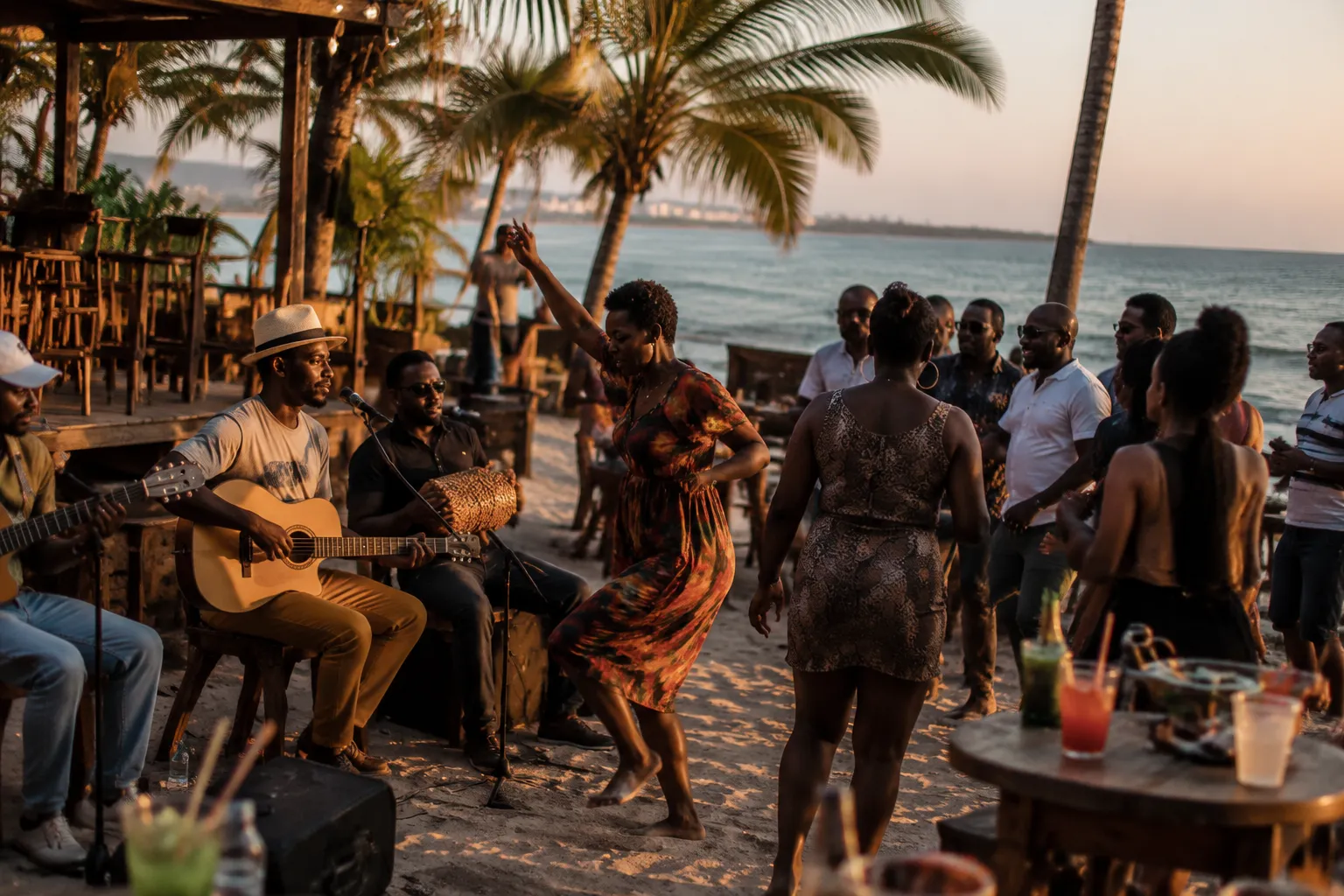
The best place to experience all three is Luanda itself, and specifically the Ilha de Luanda, the long sandy strip that curves around the bay. On weekends the beach bars and open-air clubs there play a rolling mix of kizomba, semba, kuduro and Afro-house well into the early morning.
Where to look (venues change often, always check locally):
- Ilha de Luanda: beach bars and clubs along the strip, especially popular on Friday and Saturday nights.
- Bairro Alto and Ingombota (central Luanda): live music bars and lounges where semba bands often play.
- Miramar and Talatona: more upscale venues with kizomba nights and DJs.
- Baía de Luanda (Marginal): the waterfront promenade is a popular pre-night-out stroll.
For general orientation before you go out, our guide to Luanda covers neighborhoods, transport and safety basics. For nightlife nights out, taxis or ride-hailing apps are usually safer than walking after dark, especially in unfamiliar areas.
“In Luanda, the night doesn’t really start until midnight, and it doesn’t end until the sun comes up over the Atlantic.”
Etiquette: how to ask someone to dance in Angola
Ask politely, respect a ‘no,’ and follow the local lead. In Angolan dance culture, extending a hand and a small nod is the standard invitation. If someone declines, smile and move on, there’s no drama and no explanation needed.
A few practical tips for visitors:
- Watch for a song or two before jumping in, so you know what style is being played.
- If you don’t know the dance, say so honestly. Many locals are happy to guide a beginner through a basic kizomba.
- Keep the embrace respectful, especially with someone you’ve just met. Kizomba is close, but it’s still a dance, not a proposition.
- Don’t drink too much before dancing. Sloppy leading and following ruins the connection.
- Tip the band if there’s live music, especially in smaller bars.
Kizomba shoes and what you need to get started
You don’t need much. For social dancing at home or in a club, comfortable shoes with a smooth sole that lets you pivot are enough. Sneakers with grippy rubber soles are the worst choice, they’ll stick to the floor and stress your knees.
Basic starter kit:
- Shoes: leather-soled or suede-soled shoes; ballroom or Latin dance shoes work well. Women often wear low-heeled dance shoes (2 to 5 cm), men wear flat leather-soled shoes.
- Clothing: something breathable you can move in. Kizomba gets warm fast in close embrace.
- A small towel or handkerchief: genuinely useful in a hot club.
- Deodorant, mints, and awareness of hygiene: you’re dancing chest-to-chest with strangers. Be a good partner.
Can you dance kizomba solo, or is it partner only?
Kizomba is fundamentally a partner dance. The whole point is the connection between two people through the embrace. That said, you can absolutely practice the basic step, weight changes and musicality on your own, and many teachers recommend it.
Kuduro, by contrast, is very often danced solo or in groups, and semba can be danced solo as freestyle but shines as a partner dance. So if you’re travelling alone and worried about not having a partner: no problem. Kuduro nights are perfect for solo dancers, and at kizomba socials you’ll almost always find someone to dance with if you ask politely.
Kizomba dance classes: where to find them
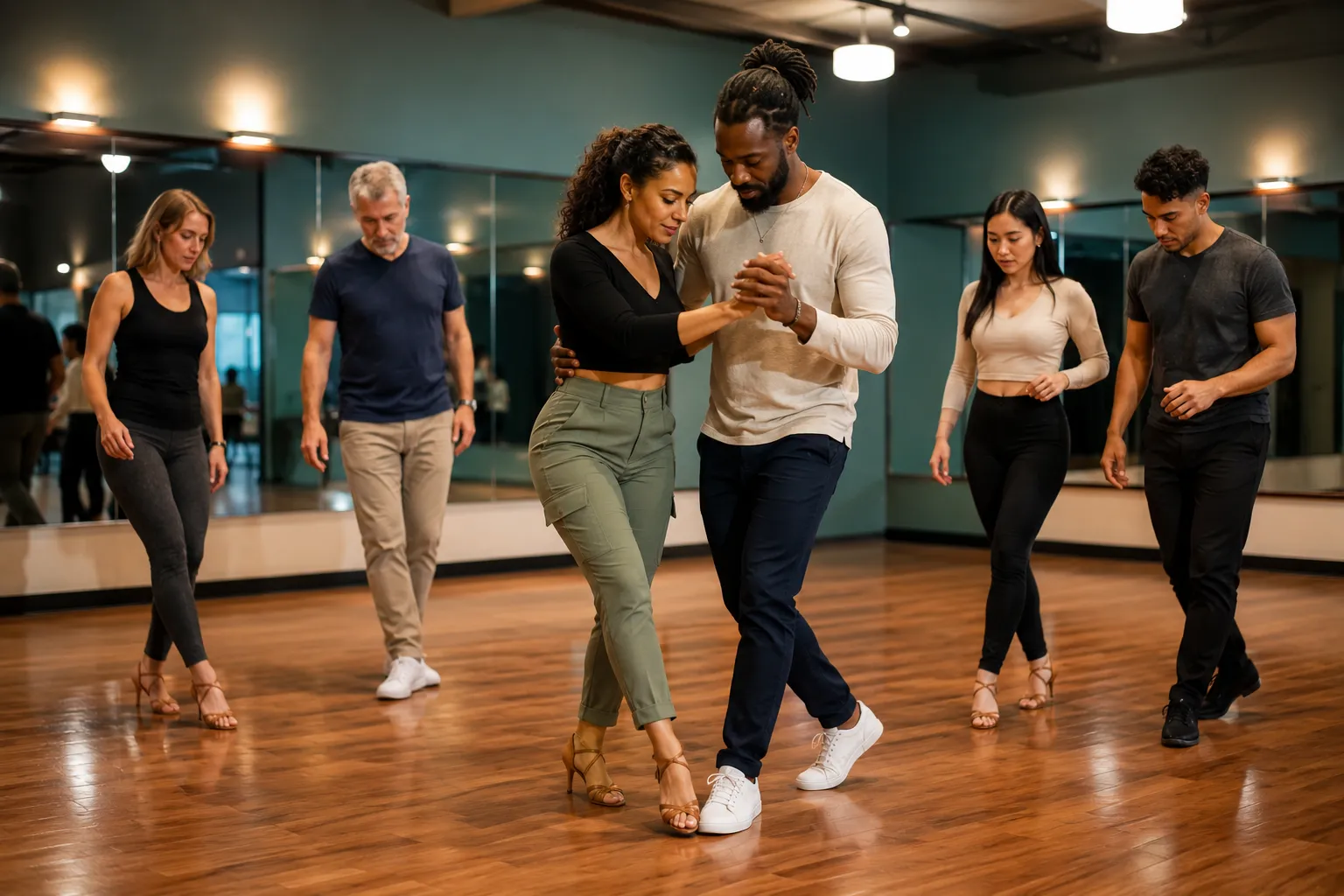
Kizomba classes are now available in most large cities worldwide. In many European cities, look for schools that specifically teach “kizomba tradicional” or “urban kiz.” Search “kizomba lessons + your city” and check whether the school teaches the Angolan roots or only the modern European fusion, both are valid, but they feel different.
If you’re travelling to Angola, ask at your hotel or through local guides about workshops. Some Luanda studios run short intensive classes for visitors, and cultural centers occasionally host beginner nights.
Why is kizomba popular outside of Angola?
Kizomba went global in the 2000s and 2010s, largely through Portugal (where a large Angolan diaspora lives), then France, and then the international Latin dance circuit. Reasons it caught on:
- The embrace: kizomba’s close-hold is intimate without being flashy, appealing to dancers tired of showy salsa.
- Slow tempo: easier to learn as a beginner than fast Latin styles.
- Musicality: the syncopated rhythm gives room for creative interpretation.
- Festivals: major events like AfroLatin festivals across Europe helped spread it fast.
Purists sometimes complain that “international kizomba” has drifted far from Angolan roots, with more theatrical moves and R&B-influenced music. Both versions coexist, but if you want the real thing, listen to Angolan artists and, ideally, dance in Luanda.
What’s the history of Angolan music and dance?
Angolan music sits at the crossroads of Bantu tradition and Portuguese colonial influence. Rhythms, call-and-response singing, and dances like the umbigada came from Bantu peoples across what’s now Angola. Portuguese colonization (from the 15th century until independence in 1975) brought European instruments, Catholic hymnody, and later urban recording culture.
The 20th century timeline in broad strokes:
- 1950s to 1960s: semba flourishes in Luanda; nationalist songs emerge.
- 1970s: independence in 1975; artists like Bonga become voices of Angolan identity.
- Late 1970s to 1980s: kizomba is born in Luanda, blending semba with zouk.
- Late 1980s to 1990s: kuduro emerges from Luanda’s musseques (informal neighborhoods).
- 2000s onward: all three styles go international, kizomba especially.
For more background on the country’s story, our guide to the history of Angola fills in the political and cultural context.
Festivals and events
Angola hosts several music events, and the diaspora runs many more. Check locally before you travel, dates and lineups change every year:
- Luanda International Jazz Festival: annual event, usually mid-year.
- Independence Day (11 November): street parties and concerts across the country.
- Carnival (February or March): big street parades in Luanda with semba, kuduro and traditional groups.
Internationally, look for AfroLatin dance festivals in Lisbon, Paris, Amsterdam and other European cities, most now have a dedicated kizomba room.
Planning a music-focused trip to Angola
If music and dance are your main reason for going, build your trip around Luanda and a weekend or two of nightlife. For everything else you need to organize, from visa to vaccinations to when to go, start with our overview of the attractions in Angola. And for official travel advice, always check your government’s travel advisory.
Conclusion
Semba, kizomba and kuduro aren’t just musical styles, they’re a compact history lesson in modern Angola: rural roots meeting colonial cities, war-era nightlife giving birth to intimate slow-dance, and street kids in the musseques inventing a global electronic sound. If you’re planning a trip, don’t just visit the attractions in Angola. Spend at least one night on the Ilha de Luanda, let the music find you, and accept the first invitation to dance. That’s the fastest way to understand this country.
Next steps:
- Listen to a starter playlist: Bonga, Eduardo Paim, Paulo Flores (semba and kizomba), Tony Amado and Nagrelha (kuduro).
- Book a beginner kizomba class in your city before you travel.
- Plan your Luanda nights around a weekend, and pre-arrange safe transport.
- Verify current visa, vaccination and safety info via official sources before you go.
Want to keep this guide? We email you the key points with a link to every section.
Frequently asked questions
Is kizomba an Angolan dance?
Yes. Kizomba was born in Luanda, Angola, in the late 1970s and early 1980s. It's Angolan in origin, even though it's now danced worldwide.
What language are kizomba songs in?
Mostly Portuguese, with occasional lyrics in Kimbundu or other Angolan Bantu languages. Cape Verdean Creole is also common in related zouk-love tracks.
Is kizomba the same as bachata or salsa?
No. Kizomba is Angolan, slower, and danced in a closer embrace. Bachata is from the Dominican Republic and salsa is Cuban-Puerto Rican in origin. They're all partner dances but musically and stylistically distinct.
Can I learn kizomba if I have no dance experience?
Yes. Kizomba is one of the more beginner-friendly partner dances because the basic step is simple and the tempo is slow. Most beginners feel comfortable after 4 to 6 classes.
Is kuduro dangerous to dance?
Not inherently, but the more acrobatic street style can involve floor work and freezes that require conditioning. Casual kuduro danced upright at a club is safe for anyone.
Where's the best place in Luanda to experience live semba?
Small bars in central Luanda and along the Ilha often host live semba bands, especially on weekends. Ask locally, venues change often.