Quick Answer
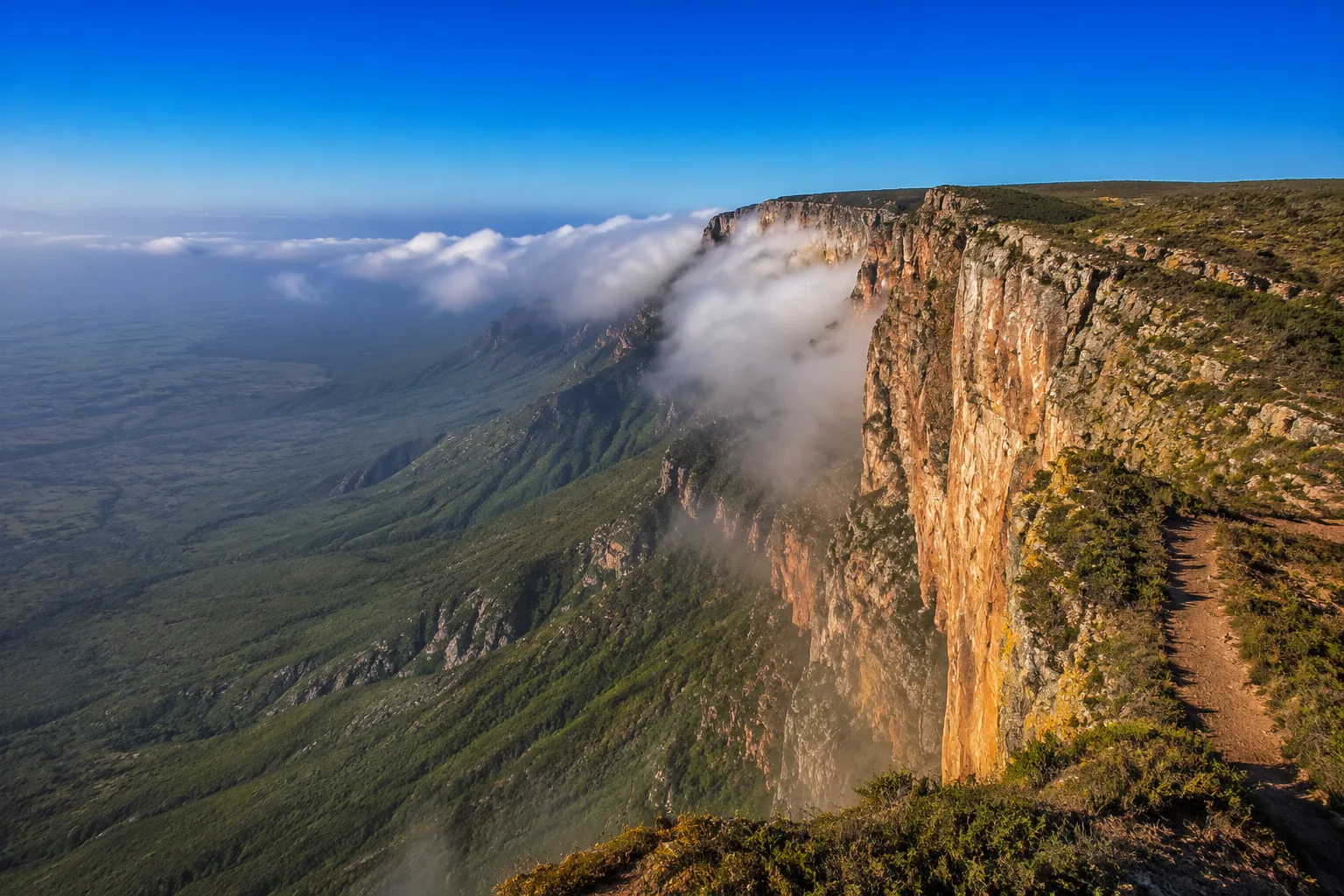
Angola’s top tourist attractions blend raw nature and layered history: the thundering Kalandula Falls, the vertigo-inducing Tundavala Fissure, the lunar landscape of Miradouro da Lua, the wildlife of Kissama National Park, and the UNESCO-listed ruins of Mbanza Kongo. Add Luanda’s colonial forts and the beaches of Benguela, and you have one of Africa’s most underrated travel countries.
Key Takeaways
- Angola welcomed 223,000 international tourists in 2025, a 28% jump year-on-year, and now ranks among Africa’s fastest-growing destinations [2][9].
- Visa access has become dramatically easier: since September 2023, 98 countries can enter visa-free for tourism up to 30 days, others via e-visa (always verify with the official portal) [7].
- A 5% tourism tax on classified accommodations took effect on 30 April 2026, applied to the first seven nights [4].
- The government approved new visitor infrastructure at Kalandula, Tundavala and Serra da Leba in June 2026 (viewpoints, trails, parking, sanitation) [1].
- Mbanza Kongo is Angola’s flagship UNESCO World Heritage Site, the former capital of the Kongo Kingdom [5].
- The dry season (May to October) is the best time to visit for wildlife, waterfalls and coastal exploration.
- Plan 10 to 14 days to see the highlights without rushing. A weekend only covers Luanda.
What are the best tourist attractions to visit in Angola?
The best Angola tourist attractions cluster around three themes: natural landmarks, colonial and pre-colonial heritage, and coastal cities. If you only have one week, prioritise Luanda, Kalandula Falls in Malanje, and the Lubango highlands. Add Kissama National Park for wildlife and Mussulo for beach time.
Here’s the shortlist most travellers build their trip around:
| Attraction | Region | Why go | Best for |
|---|---|---|---|
| Kalandula Falls | Malanje | One of Africa’s largest waterfalls | Nature, photography |
| Tundavala Fissure | Huíla / Lubango | 1,000m cliff and viewpoint | Hiking, drama |
| Miradouro da Lua | South of Luanda | Eroded “moon landscape” | Day trip, sunsets |
| Kissama National Park | Bengo | Elephants, antelope, savanna | Safari beginners |
| Mbanza Kongo | Zaire province | UNESCO Kongo Kingdom ruins | History buffs |
| Ilha do Mussulo | Luanda | Palm-fringed lagoon peninsula | Beach weekends |
| Fortaleza de São Miguel | Luanda | 1576 Portuguese fort, museum | Half-day culture |
For a deeper breakdown of each site, our guide to things to do in Angola goes further.
Where is Luanda and what can you do there?
Luanda is Angola’s capital, sitting on the Atlantic coast in the country’s northwest. It’s the main entry point (all international flights land at Dr. António Agostinho Neto International Airport, NBJ), and you’ll almost certainly spend at least two nights here.
What to actually do:
- Walk the Marginal, the palm-lined bayside promenade, at sunset
- Tour the Fortaleza de São Miguel (1576), which houses the Museum of the Armed Forces
- Visit the National Museum of Slavery in Morro da Cruz for hard but essential context
- Cross by boat to the Ilha do Mussulo lagoon for a beach day
- Eat muamba de galinha or grilled fish at a rooftop restaurant in Ilha do Cabo
Luanda is expensive by African standards. Budget accordingly, and read our full Luanda reisgids before booking a hotel.
Natural landmarks: Kalandula Falls, Tundavala and the Miradouro da Lua
Angola’s natural landmarks are the country’s strongest tourist draw, and in 2026 they’re finally getting proper visitor infrastructure [1].
Kalandula Falls
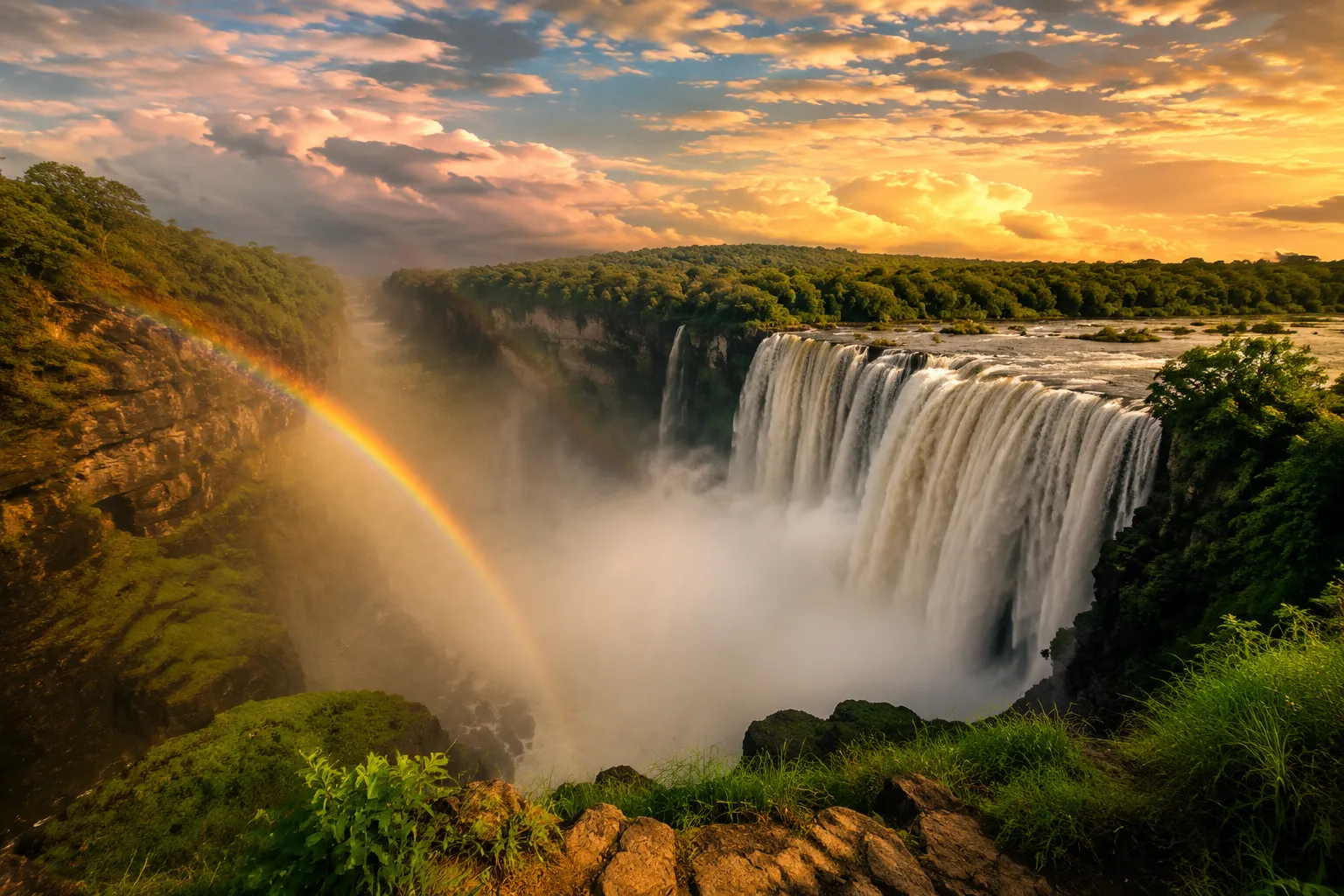
Kalandula (or Calandula) Falls in Malanje province is roughly 105 metres high and 400 metres wide, making it one of the largest waterfalls in Africa by volume. It’s most spectacular in the rainy season (November to April) when the horseshoe curtain runs at full flow, though roads are easier in the dry months. Combine it with the nearby Pedras Negras de Pungo Andongo, a set of towering black monoliths steeped in Kongo legend.
Full details in our dedicated Kalandula Falls guide.
How do I get to Kalandula Falls from Luanda?
By road it’s roughly 380 km east from Luanda to Malanje city, then about 85 km further north to the falls. Total driving time is 6 to 8 hours depending on road conditions. Most travellers either hire a 4x4 with driver from Luanda or fly Luanda, Malanje with TAAG and continue by road (2 to 3 hours). Self-drive is possible but only recommended for experienced overland travellers.
Tundavala Fissure and Serra da Leba
Down in the southern highlands near Lubango, the Tundavala escarpment drops around 1,000 metres in a single sheer plunge. The nearby Serra da Leba pass is one of the most photographed roads in Africa, a hairpin ribbon carved into the mountains between Lubango and Namibe. Both got green-lit for tourist infrastructure upgrades in June 2026 [1].
Miradouro da Lua
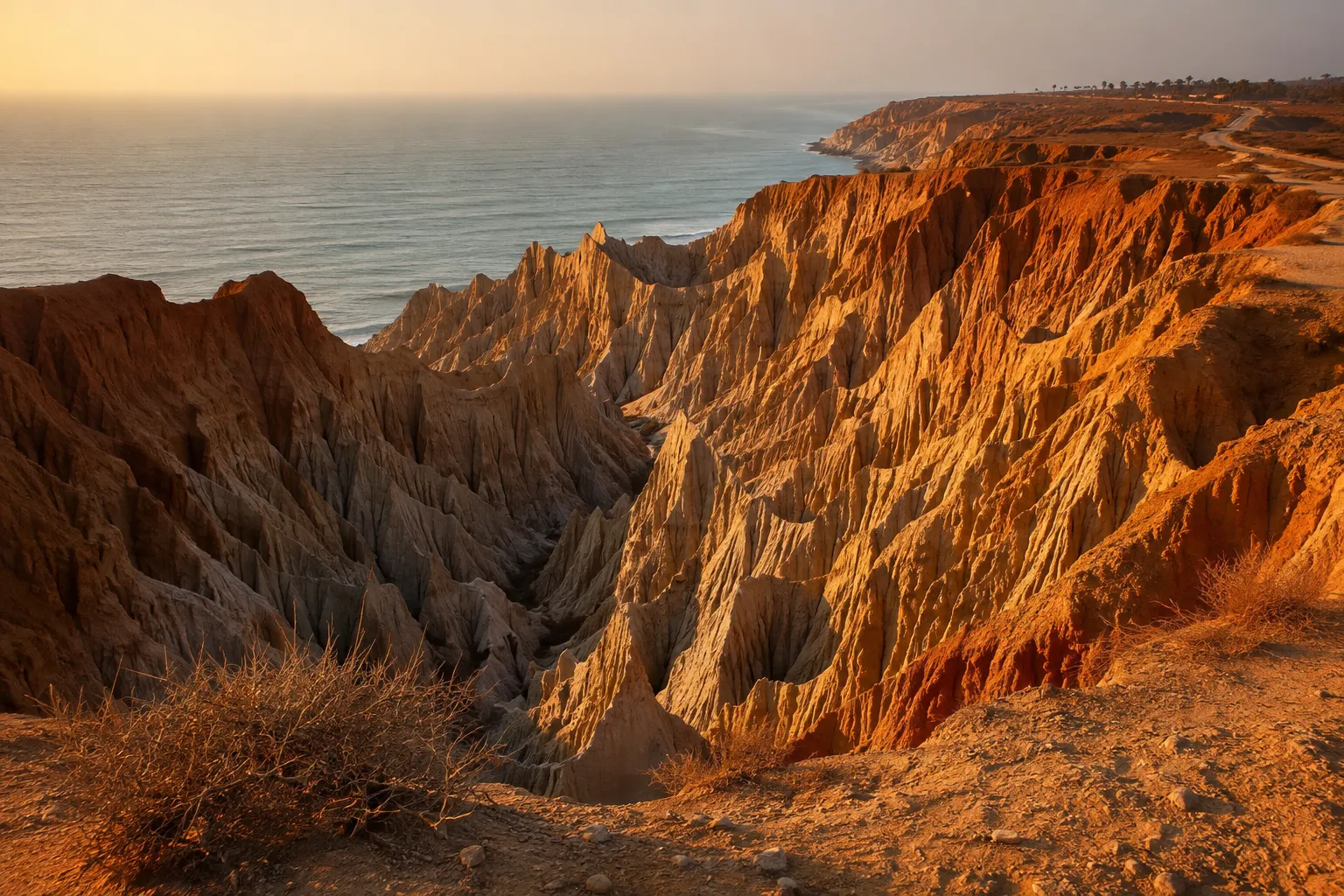
About 40 km south of Luanda on the road to Cabo Ledo, the Miradouro da Lua (“moon viewpoint”) is a wind-eroded amphitheatre of ochre and cream cliffs that genuinely does look lunar. It’s the easiest natural landmark to reach from the capital, perfect for a half-day trip combined with a beach stop.
History and heritage: forts, kingdoms and rock formations
Angola’s heritage layer runs deep: pre-colonial kingdoms, Portuguese colonisation from 1575, the slave trade, independence in 1975, and a civil war that only ended in 2002. Read our overview of the history of Angola for context before you visit.
Fortaleza de São Miguel
The São Miguel Fortress in Luanda dates to 1576 and was the administrative heart of Portuguese Angola for centuries. Today it holds the Museum of the Armed Forces, azulejo tile panels telling colonial history, and sweeping views over the bay.
Mbanza Kongo (UNESCO World Heritage)
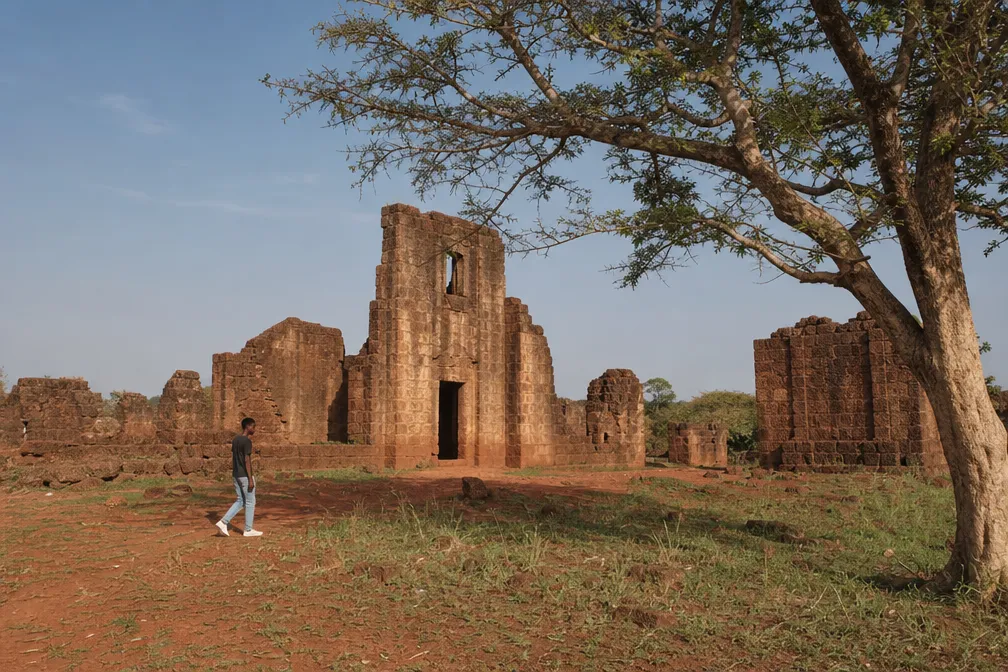
Mbanza Kongo, in the north near the DRC border, was the capital of the Kingdom of Kongo from at least the 14th century. It became a UNESCO World Heritage Site in 2017 [5]. You can walk the ruins of the Cathedral of São Salvador (one of Africa’s oldest churches), see royal burial sites, and visit the Kulumbimbi royal enclosure. It’s remote and takes effort to reach, but it’s the most culturally significant stop in the country.
Pedras Negras de Pungo Andongo
The Black Rocks of Pungo Andongo are enormous dark monoliths rising out of the Malanje plateau. Local legend links them to the Ndongo Kingdom and Queen Nzinga. They pair naturally with a Kalandula Falls trip.
Wildlife and national parks: is Angola good for a safari?
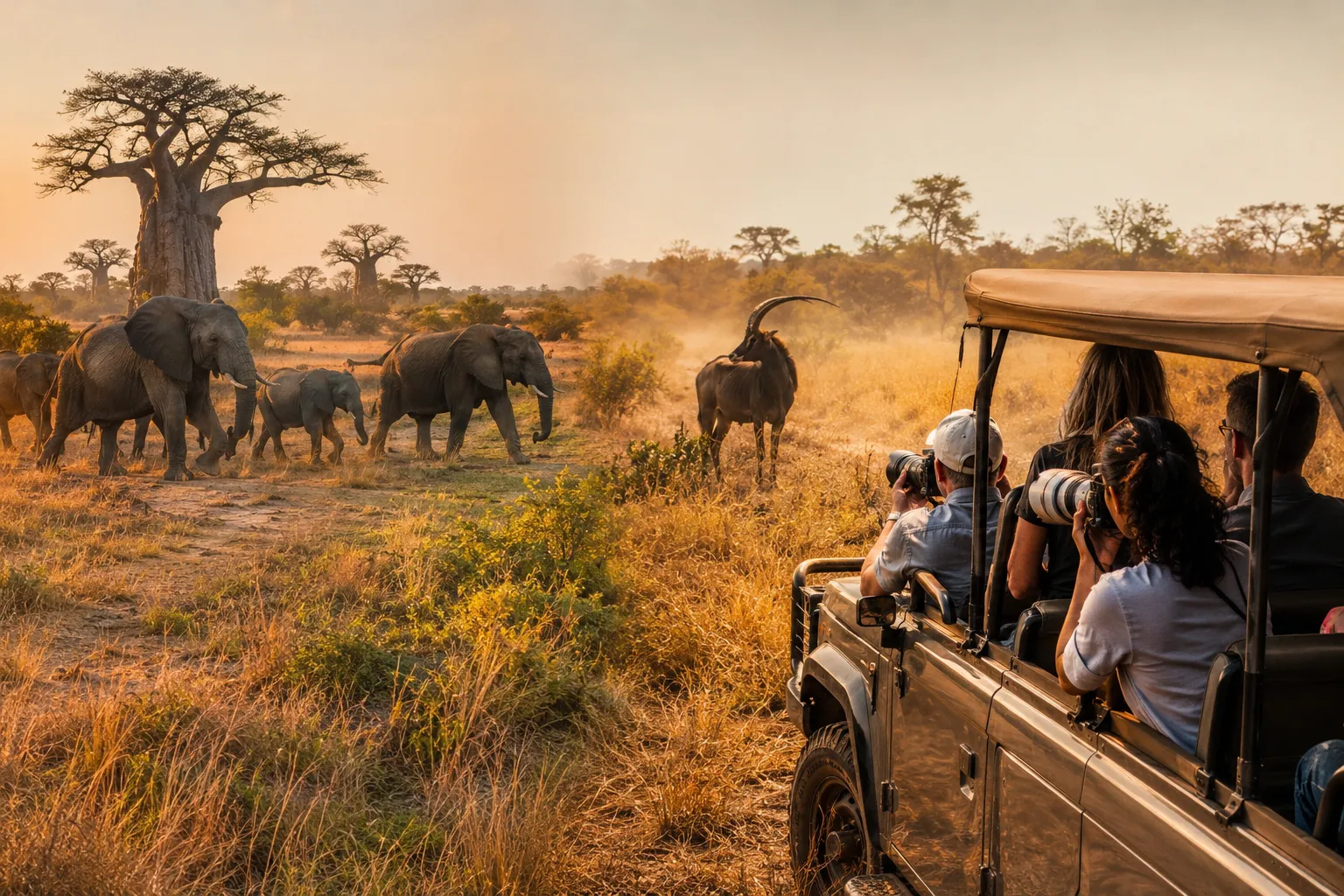
Angola isn’t Kenya or Botswana, and it shouldn’t be marketed that way. But wildlife tourism is genuinely recovering, and the country holds some of Africa’s rarest species.
- Kissama (Quiçama) National Park: the closest park to Luanda, restocked in the early 2000s via Operação Arca de Noé. Elephants, antelope, buffalo. See our Kissama National Park guide.
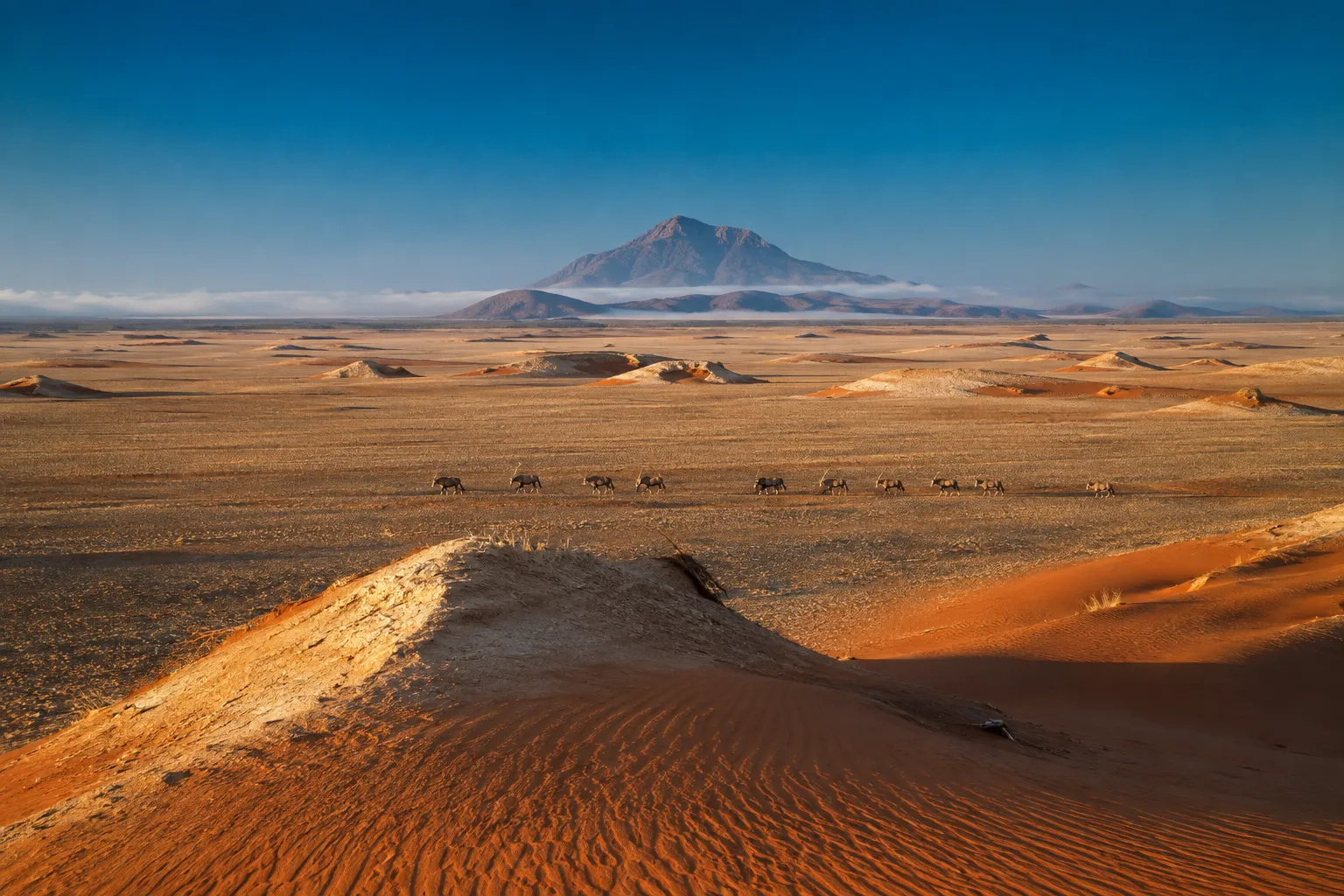
- Iona National Park (Namibe): the largest park, a desert-meets-Atlantic landscape with welwitschia plants, oryx and dramatic dunes.
- Cangandala National Park and the Luando Reserve (Malanje): the last refuge of the giant sable antelope (Palanca Negra Gigante), Angola’s national symbol and one of the world’s rarest large mammals.
- Mayombe Forest (Cabinda): dense equatorial rainforest with primates and forest elephants.
Expect longer drives, fewer other tourists, and more basic camps than in East Africa. That’s a trade some travellers actively want.
Cities and culture: Benguela, Lobito, Lubango and Cabinda
Beyond Luanda, Angola’s coastal and highland cities each have a distinct character.
- Benguela: colonial-era streets, Praia Morena, and the terminus of the historic Benguela Railway.
- Lobito: sits on a striking sandbar (Restinga) with a walkable beach promenade and the Lobito Corridor logistics hub.
- Lubango: highland climate, the Cristo Rei statue overlooking the city, gateway to Tundavala and Serra da Leba.
- Namibe: dry, low-key coastal town, launchpad for Iona National Park.
- Cabinda: the northern exclave, oil-rich, forested, with tighter travel advisories. Verify current advice before going.
Culturally, don’t miss live semba or kizomba in a Luanda bar, and try the national dish muamba de galinha. Our page on the Angolan cuisine covers the essentials.
Are there beaches worth visiting in Angola?
Yes. Angola has roughly 1,600 km of Atlantic coastline, and the beaches are one of its most underrated assets. Top picks:
- Mussulo (Luanda): calm lagoon side, seafood beach bars
- Cabo Ledo: surf beach 120 km south of Luanda
- Praia Morena (Benguela): the classic city beach
- Baía Azul and Baía Farta (Benguela): turquoise coves, quieter
- Praia da Caotinha (Benguela): dramatic cliffs and clear water
- Flamingos and Sangano: sandy stretches south of the capital
The Benguela current keeps the water cool, so it’s more Portuguese Atlantic than Caribbean in feel.
How to plan a trip around the highlights
How many days do I need in Angola?
- 3 to 4 days: Luanda + a day trip to Miradouro da Lua or Mussulo
- 7 days: Luanda + Kalandula Falls + Kissama
- 10 to 14 days: Luanda + Malanje (Kalandula) + Lubango (Tundavala, Serra da Leba) + Benguela / Lobito
- 3 weeks: add Mbanza Kongo in the north or Iona National Park in the south
A practical route is in our Angola itinerary planner.
What’s the best time of year to visit Angola?
The dry season, roughly May to October, is the best time to visit Angola. Skies are clear, roads passable, wildlife concentrated around water, and humidity manageable. The rainy season (November to April) is when waterfalls peak but back roads can flood. See our detailed best time to visit Angola breakdown.
What is the cost of visiting Angola’s main attractions?
Angola is not a cheap destination. Luanda is consistently ranked among the world’s most expensive cities for expats, and that filters into tourist pricing. Rough guidance for 2026:
- Mid-range hotel in Luanda: expect a solid nightly rate at international brand level (verify live rates)
- 4x4 with driver: significantly more than in East Africa
- Domestic TAAG flight: reasonable when booked ahead
- 5% tourism tax: added to classified accommodations for the first 7 nights [4]
A realistic two-week trip with a driver, domestic flights and mid-range hotels lands in the “premium adventure travel” bracket. Budget backpacker travel is possible but requires patience with logistics.
Is it safe to travel to Angola as a tourist right now?
Angola is broadly safe for tourists in 2026, with the usual big-city precautions in Luanda and stricter caution advised for Cabinda. Petty theft and traffic are the main day-to-day risks. Landmine residue exists in some rural areas, so stick to marked paths. Always check the current your government’s official travel advisory (for example the UK FCDO or the US State Department) before booking. Our is Angola safe guide is updated regularly.
Can you visit Angola without a tour guide?
Yes, but it’s harder than in most African destinations. Portuguese is essential (English is rarely spoken outside top hotels), self-drive requires a 4x4 and confidence with rough roads, and hotel bookings often need to be arranged directly. First-time visitors usually book at least a driver, and often a full guided circuit. Independent travel works best if you have prior Africa experience.
Disclosure: the following contains affiliate links. If you book through them we may earn a small commission at no extra cost to you.
For guided options, browse Angola tours and day trips on GetYourGuide or compare multi-day itineraries with local operators.
What’s the difference between visiting Angola vs other African countries?
Compared to Kenya, South Africa or Tanzania, Angola offers:
- Far fewer tourists (223,000 in 2025 vs. millions elsewhere) [2]
- Portuguese-speaking culture and lusophone cuisine
- Higher prices, especially in Luanda
- Less polished tourism infrastructure, though improving fast [1][6]
- A rawer, less curated experience
Choose Angola if you’ve already done the classic safari circuits and want something that still feels unmapped.
What do most tourists miss when visiting Angola?
The three most under-visited highlights, in my experience:
- Mbanza Kongo (too remote for most itineraries but historically extraordinary)
- Iona National Park (desert-meets-ocean scenery unlike anywhere else)
- Live music venues in Luanda (semba and kizomba clubs beyond the tourist bars)
What should I know before visiting Angola for the first time?
- Verify your visa status at the official Angolan portal (98 countries have been visa-free for tourism since 2023) [7]
- Yellow fever vaccination is typically required. Confirm with ITG Antwerp or LCR
- Take malaria prophylaxis and don't drink tap water
- Carry cash in kwanza; card acceptance is spotty outside top hotels
- Learn 20 words of Portuguese. It changes everything
- Book domestic flights on TAAG well in advance
Full prep in our travelling to Angola pillar guide.
Conclusion: your next step
Angola in 2026 is at a real inflection point: visa access is easier than ever, tourism is growing 28% year-on-year, and infrastructure at the flagship natural sites is finally being built [1][2][9]. That window, where a country is welcoming but still uncrowded, doesn’t last forever.
Actionable next steps:
- Check the current visa rules on the official Angolan e-visa portal [7]
- Book flights via TAAG for the dry season (May to October)
- Verify your yellow fever and malaria prophylaxis with ITG Antwerp or LCR
- Plan a 10-to-14 day loop hitting Luanda, Malanje and Lubango
- Read our travelling to Angola pillar guide for the full prep list
Free help from our team in Angola
Want to combine these attractions in one trip?
Tell us how many days you have and which places you want to see. We plan a route that works with the distances, with transport and guides.
- Local team in Angola
- No obligation, nothing to pay
- Reply by email or WhatsApp
Want to keep this guide? We email you the key points with a link to every section.
Frequently asked questions
What are the top attractions in Angola?
Kalandula Falls, Tundavala Fissure, Miradouro da Lua, Kissama National Park, Mbanza Kongo, Fortaleza de São Miguel in Luanda, and the beaches around Mussulo and Benguela.
What is Angola's most famous landmark?
Kalandula Falls in Malanje province is the country's single most iconic natural landmark. For heritage, Mbanza Kongo (UNESCO) is the most significant cultural site.
What historical sites can I visit?
The Fortaleza de São Miguel (1576) in Luanda, the National Museum of Slavery, Mbanza Kongo ruins, the Pedras Negras de Pungo Andongo, and colonial-era architecture in Benguela and Lobito.
Are there UNESCO sites in Angola?
Yes. Mbanza Kongo, the historic capital of the Kongo Kingdom, was inscribed on the UNESCO World Heritage List in 2017.
Is Angola good for wildlife?
It's improving. Kissama National Park is the most accessible, Iona has unique desert wildlife, and Cangandala protects the endemic giant sable antelope. Don't expect Serengeti-density herds, but expect solitude.
How many days do I need to see the highlights?
Plan on 10 to 14 days for a proper circuit covering Luanda, Malanje (Kalandula), Lubango (Tundavala) and either Benguela or Mbanza Kongo. A rushed week works if you fly between regions with TAAG.
References
- [1] Presidente da República aprova construção de infraestruturas turíst...
- [2] Angola Records 223,000 Tourist Arrivals in 2025
- [3] Angola Leisure Tourism Increase 2025
- [4] Angola Introduces 5% Tourism Tax
- [5] Visit Mbanza Kongo
- [6] Cultural Heritage Tourism
- [7] Tourism & Hospitality in Angola
- [8] Untouched, Wild, Welcoming: Angola's Hidden Tourism Gem
- [9] 28% Growth in International Arrivals: UN Tourism Ranks Angola