Long before Brazilian samba filled Rio’s carnival, its rhythmic ancestor was already being played on the coast of what is now Angola. That single fact tells you most of what you need to know about angola music: it is old, it travelled far, and it shaped genres you already love without ever getting the credit. This guide is about the people behind those sounds, the songs to start with, and where to hear them live when you visit.
Quick Answer
Angola music is a family of Afro-Portuguese styles built on semba, kizomba and kuduro, sung mostly in Portuguese and Bantu languages. The essential artists to know are Bonga, Waldemar Bastos, Paulo Flores, Anselmo Ralph, C4 Pedro, and the historic group Ngola Ritmos. You can stream almost all of them on Spotify, YouTube and Apple Music, and hear live semba and kizomba in Luanda’s Ilha and Marginal districts most weekends.
Key Takeaways
- Semba is the mother genre, and it’s widely considered an ancestor of Brazilian samba.
- Bonga is the international face of Angolan music thanks to his 1972 album Angola 72.
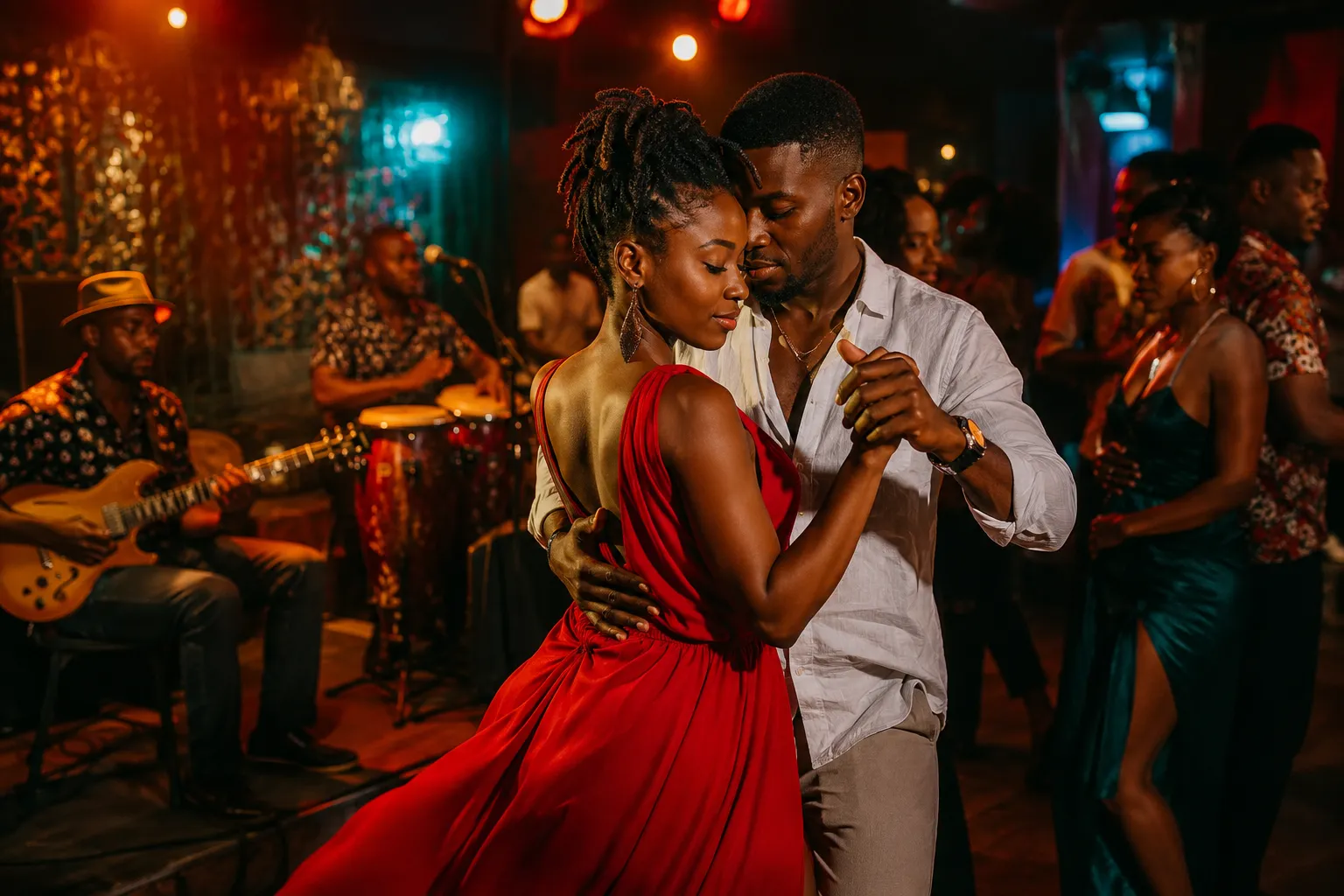
- Kizomba is both a music genre and a dance, born in Luanda in the early 1980s.
- Kuduro is Angola’s electronic street sound, fast, funny, and unmistakably Luandan.
- Paulo Flores is the most important living semba songwriter.
- Live music thrives in Luanda, especially on Ilha do Cabo and along the Marginal.
- You don’t need Portuguese to enjoy it, but knowing a few song titles helps.
- Buy from artists directly when you can. Streaming pays them very little.
Why does angola music matter far beyond Angola?
Angolan music matters because it is a root system, not a branch. Semba travelled with enslaved Angolans to Brazil and helped shape samba. Later, kizomba became a global partner-dance craze from Lisbon to Seoul, and kuduro fed into Portuguese-language pop and even Western electronic music through producers like Buraka Som Sistema.
For a traveller, this means the soundtrack of your trip will feel both familiar and new. You will recognise the pulse under Brazilian, Cape Verdean and Portuguese pop, but the phrasing, the language mix and the storytelling belong to Angola alone. If you want the bigger cultural picture first, our overview of the culture and etiquette of Angola is a useful companion read.
What is Angolan music style called, and what are the main genres?
The main Angolan music styles are semba, kizomba, kuduro, rebita and tarrachinha. Semba is the acoustic, guitar-and-percussion root; kizomba is its slow, romantic descendant; kuduro is fast electronic street music; rebita is an older ballroom-style couple dance; tarrachinha is a slower, more sensual offshoot of kizomba.
A very short field guide:
- Semba: mid-tempo, storytelling lyrics, acoustic guitars, dikanza scraper, ngoma drums. The soul of the country.
- Kizomba: slower, romantic, heavy on synths and drum machines from the 1980s onward. Sung in Portuguese and Kimbundu.
- Kuduro: 130 to 145 BPM, punchy electronic beats, rapped or shouted vocals, born in Luanda’s musseques (informal neighbourhoods) in the late 1980s and 1990s.
- Rebita: courtly couple dance with accordion and harmonica, a nod to 19th-century Luanda.
- Tarrachinha / tarraxo: slower, minimalist, hip-driven cousin of kizomba.
This article focuses on the artists and listening side. If you want to understand how the dances work and how to move to them, our dedicated guide to kizomba, semba and kuduro as dance styles covers that in detail.
What instruments are used in traditional Angolan music?
Traditional Angolan music is built around hand percussion, scraped idiophones, and voice, with acoustic guitar added in the semba era. The core instruments are the ngoma drum, the dikanza (a notched bamboo or wooden scraper), the puita (a friction drum), the marimba and the hungu (a musical bow related to the Brazilian berimbau).
Modern semba adds nylon-string guitar, bass, brass and light drum kit. Kizomba layers in synthesizers, drum machines and electric piano. Kuduro is almost entirely electronic, built on hard-hitting programmed drums and samples.
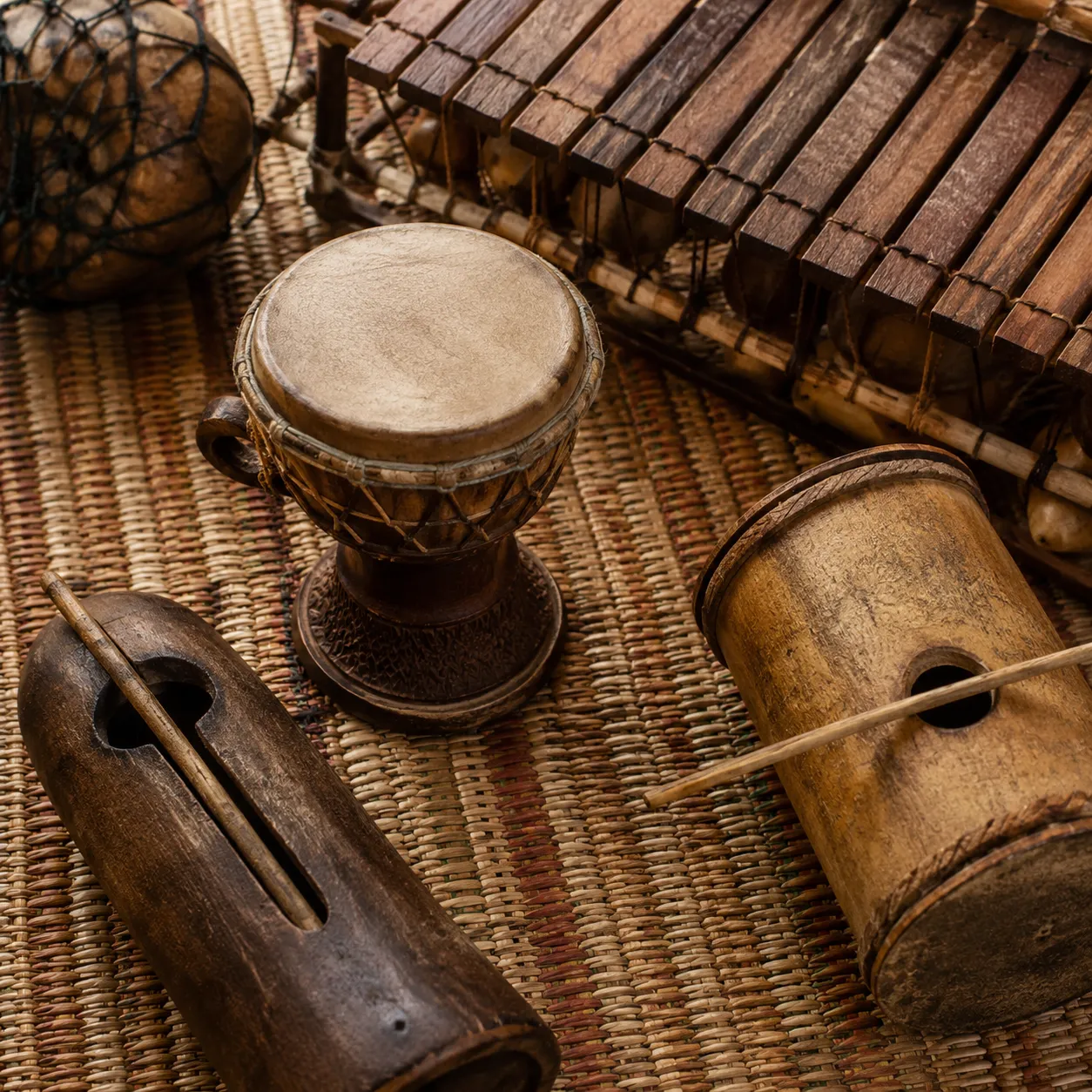
If you want to bring something home, small dikanzas and hand drums are sold at craft markets in Luanda such as Benfica. Check with your airline about wooden-instrument import rules for your destination country.
Angolan music history and origins: how did it get here?
Angolan music grew out of Bantu musical traditions from the Kimbundu, Ovimbundu, Bakongo and Chokwe peoples, then absorbed Portuguese guitar, harmony and language during four centuries of colonisation. In the 20th century, semba became the sound of urban Luanda, and after independence in 1975 it also became the sound of national identity.
Three moments shaped everything that followed:
- The mid-20th-century Luanda scene, where groups like Ngola Ritmos fused Kimbundu-language singing with acoustic guitar and helped turn semba into a modern popular genre. Ngola Ritmos also became closely associated with the independence movement.
- The independence era around 1975, when singers like David Zé, Urbano de Castro and Artur Nunes used music to mobilise and mourn. Several of them died young in the political violence that followed.
- The 1980s kizomba boom, when Luanda musicians slowed semba down, plugged it in, and created a new dance-floor sound that would later explode in the Lisbon diaspora.
For the political and colonial backdrop, our summary of the history and people of Angola fills in the timeline.
Who are the most famous Angolan musicians?
The most famous Angolan musicians internationally are Bonga, Waldemar Bastos, Paulo Flores, Anselmo Ralph and C4 Pedro, joined by historic groups like Ngola Ritmos and a wave of newer kuduro and Afro-house artists. Here is who each one is and what to play first.
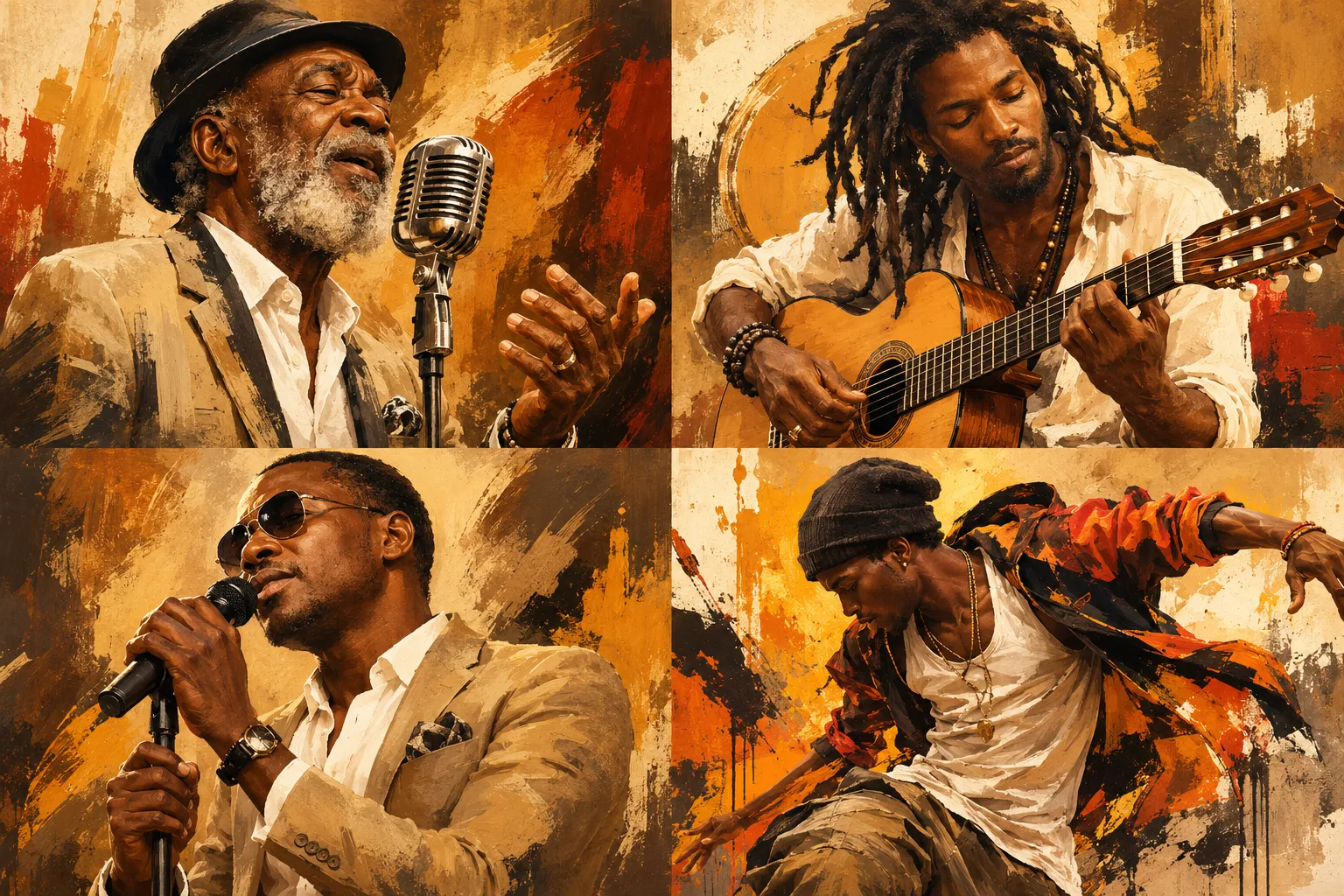
Bonga: the voice that carried Angola to the world
Bonga (born José Adelino Barceló de Carvalho in 1943) is the most internationally recognised Angolan singer. A former athlete turned political exile during the late colonial period, he recorded his landmark album Angola 72 in the Netherlands, blending semba with fado, morna and samba influences. His gravelly voice and the song “Mona Ki Ngi Xica” (“The Child I Am Leaving Behind”) became anthems of the independence generation.
Start with: Angola 72, then Angola 74, then the compilation Best of Bonga.
Waldemar Bastos: the songwriter’s songwriter
Waldemar Bastos was celebrated internationally for his gentle, cross-Atlantic songwriting, mixing Angolan melodies with Portuguese fado and Brazilian tropicalismo. His music travels well even if you don’t speak Portuguese.
Start with: Pretaluz and Renascence.
Paulo Flores: modern semba’s architect
Paulo Flores is arguably the central figure in modern semba. Since the early 1990s he has written a huge catalogue of songs that document daily life in Angola, from love and loss to politics and migration. He is also one of the key figures who helped push kizomba forward as a song form, not just a dance beat.
Start with: any greatest-hits compilation, plus his more recent collaborative albums with younger Angolan artists.
Anselmo Ralph and C4 Pedro: kizomba meets R&B
Anselmo Ralph brought a polished, English-influenced R&B sensibility to kizomba in the 2000s and 2010s, with big radio ballads sung in Portuguese. C4 Pedro (born in Luanda in 1983, raised partly in Belgium) pushed the sound even further toward contemporary pop and Afrobeats, and is a household name across Portuguese-speaking Africa.
Start with: Anselmo Ralph’s ballads on any streaming platform, and C4 Pedro’s radio singles.
The independence generation: Ngola Ritmos, David Zé and friends
If you want to understand where all of this comes from, spend an hour with Ngola Ritmos, David Zé, Urbano de Castro, Artur Nunes and Elias Dya Kimuezu. The recording quality is often rough, but the songs are the DNA of Angolan popular music.
The new generation and the Angolan diaspora
The younger scene splits between Luanda-based artists working in kizomba, Afro-house and kuduro, and a large diaspora scene in Lisbon, where Angolan producers helped birth batida and influenced Portuguese-language pop. Names to explore include Cabo Snoop, Nagrelha (kuduro legend), Titica, Yola Semedo, Perola, Matias Damásio, Ary and Preto Show. In electronic music, the Lisbon-based label Príncipe Discos has released a wave of producers of Angolan heritage.
Is Angolan music similar to Brazilian music?
Yes, and no. Semba and samba share a common Bantu-Angolan ancestry, so the underlying pulse and some rhythmic patterns feel related. But Angolan music is sung mostly in Portuguese and Kimbundu, uses different percussion, and leans more on storytelling ballads than on the carnival ensembles that define Brazilian samba schools.
A useful rule of thumb: if a song feels like samba slowed down, sung by a single storyteller with an acoustic guitar and a scraper, you are probably listening to semba.
A starter playlist: 15 essential Angolan tracks
Use this as a first pass. Search each track on your preferred streaming service.
| # | Artist | Track | Why it matters |
|---|---|---|---|
| 1 | Bonga | Mona Ki Ngi Xica | The emotional anthem of the exile generation |
| 2 | Bonga | Balumukeno | Classic semba groove |
| 3 | Ngola Ritmos | Muxima | Foundational recording of modern semba |
| 4 | David Zé | Mutudi ua Ufolo | Voice of the independence era |
| 5 | Waldemar Bastos | Sofrimento | Cross-Atlantic songwriting at its finest |
| 6 | Paulo Flores | Recompensa | Modern semba storytelling |
| 7 | Paulo Flores | Xé Povo | A crowd favourite live |
| 8 | Anselmo Ralph | Curti-te a Brincar | Signature kizomba-R&B ballad |
| 9 | C4 Pedro | Rainha | Contemporary Afro-pop from Luanda |
| 10 | Matias Damásio | Loucos | Radio-ready kizomba |
| 11 | Yola Semedo | Filho Meu | Powerhouse female vocal |
| 12 | Pérola | Chocolate | Kizomba with a modern edge |
| 13 | Titica | Chão | Kuduro star, boundary-breaking artist |
| 14 | Cabo Snoop | Windeck | Global kuduro breakout |
| 15 | Buraka Som Sistema | Kalemba (Wegue Wegue) | Diaspora crossover, Angolan-Portuguese |
Rotate this list for a week and you will already have better ears for Angolan music than 95% of visitors.
How to listen to Angolan music online
The easiest way is Spotify, Apple Music, YouTube and YouTube Music, where nearly all major Angolan artists have official pages. For deeper cuts and independence-era recordings, YouTube uploads by fans are often the best source. Bandcamp has a smaller but higher-quality catalogue that pays artists better.
Practical tips:
- Search in Portuguese spelling (Bonga, not “Bongar”; Waldemar Bastos, not “Bastus”).
- Follow official artist pages to avoid low-quality re-uploads.
- Angolan radio streams online too. RNA (Radio Nacional de Angola) and LAC (Luanda Antena Comercial) both stream on their websites.
- For playlists curated by locals, search “semba” and “kizomba angolana” on Spotify rather than generic “kizomba”, which will surface a lot of European dance-scene remixes.
Best Angolan artists to follow right now
The safest bet in any given year is the classic core (Bonga, Paulo Flores, Waldemar Bastos) plus a rotating handful of current radio names such as Matias Damásio, Anselmo Ralph, C4 Pedro, Yola Semedo, Pérola, Ary, Preto Show, Titica and Nagrelha’s crew in kuduro. Chart positions shift every season, so treat “best of 2026” lists on Angolan blogs and Rádio Luanda’s own playlists as your real-time guide.
Where can I hear live music in Angola?
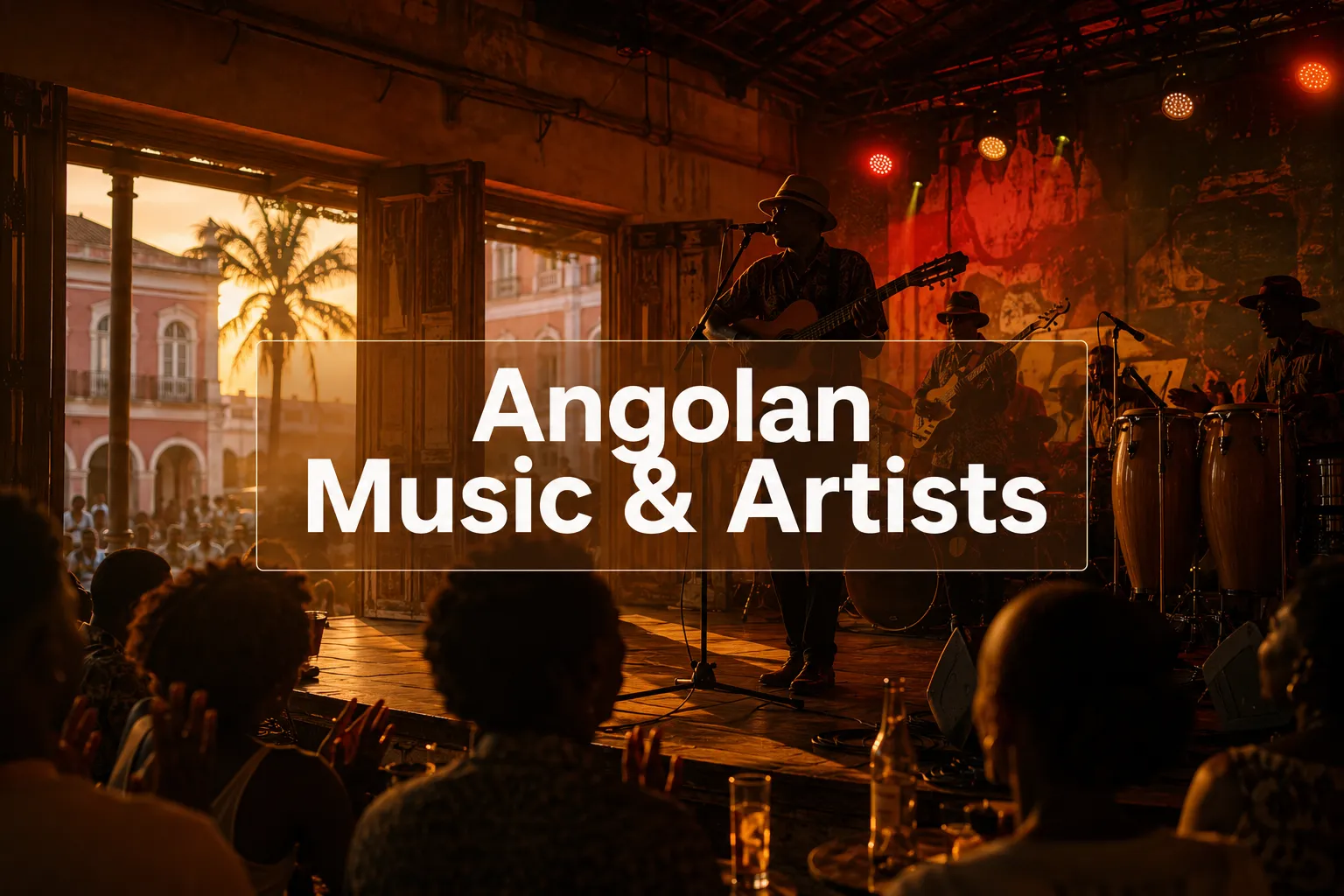
Live music is easiest to find in Luanda, especially in the Ilha do Cabo peninsula, along the Marginal waterfront, and in the Bairro Operário and Alvalade districts. Weekend nights bring semba and kizomba bands to beach bars, hotel lounges and dedicated live venues. In Benguela and Lubango, live scenes are smaller but real, usually clustered around a handful of restaurants and cultural centres.
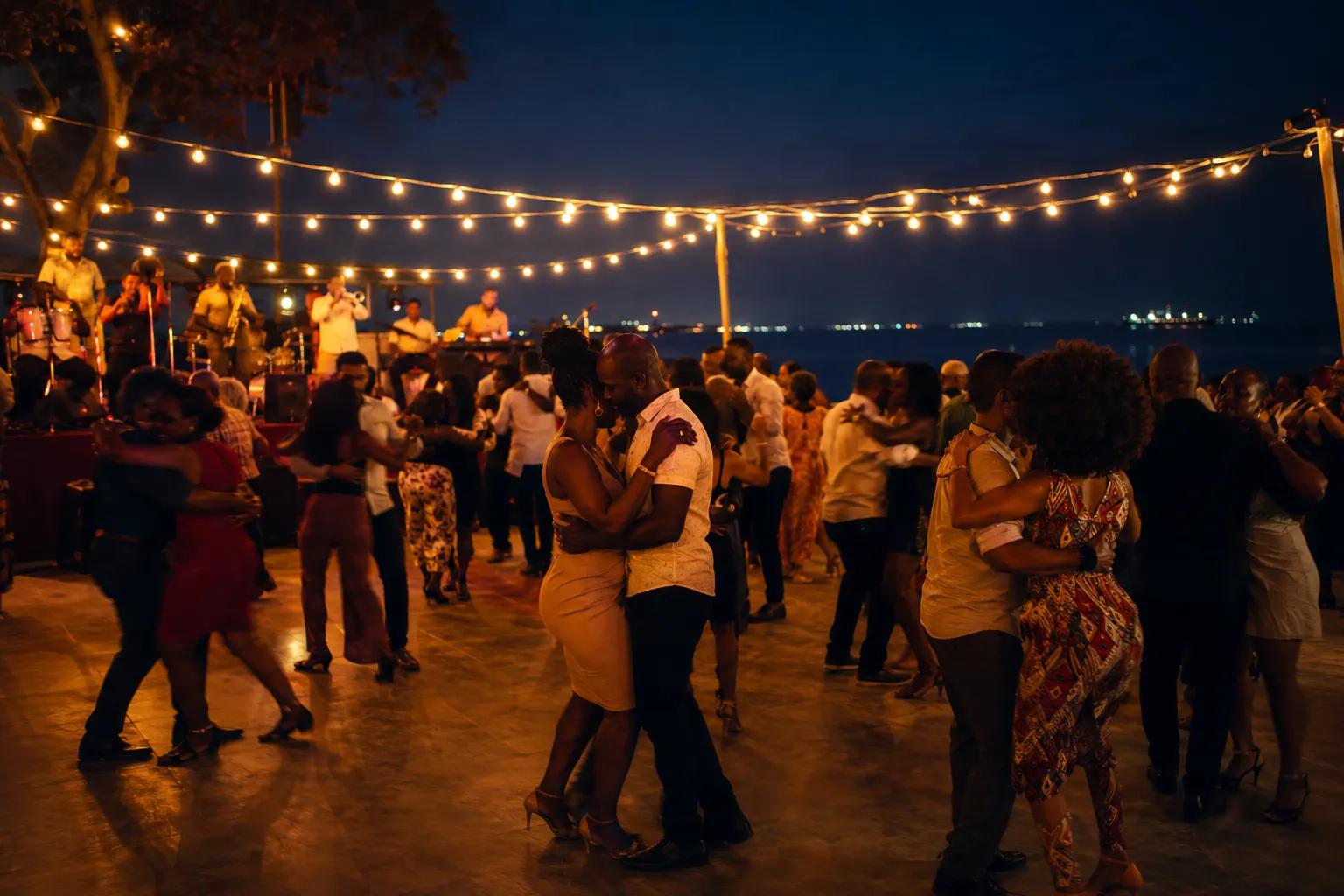
For venue names, opening nights and current hotspots, our regularly updated guides to Luanda nightlife and live music in Luanda go into detail. A few pointers that don’t change:
- Ilha do Cabo is the classic sunset-to-late-night strip.
- Larger hotels along the Marginal often host semba trios on weekend evenings.
- Look out for “noite de semba” or “noite de kizomba” flyers.
- Local cultural centres and the União dos Escritores Angolanos occasionally host acoustic sessions.
Angolan music festivals, carnival and events
The biggest annual music event is the Carnaval de Luanda in February or March, a state-supported parade competition with troupes performing semba, kazukuta and rebita along the Marginal. Beyond carnival, look for the Festival Internacional de Música do Luanda, occasional Bonga and Paulo Flores homecoming concerts, and smaller kizomba festivals that mix workshops and live bands.
Dates shift year to year. Check the official Instagram and Facebook pages of the Ministério da Cultura, Turismo e Ambiente and of individual venues about a month before your trip. If carnival is your target, our overview of the Luanda carnival explains what to expect.
How much do Angolan concerts cost?
Ticket prices vary a lot, so I won’t quote exact numbers that could be wrong by the time you read this. As a rough guide, local live-band nights in bars and small venues are usually the cheapest option, often just the cost of a drink or a small cover charge. Ticketed concerts by big names (Bonga, Paulo Flores, Anselmo Ralph) sit in a mid-range that is affordable by European standards but not cheap. Festival passes and international acts are the priciest tier.
Bring cash in kwanza for smaller venues. Card acceptance is improving in Luanda but still patchy. Our Angola money and currency guide covers ATMs, card use and tipping.
Angolan music for beginners: where should I start?
Start with three albums and one dance class. Listen to Bonga’s Angola 72, any Paulo Flores compilation, and Waldemar Bastos’s Pretaluz, then take a beginner kizomba lesson either at home or in Luanda. Ten hours of listening plus one dance class will teach you more than a month of reading.
Decision rule: if you have one week, pick one artist per genre (Bonga for semba, Anselmo Ralph for kizomba, Cabo Snoop for kuduro) and go deep rather than wide.
Can you learn to dance to Angolan music as a traveller?
Yes, and Luanda is one of the best places in the world to do it. Most hotels can point you to a kizomba teacher, and dance schools in the city offer drop-in classes for visitors. Semba is faster and harder to fake; kizomba is slower and much easier for a first-timer. The Angolan music and dance guide has step-by-step basics.
Common mistakes people make about Angolan music
“Kizomba is Portuguese.” No. It was born in Luanda in the early 1980s, sung mostly in Portuguese and Kimbundu, and later popularised globally through the Lisbon diaspora.
Other frequent mix-ups:
- Calling everything “kizomba” on the dance floor. In Angola, semba, kizomba and tarrachinha are distinct.
- Confusing kizomba with zouk. Zouk is from the French Caribbean. They share DNA but are not the same.
- Assuming Angolan music is all in Portuguese. Many classic tracks are in Kimbundu, Umbundu or Kikongo. Our overview of the languages of Angola explains the mix.
- Ignoring the political layer. Songs from the 1970s often carry independence-era meaning that isn’t obvious from the melody alone.
How to listen respectfully and support the artists
Buy at least one album or physical CD in Luanda if you can, tip live musicians, and follow artists on social media rather than relying only on pirated YouTube uploads. Streaming payouts to African artists are famously small, so direct purchases and merchandise go a long way.
Practical checklist:
- Ask before filming a live performance; a nod from the band is usually enough.
- Don’t request “the Buena Vista of Angola” sets; ask what the band wants to play.
- Learn to say “Kuia kiambote” (Kimbundu for “thank you very much”) or a simple “muito obrigado”.
Buying music and instruments in Angola
CDs and vinyl are increasingly rare but not extinct. Look in Luanda’s larger bookshops, the airport shops, and craft markets. For instruments, Mercado do Benfica on the southern edge of Luanda is a good bet for hand-carved drums, dikanzas and small marimbas. For serious instruments, ask a musician after a gig; they’ll usually know a maker.
Conclusion: your next steps
If you take one thing from this guide, let it be this: Angolan music rewards a small amount of homework enormously. Spend a week with Bonga, Paulo Flores and Waldemar Bastos before you fly, take one kizomba lesson when you land, and ask any Angolan you meet what they are listening to right now. You will come home with a playlist and a memory that no guidebook attraction can match.
Ready to plan the trip that goes with the soundtrack? Start with our overviews of what Angola is known for, the culture and etiquette of Angola, and the practicalities of reaching Luanda.
Want to keep this guide? We email you the key points with a link to every section.
Frequently asked questions
Is Angolan music sung in English?
Rarely. Most Angolan music is in Portuguese, with lyrics in Kimbundu, Umbundu or Kikongo mixed in. A few diaspora artists release English versions.
Who is the most famous Angolan singer of all time?
Bonga is the most internationally recognised. Domestically, Paulo Flores has a comparable stature among modern audiences, and Ngola Ritmos is the most historically important group.
Is semba the same as samba?
No, but they are related. Semba is Angolan and older, and it is widely considered one of the ancestors of Brazilian samba.
Where can I hear live semba in Luanda?
Weekend nights on Ilha do Cabo, along the Marginal, and in a handful of dedicated live venues. Our Luanda nightlife guide has the current shortlist.
Do I need to speak Portuguese to enjoy Angolan music live?
Not at all. Melody, groove and dance carry most of it. Learning a few song titles and greetings helps you connect with the crowd.
Is it safe to go to concerts in Luanda?
Generally yes, with the same big-city precautions you would take anywhere. Use a registered taxi at night, keep valuables out of sight, and check our Angola safety guide before you travel.