Quick Answer
Angola culture blends Bantu roots with Portuguese colonial heritage, and visitors are judged first on manners: greet everyone with bom dia or boa tarde, shake hands (women often kiss cheeks), and always defer to elders. Hospitality is sacred, so accept coffee or water when offered, ask before photographing people, and never photograph government buildings, ports, or military sites. Dress smartly in cities, modestly in villages and churches, and take time for small talk before business.
Key Takeaways
- Portuguese is the official language and English is rarely spoken outside major hotels and tour operators.
- Greetings are non-negotiable: never launch into a request without saying hello first.
- Elders come first in seating, serving, greeting, and speaking order.
- Semba, kizomba and kuduro are the heartbeat of Angolan social life, not just tourist shows.
- Muamba de galinha and funge are the national dishes you should try at least once.
- Photographing police, military, ports or airports can lead to detention or confiscated gear [9].
- Dress smartly for business and city life; modestly for churches and rural visits.
- Family and community trump individualism in nearly every social decision.
- Public holidays like Independence Day (11 November) and Carnaval reveal the culture at full volume.
What Are the Main Traditions and Customs in Angola?
Angolan traditions rest on three pillars: respect for elders, extended family loyalty, and communal celebration through music and food. Bantu heritage from groups like the Ovimbundu, Ambundu, Bakongo and Chokwe shapes rites of passage, storytelling, and craft, while more than four centuries of Portuguese influence added Catholicism, the Portuguese language, and a strong café and Sunday-lunch culture.
Day to day, this shows up in small habits. People greet before they ask for anything. Neighbours share food. Big life moments (births, weddings, funerals) pull in dozens of relatives and can last days. In the northeast, the Chokwe sona sand drawings are recognised as intangible cultural heritage and remain a living tradition passed between generations [8].
If you want a broader primer on the country’s roots and modern identity, our guide to the culture of Angola goes deeper.
What Languages Do People Speak in Angola?
Portuguese is the official language and the one you’ll see on signs, menus, and government forms. Alongside it, most Angolans also speak at least one Bantu language: Umbundu (central highlands), Kimbundu (Luanda and around), Kikongo (north), and Chokwe (east).
English is spoken in international hotels, airline offices, and by younger urban professionals, but don’t count on it in markets, taxis, or smaller towns. A few Portuguese phrases go a very long way:
- Bom dia / Boa tarde / Boa noite, Good morning / afternoon / evening
- Por favor / Obrigado (m) / Obrigada (f), Please / Thank you
- Com licença, Excuse me
- Quanto custa?, How much?
For a fuller list and pronunciation tips, see our page on the language of Angola.
How Do Angolans Greet Each Other and Show Respect?
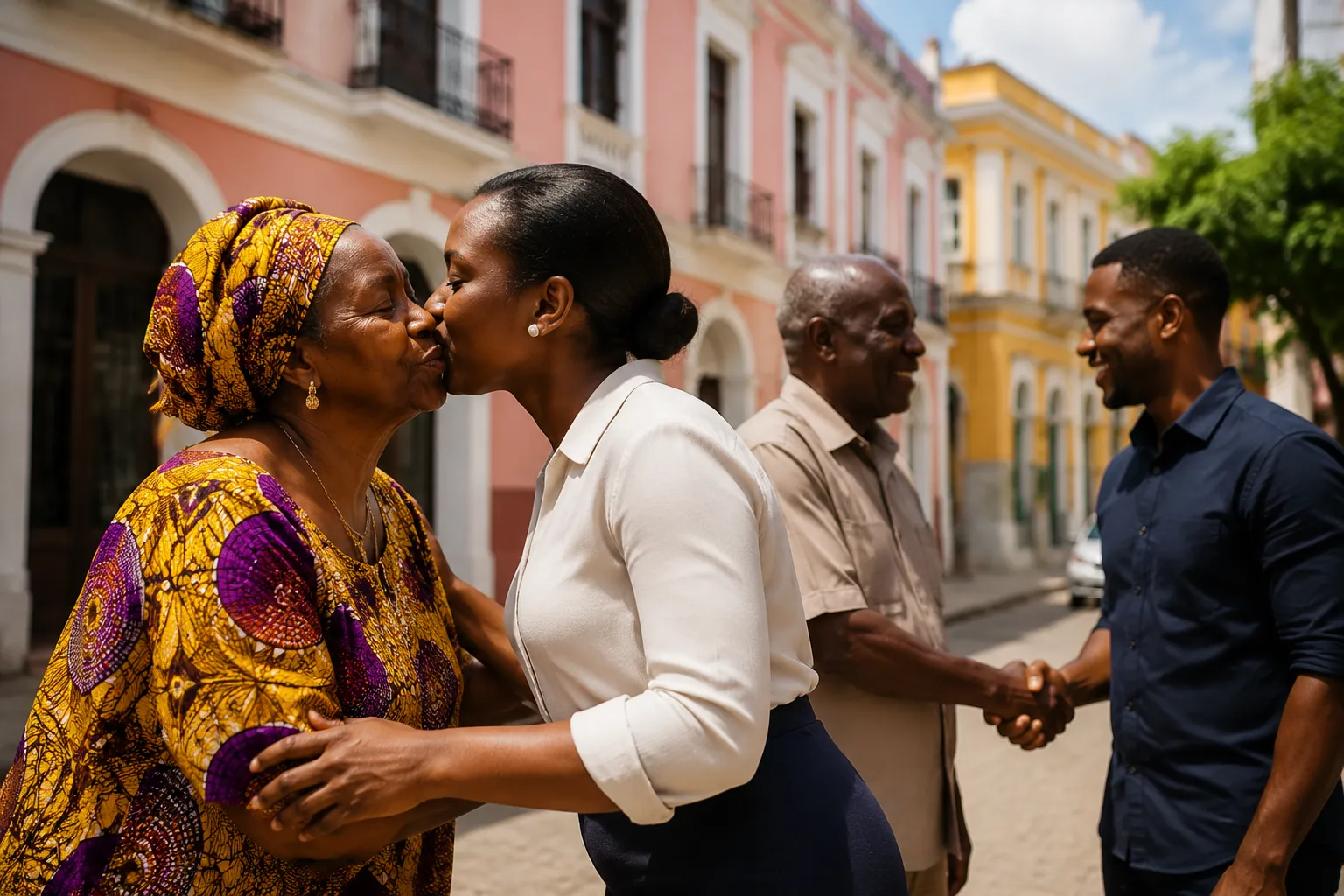
Start every interaction with a greeting, a handshake, and eye contact appropriate to the person’s status. Skipping the greeting is the single fastest way to be seen as rude [9][10].
The basic rules:
- Men usually shake hands with other men. Handshakes can be longer and warmer than in northern Europe.
- Women commonly exchange two kisses on the cheeks in social settings; with men they know less well, a handshake is safer [16].
- When meeting the opposite sex for the first time, let the other person offer their hand first, especially with women [15][16].
- Elders are greeted first, always. A slight bow of the head or slightly lowered eyes shows respect [10][17].
- Use Senhor or Senhora plus the surname until invited to switch to first names [9].
- Address officials as Excelência (Your Excellency) [10][17].
Eye contact is nuanced. With peers it signals honesty, but avoiding direct eye contact with elders or superiors is a mark of respect in more traditional settings [10][17]. Point with your whole hand, not one finger [11].
What Is Traditional Angolan Music and Dance Like?
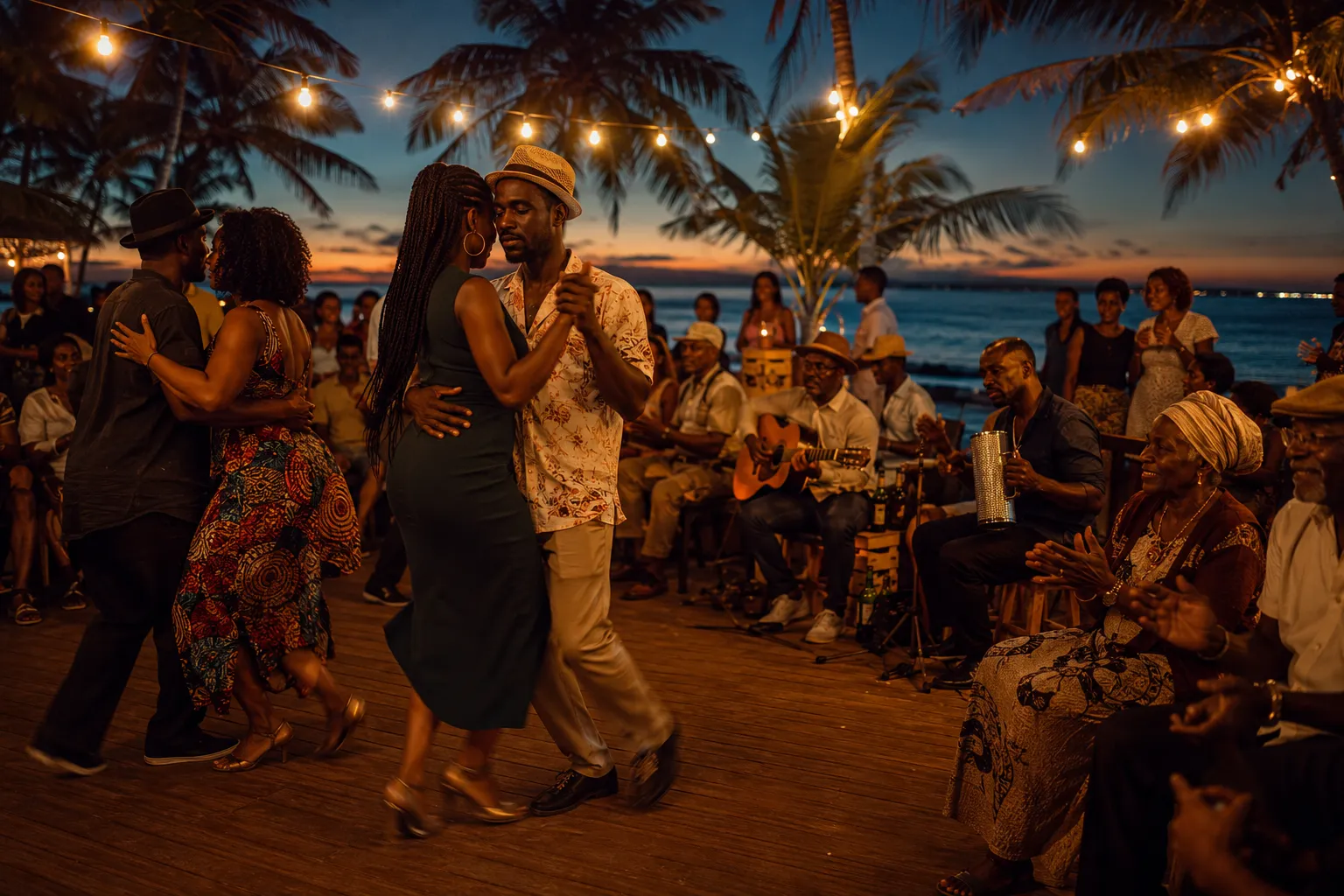
Angolan music is inseparable from social life. Three genres carry most of the identity:
- Semba, the older, faster ancestor of Brazilian samba, with sharp horns and a bounce in the hips. Roda de semba gatherings still happen weekly on Ilha de Luanda [1][5].
- Kizomba, slow, sensual couple dance born in Luanda in the 1980s, now global. Angolan kizomba is closer, calmer, and more grounded than the European style.
- Kuduro, high-energy electronic street music from the 1990s onward, driving Luanda’s youth culture and clubs.
You’ll also hear rebita (a colonial-era ballroom dance), kabetula, and Cabinda’s maringa. Music festivals, semba nights and kizomba retreats run throughout the year, with a heavy concentration around Luanda’s Baía [1][5][6]. Watching locals dance is one thing; being pulled onto the floor at a wedding is another. Say yes.
What Should I Know About Angolan Food and Cuisine?
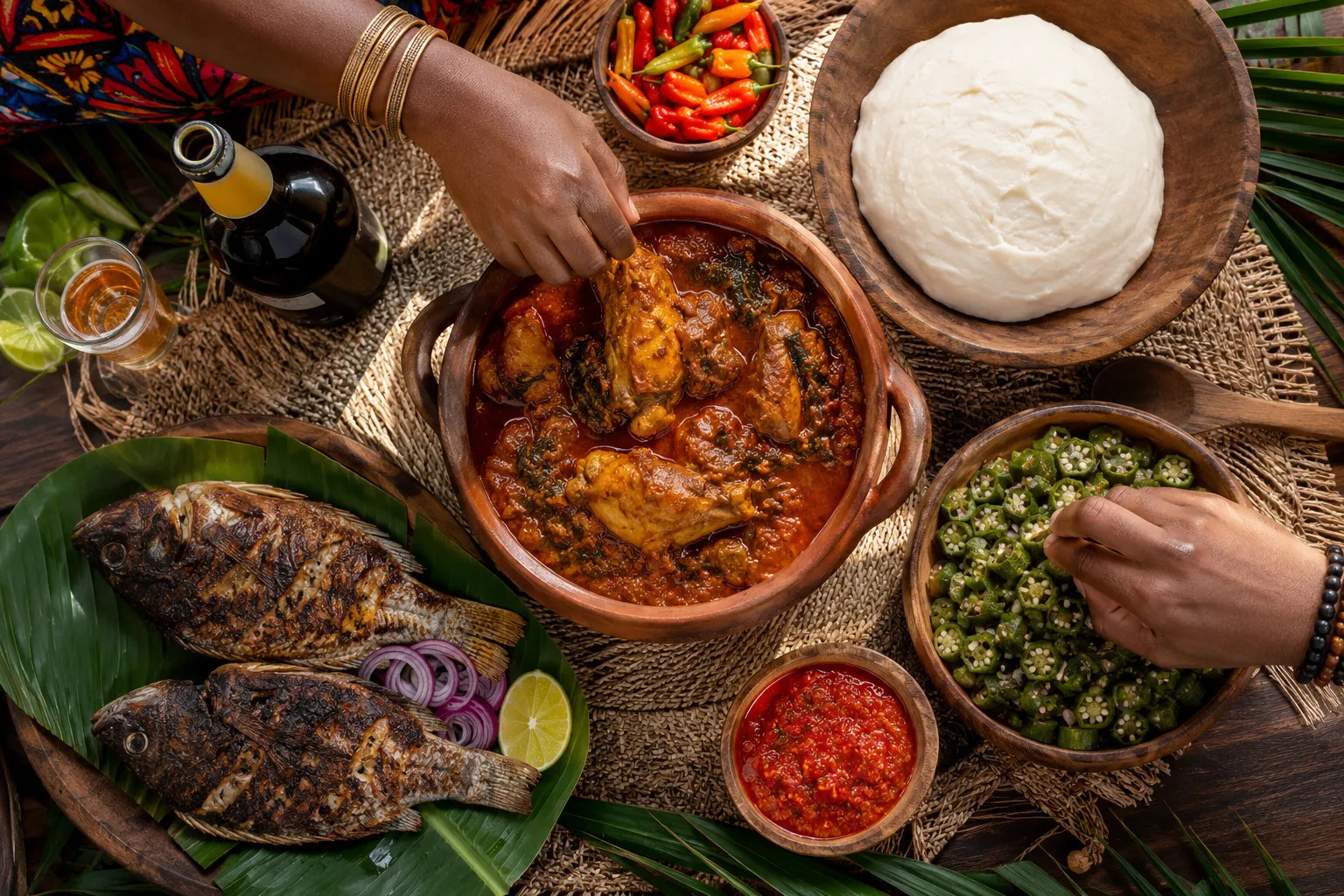
Angolan cuisine is hearty, palm-oil rich, and built around a starch base with a stew on the side. Coastal cooking leans on fish and seafood; the interior on chicken, beef, beans, and cassava.
Dishes to try:
| Dish | What it is | Where you’ll find it |
|---|---|---|
| Muamba de galinha | Chicken stew with palm oil, okra and garlic | National dish, everywhere |
| Funge | Cassava or corn flour porridge, eaten with stews | Every canteen |
| Calulu | Dried fish or meat with greens and palm oil | Traditional restaurants |
| Kizaca | Cassava leaves stewed with palm oil | Home cooking, markets |
| Peixe grelhado | Grilled fresh fish | Coast, Ilha de Luanda |
| Cocada amarela | Sweet yellow coconut dessert | Luanda dessert menus |
Table manners matter. Wait to be seated, let the host or the eldest person start eating, wash your right hand if funge is served (it’s traditionally eaten with the right hand), take modest portions, and don’t grab the last piece unless offered [13][15]. Refusing food or drink repeatedly can come across as suspicious or cold [9][14]. If you can’t eat something, accept a small amount and explain politely.
Dig deeper in our Angolan cuisine guide.
What Are Important Holidays and Celebrations in Angola?
Angola’s calendar mixes Catholic feasts, national commemorations, and vibrant local carnivals. The biggest dates for a visitor:
- 1 January, New Year
- February/March, Carnaval de Luanda, four days of parades, drumming, and semba floats
- 4 April, Peace Day (end of the civil war in 2002)
- 1 May, Labour Day
- 17 September, National Hero’s Day
- 2 November, All Souls’ Day
- 11 November, Independence Day (from Portugal, 1975), the biggest civic celebration
- 25 December, Christmas
Beyond public holidays, look for the Festival Internacional de Música do Semba, kizomba retreats, and rap and song festivals in Luanda’s Baía [1][5][6]. Regional saints’ days in Benguela, Huambo and Malanje are excellent windows into local traditions if you’re on an Angola itinerary.
What Is Considered Rude or Disrespectful in Angolan Culture?
Skipping greetings, pointing with one finger, and photographing sensitive sites top the list. Angolans are generally warm and forgiving with foreigners, but a few things really do offend:
- Starting a conversation with a request without a greeting first.
- Photographing government buildings, military, police, ports, airports, this can lead to detention or gear confiscation [9].
- Photographing people, especially in markets or poorer neighbourhoods, without asking [14].
- Loud complaining, aggressive haggling, or public shows of anger.
- Refusing hospitality repeatedly (coffee, water, food) [9][14].
- Ignoring elders in a room, or interrupting them.
- Overly casual dress in offices, churches, or government buildings [13][14][17].
- Pointing with a single finger or handing things with the left hand only [11].
- Blunt “no” as a first answer. Softer, indirect refusals are the norm [9][10][12].
What Is the History of Angola and How Does It Shape Culture Today?
Angola was a Portuguese colony for nearly 500 years, gained independence on 11 November 1975, and then endured a civil war until 2002. That timeline explains almost every layer of modern culture.
- Portuguese remains the unifying language across dozens of ethnic groups.
- Catholicism is dominant, but layered with Bantu spiritual traditions.
- Music like semba travelled across the Atlantic and shaped Brazilian samba, then returned enriched.
- Post-war Angola is young: the median age is under 17. That energy drives kuduro, urban art, and Luanda’s nightlife.
- Peace Day (4 April) and Independence Day (11 November) carry real emotional weight, not just parades.
For context before you go, our history of Angola article walks through the full timeline.
What Are Traditional Angolan Clothes and When Are They Worn?
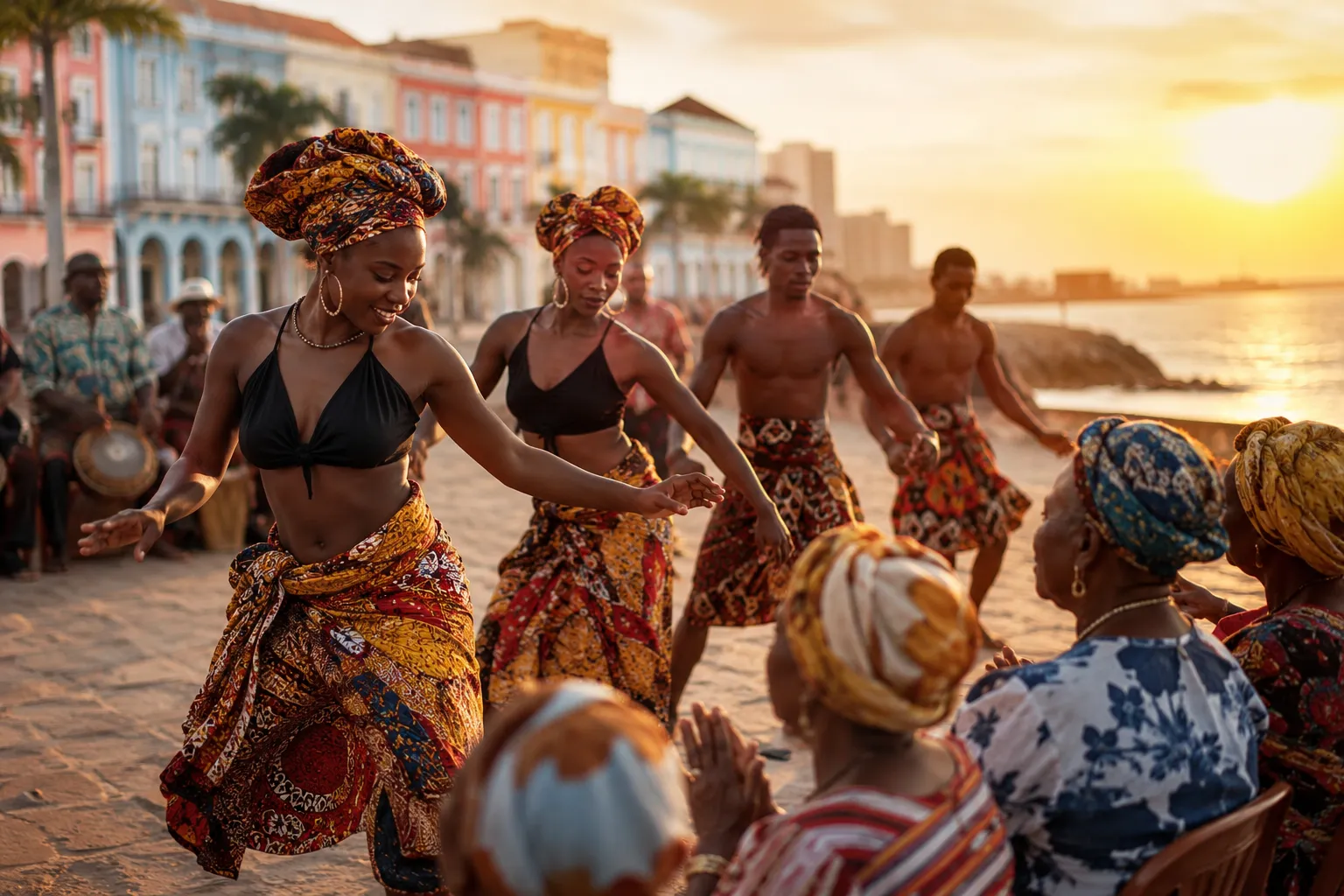
Traditional dress varies by ethnic group but the most recognised item is the panos, colourful wrap-around cloth worn by women, often with a matching lenço headwrap. Men in some regions wear embroidered shirts and cloth wraps at ceremonies.
Everyday urban dress today is largely Western and smart: crisp shirts, tailored trousers, dresses. Angolans dress up more than most Europeans, and looking sharp is seen as a sign of self-respect and respect for others [13][14][17].
Practical dress guide:
- Business meetings: full office attire, even if the meeting is in a restaurant [10][17].
- Restaurants and nightlife in Luanda: smart casual to dressy.
- Churches: cover shoulders and knees.
- Markets and beaches: casual is fine, but not swimwear off the sand.
- Rural villages: modest, covered, and lean towards conservative [13][14].
What Role Does Family Play in Angolan Society?
Family is the core social and economic unit, and “family” almost always means the extended family. Cousins, aunts, uncles and godparents are treated more like siblings and parents than distant relatives.
Decisions about work, marriage, housing, and money are often discussed collectively. Elders carry moral authority. When you meet someone, asking about their family is not small talk, it’s the polite thing to do, and it opens doors [10][17]. Bringing a small gift when invited to a home (pastries, wine if the family drinks, something for the children) is appreciated but not required.
What Are Common Mistakes Tourists Make in Angola?
Most visitor missteps come from rushing, assuming English will work, or applying European norms of directness. The most common ones:
- Photographing police, ports, or government buildings. Serious risk of detention [9].
- Trying to conclude business in one meeting. Rapport comes first [10][17].
- Refusing food or drink offered in someone’s home [9][14].
- Ignoring the eldest person in the room.
- Wearing beachwear off the beach.
- Not carrying cash. Card acceptance is limited outside major hotels and Luanda.
- Booking Cabinda without checking travel advice. Advisories are often stricter there.
- Skipping the yellow fever vaccination or antimalarials.
Before you go, cross-check the practical basics on travel to Angola, is Angola safe and Angola vaccinations. For official advice, your own government’s travel advisory and the WHO country profile (who.int) are the most reliable starting points. Always verify closer to your departure date.
How Do Angolans View Business Etiquette and Negotiations?
Business in Angola is relationship-first. Contracts follow trust, and trust is built over coffee, meals, and conversations about family, football, and the country [10][17].
Practical rules:
- Arrive on time yourself, but expect flexibility from local counterparts.
- Dress as for a formal office, even for restaurant meetings [10][17].
- Exchange business cards with your right hand or both hands. Present the card so the recipient can read it.
- Start with small talk, not the agenda.
- Don’t push for a fast yes or no. Decisions often need internal consultation.
- Address senior figures with titles (Doutor, Engenheiro, Excelência).
- Follow up in writing after meetings, in Portuguese if possible.
Interior Angola runs on personal introductions more than cold outreach. A local partner or fixer is often the difference between a productive week and a wasted one.
What Is the Religion and Spiritual Beliefs in Angola?
Angola is majority Christian, with Roman Catholicism the largest denomination (a legacy of Portuguese colonisation) and Protestant and evangelical churches growing steadily. Traditional Bantu spiritual beliefs, including ancestor veneration and belief in spiritual forces of nature, remain present, often blended with Christian practice.
For visitors: church services are welcoming but attendance means dressing modestly, silencing phones, and not photographing worshippers without asking. Sunday mornings in Luanda and rural towns belong to church, followed by long family lunches.
What Are Coming-of-Age Traditions in Angolan Culture?
Coming-of-age rites vary sharply between ethnic groups but share common themes: separation from childhood, instruction by elders, and public recognition of adulthood. Among some southern groups, initiation schools teach boys about responsibility, community roles, and traditional knowledge. Girls in some communities go through instruction on adulthood, family, and health.
Urban Angola has largely shifted to school graduations, quinceañera-style birthdays, weddings, and religious confirmations as the visible markers. Weddings in particular are enormous, often combining a civil ceremony, a church service, and a traditional alambamento, the groom’s family formally asking for the bride and offering symbolic gifts.
Practical Etiquette Cheat Sheet
- Greet everyone, elders first
- Use Senhor/Senhora and surnames initially
- Accept offered food and drink, at least a taste
- Ask before photographing people
- Dress smartly in cities; modestly in churches and villages
- Carry cash (kwanza) for daily expenses
- Tip 5-10% in restaurants if service isn't included
- Photograph military, police, ports, airports, or government buildings
- Skip greetings before asking questions
- Point with one finger
- Give a blunt public "no"
- Wear beachwear away from the beach
- Rush business meetings
Booking, Insurance and Getting Around
Transparency: some links on Angolatravelguide.com are affiliate links. If you book through them, we may earn a small commission at no extra cost to you.
Angola isn’t a cheap destination and infrastructure varies. For most trips I recommend booking accommodation and domestic transfers in advance, and taking out proper travel insurance that covers medical evacuation. Compare flights on TAAG Angola Airlines (taag.com) alongside European carriers, and check hotels in Angola on Booking.com for cancellation-friendly rates. Practical basics like currency and airports are covered in our money in Angola and flights to Angola guides.
Conclusion
Angola culture rewards the traveller who slows down. Greet first, dress the part, accept the coffee, and let elders lead. Do that, and doors open, to family lunches, roda de semba nights, and the kind of conversations that make a trip stick.
Your next steps:
- Learn ten Portuguese phrases before you fly.
- Verify visa, vaccination and safety info on official sources close to departure.
- Book a night out with live semba or kizomba in Luanda.
- Read our pillar guides on travel to Angola, Luanda, and Angola attractions.
The Big Angola Quiz
25 questions about culture, food, music and geography. How much do you already know?
All answers come straight from our guides. Fancy more background? Start withthe culture of Angola.
Want to keep this guide? We email you the key points with a link to every section.
Frequently asked questions
Is tipping expected in Angola?
In restaurants aimed at tourists and expats, a 5-10% tip is appreciated if service isn't already included. For taxis and small services, rounding up is enough.
Can I drink the tap water?
No. Stick to sealed bottled water, even for brushing teeth. Ice in high-end hotels is usually safe; elsewhere, ask.
Do I need to speak Portuguese to travel in Angola?
It helps enormously. English works in top hotels and with tour operators, but a handful of Portuguese phrases will change how people treat you.
Is it safe for solo female travellers?
Many women travel solo without incident, especially in Luanda, Benguela, and Lubango, but standard precautions apply: dress modestly, avoid walking alone at night, use trusted taxis or ride apps, and check current advice on [is Angola safe](/is-angola-safe/).
Are LGBTQ+ travellers welcome?
Same-sex relationships were decriminalised in 2021, but public attitudes remain conservative. Discretion is advised, especially outside Luanda.
When is the best time to visit for cultural experiences?
The dry season (May to October) is easier for travel, but Carnaval (February/March) and Independence Day (11 November) are the highlights of the cultural calendar. See [best time to visit Angola](/best-time-to-visit-angola/).