Quick Answer
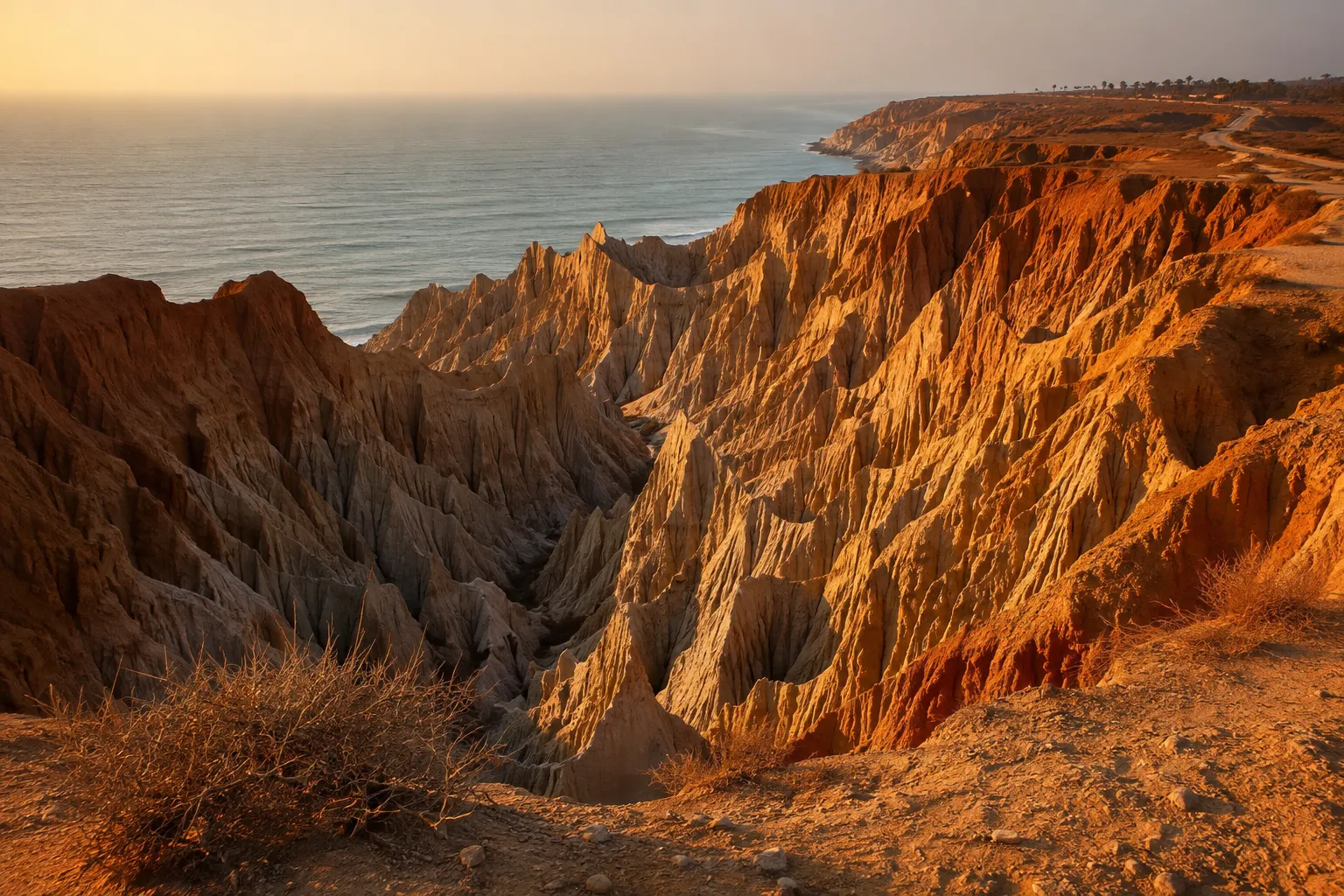
An Angola safari is worth it if you want raw, uncrowded wilderness and don’t need guaranteed Big Five sightings. Wildlife is still recovering from decades of civil war, so animal densities are far lower than in Kenya, Tanzania or Botswana. What you get instead: empty parks, dramatic desert-and-savannah scenery, endemic species like the giant sable antelope, and the feeling of being one of the few travellers on the continent doing something genuinely different.
Key Takeaways
- Angola is not a Big Five mass-tourism safari. Wildlife populations were devastated during the 1975 to 2002 civil war and are still rebuilding.
- The main safari destinations are Kissama (Quiçama), Iona, Cangandala, Luando and Bicuar national parks.
- Best time: dry season, May to October, cooler, less malaria pressure, better road access.
- Expect to travel by 4x4 with a local guide or operator; self-drive is possible but demanding.
- Costs are high relative to Southern Africa because Angola has limited tourism infrastructure and Luanda is one of the pricier African cities.
- The endemic palanca negra (giant sable antelope) is Angola’s flagship species and is found nowhere else on earth.
- Ideal for experienced, adventurous travellers, not first-time African safari-goers.
- Always check the current official travel advisory before booking.
What is an Angola safari like compared to other African countries?
An Angola safari is wilder, quieter and rougher than a classic East or Southern African safari. You will rarely see another vehicle, but you will also see fewer animals. Think of it as exploration travel rather than a wildlife-ticking holiday.
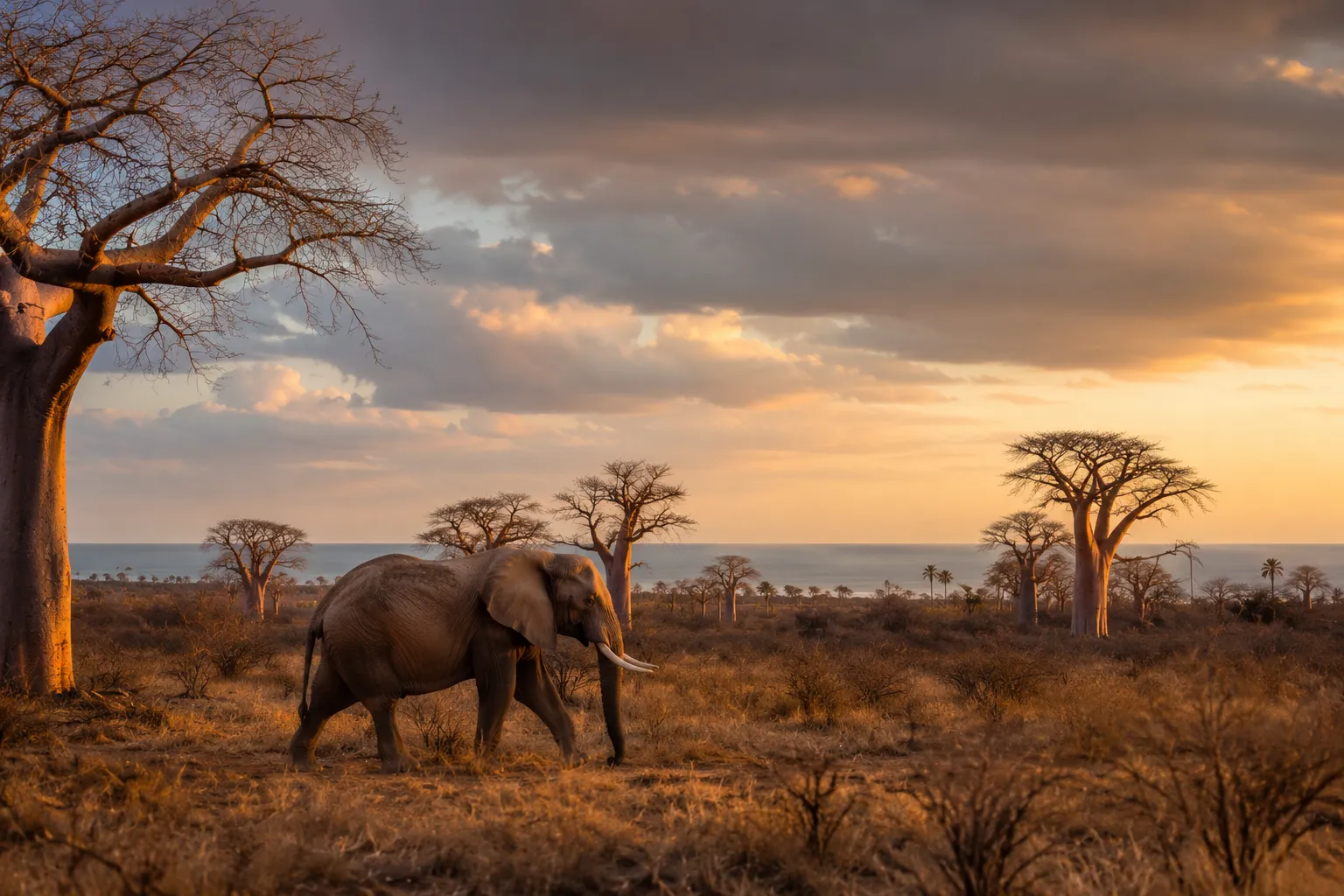
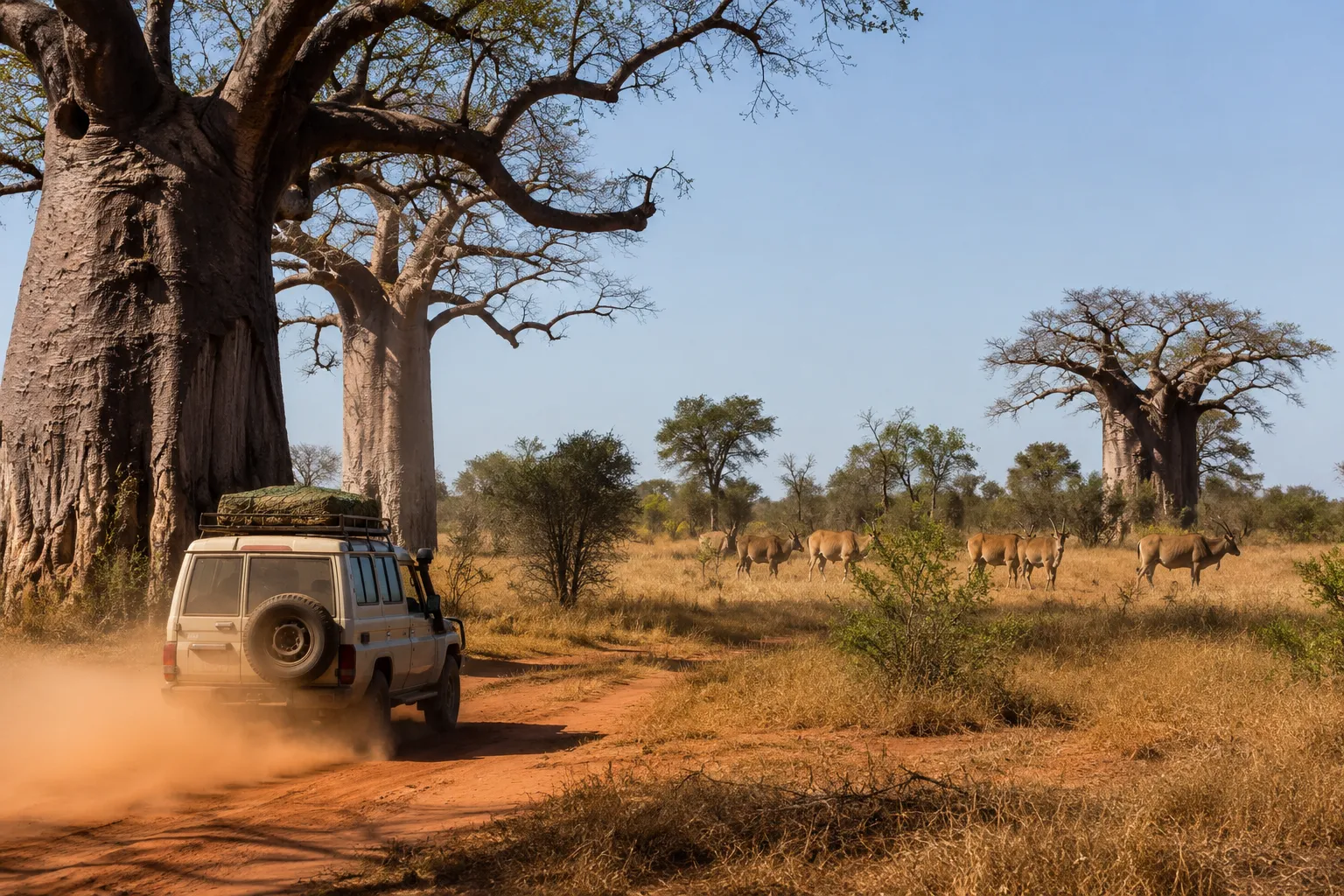
In Kenya’s Masai Mara or Botswana’s Okavango, sightings are almost guaranteed and lodges are polished. In Angola, the parks are vast, guiding is inconsistent, and roads range from good tarmac to washed-out tracks. The reward is authenticity: baobab-studded plains, empty beaches meeting desert, and communities that rarely see foreign visitors.
Choose Angola if you have already done a mainstream safari, love adventure travel, and value solitude over species counts. Skip it if this is your first African trip and you want lions in the viewfinder on day one.
Where can you do a safari in Angola?
Angola has several national parks worth considering, each offering something different. The four most relevant for visitors are Kissama, Iona, Cangandala and Luando, with Bicuar as a lesser-known option. For the full overview, see our guide to the national parks of Angola.
Kissama (Quiçama) National Park
The most accessible park, about 70 km south of Luanda. Kissama was famously restocked in the early 2000s through Operação Arca de Noé (Operation Noah’s Ark), which brought elephants and other species from South Africa and Botswana. You can realistically see elephant, eland, kudu, waterbuck, bushbuck and various antelope. Read more in our dedicated Kissama National Park article.
Iona National Park
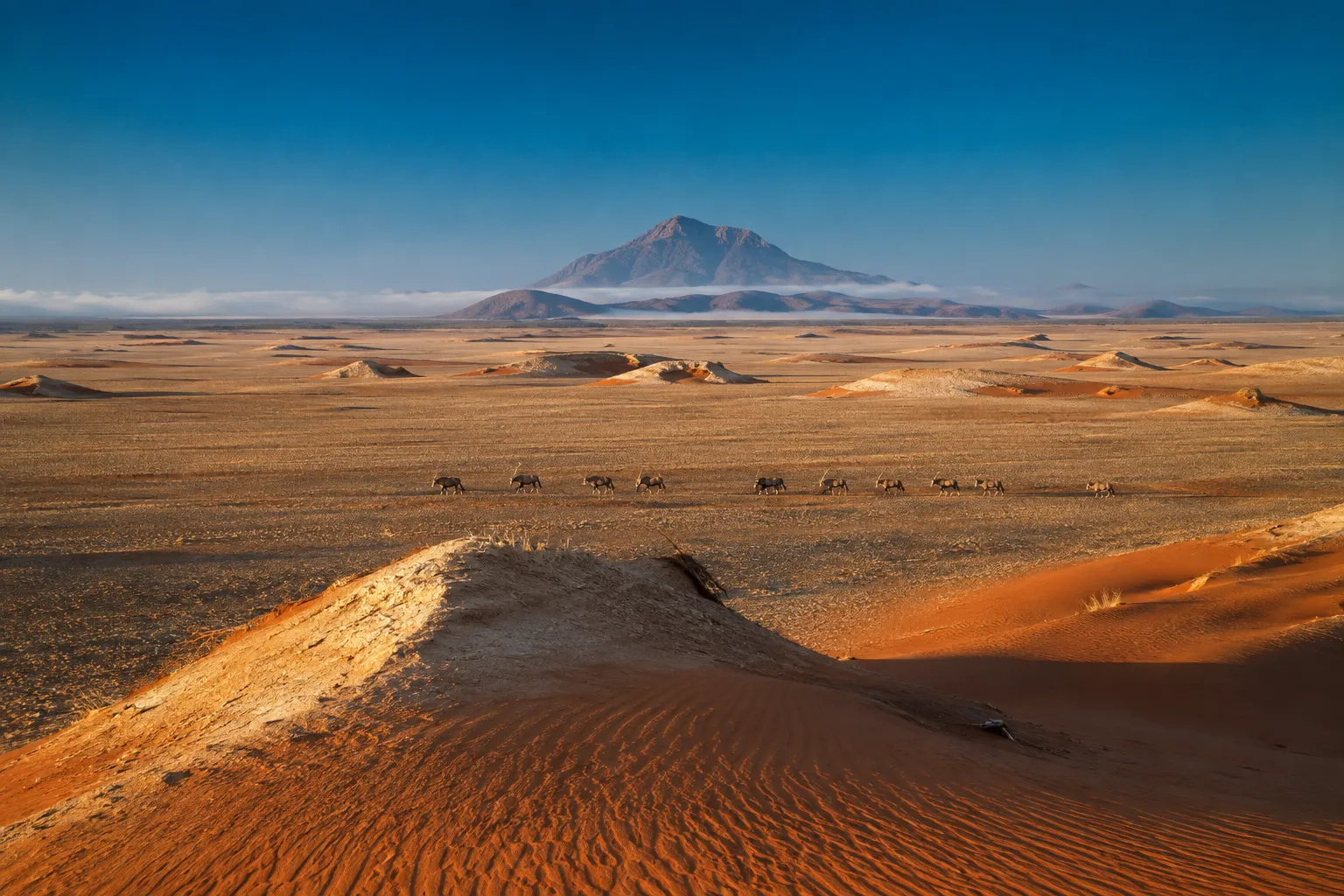
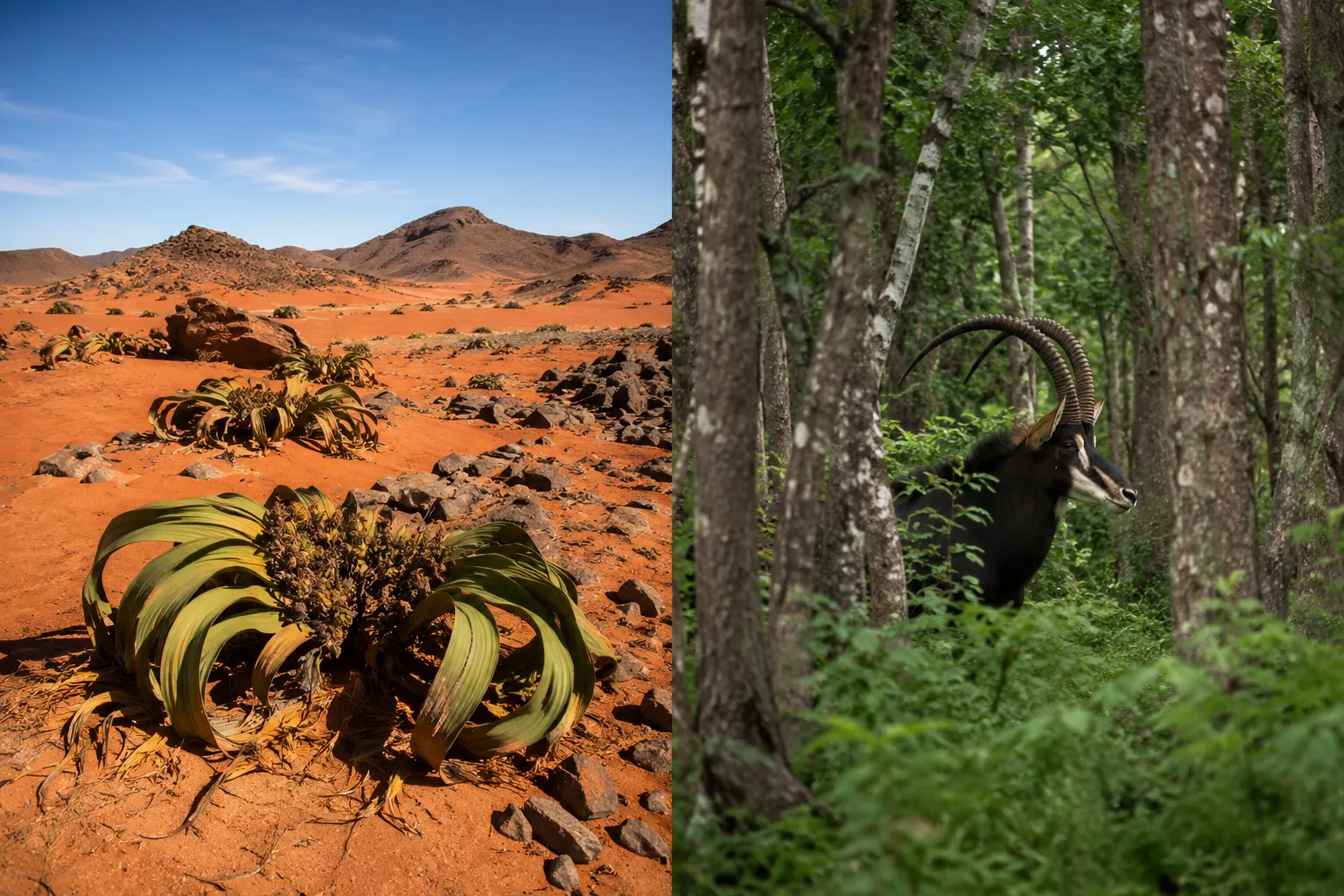
Angola’s largest park, in the far south in Namibe province. This is desert safari territory: welwitschia plants, oryx-like gemsbok, springbok, and the sea meeting the Namib. Iona borders Namibia’s Skeleton Coast and is now co-managed with African Parks, which is slowly improving infrastructure. Combine it with a trip to Namibe for the full southern experience.
Cangandala and Luando (Malanje province)
These are the strongholds of the palanca negra gigante, the giant sable antelope. Cangandala is small but critical for conservation, and Luando is a huge community-managed reserve. Sightings are rare and usually require prior arrangement with the conservation programme.
Bicuar and Mupa
In Huíla and Cunene provinces. Bicuar has been slowly recovering and offers miombo woodland scenery. Mupa is remote and mostly for hardcore explorers.
What animals will I see on an Angola safari?
Realistic expectations matter. Angola’s wildlife is present but sparse compared to established safari destinations. Here is what you can reasonably hope to see:
| Park | Realistic sightings | Rare/special |
|---|---|---|
| Kissama | Elephant, eland, kudu, waterbuck, bushpig, birds | Manatee (coast) |
| Iona | Gemsbok, springbok, ostrich, zebra | Cheetah, brown hyena |
| Cangandala | Common antelope, birdlife | Giant sable antelope |
| Luando | Bushbuck, duiker | Giant sable antelope |
| Bicuar | Roan, sable, hartebeest | Leopard (rare) |
You will not see lion, rhino or large predator concentrations in the way you would in the Serengeti. Birdwatchers, however, do well: Angola has strong endemic and near-endemic bird diversity.
What wildlife is unique to Angola that you won’t see elsewhere?
The giant sable antelope (Hippotragus niger variani) is Angola’s national symbol and found nowhere else on earth. Males have magnificent curved horns often exceeding 1.5 metres. The species survived the war in tiny numbers and is now the focus of an intensive conservation programme. Learn more in our palanca negra guide.
Angola also has several endemic and near-endemic birds, including the Angola cave chat, Gabela bushshrike and Grey-striped francolin, which makes the country a rising destination for serious birders.
Best time to visit Angola for safari
The dry season from May to October is the best time for an Angola safari. Roads are passable, vegetation is thinner (better viewing), and malaria risk is lower. July and August are coolest, especially in the southern highlands around Lubango.
The wet season (November to April) turns dirt roads into mud, floods river crossings and pushes wildlife deeper into inaccessible areas. Some lodges close entirely. For a broader look at seasonal planning, see our best time to visit Angola breakdown.
How much does an Angola safari cost?
Angola is not a cheap safari destination. Luanda ranks year after year among the most expensive African cities for visitors, and remote parks add logistics costs.
Rough guidance for 2026 (verify with your operator):
- Budget adventure (self-drive, camping): from around €150 to €250 per person per day, excluding flights
- Mid-range guided tour: €300 to €500 per person per day
- Higher-end operator-led safari: €500 to €900+ per person per day
- International flights from Europe or the US: often €900 to €1,800 return
These are ballpark ranges based on operator quotes, not fixed prices. Angola has few lodges, so pricing is not competitive the way it is in Kenya.
Can you do an Angola safari on a budget?
Yes, but only if you are comfortable with rough travel and self-organisation. The cheapest way is to rent a 4x4 in Luanda, camp in Kissama, cook your own food and skip the remote southern parks. Even then, fuel, park fees, permits and vehicle rental add up quickly.
A truly budget safari (under €100/day) is not realistic in Angola for most travellers. If cost is your main concern, consider Namibia or Zambia instead.
Is Angola safe for tourists on safari?
Angola is generally safe for organised tourism in the main safari areas, but it is not a mainstream destination and requires more caution than Kenya or Botswana. Petty crime is mostly a Luanda issue. Cabinda has separate, stricter travel advice. Rural areas may still have residual landmine risk from the war, stick to marked tracks and never wander off with an unknown guide.
Always check the current official travel advice or your own government’s guidance before booking, and read our is Angola safe overview.
Honest take: Angola is safer than its reputation suggests for prepared travellers, but nowhere near as tourism-ready as its southern neighbours.
How to get to an Angola safari from the US
There are no direct flights between the US and Angola. Most travellers connect through:
- Lisbon (LIS) with TAP Portugal, then TAAG or TAP to Luanda
- Addis Ababa (ADD) with Ethiopian Airlines
- Johannesburg (JNB) with South African Airways or Airlink
- Paris, Frankfurt or Brussels with Air France, Lufthansa or Brussels Airlines
Total travel time from the US East Coast is typically 18 to 24 hours. Since March 2026, all flights to Luanda land at the new Dr. António Agostinho Neto International Airport (NBJ), not the old Quatro de Fevereiro (LAD). See our flights to Angola page for current routing.
Since September 2023, tourists from 98 countries, including the US, UK, most EU nations, Canada and Australia, can enter Angola visa-free for tourist stays of up to 30 days; other nationalities need a visa or e-visa arranged in advance. Check the Angola visa guide and the official Serviço de Migração e Estrangeiros e-visa portal for your nationality.
Angola safari vs Botswana safari: which is better?
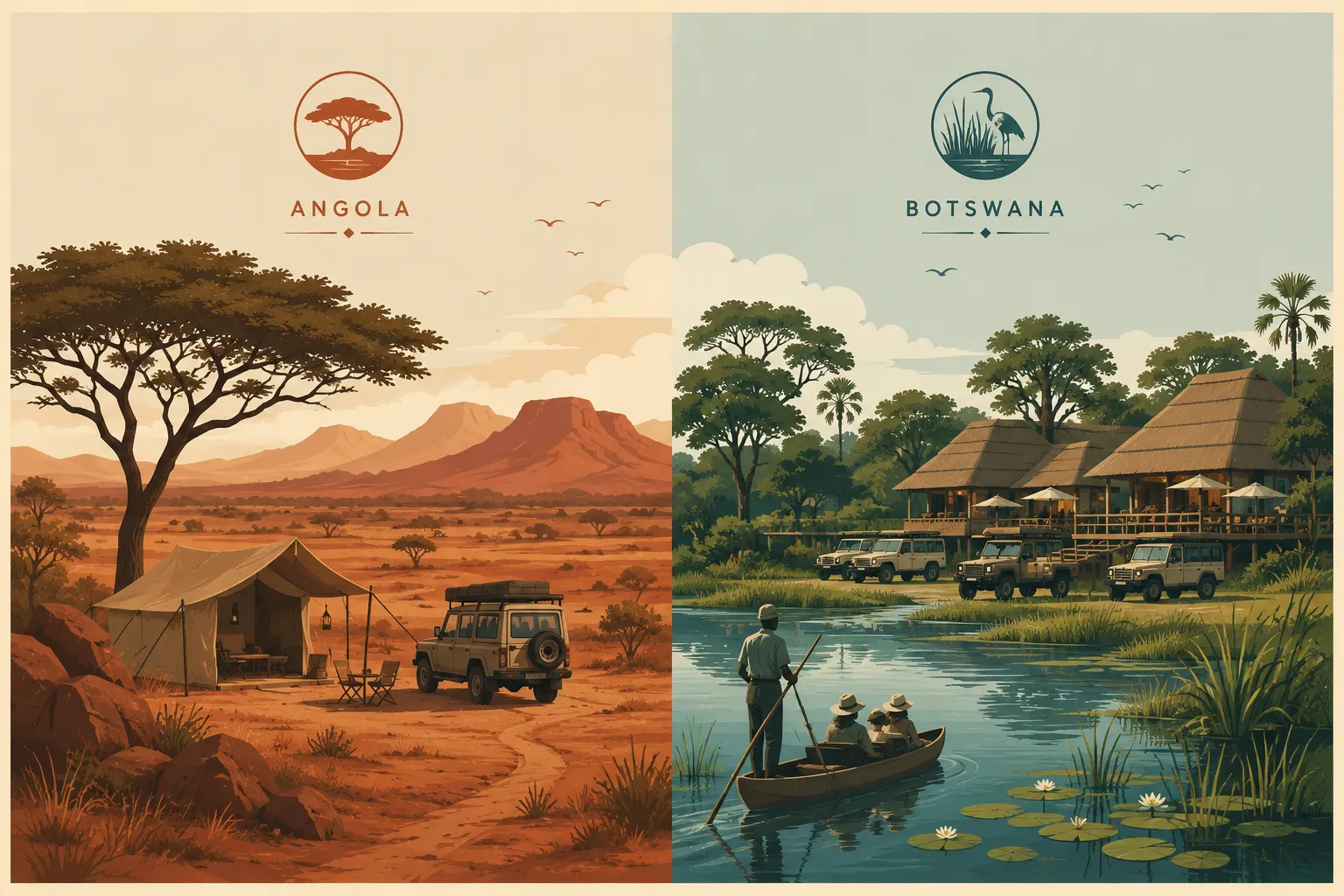
Botswana is better if you want world-class wildlife, luxury lodges and guaranteed sightings. Angola is better if you want raw wilderness, no crowds and a genuine sense of exploration.
| Factor | Angola | Botswana |
|---|---|---|
| Wildlife density | Low, recovering | Very high |
| Crowds | Almost none | Moderate to high in season |
| Infrastructure | Basic | Excellent |
| Cost | High for what you get | High but world-class product |
| Adventure factor | Very high | Moderate |
For a first-ever African safari, Botswana wins. For your fifth safari when you want something different, Angola makes sense.
What do I need to pack for an Angola safari?
Angola safari packing is closer to overlanding than luxury safari. Essentials:
- Lightweight, neutral clothing (khaki, olive, brown)
- Warm layer for early mornings in the highlands
- Sturdy walking shoes plus sandals
- Wide-brim hat, high-SPF sunscreen, sunglasses
- Strong insect repellent (DEET) and long sleeves for dusk
- Malaria prophylaxis (consult a tropical medicine clinic)
- Yellow fever vaccination certificate (typically required for entry, verify)
- Refillable water bottle with filter
- Headtorch, power bank, universal adapter (Type C/F, 220V)
- Basic first-aid kit
- Cash in USD or EUR for exchange to kwanza
- Portuguese phrasebook or translation app (English is limited)
Check current health requirements via the WHO and read our Angola vaccinations and health article.
How long should an Angola safari trip be?
Minimum 10 days, ideally 14 to 21 days. Angola’s distances are huge and roads are slow. A short trip means most of your time is spent moving, not seeing wildlife.
Sample itineraries:
- 10 days: Luanda + Kissama + Kalandula waterfalls
- 14 days: Luanda + Kissama + Malanje (Kalandula, Cangandala) + Lubango
- 21 days: Add Namibe, Iona and Serra da Leba to the above
Combine safari with cultural stops in Luanda and Benguela for a more complete picture of the country.
Common mistakes people make booking an Angola safari
- Expecting Kenya-level wildlife density. You will be disappointed. Recalibrate.
- Booking in the rainy season. Access becomes very hard.
- Trying to self-drive without 4x4 experience. Angola punishes underprepared drivers.
- Skipping travel insurance. Medical evacuation from remote parks is essential coverage.
- Underestimating language. Zero Portuguese outside Luanda is a real barrier.
- Ignoring visa timing. E-visa processing can be inconsistent, apply well ahead.
- Trying to see everything in a week. Distances kill short itineraries.
Is an Angola safari worth the money?
For the right traveller, yes. For most first-time safari-goers, no.
Worth it if you value: solitude, exploration, cultural authenticity, endemic species and bragging rights. Not worth it if you want: predictable Big Five sightings, polished lodges, or the best photography opportunities per dollar. On raw safari value-for-money, Namibia, Zambia and Tanzania all beat Angola in 2026. But none of them feel like Angola feels.
“Angola gave me the emptiest game drive of my life. Six hours, one elephant, zero other vehicles. It was extraordinary, but I already had five safaris behind me.”
Conclusion: Should you book an Angola safari?
Book it if you are an experienced traveller who wants something few others have done, values wild solitude over species counts, and accepts that logistics will be harder and pricier than a mainstream safari. Skip it if this is your first African safari or if you want guaranteed wildlife spectacle.
Next steps:
- Check the current official travel advisory for Angola
- Read our travel to Angola planning guide
- Explore the full Angola attractions overview
- Verify visa and vaccination requirements via official sources
- Contact a reputable Angola-based operator for a tailored quote
Angola rewards patience and preparation. Come with the right mindset and it delivers experiences that no other African safari can match.
Free help from our team in Angola
Planning a safari in Angola?
Tell us when you travel and what you hope to see. We tell you which park fits your dates and arrange the 4x4, a guide from our own team and the lodges.
- Local team in Angola
- No obligation, nothing to pay
- Reply by email or WhatsApp
Want to keep this guide? We email you the key points with a link to every section.
Frequently asked questions
Do I need a guide for an Angola safari?
Strongly recommended. Guides handle Portuguese, park permits, road conditions and safety. Self-drive is possible in Kissama but not in remoter parks.
Is malaria a serious risk?
Yes. Malaria is present throughout Angola year-round. Take prophylaxis and use repellent. Consult a travel medicine clinic before departure.
Can I combine Angola with Namibia?
Yes, the Iona/Skeleton Coast border area makes an overland combination feasible for experienced travellers with the right permits.
Are there luxury lodges in Angola?
Very few. A handful of decent lodges exist in Kissama and near Lubango, but nothing comparable to Botswana or Kenya's high-end camps.
Is English spoken in the parks?
Rarely. Portuguese is essential. Some guides working with international operators speak English, but staff and local communities usually do not.
Can I see the giant sable antelope reliably?
No. Sightings require permission and lots of luck. It remains one of Africa's rarest large mammals.