Quick answer
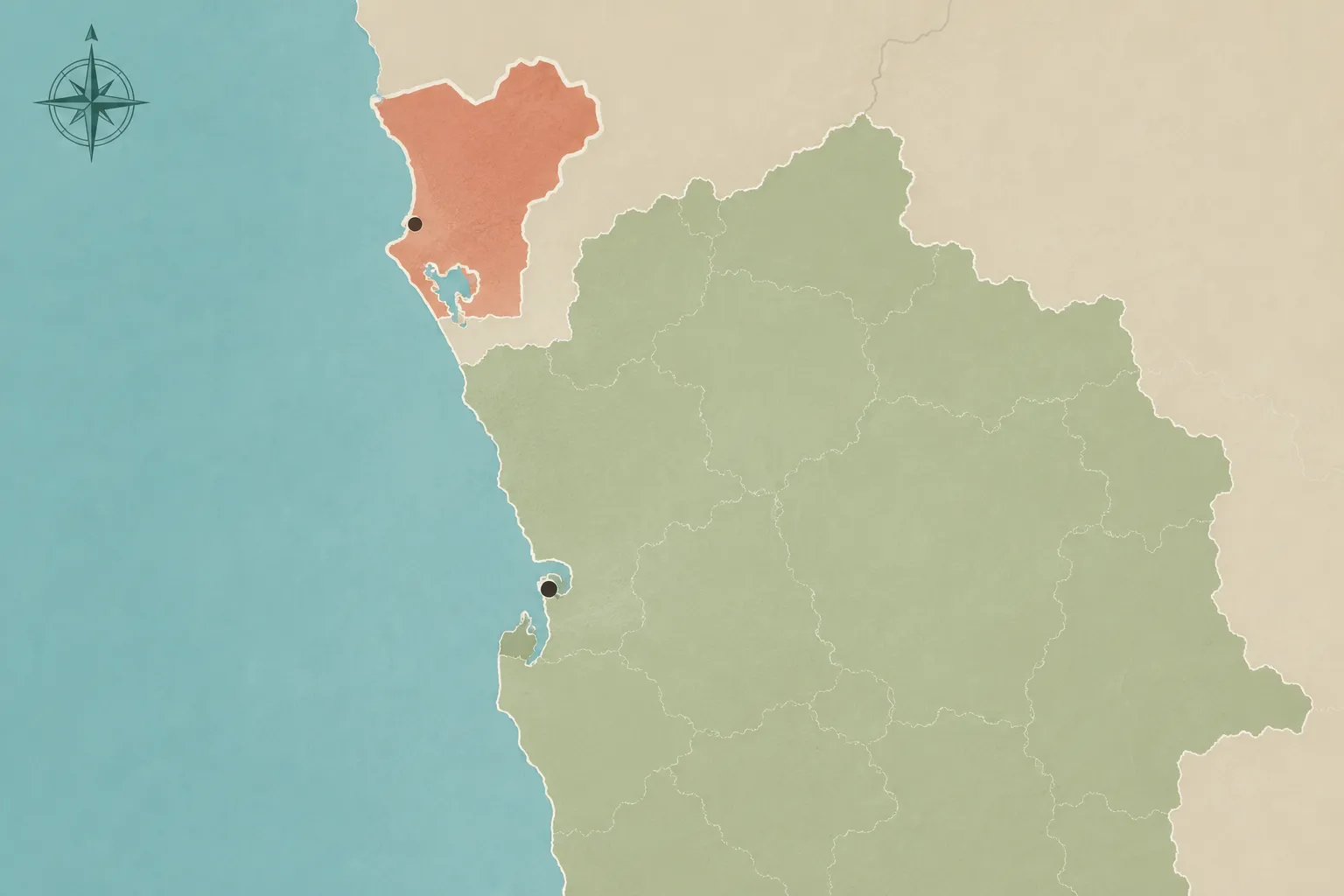
Cabinda is Angola’s oil-rich exclave, a small province of roughly 7.300 km² tucked between the Republic of Congo and the Democratic Republic of Congo, physically cut off from the rest of Angola. It produces the bulk of Angola’s crude oil, holds the dense Maiombe rainforest, and has a long-running low-level separatist conflict. For travellers it means: fly in from Luanda, stick to Cabinda city, and check the actual travel advisory before you book.
Key takeaways
- Cabinda is an exclave: it’s part of Angola but separated by a strip of DR Congo.
- It’s the country’s oil heartland, producing most of Angola’s offshore crude.
- Access is basically by air from Luanda (about 1 hour flight, TAAG Angola Airlines).
- Multiple Western governments advise against non-essential travel outside Cabinda city due to separatist activity and kidnap risk.[1][3][6][10]
- Main attractions: Atlantic beaches, the historic Simulambuco Treaty house, and the Maiombe (Mayombe) rainforest.
- Independent tourism exists but is limited. Most visitors are oil-sector workers or business travellers.
- Always verify the current advisory from your own foreign ministry before travelling.
What is Cabinda, Angola?
Cabinda is a province of Angola on the Atlantic coast of Central Africa, bordered by the Republic of Congo to the north and the Democratic Republic of Congo to the south and east. It has its own capital, also called Cabinda, and a population estimated at around 850.000 people. The province is culturally and linguistically closer to the Bakongo peoples of the two Congos than to central Angola.
Two things define Cabinda for the outside world: oil and isolation. It supplies a large share of Angola’s crude exports and it’s the only Angolan province you can’t reach by road from Luanda without crossing an international border.
Where is Cabinda located on the map?
Cabinda sits on the Atlantic coast, roughly between latitudes 4° and 6° South, wedged between the two Congos. A narrow corridor of DR Congo territory (about 60 km wide) along the Congo River mouth separates it from mainland Angola to the south.
If you look at a map of Angola, Cabinda is that small detached rectangle up in the northwest, north of the massive Congo River. From Cabinda city to Luanda is roughly 480 km in a straight line over water, or a long, complicated overland journey through DR Congo that most travellers simply don’t attempt.
For more context on the country as a whole, see our overview of travelling to Angola.
Why is Cabinda separated from Angola?
The separation is a colonial leftover. In 1885 the Treaty of Simulambuco made Cabinda a Portuguese protectorate, distinct from the rest of what became Portuguese Angola. When European powers carved up Africa at the Berlin Conference, King Leopold II’s Congo Free State was granted a corridor to the Atlantic along the Congo River, which physically cut Cabinda off from Angola proper.
When Angola gained independence in 1975, Cabinda was administratively folded into the new republic despite protests from local movements that argued it should have been decolonised as a separate territory. That dispute is still the root of the current tensions.
Cabinda oil production and economy
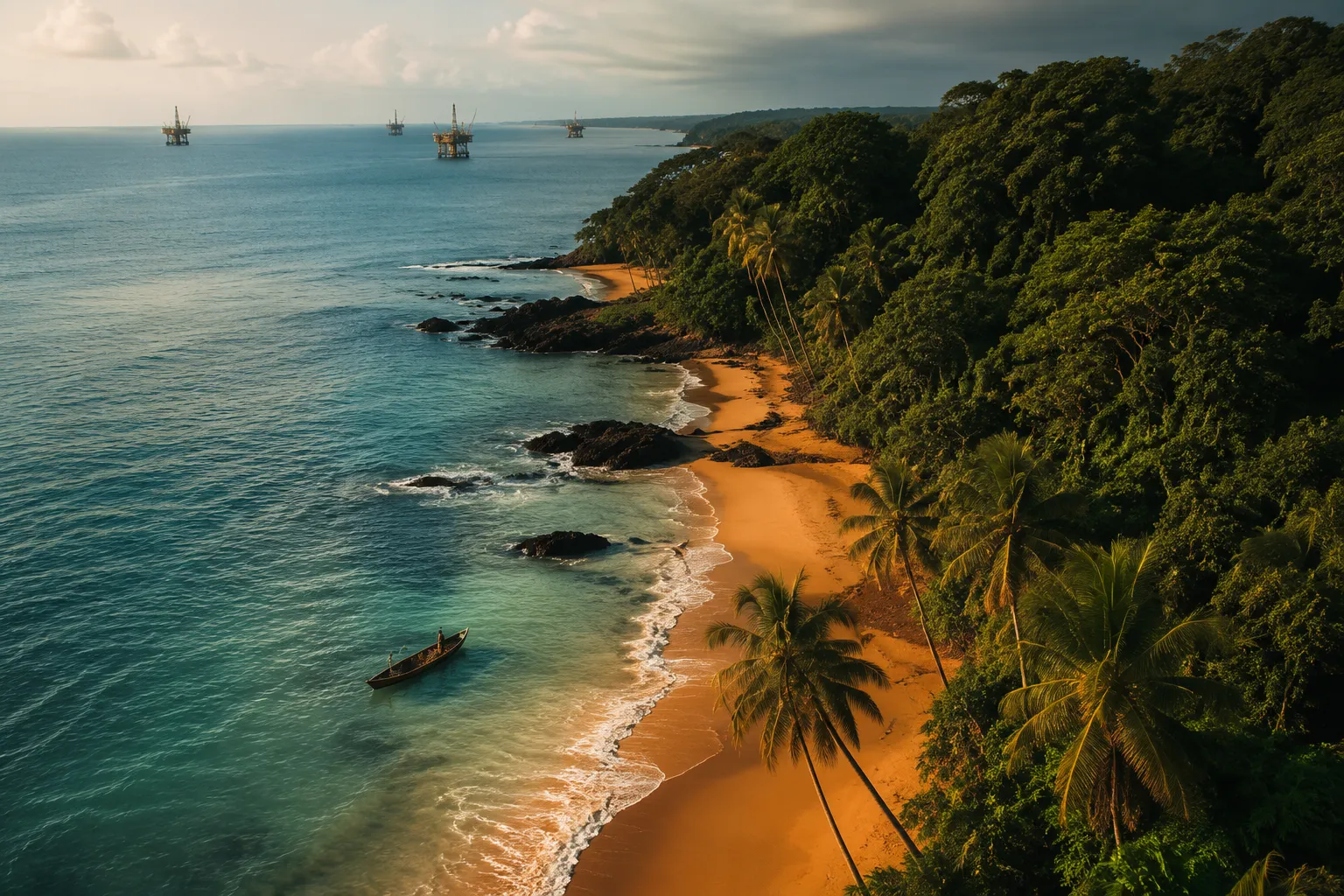
Cabinda is the economic engine of Angola. Its offshore fields, operated for decades by Chevron and partners through the Cabinda Association, produce the majority of Angolan crude. Oil revenues from Cabinda fund a huge share of the national budget.
The paradox is well documented: despite generating billions in revenue, the province itself sees limited local development, and many residents complain that oil wealth mostly flows out. This grievance fuels the political conflict.[2][4]
Beyond oil, the economy includes:
- Timber from the Maiombe forest (regulated, but illegal logging remains an issue)
- Small-scale fisheries along the coast
- Cocoa, coffee and palm oil on a modest scale
- Port activity at Cabinda’s harbour
Cabinda independence movement history
The Frente para a Libertação do Enclave de Cabinda (FLEC) was founded in 1963 and has fought, in various factions, for Cabindan independence ever since. A peace memorandum was signed in 2006 with a faction of FLEC, but the hardline FLEC-FAC wing rejected it and continues low-intensity armed activity.[4]
Key moments:
| Year | Event |
|---|---|
| 1885 | Treaty of Simulambuco: Cabinda becomes a Portuguese protectorate |
| 1963 | FLEC founded |
| 1975 | Angolan independence; Cabinda incorporated into Angola |
| 2006 | Memorandum of Understanding with part of FLEC |
| 2010 | Attack on Togo national football team bus during Africa Cup of Nations |
| 2020s | Continued sporadic attacks in rural border zones[2][4] |
The 2010 attack on the Togo team, which killed three people, put Cabinda on the international map for the wrong reasons and still influences travel perceptions today.
Cabinda population and demographics
The province has an estimated population of around 850.000, with the majority ethnically Bakongo (particularly the Ibinda, Iwoyo, Ikoci and Ilinge subgroups). Portuguese is the official language, but Ibinda and other Kikongo variants are widely spoken at home.
Religion is predominantly Christian, split between Roman Catholic and various Protestant and evangelical denominations, with traditional beliefs still present in rural areas.
Cabinda vs the rest of Angola: key differences
Cabinda stands out from mainland Angola in several practical ways:
- Geography: exclave, tropical rainforest interior versus the drier savannas and highlands of much of Angola.
- Culture: Bakongo-dominant, closer ties to Congo-Brazzaville and Kinshasa than to Luanda.
- Language: Ibinda/Kikongo is stronger locally than Kimbundu or Umbundu.
- Politics: only province with an active, if low-level, separatist movement.
- Access: no road connection to the rest of Angola without a Congolese transit.
- Economy: disproportionate share of national oil output.
Compared to a beach-and-city destination like Benguela or the highlands around Lubango, Cabinda is much more off the standard tourist track.
How to get to Cabinda from Luanda
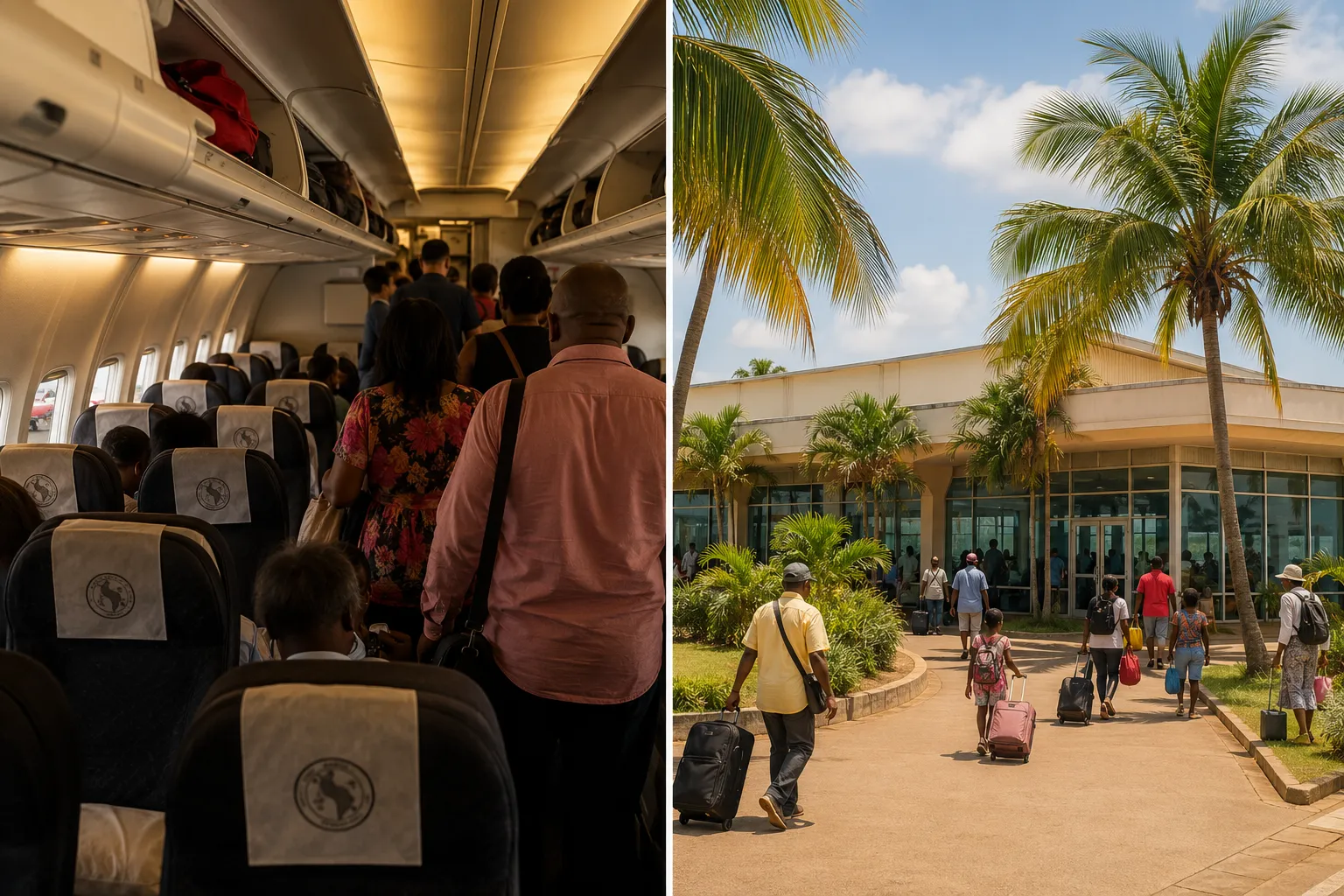
The practical answer for almost every traveller: fly from Luanda. TAAG Angola Airlines operates multiple daily flights between Luanda and Cabinda’s Maria Mambo Café Airport (CAB). Flight time is roughly one hour.
Overland via DR Congo is theoretically possible (Luanda to Matadi to Muanda to the Cabinda border), but it requires DRC transit visas, a long ferry over the Congo River, and multiple border crossings that are unpredictable. Not recommended for regular travellers.
If you’re planning any domestic flight in Angola, book directly through TAAG or a reputable OTA. Prices and schedules change often, so verify at booking time.
Affiliate disclosure: the following link is an affiliate. If you book through it we may earn a small commission at no extra cost to you.
Check current flights to Luanda and onward domestic connections via our partner: flight search for Angola. For getting around once you land, see flights to Angola.
Cabinda tourism and attractions
Tourism in Cabinda is small-scale but real. Most visitors focus on Cabinda city and short trips into the surrounding coast and forest. Highlights:
- Cabinda city seafront with palm-lined promenades and colonial-era buildings.
- Simulambuco Treaty House (Casa do Tratado de Simulambuco), a small historic site marking the 1885 treaty.
- Praia do Futila and other Atlantic beaches, quiet and often nearly empty.
- Maiombe Forest (see below), the province’s natural crown jewel.
- Local markets with Bakongo crafts, palm wine and fresh seafood.
For a broader look at Angola’s natural highlights, browse our overview of things to do in Angola.
The Maiombe rainforest
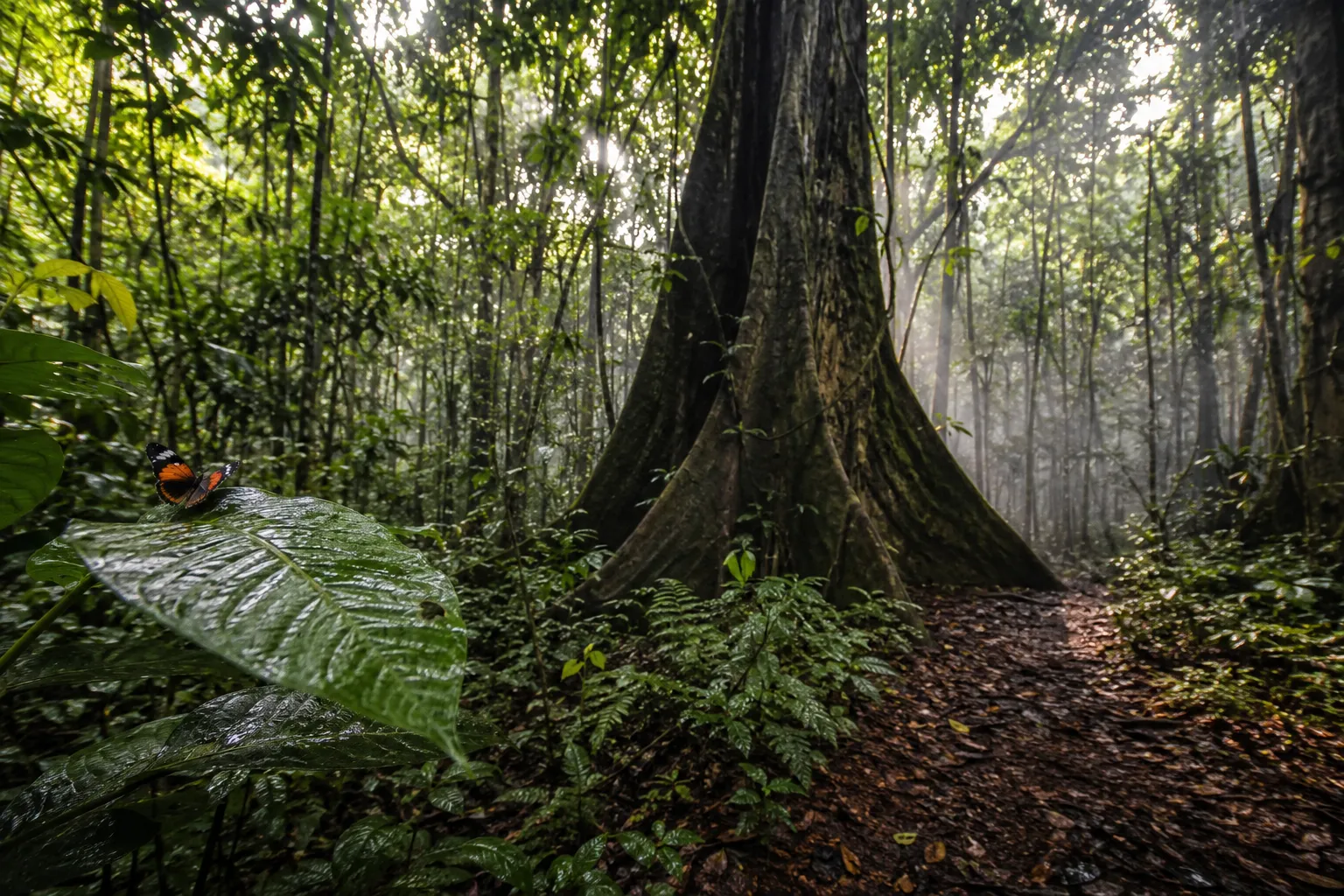
The Maiombe (Mayombe) Forest stretches across Cabinda, the two Congos and Gabon, and is often called the “Amazon of Africa” for its biodiversity. On the Angolan side, part of it is protected as the Maiombe National Park.
What you can potentially see:
- Ancient hardwood trees, some centuries old
- Forest elephants (rare, shy)
- Gorillas and chimpanzees in remote pockets
- Hundreds of bird species and endemic butterflies
- Traditional Bakongo forest villages
Access is challenging. Independent hiking is not advisable given both the terrain and the current security picture. Any forest visit should be organised through a licensed local operator with proper permits and, ideally, a park ranger escort.
Cabinda language and culture
The linguistic and cultural map of Cabinda is Bakongo. Ibinda (a Kikongo variant) is the main local language, alongside Portuguese for official use. Cross-border family and trade ties with Pointe-Noire (Republic of Congo) and Boma (DR Congo) are strong.
Traditional music includes forms related to rumba congolaise, and the province has its own culinary accents: heavier use of cassava leaves (kizaka), palm oil, freshwater fish and forest game where legal. For a broader introduction, see culture of Angola and Angolan cuisine.
Cabinda conflict and security situation
Here I’ll be direct rather than dramatic. As of mid-2026, several Western governments actively warn against non-essential travel to Cabinda province outside Cabinda city:
- The UK Foreign Office advises against all but essential travel to the province, except Cabinda city, citing targeted attacks on foreigners and kidnap risk.[1]
- Canada (advisory updated 20 July 2026) urges travellers to avoid non-essential travel, referencing active militant groups, kidnappings and landmine risk on rural and secondary roads.[6]
- France’s Foreign Ministry (30 June 2026) classifies both the city and the wider province as potential insecurity zones and recommends travel only for imperative reasons, with practical guidance to move by car with windows closed, doors locked, and avoid walking alone.[3]
- Germany’s Foreign Office (3 July 2026) advises against trips to Cabinda, noting a tense situation despite improved general security.[10]
- The OSAC 2026 Angola report notes that outside Cabinda city, armed groups including FLEC-FAC have attacked foreign interests.[5]
That doesn’t mean nobody visits. Business travellers and oil-sector staff go regularly, generally staying inside Cabinda city and using vetted transport. But it does mean you must check your own government’s advisory the week you travel, not two years before. See also our overview of is Angola safe.
Cabinda travel safety for visitors: practical rules
If you decide to visit, sensible precautions matter more here than almost anywhere else in Angola:
- Stay in Cabinda city unless you have a very specific, guided reason to leave it.
- Avoid rural and secondary roads, especially near the Congo borders, where landmine risk still exists.[6]
- Do not travel at night between towns.
- Use pre-arranged transport through your hotel or a known operator, not street taxis.
- Carry ID and a copy of your visa at all times; expect checkpoints.
- Register with your embassy if possible.
- Have travel insurance that explicitly covers Angola including Cabinda and, ideally, medical evacuation.
Cabinda natural resources and mining
Beyond oil, Cabinda’s natural resources include:
- Natural gas (associated with offshore oil fields)
- Hardwood timber from Maiombe (okoumé, limba, sapelli)
- Phosphates and some potash in exploration stages
- Manganese deposits reported in the interior
There is no large-scale mining tourism circuit. Any resource-sector visit will be corporate and permit-based.
Cabinda climate and geography
Cabinda is fully tropical: hot and humid year-round, with two distinct seasons.
| Season | Months | Character |
|---|---|---|
| Dry / cool | May, September | Less rain, lower humidity, overcast mornings, 22-28°C |
| Wet / hot | October, April | Heavy tropical showers, 26-32°C, high humidity |
The coast is a mix of sandy beaches, mangroves and low cliffs. Inland, the terrain rises into forested hills that form the Maiombe. Rivers are short and often navigable only by canoe.
When to visit
The dry season, roughly June to September, is the most comfortable window: less rain, easier road conditions, and better forest access. This aligns with the general best time to visit Angola for most of the country.
Avoid the peak of the rainy season (December to March) if you plan any forest excursions. City visits are fine year-round weather-wise.
Where to stay
Accommodation is concentrated in Cabinda city and mostly built around business travel for the oil sector. You’ll find:
- A handful of international-standard business hotels (often used by oil companies)
- Mid-range Angolan hotels and guesthouses
- Basic pensões for budget travellers, quality varies widely
Rooms tend to be pricey relative to what you get, which is true across Angola. Book ahead, especially midweek. You can compare current options via our partner: hotels and flights in Angola.
For general accommodation advice across the country, see accommodatie Angola.
Do I need anything special to travel to Cabinda?
Beyond standard Angola entry requirements, there is no separate Cabinda visa. You need:
- Entry documentation: nationals of the 98 visa-exempt countries need no visa for tourist stays up to 30 days; everyone else needs an Angola e-visa arranged in advance (verify current rules for your nationality)
- Yellow fever vaccination certificate (generally required for Angola)
- Malaria prophylaxis discussed with a travel clinic
- Proof of onward travel in some cases
- Travel insurance covering the province specifically
See our detailed guides on Angola visa guide and vaccinations in Angola, and always cross-check with the official Serviço de Migração e Estrangeiros before you book.
Conclusion
Cabinda is one of the most geographically and politically unusual corners of Africa: a small, oil-rich, rainforest-covered slice of Angola that isn’t even attached to Angola. For the right traveller, curious, well-prepared, and honest about the risks, it’s a rewarding stop. For everyone else, it’s a place to understand from the map and the news, not from the ground.
Next steps:
- Read the current travel advisory from your own foreign ministry (UK, Canada, France, Germany, Netherlands or Belgium).
- Compare flight options from Luanda and confirm domestic schedules with TAAG.
- Sort your Angola visa, yellow fever certificate, and comprehensive travel insurance.
- Plan a base in Cabinda city and only venture further with a vetted local operator.
Free help from our team in Angola
Planning a trip to Cabinda?
Cabinda is an exclave, so most people fly in from Luanda. Tell us when you travel and what for, and we help with the flight, a driver and a place to stay.
- Local team in Angola
- No obligation, nothing to pay
- Reply by email or WhatsApp
Want to keep this guide? We email you the key points with a link to every section.
Frequently asked questions
Where is Cabinda?
Cabinda is a coastal province of Angola in Central Africa, physically separated from the rest of Angola by a strip of the Democratic Republic of Congo. It borders the Republic of Congo to the north and DR Congo to the south and east.
Why is Cabinda separate from Angola?
Because of colonial borders. In 1885 Cabinda became a Portuguese protectorate under the Treaty of Simulambuco, while King Leopold II's Congo Free State was granted a corridor to the Atlantic that split it from the rest of Portuguese Angola. When Angola gained independence in 1975, Cabinda was included in the new state despite protests.
How do I get to Cabinda?
The practical way is to fly from Luanda to Cabinda's Maria Mambo Café Airport (CAB) with TAAG Angola Airlines. The flight takes about one hour. Overland via DR Congo is possible but complicated and not recommended for most travellers.
Is Cabinda safe to visit?
Cabinda city is generally used by business travellers, but multiple Western governments advise against non-essential travel to the wider province due to separatist activity, kidnap risk and landmine risk on rural roads. Check your own government's current advisory before booking.
What is there to see in Cabinda?
Main attractions are Cabinda city's seafront and colonial architecture, the Simulambuco Treaty house, quiet Atlantic beaches like Praia do Futila, and the Maiombe rainforest, one of Africa's most biodiverse tropical forests.
Do I need anything special to travel there?
Nationals of the 98 countries on Angola's visa-free list can enter for tourism without a visa for up to 30 days; other nationalities need an e-visa arranged in advance. Everyone needs yellow fever vaccination, malaria prophylaxis, and travel insurance that covers Angola including Cabinda. There is no separate Cabinda permit, but expect ID checks. Always verify current rules on the official evisa.ao portal.