Quick answer
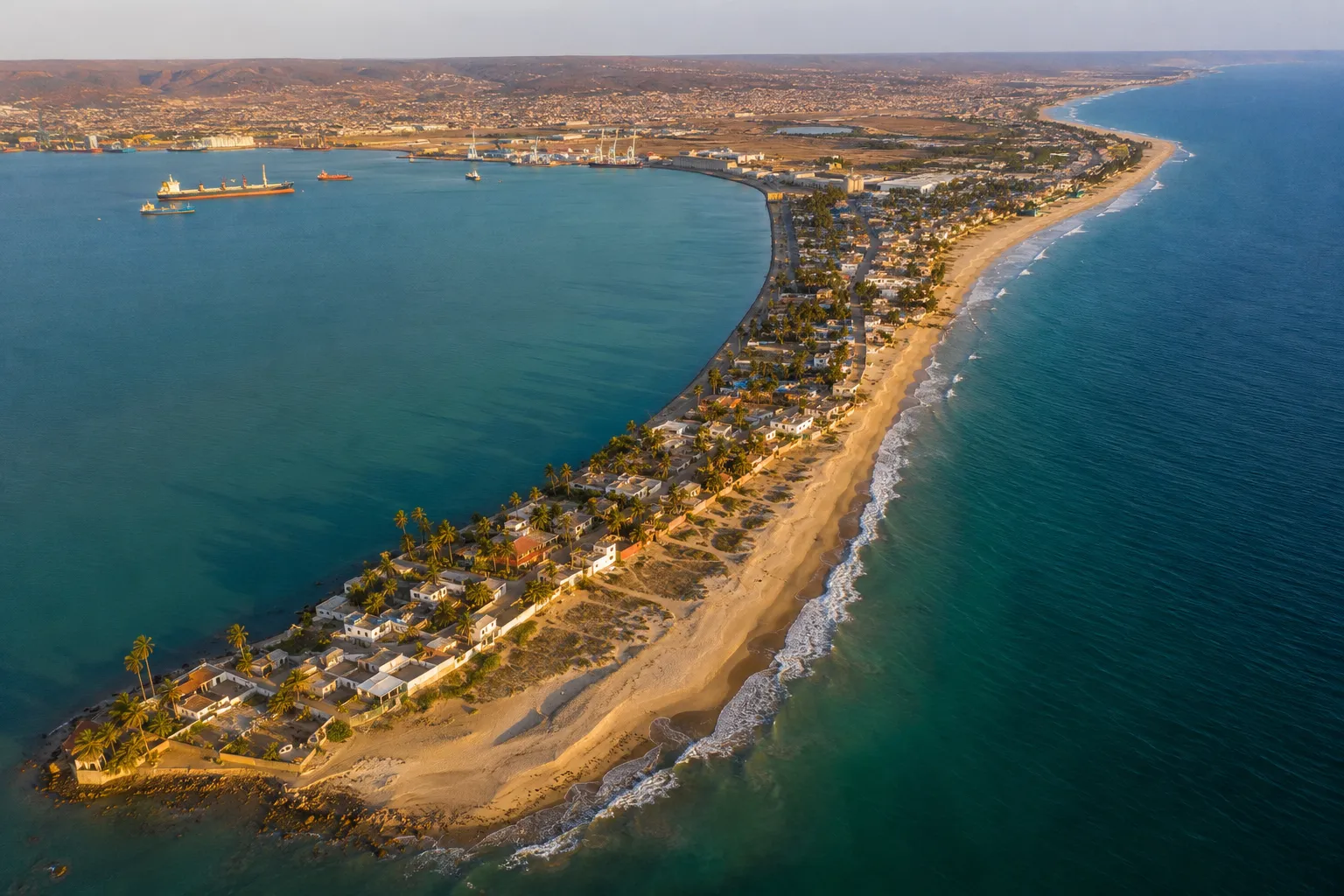
Lobito is a coastal port city about 500 km south of Luanda, on Angola’s Atlantic coast. It’s best known for the Restinga, a 10 km sandspit that shelters one of Africa’s finest natural harbours, its palm-lined beaches, and the historic Benguela railway that now feeds the strategic Lobito Corridor linking Angola to the copper belt of the DRC and Zambia.[1][5][7]
Key takeaways
- Lobito sits on Angola’s central coast, roughly 500 km south of Luanda and about 30 km north of Benguela.[5]
- The Restinga is a narrow 10 km sandspit, only 200 to 300 m wide, forming Lobito Bay and hosting hotels, restaurants and beaches.[7]
- Restinga Beach stretches around 3 km with soft golden sand and calm water, popular for swimming, beach sports and fresh seafood.[4]
- The Benguela railway and the wider Lobito Corridor (over 1,300 km) connect the port to the DRC and Zambia, making Lobito a key logistics hub.[1][3][5]
- Best time to visit is the dry season, roughly May to October, when the coast is cooler and drier.
- Combine Lobito with Benguela (30 km away) for beaches like Baía Azul and colonial architecture.
- The city has around 200,000 inhabitants and a working port with oil, gas and dedicated mineral terminals.[5]
Why visit Lobito
Lobito offers something different from Luanda: a relaxed coastal vibe, real beaches within the city, and a working port with genuine historical weight. It’s one of the more pleasant urban stops on any Angola itinerary, and pairs naturally with Benguela into a compact coastal loop.
What makes it stand out:
- The Restinga: living on a sandspit with the ocean on one side and the bay on the other.
- Beaches inside the city: you don’t need to drive an hour to swim.
- History you can see: Portuguese-era buildings, the old railway station, colonial villas.
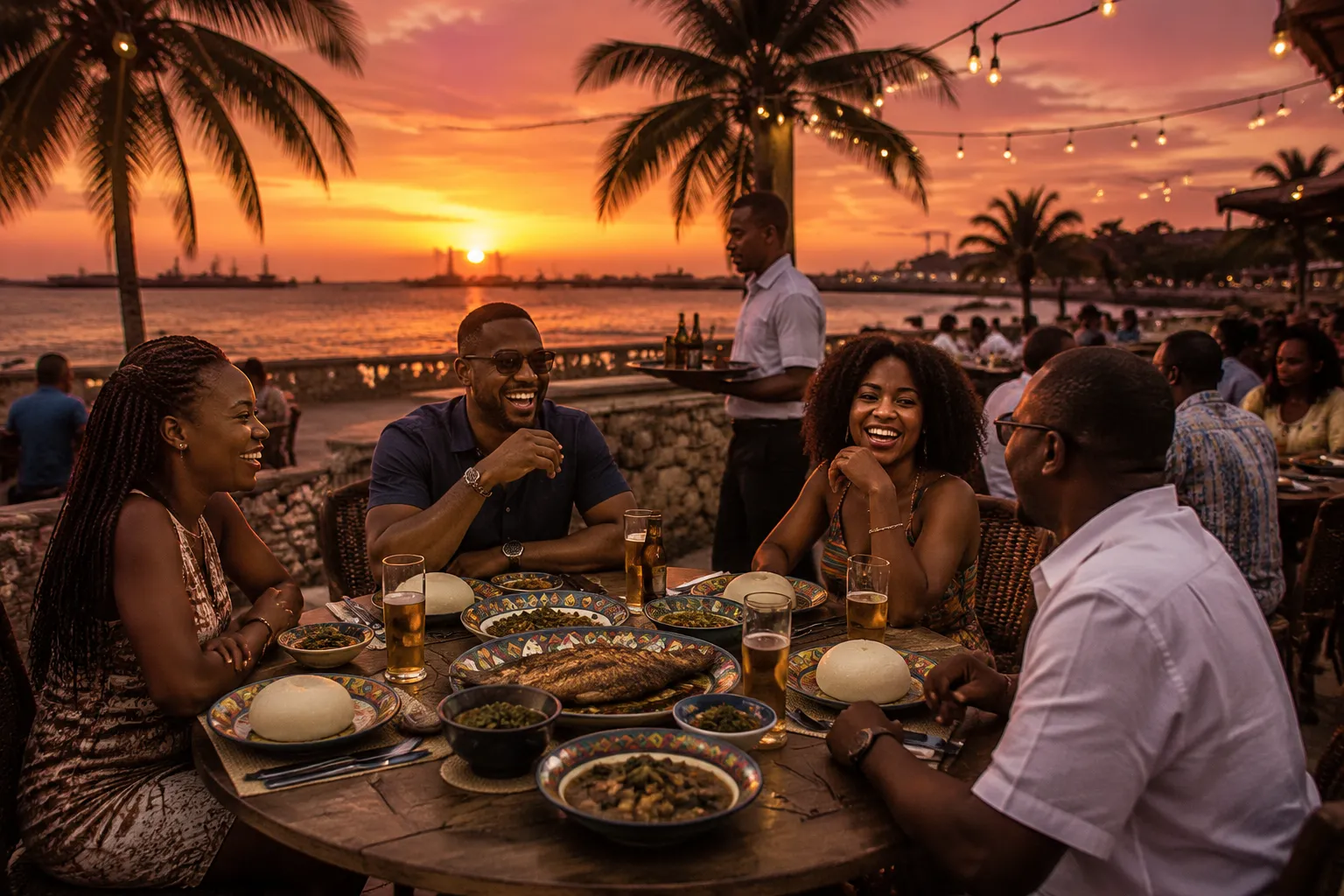
- Seafood: some of the best grilled fish and calulu on Angola’s coast.
- Strategic port: the revived Benguela railway and Lobito Corridor put the city back on the global map.[1][5]
For broader context on planning your trip, see our guide on travelling to Angola and the overview of things to do in Angola.
The Restinga sandspit and beaches
The Restinga (Ponta da Restinga) is a natural 10 km sandspit that curls out from the mainland and forms the sheltered Lobito Bay. It’s only about 200 to 300 m wide between its two shorelines, yet it holds a densely built strip of hotels, restaurants, private homes and beach clubs, making it the geographic and social heart of the city.[7]
Historically the Restinga grew 15 to 20 metres per year until 20th-century port works stabilised it to keep the bay open for shipping.[7] Today it’s essentially a long, narrow neighbourhood with beaches on both sides.
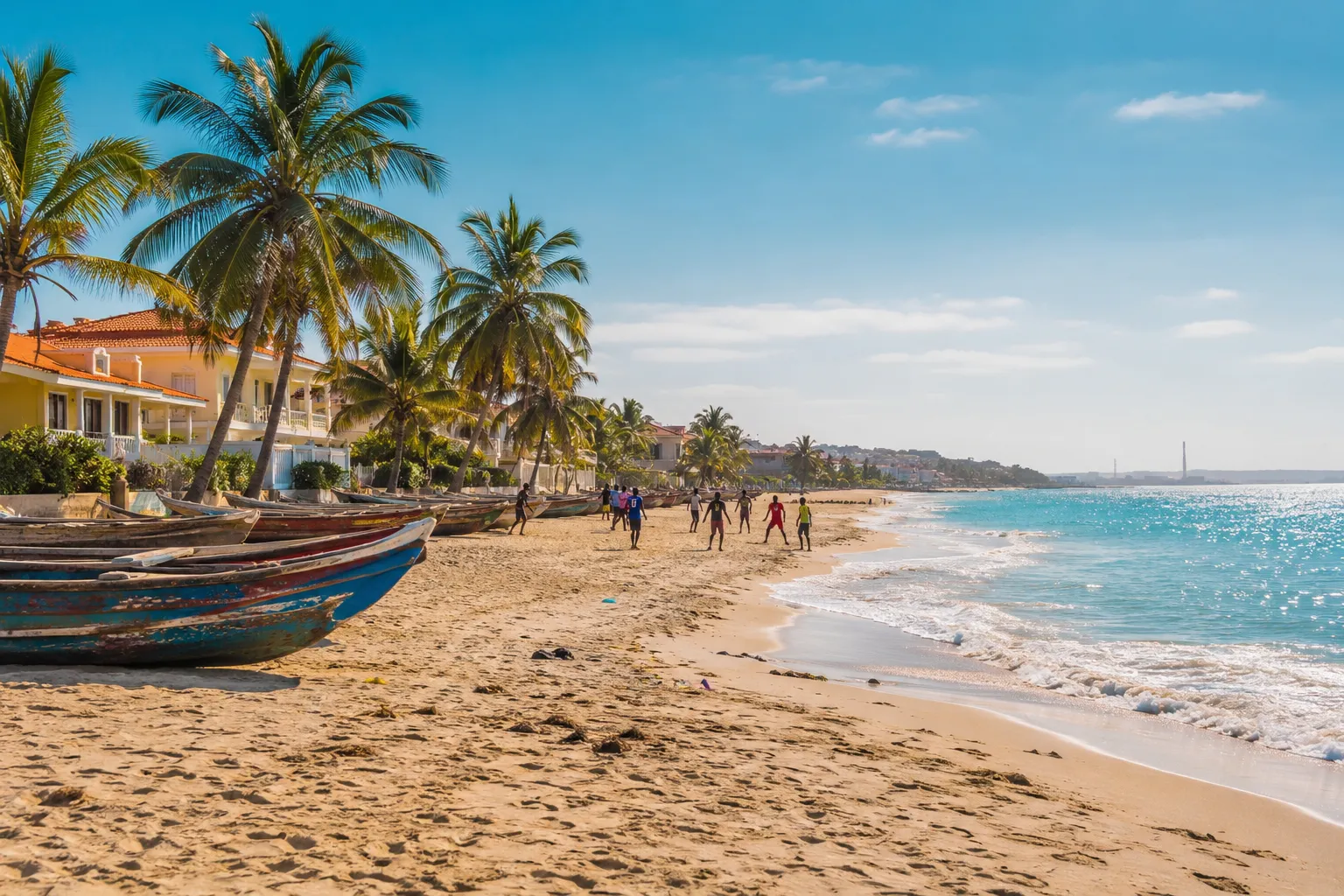
Restinga Beach
Restinga Beach itself runs roughly 3 km along the ocean side of the spit. Expect:
- Soft golden sand and generally clear, calm water[4]
- Swimming, sunbathing, beach soccer, volleyball and shore fishing[4]
- Nearby restaurants serving grilled fish, prawns and traditional Angolan seafood
- Free 24/7 parking, public bathrooms, but no lifeguards on duty[4]
- Dogs not allowed on the beach[4]
Can you swim at Lobito beaches?
Yes. The bay side is usually calm and family-friendly, while the ocean side has more waves. Water quality is generally good, but there are no lifeguards, so parents should watch children closely and avoid swimming alone or after dark.[4]
Tip: The bay side of the Restinga is best for young kids and easy swimming; the ocean side is better if you want surf and a longer beach walk.
Beyond the spit itself, the area borders a small natural reserve with walking paths and short boat tours to nearby islets, easily arranged with local operators.[4] For a wider look at the country’s coastline, see our guide to the beaches in Angola.
The port and the Benguela railway
Lobito’s port is the reason the city exists in its modern form. Sheltered behind the Restinga, it’s one of the deepest natural harbours on Africa’s west coast and handles general cargo, oil and gas, and a dedicated mineral terminal that operates year-round.[5]
The Benguela railway and Lobito Corridor
The Benguela railway was built in the early 20th century to move copper from the interior to the Atlantic. Today it’s the spine of the Lobito Corridor, a more than 1,300 km rail and logistics route linking Lobito’s port to the copper and cobalt belts of the Democratic Republic of Congo and Zambia.[1][5]
The corridor has become a major geopolitical project:
- The US, EU and G7 have backed it as a strategic alternative route for critical minerals.[1][6]
- Angola and Zambia are advancing financing talks for a new rail extension into Zambia.[3]
- A 2026 France 24 report describes it as one of Africa’s mega-projects now facing a real delivery test.[5]

For travellers, the practical takeaway is simple: the port is active, and infrastructure investment is increasing, which is gradually improving roads, hotels and services in the area.
Things to do in Lobito
Lobito isn’t a checklist city. It’s a place to slow down, walk, swim and eat. But there are clear highlights:
- Walk the Restinga end to end, ideally at sunset when the light hits both the bay and the ocean.
- Swim at Restinga Beach and try a game of beach soccer with locals.
- Visit the old railway station and the colonial core near the port.
- Take a boat trip from the bay to nearby islets or along the coast.
- Eat grilled fish at a beachfront restaurant, ideally with funge or calulu.
- Day trip to Benguela for Praia Morena and Baía Azul.
- Drive south to Baía Azul and Baía Farta for quieter beaches and dramatic cliffs.
Looking for guided experiences? Local operators in Lobito and Benguela offer half-day city tours, boat trips and fishing charters. You can compare Lobito tours and activities via our booking partner to see current availability.
Where to stay and eat
Accommodation in Lobito ranges from mid-range business hotels near the port to beach-focused options on the Restinga.
Popular areas:
- The Restinga: closest to the beach, best for leisure travellers. Options include Aldeamento Turístico Restinga and Hotel Terminus.[4]
- City centre / near the port: more business-oriented, useful if you’re arriving by train or working with the port.
- Compão / residential districts: quieter, more local feel.
Food to try:
- Muamba de galinha (Angola’s national dish, chicken in palm oil sauce)
- Calulu de peixe (dried and fresh fish stew)
- Funge (cassava or corn porridge)
- Grilled prawns and lobster straight off the boat
- Cold Cuca or Nocal beer at a beachfront bar
You can check current rates and availability for hotels in Lobito on our booking partner. For a broader look at where to stay in the country, see accommodation in Angola and background on Angolan cuisine.
Getting to Lobito from Luanda
You have three realistic options: fly, drive, or combine. Lobito sits about 500 km south of Luanda along the coast.[5]
| Option | Time | Notes |
|---|---|---|
| Fly to Catumbela (CBT) | ~1 hr flight | Airport serves both Lobito and Benguela; ~20 min drive to Lobito |
| Drive (self or hired) | ~7 to 9 hrs | Via EN100 coastal road; scenic but long |
| Long-distance bus | ~8 to 10 hrs | Cheapest, less comfortable, check current schedules |
Flights are operated primarily by TAAG Angola Airlines into Catumbela Airport (CBT), which sits between Lobito and Benguela. From there it’s a short taxi transfer. For an overview of domestic transport, see getting around Angola and our tips on flights to Angola.
Combining Lobito with Benguela
Yes, and you probably should. Lobito sits about 30 km north of Benguela, and the two cities are usually visited together as a coastal pair.
A typical 3 to 4 day plan:
- Day 1: Arrive Catumbela, settle into Lobito, walk the Restinga at sunset.
- Day 2: Beach day on Restinga Beach plus a boat trip in the bay.
- Day 3: Day trip to Benguela: Praia Morena, colonial centre, seafood lunch.
- Day 4: Baía Azul or Baía Farta, then transfer back.
For more on the neighbouring city, read our dedicated Benguela guide and see how both fit into a full Angola itinerary or a shorter Angola holiday itinerary.
When is the best time to visit Lobito?
The best time to visit Lobito is during the dry season, roughly May to October. Along the Benguela current the coast is cooler and drier, humidity drops, and beach days are more reliable. November to April is the rainy season with warmer, more humid conditions and occasional heavy showers.
Quick decision rule:
- Choose May to October if you want reliable beach weather and easier road travel.
- Choose November to April only if you’re focused on green landscapes inland and can tolerate rain.
See our full breakdown of the best time to visit Angola for month-by-month detail.
Is Lobito safe to visit?
Lobito is generally considered one of the calmer cities on the Angolan coast, with less of the petty crime pressure seen in parts of Luanda. Standard precautions apply: watch valuables on the beach, don’t flash phones or cash, avoid unlit areas at night, and use registered taxis or your hotel’s transport after dark.
For up-to-date official guidance, check:
- your government’s official travel advice (for example the UK FCDO or the US State Department)
Also review our general article on is Angola safe and the Angola visa guide page before booking.
Lobito vs other Angola coastal cities
How does Lobito compare with the other big coastal names?
- Luanda: capital, biggest, busiest, most expensive. Great for city energy, museums and the Ilha, less for classic beach days. See our Luanda guide.
- Benguela: elegant colonial architecture, wide beaches like Praia Morena, more laid-back than Luanda.
- Lobito: unique geography with the Restinga, working port character, strong seafood scene.
- Namibe: further south, gateway to Iona National Park and desert landscapes.
If you want one focused beach base with easy day trips, Lobito plus Benguela is the strongest combination on the coast.
Conclusion
Lobito is one of Angola’s most rewarding coastal stops: a real city built on a sandspit, with beaches you can walk to, seafood worth flying for, and a port that’s suddenly at the centre of global logistics. Combine it with Benguela, plan for the dry season, and pre-book your flights and hotels via a trusted partner.
Next steps:
- Check current entry rules on our Angola visa guide page.
- Pick your window using the best time to visit Angola guide.
- Build a route with our Angola itinerary planning tips.
- Lock in flights, Catumbela transfers and Lobito hotels early, especially in dry season.
Free help from our team in Angola
Planning a trip to Lobito?
Tell us when you want to go. We arrange transport from Luanda or Catumbela airport, a guide for the Restinga and Benguela, and a place to stay.
- Local team in Angola
- No obligation, nothing to pay
- Reply by email or WhatsApp
Want to keep this guide? We email you the key points with a link to every section.
Frequently asked questions
Where is Lobito?
Lobito is a port city on Angola's central Atlantic coast, in Benguela province, about 500 km south of Luanda and roughly 30 km north of Benguela city.
What is the Restinga?
The Restinga is a natural 10 km sandspit that shelters Lobito Bay. It's only 200 to 300 m wide but densely built up, with beaches on both sides and most of the city's leisure hotels and restaurants.
What is Lobito known for?
Lobito is known for the Restinga sandspit, its beaches, its sheltered natural harbour, and the historic Benguela railway. Today the city is also a hub of the strategic Lobito Corridor connecting Angola to the DRC and Zambia.
How do I get to Lobito?
Fly with TAAG from Luanda to Catumbela Airport (CBT), which sits between Lobito and Benguela, then transfer by taxi in about 20 minutes. Driving from Luanda takes roughly 7 to 9 hours via the coastal road.
Can I combine Lobito with Benguela?
Yes. They are only about 30 km apart and are almost always visited together. Three to four days is enough to enjoy Restinga Beach, Praia Morena in Benguela and a day trip to Baía Azul.
When is the best time to visit Lobito?
The dry season from May to October, when the coast is cooler and drier. Avoid the peak of the rainy season (January to March) if beach weather is your priority.