Angola has roughly 1,600 kilometres of Atlantic coastline, and most travellers have never heard of a single beach on it. That is exactly why this coast is one of the most interesting in Africa right now: empty sand, colonial fishing towns, a world-class left-hand point break, and a lagoon you reach by wooden speedboat from the capital.
Quick answer
The best beaches in Angola sit in three clusters: Mussulo and Cabo Ledo near Luanda for lagoons and surf, Praia Morena, Baia Azul and the Restinga around Benguela and Lobito for classic swimming beaches, and the wild desert coast around Namibe for solitude. Visit in the dry season, roughly May to October, for the calmest sea and clearest skies. [1][2]
Key takeaways
- Angola’s coast is long, varied and still very under-visited by international travellers.
- Mussulo is the easiest beach escape from Luanda, reached by a short boat ride.
- Cabo Ledo is the country’s surf capital, famous for a long left-hand point break.
- Praia Morena and Baia Azul near Benguela are the best classic swimming beaches.
- The Namibe coast is where the Namib Desert meets the Atlantic; expect wild solitude.
- Dry season (roughly May to October) offers the best weather and sea conditions.
- Bring cash, expect limited signage in English, and always check current safety advice.
Why Angola’s beaches surprise visitors
Most visitors arrive expecting oil rigs and dust, and instead find turquoise lagoons, colonial promenades and empty stretches of gold sand. Angola’s coast runs from the tropical north near Cabinda down to the desert cliffs of Namibe, giving huge variety in one country. Because tourism is still small, many beaches feel private even on weekends. [1][4]
A few things worth knowing before you go:
- The cold Benguela Current runs up the coast from the south, so water gets noticeably cooler as you head towards Namibe.
- Beaches close to Luanda can get busy on Sunday afternoons with locals and expats.
- Infrastructure varies wildly. Some beaches have full resorts, others have a single grill shack.
- Portuguese is the working language. A few words go a long way. See our notes on things to do in Angola for context before your trip: things to do in Angola.
Tip: Angola is not a backpacker destination yet. Prices in Luanda can rival Western European capitals, especially for hotels and imported food. Budget travellers should plan meals around local seafood and grelhados (grilled fish).
Mussulo and the beaches near Luanda: the best day trip beaches
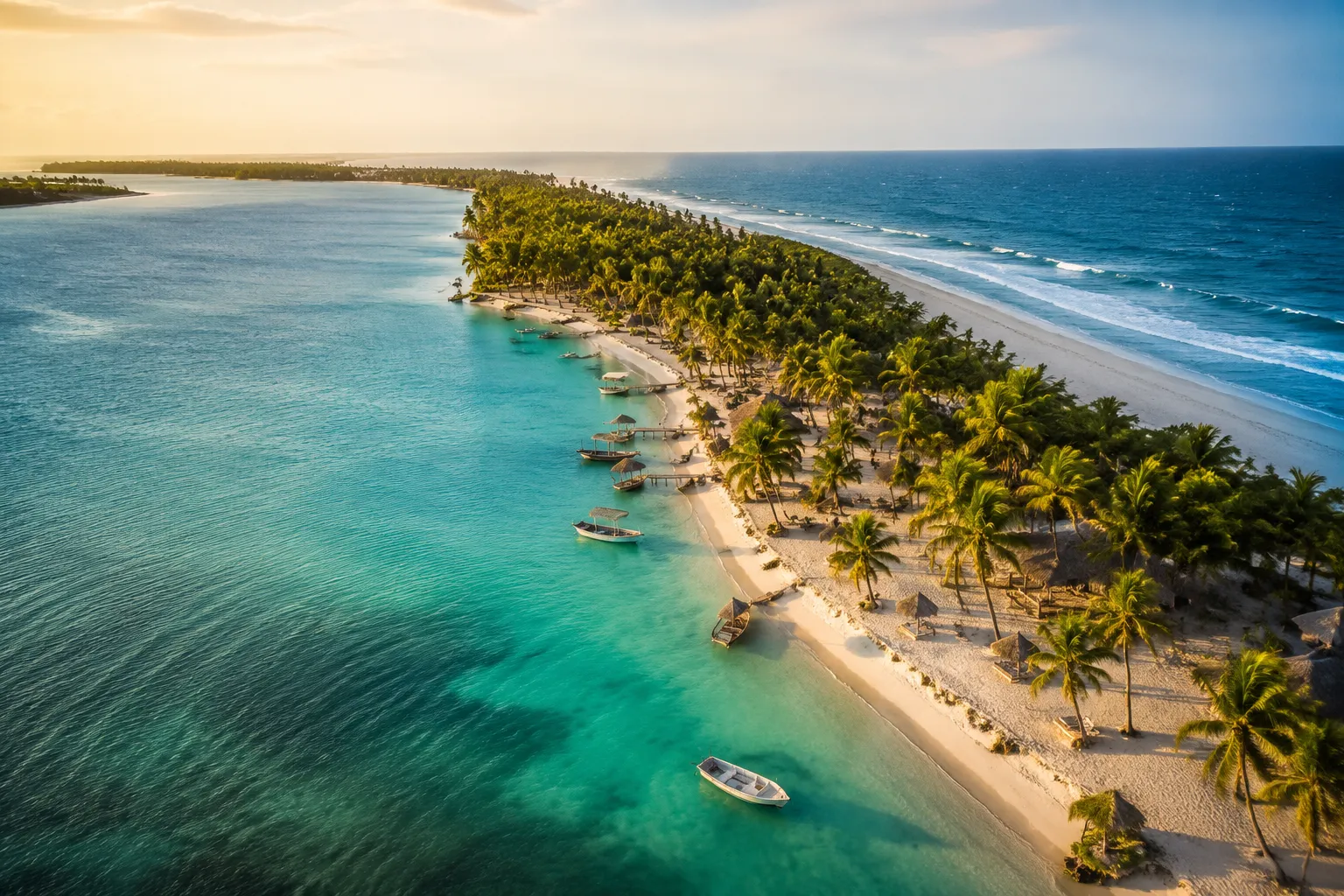
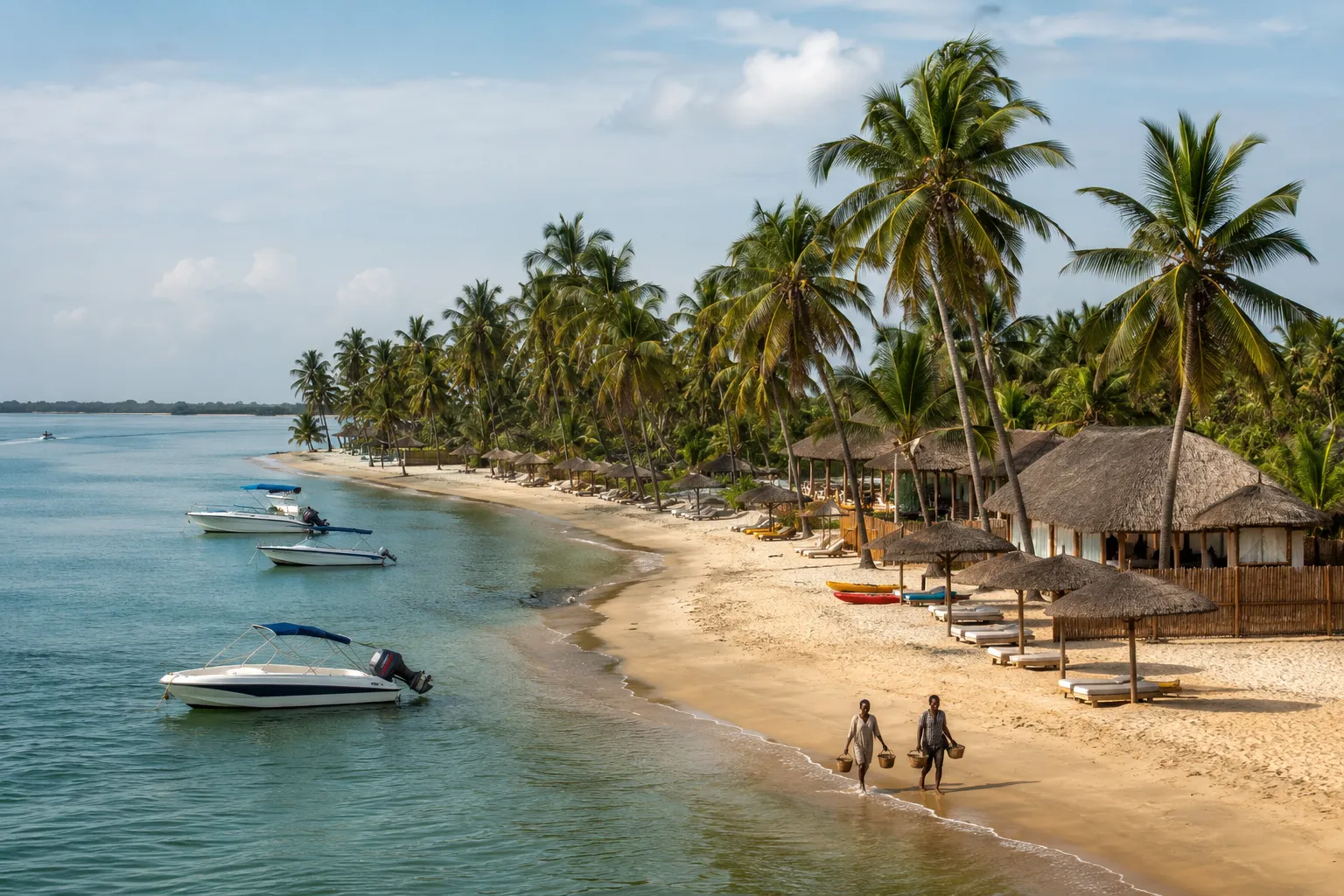
The best beach near Luanda is Ilha do Mussulo, a long sandy peninsula that shelters a calm lagoon just south of the capital. It is reached by a short boat ride, usually from Ilha de Luanda, and offers palm-shaded restaurants, jet-skis, and family-friendly swimming. It is the default weekend escape for anyone based in the city. [1][4]
What you get at Mussulo:
- Calm, shallow lagoon water on the inland side
- Open Atlantic surf on the ocean side of the spit
- Small resorts, beach clubs and rented kiosks
- Boat transfers arranged through hotels or directly at the pier
Other beaches within a day trip of the capital include Santiago Beach, Sangano (a quieter 3-kilometre stretch of white sand) and further south Cabo Ledo. Together they make Luanda one of the easiest African capitals for a beach day. For the wider city context, see our Luanda travel guide. [3]
Luanda beach vs other Angola beaches: beaches inside Luanda itself (like parts of Ilha) are convenient but urban, with traffic noise and mixed water quality. For actual swimming and scenery, head 30 to 120 kilometres out of town. The reward for the drive or boat ride is a genuinely different, quieter beach.
Benguela and Lobito: Praia Morena, Baia Azul and the Restinga
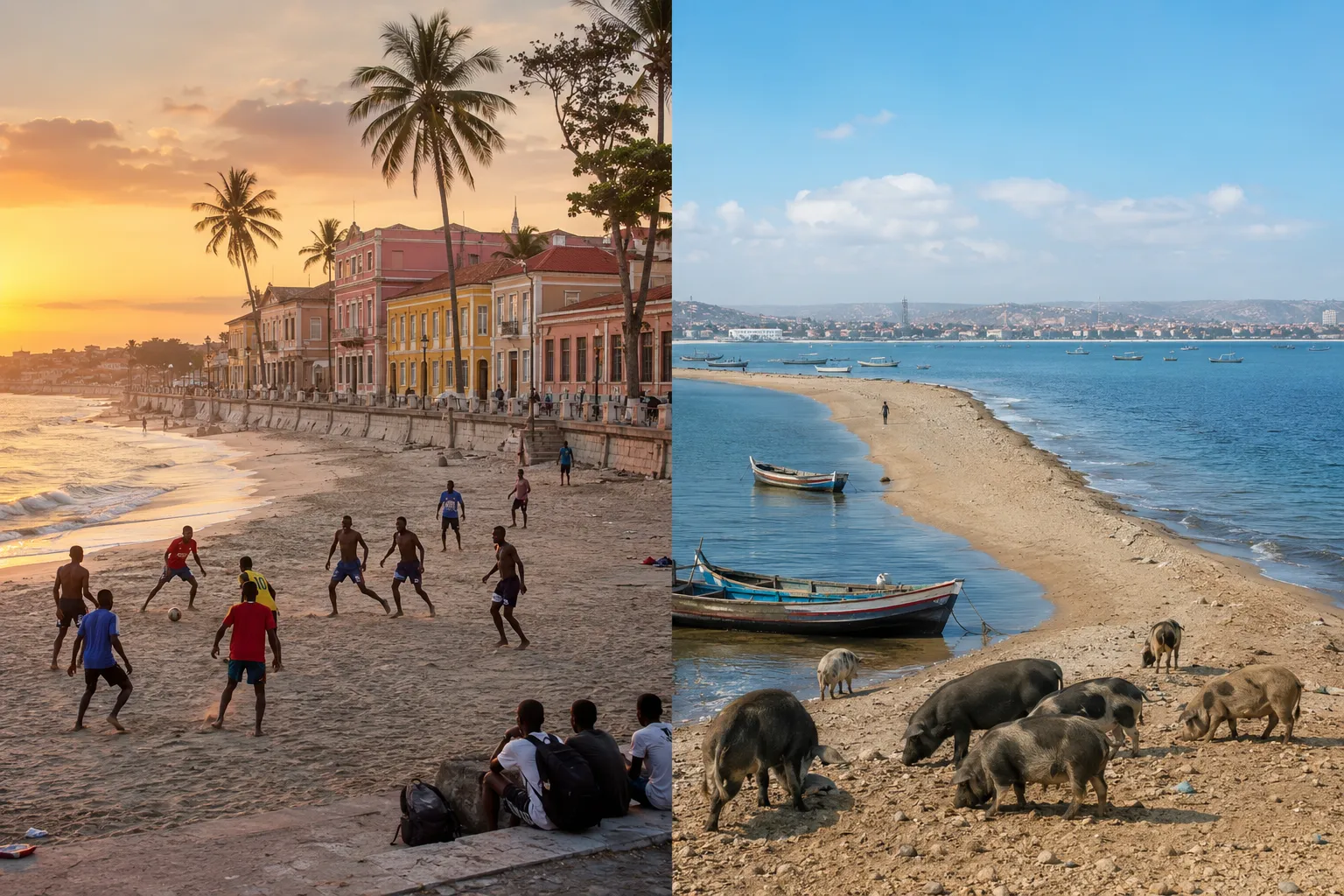
Benguela and Lobito, about 500 kilometres south of Luanda, have the country’s most classic swimming beaches. Praia Morena is Benguela’s palm-lined urban beach, great for sunset walks and grilled fish. Baia Azul (“Blue Bay”) sits just outside the city with clean sand and clear water. In Lobito, the Restinga is a long, thin sand spit lined with restaurants and villas. [4][2]
Quick comparison of the three:
| Beach | Best for | Vibe |
|---|---|---|
| Praia Morena | City beach, sunset, food | Lively, urban |
| Baia Azul | Swimming, sport fishing | Relaxed bay |
| Restinga (Lobito) | Long walks, restaurants | Local, tranquil |
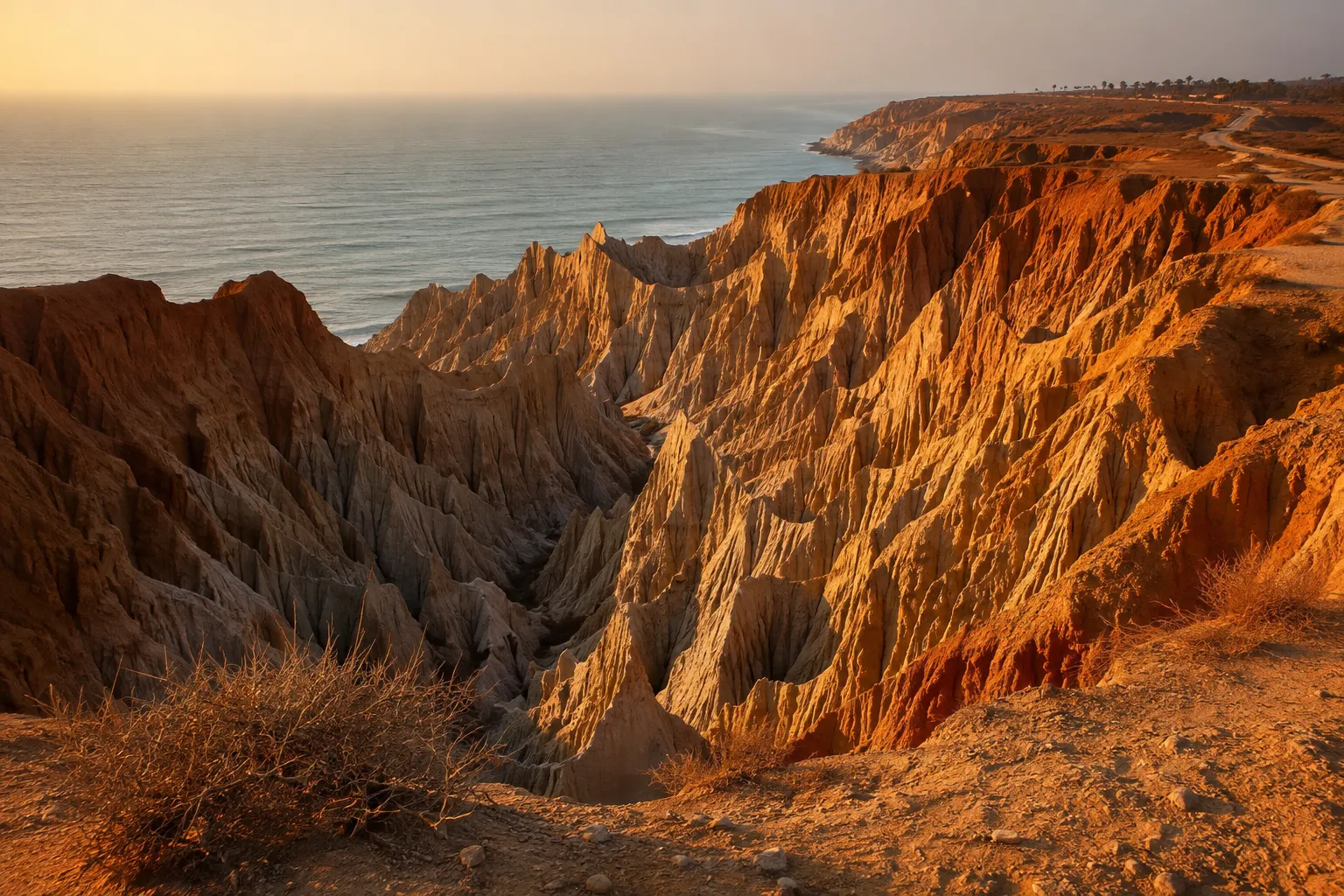
Nearby you will also find Praia da Caotinha, a small cove near Lobito known for turquoise water and dramatic cliffs, and Praia do Chingo, a quieter beach with interesting rock formations south of Benguela. For planning purposes, use our destination pages for Benguela and Lobito. [2][5]
The wild beaches of the south: Namibe and the desert coast
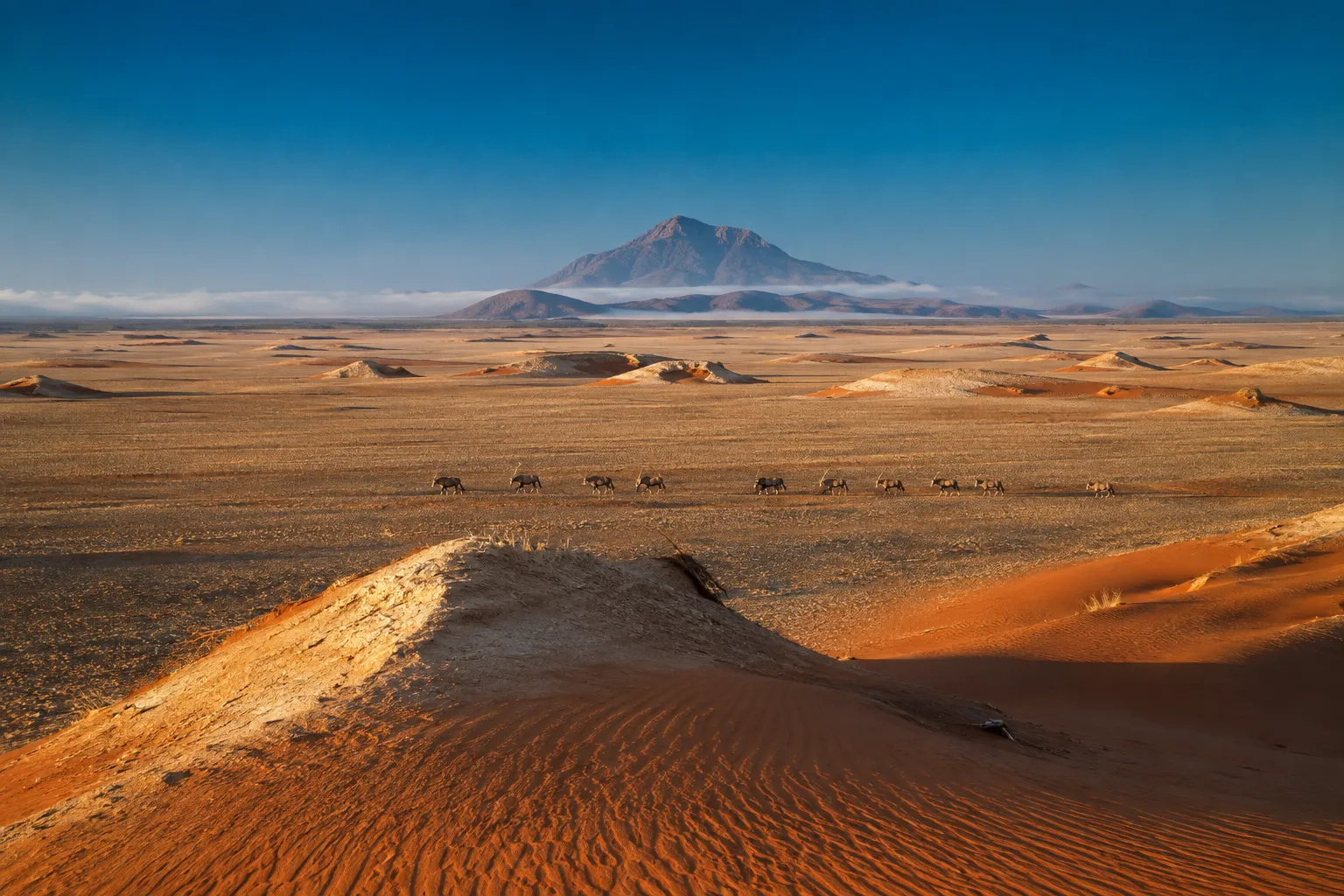
South of Lobito the coast becomes drier and stranger. Around Namibe (formerly Moçâmedes), the Namib Desert runs right up to the Atlantic. Beaches here are dramatic and often empty, with rocky headlands, cold water thanks to the Benguela Current, and access to Iona National Park. It is Angola’s most adventurous stretch of coast and rewards travellers who like solitude over sunloungers. [5]
Highlights of the southern coast:
- Praia da Baia dos Tigres: a former island community, now half-abandoned and half-buried in sand, reached only by 4x4 with permits.
- Praia da Morena near Namibe (not to be confused with Benguela’s Praia Morena): secluded, with striking rock formations.
- Coastal drives from Namibe town toward the Iona park entrance, with shipwrecks and fishing camps along the way.
This region is not for a casual beach day. You will want a 4x4, local guide and plenty of water. Our Namibe guide covers logistics.
Hidden and lesser-known beaches: if you want beaches almost no foreign tourist reaches, look at Praia da Luz near Cabinda in the far north, Praia da Galé inland-adjacent near Saurimo, and small fishing coves between Sumbe and Porto Amboim. Expect no facilities and bring everything you need. [5]
Cabo Ledo and the surf coast: are Angola beaches good for surfing?
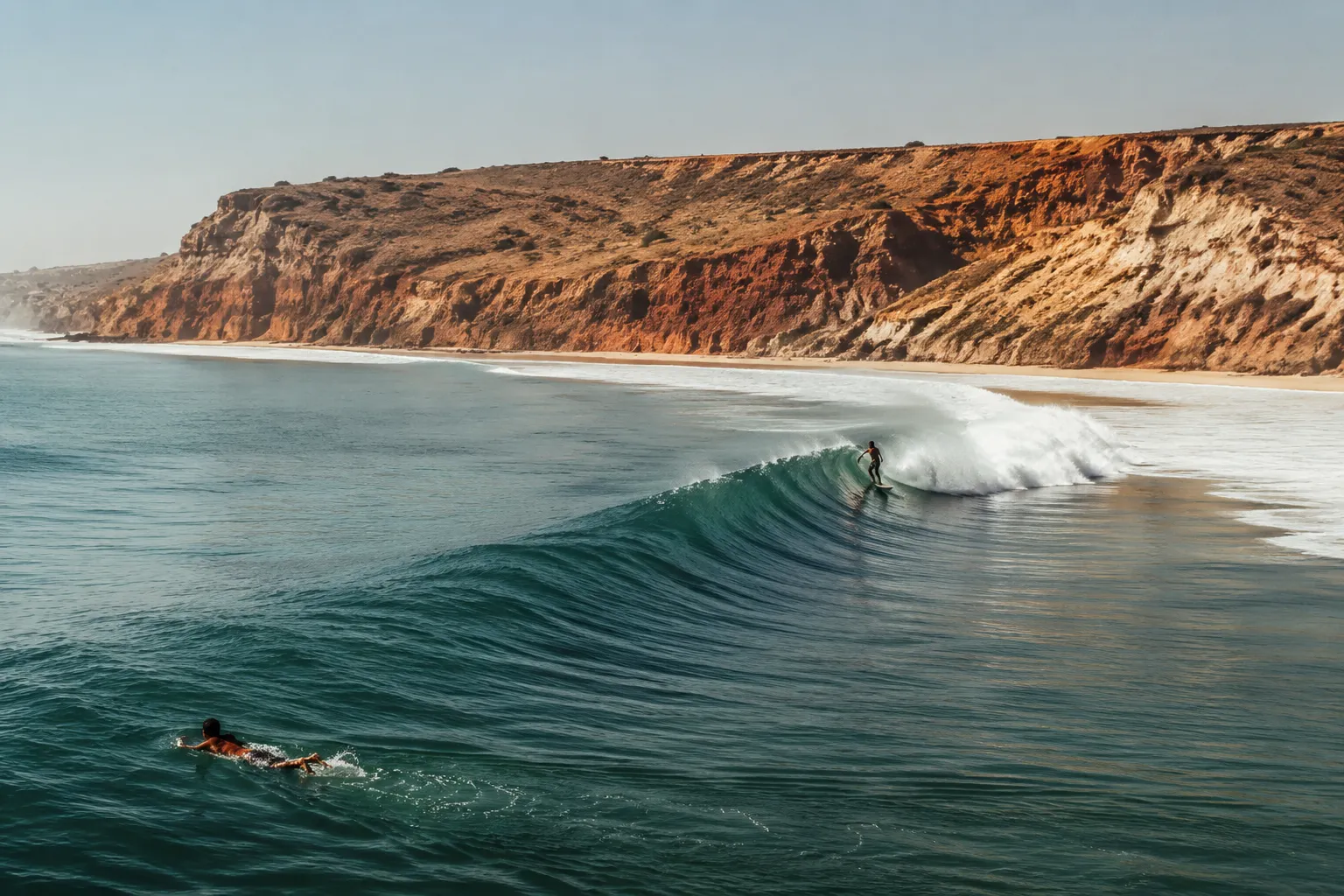
Yes. Cabo Ledo, about 120 kilometres south of Luanda, is Angola’s premier surf spot, famous for a long, mellow left-hand point break that peels along a curving bay. The surf is most consistent during the dry season, roughly June to October, when swells wrap in cleanly. There are a handful of surf camps and simple lodges on site. [2]
Why Cabo Ledo works so well:
- Long, forgiving left ideal for intermediate surfers
- Consistent swell in dry-season months
- Uncrowded compared to South Africa or Morocco
- Basic camps offer board rental and lessons
Other spots worth knowing: Buraco (north of Luanda) for shorter, punchier waves, and various beach breaks along the Sumbe coast. Full details are in our surfing in Angola guide.
Affiliate disclosure: links marked as bookings help support this site at no extra cost to you. We only recommend operators we would use ourselves.
If you want a hassle-free surf trip, booking a package with a local surf camp that includes airport transfer, accommodation and board hire is usually the smoothest option. You can also compare hotels and tours in the Cabo Ledo area through our partner network.
Are Angola beaches safe? Swimming, sun and general advice
Most Angolan beaches are safe to visit in daylight, especially the well-known ones near Luanda, Benguela and Lobito, but conditions and petty crime risk vary. Swimming is best in sheltered bays like Mussulo and Baia Azul. Open Atlantic beaches can have strong currents and rip tides. Always check current government travel advice before you go. [1]
Practical safety tips:
- Do not swim alone on open, unpatrolled Atlantic beaches.
- Watch for rip currents; if caught, swim parallel to shore.
- Keep valuables out of sight; do not leave bags unattended.
- Avoid isolated beaches after dark.
- For up-to-date safety information, check your national foreign office (for example the UK’s FCDO travel advice for Angola).
Are Angola beaches safe to visit in 2026? In general yes, in the tourist-standard areas near Luanda, Benguela and Lobito. The exclave of Cabinda often carries stricter travel advisories. Situations change, so verify the latest guidance from your government’s foreign office before booking. [1]
Best beaches in Angola for families
For families, the safest and easiest beaches are Mussulo (calm lagoon, resorts, boat access), Baia Azul near Benguela (shallow, clean, umbrella rental) and the Restinga in Lobito (long, safe stretch with restaurants). These beaches combine calm water, food nearby and enough infrastructure that you do not need to bring everything from home. [1][4]
Family-friendly features to look for:
- Sheltered bay or lagoon (avoids strong Atlantic surf)
- Shade from palms or rented umbrellas
- Nearby toilets and restaurants
- Boat or short-drive access rather than long 4x4 expeditions
Skip Cabo Ledo with small children unless they are confident swimmers; the surf and currents there are not ideal for toddlers.
Practical tips: access, cost and best time
Getting to Angolan beaches usually means driving from Luanda or flying to a regional airport like Benguela or Namibe, then arranging local transport. The best time is the dry season, roughly May to October, when it is cooler, drier and less humid. Rental cars, hired drivers and organised day tours are the three main options. [2]
How to get to the main beaches:
- Mussulo: taxi to Ilha de Luanda pier, then boat (10 to 30 minutes)
- Cabo Ledo: roughly 2-hour drive south of Luanda by car or transfer
- Sangano and Bengo-area beaches: 1 to 2 hours south of Luanda by road
- Benguela and Lobito beaches: fly from Luanda, then short taxi rides
- Namibe: fly from Luanda; 4x4 recommended for coastal exploration
Cheapest beaches to visit in Angola are generally the ones near Benguela and Lobito, where local guesthouses and restaurants are far more affordable than Luanda. Mussulo and Cabo Ledo are pricier because of transfer costs and resort pricing. Bring kwanza in cash for smaller places; card acceptance is patchy outside big hotels.
Beaches with hotels and resorts are concentrated around Mussulo, Cabo Ledo, central Luanda, Benguela and Lobito. Booking hotels and tours in advance is smart, especially in dry season. You can compare beach hotels and multi-day tours in Angola through our partner network.
• Confirm current visa rules with the official Angolan e-visa portal
• Check yellow fever and malaria advice with a travel clinic
• Bring cash (kwanza) for beach kiosks and boat drivers
• Download offline maps; signage in English is limited
• Pack reef-safe sunscreen and a light windbreaker for cooler southern beaches
Comparison: which Angola beach should you pick?
| Beach | Region | Best for |
|---|---|---|
| Mussulo | Near Luanda | Families, day trips |
| Cabo Ledo | South of Luanda | Surfing |
| Praia Morena | Benguela | Urban beach, food |
| Baia Azul | Benguela | Swimming |
| Restinga | Lobito | Long walks, quiet |
| Namibe coast | South | Adventure, solitude |
Conclusion
Angola’s coast is one of the last genuinely under-explored beach destinations in Africa. If you have one weekend, head to Mussulo. If you have a week, pair Luanda with Cabo Ledo for surf and then fly south to Benguela for Praia Morena and Baia Azul. If you have more time and a sense of adventure, drive into the Namibe desert coast where the beaches empty out completely.
Practical next steps: check the latest visa and health requirements with the official Angolan e-visa portal and your travel clinic, book flights into Luanda well ahead of dry season, and pin down at least your first two nights of accommodation before you land. From there, you can improvise. That, honestly, is half the fun of travelling this coast right now.
Golden hour calculator
Sunrise, sunset and the finest photo light for each destination.
Times in Angolan time (UTC+1, no daylight saving), calculated astronomically and accurate to within a few minutes; cloud cover and terrain (mountains!) determine the real light. Need inspiration? Explorethe finest beaches andthe Miradouro da Lua.
Free help from our team in Angola
Want your beach days in Angola arranged?
Tell us which coast appeals to you and when you travel. We arrange the transfers and help you choose where to stay, from Mussulo to Benguela and Namibe.
- Local team in Angola
- No obligation, nothing to pay
- Reply by email or WhatsApp
Want to keep this guide? We email you the key points with a link to every section.
Frequently asked questions
Does Angola have good beaches?
Yes. Angola has roughly 1,600 kilometres of Atlantic coastline with a wide range of beaches, from calm palm-fringed lagoons at Mussulo to surf breaks at Cabo Ledo and empty desert shores near Namibe. Tourism is still developing, so many beaches are uncrowded and feel genuinely undiscovered compared to more established African coasts.
What is the best beach near Luanda?
The best beach near Luanda is **Ilha do Mussulo**, a long sandy peninsula reached by a short boat ride from Ilha de Luanda. It has calm lagoon water on one side, Atlantic surf on the other, and a mix of small resorts and beach kiosks. It is the standard weekend escape for city residents.
What is Mussulo?
**Mussulo** is a long sandy peninsula stretching south from Luanda, protecting a calm inland lagoon from the Atlantic. It is accessed by a 10 to 30 minute boat transfer and offers palm-lined beaches, resorts, water sports and seafood restaurants. Its shallow lagoon side makes it especially popular with families and boat trip visitors.
Are the beaches safe for swimming?
Sheltered bays like Mussulo's lagoon, Baia Azul near Benguela and parts of the Restinga in Lobito are generally safe for swimming. Open Atlantic beaches, including Cabo Ledo, can have strong currents and rip tides. Never swim alone on unpatrolled beaches, watch children carefully and check local advice before entering the water.
Which beaches are best for surfing?
**Cabo Ledo**, about 120 kilometres south of Luanda, is Angola's top surf destination thanks to a long left-hand point break. Buraco north of Luanda and various beach breaks along the Sumbe coast also work. Conditions are best in the dry season from roughly June to October. See our dedicated surfing in Angola guide for details.
When is the best time for the beach?
The best time to visit Angolan beaches is the dry season, roughly **May to October**. Days are sunny and less humid, and the sea is calmer, especially north of Namibe. The rainy season, November to April, brings warmer water but more humidity, occasional storms and rougher surf on exposed coasts.