Quick answer
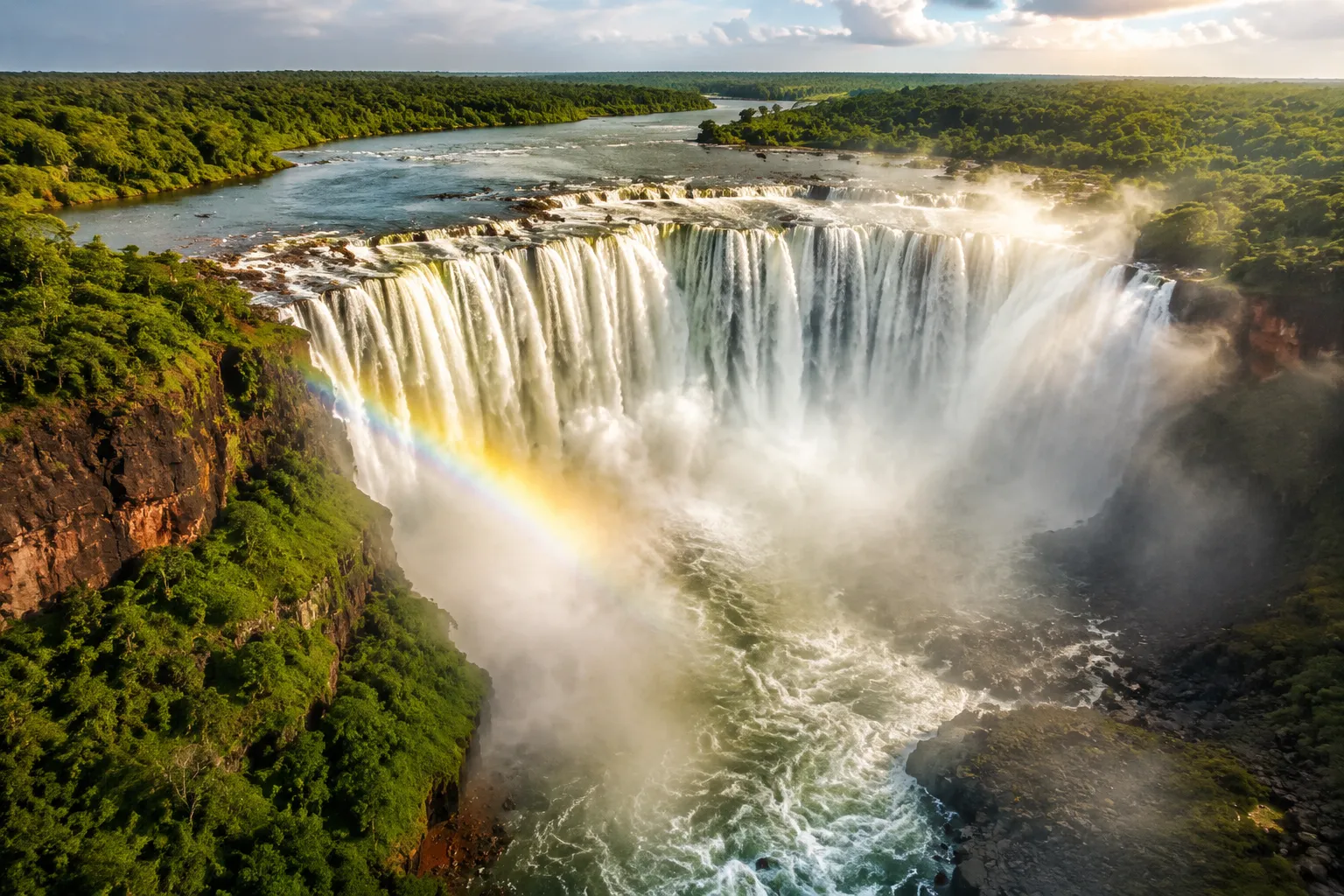
Kalandula Falls (Quedas de Kalandula) is one of Africa’s biggest waterfalls, located on the Lucala River in Malanje province, roughly 360 to 420 km east of Luanda. The horseshoe-shaped curtain drops around 105 meters and stretches about 400 meters wide, making it the second-largest waterfall in Africa by volume after Victoria Falls [1][4]. You reach it via a full-day drive from Luanda, entrance is a small local fee, and the best time to visit is at the end of the rainy season (March-April) when the falls are at their most powerful.
Key takeaways
- Location: Malanje province, northern Angola, on the Lucala River near the town of Kalandula.
- Size: Approximately 105 m high and 400 m wide, one of the largest waterfalls in Africa [1][4].
- Distance from Luanda: roughly 360-420 km one way, around 6-8 hours by car via Malanje.
- Best time: end of the rainy season (March-April) for maximum flow; May-August for easier access and clearer views.
- Entrance: small local fee, paid in kwanza on-site; a local guide is optional but recommended.
- Combine with: Pedras Negras de Pungo Andongo, roughly 2-3 hours away by road.
- Safety: generally safe but remote; bring cash, water, and a 4x4 in wet season.
Where are the Kalandula Falls located?
Kalandula Falls sits on the Lucala River in Malanje province, in the north-central interior of Angola, near the small town of Kalandula (formerly Duque de Bragança) [1][10]. The falls are around 85 km northwest of Malanje city and about 360-420 km east of Luanda depending on the route.
The surrounding area is a green plateau of tropical savanna, coffee plantations, and small farming villages. It’s remote but reachable, and part of the region’s charm is how few tourists you’ll meet. On a good day you may share the viewpoint with just a handful of other visitors [5].
For broader context on Angola’s landmarks, see our overview of things to do in Angola.
Why the Kalandula waterfalls are worth visiting
Kalandula is worth visiting because it’s one of the largest waterfalls on the African continent, yet remains virtually untouched by mass tourism. Where Victoria Falls draws over a million visitors a year, Kalandula sees only a fraction of that, giving you a raw, unfiltered experience [1][8].
What makes it special:
- Scale: the horseshoe-shaped curtain is genuinely massive, comparable in ambition to Iguazu or Niagara.
- Solitude: no crowds, no fenced walkways, no souvenir stalls blocking the view.
- Access: you can walk to the base and stand almost inside the spray at the right time of year [5][8].
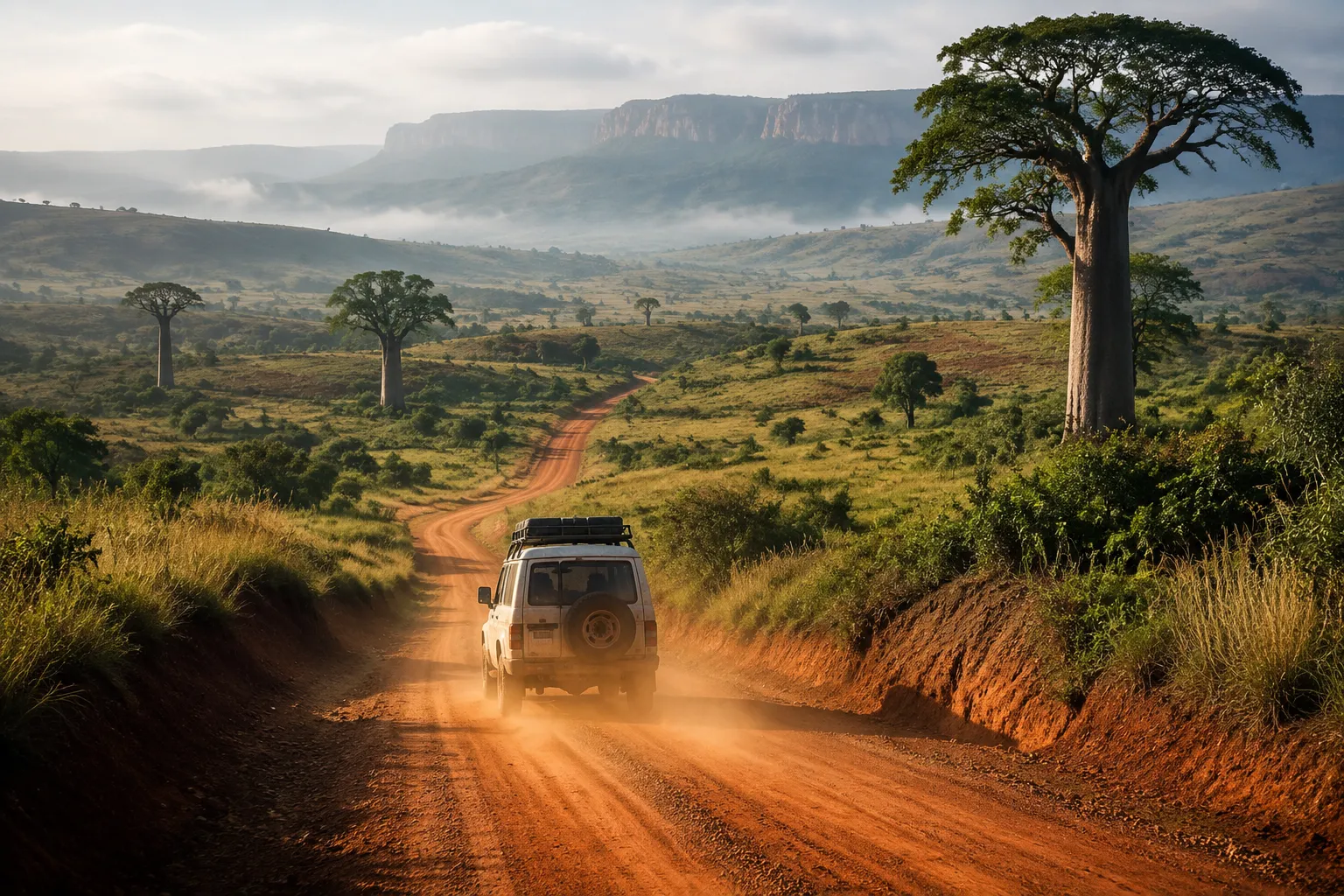
- Landscape: the green Malanje plateau, red-dirt roads, and traditional villages make the journey itself memorable.
“You can walk right up to the edge with no barriers. It’s the kind of experience that has vanished from most of the world’s famous waterfalls.”, traveler review, TripAdvisor [2]
How tall is Kalandula Falls?
Kalandula Falls is approximately 105 meters (344 feet) high and around 400 meters (1,300 feet) wide [1][4]. That makes it roughly the same height as Victoria Falls, though narrower and with a lower peak water volume.
By African standards, only Victoria Falls (Zambia/Zimbabwe) is consistently larger. Kalandula is regularly cited as the second-largest waterfall in Africa by volume [1][4][8].
How to get to Kalandula Falls from Luanda
The most common route is by road from Luanda, via Malanje. It’s a full-day drive of roughly 360-420 km one way, taking about 6 to 8 hours depending on road conditions, checkpoints, and stops [4][5].
The route in short
- Luanda to Malanje city: around 380 km on the EN-230, roughly 5-7 hours. Road quality is generally reasonable but with rough patches, potholes, and slow trucks.
- Malanje to Kalandula town: around 85 km on a smaller road, roughly 1.5-2 hours. The last stretch can be very rough in the wet season.
- Kalandula town to the falls: a short drive on a dirt track to the viewpoint.
Your options
- Rent a 4x4 with driver: the most practical option for most foreign visitors. A driver who knows the route saves headaches at checkpoints.
- Organized multi-day tour: several operators run 2-4 day trips from Luanda combining Kalandula with Pungo Andongo. This is the easiest way and often the best value once you factor in fuel, accommodation, and guiding.
- Self-drive: possible if you’re experienced with African road travel, have a 4x4, and speak some Portuguese.
- Domestic flight + car: you can fly Luanda-Malanje and hire a car locally, cutting driving time significantly.
Affiliate disclosure: some links below are affiliate links (rel=“sponsored nofollow”). We may earn a small commission at no extra cost to you.
For a hassle-free experience, you can book a guided Angola tour that includes Kalandula and Pungo Andongo. See our full guide to travelling to Angola and getting around Angola for transport logistics.
Best time to visit Kalandula Falls: dry season vs wet season
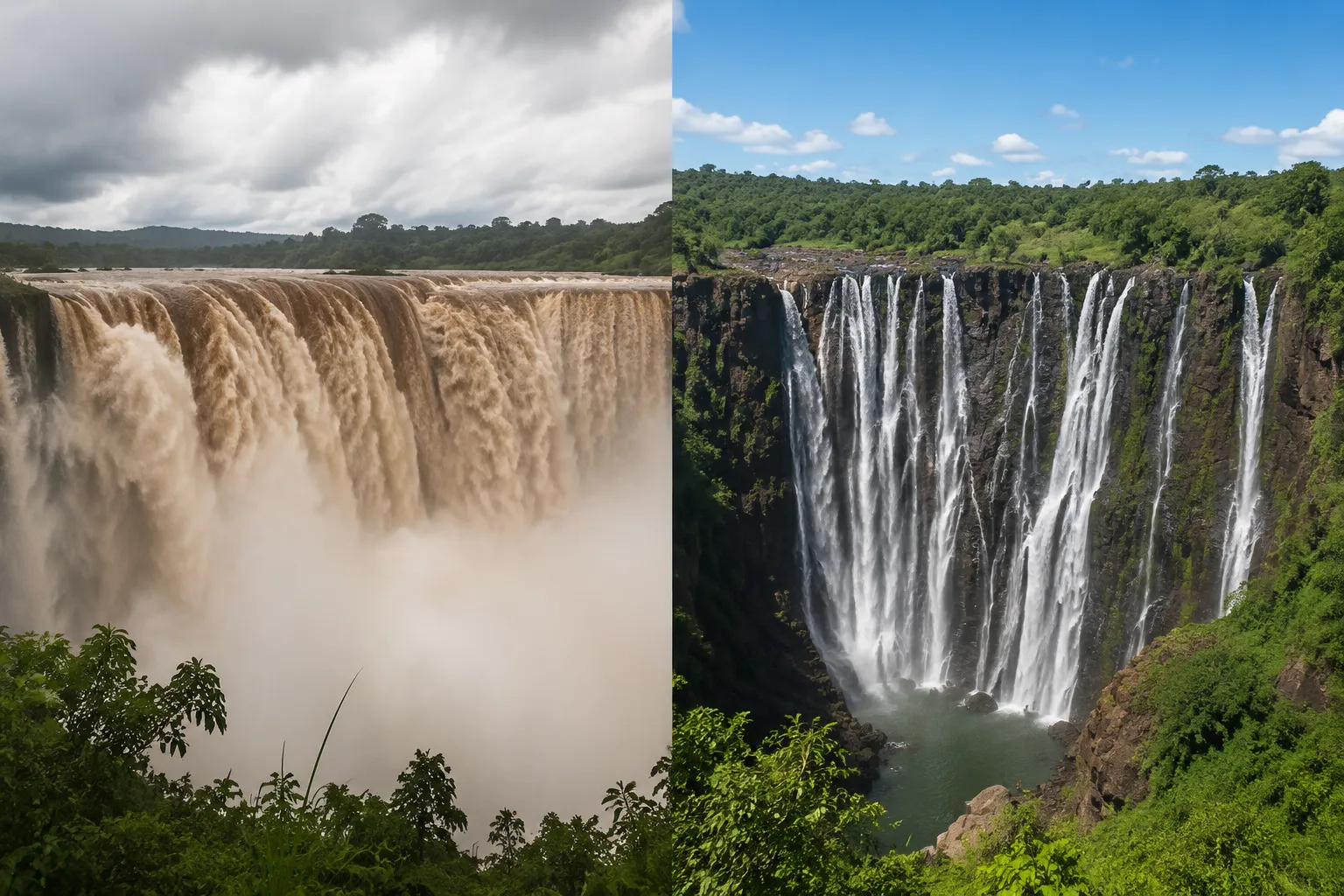
The best time to visit Kalandula Falls depends on what you want: maximum power (March-April, end of rainy season) or easier access and clearer views (May-September, dry season) [4][5][9].
Choose March or April if you want the falls at maximum thunder and mist.
Choose June, July, or August if you want cool, dry weather, easier roads, and clearer photos.
Wet season (November-April)
- Water volume is enormous; the falls form a single massive brown curtain.
- Mist can be so thick you barely see the base.
- Roads, especially the last stretch to the falls, can be muddy and slippery.
- Peak spectacle around March-April.
Dry season (May-October)
- Falls split into distinct white cascades over dark basalt.
- Blue skies, less mist, better photos and rainbows.
- Roads are easier, hiking to the base is safer.
- Best all-round window for a first visit.
For more general guidance, see best time to visit Angola.
Viewpoints and how close you can get
There are two main viewpoints, and yes, you can get remarkably close to the falls [5][8].
- Top viewpoint (near the old Pousada Kalandula): a wide panoramic view of the full horseshoe from above. This is the classic postcard angle and where most photos are taken.
- Bottom / river-level viewpoint: a rough footpath descends toward the base. In dry season you can hike down and stand within meters of the spray. Sturdy shoes required; slippery when wet.
Do you need a guide at Kalandula Falls?
You don’t strictly need a guide for the main viewpoint, but hiring a local guide at the top is cheap, supports the community, and is genuinely useful if you want to hike down to the base [5]. Guides typically ask a small tip in kwanza and can show you the best safe paths.
Entrance fee, safety and swimming
Entrance fee
There is a small local entrance fee, paid in Angolan kwanza on arrival [5]. Exact amounts change, so bring cash and confirm on the day. Do not rely on cards.
Is Kalandula Falls safe to visit?
Yes, Kalandula is generally safe. Malanje province is calm, and visitors report friendly locals and no security issues at the falls themselves [2][5]. Standard precautions apply: watch your footing near the edge (no barriers), don’t hike down alone in the wet season, and keep an eye on the weather.
For up-to-date safety guidance, consult your government’s official travel advice (for example the UK FCDO or the US State Department), and see our overview of is Angola safe.
Can you swim at Kalandula Falls?
Swimming directly at the base of Kalandula Falls is not recommended. The currents, hidden rocks, and sheer volume of water make it dangerous, especially in wet season. Some travelers cool off in calmer pools upstream, but there are no official swimming areas and no lifeguards [5][8].
How long does it take to visit Kalandula Falls?
Realistically, plan a minimum of 2 days from Luanda: one day driving out (with an overnight in Malanje or near the falls), and one day at the site plus the return drive. Three days is more comfortable, especially if you add Pungo Andongo.
At the falls themselves, 2-4 hours is enough for the viewpoints and a short hike. Photographers often stay for sunrise and late afternoon light.
Day 1: Luanda to Malanje (drive, overnight in Malanje).
Day 2: Malanje to Kalandula Falls, visit both viewpoints, overnight near falls or back in Malanje.
Day 3: Pedras Negras de Pungo Andongo, return to Luanda.
See our full Angola itinerary for longer routes.
Kalandula Falls vs Victoria Falls: how do they compare?
Victoria Falls is bigger and more famous. Kalandula is quieter, cheaper, and far less developed. Both are stunning, but they offer very different experiences [1][8].
| Feature | Kalandula Falls | Victoria Falls |
|---|---|---|
| Height | ~105 m | ~108 m |
| Width | ~400 m | ~1,700 m |
| Country | Angola | Zambia/Zimbabwe |
| Annual visitors | Very low | ~1 million+ |
| Infrastructure | Minimal | Extensive |
| Cost | Low | High |
| Crowds | Almost none | Many |
Choose Kalandula if you want raw, uncrowded adventure. Choose Victoria if you want polished tourism infrastructure, activities, and easy access.
Where to stay near Kalandula Falls
Accommodation near the falls is limited. Your main options are:
- Pousada Kalandula (near the top viewpoint): the historic lodge overlooking the falls. Basic but atmospheric; check current operating status before booking, as reports vary [5][9].
- Hotels in Malanje city (~85 km away): more choice, better facilities, but a 1.5-2 hour drive each way.
- Guesthouses in Kalandula town: simple, cheap, local. Best for adventurous travelers who speak some Portuguese.
Book hotels in Malanje in advance during dry season weekends. For general lodging tips, see accommodation in Angola.
Combining with the Pedras Negras de Pungo Andongo
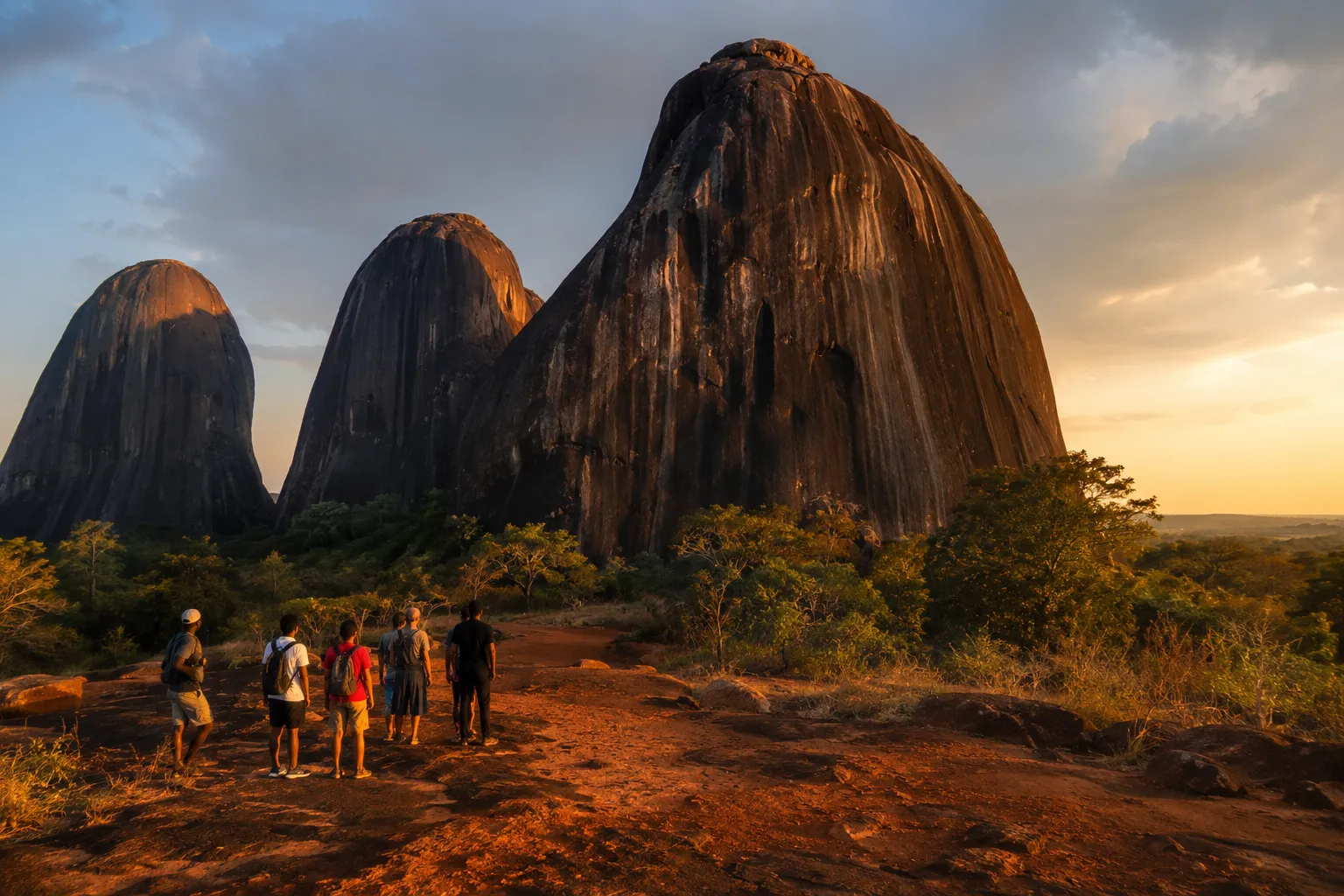
Most travelers pair Kalandula Falls with the Pedras Negras de Pungo Andongo (Black Rocks of Pungo Andongo), a group of dramatic black monolithic rock formations about 2-3 hours’ drive south of the falls, still in Malanje province [4][8].
Highlights:
- Massive, weathered black boulders rising from the plains.
- Cultural and historical significance tied to the ancient Ndongo kingdom.
- Great sunset viewpoint from the top of the main rock.
Combining both in a single 3-4 day trip from Luanda is by far the most rewarding way to explore Malanje.
What to pack for a Kalandula Falls trip
Pack for a rugged rural trip, not a resort:
- Cash in kwanza for entrance, guides, tips, and food (no cards in the area).
- Sturdy walking shoes or hiking boots with grip for slippery paths.
- Light rain jacket even in dry season; the spray is intense.
- Dry bag or plastic sleeve for your phone and camera.
- Sun hat, sunscreen, and insect repellent.
- Water and snacks; options near the falls are limited.
- Malaria prophylaxis and yellow fever certificate (see vaccinations in Angola).
- Portuguese phrasebook or offline translator app; English is rarely spoken.
- eSIM or local SIM for mobile data; signal is patchy but exists.
Practical tips from the road
- Fill up on fuel in Malanje. Petrol stations are sparse beyond the city.
- Start early. Leave Luanda before sunrise to avoid urban traffic.
- Bring your passport. Expect police checkpoints; documents must be in order.
- Respect the locals. Ask before photographing people. A small gift or tip is appreciated when photos are taken.
- Don’t underestimate distances. Roads can be slow. Build in buffer time.
- Combine with Luanda. Spend a day or two exploring Luanda before or after your Malanje trip.
Conclusion
Kalandula Falls is one of the most spectacular yet under-visited natural sights on the African continent. If you’re planning a trip to Angola, it belongs at the top of your list alongside Luanda, Kissama National Park, and the Lubango highlands.
Your next steps:
- Pick your season (March-April for power, June-August for ease).
- Decide between a guided tour or self-drive with a 4x4.
- Sort your visa, vaccinations, and travel insurance early.
- Combine Kalandula with Pungo Andongo for a full Malanje experience.
- Read our guides to things to do in Angola and Angola travel tips to build the rest of your trip.
Free help from our team in Angola
Want to see Kalandula Falls?
Kalandula is a long day’s drive from Luanda. Tell us your dates and we arrange the drive, a guide from our own team and a place to stay near the falls.
- Local team in Angola
- No obligation, nothing to pay
- Reply by email or WhatsApp
Want to keep this guide? We email you the key points with a link to every section.
Frequently asked questions
Where are the Kalandula Falls?
Kalandula Falls is on the Lucala River in Malanje province, north-central Angola, roughly 360-420 km east of Luanda and about 85 km northwest of Malanje city.
How big are the Kalandula Falls?
Approximately 105 meters high and 400 meters wide, forming a horseshoe-shaped curtain. It's considered the second-largest waterfall in Africa by volume after Victoria Falls.
How do I get to Kalandula Falls?
By road from Luanda via Malanje, a 6-8 hour drive one way. Most travelers use a 4x4 with driver, join a multi-day tour, or fly to Malanje and hire a car locally.
When is the best time to visit Kalandula Falls?
March-April at the end of the rainy season for maximum water flow, or May-September in the dry season for easier access and clearer views.
Can you get close to the Kalandula waterfalls?
Yes. There are two main viewpoints, and in the dry season you can hike down a rough footpath to near the base, standing within meters of the spray.
Where can I stay near Kalandula Falls?
Options include the historic Pousada Kalandula (verify current status), hotels in Malanje city about 85 km away, or simple guesthouses in Kalandula town.
Do I need a visa to visit Angola?
Many nationalities, including EU citizens, now benefit from visa-free short stays or an e-visa, but rules change. Check the current requirements before travel via our [Angola visa guide](/angola-visa/) guide and the official Angolan e-visa portal.
Is Kalandula Falls safe to visit?
Yes, the area is generally safe and calm. Standard precautions apply near unfenced edges and steep paths. Check the current [Belgian travel advisory](https://diplomatie.belgium.be/nl) before you go.