Quick answer
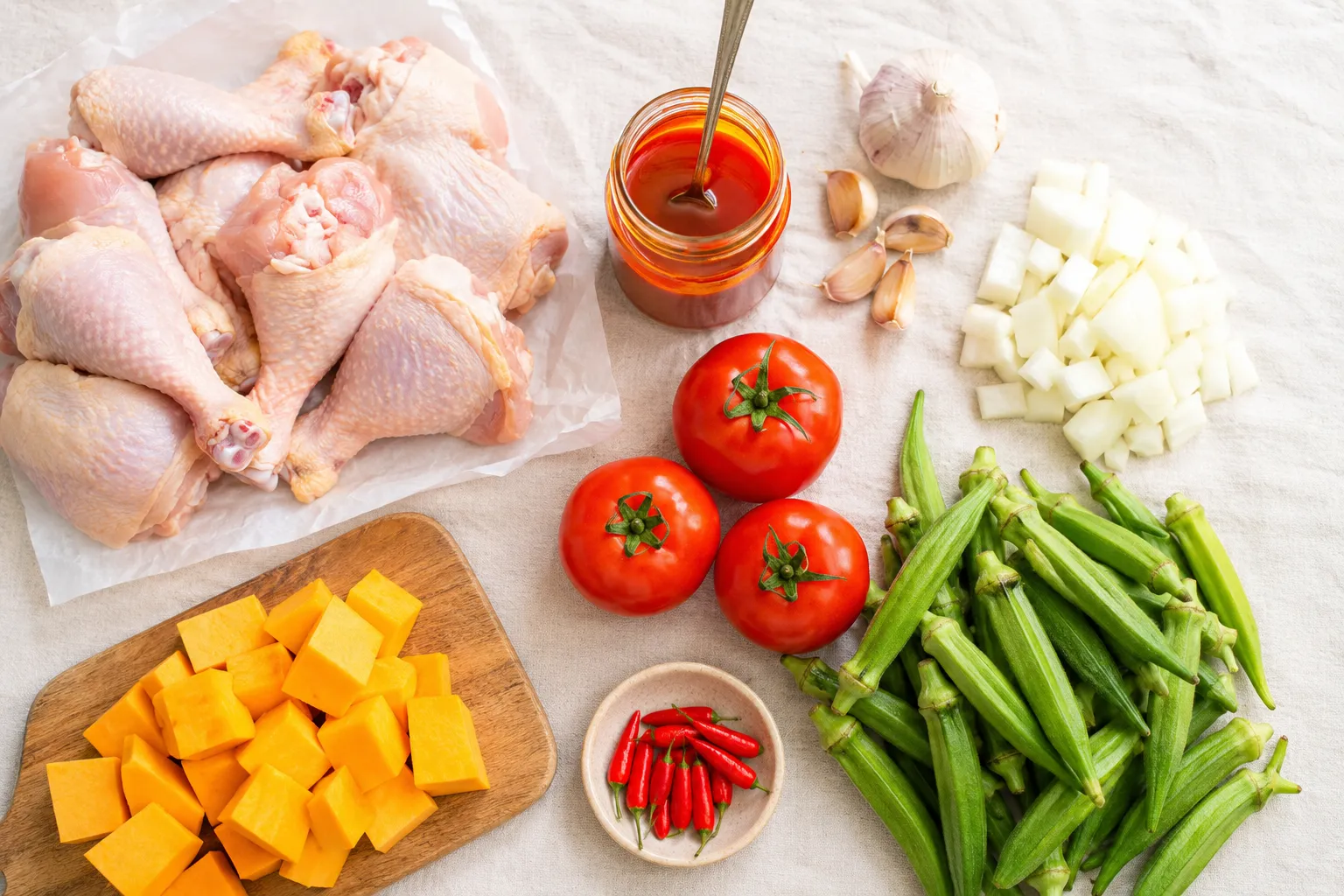
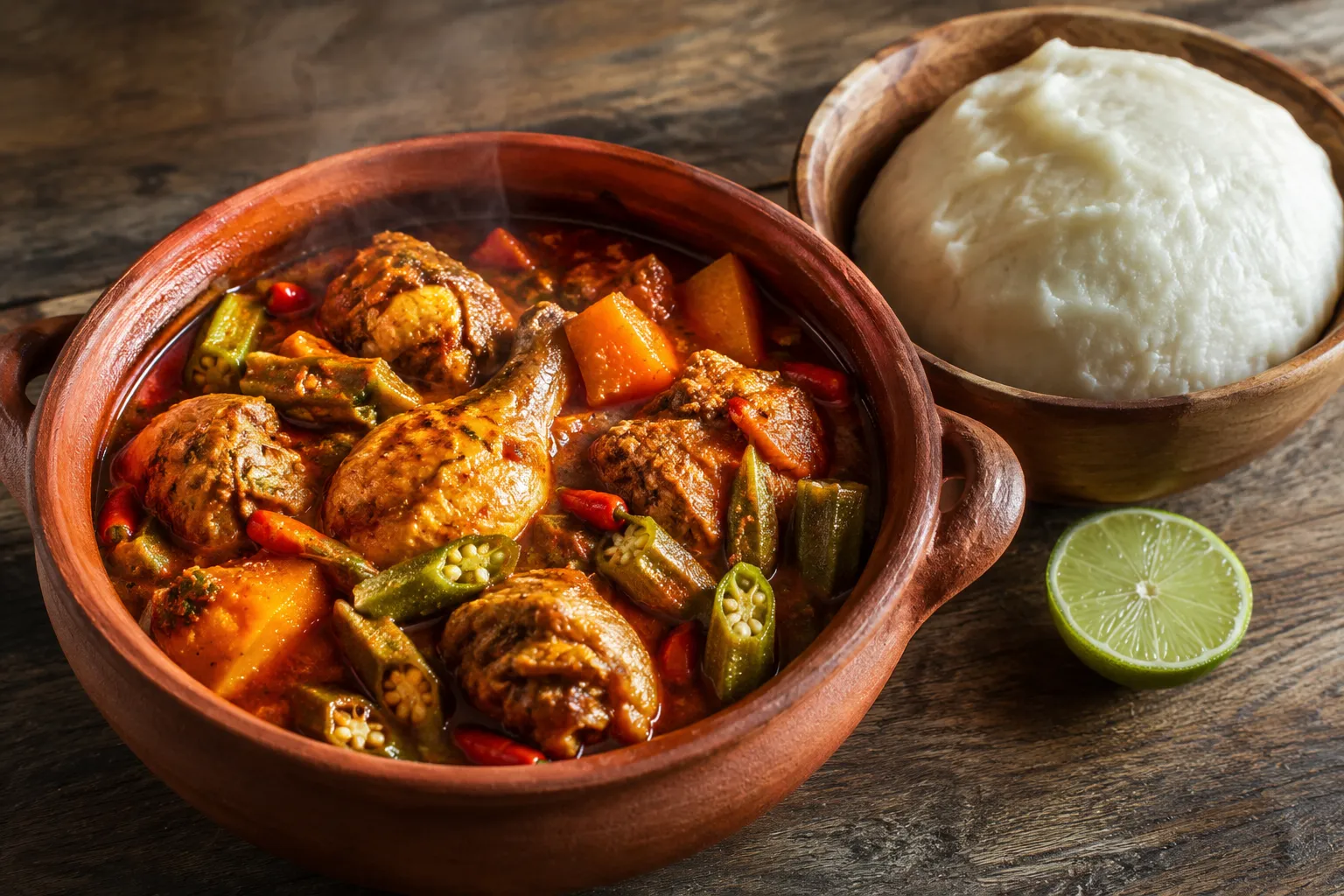
The muamba de galinha Angolan chicken stew is a slow-simmered dish of chicken, unrefined red palm oil (dende), onion, garlic, tomato, okra and gindungo chilli, usually with cubes of squash or pumpkin melting into the sauce. That deep red-orange colour comes from the palm oil, not from tomato or paprika. It is the dish most often named as Angola’s national dish, and it is traditionally eaten with funge, a soft cassava or maize dough. At home it takes roughly 40 minutes of simmering after browning the chicken.
Key takeaways
- Muamba de galinha is also spelled moamba de galinha, and the peanut-based cousin is muamba de ginguba.
- The one non-negotiable ingredient is unrefined red palm oil, sold abroad as dende, palm butter or muamba de dendem.
- Gindungo, the Angolan bird’s eye chilli, brings the heat. Thai bird’s eye or a few drops of a clean hot sauce work as a stand-in.
- Standard partner: funge. Rice is the usual restaurant alternative, and many places serve both.
- Cooking is genuinely simple. Season, brown, soften aromatics, add tomato and chilli, then add squash and okra and simmer.
- Nobody has to declare it the official national dish for it to matter. Calulu has an equal claim, and Angolans will happily argue about it.
- It freezes well for up to three months, and the flavour improves overnight.
What is muamba de galinha?
Muamba de galinha is an Angolan chicken stew built on red palm oil, with okra and squash giving the sauce body and a faint sweetness. It belongs to a wider family of palm oil dishes found across Central Africa, but the Angolan version is distinctive for its combination of okra, pumpkin and gindungo chilli, and for being served with funge.
The word muamba refers to the palm oil sauce itself, which is why you also see muamba de ginguba (the same idea made with ground peanuts) and muamba de peixe with fish. Galinha simply means chicken. Spelling varies by region and by cookbook, so moamba de galinha on a menu is the same dish.
If a stew arrives at your table the colour of a Namibe sunset and smells faintly of smoke and toasted nuts, that is the palm oil talking. Everything else is supporting cast.
You will find it at family lunches, at weddings, on Sunday tables and in restaurants that cater to Angolans rather than to expat business travellers. It is a genuine home dish, not a tourist invention. For the wider context, see the overview of 15 Angolan dishes worth trying and the background on Angola’s culture and everyday traditions.
How does muamba de galinha differ from an ordinary chicken stew?
The difference is the fat. A European or American chicken stew is usually built on butter, olive oil or a flour roux, and it is thickened with starch or reduction. Muamba is built on unrefined red palm oil and thickened by okra and softened squash.
What that changes in practice:
- Colour. Bright red-orange throughout, including the oil that pools on top. A tomato stew is duller and browner.
- Aroma. Red palm oil smells savoury and slightly smoky, a little like roasted carrot and nut oil combined.
- Texture. Okra releases a light silkiness. It is not slimy when cooked in an acidic tomato base, but the sauce clings differently to a spoon.
- Heat. Gindungo is present but usually as background warmth. The chilli is often added whole so diners can crush it into their own portion.
- Sweetness. Pumpkin or butternut breaks down and rounds off the acidity.
| Dish | Fat / base | Main protein | Usual side |
|---|---|---|---|
| Muamba de galinha | Red palm oil, tomato | Chicken | Funge or rice |
| Muamba de ginguba | Ground peanuts | Chicken or fish | Funge or rice |
| Calulu | Palm oil, dried fish base | Dried and fresh fish | Funge |
| European chicken stew | Butter, oil, roux | Chicken | Potatoes, bread |
Calulu is the dish most often mentioned in the same breath, and it is covered separately in the guide to funge and calulu, Angola’s other national plate.
What is on the muamba de galinha ingredients list?
The core list is short: chicken, red palm oil, onion, garlic, tomato, okra, gindungo chilli, salt and water. Squash or pumpkin is so common that most cooks treat it as standard. Lemon or lime juice for marinating the chicken is very widespread, and some families add a bay leaf or a little tomato paste.
Which palm oil is best for muamba de galinha?
Use unrefined red palm oil, the thick orange kind, never refined or bleached palm oil and never palm shortening. Refined palm oil is pale and flavourless, and the stew will look and taste wrong.
What to look for on the label:
- Words like dende, azeite de dendê, red palm oil, palm butter, muamba de dendem or zomi.
- A deep orange to brick-red colour in the jar.
- Solid or semi-solid at cool room temperature. That is normal. Warm the jar in hot water or spoon it out and let it melt in the pan.
- Brazilian, Nigerian, Ghanaian and Angolan brands are all workable. Brazilian dendê is often the easiest to find in Europe.
Common mistake: using too much. Red palm oil is assertive. Four tablespoons for four people gives colour and flavour without a heavy slick.
Can you make muamba de galinha without palm oil?
You can make a decent chicken stew, but it will not really be muamba. If palm oil is unavailable, the closest workaround is a neutral oil plus a colour and flavour boost, and the honest framing is that you are making a muamba-style stew.
If you have no dende:
- Use 3 tablespoons of a neutral oil such as sunflower.
- Add 1 teaspoon of sweet paprika and a pinch of turmeric for colour. Accept that the colour will be flatter.
- Add 1 tablespoon of smooth unsweetened peanut butter for body and nuttiness. This nudges the dish towards muamba de ginguba, which is a legitimate relative rather than a mistake.
Choose the palm oil version if you can find the ingredient. Choose the peanut version if you cannot, and call it what it is.
What to use instead of gindungo
Gindungo is a small, hot Angolan bird’s eye chilli, often sold as a paste or steeped in oil on the table. Outside Angola, use Thai bird’s eye chillies (one to three, depending on tolerance), or piri piri / African bird’s eye if your shop carries them.
Workable substitutes, in order of closeness: Thai bird’s eye, piri piri, malagueta pepper, habanero used sparingly, or a clean-tasting hot sauce with no smoke or vinegar dominance. Avoid chipotle or smoked chilli, which pull the dish in a different direction.
Traditional muamba de galinha recipe: how to make it at home
This is a workable home version for four people, not a single canonical family recipe. Angolan households vary the chilli, the squash, the okra quantity and whether they use lemon, and every one of those versions is authentic.
Serves 4. Prep 20 minutes. Cook about 55 minutes total, including roughly 40 minutes of simmering.
Ingredients
- 1.2 kg bone-in chicken, thighs and drumsticks, cut into large pieces
- Juice of 1 lemon (about 2 tablespoons)
- 5 garlic cloves, crushed
- 1.5 teaspoons salt, plus more to taste
- 1 teaspoon ground black pepper
- 4 tablespoons (60 ml) unrefined red palm oil (dende)
- 1 large onion, finely chopped
- 3 ripe tomatoes, chopped, or 1 x 400 g tin of chopped tomatoes
- 1 tablespoon tomato paste (optional, for depth)
- 400 g pumpkin or butternut squash, peeled, in 3 cm cubes
- 200 g okra, tops trimmed, halved lengthways if large
- 1 to 2 gindungo or bird’s eye chillies, whole or finely chopped
- 250 ml water or light chicken stock
- 1 bay leaf (optional)
Method
- Marinate. Toss the chicken with the lemon juice, half the garlic, the salt and the pepper. Leave for at least 20 minutes, or up to overnight in the fridge. This step matters more than it looks.
- Heat the palm oil in a wide heavy pot over medium heat until it loosens and shimmers. Do not let it smoke, because overheated red palm oil turns bitter and loses its colour.
- Brown the chicken in batches, skin side down first, about 3 minutes per side. Remove and set aside. You want colour, not cooked-through chicken.
- Soften the onion in the same oil for 5 minutes until translucent, then add the remaining garlic and cook 1 minute more.
- Add the tomatoes and the tomato paste if using. Cook 5 to 8 minutes, stirring, until the tomato collapses and the oil separates slightly at the edges.
- Return the chicken to the pot with the water or stock, the bay leaf and the chilli. Add the chilli whole if you want mild heat, chopped if you want it hot. Bring to a gentle simmer, cover, and cook 20 minutes.
- Add the squash. Simmer uncovered for 10 minutes, until the cubes start to soften at the edges and thicken the sauce.
- Add the okra last. Simmer 8 to 10 minutes only, so it stays green and firm rather than turning to mush.
- Taste and finish. Adjust salt, add a squeeze of lemon if it tastes flat, and let the pot rest off the heat for 10 minutes before serving. The sauce should coat a spoon and show a thin red-orange film of oil on top.
How long does muamba de galinha take to cook?
Plan on about 40 minutes of simmering after browning, and roughly one hour from pot to table. Bone-in thighs need 30 to 40 minutes of gentle simmering to become tender. Breast meat needs far less, around 15 to 20 minutes, and dries out if you push it. A pressure cooker cuts the simmer to about 12 minutes at pressure, but add the okra afterwards on the stove.
What is muamba de galinha served with?
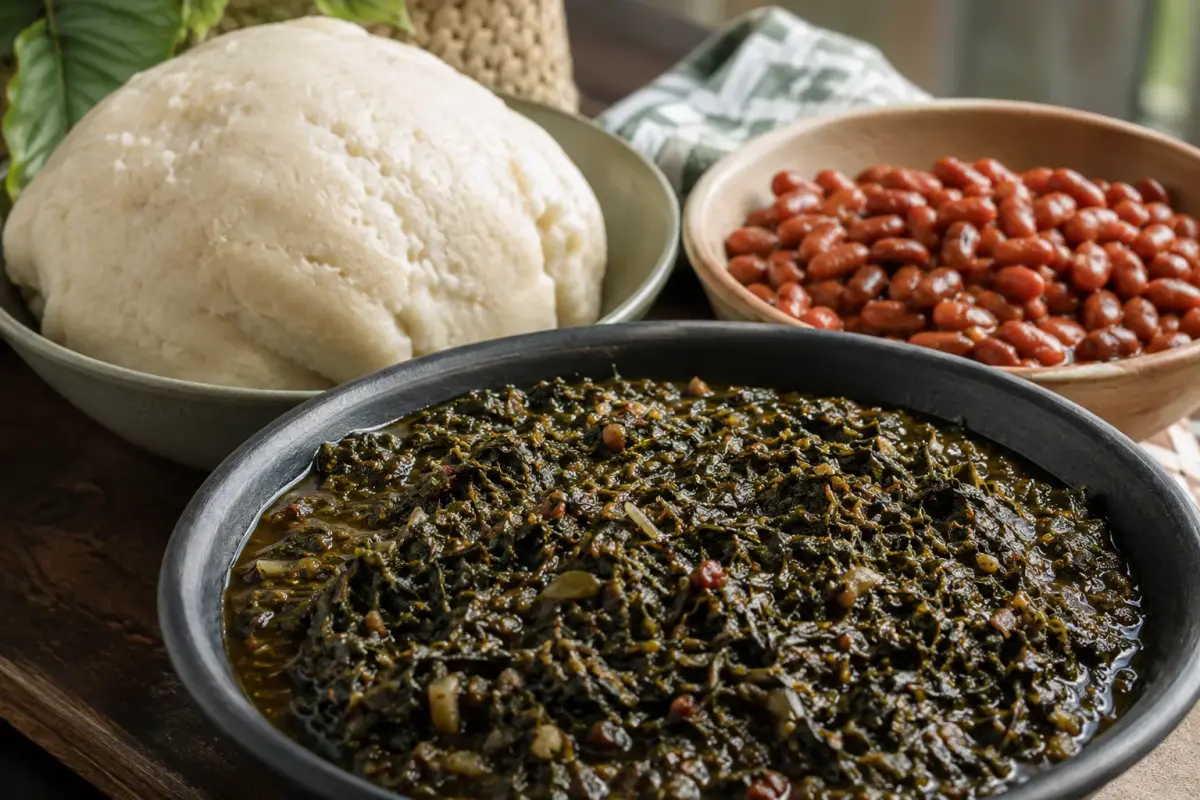
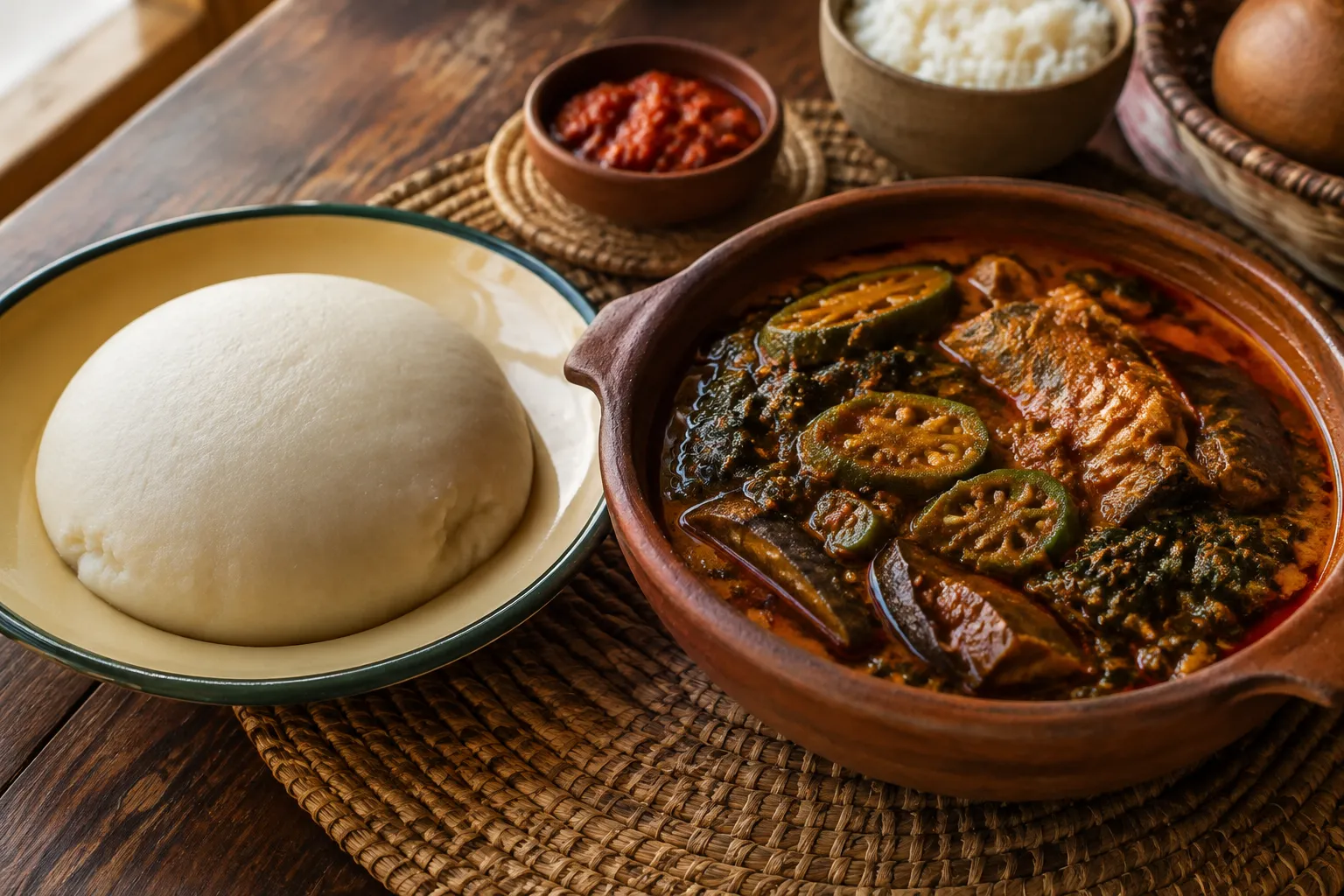
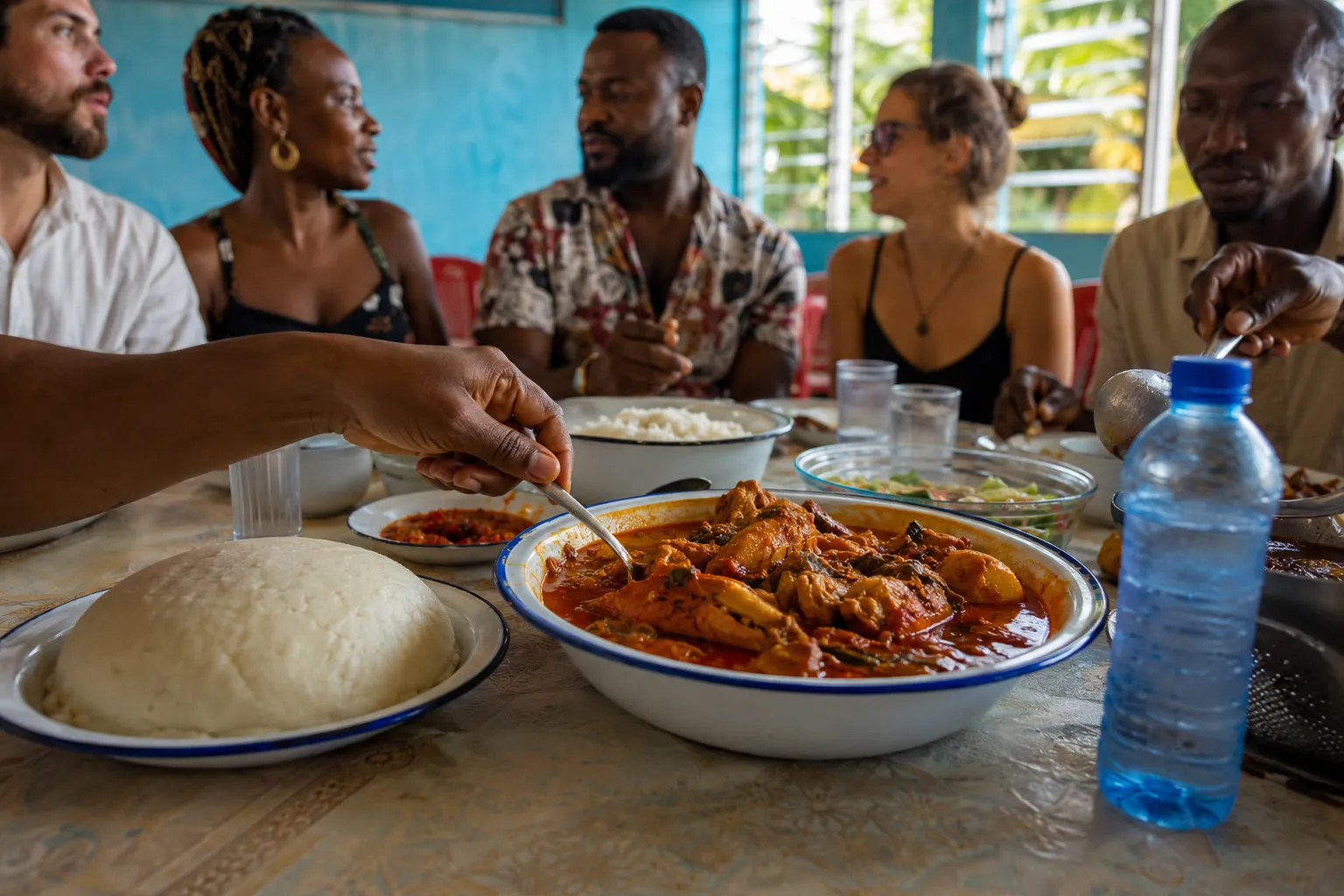
Funge is the classic partner, a smooth dough of cassava flour or maize meal used to scoop up the sauce. Rice is the standard restaurant alternative, and many places offer both on the same plate.
Other things that commonly appear alongside:
- Funge de bombó (cassava) or funge de milho (maize), explained in the funge and calulu guide
- Plain white rice
- Boiled or fried cassava
- Kizaca, pounded cassava leaves
- A simple tomato and onion salad to cut the richness
- Extra gindungo paste or chilli oil on the table
- Cold beer or a bottle of water, because the heat builds
Eating tip: tear off a small piece of funge with your right hand, press a dent into it with your thumb, and use it to lift sauce and meat. Cutlery is completely normal in restaurants, so follow the table you are at.
Where can you eat muamba de galinha in Angola, and what does it cost?
You will find it most reliably in Angolan-run restaurants and neighbourhood eateries rather than international hotel dining rooms, and it is often a weekend or lunchtime dish. Prices are not published centrally and vary enormously between a local canteen and an upmarket restaurant, so check current menus rather than trusting any figure quoted online.
A few practical notes for travellers:
- Ask for it by name. In Portuguese: “Tem muamba de galinha hoje?” (Do you have muamba de galinha today?). Many Angolans speak little English outside tourism.
- Lunch beats dinner for traditional dishes in many places, since stews are cooked in the morning.
- Luanda is expensive. The capital has ranked for years among the pricier cities for expatriates, and restaurant bills reflect that. A small local eatery will cost a fraction of a hotel restaurant.
- Carry cash. Card acceptance is limited outside larger establishments in the big cities.
- Ask whether it comes with funge, rice or both, and whether the chilli is in the pot or on the side.
For where to eat and how the scene works, see the guide to restaurants in Luanda and the wider introduction to Luanda as a destination. Food is also one of the easiest ways into a conversation about the country’s regional identities, described in the piece on Angola’s peoples and ethnic groups.
Where can you buy muamba de galinha ingredients near you?
Look for African, Afro-Caribbean, Brazilian or Portuguese grocers, which are the most reliable source for red palm oil, fresh okra and bird’s eye chillies. Large supermarkets in Europe increasingly stock frozen okra and butternut squash year round.
A quick sourcing checklist:
| Ingredient | Where to look | Fallback |
|---|---|---|
| Red palm oil (dende) | African or Brazilian grocer, online spice shops | None that is faithful; see the peanut option above |
| Okra | African or South Asian grocer, frozen aisle | Frozen sliced okra works fine |
| Gindungo | African grocer (paste or dried) | Thai bird’s eye chilli, piri piri |
| Cassava flour for funge | African or Latin American grocer | Fine maize meal |
| Pumpkin | Any supermarket | Butternut squash |
If a shop sells “palm oil” that is pale yellow or white, it is refined. Put it back.
Troubleshooting: too spicy, too oily, too thin
Fix heat with fat, starch and acid, not with water. Water dilutes the flavour without reducing the burn much.
- Too spicy: remove any whole chillies, stir in extra cubes of cooked squash or a spoon of peanut butter, add a squeeze of lemon, and serve with a larger portion of funge or rice. A spoon of coconut milk also tames it, though it moves the dish away from tradition.
- Too oily on top: skim with a spoon. A visible film of red oil is correct and expected, but a thick layer means too much palm oil went in.
- Too thin: simmer uncovered for another 10 minutes, or mash a few squash cubes against the side of the pot.
- Bitter or dull colour: the palm oil was overheated. Nothing fixes this fully, so keep the heat moderate next time.
- Slimy okra: it was added too early or cut too small. Add it in the last 10 minutes and keep the pieces large.
How should you store and freeze muamba de galinha?
Refrigerate it for up to three days in a sealed container, and freeze it for up to three months. The flavour is arguably better on day two, once the palm oil and tomato have settled together.
- Fridge: cool within two hours, then store covered for up to 3 days. Reheat until piping hot.
- Freezer: portion into airtight containers, leave headspace, and label with the date. Up to 3 months for best quality.
- Okra note: okra softens after freezing. If you plan to freeze, either accept the change or cook and freeze the stew without okra and add fresh okra when reheating.
- Reheating: gentle heat on the hob with a splash of water. Palm oil separates when cold, which is normal, and stirring brings it back.
- Do not freeze funge. It goes grainy. Make it fresh.
Is muamba de galinha healthy? Nutritional notes
It is a whole-food stew of chicken, vegetables and unrefined oil, so it stacks up reasonably well, with the main caveat being the amount of palm oil and salt. Red palm oil is high in saturated fat, and it is also a rich natural source of carotenoids, which is what gives it the orange colour.
Practical points rather than precise numbers, which vary hugely with how much oil a cook uses:
- Protein-rich thanks to bone-in chicken.
- Vegetable-forward with okra (fibre) and pumpkin (carotenoids).
- High in fat from the palm oil. Reducing from 4 tablespoons to 2 or 3 lowers the fat without ruining the character.
- Salt is the easiest thing to over-add. Season at the end.
- Gluten free as written. Funge made from cassava or maize is also gluten free.
- Remove the chicken skin before serving if you want to cut fat further.
Anyone with specific dietary or medical concerns should follow the advice of a qualified professional rather than a travel guide.
Conclusion: cook it once before you travel
Muamba de galinha rewards a small amount of shopping effort and almost no technique. Track down a jar of real red palm oil, buy bone-in chicken, keep the okra for the final ten minutes, and you will have a dish that tastes recognisably Angolan rather than approximately African.
Your next steps:
- Find one supplier of unrefined red palm oil, either an African or Brazilian grocer near you or an online spice shop.
- Cook the four-person recipe above once, with the chilli left whole so you can judge the heat.
- Serve it with rice the first time and funge the second time, then decide which you prefer.
- Before travelling, learn the sentence “Tem muamba de galinha?” and use it in a local eatery rather than a hotel restaurant.
- Read the broader Angolan food guide to plan what else to order once you are there.
Want to keep this guide? We email you the key points with a link to every section.
Frequently asked questions
Is muamba de galinha officially Angola's national dish?
It is the dish most commonly named as Angola's national dish, both inside and outside the country, but there is no single official designation. Calulu, the dried fish stew, has an equal claim and is just as widely cited.
What is the difference between muamba and moamba?
Nothing. They are two spellings of the same word, and both appear on Angolan menus and in cookbooks.
Is muamba de galinha very spicy?
Usually mild to medium in restaurants, with extra gindungo offered on the side. Home versions can be hotter. Ask before ordering if heat is a concern.
Can muamba de galinha be made with chicken breast?
Yes, but reduce the simmering time to 15 to 20 minutes and add the breast after the tomato base is ready. Bone-in thighs give a much better sauce.
What is muamba de ginguba?
The peanut-based relative of the same dish, made with ground peanuts instead of, or alongside, palm oil. It is common in Angola and is a useful backup recipe when dende is unavailable.
Is there a vegetarian version?
Not traditionally, but the palm oil, tomato, okra and pumpkin base works well with mushrooms, chickpeas or firm squash as the centrepiece. Call it muamba de legumes rather than muamba de galinha.