Quick answer
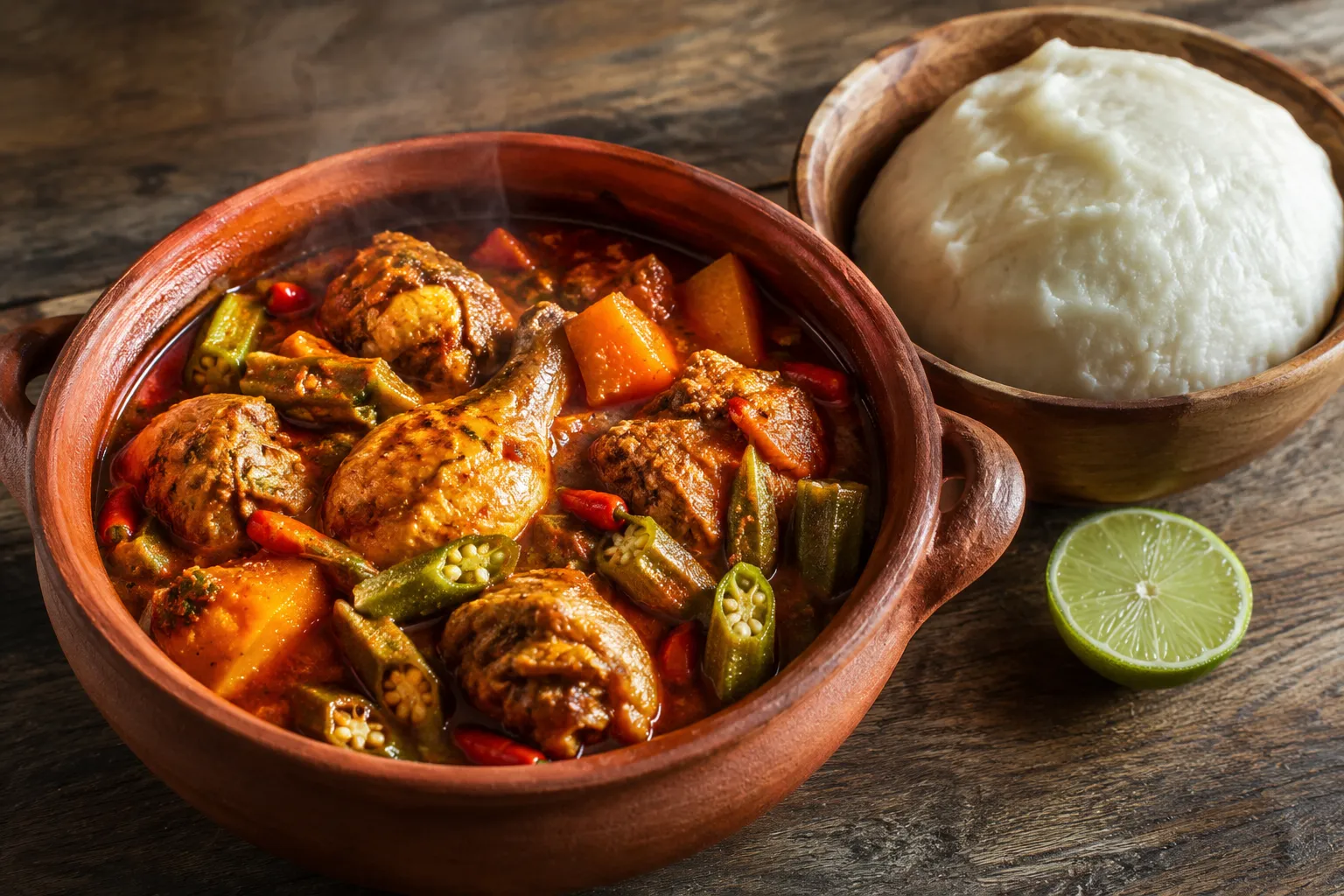
Vegetarian and vegan food in Angola exists, but it is mostly hiding inside traditional home cooking rather than sitting on restaurant menus. Funge, beans, cassava leaves, plantain, rice, sweet potato and superb tropical fruit form a solid plant-based base. The catch is that greens are often finished with dried shrimp or dried fish, and bean stews are frequently cooked with smoked meat or bones, neither of which you can see. Vegetarians who ask carefully will eat well. Strict vegans should plan on self-catering for a meaningful share of their meals.
Key takeaways
- Say “sem peixe, sem carne” (without fish, without meat). Saying only “no meat” will still get you fish, because fish often is not counted as meat.
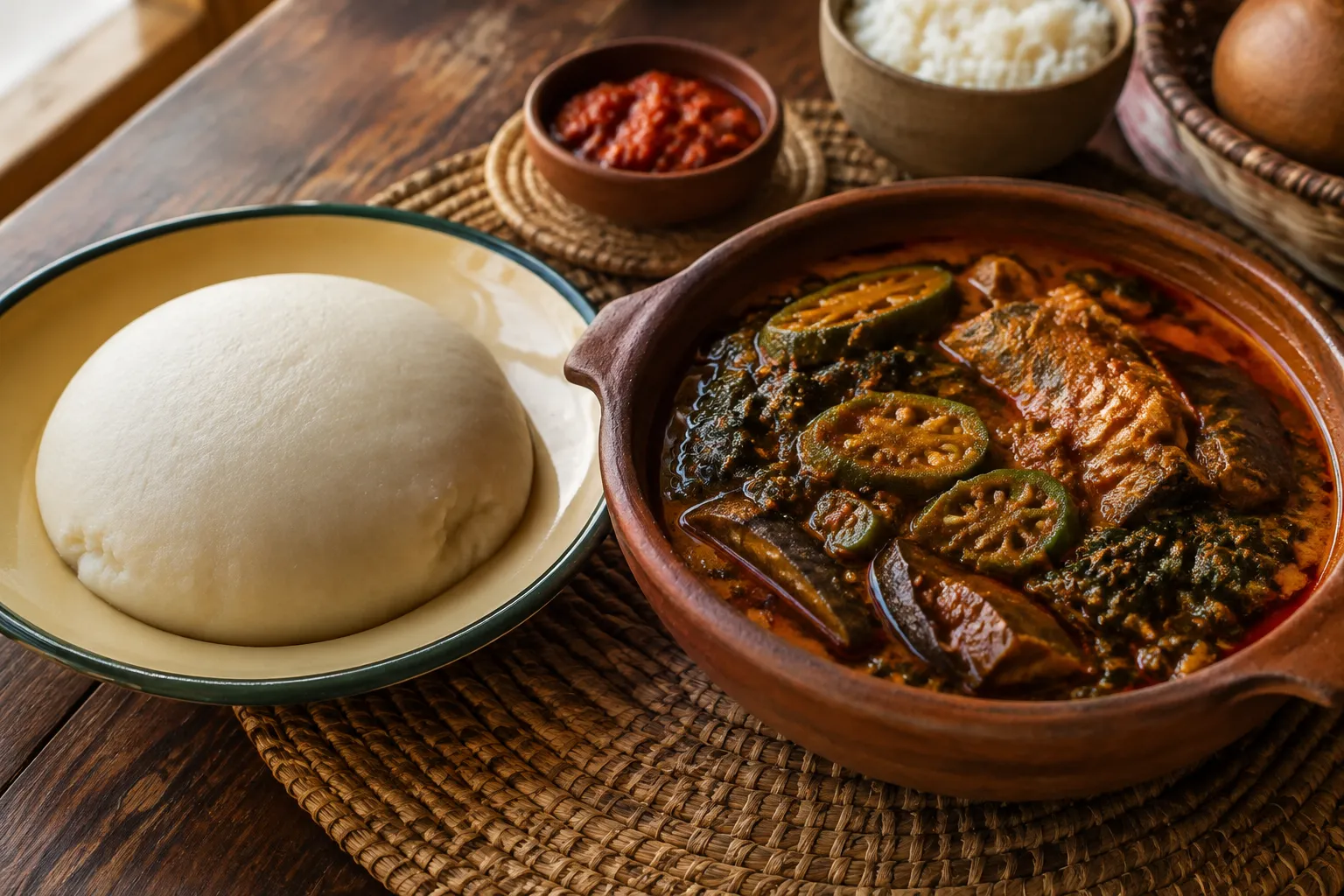
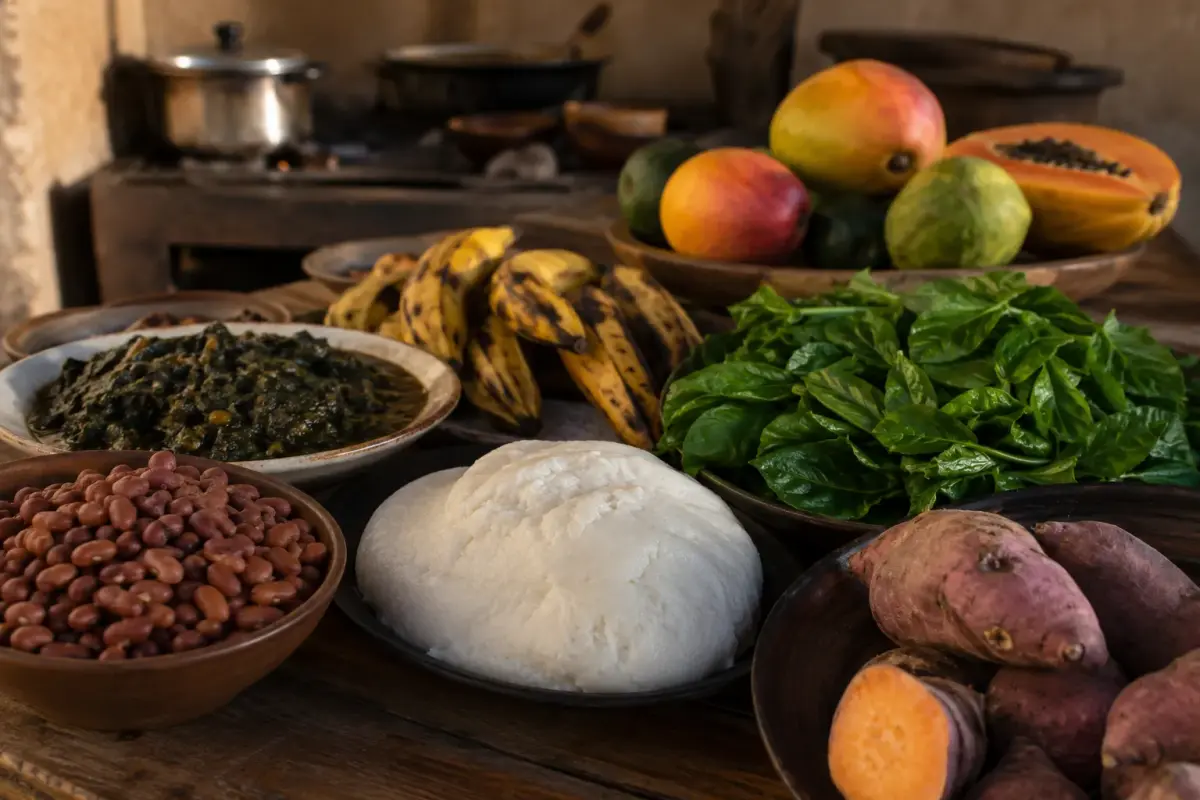
- Funge is naturally vegan: cassava or maize flour and water, nothing else. It is the safest carbohydrate in the country.
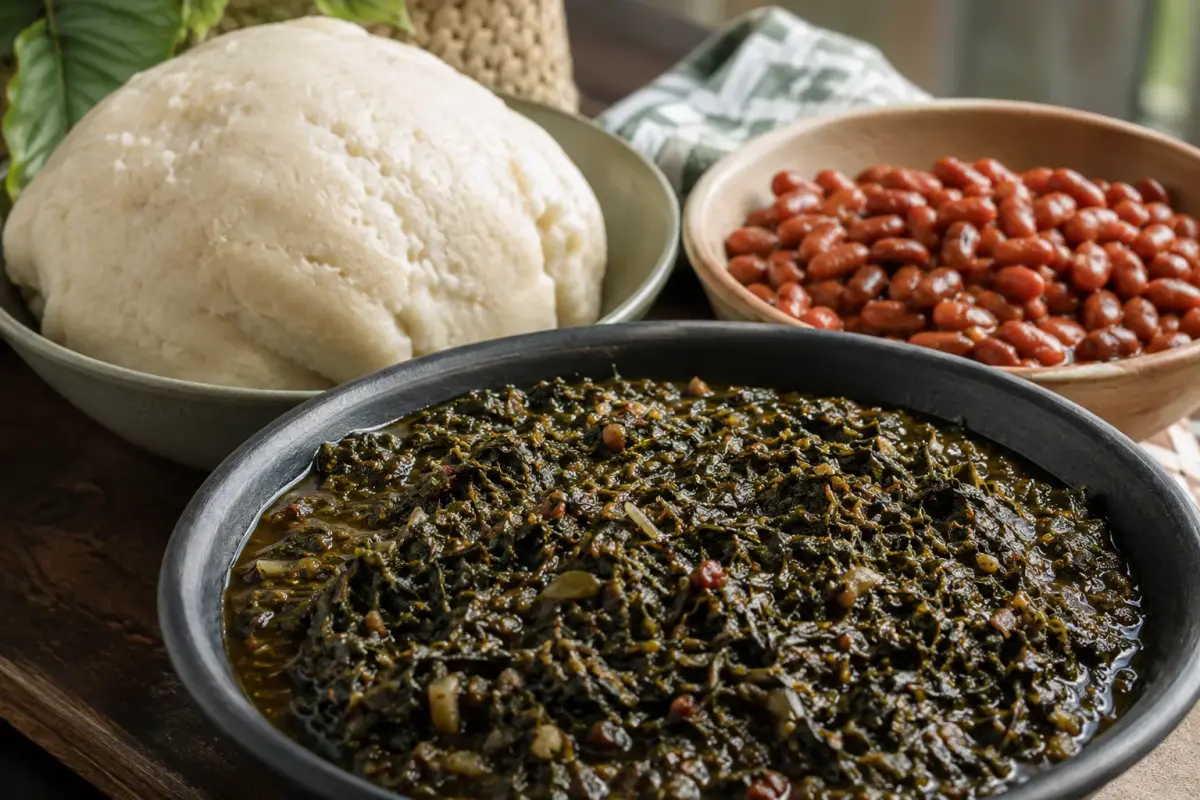
- Kizaka (stewed cassava leaves) is traditional and often vegan, but dried shrimp or dried fish is a very common addition.
- Beans in palm oil are delicious and widespread, but may be cooked with smoked meat, bones or fish stock.
- Dedicated vegetarian restaurants are rare and concentrated in Luanda. Elsewhere you improvise from side dishes.
- Fruit is a genuine highlight: mango, papaya, banana and pineapple are excellent and cheap in season.
- Vegetarian is workable. Vegan is genuinely hard. Be honest with yourself before booking a long trip.
- Markets and self-catering are the single biggest quality-of-life upgrade for plant-based travellers in Angola.
Do Angolans eat vegetarian food?
Angolans eat a great deal of plant-based food, but almost nobody in Angola identifies as vegetarian or vegan. Veganism as a labelled lifestyle is very uncommon and largely limited to a small urban and expatriate slice of Luanda.
That distinction matters more than it sounds. Everyday Angolan cooking, especially in rural areas and in lower-income households, leans heavily on cassava, maize, beans, sweet potato, greens, groundnuts and fruit. Meat and fish are often flavouring rather than the centrepiece: a handful of dried shrimp stirred through greens, a bone simmered in the bean pot, a small piece of smoked fish shredded into a stew. So the food is plant-heavy, but rarely plant-only.
The practical consequence: when you say you do not eat meat or fish, you are not describing a familiar dietary category. Frame it as a preference or a health matter, stay friendly, and do not lecture. Angolan hospitality is generous, and a host will usually try hard to accommodate you once they understand.
Angolan cooking is plant-rich by tradition and meat-flavoured by habit. Your job as a traveller is to separate the two.
Is it easy to be vegan in Angola?
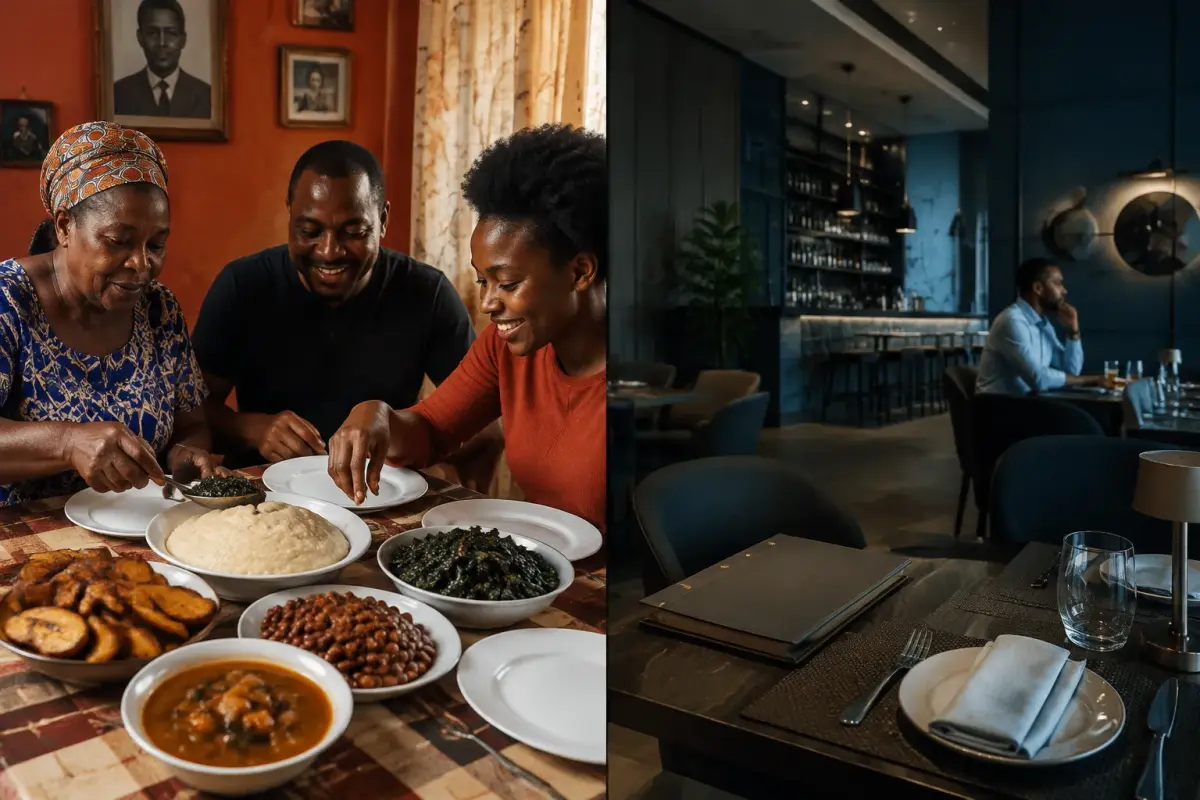
No. Vegetarian eating in Angola is manageable with care and a few Portuguese phrases. Strict vegan eating is genuinely difficult, and pretending otherwise would set you up for a frustrating trip.
Why vegetarian works reasonably well
- Funge, rice, bread, plantain, sweet potato and cassava are everywhere.
- Beans, greens and groundnut-based sauces are staples, not novelties.
- Eggs, cheese and milk are available in cities and in hotel breakfasts, so protein and calories are covered.
- Fruit is abundant and outstanding.
Why vegan is hard
- Dried shrimp and dried fish are stirred into greens so routinely that many cooks would not think to mention it.
- Palm oil dishes, particularly beans, are often cooked with smoked meat, bones or fish.
- Butter and eggs run through the Portuguese-influenced bakery and pastry culture.
- The concept itself is unfamiliar, so “no animal products at all” often gets simplified in someone’s head to “no meat”.
- Restaurant kitchens outside Luanda have little reason to keep a separate vegan option ready.
Decision rule: if you are a flexible vegetarian, Angola is fine. If you are a strict vegan, plan to cook or assemble roughly a third to a half of your own meals, and treat restaurant meals as a bonus rather than the plan.
Which traditional dishes work?
Several core Angolan dishes are plant-based by default, and a few more become plant-based with one small request. The list below is your working menu.
| Dish | What it is | Vegan by default? | What to check |
|---|---|---|---|
| Funge / funje | Cassava or maize starch dough | Yes | Nothing. Flour and water only |
| Kizaka | Stewed cassava leaves | Often | Dried shrimp or dried fish |
| Feijao de oleo de palma | Beans cooked in palm oil | Sometimes | Smoked meat, bones, fish |
| Folhas de abobora, feijao, batata-doce | Pumpkin, bean or sweet potato leaves | Often | Dried shrimp, stock |
| Banana frita | Fried plantain | Usually | Frying oil shared with fish |
| Batata-doce, mandioca cozida | Boiled sweet potato, boiled cassava | Yes | Nothing |
| Arroz | White rice | Usually | Chicken or fish stock |
| Salada mista | Tomato, onion, lettuce salad | Yes | Tuna added without asking |
Calulu, the layered stew, is normally built on dried fish or meat, so it is not a vegetarian dish in its standard form. For the full background on how these staples are constructed and eaten together, read the explainer on funge and calulu, and the broader guide to Angolan food for context on the wider cuisine.
Common mistake: assuming that a green vegetable dish is automatically safe. Greens are exactly where the dried shrimp lives.
The two hidden traps
The two things that will catch you out are invisible: dried shrimp or dried fish stirred into leafy greens, and palm oil bean dishes cooked with smoked meat or bones. Neither shows up on the plate.
Dried shrimp is used the way anchovy paste is used in parts of Europe: as a savoury base, not as a visible ingredient. It dissolves into the greens. Smoked meat and bones do the same job in a bean pot, contributing depth and salt while the solid pieces get removed or reduced to nothing. A cook asked “is there meat in this?” may honestly answer no, because in their mental model the bone was seasoning, not meat.
How to check without being difficult:
- Ask about ingredients before you ask for changes: “Quais sao os ingredientes?”
- Name the specific items rather than the category. Shrimp, fish, chicken stock, bones.
- Ask what the dish was cooked with, not just what is in it.
- Accept that some answers will be wrong, and decide in advance how strict you are willing to be.
Edge case worth knowing: shared frying oil. Fried plantain and fried cassava are often cooked in the same oil as fish. Vegetarians usually let this go. Strict vegans may not want to.
Other friction points to expect: bread and pastries containing butter or eggs, few plant milks outside larger supermarkets in the capital, and social pressure at meals, since refusing food offered by a host can read as rejection. A short, warm explanation up front prevents most awkwardness. The section on eating etiquette in the Angola culture guide is worth reading before you accept your first home-cooked invitation.
How to explain it in Portuguese
Lead with what you cannot eat, in Portuguese, listing each item by name. Vague statements get vague results.
The single most important phrase is “sem peixe, sem carne”, without fish and without meat. Say both words. Vegetarians who only say “no meat” get served fish with a clear conscience, because fish is often not classified as meat in everyday Angolan and Portuguese-language usage.
| Portuguese | English |
|---|---|
| Sem peixe, sem carne | Without fish, without meat |
| Nao como carne, frango, peixe nem marisco | I don’t eat meat, chicken, fish or seafood |
| Tem algum prato vegetariano? | Is there a vegetarian dish? |
| Quais sao os ingredientes? | What are the ingredients? |
| Sem camarao seco, por favor | Without dried shrimp, please |
| So legumes e arroz, por favor | Just vegetables and rice, please |
| Sem ovos, sem leite, sem manteiga | No eggs, no milk, no butter |
| Foi cozinhado com carne? | Was it cooked with meat? |
| Sou vegetariano / vegetariana | I am vegetarian (m / f) |
English is not widely spoken outside tourism and business settings, so learning these lines is not optional politeness, it is how you eat. Build them into the wider set of survival lines in the Angolan Portuguese phrases guide, and consider saving a screenshot of the list on your phone to show waiting staff directly.
Quick example that works: point at a plate of beans, then say “Sem carne, sem peixe. So feijao e arroz, por favor.” Concrete, visual, hard to misread.
Where to eat
Dedicated vegetarian and vegan restaurants in Angola are rare, and the handful that exist are concentrated in Luanda. Outside the capital, assume there are none and build your meals from side dishes and markets instead.
What Luanda does offer is a workable indirect route:
- Indian restaurants, which reliably have genuinely vegetarian dishes and cooks who understand the concept without explanation.
- Lebanese and Middle Eastern places, where hummus, falafel, tabbouleh and flatbread do most of the work and much of it is vegan.
- Italian and pizzeria kitchens, easy for vegetarians, workable for vegans if you skip cheese.
- Hotel restaurants, which are used to international guests and will usually assemble something to order.
- Health-focused cafes and juice bars, which come and go, so check current listings rather than any fixed name.
Because the scene changes fast, it is better to check what is currently open than to rely on a list. Start with the overview of the best restaurants in Luanda and filter by cuisine rather than by any vegetarian label.
Which parts of Luanda
Vegetarian-friendly eating in Angola is essentially a Luanda story, and within Luanda it clusters in the areas with international restaurants and expatriate residents.
- Ingombota and the Marginal waterfront: hotel dining, international menus, the highest chance of an off-menu vegetarian plate.
- Miramar and Alvalade: residential areas with a concentration of Indian, Lebanese and Italian kitchens.
- Talatona and Luanda Sul: newer districts with malls and supermarkets, which is also where you will find the widest grocery selection.
- Ilha do Cabo: seafood-dominated, so the least promising for anyone avoiding fish, though salads and sides are available.
Outside the capital, the picture is simpler. Benguela and Lobito have coastal restaurants heavily oriented to fish, Lubango has hearty highland cooking, and in both cases your best meals will come from asking for rice, beans, greens and plantain as a plate of sides. Orient yourself first with the Luanda city guide if the capital is your base.
Self-catering and markets
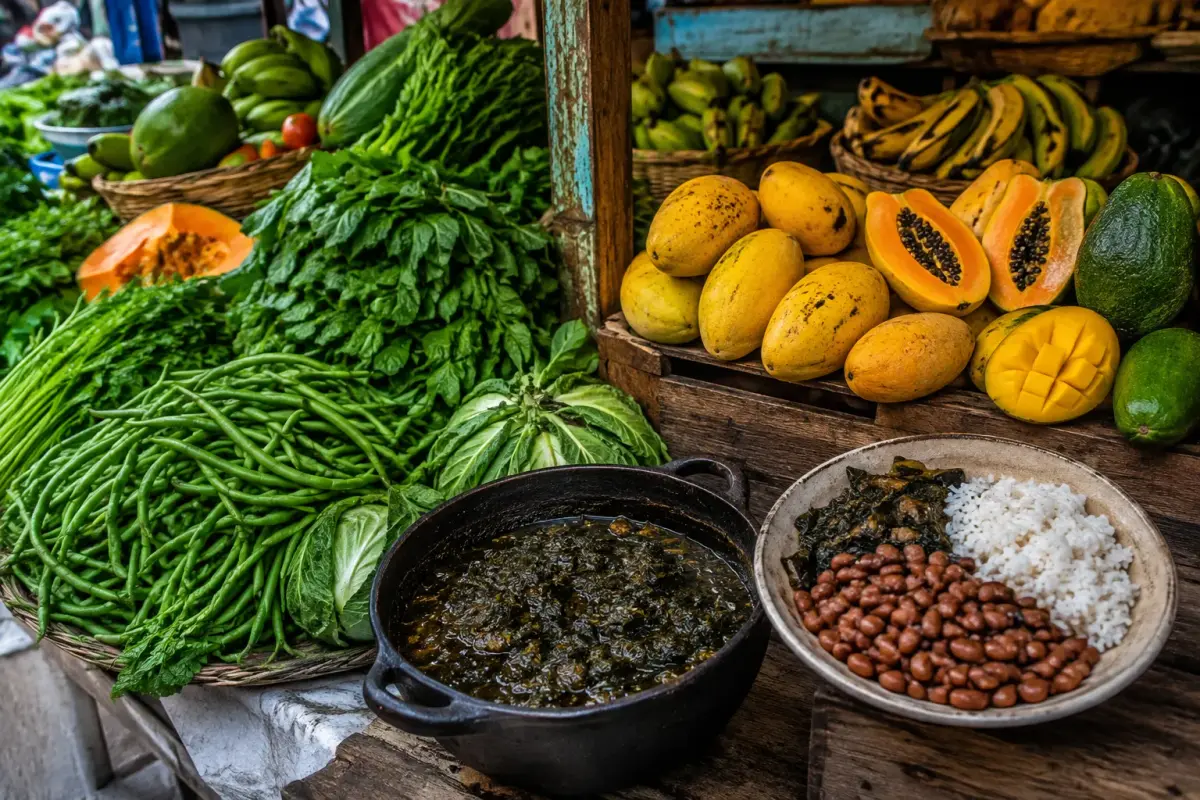
Self-catering is the strongest move a plant-based traveller can make in Angola. Luanda supermarkets in the newer districts stock imported goods including pasta, tinned beans, tinned tomatoes, peanut butter, rice, oats and sometimes plant milk, while open-air markets across the country sell fresh produce far more cheaply.
What grows well in Angola and turns up in markets:
- Cassava, sweet potato, yam and taro
- Maize, beans and cowpeas
- Pumpkin and its leaves, plus bean leaves and sweet potato leaves
- Tomatoes, onions, garlic, chilli, okra, cabbage and carrots
- Groundnuts, a genuinely useful protein source
- Bananas and plantain, mango, papaya, pineapple, guava, avocado, citrus and coconut
Fruit is the real pleasure. Mango, papaya, banana and pineapple are excellent, and in the right season they are abundant enough to build a whole breakfast around.
A practical shopping kit for a two-week trip:
- Peanut butter or a bag of groundnuts for protein and calories
- Oats or bread for breakfasts you control
- Tinned beans and tinned tomatoes as a fallback dinner
- Rice or pasta
- A knife, a spoon and a small cutting board
- Fresh fruit bought every couple of days
- Salt, chilli and a stock cube you have read the label on
Bargaining note: market prices are negotiable and quoted in kwanza, and cash is often necessary outside large city shops. Bring small notes.
A realistic two-week strategy
Build the trip around a repeatable daily pattern rather than hunting for a vegan restaurant in every town. The pattern that actually works is: control breakfast, assemble lunch from sides and market food, and negotiate one restaurant dinner.
Hotel breakfasts are your reliable anchor. Most mid-range and upmarket Angolan hotels serve a buffet with bread, fruit, jam, sometimes eggs, sometimes cheese, occasionally beans, plus coffee. Vegetarians eat well. Vegans should scan for fruit, bread, jam, plain beans and black coffee, then top up from their own supplies.
| Meal | Vegetarian plan | Vegan plan |
|---|---|---|
| Breakfast | Hotel buffet: bread, eggs, cheese, fruit | Fruit, bread with jam or peanut butter, black coffee |
| Lunch | Rice, beans, greens, salad, fried plantain | Market fruit, bread, groundnuts, boiled cassava or sweet potato |
| Dinner | Restaurant, ordering sides plus a vegetarian main | Sides plate ordered with “sem peixe, sem carne”, or self-catered |
| Snacks | Nuts, fruit, bread rolls | Nuts, fruit, dried fruit brought from home |
Five habits that make the difference:
- Book accommodation with a kitchenette or fridge where you can.
- Carry a fruit knife and a reusable container.
- Restock at a market or supermarket every time you reach a larger town.
- Order side dishes deliberately. A plate of three sides is a meal.
- Repeat your dietary line every single time, even at the same restaurant on a second visit.
Cost expectations: plant-based food from markets is among the cheaper things you can buy in Angola. Restaurant dining in Luanda is expensive by regional and international standards, and being vegetarian will not reduce that much, since you are often paying for the venue rather than the protein.
Conclusion
Vegetarian and vegan food in Angola rewards preparation and punishes vagueness. The raw materials are genuinely good: funge, beans, cassava leaves, groundnuts, sweet potato, plantain and some of the best mango and papaya you will taste anywhere. What is missing is the infrastructure, the menu labels and the shared vocabulary that plant-based travellers take for granted elsewhere.
Your next steps:
- Memorise “sem peixe, sem carne” and the four or five phrases in the table above.
- Screenshot the phrase list so you can show it rather than pronounce it.
- Book at least some accommodation with a fridge or kitchenette.
- Pack peanut butter, nuts and a fruit knife.
- Read up on funge and calulu and the wider Angolan food guide so you can recognise dishes by name on arrival.
- Set your own line in advance on shared frying oil and uncertain stock, and stop relitigating it at every meal.
Do that, and Angola goes from being a country you survive on bread and fruit to one where you eat properly, cheaply and with real local flavour.
Want to keep this guide? We email you the key points with a link to every section.
Frequently asked questions
Is Angola vegetarian-friendly?
Moderately. Angola has plenty of plant-based ingredients and several traditional dishes that are vegetarian, but very few restaurants advertise vegetarian options. Vegetarians who speak some Portuguese and ask specific questions will eat well.
Can vegans travel in Angola?
Yes, but expect real effort. Palm oil dishes, dried shrimp and stock are widespread, and the vegan concept is unfamiliar. Plan on self-catering a significant portion of meals and carrying backup food.
What is the safest vegan dish to order in Angola?
Plain funge with a side of rice, boiled sweet potato or cassava, plus a fresh tomato and onion salad. Funge is just flour and water, so it carries no hidden animal ingredients.
Why do vegetarians in Angola keep getting served fish?
Because fish is often not considered meat in everyday usage. Always say "sem peixe, sem carne", naming fish explicitly, and add "nem marisco" to rule out seafood.
Are there vegan cafes in Luanda?
A small number of health-focused cafes and juice bars operate in Luanda, mainly in Talatona, Miramar and the Marginal area, but they open and close frequently. Indian and Lebanese restaurants are the more dependable option.
Is dried shrimp really in everything?
Not everything, but it appears often enough in leafy green dishes that you should assume it is present until told otherwise. Ask "Tem camarao seco?" before ordering any greens.
Do Angolan markets sell tofu or plant milk?
Rarely in open-air markets. Larger supermarkets in Luanda sometimes stock plant milk and imported meat substitutes, but availability is inconsistent. Do not build a trip plan around finding them.