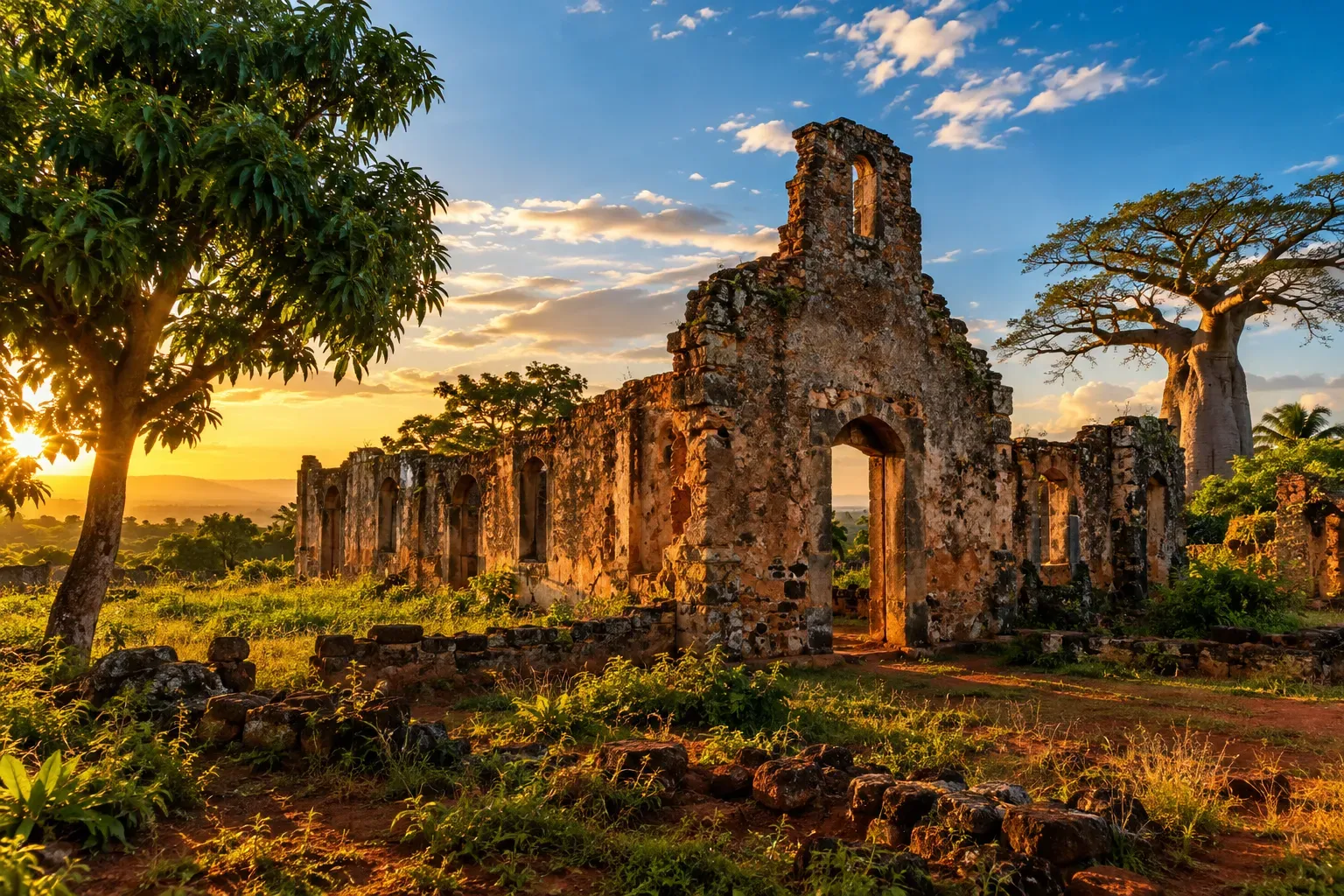
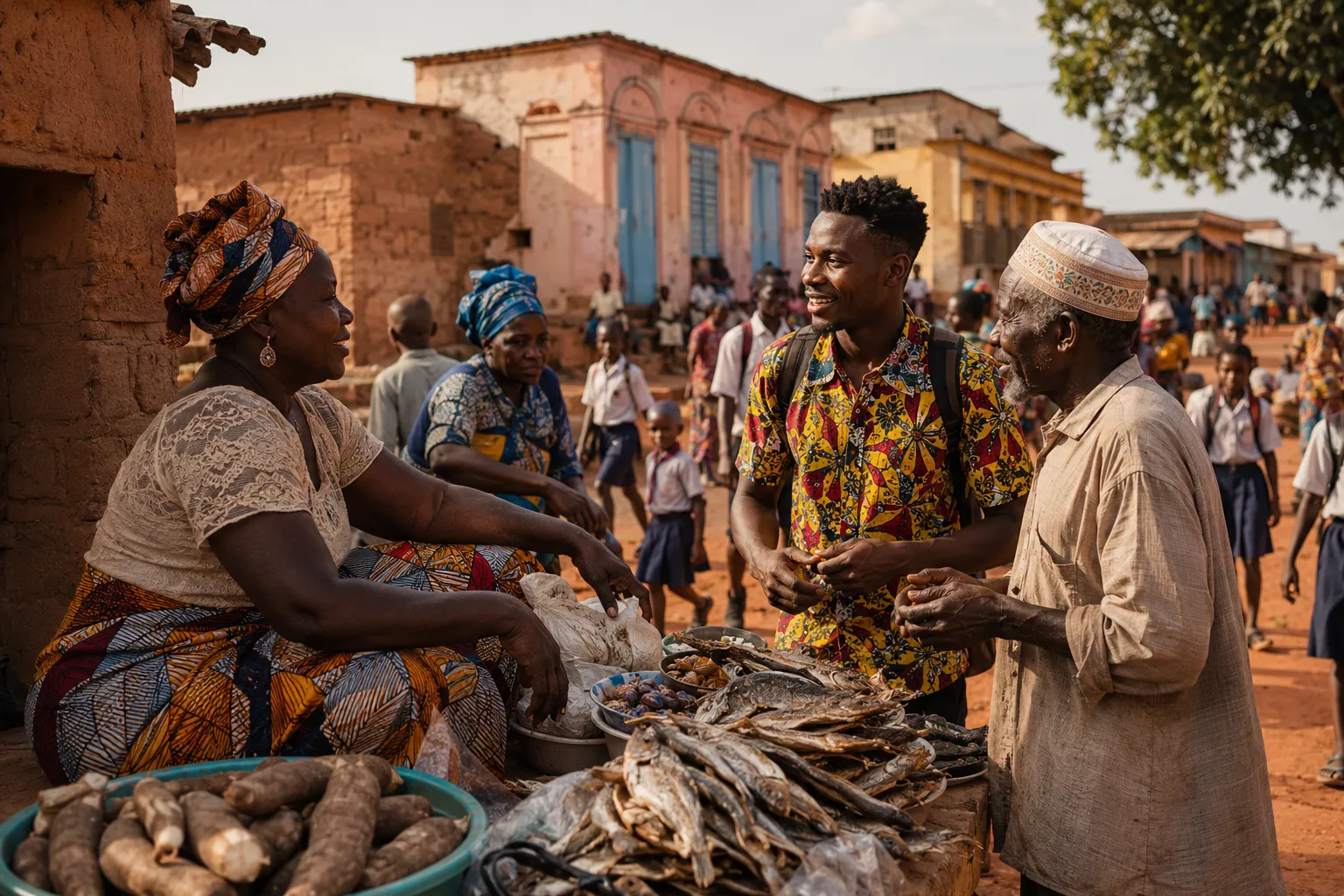
Angola is home to more than 35 million people spread across nearly 100 ethnic groups, from the highland Ovimbundu farmers to the semi-nomadic Mwila of the south and the Bakongo traders near the Congo border. If you’re planning a trip, understanding who you’ll actually meet, and how they live, will change your experience from a checklist visit into something that sticks with you for years.
Quick Answer
The Angola people are one of Africa’s most ethnically diverse populations: three groups (Ovimbundu, Ambundu, Bakongo) make up roughly three-quarters of the country, while dozens of smaller communities like the Chokwe, Nyaneka-Nkhumbi, Ovambo, Herero and San preserve their own languages and customs. Portuguese unites them officially, but daily life is a bilingual mix. The population is strikingly young, half under 18, and split between fast-growing cities like Luanda and rural areas where tradition still runs the day.
Key Takeaways
- Angola has around 35+ million inhabitants across more than 18 provinces (verify with INE Angola for the latest census figure).
- The three largest ethnic groups are the Ovimbundu (~37%), Ambundu (~25%), and Bakongo (~13%) [1].
- Portuguese is the official language, but most people also speak an African language such as Umbundu, Kimbundu, Kikongo or Chokwe [2].
- Roughly 60% are Roman Catholic, with a large Protestant minority and growing evangelical and Kimbanguist communities [6].
- Angola is one of the youngest countries in the world, with a median age around 16 [7].
- Music (semba, kizomba, kuduro) and food (muamba de galinha, funge, calulu) are central to social life [3].
- Urban Angola (especially Luanda) is fast, expensive and cosmopolitan; rural Angola is slower, warmer, and more traditional.
What are the main ethnic groups in Angola?
Angola has more than 90 recognised ethnic groups, but three Bantu peoples dominate: the Ovimbundu, Ambundu and Bakongo, together roughly 75% of the population [1]. The rest of the country is a beautiful mosaic of smaller groups, each with their own language, dress and history.
Here is a simplified overview of where you’ll encounter them:
| Ethnic group | Approx. share | Main region | Language |
|---|---|---|---|
| Ovimbundu | ~37% | Central highlands (Huambo, Bié, Benguela) | Umbundu |
| Ambundu (Mbundu) | ~25% | Luanda, Bengo, Malanje | Kimbundu |
| Bakongo | ~13% | North (Uíge, Zaire, Cabinda) | Kikongo |
| Lunda-Chokwe | ~8% | East (Lunda Norte, Lunda Sul, Moxico) | Chokwe |
| Nyaneka-Nkhumbi | ~5% | Southwest (Huíla, Namibe) | Nyaneka |
| Ovambo, Herero, Mwila, Kuvale | small % combined | Deep south (Cunene, Namibe) | Various |
| San (Khoisan) | very small | Southeast borderlands | Khoisan languages |
| Mestiço & Portuguese-descended | ~2-5% | Cities, especially Luanda & Benguela | Portuguese |
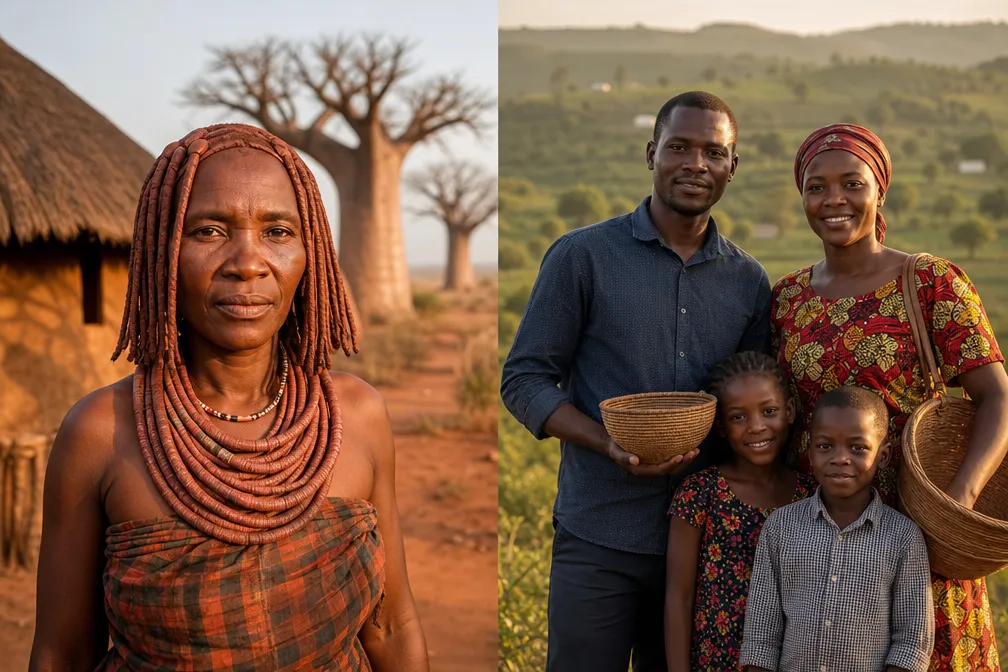
The Ovimbundu are traditionally farmers and traders of the central plateau. The Ambundu shaped much of Angola’s political history and are strongly represented in Luanda. The Bakongo stretch across borders into DR Congo and Republic of Congo, with deep trading roots. Further east, the Chokwe are famous for their masks and geometric art. In the south, the Mwila (Muhila) women you may see with ochre-clay hair and elaborate beadwork belong to the wider Nyaneka-Nkhumbi group [5]. The Herero and Ovambo live in the arid south and share cultural ties with Namibia.
Cities also have significant mestiço (mixed African-European) and Portuguese-descended communities, particularly in Luanda, Benguela and Lubango, adding another layer to Angola’s identity.
For context on where these groups live and travel logistics, see our guide on travel to Angola.
How many people live in Angola?
Angola has an estimated 35 million+ inhabitants in 2026, with one of the fastest growth rates in Africa. The last full census (2014) counted 25.8 million; projections and INE Angola updates suggest steady growth of around 3% per year. Verify the latest number via INE Angola.
Key demographic points travellers should know:
- About half the population is under 18 [4], so expect a lively, youthful energy everywhere you go.
- Around 65-70% of Angolans now live in urban areas, with Luanda alone home to over 8 million.
- Life expectancy has risen sharply since the civil war ended in 2002, though it remains lower than the regional average [7].
- Population density is very uneven: dense along the coast and central highlands, sparse in the east and south.
What languages do Angolans speak?
Portuguese is the only official language and the one you’ll see on signs, menus and government documents. In daily life, most Angolans switch between Portuguese and a Bantu language depending on who they’re talking to [2].
The main national languages are:
- Umbundu (Ovimbundu, central highlands)
- Kimbundu (Ambundu, Luanda and hinterland)
- Kikongo (Bakongo, north and Cabinda)
- Chokwe (east)
- Nyaneka, Nganguela, Kwanyama, Nkhumbi (south)
English is limited to hotel staff, tour operators and some younger urban Angolans. Learning a few Portuguese phrases (bom dia, obrigado/obrigada, quanto custa) goes a long way. For a deeper look, read our article on language of Angola.
What is daily life like in Angola?
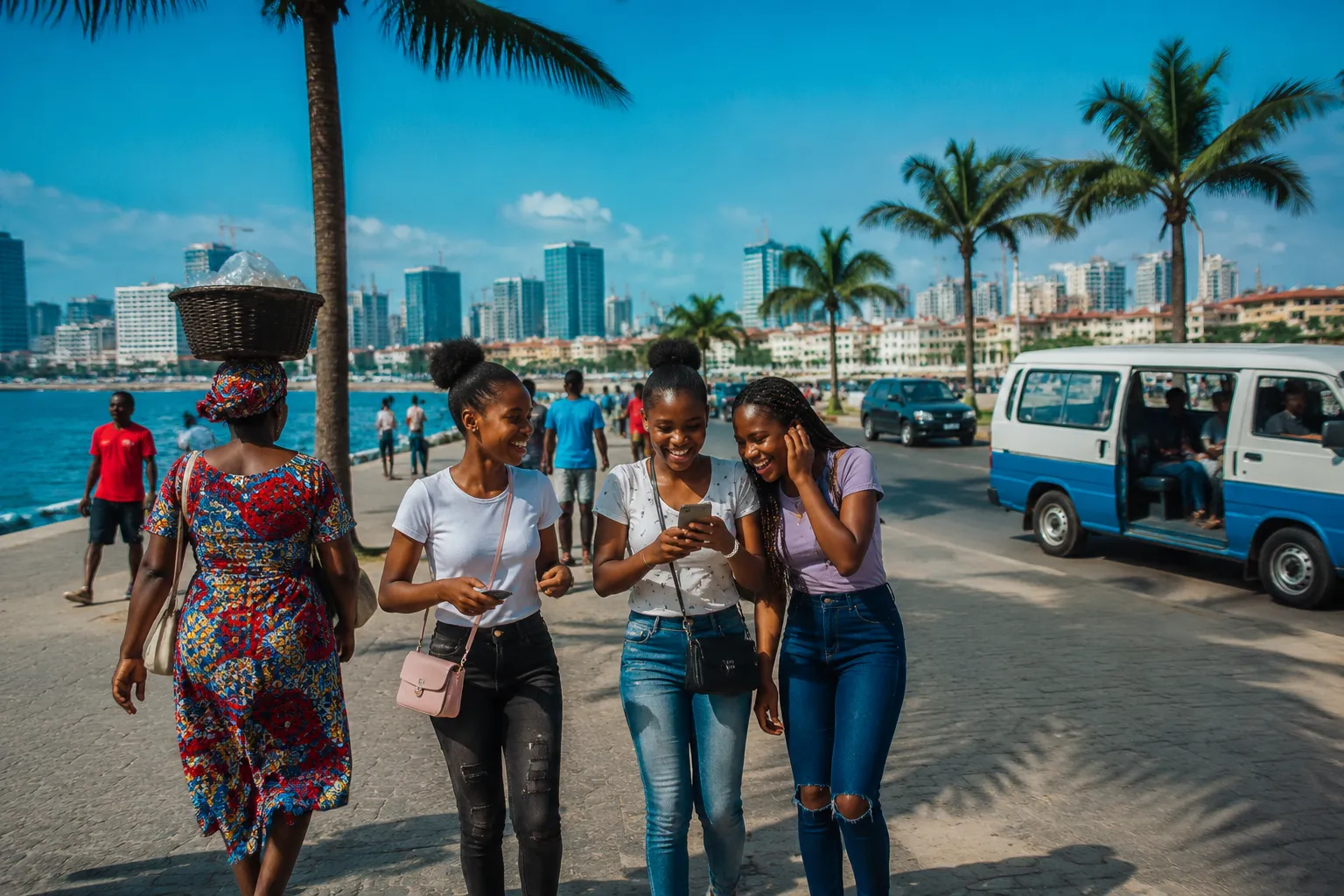
Daily life in Angola splits sharply between city and countryside. In Luanda, mornings start early to beat the traffic, workers pile into blue-and-white candongueiro minibuses, and by evening the Marginal promenade fills with joggers, families and food stalls. In rural areas, life follows the sun and the rainy season, farming, fetching water, tending livestock and gathering with neighbours.
A few things you’ll notice as a traveller:
- Family comes first. Extended households are the norm and Sunday lunch is often a full family event.
- Greetings matter. A handshake, eye contact and a “tudo bem?” opens most conversations.
- Cash is king outside big hotels; the kwanza (AOA) is the currency, and card acceptance is limited.
- Traffic and heat shape the daily rhythm in cities, especially Luanda, which has repeatedly ranked among the world’s most expensive cities for expats.
- Community events, church services, weddings, funerals, are large, loud and welcoming.
What are Angolan cultural traditions and customs?
Angolan culture blends indigenous Bantu roots with Portuguese colonial influence, resulting in a unique mix of ceremonies, dress, and social codes [3]. Traditional rites of passage (birth, initiation, marriage, death) remain important, especially in rural communities.
Common customs travellers encounter:
- Respect for elders is deeply embedded; use senhor or senhora until invited to be less formal.
- Removing your shoes before entering a home is common.
- Bring a small gift (fruit, drinks, sweets) if invited to someone’s house.
- Modest dress is appreciated outside beach areas, particularly in villages and churches.
- Photographing people, especially the Mwila, Himba-related and Herero communities in the south, always requires asking first, and sometimes a small fee.
For a fuller picture, see culture of Angola.
What is the traditional music and dance of the Angola people?
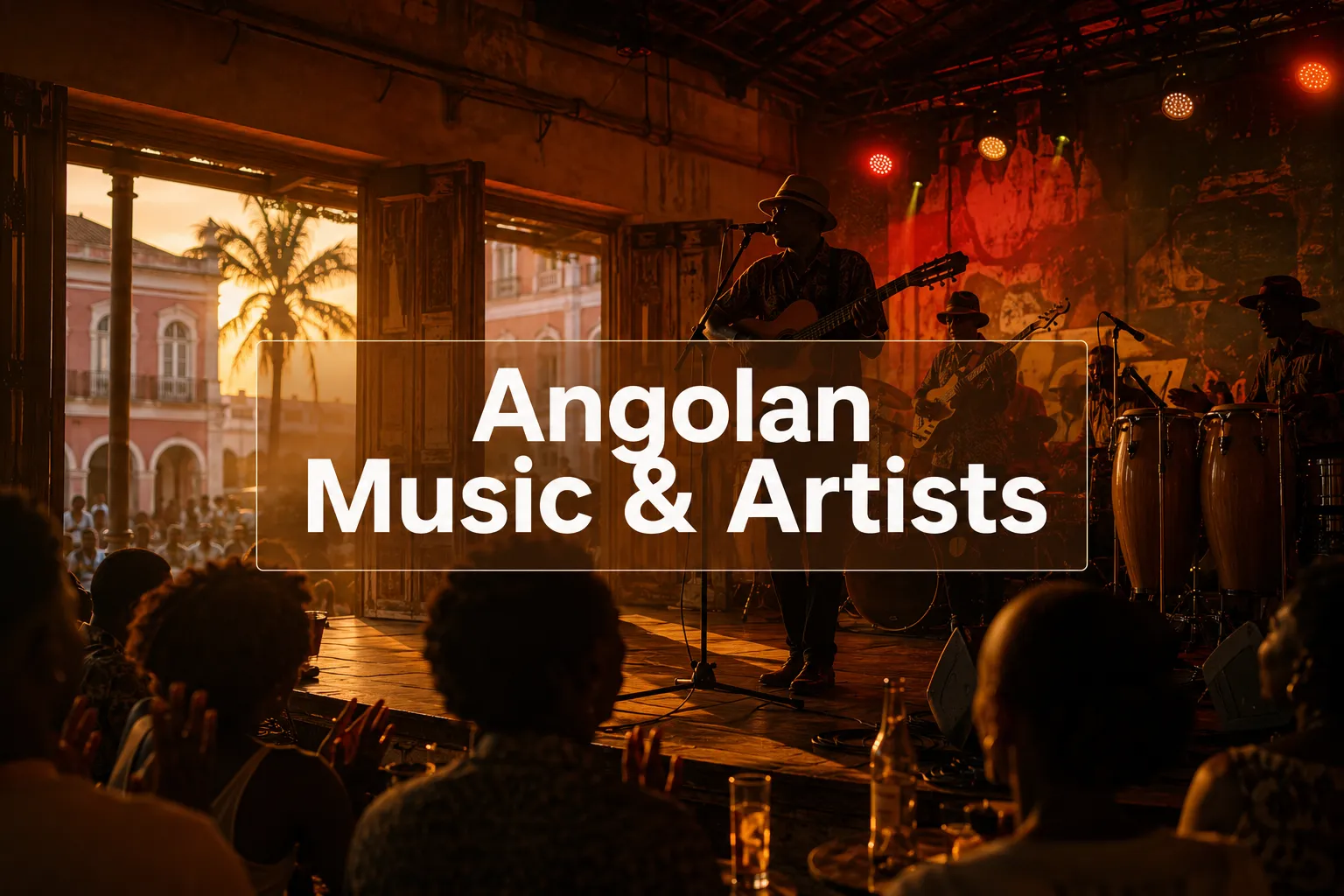
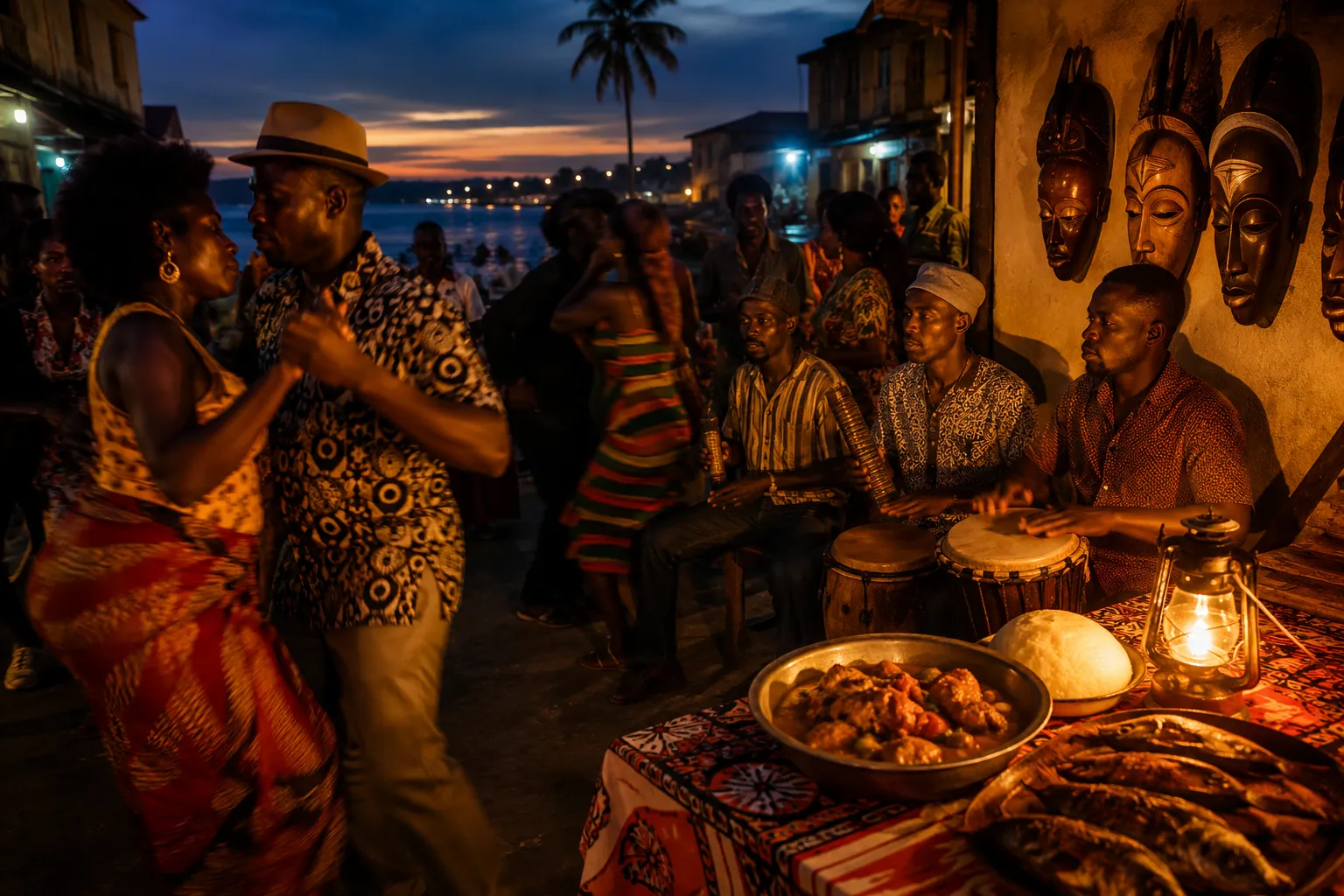
Music is the pulse of Angolan life. Three genres dominate: semba (the roots), kizomba (romantic, slower) and kuduro (fast, electronic, born in Luanda’s suburbs) [3]. Semba is often called the ancestor of Brazilian samba, a reminder of Angola’s Atlantic history.
You’ll hear music everywhere: taxis, markets, weddings, beach bars. Traditional instruments include the dikanza (scraper), marimba, ngoma drums and hungu (musical bow). In the countryside, dances tied to harvest, initiation and ancestor ceremonies are still performed. Modern Angolan artists export Afro-house and kuduro across Africa and to Portugal and Brazil [4].
What do Angolans eat and what is the cuisine like?
Angolan cuisine is hearty, coastal-influenced and shaped by Portuguese and Brazilian trade [3]. The national dish is muamba de galinha (chicken stew with palm oil, okra and garlic), usually served with funge (cassava or maize porridge).
Dishes worth trying:
- Calulu, dried fish or meat with greens
- Kizaca, cassava leaves stewed with peanut
- Peixe grelhado, grilled fresh fish along the coast
- Cabidela, rice cooked with chicken and its blood, Portuguese-influenced
- Gafanhotos, fried grasshoppers, a highland snack
Beer (Cuca, Nocal), fresh juices (maracujá, múcua from baobab) and Portuguese wine are widely available. Explore more in our Angolan cuisine guide.
What religions do people practice in Angola?
Angola is majority Christian: about 60% Roman Catholic and roughly 38% Protestant (Methodist, Baptist, evangelical and Pentecostal churches), with small Muslim, Kimbanguist and traditional-belief communities [6].
Religion is highly visible: cathedrals in Luanda and Benguela, packed Sunday services, and vibrant church choirs. Traditional African beliefs, especially around ancestors and healing, often coexist with Christian practice in rural areas. Travellers are welcome to attend church services; dress modestly and be respectful with photography.
How has Angolan culture been shaped by history?
Four historical layers explain modern Angola: precolonial Bantu kingdoms (Kongo, Ndongo, Matamba, Lunda), Portuguese colonisation (1482-1975), the transatlantic slave trade (which sent millions of Angolans to Brazil, deeply linking the two cultures), and the civil war (1975-2002).
The result is a country where you’ll hear Portuguese fado influences in one bar and Bantu drumming in the next, where Catholic saints share space with ancestor rituals, and where a generation raised during war now leads a young, urban, ambitious society. For a deeper timeline, see history of Angola.
“Angola’s identity is not one voice but a choir: highland farmers, coastal fishermen, forest hunters and city entrepreneurs all singing in Portuguese and their mother tongues at once.”
What common challenges do Angolans face today?
Despite oil wealth, Angola faces real challenges: income inequality, high youth unemployment, expensive urban housing, patchy healthcare, and infrastructure gaps outside major cities. Inflation and a volatile kwanza affect daily budgets. Rural areas still deal with limited electricity and water access, and residual landmine risk exists in some remote regions (largely cleared, but stay on marked paths, verify current advice via your government’s travel advisory).
For travellers, this translates into: prices in Luanda that can shock you, uneven road quality upcountry, and huge warmth from people who often make do with far less than you have.
What is the education system like in Angola?
Angola’s education system offers six years of compulsory primary school, followed by secondary and higher education. Public schools are free but overcrowded; private and international schools exist mainly in Luanda. Literacy has risen sharply since 2002 but remains uneven, with a wide urban-rural gap and a persistent gender gap in rural areas.
Angolan universities (Universidade Agostinho Neto, Universidade Católica de Angola and others) educate a growing middle-class youth who increasingly shape the country’s music, tech and business scenes.
How do Angolans celebrate holidays and festivals?
The biggest dates on the Angolan calendar are:
- Independence Day (11 November), parades, music, national pride
- Carnival (February/March), huge street festivals, especially in Luanda and Luanda Island
- Christmas and Easter, family-centred Catholic celebrations
- Peace Day (4 April), marking the end of the civil war in 2002
- Regional harvest and initiation festivals, vary by ethnic group
Weddings and funerals are also major cultural events, often lasting days and involving hundreds of guests. If invited, go, it’s one of the warmest windows into Angolan life.
What is family structure like in Angolan society?
Angolan family life is extended, hierarchical and communal. Households often include grandparents, cousins and in-laws under one roof or compound. Elders hold authority; children are raised collectively by aunts, uncles and neighbours. In many ethnic groups (like the Bakongo), lineage is traced matrilineally, meaning family identity flows through the mother’s line.
Gender roles are shifting quickly in cities, women lead businesses, ministries and universities, while remaining more traditional in rural areas. The country’s youthful population means family households are typically large and lively.
What are traditional Angolan crafts and art forms?
Angola’s traditional arts are tied to rituals, life passages and everyday utility [8]. Notable forms include:
- Chokwe masks and sculpture, among Central Africa’s most respected artistic traditions
- Woven baskets and mats from the central highlands
- Mwila and Herero beadwork and hair sculpting in the south
- Pottery from Ambundu and Ovimbundu communities
- Contemporary art thriving in Luanda galleries, often addressing war, memory and identity
Markets like Benfica (Luanda) are good places to buy authentic crafts, always ask about origin and, where relevant, negotiate respectfully.
Conclusion: meeting the Angola people on your trip
The best souvenir from Angola is not a mask or a bottle of Cuca beer, it’s the memory of the people. A Ovimbundu farmer explaining coffee, a Luanda taxi driver singing along to kizomba, a Mwila grandmother teaching you how she braids ochre into her hair. To make the most of it:
- Learn a few words of Portuguese before you arrive.
- Ask before you photograph, always.
- Say yes when invited to eat, dance or attend a service.
- Plan around the dry season (May-October) and check current visa and health requirements via official sources.
- Book with reputable local operators and respect community guidelines in rural areas.
Ready to plan the trip? Start with our overview of Angola attractions and the practical basics in travel to Angola.
Want to keep this guide? We email you the key points with a link to every section.
Frequently asked questions
Are Angolans friendly to tourists?
Yes. Angola sees relatively few international tourists, so visitors are often greeted with genuine curiosity and warmth, especially outside Luanda. A polite greeting in Portuguese goes a long way.
What language should I learn before visiting Angola?
Portuguese. English is not widely spoken outside upscale hotels and tour operators. Even basic Portuguese phrases will noticeably improve your experience.
Is it safe to visit rural Angola?
Most rural areas are calm, but road conditions, medical access and residual landmine risk mean you should travel with a reputable guide, stay on marked paths, and check current advice from your foreign ministry.
What should I wear when meeting local communities?
Modest, practical clothing. Avoid very short shorts or revealing tops in villages and churches. In the far south, communities like the Mwila have their own traditional dress, admire, but don't imitate.
Can I photograph people freely?
No. Always ask permission first, especially with the Mwila, Herero and other traditional communities in the south. Some may request a small tip, this is normal and fair.
What is the best way to experience Angolan culture in one trip?
Combine Luanda (music, food, museums) with the central highlands (Ovimbundu culture, colonial towns like Huambo) and the south (Lubango, Serra da Leba, Mwila communities near Huíla). Two to three weeks is ideal.