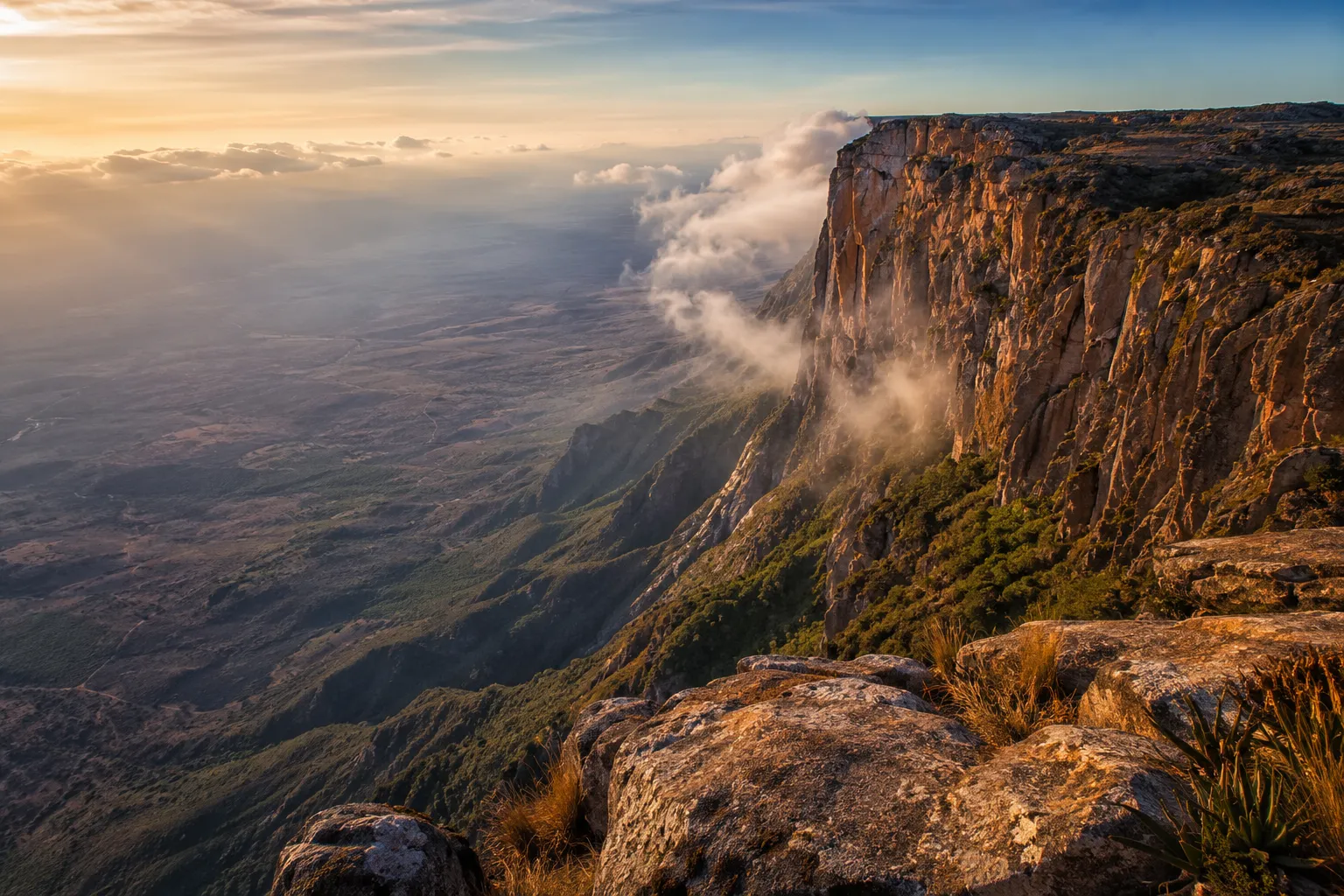
Stand on the rim at Tundavala and the ground simply ends. One step forward is grassland at 2,200 metres above sea level. One step further is a drop of roughly a kilometre straight down to the plains rolling west toward Namibe. There are no railings, no ticket booth, no signs telling you where the edge really is. That mix of raw geography and near-total absence of infrastructure is exactly what makes the tundavala gap one of the most memorable places in southern Africa, and one of the few sights I tell every traveller heading to Lubango they must see.
Quick Answer
Tundavala, or Fenda da Tundavala in Portuguese, is a massive fissure and cliff-edge viewpoint on the Great Escarpment in Huila province, southern Angola. It sits about 18 kilometres northwest of Lubango, roughly a 30 minute drive on a rough road. The rim is around 2,200 metres high with a drop of about 1,000 metres to the plains below. Go in the dry season, late afternoon, and stay well back from the unfenced edge.
Key Takeaways
- Tundavala is a natural viewpoint on the edge of the Great Escarpment, not a park or resort. Expect no facilities.
- It is roughly 18 km from Lubango, about 30 minutes by car on a bumpy road.
- The rim sits near 2,200 m elevation with a drop close to 1,000 m to the lowlands.
- Best light is late afternoon and sunset, but mist can shut down the view without warning.
- The cliff has no barriers. Keep children close and stay several metres back from the edge.
- Combine it with the Serra da Leba pass, the Christ the King statue in Lubango, and the descent to Namibe.
- Bring water, snacks, warm layers and a torch. There are no shops, toilets or lights at the site.
What Is Tundavala?
Tundavala is a huge cleft in the western edge of the Great Escarpment, where the Angolan highlands drop suddenly toward the coastal plain. In Portuguese it is called Fenda da Tundavala, which translates roughly as “the Tundavala fissure” or “gap.” The site is unfenced highland grassland, weathered granite outcrops, and a sheer vertical wall that opens onto a vast view west and south.
It is not a formal park. There is no gate, no visitor centre, no marked trail system. You drive up, you park on the rocky ground, and you walk toward the edge. That informality is part of the appeal, and part of the risk.
Where Is Tundavala Located?
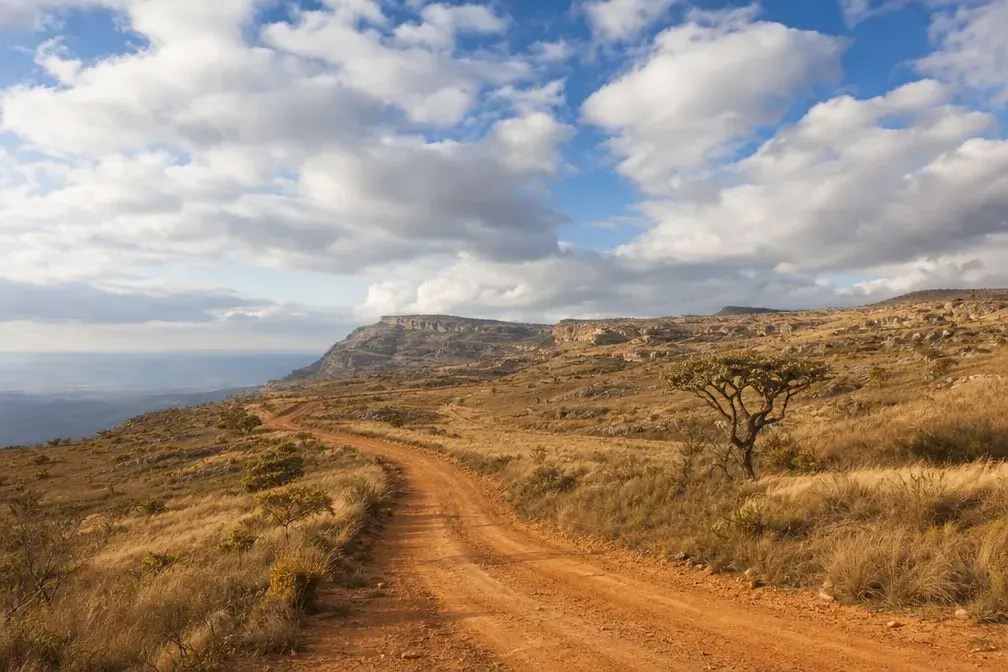
Tundavala is in Huila province in southern Angola, about 18 km northwest of the provincial capital Lubango. Lubango itself sits on a plateau around 1,700 m and is the launching point for almost every visit. From Lubango you head northwest on the Tundavala road, climbing steadily onto the escarpment until the tarmac gives way to a rougher track that ends near the rim.
For context, Huila is one of the highland provinces that most travellers reach on a southern Angola road trip linking Lubango, Namibe and the coast. If you’re still mapping out the wider route, our Lubango destination guide covers the city itself in more detail.
Why Is Tundavala Worth the Detour?
Because there is genuinely nothing else like it in the country. Angola has more famous names, the Kalandula waterfalls, Kissama National Park, the beaches of Benguela, but very few places give you this specific combination: extreme altitude, a sheer vertical drop, and an uninterrupted panorama across an entire region. On a clear day you look out across the top of the escarpment and see the land tumble away toward the Namib desert edge.
It is also one of the few big sights in Angola where you feel like you have arrived somewhere before the crowds. There are no tour buses lined up. Sometimes you’ll share the rim with a handful of locals selling honey or crafts, sometimes with no one at all.
How to Get to Tundavala From Lubango
The practical answer: hire a car with driver, take a taxi from Lubango, or drive yourself if you already have a 4x4. It is roughly 18 km and takes about 30 minutes depending on the road surface, which changes with each rainy season.
Here are the realistic options:
- Hired car with driver. The most common choice for international travellers. Arrange through your hotel in Lubango or a local guide. Half-day rates are normal.
- Taxi. Available in central Lubango. Agree on a return price before setting off, and confirm the driver will wait at the site.
- Self-drive. Feasible in a high-clearance vehicle. The tarmac deteriorates as you climb. See our notes on getting around Angola for driving realities.
- Shared minibus (candongueiro). Cheapest option, runs in the general direction but drops you short of the rim. Only for confident travellers with time and patience.
There is no public transport that goes to the viewpoint itself. Whatever you choose, make sure the driver knows you want to stay for sunset and understand you’ll be returning to Lubango after dark.
Best Time of Day and Time of Year to Visit
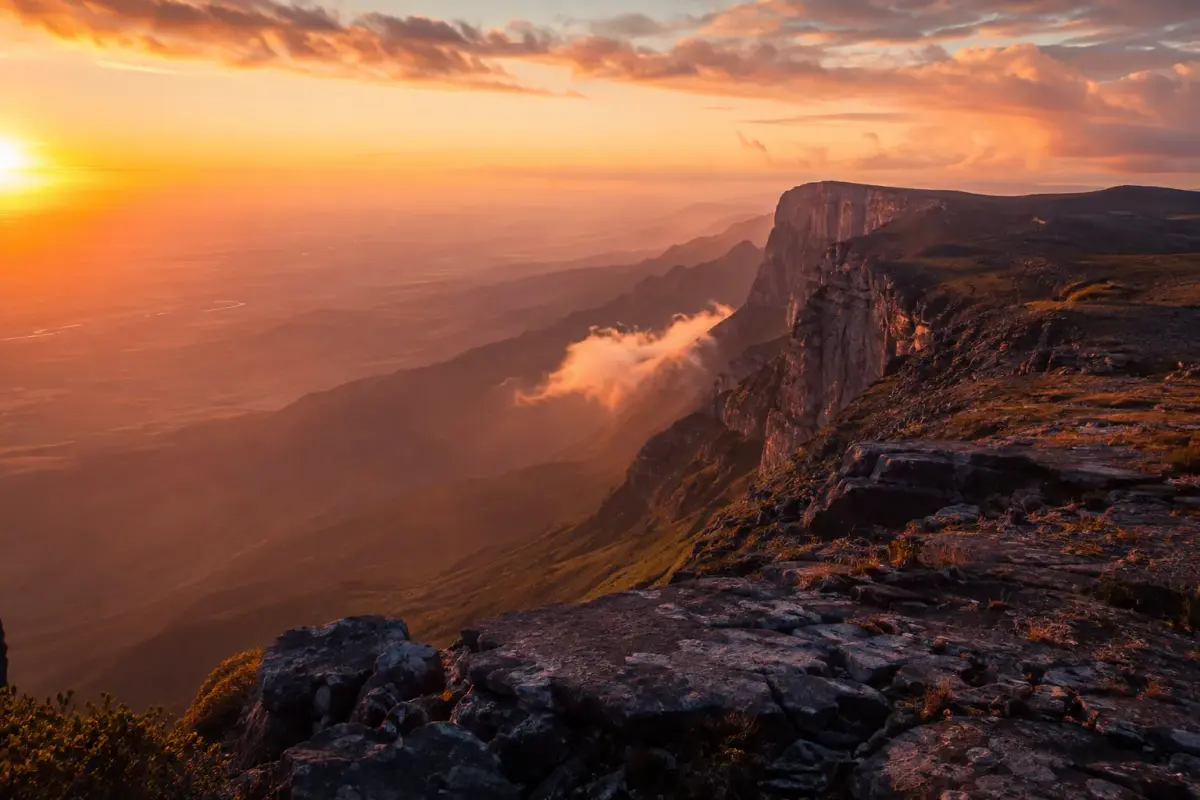
Late afternoon into sunset is the classic time. The light softens, the west-facing cliff catches warm colour, and the drop into shadow makes the depth suddenly readable. Mornings can also be good, but the view often clears later in the day.
For the time of year, the dry season from roughly May to October is the safest bet. During the rainy months of November through April, low cloud and mist can sit on the escarpment for days and completely erase the view. There is no consolation prize at Tundavala when the fog rolls in, you’ll be standing in wet grass staring at grey. For a broader planning window see our guide on the best time to visit Angola.
What to Expect When You Arrive
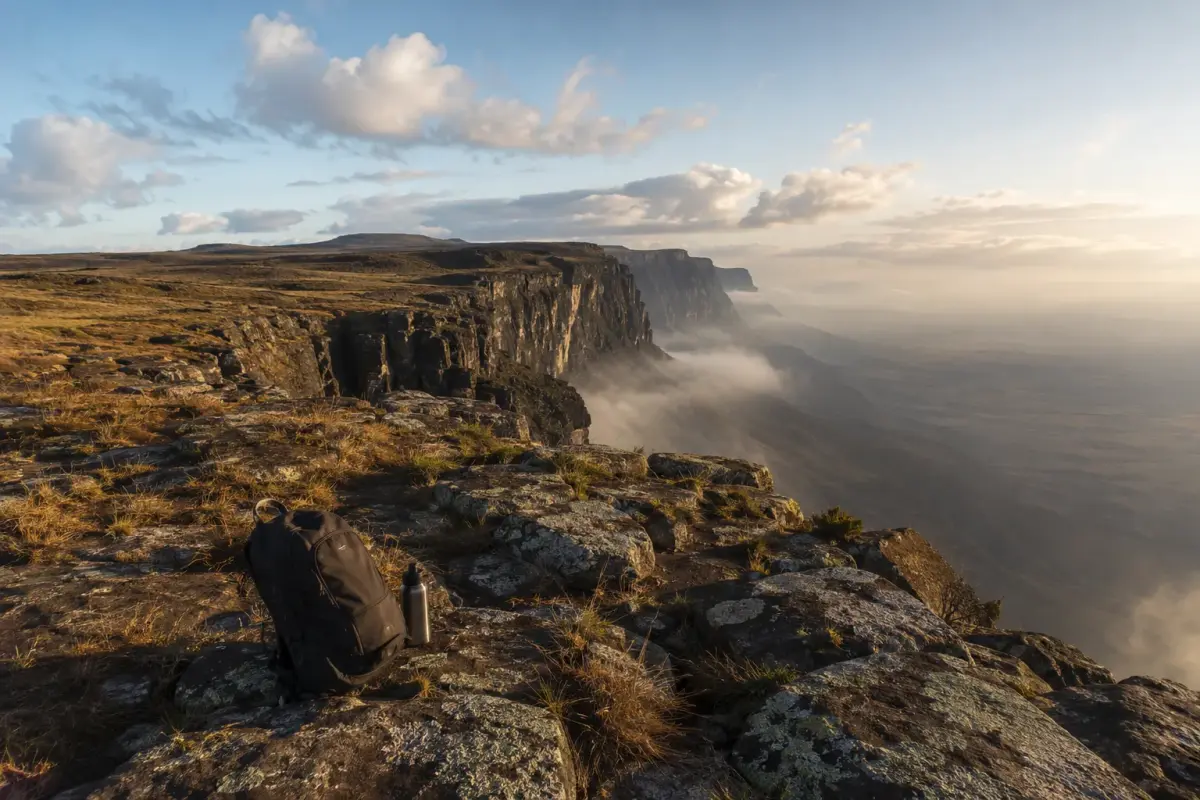
You’ll pull off the track onto flat, rocky ground scattered with low shrubs. There may be a few stalls with women selling homemade honey, woven baskets, or cold drinks. Sometimes there is no one at all.
From the parking area you walk a short distance across the plateau to the edge. There is no marked path. You choose your route across the grass and rock. The cliff appears suddenly, and the drop is immediate. Beyond, you see the plains stretching toward Namibe province, distant blue ridges, and often a slow drift of cloud below your feet.
There are no toilets, no shelters, no cafes, no rangers. Bring everything you need and take everything back with you.
Tundavala at a glance
| Feature | Detail |
|---|---|
| Location | Huila province, roughly 18 km NW of Lubango |
| Elevation at rim | Around 2,200 m above sea level |
| Vertical drop | Approximately 1,000 m |
| Drive from Lubango | About 30 minutes on a rough road |
| Entrance fee | None reported; details can change locally |
| Facilities | None. No toilets, no shops, no barriers |
| Best light | Late afternoon and sunset in dry season |
Is Tundavala Safe to Visit?
The cliff itself is the main hazard, and it is a serious one. There are no barriers, no warning signs, no marked safe zones. The rock at the edge can be loose or undercut. Every year there are stories of people who got too close for a photo. Stay several metres back. Do not sit on the lip. Keep small children within arm’s reach at all times, ideally not near the edge at all.
Beyond the cliff, Tundavala is generally straightforward. Petty crime is uncommon at the site itself, though standard precautions apply on the road up and in Lubango. Weather can turn cold and wet fast at 2,200 m, so warm layers matter even in the dry season. For broader context on travel conditions across the country, see our practical overview of whether Angola is safe to visit, and always check your government’s current travel advisory, such as the US State Department or UK FCDO, before you go.
What to Combine Tundavala With
Tundavala works best as one stop on a longer loop around Huila. The classic pairings from Lubango are:
- Serra da Leba pass. A famous hairpin road descending the escarpment toward Namibe. Its switchbacks are a photograph in themselves.
- Cristo Rei (Christ the King). The white statue on a hill above Lubango, a smaller cousin of Rio’s Christ, with sweeping city views.
- Lubango itself. Cool highland air, colonial-era streets, and good coffee.
- The road down to Namibe. Continuing west takes you into a totally different landscape of desert and ocean. Our Namibe guide covers what to do once you drop off the escarpment.
Two or three nights in Lubango gives you time to see all of the above at a reasonable pace. For inspiration on how it fits into a longer trip, browse the broader list of Angola’s top attractions.
Where to Stay Near Tundavala
There is no accommodation at the site. All lodging is in Lubango, where you’ll find a range of options from mid-range city hotels to a few pousadas on the outskirts. Standards vary and prices in Angola can be higher than travellers expect. Book in advance during the dry season, when domestic tourism peaks.
For most visitors, one to three nights in Lubango is enough to cover Tundavala, Serra da Leba and Cristo Rei without rushing.
Tundavala Photography Tips
The site is a gift for photographers, but it demands patience.
- Shoot late. The cliff faces roughly west, so afternoon and sunset light is far better than midday, when the scene flattens into haze.
- Bracket for dynamic range. The contrast between bright sky and shadowed drop is enormous.
- Use a wide lens for scale, a telephoto for the layers. Distant ridges compress beautifully at 100-200mm.
- Watch your footing before your composition. Set your tripod well back from the edge.
- Include foreground rock. It anchors the frame and communicates depth better than the void alone.
If landscape work is a big part of your trip, our roundup of Angola’s best photography spots covers other locations worth planning around.
What to Bring
Because there is nothing at the site, pack like you’re going on a short hike, even though you barely need to walk.
- Water, at least a litre per person
- Snacks or a picnic
- Warm layer and a windproof jacket (it gets cold at 2,200 m, especially at sunset)
- Sun hat, sunglasses, sunscreen
- Sturdy closed shoes with grip
- Torch or headlamp for the walk back to the car after sunset
- Fully charged phone and camera batteries
- Cash in kwanza for any honey or crafts you might buy from local sellers
- Rubbish bag to carry everything out
Conclusion
Tundavala rewards travellers who make the effort. It is not polished, not signposted, not commercialised, and that is precisely why it feels like a real discovery. Base yourself in Lubango for two or three nights, pick a clear afternoon in the dry season, hire a driver who will wait for sunset, and give yourself time to sit with the view. Respect the edge, bring your own water, and leave nothing behind. Then keep going: down the Serra da Leba pass, out to Namibe, and on to the coast. Few countries hand you a landscape this big without asking anything in return.
Free help from our team in Angola
Want to see Tundavala with a local?
Tell us when you are in Lubango. A driver or guide from our own team takes you to Tundavala and the Serra da Leba, at the time of day with the best light.
- Local team in Angola
- No obligation, nothing to pay
- Reply by email or WhatsApp
Want to keep this guide? We email you the key points with a link to every section.
Frequently asked questions
How long does it take to visit Tundavala?
Plan on half a day from Lubango. That's roughly 30 minutes each way plus two to three hours at the site, longer if you're staying for sunset.
What is the tundavala gap hiking difficulty?
There is no formal hiking trail. Reaching the main viewpoint requires only a short walk across flat ground from where you park. It is easy for anyone mobile, but the terrain is uneven rock and grass, so wear proper shoes.
Is there a Tundavala entrance fee?
No formal entrance fee is currently reported at the site. Local arrangements can change, so carry small amounts of kwanza in case a community fee is introduced.
What is the altitude at Tundavala?
The rim sits at roughly 2,200 metres above sea level, with a vertical drop of about 1,000 metres to the plains below. Some travellers feel the altitude mildly on arrival from the coast.
How does Tundavala compare to other Angola viewpoints?
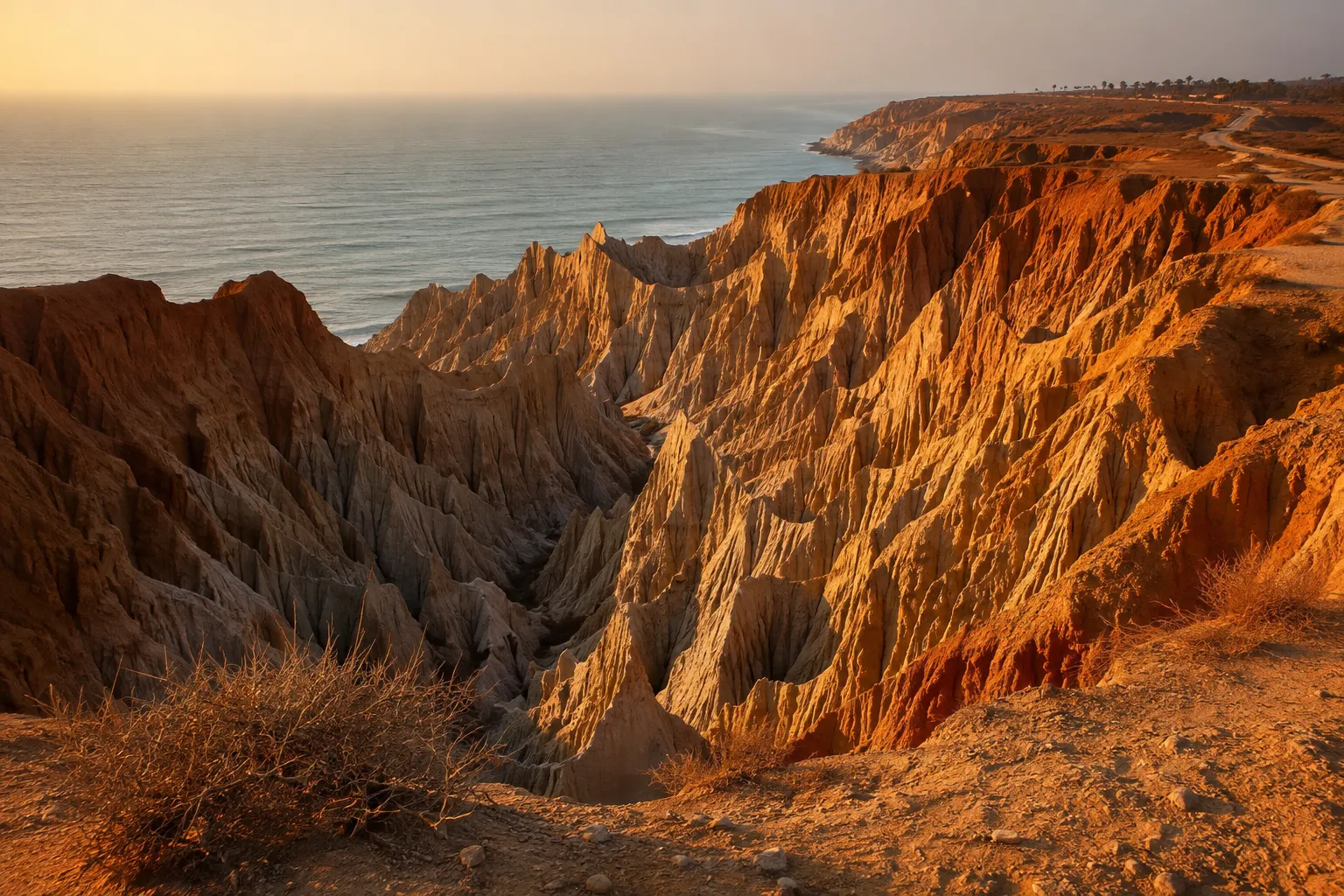
It is the country's most dramatic cliff-edge view. Miradouro da Lua near Luanda is stunning in its own eroded, coastal way, but Tundavala's scale and altitude are in a different league. For a country-wide comparison, our page on Angola's top attractions puts the main sights in context.
What are the weather conditions like at Tundavala?
Cool and often windy year-round. Dry season (May to October) brings clearer skies but chilly evenings. Rainy season (November to April) means mist, low cloud, and days when the view is entirely closed in.
Can I visit Tundavala without a guide?
Yes. Many travellers hire a taxi or self-drive. A local guide adds context and helps with the road conditions, but is not required.
Is Tundavala suitable for children?
The view is spectacular for families, but the unfenced cliff demands constant, hands-on supervision. If your children are the sort to run ahead, keep them well back from the rim or consider giving this one a miss.