Long before Portuguese caravels appeared on the Atlantic horizon, a stone-walled royal town on a highland plateau in northern Angola ruled one of Central Africa’s most powerful states. That town was Mbanza Kongo, capital of the Kingdom of Kongo from roughly the 14th century, and today it is one of only two UNESCO World Heritage sites in Angola. For travellers willing to venture far beyond Luanda, it is quite simply the most important cultural destination in the country.
Quick Answer
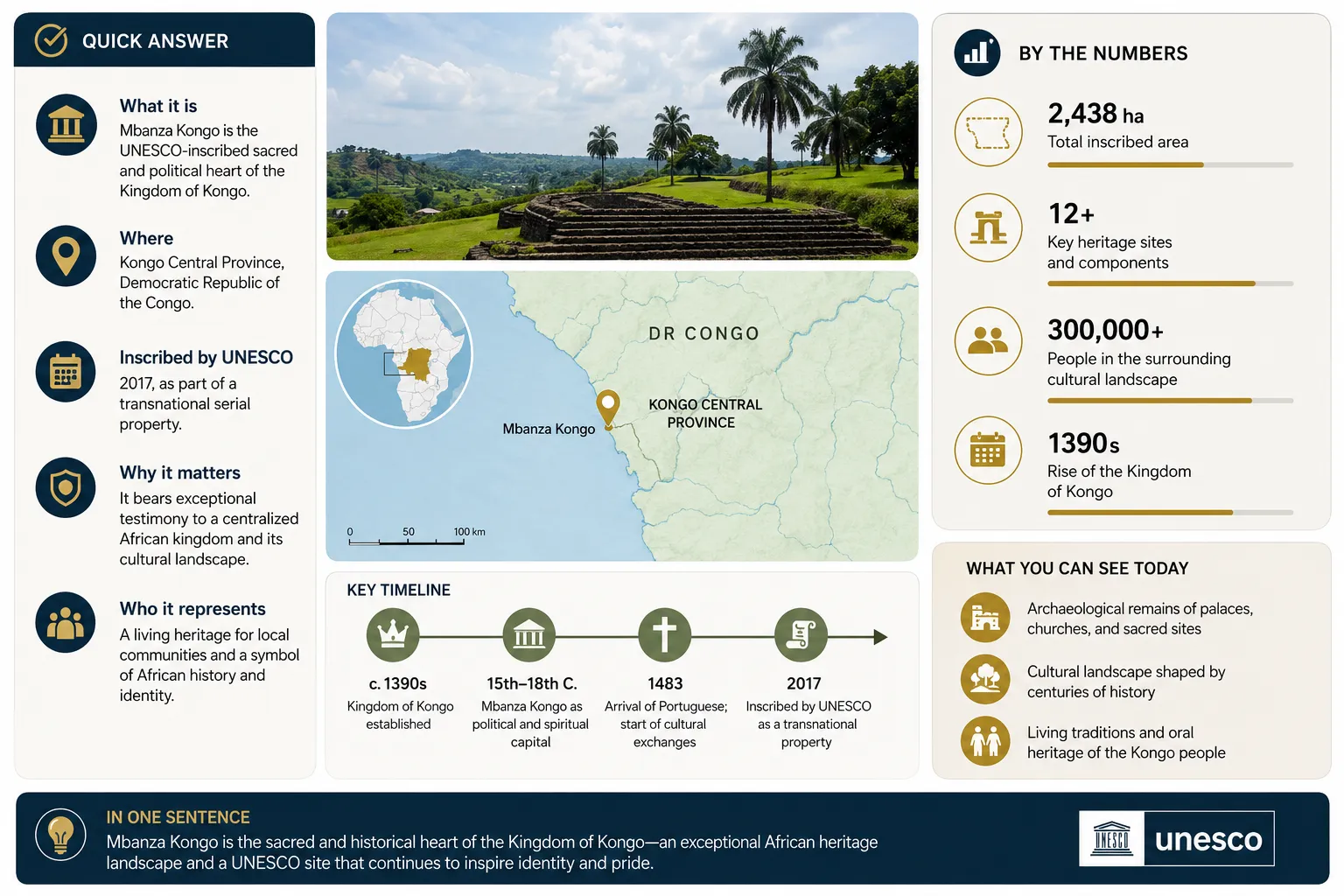
Mbanza Kongo is the historic capital of the former Kingdom of Kongo, located in Zaire province in northern Angola near the border with the Democratic Republic of Congo. It was inscribed on the UNESCO World Heritage List in 2017 for its exceptional archaeological remains, including the ruins of the old cathedral (Kulumbimbi), royal burial sites, and the layout of the ancient royal residence. Visiting requires a domestic flight or long drive from Luanda, and a full exploration of the core sites takes one to two days.
Key Takeaways
- Mbanza Kongo was the political and spiritual capital of the Kingdom of Kongo, a state that flourished from the 14th to the 19th century.
- The site was declared a UNESCO World Heritage Site in 2017, Angola’s first cultural inscription.
- Highlights include Kulumbimbi (the ruined cathedral of São Salvador), the Museum of the Kings of Kongo, sacred trees, and royal tombs.
- The town sits on a 570 metre plateau in Zaire province, roughly 350 km north-east of Luanda.
- The dry season from May to October is the best time to visit, with cooler temperatures and passable roads.
- Tourism infrastructure is basic, so plan lodging and transport in advance, ideally via a specialised operator.
- Mbanza Kongo carries deep cultural significance for millions of Bakongo people across Angola, DRC, and the Republic of Congo.
What is Mbanza Kongo and why is it important
Mbanza Kongo is the ancient capital of the Kingdom of Kongo, and it matters because it is one of the few surviving physical records of a major pre-colonial sub-Saharan African state. The site preserves both African royal architecture and one of the earliest points of sustained contact between Central Africa and Europe.
The kingdom controlled a large territory covering parts of what is now northern Angola, western DRC, and the Republic of Congo. At its peak in the 15th and 16th centuries, Mbanza Kongo housed a royal court, foreign envoys, missionaries, and tens of thousands of residents. When Portuguese explorers arrived in 1483, the ManiKongo (king) already ruled a sophisticated society with its own administration, trade networks and metallurgy.
For visitors, Mbanza Kongo is not a spectacular temple complex like Great Zimbabwe or the pyramids of Meroe. Its power is subtler: layered ruins, sacred trees, oral history and archaeology that together tell the story of an African kingdom that negotiated, corresponded with popes and eventually collapsed under the pressures of the transatlantic slave trade.
Mbanza Kongo UNESCO World Heritage Site location
Mbanza Kongo is the capital of Zaire province in the far north-west of Angola, sitting on a plateau roughly 50 km south of the border with the Democratic Republic of Congo. Its geographic coordinates place it near 6°16’ S, 14°15’ E, at an altitude of about 570 metres.
Key location facts:
- Province: Zaire
- Distance from Luanda: approximately 350 km by air, 500+ km by road
- Nearest international city: Matadi (DRC), across the Congo River
- Terrain: highland savanna with scattered baobabs and mango groves
The elevation gives the town a milder climate than the humid coast, which is one reason it was chosen as a royal seat centuries ago. For deeper context on the wider country, our guide on travel to Angola covers geography, entry rules and regional logistics.
History of Mbanza Kongo and the Kingdom of Kongo
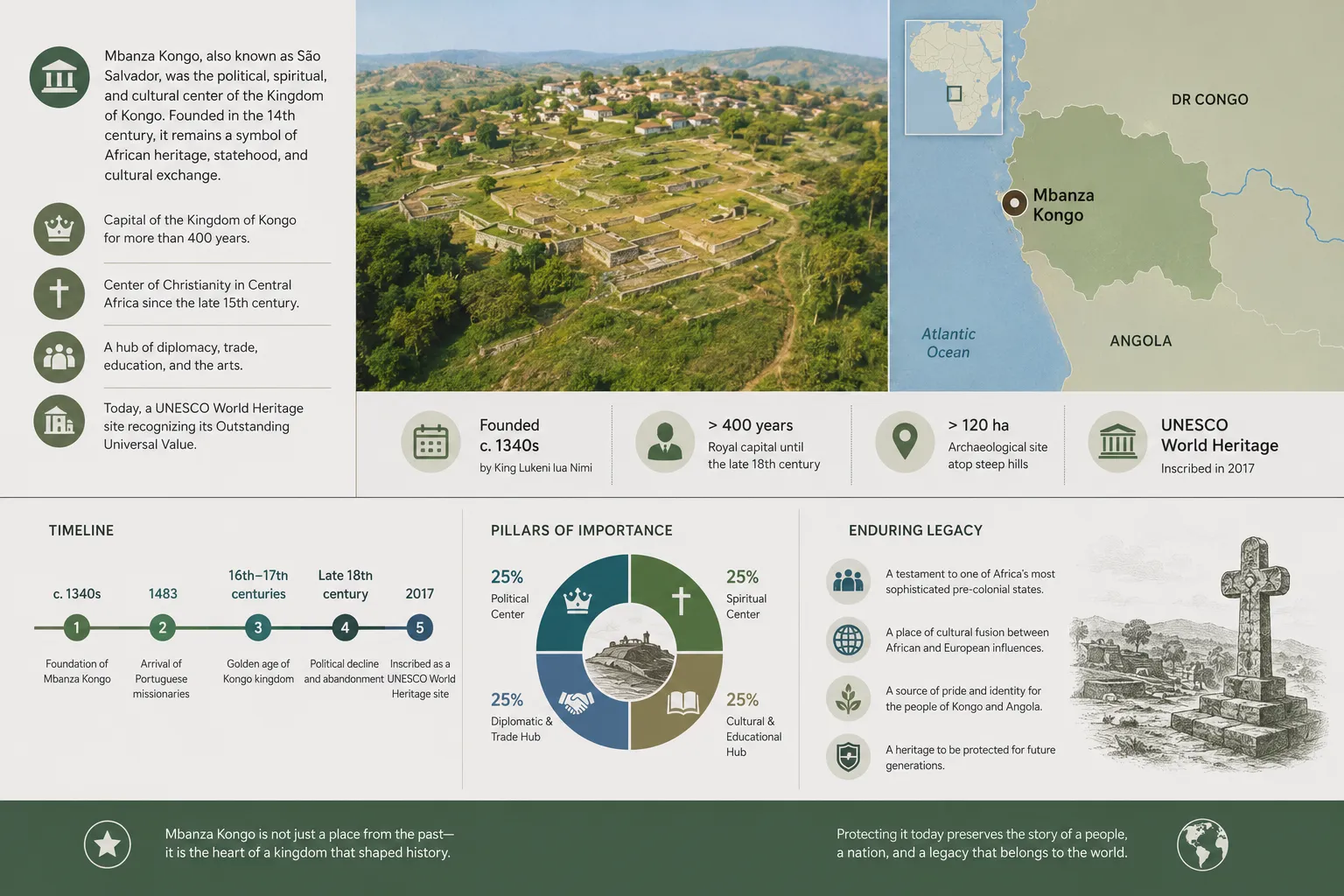
The Kingdom of Kongo emerged in the late 14th century when Lukeni lua Nimi, according to oral tradition, founded a state that would dominate the region for centuries. Mbanza Kongo became its capital, chosen for its defensible plateau and central position among Bakongo clans.
Key historical moments:
- c. 1390: Foundation of the kingdom and establishment of Mbanza Kongo as capital.
- 1483: Portuguese navigator Diogo Cão reaches the Congo River mouth and makes contact.
- 1491: King Nzinga a Nkuwu is baptised as João I, and Christianity is adopted at court.
- 1506-1543: Reign of Afonso I, who corresponds with the Vatican and turns Mbanza Kongo into São Salvador, a walled Christian city.
- 1568: Jaga invasion temporarily destroys the capital.
- 1665: Battle of Mbwila; the Portuguese defeat and behead King António I, beginning the kingdom’s long decline.
- 19th century: Formal absorption into Portuguese colonial territory.
For the broader Angolan story from precolonial times through the civil war, see our overview of the history of Angola.
Mbanza Kongo archaeological sites: what to see
The UNESCO inscription covers a cluster of connected sites within and around the modern town. Most can be visited on foot with a local guide.
Kulumbimbi (Ruins of São Salvador Cathedral). The most iconic monument, built in the early 16th century and considered by some accounts the oldest church in sub-Saharan Africa south of the Sahel. Only the roofless stone walls survive, and locals traditionally regard the site as sacred.
Museum of the Kings of Kongo (Museu dos Reis do Kongo). Housed in a former colonial building, this small museum contains royal regalia, ceremonial staffs, crucifixes, pottery and photographs. It is the best introduction before walking the ruins.
Yala Nkuwu tree. A massive fig tree traditionally used as the site where the ManiKongo held court and dispensed justice. Still standing, still revered.
Royal tombs and burial sites. Several kings are buried in and around Kulumbimbi; other royal graves lie in nearby fields.
Lumbu (royal enclosure remnants). Traces of the stone walls that once surrounded the palace precinct.
Nkulumbimbi and sacred stones. Additional ritual sites tied to Bakongo cosmology.
For context on other UNESCO-worthy natural and cultural spots in the country, browse our roundup of things to do in Angola.
When was Mbanza Kongo designated a UNESCO site
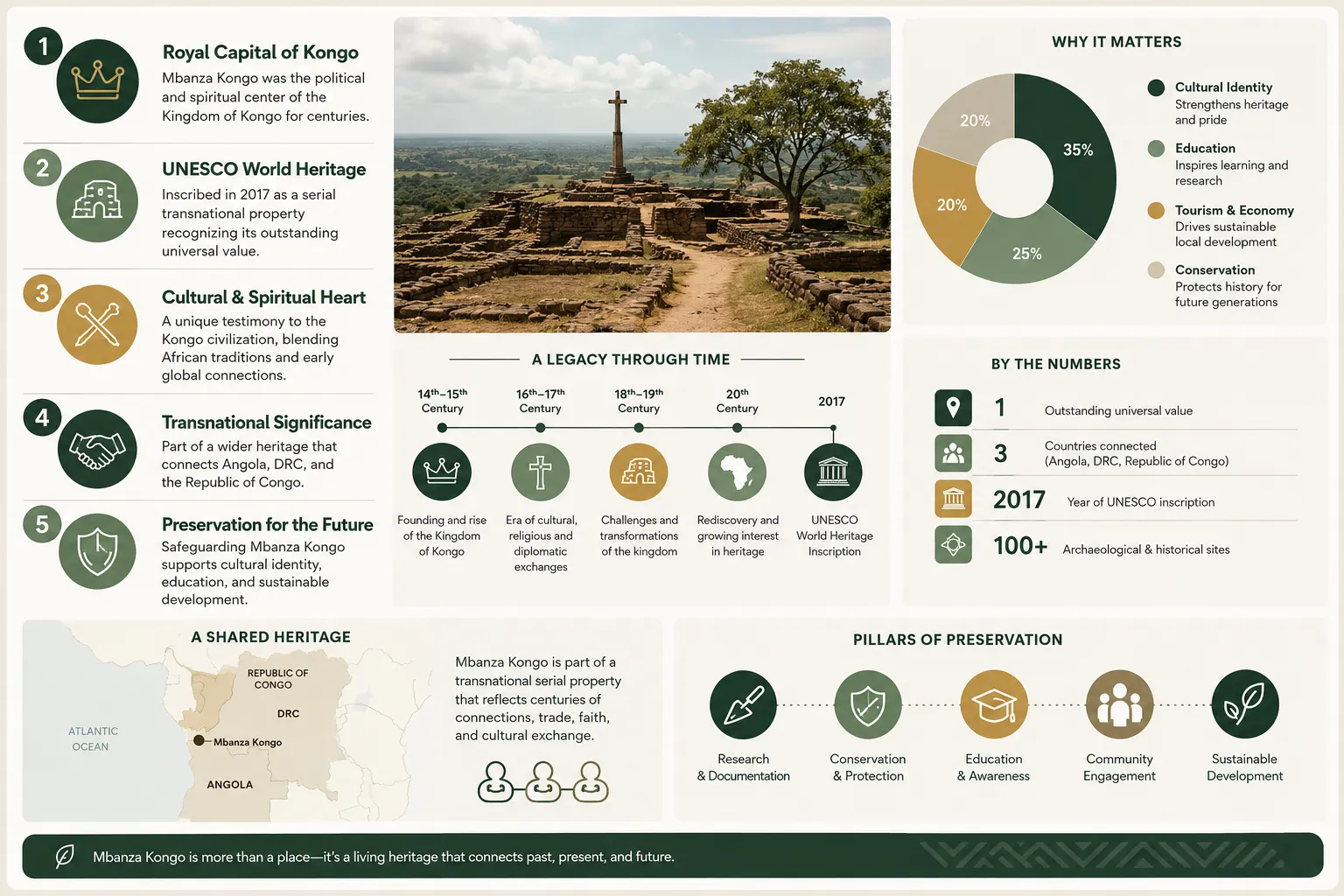
Mbanza Kongo was inscribed on the UNESCO World Heritage List on 8 July 2017, during the 41st session of the World Heritage Committee held in Kraków, Poland. It was inscribed under the official title “Mbanza Kongo, Vestiges of the Capital of the former Kingdom of Kongo” and was Angola’s first cultural World Heritage Site.
The inscription recognises criteria (iii) and (iv): the site bears exceptional testimony to a civilisation and represents an outstanding example of the transformation of an African capital through contact with a European power. You can verify the listing directly via the UNESCO World Heritage Centre.
Mbanza Kongo vs other African kingdoms
Mbanza Kongo occupies a unique place among Africa’s royal capitals. Here is how it compares to a handful of well-known peers.
| Site | Country | Peak period | Best-known feature |
|---|---|---|---|
| Mbanza Kongo | Angola | 15th, 17th c. | Kulumbimbi cathedral ruins, royal tombs |
| Great Zimbabwe | Zimbabwe | 11th, 15th c. | Massive dry-stone walls |
| Kumasi (Asante) | Ghana | 17th, 19th c. | Royal palace, Golden Stool tradition |
| Gondar | Ethiopia | 17th, 18th c. | Fasil Ghebbi castles |
| Meroe | Sudan | 8th c. BCE, 4th c. CE | Nubian pyramids |
What makes Mbanza Kongo distinctive is the fusion: it is simultaneously an indigenous African royal centre and the site where Central African and European Christian civilisations first genuinely engaged as diplomatic equals.
Mbanza Kongo restoration projects: current status
Restoration and archaeological work at Mbanza Kongo has been ongoing since the UNESCO nomination process began around 2011. Excavations conducted by Angolan and international teams have uncovered foundations, ceramics, imported glass beads, coins, and burial remains.
Current focus areas include:
- Stabilisation of Kulumbimbi’s walls to prevent further collapse.
- Expansion and modernisation of the Museum of the Kings of Kongo.
- Ongoing archaeological digs around the royal enclosure.
- Community engagement programmes with Bakongo traditional authorities.
Progress can be uneven due to funding cycles and logistical challenges, so what you see on the ground may differ from official communications. Check the latest status via UNESCO before travelling.
What artifacts were found at Mbanza Kongo
Excavations at Mbanza Kongo have yielded artefacts that document both indigenous Kongo material culture and centuries of Euro-African exchange.
Notable finds include:
- Portuguese coins dating from the 16th and 17th centuries.
- Venetian glass beads brought via the Atlantic trade.
- Ceramics of both local and imported (Portuguese, Chinese porcelain) origin.
- Crucifixes and religious medals blending Christian and Bakongo iconography.
- Iron tools and slag pointing to sophisticated local metallurgy.
- Human remains from royal burials, informing scholarship on Kongo elite society.
Most curated pieces are displayed at the Museum of the Kings of Kongo in town.
How to visit Mbanza Kongo Angola
Getting to Mbanza Kongo takes planning, but it is manageable. Two realistic options exist.
By air. Domestic flights link Luanda to Mbanza Kongo airport (SSY), typically operated by TAAG Angola Airlines a few times per week. Flight time is about one hour. Schedules change, so book with flexibility.
By road. The overland journey from Luanda takes 8-12 hours depending on road conditions, passing through Caxito, N’Zeto and Tomboco. A 4x4 is strongly recommended, and travelling with a driver or organised tour is the norm.
Practical steps:
- Arrange your Angola visa or confirm visa-free eligibility. See our Angola visa guide for current rules.
- Book domestic flights or a chartered vehicle well in advance.
- Reserve a guide who speaks Portuguese and understands the sites.
- Confirm accommodation before departure.
- Bring cash in kwanza; ATMs are unreliable outside Luanda.
For flights and multi-day itineraries, working with a specialised Angola operator saves considerable friction.
Mbanza Kongo tourism infrastructure and facilities
Tourism infrastructure in Mbanza Kongo is basic but functional. Expect a small provincial town, not a polished heritage destination.
Accommodation. A handful of guesthouses and small hotels operate in town, ranging from simple pousadas to mid-range business hotels. Air conditioning and reliable Wi-Fi are not guaranteed. Book directly or via a tour operator.
Food. Local restaurants serve Angolan staples like funge, muamba de galinha and grilled fish. For a taste of what to expect country-wide, browse our guide to Angolan food.
Guides. Museum staff and independent guides are available, though English is limited. A Portuguese-speaking companion or a pre-booked guide helps enormously.
Connectivity. Mobile signal (Unitel, Movicel) is generally available in town but patchy elsewhere.
Medical. Basic clinics only. Serious care requires evacuation to Luanda, so travel insurance with medevac cover is essential.
Mbanza Kongo best time to visit
The best time to visit Mbanza Kongo is during the dry season, from May to October, when temperatures are cooler, humidity drops and roads are more reliable.
| Period | Weather | Travel suitability |
|---|---|---|
| May, August | Dry, cool nights (15-25°C) | Excellent |
| September, October | Warming, still dry | Very good |
| November, February | Hot, heavy rains | Difficult; muddy roads |
| March, April | Warm, tapering rains | Fair |
For a country-wide seasonal breakdown, see our article on the best time to visit Angola.
How long does it take to explore Mbanza Kongo
Plan for a minimum of one full day, ideally two, to explore Mbanza Kongo properly.
Suggested itinerary:
- Day 1 morning: Museum of the Kings of Kongo (2 hours), then Kulumbimbi cathedral ruins (1.5 hours).
- Day 1 afternoon: Yala Nkuwu tree, royal tombs, walk through the historic town centre.
- Day 2 morning: Outlying archaeological sites, sacred stones, viewpoints over the plateau.
- Day 2 afternoon: Optional visit to nearby villages to meet Bakongo cultural authorities.
Rushing through in half a day is possible but misses the point. This is a site that rewards slow observation, conversation with locals and reading between the ruined walls.
Mbanza Kongo accessibility issues for visitors
Accessibility at Mbanza Kongo is limited, both physically and logistically. Paths across the archaeological zones are uneven, unpaved and can be muddy in the wet season. Kulumbimbi has no wheelchair access, and the museum building has steps.
Other practical considerations:
- Language: almost no English; basic Portuguese is essential or bring a translator.
- Signage: limited on-site interpretation panels.
- Cash: carry sufficient kwanza; card acceptance is minimal.
- Security: the town is generally calm, but standard travel-advisory guidance applies. Check current advice from your government’s travel advisory before you go.
If accessibility is a concern, discuss specific needs with your tour operator before booking.
Mbanza Kongo cultural significance to Congolese people
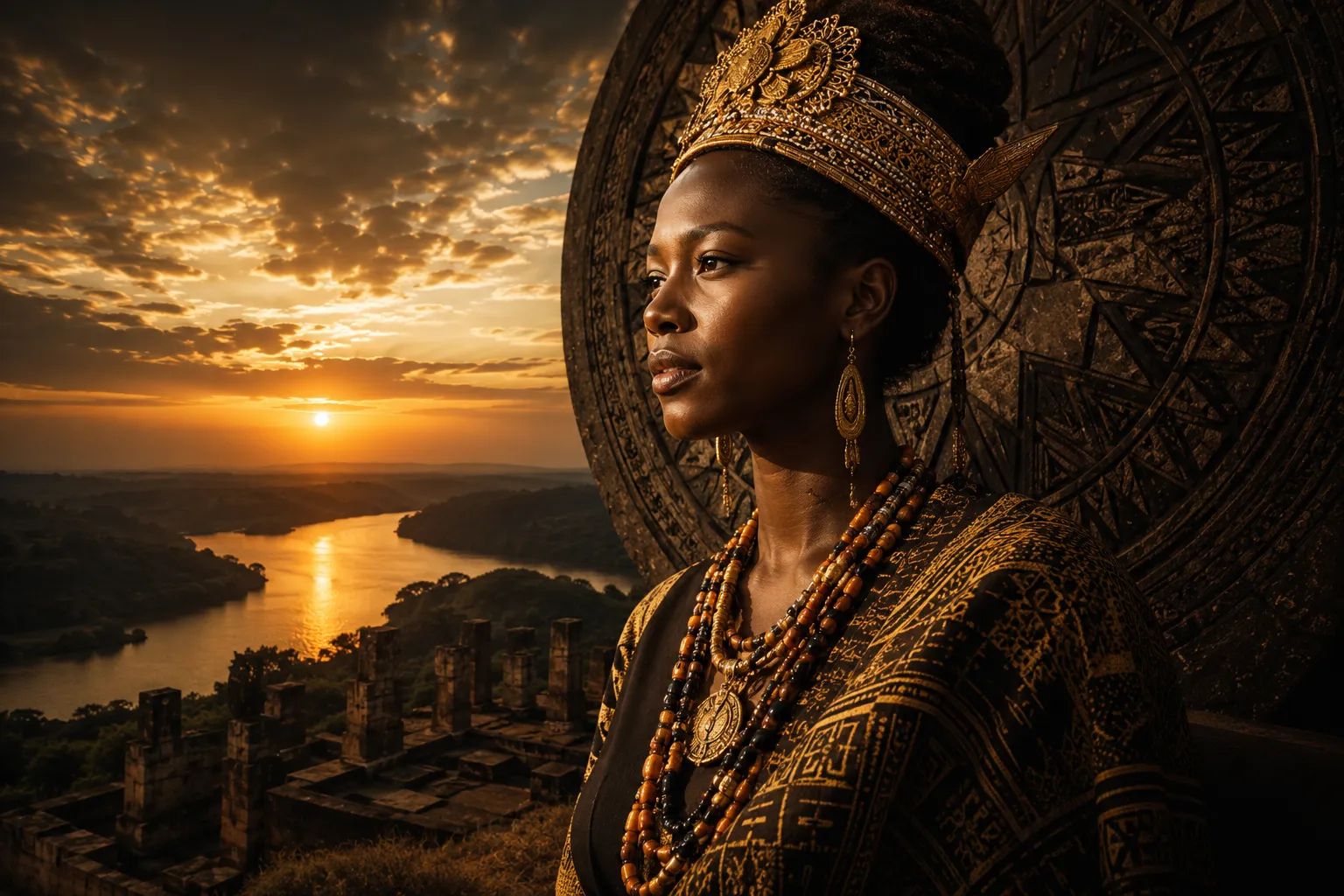
For millions of Bakongo people living today across Angola, the Democratic Republic of Congo and the Republic of Congo, Mbanza Kongo is not a ruin but a living spiritual centre. It is the ancestral origin point, the seat of the ancient kings, and a symbol of pre-colonial African sovereignty.
Traditional coronations and cultural ceremonies still take place near Kulumbimbi and beneath Yala Nkuwu. The site anchors a shared Kikongo-speaking identity that transcends modern borders drawn by 19th-century European powers. When you walk the plateau, remember you are not only visiting an archaeological zone but a place of active cultural memory. Behave accordingly: ask before photographing ceremonies, dress modestly, and follow your guide’s cues around sacred trees and burial areas.
For more on Angola’s ethnic and cultural landscape, our piece on Angola culture offers useful context.
“Mbanza Kongo is where our history speaks from the stones. It is not the past. It is who we still are.” — a sentiment commonly expressed by Bakongo elders in Zaire province.
Conclusion
Mbanza Kongo is not an easy destination, and that is precisely why it stays with you. It rewards travellers who want depth over convenience, who accept dusty roads and basic hotels in exchange for standing among stones that witnessed African kings corresponding with popes five centuries ago. If you are already planning a serious trip to Angola, adding two days in Zaire province transforms your journey from a coastal tour into a genuine encounter with Central African history.
Next steps: verify your visa requirements, check flight availability with TAAG, book a Portuguese-speaking guide in advance, and read up on the wider country via our pillar guide on travel to Angola. Then go, before mass tourism finds this remarkable plateau.
- Valid Angola visa or visa-free confirmation
- Yellow fever vaccination certificate
- Malaria prophylaxis
- Cash in Angolan kwanza
- Domestic flight or 4x4 arranged from Luanda
- Portuguese-speaking guide booked
- Travel insurance with medevac coverage
Free help from our team in Angola
Want to visit Mbanza Kongo?
The UNESCO site is a long way from Luanda. Tell us your dates and we arrange the transport, a guide who knows the history of the Kingdom of Kongo and a place to stay.
- Local team in Angola
- No obligation, nothing to pay
- Reply by email or WhatsApp
Want to keep this guide? We email you the key points with a link to every section.
Frequently asked questions
Is Mbanza Kongo safe to visit?
Generally yes. The town and surrounding area are calm, with normal precautions against petty theft. Check your government's current travel advisory before departure.
Do I need a special permit to visit the archaeological sites?
No special permit is required, but you should register at the Museum of the Kings of Kongo and hire a local guide to access certain restricted zones.
Can I visit Mbanza Kongo as a day trip from Luanda?
Technically yes by air, but it is exhausting and you will miss most of the experience. Plan at least one overnight.
What language is spoken in Mbanza Kongo?
Portuguese is the official language. Kikongo is widely spoken locally. English is rare.
Are there ATMs in Mbanza Kongo?
A few exist but are unreliable. Bring sufficient Angolan kwanza from Luanda in cash.
Is photography allowed at the ruins?
Yes at most sites, but always ask before photographing people, ceremonies or the interior of sacred spaces.