Quick answer
The palanca negra gigante (giant sable antelope, Hippotragus niger variani) is a critically endangered antelope subspecies found nowhere on earth except Angola. Roughly 300 animals survive across about eight herds in Cangandala National Park and the Luando Strict Nature Reserve, both in and around Malanje province. Visiting Cangandala is possible with permission from the park authorities, but seeing a giant sable as a casual tourist is genuinely unlikely. Treat it as a conservation pilgrimage, not a safari tick.
Key takeaways
- The giant sable is endemic to Angola, and its entire wild range sits in two protected areas: Cangandala National Park and the Luando Strict Nature Reserve.
- Population estimates hover around 300 animals in roughly eight herds, one herd in Cangandala and the rest in Luando. Every survey gives a slightly different number, so treat all figures as estimates.
- The subspecies was feared extinct during Angola’s civil war, then confirmed alive in 2004 through camera-trap work led by conservation biologist Pedro Vaz Pinto.
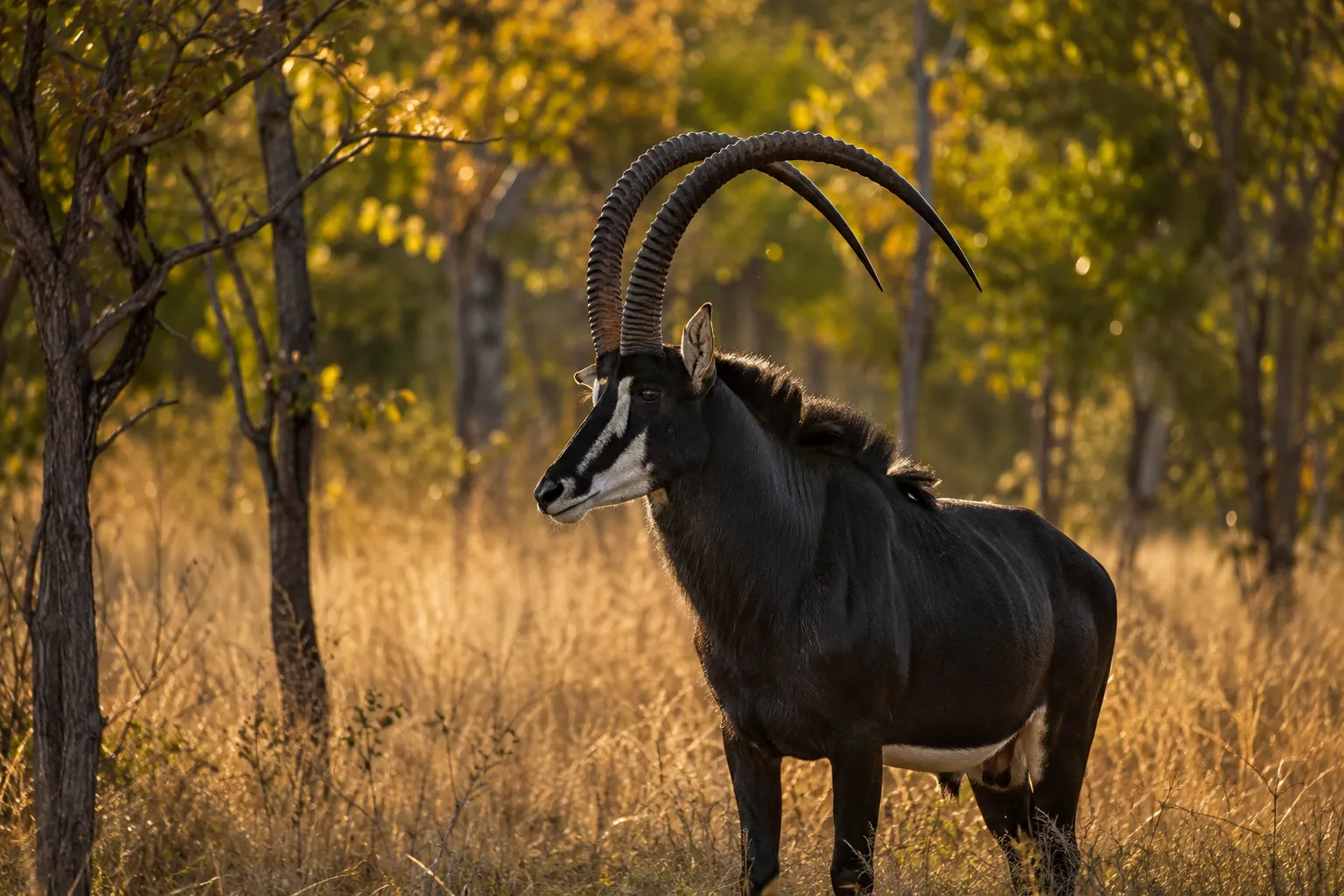
- Its horns are the giveaway: the longest of any sable, sweeping back in a deep arc that can exceed 1.5 metres along the curve in mature bulls.
- Main threats: poaching for bushmeat, habitat encroachment, and hybridisation with roan antelope after herd bulls were wiped out.
- Hunting is illegal. The animal is fully protected in Angola and there is no legal trophy hunting of the giant sable anywhere.
- The national football team is nicknamed the Palancas Negras, and the animal turns up on currency, logos and airline branding across the country.
- Realistic advice for travellers: come in the dry season (May to September), arrange permission in advance through the park authorities or a Malanje-based operator, and go for the landscape, the ranger stories and the conservation project rather than a guaranteed sighting.
What is a palanca negra giant sable antelope?
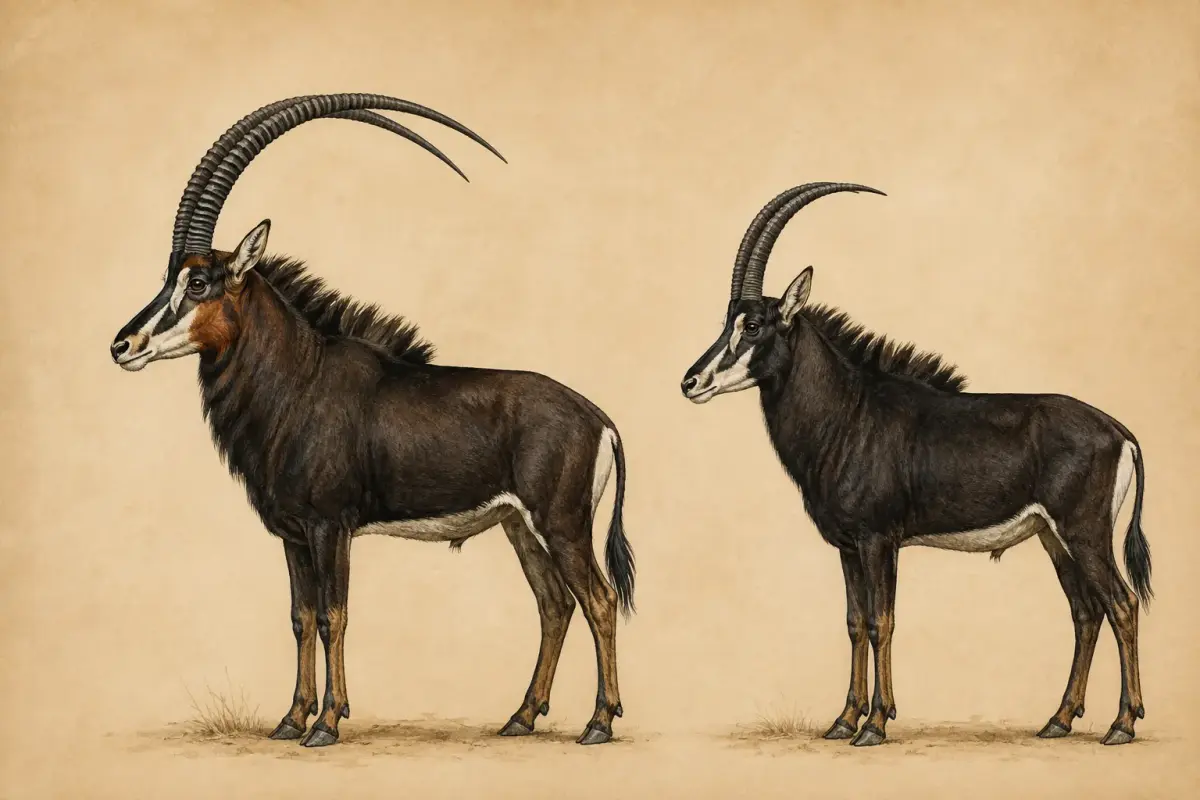
The palanca negra gigante is the largest and rarest of the sable antelopes, a subspecies of Hippotragus niger that evolved in isolation in the miombo woodlands of central Angola. Mature bulls are coal-black with white facial blazes and a white belly; cows and young animals are a rich chestnut-brown. Both sexes carry ringed horns, but the bull’s are spectacular, arcing backwards over the shoulders in a shape that has made the animal a hunting-world legend and a national emblem at the same time.
The subspecies was first described scientifically in the 1910s after specimens were sent out of Angola, and it has been treated as distinct ever since. “Palanca negra gigante” is simply Portuguese for “giant black antelope,” and Angolans use the shorter palanca negra in everyday speech.
What makes it matter beyond biology is how completely Angola has adopted it. The football team is the Palancas Negras. The image appears on banknotes, government seals, corporate logos and aircraft liveries. Few countries have a national animal that is both this recognisable and this close to disappearing.
A country of more than 35 million people has built its most visible national symbol around an animal that maybe 300 individuals still represent in the wild.
Where do palanca negra sable antelopes live in Angola?
The entire wild population lives in two protected areas in central Angola: Cangandala National Park and the much larger Luando Strict Nature Reserve, in and around Malanje province. There is no giant sable population anywhere else, in any other country, or in any zoo.
The two sites work very differently:
| Cangandala National Park | Luando Strict Nature Reserve | |
|---|---|---|
| Size | Small, Angola’s smallest national park | Far larger, spanning the Luando river basin |
| Giant sable herds | One herd, inside a fenced sanctuary | Most of the remaining herds |
| Monitoring | Intensive, camera traps and rangers | Patchier, harder to survey |
| Visitor access | Possible with permission | Effectively closed to tourism |
| Road access | Reachable by road from Malanje city | Remote, poor roads, long distances |
If you want to stand a chance of any contact with the species, Cangandala is the only realistic option. Luando is a research and protection landscape, not a destination.
Both sites sit in miombo woodland, the broad belt of Brachystegia and Julbernardia trees that stretches across central Africa. Add seasonal grassy floodplains called anharas and you have the giant sable’s world. Our guide to Malanje province covers how the region fits into a wider trip, since most travellers combine it with the Kalandula Falls.
How big do giant sable antelopes get, and how long do they live?
Adult giant sable bulls stand roughly 1.3 to 1.4 metres at the shoulder and weigh in the region of 230 to 270 kg, with cows lighter and smaller. The defining measurement is horn length: mature bulls can carry horns exceeding 1.5 metres measured along the curve, the longest recorded of any sable.
On lifespan, sable antelopes generally live around 17 to 19 years, with animals in protected or managed conditions reaching the upper end and wild animals usually falling short because of predation and disease. There is no reason to think the giant sable differs meaningfully.
A few size notes that help when you are looking at photographs:
- Bulls darken with age. A young bull is brown and looks like a cow. That deep glossy black only arrives at maturity, usually after three to four years.
- Cows have horns too, just shorter and thinner. People often mistake a horned cow for a young bull.
- Neck and shoulder mass in old bulls is striking. They look front-heavy, almost bison-like in profile.
Palanca negra vs regular sable antelope: what is the difference?
The giant sable differs from common sable populations in southern and eastern Africa in three practical ways: it is larger, its horns are longer and more deeply swept, and its facial markings are broader with more chestnut-brown on the cheeks of cows and young animals. It is also genetically distinct, having been separated from other sable populations for a long time.
A quick decision rule for photo identification: if you are looking at a sable in Zimbabwe, Botswana, Tanzania, Kenya, South Africa or Zambia, it is not a giant sable. Geography settles the question before horn shape does. The giant sable exists only in central Angola.
The genetic distinctiveness is not academic trivia. It sits at the heart of the conservation crisis, because when herd bulls were lost to poaching, surviving giant sable cows bred with roan antelope and produced hybrid calves. Protecting genetic integrity became as urgent as protecting individual animals.
Why is the palanca negra endangered, and what are the main threats?
The giant sable is classed as Critically Endangered on the IUCN Red List, driven primarily by decades of poaching during and after Angola’s civil war (1975 to 2002), habitat loss to farming and settlement, and hybridisation with roan antelope. Its tiny population and single-region range mean any one of those pressures could still finish it off.
The threat list, in rough order of severity:
- Poaching and snaring. During the war, wire snares and subsistence hunting hit the herds hard across both protected areas. Snares do not distinguish between species or sexes and they killed breeding bulls.
- Hybridisation with roan antelope. With too few giant sable bulls left in Cangandala, cows bred with roan bulls. Conservationists had to intervene by removing hybrid animals and translocating pure giant sable bulls into the sanctuary.
- Habitat encroachment. Slash-and-burn agriculture, charcoal production and cattle grazing eat into miombo woodland and the seasonal grasslands the antelope depend on.
- Tiny, fragmented population. With roughly eight herds and around 300 animals, inbreeding, disease outbreaks and localised bad luck carry real extinction risk.
- Institutional strain. Angola’s protected areas have historically been under-resourced. Ranger numbers, vehicles and fuel are the difference between a patrolled park and a paper park.
The story is not all bleak. The species was widely feared lost by the late 1990s. Then in 2004, camera-trap images obtained under a project led by conservation biologist Pedro Vaz Pinto confirmed the giant sable was still alive in Cangandala. That confirmation reset Angolan conservation, and the intensive protection of a fenced sanctuary herd in Cangandala followed.
How many palanca negra sable antelopes are left?
Recent estimates put the total population at roughly 300 animals across about eight herds, with one herd in Cangandala National Park and the rest spread through the Luando Strict Nature Reserve. That figure is an estimate, not a headcount, and different surveys produce different numbers.
Why the imprecision is unavoidable:
- Luando is huge, roadless in places and hard to survey systematically.
- Giant sable are shy woodland animals that use dense cover.
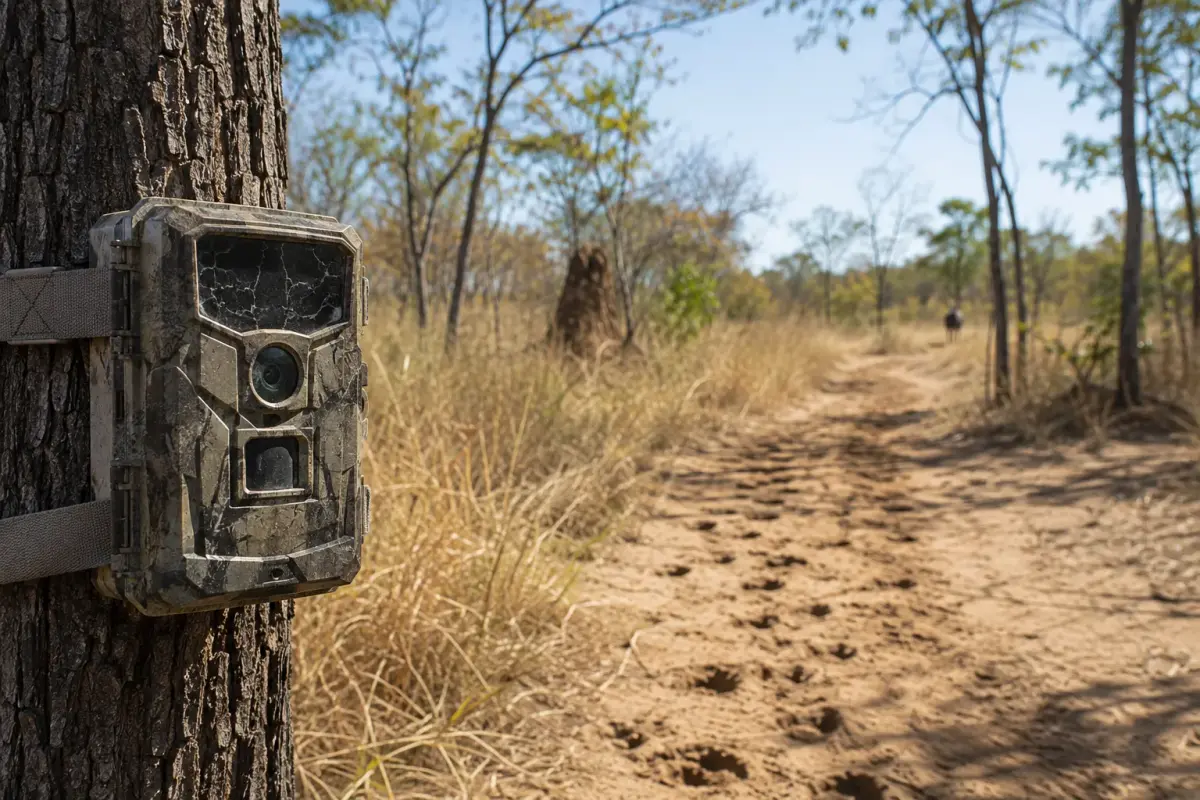
- Aerial and camera-trap surveys sample rather than count.
- Herd composition shifts between seasons and years.
So if you see a confident precise number quoted anywhere, be sceptical. Conservation biologists working on this species talk in ranges. The honest summary is: low hundreds, trending cautiously in the right direction under protection, still critically endangered.
Can you hunt palanca negra giant sable in Angola?
No. The giant sable is fully protected under Angolan law and there is no legal hunting of the species anywhere in the world. It is a critically endangered endemic subspecies inside protected areas, and any killing of one is poaching, not hunting.
This question comes up because the giant sable was historically prized as a trophy animal, and colonial-era hunting is part of why it became rare in the first place. Some old records and museum specimens date from that period. That era is closed. Anyone offering a giant sable hunt is either scamming you or proposing a serious wildlife crime.
Travellers should also know that photographing or approaching the animals is not a free-for-all either. Access to the Cangandala sanctuary area is controlled, and the monitoring team decides what is and is not appropriate. Follow the rangers’ instructions without negotiation.
What do giant sable antelopes eat, and what habitat do they need?
Giant sable are grazers, feeding mainly on medium and tall grasses in seasonal floodplains and woodland clearings, supplemented with some browse from shrubs and trees during the dry season. They also visit mineral licks and termite mounds to get salts and trace elements.
Their habitat needs are specific enough to explain why the range is so small:
- Miombo woodland for shade, cover and dry-season browse.
- Anharas, the seasonally wet grassy plains, for the nutritious grazing that drives breeding condition.
- Reliable water within reach, especially through the dry months.
- Low human pressure. They are wary animals and abandon areas with heavy snaring or settlement.
Because they need that mosaic of woodland and open grassland, they cannot simply be relocated to any patch of Angolan bush. The mix matters, which is one reason conservation effort has concentrated on holding and improving the two existing sites rather than founding populations elsewhere.
Palanca negra breeding and reproduction
Sable antelope cows give birth to a single calf after a gestation of roughly eight to nine months, and calves are typically hidden in cover for their first weeks before joining the nursery herd. Breeding herds are led by a dominant bull; younger bulls form bachelor groups or hold territories nearby.
For a species this small in number, the reproductive details carry outsized weight:
- One calf per cow per year at best. There is no fast recovery from a population crash.
- A single herd bull can dominate breeding, which means losing that one animal to a snare can stall reproduction for a season and open the door to hybridisation.
- Calf survival depends heavily on cover and predator pressure, so habitat quality feeds straight into recruitment rates.
That is exactly why the Cangandala sanctuary exists. A fenced, intensively monitored enclosure lets managers control which bulls breed with which cows, remove hybrids and protect calves through their most vulnerable months.
Best places to see giant sable antelopes in Angola, and can you realistically do it?
Cangandala National Park, reached by road from the city of Malanje, is the only place a visitor might reasonably attempt to see a palanca negra giant sable antelope in Angola. Even then, a sighting is unlikely. I want to be blunt about that, because plenty of travel content implies otherwise.
Here is what a visit actually involves:
- Get to Malanje. The city is the gateway, roughly a long day’s drive east from Luanda or a domestic flight plus transfer. Most travellers pair it with the Kalandula Falls.
- Arrange permission before you arrive. Entry to Cangandala requires authorisation, and permits and guides are arranged through the park authorities or an operator based in Malanje. Fees, procedures and what is currently open change, so confirm directly rather than relying on any blog, including this one.
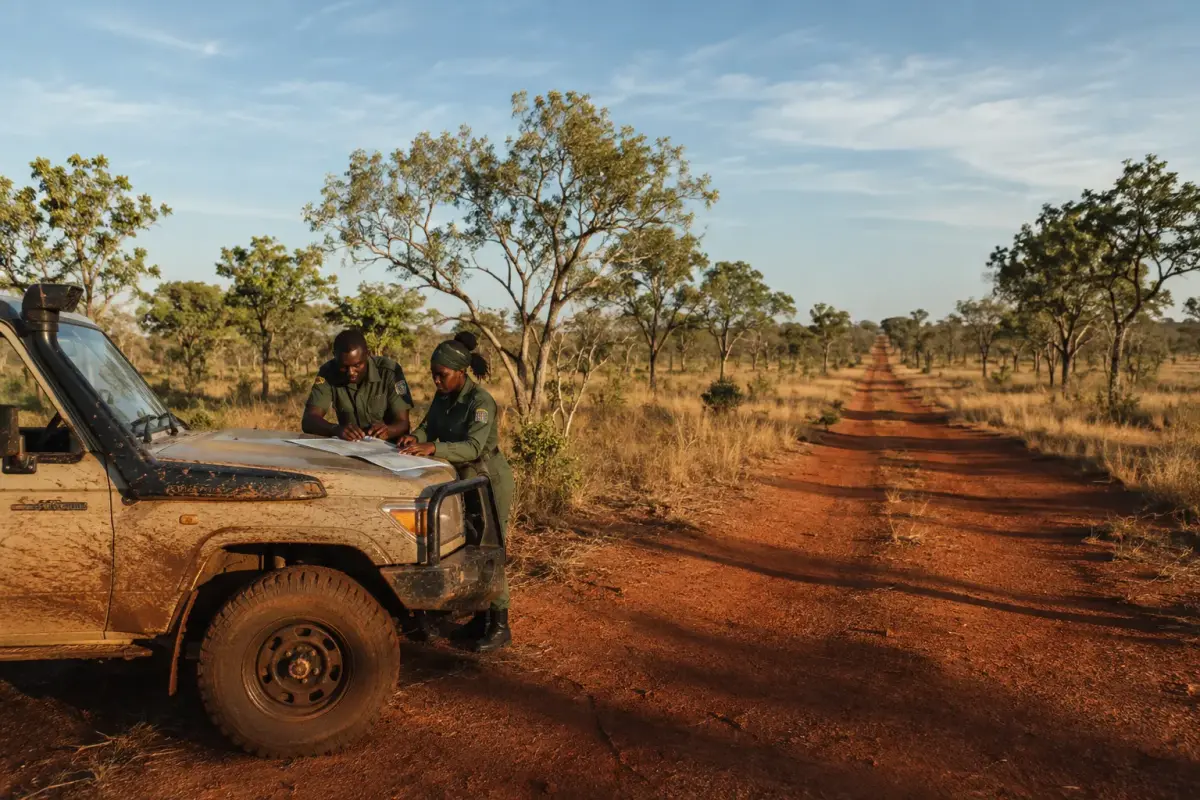
- Travel with a guide or ranger. This is not a self-drive park with signposted loops. You go with people who know the tracks and the current status of the herd.
- Manage your expectations. The Cangandala herd is small, shy and living inside a managed sanctuary within a larger park. The monitoring team’s priority is the animals, not visitor satisfaction.
- Value what you do get. Miombo woodland, birdlife, the anharas, ranger conversations and the sense of standing in the one landscape on earth where this animal persists.
The park has been preparing to open more fully to visitors in recent years, and infrastructure has been developing slowly. Whether that has reached the point of reliable tourist facilities when you travel is something to verify locally, not assume.
Choose your park by what you want. If you want to see mammals with reasonable confidence, go to Kissama National Park near Luanda instead, where restocking through the “Operação Arca de Noé” programme rebuilt the wildlife population. If you want the giant sable story, go to Cangandala and accept the odds. For the bigger picture, see our overview of Angola’s national parks and what safari in Angola actually looks like in practice.
When to go
The dry season, roughly May to September, is the better window. Roads in Malanje province are far more reliable, grass is shorter so visibility improves, and animals concentrate near water. The rainy season turns tracks to mud and makes the whole exercise harder. Our guide to the best time to visit Angola breaks down the regional differences month by month.
A quick honesty check
Travellers have spent two days in Cangandala and seen duiker, warthog, a great deal of birdlife and no sable at all, and come away satisfied anyway, because they had understood the deal before they went. The ones who leave disappointed are those who booked expecting a guaranteed sighting. Set the expectation correctly and the trip works.
Common mistakes travellers make about the palanca negra giant sable antelope in Angola
The biggest mistake is treating the giant sable as a checklist animal comparable to a Big Five sighting in Kenya or South Africa. It isn’t, and the comparison sets up disappointment.
Other frequent errors:
- Turning up without permission. Cangandala is not a walk-in park. Sort authorisation in advance.
- Planning it in the rains. November to April makes the roads difficult and the wildlife harder to see.
- Confusing sable species. Sable antelope in southern African game reserves are common sable, not giant sable. Any “giant sable” offered outside Angola is mislabelled.
- Assuming a zoo alternative exists. There is no captive population of the giant sable subspecies to fall back on.
- Skipping the wider region. Malanje offers the Kalandula Falls and the Pungo Andongo rock formations. Build the trip around those and treat Cangandala as the bonus. Our list of the best things to do in Angola puts it in context.
Before you finalise anything, check your own government’s travel advisory for current guidance on Angola, including road travel and any regional cautions.
Conclusion
The palanca negra story is one of the more remarkable conservation narratives in Africa: a subspecies written off as a casualty of a 27-year war, rediscovered on camera in 2004, and now nursed along in the low hundreds inside two protected areas in central Angola. That it also happens to be the emblem on the national football shirt makes it culturally impossible to ignore.
What it does not make is an easy safari target. So plan accordingly.
Your next steps:
- Anchor your trip on Malanje province, with Kalandula Falls and Pungo Andongo as the guaranteed highlights and Cangandala as the aspirational extra.
- Travel between May and September for passable roads and better wildlife visibility.
- Contact the park authorities or a Malanje-based operator well in advance to arrange authorisation and a guide, and confirm current fees and access rather than assuming.
- Compare your options honestly. If you want reliable mammal sightings, add Kissama near Luanda to the itinerary.
- Check your own government’s travel advisory for Angola before you book, and revisit it close to departure.
Go to Cangandala for what it is: a pilgrimage to the last stronghold of an animal that exists nowhere else. If a black bull with those extraordinary horns steps out of the miombo, it will be the best wildlife moment of your life. If not, you were still there.
Free help from our team in Angola
Hoping to see the giant sable?
Sightings are rare and depend on access to Cangandala. Tell us when you travel and we tell you honestly what is possible, and plan the trip with a guide if it is.
- Local team in Angola
- No obligation, nothing to pay
- Reply by email or WhatsApp
Want to keep this guide? We email you the key points with a link to every section.
Frequently asked questions
Is the giant sable antelope extinct?
No. It was feared lost during Angola's civil war, but camera-trap evidence in 2004 confirmed survivors in Cangandala National Park. It remains critically endangered, with an estimated few hundred animals.
Where is the only place giant sable antelopes live?
Central Angola, specifically Cangandala National Park and the Luando Strict Nature Reserve in and around Malanje province. There is no wild or captive population anywhere else.
Can tourists see a palanca negra in Angola?
It is possible in theory at Cangandala with permission and a guide, but genuinely unlikely in practice. The herd is small, shy and closely managed. Go for the conservation story and the landscape, not for a guaranteed photo.
How many giant sable antelopes are left in 2026?
Estimates point to roughly 300 animals across about eight herds. Survey figures vary, so this should be read as an approximate range rather than a precise count.
Is it legal to hunt the giant sable antelope?
No. The giant sable is fully protected in Angola and there is no legal hunting of the subspecies anywhere. Any offer of a giant sable hunt involves wildlife crime.
Why is the palanca negra Angola's national animal?
Because it exists only in Angola and became a symbol of national identity and resilience. The men's national football team is nicknamed the Palancas Negras, and the animal features on currency, official emblems and corporate branding nationwide.
How do I arrange a visit to Cangandala National Park?
Contact the park authorities or an operator based in Malanje ahead of your trip. Permits, guides, fees and current access conditions vary and change, so confirm details directly before you travel.