A 500 meter left-hand point break, water around 22 to 25 °C most of the year, and a lineup where you might share the peak with three other people instead of thirty. That is the short pitch for surfing in Angola, a country most surf travelers still haven’t put on their map. If you like empty waves, warm water, and a trip that feels genuinely off the beaten path, this coast rewards the effort of getting there.
Quick answer: is surfing in Angola worth it?
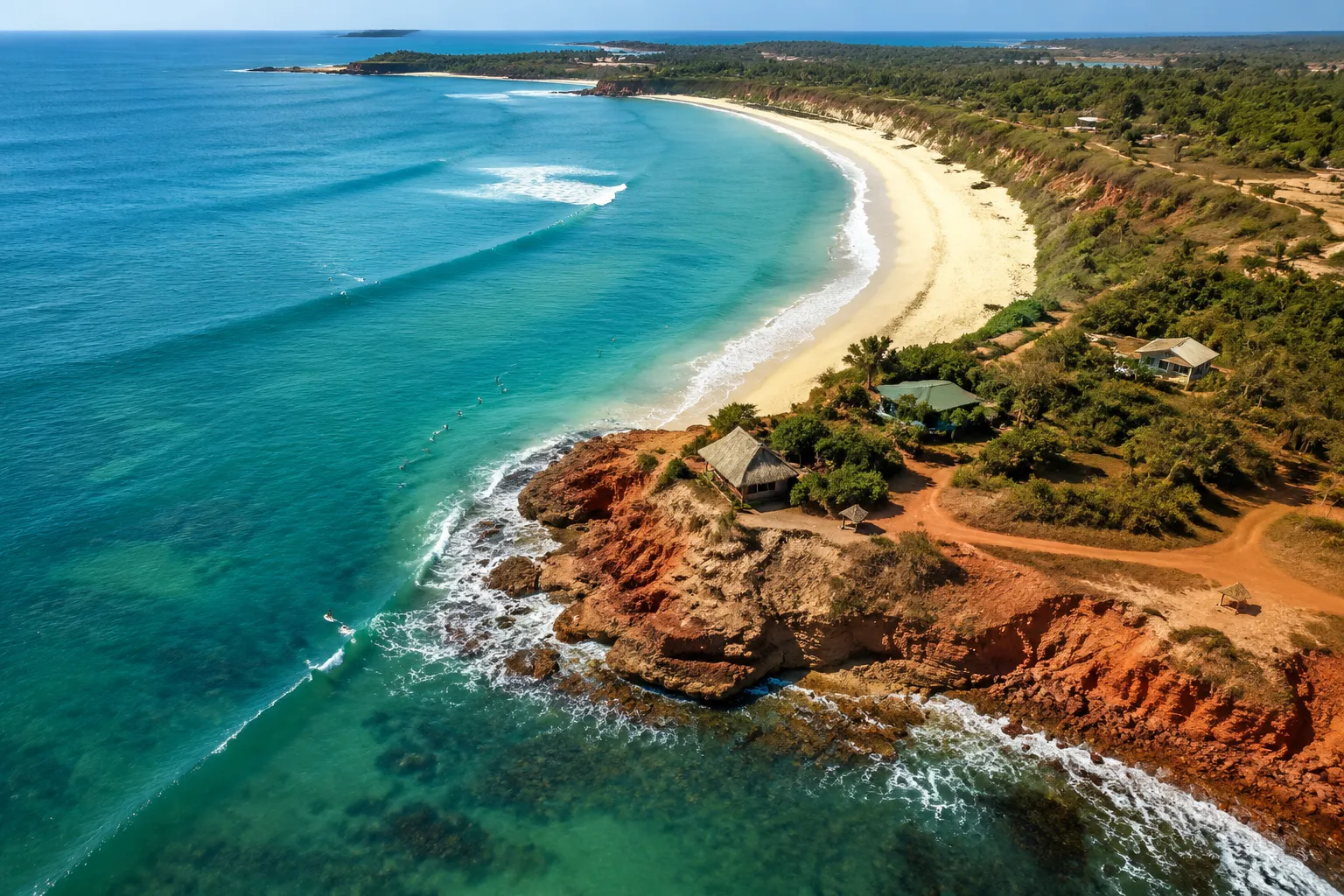
Yes, if you are after long, mellow left points and uncrowded lineups. Angola’s flagship spot, Cabo Ledo, sits about 120 to 125 km south of Luanda and delivers one of the longest lefts in Africa, with rides commonly reported between 300 and 500 meters, and up to around 800 meters on the best swells.[1][2][13] The main season runs roughly April to October, water stays warm, and crowds are minimal compared to Morocco or South Africa.[1][4]
Key takeaways
- Cabo Ledo is the country’s marquee wave: a long, slow, ripable left-hand point break, about a 2 to 3 hour drive south of Luanda.[1][2]
- Best surf season is roughly April to October, with the biggest and most consistent swells often between May and September.[1][4]
- Water temperature ranges from about 21 to 26 °C, so a springsuit or boardshorts are usually enough.[1]
- Beginners are welcome at Cabo Ledo on smaller days; it is one of the most forgiving points in Africa.[1][2]
- Angola is visa-friendly for many nationalities today, including most EU passports for short tourism stays (verify with the official e-visa portal before you fly).
- Lineups are uncrowded, but infrastructure is basic outside a handful of surf lodges.
- Fly into Luanda (TAAG and international carriers), then drive south along the coast road.
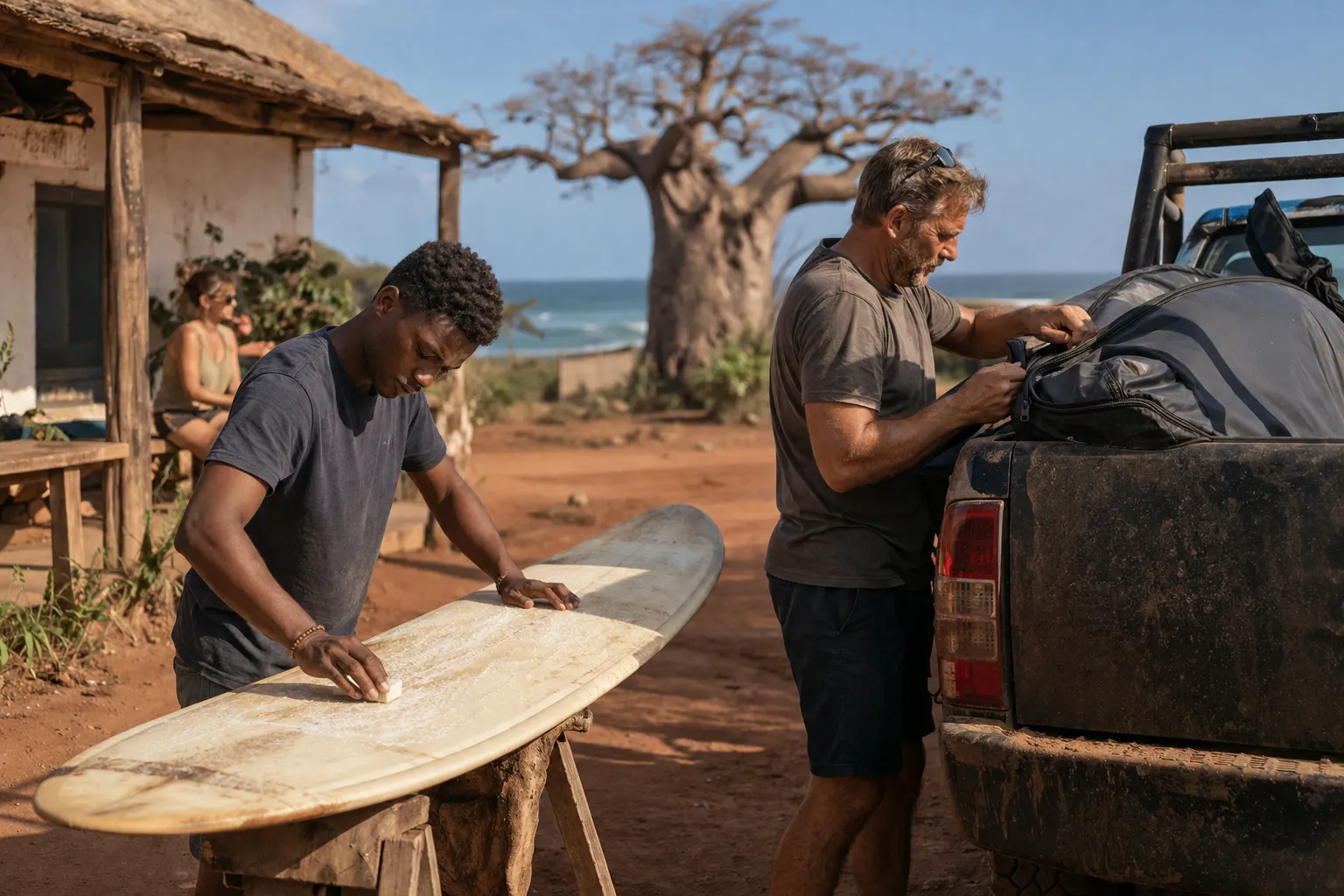
- Bring your own boards and spare fins; rentals exist at a few lodges but selection is limited.[1][4]
Is Angola good for surfing?
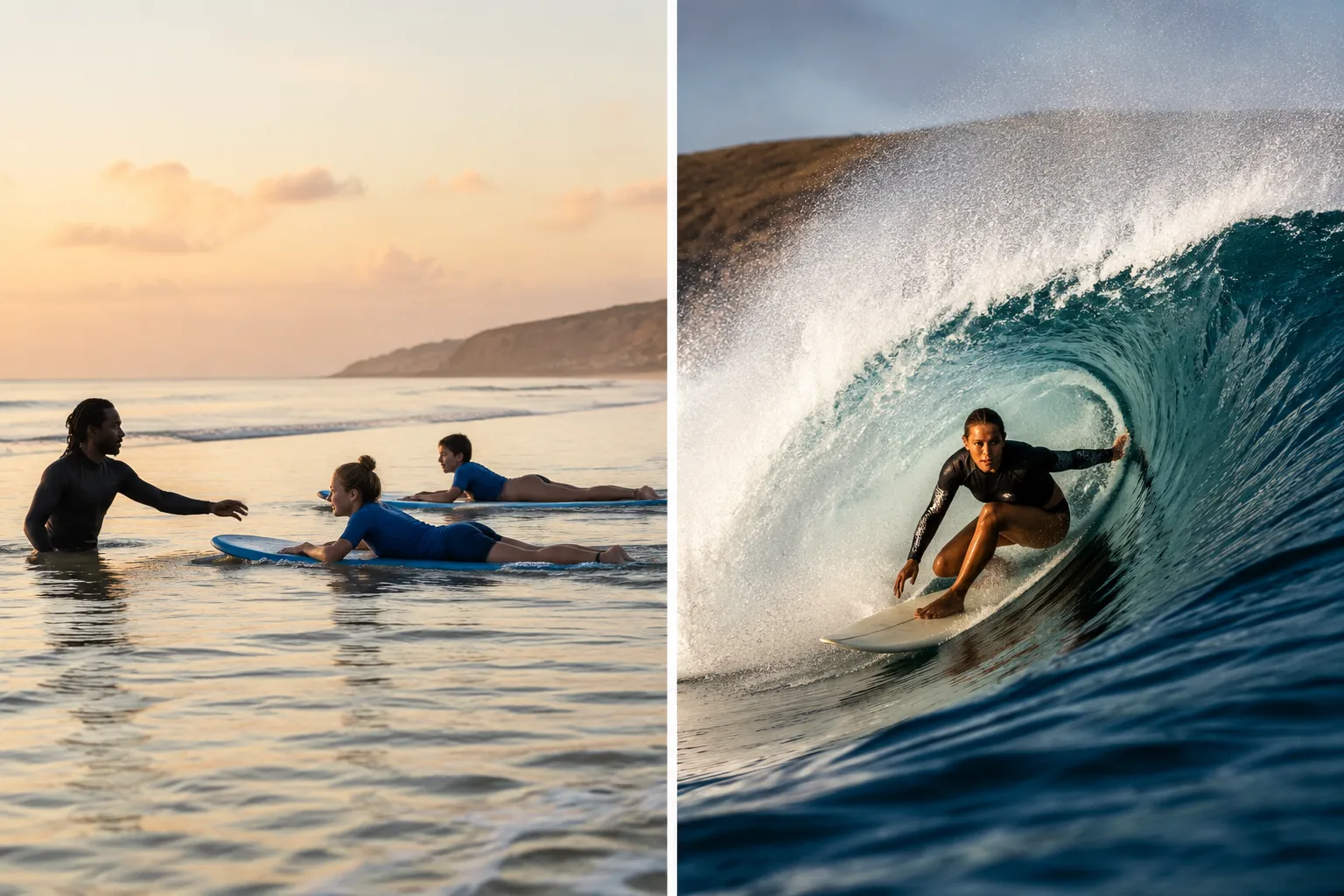
Angola is very good for surfing if your priority is quality lefts and empty water rather than variety or nightlife. The coastline stretches around 1,600 km along the Atlantic, and the Benguela current plus consistent south and south-west swells feed a string of points, reefs and beach breaks that stay rideable for much of the year.[1][3]
What makes it stand out:
- Long, workable lefts that let you link 5 to 10 turns on a single wave.[13]
- Warm water year-round compared with cold Namibia or the Cape.
- Very low crowd factor, even at the best-known spots.[1][4]
- A short, well-defined surf zone south of Luanda where most travelers focus their trip.
What holds it back for some:
- Limited surf tourism infrastructure and few English-speaking services.
- Higher travel costs than West African neighbors; Luanda is famously expensive.
- Fewer right-handers, so goofy-footers get the better deal.
“Cabo Ledo is one of the longest, most consistent left-hand points on the African continent, and it still sees a fraction of the surfers you’d find at J-Bay or Anchor Point.” Paraphrased from multiple 2024-2025 surf travel guides.[1][13]
The best surf spots in Angola (Cabo Ledo and beyond)
The best surfing in Angola is concentrated on the stretch of coast from just south of Luanda down to about Sumbe, with Cabo Ledo as the undisputed headline act.[1][2][3] Below is a quick orientation.
| Spot | Type | Level | From Luanda |
|---|---|---|---|
| Cabo Ledo | Long left point | All levels | ~2 to 3 hrs (120-125 km) |
| Buraco | Left point / reef | Intermediate+ | ~3 hrs |
| Praia da Caota | Beach break | All levels | ~3.5 hrs |
| Ponta das Salinas | Point / reef | Advanced | ~5 to 6 hrs |
| Baía Azul (Benguela) | Bay / mellow | Beginner-friendly | Flight + drive |
Cabo Ledo (Praia dos Surfistas)
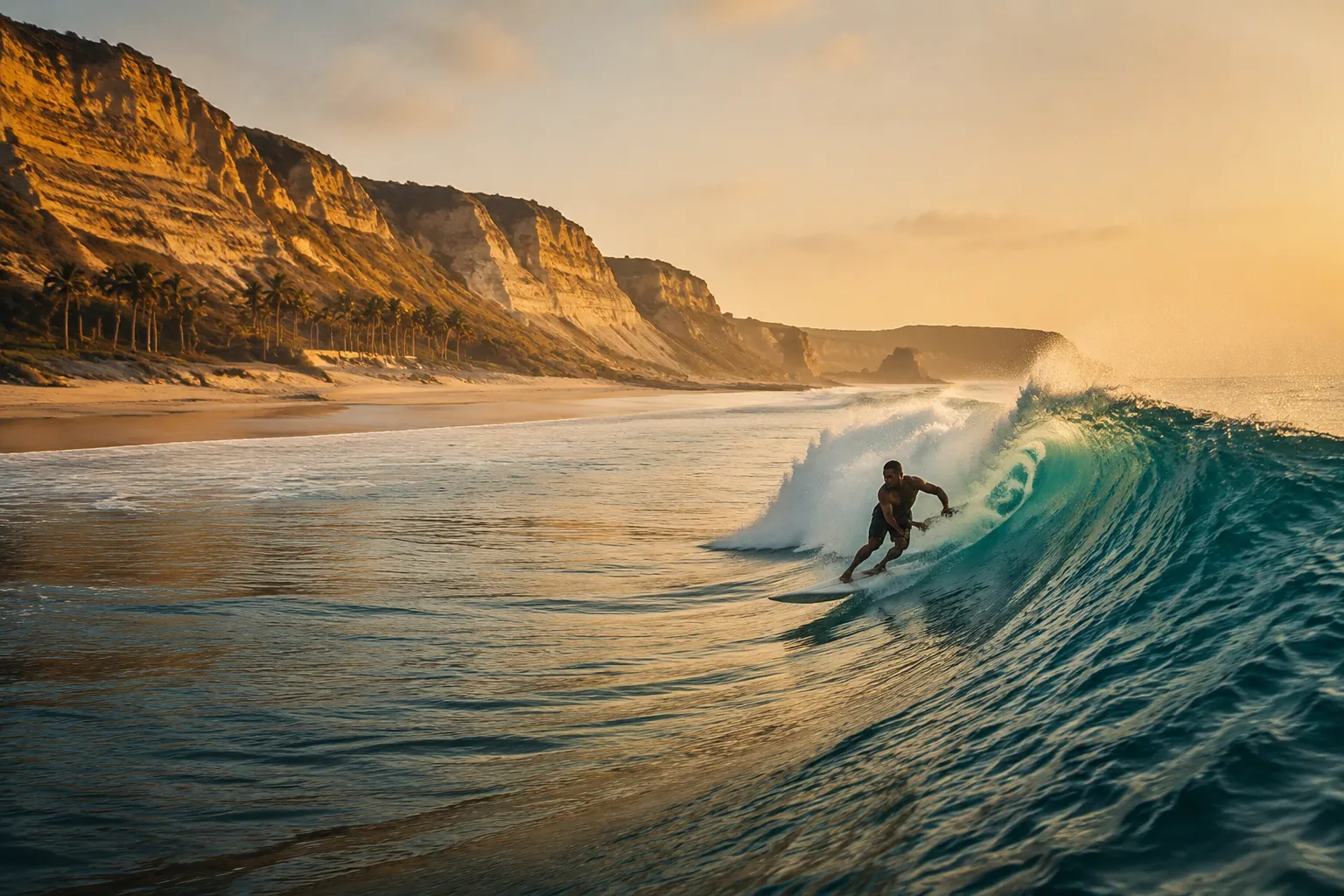
Also known as Surfers Beach or Praia dos Surfistas, Cabo Ledo sits inside a horseshoe bay south of Luanda. On a solid south-west swell it produces a long, ripable left that peels down a sand-and-cobble point for hundreds of meters. Surf media and travel operators regularly cite ride lengths of 300 to 500 m, with exceptional days pushing toward 800 m.[10][13][14] It handles size well, works on most tides, and is friendly on small days.
Buraco and Caota
Further south, Buraco offers a punchier left that turns on when Cabo Ledo starts to max out. Caota is a more forgiving beach break area, useful when the points are crowded or too big.[3][9]
Beyond the Luanda zone
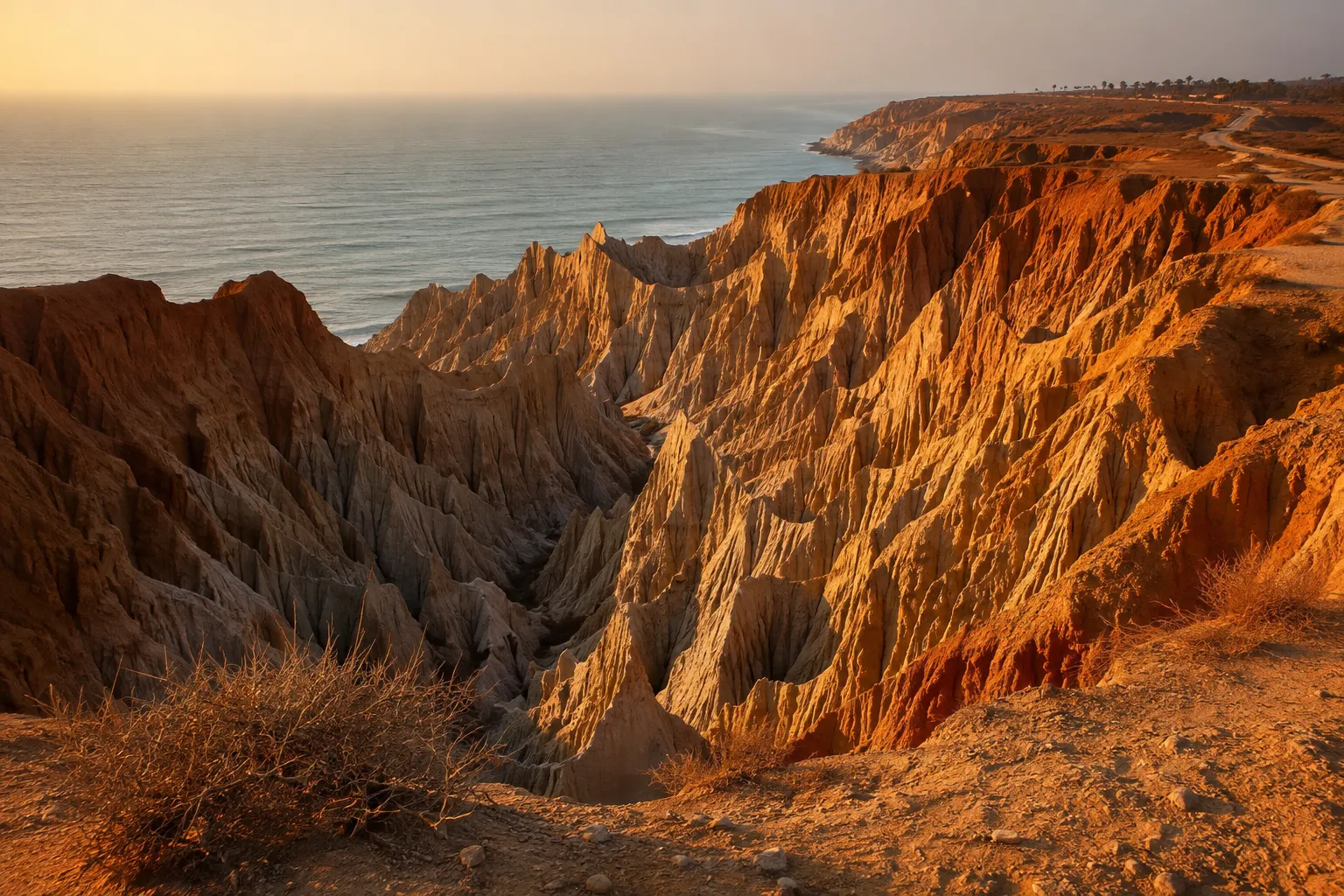
Benguela and Lobito have gentler, protected bays like Baía Azul and Praia Morena that suit beginners and longboarders. Further south around Namibe, the coast turns dramatic and desert-like, with reef setups for experienced surfers willing to explore. This is proper adventure territory. For orientation on the wider region, our guide to Angola’s coast and best beaches helps you connect the dots.
When is the best season to surf in Angola?
The best season to surf in Angola runs from April to October, with peak swell energy typically between May and September.[1][4] This overlaps with Angola’s dry, cooler season, which is also the best overall time to travel in the country.
- April to May: cleaner conditions, smaller to medium swells, great for improvers.
- June to August: the meat of the season, most consistent size, offshore winds common at dawn.[1]
- September to October: still good, generally lighter winds and fewer travelers.
- November to March: rainy season, more variable, but small clean days for beginners are common.
If you are also planning inland detours, our overview of the best time to travel to Angola covers weather patterns beyond the coast.
What months have the biggest waves?
June, July and August typically deliver the biggest and most consistent swells at Cabo Ledo and the surrounding points, driven by strong south-west groundswells generated in the South Atlantic.[1][4] Expect chest to double-overhead sets on the standout days.
How to get to Angola for surfing
Fly into Aeroporto Internacional Dr. António Agostinho Neto near Luanda (the new hub that has taken over from the old Quatro de Fevereiro airport). TAAG Angola Airlines connects Luanda with Lisbon, Brussels, São Paulo, Johannesburg and other hubs; several European and African carriers also serve the route. From Europe, the most common routing is via Lisbon.
From Luanda, most surfers head straight south by road:
- Rent a 4x4 or arrange a transfer through a surf lodge.
- Follow the coastal road toward Barra do Kwanza and Cabo Ledo.
- Expect roughly 120 to 125 km and a 2 to 3 hour drive, depending on traffic leaving Luanda.[2]
Traffic out of Luanda can be brutal. Leave early or late to avoid the worst of it. Our practical guide to getting around Angola covers driving, transfers and local realities in more detail.
Disclosure: some links in this article are affiliate links (marked with rel=“sponsored nofollow”). If you book through them we may earn a small commission at no extra cost to you.
Looking to book accommodation near the point? Most travelers stay at one of the small surf lodges directly in Cabo Ledo bay. You can compare options and dates through our partner: search Cabo Ledo lodges and Luanda hotels.
Do I need a visa to surf in Angola?
Since September 2023, tourists from 98 countries, including the Netherlands, can enter Angola visa-free for tourism stays of up to 30 days. Rules vary by nationality, so check the official list on the Serviço de Migração e Estrangeiros (SME) e-visa portal for your own passport (including Belgium, which isn’t among the countries we can confirm here), plus the travel advice of your own foreign ministry, before booking.
For a deeper dive on paperwork and preparation, see our visa guide for Angola, the official portal at evisa.ao, and general travel to Angola preparation.
What is the cost of a surfing trip to Angola?
A surf trip to Angola is not cheap, mostly because of flights and the Luanda cost base. Realistic ballpark figures for 2026, all subject to change:
- Flights Europe to Luanda return: typically several hundred to over a thousand euros, depending on season and booking window.
- Surf lodge at Cabo Ledo: mid-range full-board packages usually run in the low hundreds of euros per person per night; simpler options exist.
- Transfers Luanda to Cabo Ledo: commonly arranged by the lodge; budget accordingly.
- Meals and drinks in Luanda: expect European prices or higher in international hotels.
Bring a card and enough cash in kwanza; card acceptance is limited outside big hotels. The money and payments in Angola guide has the current picture.
What gear should I bring for surfing in Angola?
Bring your own boards. Rentals exist at a handful of lodges, but selection and quality are limited.[1][4] A sensible quiver:
- A step-up shortboard or performance board for solid days at the point.
- A fish or mid-length for smaller, softer sessions.
- Longboard if you love glide on the mellow inside sections.
- Spare fins, leashes, wax (tropical/warm water wax).
- Springsuit or 2 mm top for cooler mornings, boardshorts otherwise.
- Reef booties are optional; the main points are mostly sand with some cobbles.
- Basic first aid kit, reef-safe sunscreen, and rehydration salts.
Also pack a universal travel adapter (Angola uses 220V, 50Hz, plug types C and F).
Can you rent surfboards or take lessons in Angola?
Yes, but on a small scale. Cabo Ledo lodges are the main hubs for board rental, lessons and guiding, and a few operators run structured surf camps during the main season.[1][4][6] Instructors typically speak Portuguese and some English. If you are a complete beginner, booking a package that includes lessons, board and accommodation is by far the easiest approach.
For guided experiences and multi-day trips that combine surf with sightseeing, browse curated options via our partner: Angola surf and adventure tours. Also see our broader list of things to do in Angola for ideas on rest-day excursions.
What waves are good for beginners in Angola?
Cabo Ledo on small to medium days is the standout beginner and improver wave in Angola.[1][2] The takeoff is forgiving, the wall is long and slow, and you can kick out and paddle back up the point instead of duck-diving through whitewater. Add:
- Baía Azul near Benguela for very gentle days.
- Beach breaks around Caota when the point is too big.
Choose beginner-friendly conditions if:
- You have fewer than 20 sessions total under your belt.
- The forecast shows head-high or smaller.
- You are on a foamie or a longboard, ideally with a coach in the water.
Surfing in Angola vs other African countries
Angola sits in a specific niche compared with other African surf destinations. In short: fewer waves and less infrastructure than Morocco or South Africa, but much less crowded and more of an expedition feel.
- Vs Morocco (Taghazout): Angola has warmer water and far fewer surfers, but Morocco wins on cost, access and variety.
- Vs South Africa (J-Bay, Cape Town): J-Bay is a longer and higher-performance right; Cabo Ledo is a mellower left with warm water and no crowds.
- Vs Namibia (Skeleton Bay): Skeleton Bay is a world-class barreling left for experts only; Cabo Ledo is far more accessible and rideable by mortals.
- Vs Senegal: similar warm-water Atlantic vibe, but Angola is quieter and more logistically demanding.
Is Angola safe for tourists and surfers?
Angola is broadly safe for prepared travelers, with the usual caveats. Petty crime, especially in Luanda, is the main risk; take standard big-city precautions with valuables and taxis. Cabinda province often carries stricter travel advisories and is not on the surf route. Residual landmine risk exists in some rural areas, so stick to established roads and paths.
Always check current guidance from your government’s official travel advice (for example the UK FCDO or the US State Department) before you go, and consider proper travel insurance. Our overview is Angola safe? unpacks the practicalities.
Health prep matters too: yellow fever vaccination is typically required for entry, and malaria prophylaxis is generally recommended. See our vaccinations for Angola guide and confirm with your travel clinic.
Is Angola crowded with surfers?
No. Even at Cabo Ledo on a good day, you are typically sharing the lineup with a handful of guests from the local lodges and a few Luanda-based surfers, not the packs you’d see in Morocco, Bali or Portugal.[1][4] Outside of the main lodges, many stretches of coast see almost no surfers at all.
Practical planning tips
- Book accommodation at or near Cabo Ledo well in advance for June to August.
- Travel with hard board bags; road transfers are dusty and bumpy.
- Carry US dollars or euros to change on arrival, plus a card as backup.
- Learn a few words of Portuguese. Basic greetings go a long way. Our language guide gets you started.
- Combine your surf trip with sights like the Kalandula waterfalls, Kissama National Park or a day at Mussulo.
Conclusion: should you plan a surf trip to Angola?
If you have already ticked off Portugal, Morocco and Indonesia, and you want a warm-water trip that still feels like exploration, surfing in Angola belongs on your shortlist. The formula is simple: fly into Luanda, drive south to Cabo Ledo, and spend a week or two trading long lefts with a handful of other travelers. Nail the visa paperwork, sort your vaccinations, book a lodge on the point, and bring more boards than you think you need.
Next steps:
- Check the current visa rules and confirm entry requirements for your passport.
- Line up vaccinations with a travel clinic.
- Pick your dates within the April to October window.
- Book flights and a Cabo Ledo lodge, ideally 3 to 6 months ahead for peak season.
- Read up on Luanda for a day or two of city time before or after the surf.
Free help from our team in Angola
Planning a surf trip to Angola?
Tell us when you travel and your level. We arrange the transfer to Cabo Ledo or further south, and a place to stay near the waves.
- Local team in Angola
- No obligation, nothing to pay
- Reply by email or WhatsApp
Want to keep this guide? We email you the key points with a link to every section.
Frequently asked questions
Is Angola good for surfing?
Yes. Angola offers long, warm-water left-hand point breaks, especially at Cabo Ledo, with far fewer surfers than most other African destinations.
Where is the best surfing in Angola?
The Cabo Ledo area, roughly 120 to 125 km south of Luanda, is Angola's premier surf zone, home to a famous long left point and several nearby spots.
Where is Cabo Ledo?
Cabo Ledo is a bay on Angola's Atlantic coast, about a 2 to 3 hour drive south of Luanda along the coastal road.
When is the best surf season in Angola?
Roughly April to October, with the biggest and most consistent swells generally between May and September.
Is Angola suitable for beginners?
Yes, on small to medium days. Cabo Ledo is one of the more forgiving points in Africa, and a few lodges offer lessons and beginner boards.
Can I rent a surfboard in Angola?
Yes, at some Cabo Ledo lodges, but the selection is limited. Serious surfers should bring their own quiver and spare fins.