Quick Answer
The best areas to stay in Luanda are Ilha do Cabo for beach vibes, the Marginal and Baixa for business and downtown sightseeing, Talatona and Belas for modern quiet comfort, and Miramar for upscale hillside views over the bay. Luanda is one of the most expensive cities in Africa, so expect international-hotel pricing across all categories. Book ahead, stick to well-lit main areas at night, and use hotel or ride-hail transport rather than walking after dark.
Key Takeaways
- Ilha do Cabo is the go-to for beachfront hotels, seafood restaurants and a relaxed weekend feel.
- Baixa and the Marginal put you in the heart of business Luanda, close to Fortaleza de São Miguel and the National Museum of Slavery.
- Talatona and Belas offer newer, quieter hotels with reliable Wi-Fi, good for business travellers and families.
- Miramar is the diplomatic quarter, safe and leafy, with panoramic views and higher price tags.
- Luanda hotels are pricey by African standards; budget travellers should expect mid-range prices at best.
- All scheduled flights use the new Dr. António Agostinho Neto International Airport (NBJ), around 40 km southeast of downtown. The old Quatro de Fevereiro (LAD) no longer handles passenger flights.
- Petty crime is the main safety concern. Choose established hotels, avoid displaying valuables, and use registered taxis or Yango.
- For a broader trip picture, see our full guide to Luanda as a destination and things to do in Angola’s capital.
Best neighborhoods to stay in Luanda
Luanda’s accommodation is concentrated in five zones, each with a distinct personality. Here’s the short version before we dig deeper.
| Area | Vibe | Best for | Price level |
|---|---|---|---|
| Ilha do Cabo | Beachy, relaxed, restaurants | Leisure, couples, weekends | Mid to high |
| Baixa / Marginal | Central, business, historic | Business, first-time visitors | Mid to high |
| Talatona / Belas | Modern, suburban, quiet | Business, families, long stays | Mid to high |
| Miramar | Upscale, diplomatic, hillside | Luxury, longer stays, security | High |
| Alvalade / Maianga | Local, residential, mixed | Budget, cultural immersion | Budget to mid |
Ilha do Cabo (Ilha de Luanda)
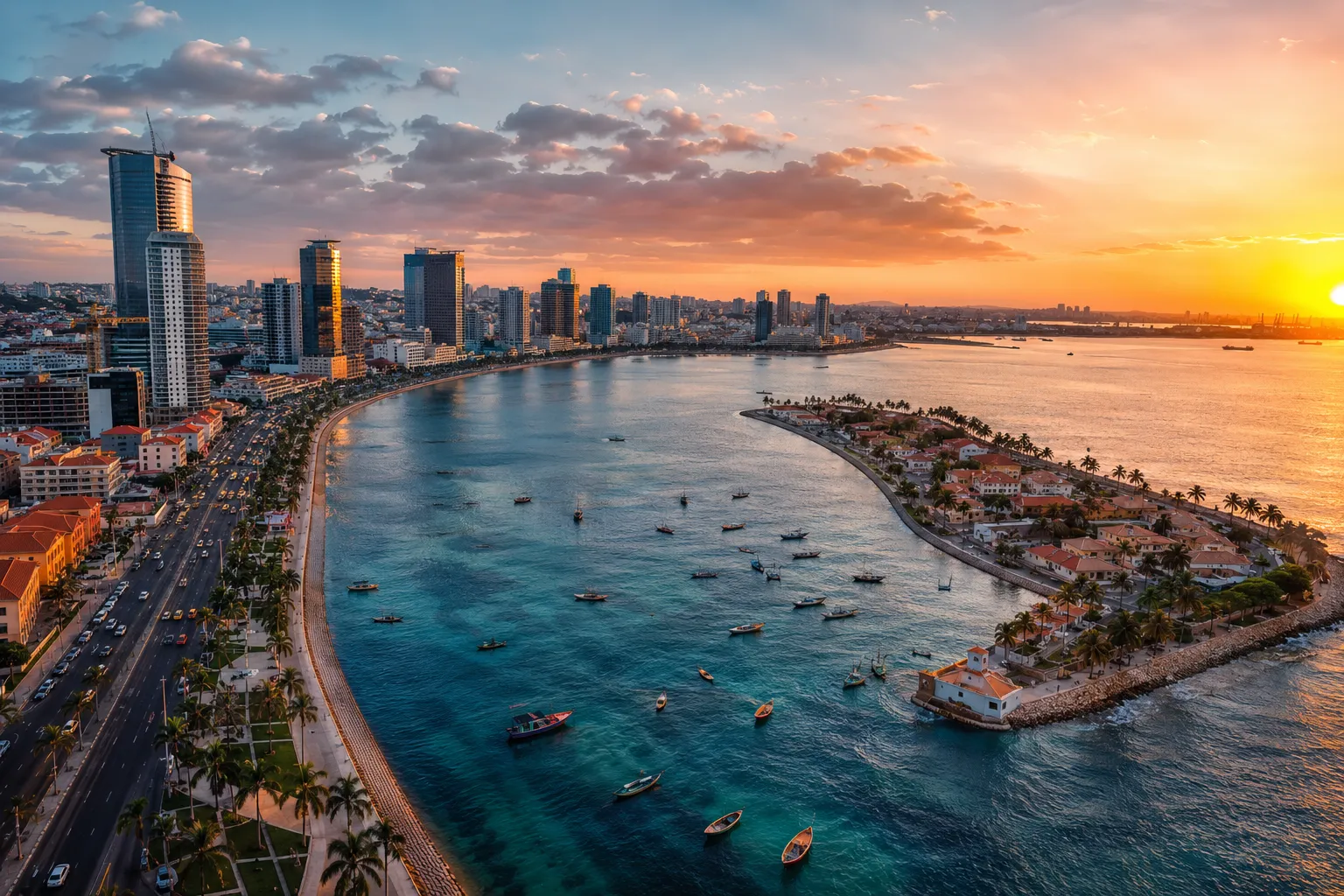
The Ilha is a long, narrow spit of sand curving into the bay. On the ocean side you get real beach; on the bay side you get calm water and skyline views. This is where locals come to eat grilled fish, drink a cold Cuca beer and watch the sunset.
Choose Ilha if you want: beach access, restaurant density, a holiday feel, and easy taxi links to downtown (about 10-15 minutes without traffic).
Watch out for: weekend traffic on the single access road, and hotels that trade heavily on location rather than quality. Read recent reviews carefully.
Baixa and the Marginal
Baixa is downtown: banks, ministries, colonial-era buildings, and the sweeping Avenida 4 de Fevereiro (the Marginal) along the bay. You’re walking distance from Fortaleza de São Miguel, the Iron Palace and the National Bank building.
Choose Baixa if you want: to be in the middle of the action, to walk to sights during the day, or to be near business meetings in the CBD.
Watch out for: heavy weekday traffic, limited on-street parking, and quieter, less pedestrian-friendly streets after office hours.
Talatona and Belas
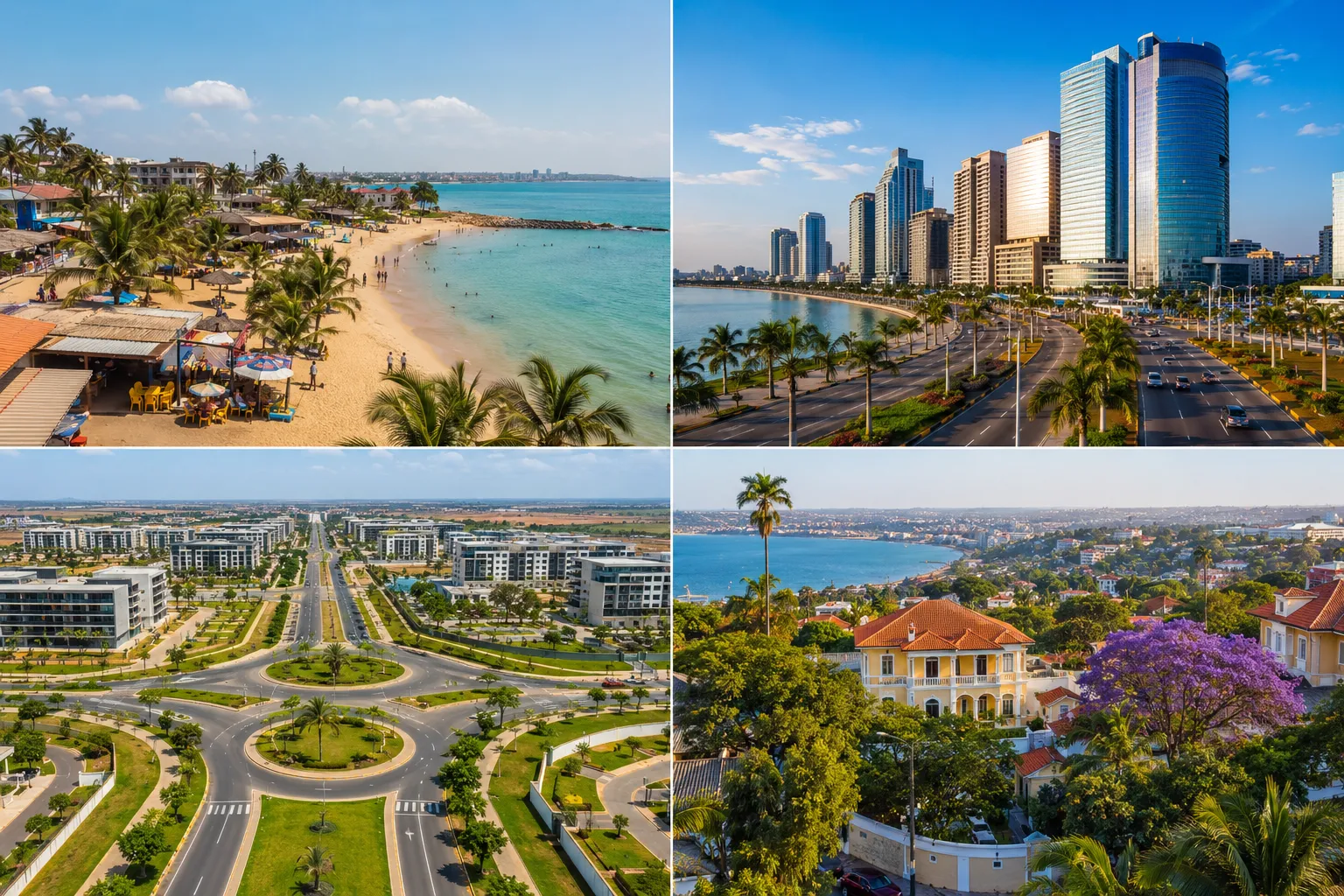
Talatona is Luanda’s newer southern business district. Wide roads, shopping centres (Belas Shopping is the anchor), international schools, and modern hotels catering to oil-and-gas executives. Belas is the residential extension with gated compounds and resorts.
Choose Talatona if you want: predictable modern comfort, reliable Wi-Fi, quieter nights, and easy access to the new airport (which sits south of the city).
Watch out for: distance from downtown sights (30-45 minutes in traffic), and a somewhat sterile feel compared to central Luanda.
Miramar
Perched on the bluff north of downtown, Miramar is the embassy quarter. Colonial villas, leafy streets, and some of the best views in the city. The US Embassy, several European embassies and top-tier hotels sit here.
Choose Miramar if you want: upscale accommodation, extra security, a quieter environment, and postcard views over the bay.
Watch out for: the highest prices in the city and fewer walk-to restaurants than Ilha or Baixa.
Alvalade and Maianga
These inland residential neighborhoods are where regular Luandans live and work. You’ll find guesthouses, small hotels, and apartments here at lower prices than the bayfront zones.
Choose these areas if you want: to save money, experience daily local life, and don’t mind taking taxis to sights and the beach.
Where do tourists usually stay in Luanda
Most international tourists split their time between Ilha do Cabo (for the beach and restaurants) and Baixa/Marginal (for sightseeing and business). Business travellers on longer contracts often prefer Talatona for its modern hotels and proximity to corporate offices. Diplomats and long-term expats gravitate to Miramar.
If it’s your first trip and you have three or four nights, base yourself near the Marginal or on Ilha do Cabo. You’ll be close to the main sights and have plenty of dining options. Our 3-day Luanda itinerary works best from either of these zones.
Luanda hotels near the airport
Since March 2026, every scheduled commercial flight to Luanda uses the new Dr. António Agostinho Neto International Airport (NBJ), about 40 km southeast of downtown. The old Quatro de Fevereiro Airport (LAD) near the centre no longer handles passenger flights, so ignore hotel websites that still advertise a short hop from “the airport”.
For layovers or early flights, the most practical hotels are in Viana and Zango and along the airport road, in the southeast of the city. In our Luanda hotel comparison they are typically 17 to 18 km from NBJ in a straight line, against about 40 km for hotels in Baixa, Talatona or on the Ilha. From downtown, allow 45 to 90 minutes to the airport.
Practical tip: ask your hotel to arrange airport pickup. Rates are higher than a street taxi, but you avoid the hassle of finding a legitimate cab at arrival and negotiating fares in Portuguese.
Safest areas to stay in Luanda
The safest areas for visitors are Miramar, Talatona, Belas, and the well-trafficked stretches of Ilha do Cabo and the Marginal. These neighborhoods have visible security, tourist-oriented hotels, and steady foot traffic during business hours.
Luanda’s main issue is opportunistic petty crime: pickpocketing, bag-snatching, phone theft from car windows. Violent crime against tourists is rare but not unheard of. Standard precautions apply:
- Don’t wear obvious jewelry or flash phones on the street.
- Use ride-hail apps (Yango is widely used) or hotel taxis rather than hailing unmarked cars.
- Avoid walking after dark, even short distances.
- Keep car windows up and doors locked in traffic.
- Carry a copy of your passport, not the original, when out and about.
For current advisories, check your country’s official travel guidance. Also see our overview on safety in Angola for a more detailed picture, and the UK Foreign Office Angola travel advice for up-to-date warnings.
What areas to avoid in Luanda
Avoid the informal settlements (musseques) that ring the city, especially Sambizanga, Cazenga, and parts of Rangel and Viana, unless you’re with a trusted local guide during daylight for a specific purpose. These are not tourist zones and street crime is more common.
Also avoid:
- Deserted stretches of beach outside busy Ilha hotspots after dark.
- The port and industrial areas at night.
- Long walks between neighborhoods at any time. Take a car.
None of this means Luanda is dangerous everywhere. Millions of people live and work here safely every day. But the gap between “tourist Luanda” and everyday Luanda is real, and staying inside the visitor bubble keeps most problems away.
Luxury, mid-range and budget options: where to stay in Luanda by price
Because prices shift constantly with the kwanza’s exchange rate, we’re using categories rather than specific numbers. Verify current rates on your preferred booking site. To compare actual hotels by area, star class and guest rating, use our Luanda hotel finder, or go straight to the 5-star hotels in Luanda or the cheap hotels in Luanda.
Best luxury hotels in Luanda
Top-end options cluster in Miramar, along the Marginal, and in Talatona. Expect international five-star chains with pools, spas, multiple restaurants, and dedicated security. Rooms often come with bay or ocean views. This is where oil executives, diplomats and visiting government delegations stay.
Choose luxury if: you value reliable amenities, English-speaking staff, on-site dining (Luanda traffic makes hotel restaurants genuinely useful), and top-tier security.
Mid-range accommodation
Mid-range hotels are the sweet spot for most travellers. You’ll find solid three- and four-star properties on Ilha, in Baixa, and in Talatona. Rooms are comfortable, breakfast is usually included, and Wi-Fi is generally reliable.
Be aware: what costs €80-120 in Lisbon can easily cost €150-250 in Luanda for equivalent quality. Luanda has consistently ranked among the world’s most expensive cities for expats.
Budget-friendly accommodation in Luanda
True budget accommodation is limited. Backpacker hostels are rare. Your best bets are:
- Guesthouses (residenciais) in Alvalade, Maianga, or on the edges of Ilha.
- Small local hotels away from the bay.
- Airbnb apartments shared with friends to split costs.
Even so, expect to pay more than you would in Lisbon, Nairobi or Cape Town for similar quality.
Luanda Airbnb vs hotels: which is better
Hotels win for short stays, business trips and first visits. You get security, reception, breakfast, and someone to call if anything goes wrong. Airbnb wins for stays of a week or more, families, and travellers who want a kitchen to escape restaurant prices.
Practical Airbnb notes for Luanda:
- Verify the neighborhood carefully. A cheap listing in the wrong area is a false economy.
- Confirm generator backup. Power cuts happen.
- Ask about water supply, hot water, and Wi-Fi speed before booking.
- Get clear check-in instructions; street addressing can be vague.
For a first trip of under a week, we recommend a hotel. For a longer stay, especially with family, a well-reviewed apartment in Talatona, Miramar or Ilha can work well.
Luanda beachfront hotels and resorts
Genuine beachfront properties are mostly on Ilha do Cabo and along the coast south of the city toward Cabo Ledo and Mussulo. Ilha hotels give you the beach with the city right there. For a proper resort escape, Mussulo peninsula (reached by short boat transfer) and Cabo Ledo (about 90 minutes south by road) are the classic weekend picks for Luandans.
If your priority is swimming and sunsets rather than sightseeing, consider splitting your stay: a couple of nights on Ilha or downtown, then two nights at a Mussulo or Cabo Ledo resort. Our guide to Mussulo covers the boat logistics.
Best Wi-Fi and business hotels in Luanda
For reliable connectivity and business facilities, focus on Talatona and Miramar. These areas host most of the international chain hotels, which offer meeting rooms, business centres, and the fastest Wi-Fi in the city. Central Marginal hotels are also good for meetings in Baixa.
Wi-Fi quality in Angola varies. Even at high-end hotels, speeds can dip during peak evening hours. If your work depends on video calls, ask the hotel to confirm speeds before booking, or pick up a local eSIM as backup. We cover connectivity in our Angola SIM and eSIM guide.
Luanda accommodation for families with kids
Family travellers do best in Talatona, Belas, or a resort on Mussulo. You want space, a pool, and quieter surroundings. Central Baixa hotels can feel cramped and busy for children.
Look for:
- Pool access (essential in Luanda’s heat).
- Family rooms or connecting rooms.
- Restaurants that welcome kids (most Angolan restaurants are family-friendly by default).
- Distance to a supermarket for snacks and bottled water. Never drink tap water.
How far is downtown Luanda from the airport
Luanda’s airport, Dr. António Agostinho Neto International Airport (NBJ), sits around 40 km southeast of downtown, so budget 45-90 minutes depending on traffic and time of day. The old Quatro de Fevereiro Airport (LAD), 4 km from Baixa, no longer handles passenger flights. Our Angola airport guide covers arrival and transfers.
Traffic in Luanda is legendary. Do not schedule tight connections between hotel and airport during weekday rush hours (roughly 07:00-09:30 and 16:30-19:30). Always leave earlier than you think you need to.
Is Luanda safe for tourists, and where to stay for peace of mind
Luanda is generally safe for tourists who use common sense and stay in established areas. Miramar, Talatona, Belas, and hotel zones on Ilha and the Marginal offer the calmest experience. The main risks are petty theft and traffic accidents, not violent crime against foreigners.
For extra reassurance:
- Book a hotel with 24-hour reception and on-site security.
- Use hotel-arranged transport for airport transfers and evening outings.
- Register with your embassy if you’ll be in-country more than a week.
- Keep a small amount of cash and one card in a hidden pocket; carry the rest in the hotel safe.
Also verify current visa rules before you fly. Angola has significantly relaxed entry for many nationalities in recent years, but rules change; see our Angola visa guide and always confirm on the official e-visa portal.
“Luanda rewards travellers who prepare. Book the right neighborhood, arrange your transport in advance, and the city opens up. Show up unprepared and it can feel overwhelming.”
- Pick your area based on trip purpose (beach, business, sightseeing, family)
- Book at least 2-4 weeks ahead for better rates
- Confirm airport pickup and transfer with the hotel
- Check visa and vaccination requirements at official sources
- Get travel insurance that covers Angola specifically
Conclusion: choosing where to stay in Luanda
Where to stay in Luanda comes down to trip purpose. Beach and food, pick Ilha do Cabo. Business and downtown, pick Baixa/Marginal or Talatona. Family and quiet, pick Talatona, Belas or a Mussulo resort. Upscale and secure, pick Miramar. Whichever zone you choose, book ahead, arrange transport in advance, and treat Luanda’s prices as a fact of life rather than a surprise.
Next steps:
- Read our full Luanda destination guide for what to do once you arrive.
- Sort your paperwork with the Angola visa guide and check vaccinations.
- Plan the wider trip with our travel to Angola overview.
Safe travels, and boa viagem.
Free help from our team in Angola
Need help with your stay in Luanda?
Tell us your dates, budget and why you are in Luanda. We suggest the area and hotel that fit, and can arrange the airport pickup so you arrive without stress.
- Local team in Angola
- No obligation, nothing to pay
- Reply by email or WhatsApp
Want to keep this guide? We email you the key points with a link to every section.
Frequently asked questions
Is Luanda expensive to visit?
Yes. Luanda has consistently ranked among the world's most expensive cities for expats and visitors. Budget more than you would for Lisbon or Cape Town, especially for hotels and restaurants in tourist areas.
What's the best area for a first-time visitor?
Baixa/Marginal or Ilha do Cabo. Both put you close to sights, restaurants and reliable transport, with the Ilha adding beach access.
Can I pay by card in Luanda hotels?
Larger hotels accept international cards, though acceptance can be inconsistent. Always carry some kwanza in cash for taxis, small restaurants and tips. See our [money in Angola guide](/angola-currency-money/) for details.
Do I need Portuguese to get by?
English is spoken at international hotels and by tour operators, but limited elsewhere. A few Portuguese basics go a long way. Learn "bom dia," "obrigado/obrigada" and "quanto custa?" at minimum.
Is it safe to walk on the Marginal?
During the day, yes, the Marginal is one of the most pleasant walks in the city. After dark, take a taxi even for short distances.
How many nights should I spend in Luanda?
Two to three nights is enough for the main sights. Add extra nights if you want to do day trips to Mussulo, Miradouro da Lua, or Kissama National Park.