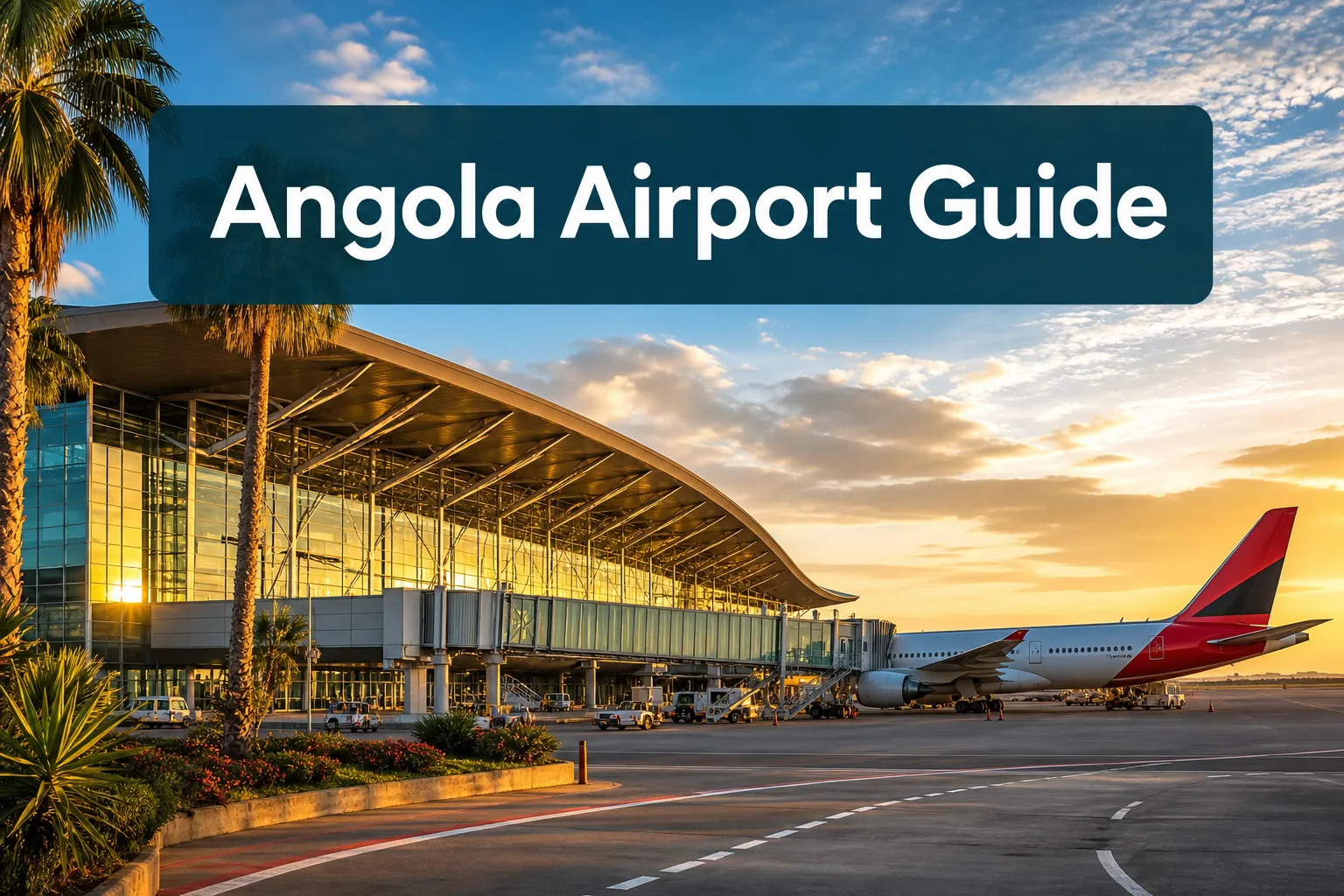
Quick Answer: Since March 2026, all scheduled commercial flights to Angola land at the new Dr. António Agostinho Neto International Airport (NBJ), about 40 km southeast of central Luanda. The old Quatro de Fevereiro (LAD), 4 km from the city, no longer handles commercial passenger flights. Plan for a 45 to 90 minute transfer into town, and have your visa (or e-visa) and yellow fever certificate ready at immigration.
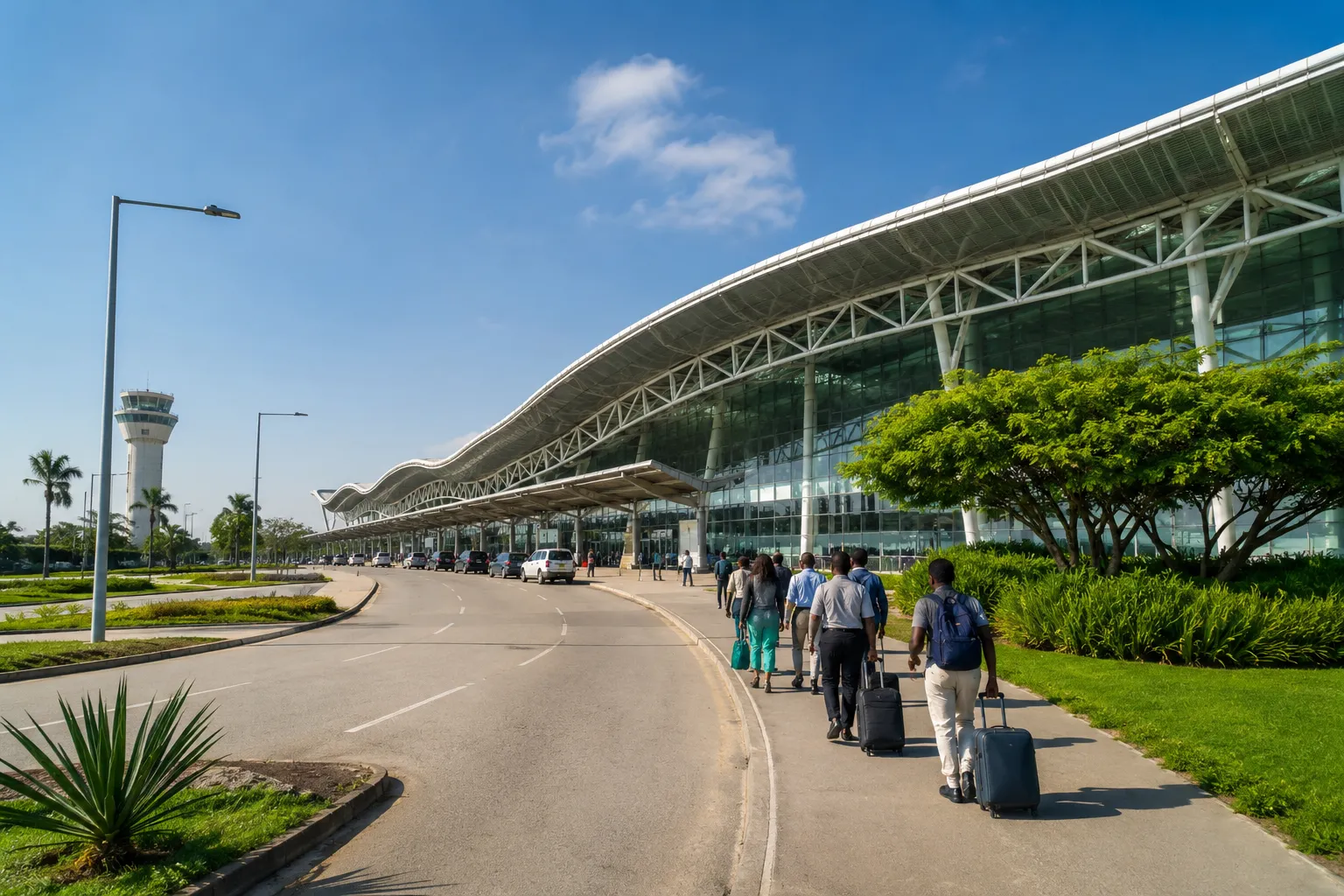
Key Takeaways
- The main angola airport for international arrivals is now NBJ (FNBJ), not LAD.
- NBJ sits in Icolo e Bengo, roughly 40 km southeast of Luanda; budget 45 to 90 minutes by car.
- TAAG Angola Airlines completed its move to NBJ in October 2025, and all remaining carriers followed by March 2026.[3]
- At immigration, officers check your visa or e-visa and often your yellow fever certificate.
- Queues of 30 to 60 minutes are normal when several wide-bodies land together.
- Pre-booked transfers or hotel pickups are the smoothest way into the city; avoid unmarked taxis.
- Regional airports worth knowing: Catumbela, Lubango, Namibe, Cabinda, Huambo.
- Bring some US dollars or euros to exchange; card acceptance is limited outside big hotels.
Which Angola Airport Do You Actually Fly Into Now?
If you booked a ticket to Luanda in 2026, you are landing at Dr. António Agostinho Neto International Airport (NBJ), not the old Quatro de Fevereiro. This matters, because a lot of guidebooks, blog posts and even hotel websites still list the old airport code (LAD) and its 4 km distance from downtown. That information is outdated.
Here is the short version:
- NBJ (FNBJ) = the new international hub, ~40 km southeast of Luanda, opened in phases from November 2023 and fully operational for commercial traffic since March 2026.[1][3][4]
- LAD (Quatro de Fevereiro) = the historic airport near the coast. It no longer handles scheduled commercial passenger flights.[8]
If a booking site or older article tells you to expect a “20-minute drive from the airport to the Marginal,” treat that as legacy information and re-check your transfer plan.
For the wider picture of how to reach Angola in the first place, see our flights to Angola guide and the TAAG and EU flight overview.
Dr. António Agostinho Neto International Airport (NBJ) Explained
NBJ is Angola’s new flagship gateway, built to replace the aging Quatro de Fevereiro and give Luanda a hub that can compete regionally with Johannesburg and Addis Ababa.
Key facts to know before you land:
- Location: Icolo e Bengo municipality, roughly 40 km southeast of central Luanda.[4]
- Codes: IATA NBJ, ICAO FNBJ.[9]
- Site size: around 43 hectares of terminal area within a much larger airport footprint.[4]
- Runways: two parallel runways (approximately 4,000 m and 3,800 m), spaced about 2.2 km apart, allowing simultaneous operations.[4]
- Terminals: three terminal buildings covering international, domestic and cargo traffic.[4]
- Builder / concession: built by Chinese contractors, inaugurated in November 2023, with a 20-year management concession awarded to an international operator.[1][4]
- Traffic phase-in: cargo from late 2023, domestic passenger flights from 2024, TAAG international hub from October 2025, and all remaining airline operations by March 2026.[3]
The move to NBJ is the biggest change to Angolan aviation in a generation. If your last visit was pre-2024, almost nothing about the arrival experience will feel familiar.
Design capacity is significantly larger than the old airport, so even at peak hours the terminal itself feels spacious. The bottleneck is usually immigration, not the building.
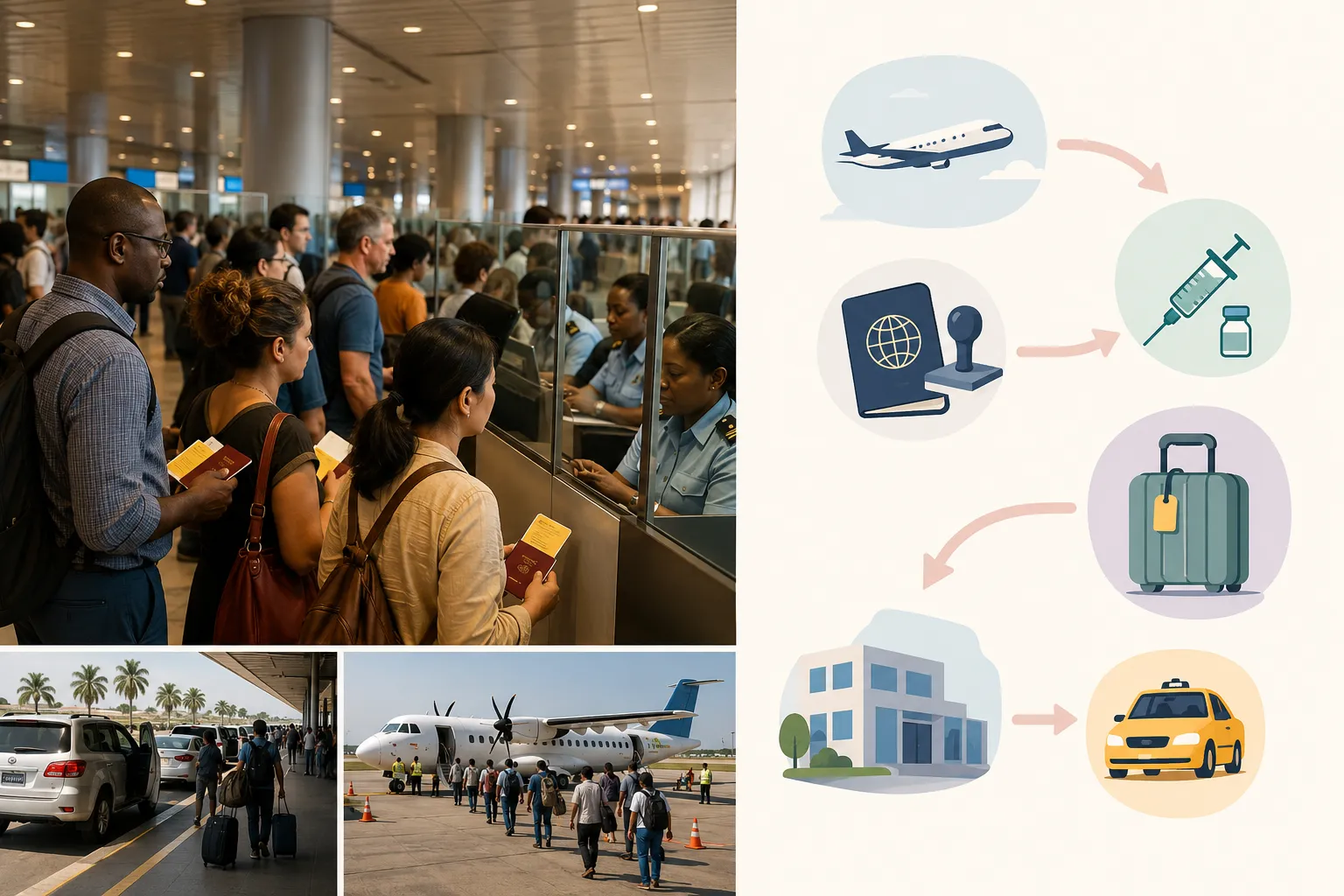
Arriving Step by Step: Immigration, Yellow Fever, Baggage, Customs
The arrival flow at NBJ follows a fairly standard pattern, but there are two Angola-specific checkpoints most travellers do not expect.
1. Health desk / yellow fever check. Before you reach passport control, staff may ask to see your yellow fever vaccination certificate. This is a long-standing requirement for travellers arriving from most countries. Keep the yellow booklet in your hand luggage, not your checked bag. For details, see our Angola vaccinations and health guide.
2. Immigration. Officers check your passport, visa or e-visa approval, and often your return ticket and hotel booking. If you used the e-visa system, bring the printed approval as backup. Read up on the current process in our Angola visa guide and, for Americans, the visa guide for US citizens.
3. Baggage claim. Belts are clearly numbered on screens. Bags from long-haul flights (Lisbon, Addis, Johannesburg, Dubai, São Paulo) can take 30 to 45 minutes to appear after a full aircraft lands.
4. Customs. Most tourists walk through the green channel. Declare cash above the threshold set by the Banco Nacional de Angola and any commercial goods.
Realistic timing: from wheels-down to standing outside with your bags, plan on 60 to 120 minutes if you are on a full international flight. On a quiet day it can be faster.
Common mistake: packing the yellow fever card in checked luggage. If a health officer asks for it and you cannot produce it, you may be delayed or, in some cases, refused entry.
How Far Is Luanda Airport From the City Centre?
NBJ is about 40 km southeast of central Luanda. In light traffic that is a 45-minute drive; in Luanda’s notorious rush hour it can stretch to 90 minutes or more. The old LAD airport was only 4 km from downtown, so if a website tells you “20 minutes to the Marginal,” it is describing the old airport.
Access to NBJ is via a dedicated expressway link. Improvements to the surrounding road network have continued in phases, so conditions can change year to year.
Getting From Luanda Airport to Your Hotel
You have four realistic options. In rough order of what I would recommend for a first-time visitor:
- Pre-booked hotel transfer. Most mid-range and upscale hotels in Luanda offer airport pickup. The driver waits in arrivals with a name sign, which removes almost all friction on a long-haul night arrival. Book when you reserve the room. See our where to stay in Luanda guide for hotels that offer this.
- Pre-booked private transfer. Independent operators and tour companies run fixed-price transfers. Useful if you are heading somewhere outside the main hotel districts.
- Ride-hailing apps. Heetch and Yango operate in Luanda and are increasingly used at NBJ. Fares fluctuate with demand and traffic. Data connectivity at the airport is generally fine once you have a SIM (see below).
- Official taxi rank. Available but the least predictable on price. Agree the fare in kwanza before getting in, and avoid touts who approach you inside the terminal.
Rough journey time: 45 to 90 minutes to central Luanda depending on traffic. Rough cost: varies by operator and currency of payment; treat any specific figure you read online as indicative and confirm on the day.
Decision rule: if you arrive after 22:00 or with kids, pay for the pre-booked transfer. It is not the moment to negotiate with strangers in a language you may not speak.
For getting around beyond the airport, our Luanda travel guide and the reistips artikel cover transport, SIM cards and etiquette.
What Airlines Fly Into Angola?
Angola’s main international carrier is TAAG Angola Airlines, which operates long-haul routes from Lisbon, São Paulo, Luanda-Havana, and several African hubs, plus a regional network.[3]
Other airlines that regularly serve Luanda include:
- TAP Air Portugal (Lisbon)
- Ethiopian Airlines (Addis Ababa)
- Emirates (Dubai)
- Lufthansa (Frankfurt, seasonally / subject to schedule)
- Air France / KLM (via European hubs, subject to schedule)
- Qatar Airways (Doha)
- Turkish Airlines (Istanbul)
- South African Airways / Airlink (Johannesburg)
- Kenya Airways (Nairobi)
Schedules change. Always verify the current operator on your booking.
Are There Direct Flights From Europe to Angola?
Yes. The most established direct routes to Luanda from Europe are Lisbon (TAP and TAAG), with additional direct or one-stop options via Paris, Frankfurt, Brussels and Istanbul depending on the season. From the UK, there is no direct London to Luanda service at time of writing; most travellers connect via Lisbon, Addis Ababa, or Paris.
For a deeper look at routing and pricing patterns, see our flights to Angola guide and the goedkope tickets naar Luanda article.
How Long Are Flights From the US to Angola?
There are no non-stop flights between the United States and Angola. Typical routings go via Lisbon, Frankfurt, Paris, Addis Ababa, Dubai or São Paulo, with total travel time of roughly 16 to 22 hours including one connection. From the US east coast via Lisbon is usually the fastest single-connection option. Full details in our flights from the US to Angola guide.
How Much Does It Cost to Fly to Angola?
Fares vary widely by season, origin and airline. As a rough guide, economy return tickets from Europe start in the mid-hundreds of euros in low season and climb sharply for peak travel or last-minute bookings. From North America expect a meaningful premium because of the added connection. Business class fares are typically several times higher.
For live pricing use a metasearch tool at the time of booking rather than trusting any static number in a blog post. Our flight time tool can help you compare routings.
What’s the Best Time to Visit Angola by Air?
The dry season, roughly May to October, is the best time to visit and also the busiest for inbound flights. The wet season (November to April) can mean lower fares and dramatic green landscapes, but also heavier tropical rain and, at times, thunderstorm-related delays into NBJ. See our Angola weather guide for month-by-month detail.
Do I Need a Visa to Enter Angola?
Citizens of 98 countries, including most of the EU, the UK, the US, Canada and Australia, do not need a visa for tourism stays of up to 30 days (since Presidential Decree 189/23, September 2023). Other nationalities can use the e-visa system. Rules change often and enforcement at the airport is strict, so verify current requirements on the official evisa.ao portal before you fly.
Start with our Angola visa guide, plus the country-specific pages for US citizens and UK citizens.
What Documents Do I Need for Angola Airport?
Have these ready in your hand luggage before you land:
- Passport valid for at least six months beyond your entry date, with blank pages.
- Visa or e-visa approval (printed copy recommended).
- Yellow fever vaccination certificate (the yellow WHO booklet).
- Return or onward ticket.
- Hotel booking or invitation letter for the first few nights.
- Proof of funds in some cases (rarely requested but occasionally checked).
A photocopy of your passport photo page, kept separately, is a smart backup.
What Should I Know Before Arriving at Luanda Airport?
A few practical things that repeat visitors take for granted but first-timers often miss:
- English is not widely spoken at the airport. A few Portuguese phrases go a long way; our Portuguese phrasebook tool is free.
- Cash still rules for small purchases outside the terminal. ATMs at NBJ dispense kwanza, and cards work at bigger counters, but do not rely on tapping your phone everywhere.
- Photography of airport infrastructure is discouraged. Keep the camera in the bag until you are outside.
- Immigration officers are formal. Answer questions briefly and politely; do not joke about the reason for your visit.
- Cabinda-bound? You will typically re-check in for a domestic flight and may face additional scrutiny. Cabinda has stricter travel advisories from many governments; verify current advice.
Facilities at NBJ: SIM Cards, ATMs, Food, Lounges, Wi-Fi
The new terminal is designed to modern international standards. Expect:
- SIM cards from Unitel and Africell at kiosks in arrivals. Bring your passport. An eSIM bought before departure is a good backup.
- ATMs in arrivals dispensing Angolan kwanza. Check the exchange rate against the Banco Nacional de Angola reference rate.
- Currency exchange desks for USD and EUR into kwanza.
- Cafés and restaurants in both landside and airside areas, though selection is limited compared with major European hubs.
- Lounges for premium passengers and Star Alliance / SkyTeam / oneworld members through partner airlines.
- Wi-Fi across the terminal, though speeds vary.
- Prayer rooms, family facilities and accessible bathrooms on the main levels.
Domestic Connections and Other Airports Around Angola
If you are exploring beyond Luanda, you will likely use a domestic flight or a regional airport at some point. TAAG operates the main domestic network from NBJ.
| Airport | Code | Serves | Typical use |
|---|---|---|---|
| Dr. A. A. Neto Intl | NBJ | Luanda region | Main international hub |
| Catumbela | CBT | Benguela / Lobito | Coast, beaches, Lobito corridor |
| Lubango | SDD | Huíla province | Serra da Leba, Tundavala |
| Namibe (Yuri Gagarin) | MSZ | Namibe province | Iona NP, desert coast |
| Cabinda | CAB | Cabinda exclave | Only realistic access |
| Huambo (Albano Machado) | NOV | Central highlands | Domestic gateway |
Other useful regional airports include Ondjiva (near the Namibian border), Soyo (oil and Congo river delta) and Luena (east). For onward planning see our Southern Angola road trip guide and Lobito guide.
Is 4 de Fevereiro Airport International or Domestic?
As of March 2026, Quatro de Fevereiro no longer handles scheduled commercial passenger flights.[3][8] It was historically Angola’s main international airport. Its role is being reshaped around cargo, executive aviation, government use and possible future functions, but for the purposes of a traveller booking a ticket today, treat LAD as effectively closed to commercial passenger service. Always confirm the airport code shown on your ticket.
Departing From NBJ: Check-In, Security, Duty Free
For departures, arrive three hours before an international flight and two hours before a domestic one. Long-haul TAAG and European carriers often see queues at check-in and security when several flights depart within the same window.
Expect standard security screening, a passport control exit stamp, and a modest but growing selection of duty free (spirits, tobacco, Angolan coffee, some crafts). Bring anything specific you want as a souvenir from town.

Common Mistakes and Practical Tips
- Booking a hotel based on distance to the old airport. Re-check distances from NBJ.
- Packing the yellow fever certificate in checked luggage.
- Assuming you can pay for the taxi in dollars or euros. You may need kwanza.
- Not printing the e-visa approval.
- Underestimating traffic on a weekday afternoon transfer.
- Landing without a hotel address written down in Portuguese for the driver.
Conclusion
The Angolan aviation landscape has shifted dramatically. If you are researching a trip in 2026, forget most of what older articles say about landing in the middle of Luanda. You are flying into NBJ, out in Icolo e Bengo, and the arrival experience rewards preparation: visa printed, yellow fever card in your carry-on, transfer pre-booked, and a bit of patience for immigration.
Next steps: confirm your visa requirements, check vaccinations, then plan your first few days with our Luanda travel guide and 7-day Angola itinerary. Boa viagem.
Free help from our team in Angola
Want someone waiting for you at the airport?
The new airport is about 40 km from the centre of Luanda. Tell us your flight and we arrange a driver who meets you in arrivals and takes you to your hotel.
- Local team in Angola
- No obligation, nothing to pay
- Reply by email or WhatsApp
Want to keep this guide? We email you the key points with a link to every section.
Frequently asked questions
What airports are in Angola?
The main international airport is Dr. António Agostinho Neto (NBJ) near Luanda. Regional airports include Catumbela, Lubango, Namibe, Cabinda, Huambo, Ondjiva, Soyo and Luena. Quatro de Fevereiro (LAD) is no longer used for scheduled commercial passenger flights.
How many airports does Luanda have?
Luanda is served primarily by the new NBJ airport, about 40 km southeast of the city. The historic Quatro de Fevereiro (LAD) still exists near the coast but no longer handles commercial passenger traffic.
Which airport do most international flights use in Angola?
Dr. António Agostinho Neto International Airport (NBJ / FNBJ). All scheduled international commercial services transferred there by March 2026.
How far is Luanda airport from the city centre?
NBJ is roughly 40 km southeast of central Luanda, a 45 to 90 minute drive depending on traffic.
Do I need a yellow fever vaccination to enter Angola?
Yellow fever vaccination has long been required for entry from most countries, and the certificate can be checked at the airport. Verify current rules with your travel clinic and the Angolan authorities before you fly.
Can I use Uber at Luanda airport?
Uber does not operate in Angola. Heetch and Yango are the main ride-hailing apps, and hotel transfers or official taxis are common alternatives.