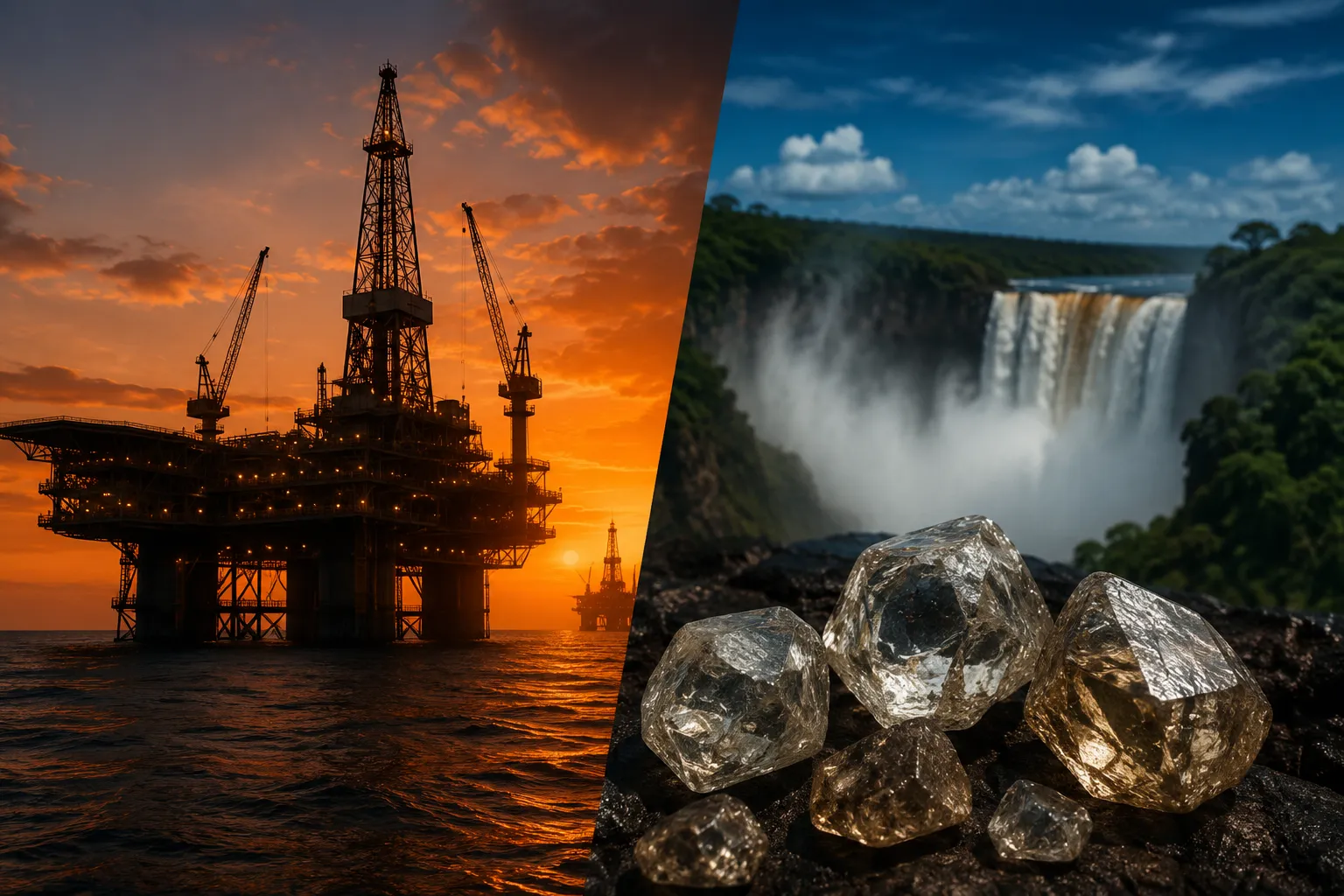
Angola pumps more than 1 million barrels of oil a day, exports some of the world’s finest diamonds, invented kizomba, and is home to an antelope so rare it appears on the national currency. Yet most travellers couldn’t point to it on a map. That mismatch, between a country’s real richness and its global profile, is exactly what makes visiting now feel like an adventure.
Quick Answer: What Is Angola Known For?
Angola is best known for being one of Africa’s largest oil and diamond producers, its Portuguese colonial heritage, and inventing the dance styles kizomba and semba. It’s also famous for the Kalandula Falls, the endangered giant sable antelope, a devastating 27-year civil war that ended in 2002, and a rapid post-war recovery. Add a 1,600 km Atlantic coastline, the Welwitschia plant in the Namib, and one of the world’s most expensive capital cities in Luanda, and you get a country with a very distinct identity.
Key Takeaways
- Oil and diamonds dominate Angola’s economy and its global reputation.
- Portuguese is the official language, a legacy of nearly 500 years of Portuguese colonial rule.
- Kizomba and semba were born here and are danced worldwide.
- Kalandula Falls is one of Africa’s largest waterfalls.
- The giant sable antelope (palanca negra) is Angola’s national symbol.
- Angola suffered a 27-year civil war (1975-2002) and has since rebuilt at pace.
- Luanda is regularly ranked among the world’s most expensive cities for expats.
- Angola has a long Atlantic coast with beaches, colonial ports, and the Benguela Current.
What Is Angola’s Main Economy Based On?
Angola’s economy is built on oil. Petroleum and gas make up the bulk of exports and government revenue, with diamonds a distant but important second. The IMF concluded its 2026 Article IV consultation with Angola noting continued reliance on hydrocarbons and ongoing efforts to diversify [3].
Recent forecasts put Angola’s 2026 GDP growth in a modest range: the IMF projects around 2.0% [5], while Banco Nacional de Angola (BNA) has been more optimistic at 3.5% [6], and private bank BFA sits between at roughly 3.3% [8]. The government is also under pressure from debt servicing, which is set to consume nearly half of the 2026 budget [10].
Diversification into agriculture, fisheries, mining, and services is a stated priority in the 2026 national budget [2], but oil still calls the shots.
Why Is Angola Famous for Diamonds?
Angola is one of the world’s top diamond producers by value, thanks to high-quality alluvial and kimberlite deposits in the northeast, especially in Lunda Norte and Lunda Sul. The country’s stones are prized for clarity and size, and the sector is the second-largest source of export revenue after oil [7].
Diamond mining also has a difficult history tied to the civil war, when so-called “blood diamonds” helped finance conflict. Since 2002 the sector has been formalised, and Angola is a participant in the Kimberley Process.
What Are the Top Exports From Angola?
Angola’s exports are heavily concentrated. In rough order of value:
- Crude oil and petroleum products (dominant share)
- Diamonds (rough and polished)
- Natural gas / LNG
- Refined petroleum
- Fish, timber, and agricultural products (coffee, bananas, sugar) in smaller amounts
That concentration makes the economy sensitive to global oil prices, which is why diversification keeps appearing in every budget speech [2][7].
Who Are the Main Ethnic Groups in Angola?
Angola has more than a dozen ethnic groups. The three largest are:
- Ovimbundu (roughly 37% of the population), mostly in the central highlands around Huambo and Bié.
- Ambundu / Mbundu (around 25%), concentrated in and around Luanda and Malanje.
- Bakongo (about 13%), in the north near the DR Congo border and in Cabinda.
Smaller groups include the Chokwe, Ovambo, Nyaneka-Nkhumbi, Ganguela, and Herero, plus a mixed-heritage (mestiço) community and a small but historically significant Portuguese-Angolan population. This diversity is one of the reasons Angolan music, food, and language are so layered. For more background, see our guide to the culture of Angola.
What Language Do People Speak in Angola?
Portuguese is the official language and the one you’ll hear in cities, media, and government. Angola is one of the largest Portuguese-speaking countries in the world by population.
Alongside Portuguese, several Bantu languages are widely spoken:
- Umbundu (Ovimbundu)
- Kimbundu (Ambundu, including around Luanda)
- Kikongo (Bakongo, north and Cabinda)
- Chokwe (east)
English is not widely spoken outside tourism and international business, so a few phrases of Portuguese go a long way. See our overview of the language of Angola for practical basics.
What Is the History of Angola’s Civil War?
Angola’s civil war ran from 1975, right after independence from Portugal, until 2002. It pitted the ruling MPLA against UNITA (and initially the FNLA), and became a Cold War proxy conflict with Cuban, Soviet, South African, and US involvement.
The war killed hundreds of thousands, displaced millions, and left large areas contaminated with landmines. It ended in 2002 after the death of UNITA leader Jonas Savimbi. Since then, Angola has focused on reconstruction, mine clearance, and building infrastructure, though the social and economic scars remain visible. For more depth, see our guide to the history of Angola.
What Are Popular Tourist Attractions in Angola?
Angola is not (yet) a mass tourism destination, which is part of its appeal. The headline attractions:
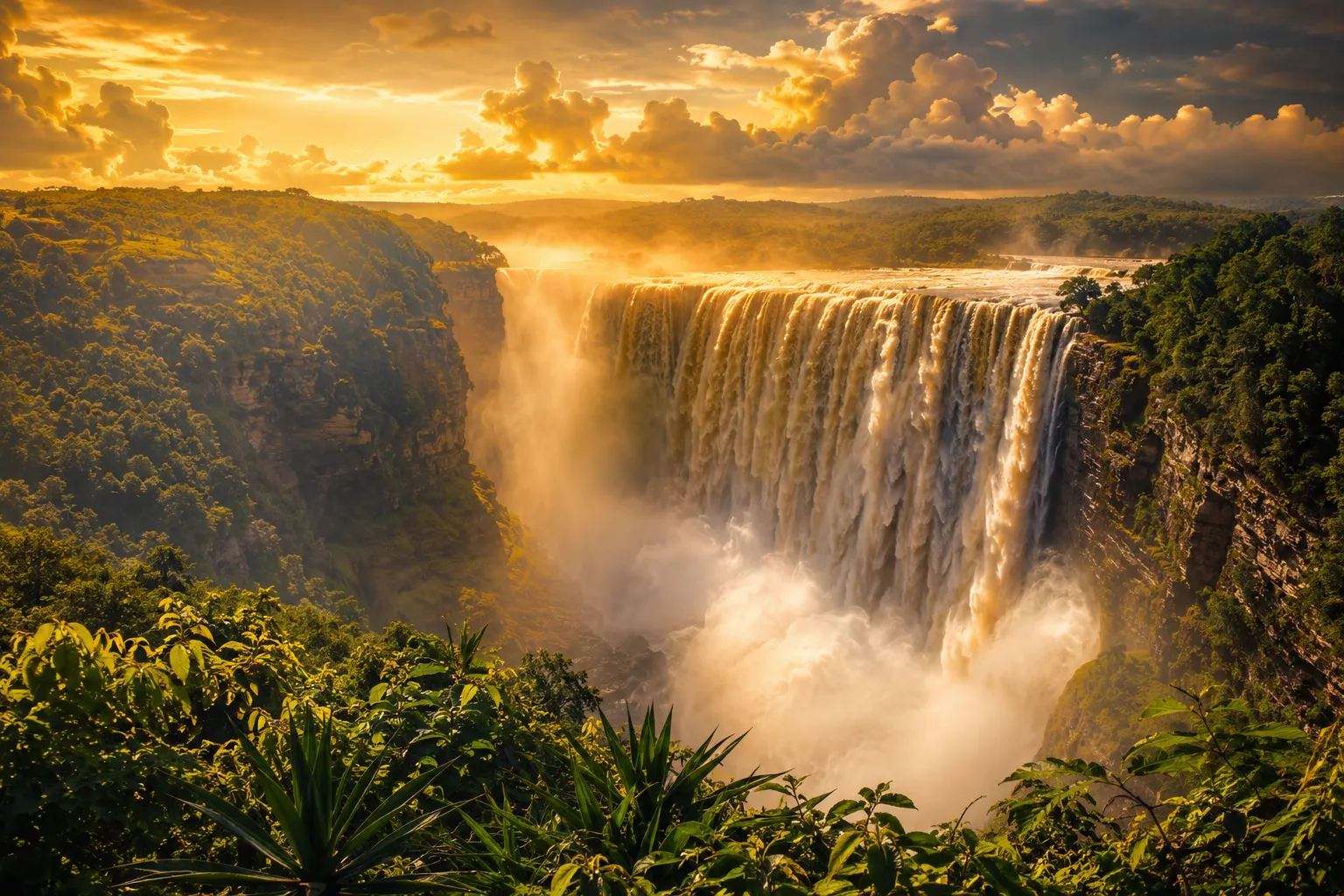
- Kalandula Falls (Malanje): one of the largest waterfalls in Africa by volume, more than 100 metres high and around 400 metres wide. See our Kalandula Falls guide.
- Kissama (Quiçama) National Park: the closest major park to Luanda, famously repopulated with elephants and other wildlife in “Operação Arca de Noé” in the early 2000s. Details in our Kissama National Park article.
- Iona National Park (Namibe): Angola’s largest park, with dunes, welwitschia, and Atlantic coastline.
- Lubango and Huíla province: Cristo Rei statue, the dramatic Serra da Leba pass, and the Tundavala gorge.
- Miradouro da Lua: a lunar-looking cliff landscape south of Luanda toward Cabo Ledo.
- Mussulo: a peninsula-lagoon just off Luanda, reached by boat.
- Benguela and Lobito: colonial-era coastal cities with beaches like Praia Morena and Baía Azul.
- Cabinda’s Mayombe rainforest: a lush enclave north of the main country.
For a broader list, see our Angola attractions overview.
How Is Angola Different From Other African Countries?
Angola stands out from most of Sub-Saharan Africa in a few concrete ways:
- Language: Portuguese-speaking, not English or French, which links it culturally to Brazil, Mozambique, and Portugal.
- Economy: oil-dependent to a degree matched by only a few African peers (Nigeria, Equatorial Guinea, Gabon).
- Coastline: ~1,600 km of Atlantic coast with the cool Benguela Current, giving the south an almost desert climate.
- Tourism profile: far less developed than Kenya, South Africa, or Tanzania, meaning fewer crowds and higher prices.
- Post-conflict recovery: one of the fastest infrastructure rebuilds in modern African history.
What Natural Resources Does Angola Have?
Beyond oil and diamonds, Angola sits on a substantial resource base:
- Natural gas (increasing LNG exports)
- Iron ore, copper, gold, phosphates, manganese
- Timber from the Mayombe forest in Cabinda
- Fisheries along the cold-current Atlantic coast
- Fertile agricultural land in the central highlands (coffee, maize, cassava, bananas)
- Hydropower potential on rivers like the Kwanza, home to major dams
The IMF and BNA both flag critical minerals and agriculture as key diversification targets [3][6].
What Is the Capital of Angola and What’s It Known For?
The capital is Luanda, Angola’s largest city and main port, sitting on the Atlantic coast. It’s known for:
- Being one of the most expensive cities in the world for expatriates, a legacy of the oil boom and limited local supply.
- A skyline of glass towers next to Portuguese colonial buildings.
- The Fortaleza de São Miguel, Ilha de Luanda beaches, and the Marginal promenade.
- A vibrant nightlife scene where kizomba was born.
For a deeper dive, see our full Luanda guide.
What Music and Culture Is Angola Famous For?
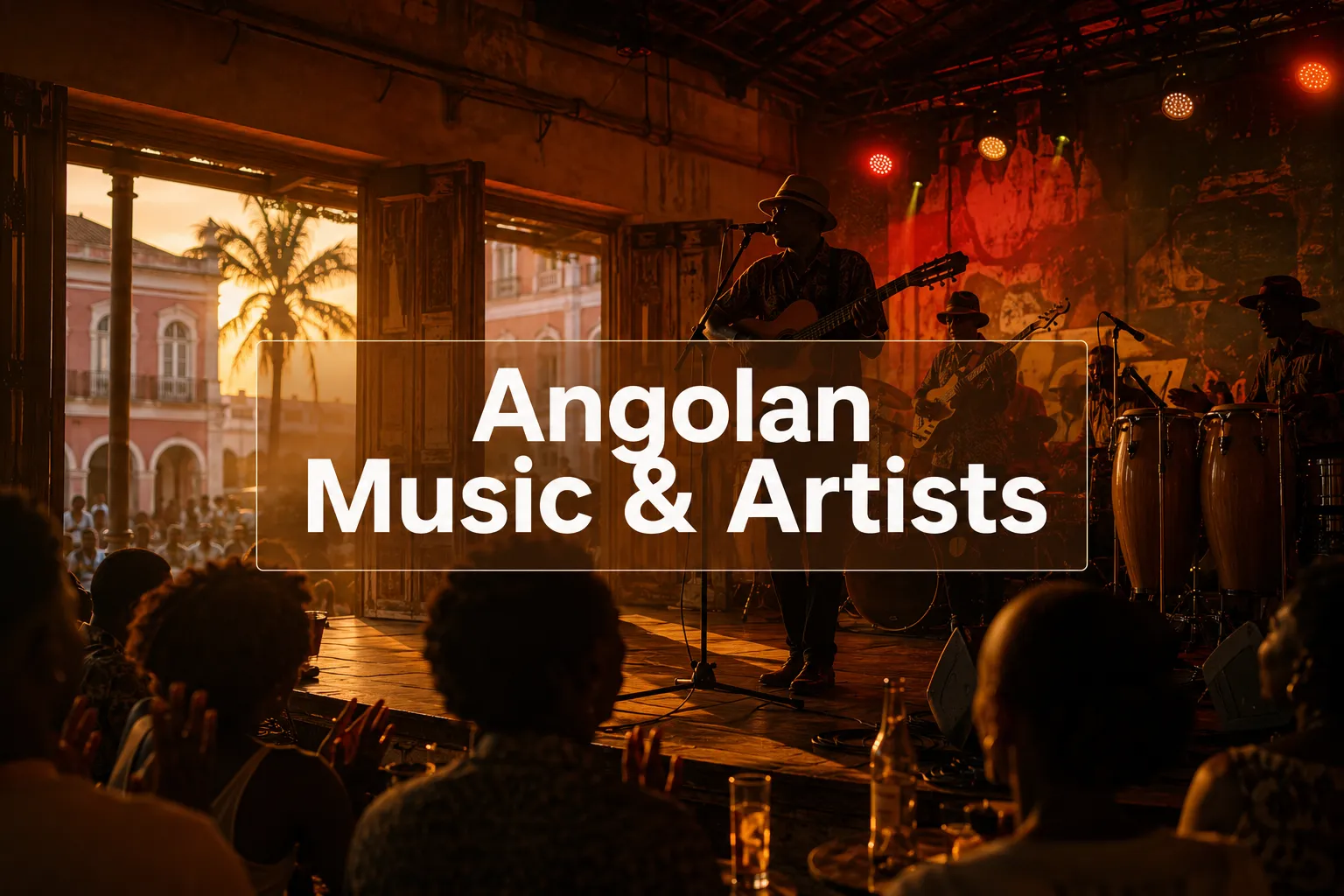
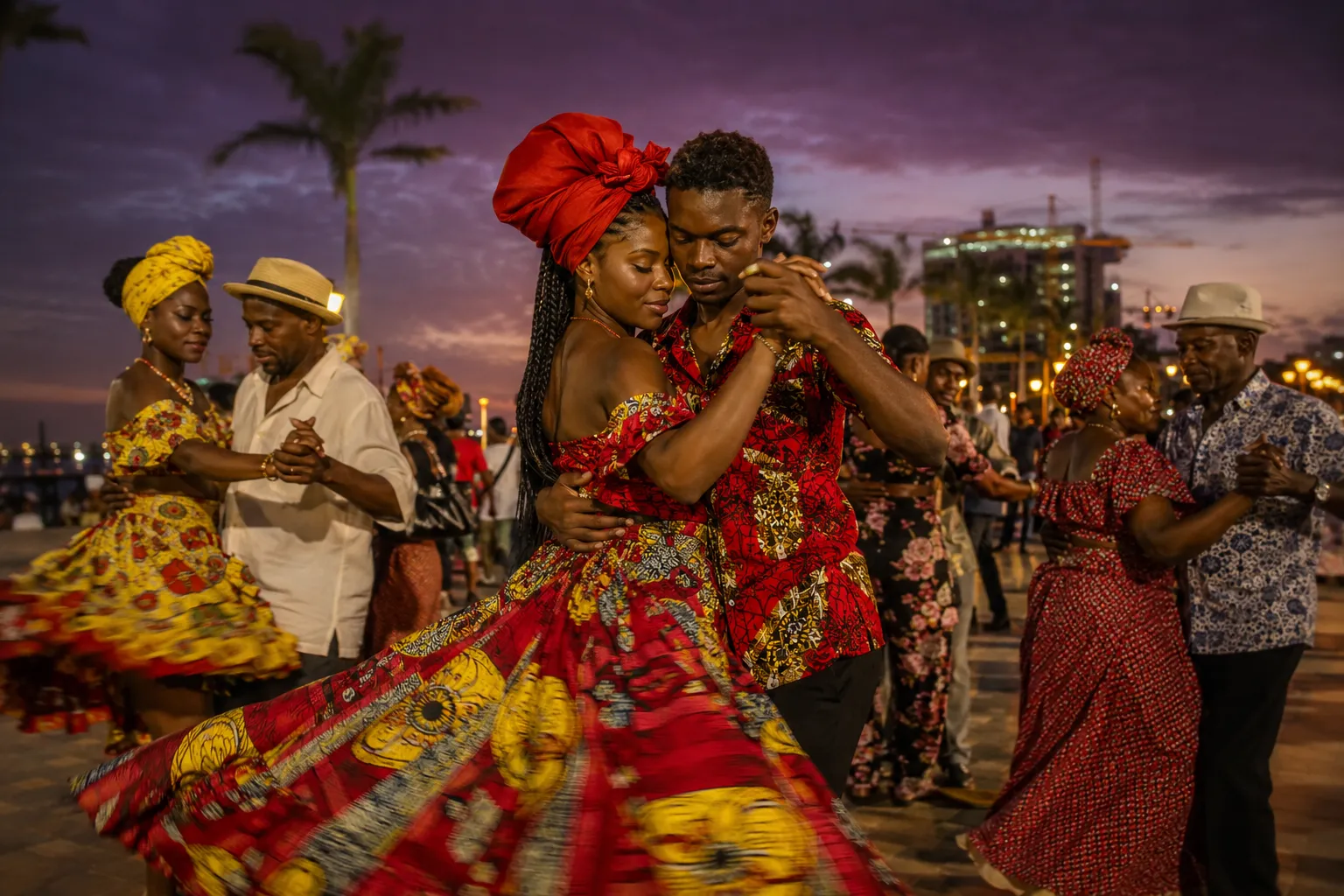
Angola is the birthplace of semba, kizomba, and kuduro, three genres that shaped Lusophone African music and, in kizomba’s case, went global as a partner dance.
- Semba: the older style, an ancestor of Brazilian samba, rooted in Mbundu traditions.
- Kizomba: slower, sensual partner dance that emerged in Luanda in the late 1970s and 80s.
- Kuduro: fast, electronic, energetic, born in the 1990s Luanda street scene.
Cuisine is another cultural signature. Signature dishes include:
- Muamba de galinha (chicken in palm oil sauce, the unofficial national dish)
- Funge (cassava or maize porridge)
- Calulu (fish or meat stew with greens)
- Kizaca (cassava leaves)
- Grilled fish and seafood along the coast
More on this in our Angolan cuisine article.
“Kizomba was born on the dance floors of Luanda. Today it’s danced from Lisbon to Los Angeles, but it still sounds most alive at home.”
What Is Angola Also Known For: The Palanca Negra, Welwitschia, and the Benguela Railway
Three more things that quietly define Angola:
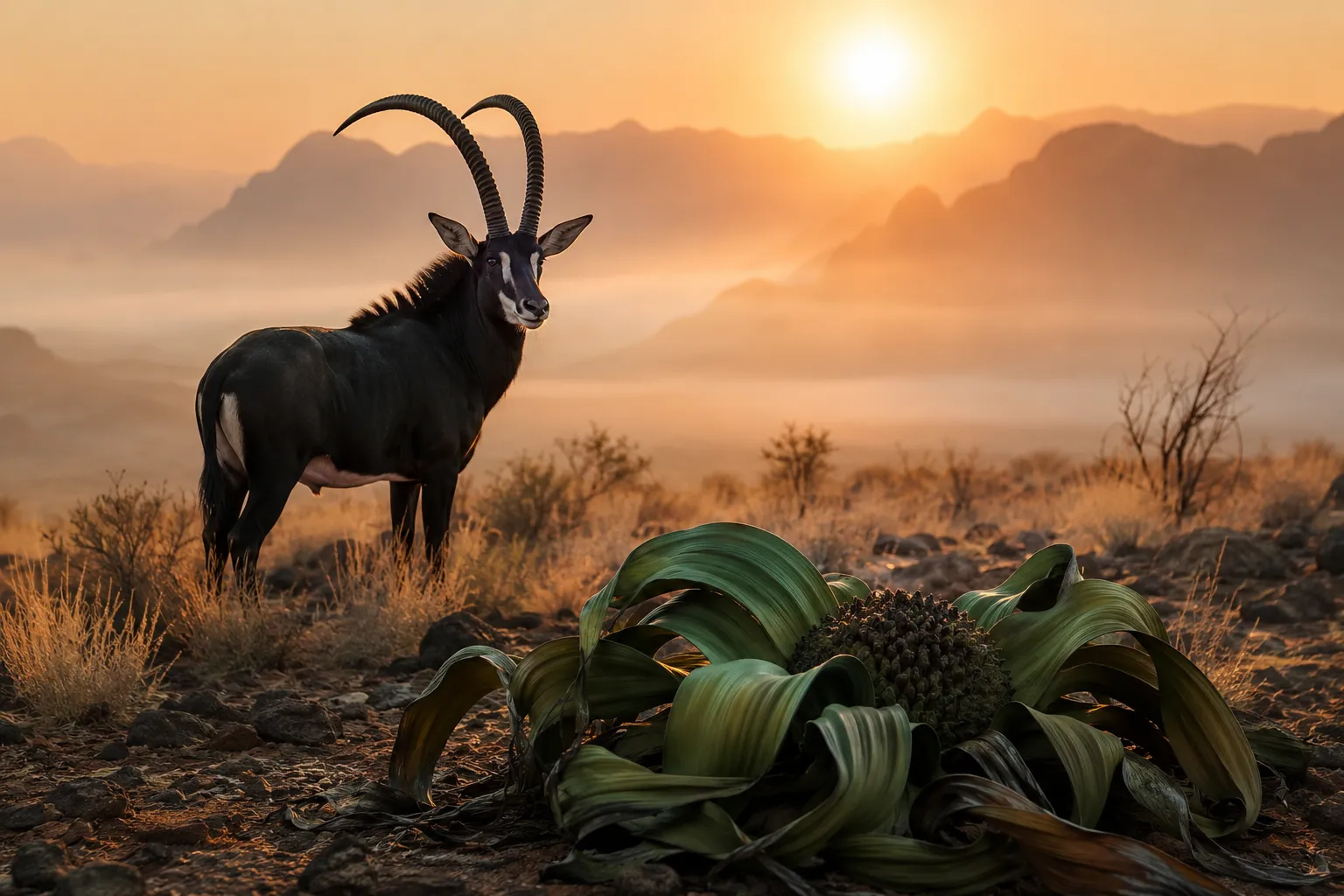
- The giant sable antelope (palanca negra gigante): endemic to Angola, critically endangered, and the country’s national symbol. It appears on the currency and the football team’s badge. Best chances of tracking it are in Cangandala National Park and the Luando Reserve in Malanje. See our giant sable antelope guide.
- Welwitschia mirabilis: a bizarre desert plant that can live over 1,000 years, found in the Namib in southern Angola and northern Namibia.
- The Benguela Railway (Caminho de Ferro de Benguela): a 1,344 km line from Lobito on the Atlantic to the DR Congo border, now central to the “Lobito Corridor” moving copper and cobalt from Central Africa to global markets.
How Has Angola’s Economy Changed in Recent Years?
After the 2014 oil price crash, Angola went through a long recession and heavy debt buildup. Since 2022 the picture has slowly improved, though 2026 remains a transition year:
- Growth is modest: IMF forecasts around 2.0% for 2026, BNA up to 3.5%, BFA around 3.3% [5][6][8].
- Debt costs are heavy: debt servicing is projected to swallow close to half the 2026 budget [10].
- Diversification is the stated priority: agriculture, mining, and services all get budget attention [2].
- The Lobito Corridor is drawing significant international investment, including from the US and EU.
- Reforms on fuel subsidies, the exchange rate, and business climate are underway, with mixed social effects [3][4].
The direction is toward a less oil-dependent economy, but the transition is slow and politically sensitive.
Comparison: Angola at a Glance vs Common Expectations
| Topic | Common Assumption | Reality |
|---|---|---|
| Language | French or English | Portuguese + Bantu languages |
| Climate | Hot jungle everywhere | Tropical north, desert south, cool coast |
| Safety | Still at war | Peaceful since 2002; verify current travel advice |
| Cost | Cheap African destination | Luanda is among the world's priciest cities |
| Visa | Extremely hard | E-visa and visa-free for many nationalities (verify) |
What Are Common Misconceptions About Angola?
A few things international travellers often get wrong:
- “It’s still at war.” The civil war ended in 2002. Angola is peaceful, though petty crime in Luanda is real and Cabinda gets stricter travel advisories. Check your government’s current travel advice before booking. See also is Angola safe.
- “It’s a cheap destination.” Luanda’s hotels, restaurants, and imported goods are expensive by African standards.
- “You need Portuguese fluency.” Helpful, yes, essential no, especially in tourism-facing businesses. Basic Portuguese phrases open a lot of doors.
- “There’s nothing to see.” The waterfalls, parks, coastline, and cities suggest otherwise.
- “It’s all oil rigs and desert.” Angola has rainforest in Cabinda, savannah in the north, highland plateau in Huíla, and dune desert in Iona.
For trip planning, our travel to Angola guide covers the practical side.
Planning a Trip: Quick Practical Notes
- Best time to visit: the dry, cooler season roughly May to October. More in best time to visit Angola.
- Visa: e-visa and visa-free access have expanded significantly, but rules change. Always verify with the official Angolan e-visa portal and see Angola visa.
- Vaccinations: yellow fever is generally required; malaria prophylaxis is recommended. Check the WHO country page and our Angola vaccinations overview.
- Flights: TAAG Angola Airlines is the national carrier; you can compare fares via booking partners on our flights to Angola page.
- Money: the Angolan kwanza (AOA) is the local currency; card acceptance is limited outside big hotels. See money in Angola.
Conclusion
Angola’s fame is built on contrasts: oil wealth alongside long recovery from war, Portuguese heritage layered over deep Bantu roots, expensive Luanda within an hour of nearly empty beaches, and a critically endangered antelope as the proud national symbol. If you want a destination that still surprises, this is one of the few left on the continent.
Next steps: start with our pillar guides on travel to Angola, Luanda, and Angola attractions, then verify the latest visa and health requirements with official sources before you book.
Want to keep this guide? We email you the key points with a link to every section.
Frequently asked questions
Is Angola safe for tourists in 2026?
Generally yes for well-planned trips to Luanda and main tourist areas, with normal urban precautions. Cabinda often carries stricter travel advisories. Always check your government's current advice before travelling.
Do I need a visa to visit Angola?
Angola has significantly liberalised entry in recent years, with e-visas and visa-free tourism for many nationalities. Rules change often, so verify with the official Angolan migration service before booking.
What is Angola most famous for internationally?
Oil, diamonds, kizomba music and dance, Portuguese heritage, and the long civil war followed by a rapid recovery.
What currency is used in Angola?
The Angolan kwanza (AOA). Cash is often needed outside major hotels and restaurants in Luanda.
Is Angola expensive to travel in?
Luanda is unusually expensive by African standards, regularly ranking among the world's costliest cities for expats. Outside the capital, costs drop but imported goods stay pricey.
What's the best time to visit Angola?
The dry season from May to October is the most comfortable and best for wildlife viewing and travel on unpaved roads.
References
- [2] Angola Budget 2026 EN
- [3] IMF Executive Board Concludes 2026 Article IV Consultation With Angola
- [4] AMAN Alliance
- [5] Angola IMF Report Forecasts Modest Economic Growth Of Around 2.0% I...
- [6] Angola BNA Forecasts Economic Growth Of 3.5% In 2026
- [7] Economy Of Angola
- [8] Angola BFA Forecasts Economic Growth Of 3.3% In 2026
- [10] Angola Turns To Local Markets As Debt Costs Swallow Nearly Half 202...