
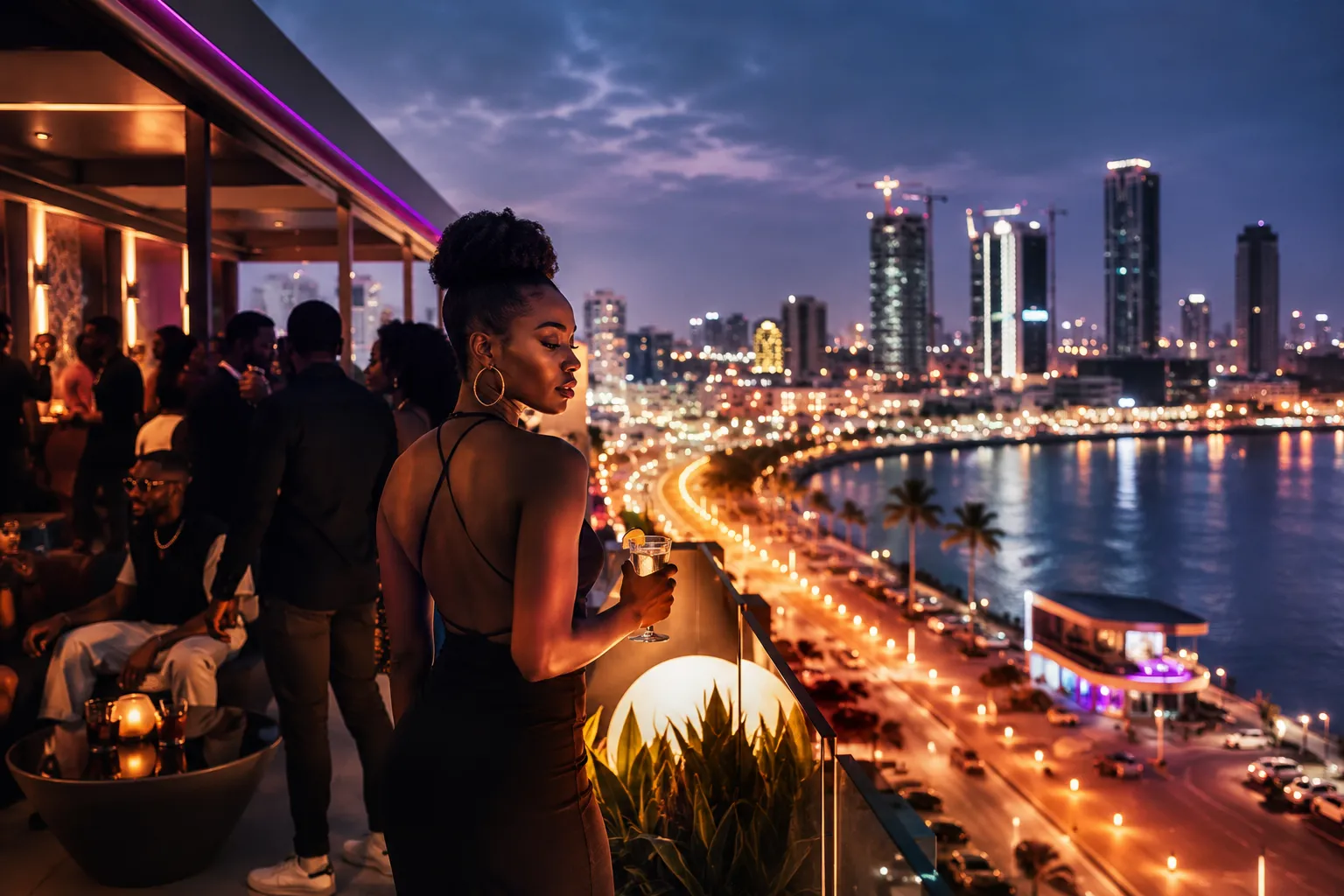
At 1 a.m. on a Saturday in Luanda, the dance floor at a kizomba lounge on Ilha do Cabo is only just filling up. That timing tells you everything about angola nightlife: it starts late, it runs on Afro-Portuguese rhythm, and it happens in a city that expats regularly rank among the most expensive on earth. If you plan around those three facts, you’ll have one of the most memorable nights out on the African continent.
Quick Answer
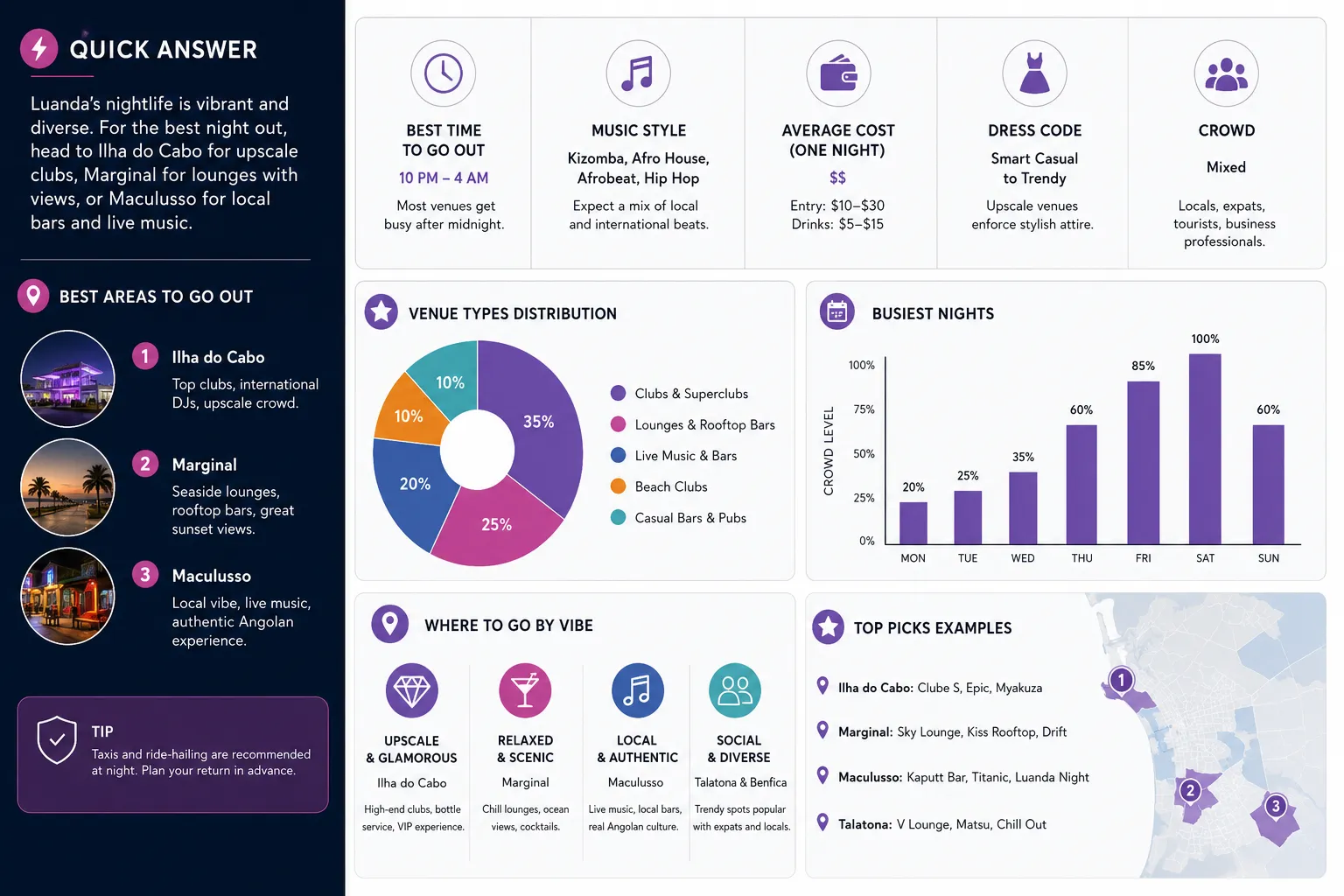
Luanda is the heart of angola nightlife, with the best clubs, bars and live music concentrated on Ilha do Cabo (beach clubs and lounges), Ingombota (upscale bars, rooftops, hotel venues) and pockets of Talatona (newer clubs south of the centre). Expect a late start (midnight to 2 a.m.), semba, kizomba and kuduro on the sound system, a smart dress code, and premium prices by African standards. Always arrange a return ride before you leave your hotel.
Key Takeaways
- Ilha do Cabo, Ingombota and Talatona are the three neighbourhoods where most tourists will actually go out.[1][7]
- Peak hours run from midnight to 4-5 a.m., with Thursday, Friday and Saturday the busiest nights.[7][8]
- Semba, kizomba, kuduro, Afro-house and Brazilian funk dominate club playlists, alongside international hip-hop and R&B.[7][10]
- Dress up. Sneakers and shorts will get you turned away at upscale venues.[5][7]
- Luanda is expensive. Budget nights are possible, but mid-range to VIP spending climbs fast.[1][7]
- Safety basics matter: pre-book taxis or ride-hailing, avoid walking between venues at night, keep valuables discreet.
- Portuguese helps but isn’t essential in tourist-facing bars and clubs.
- Beyond Luanda, Benguela offers a smaller but relaxed coastal nightlife scene.
What Are the Best Clubs and Bars in Luanda?
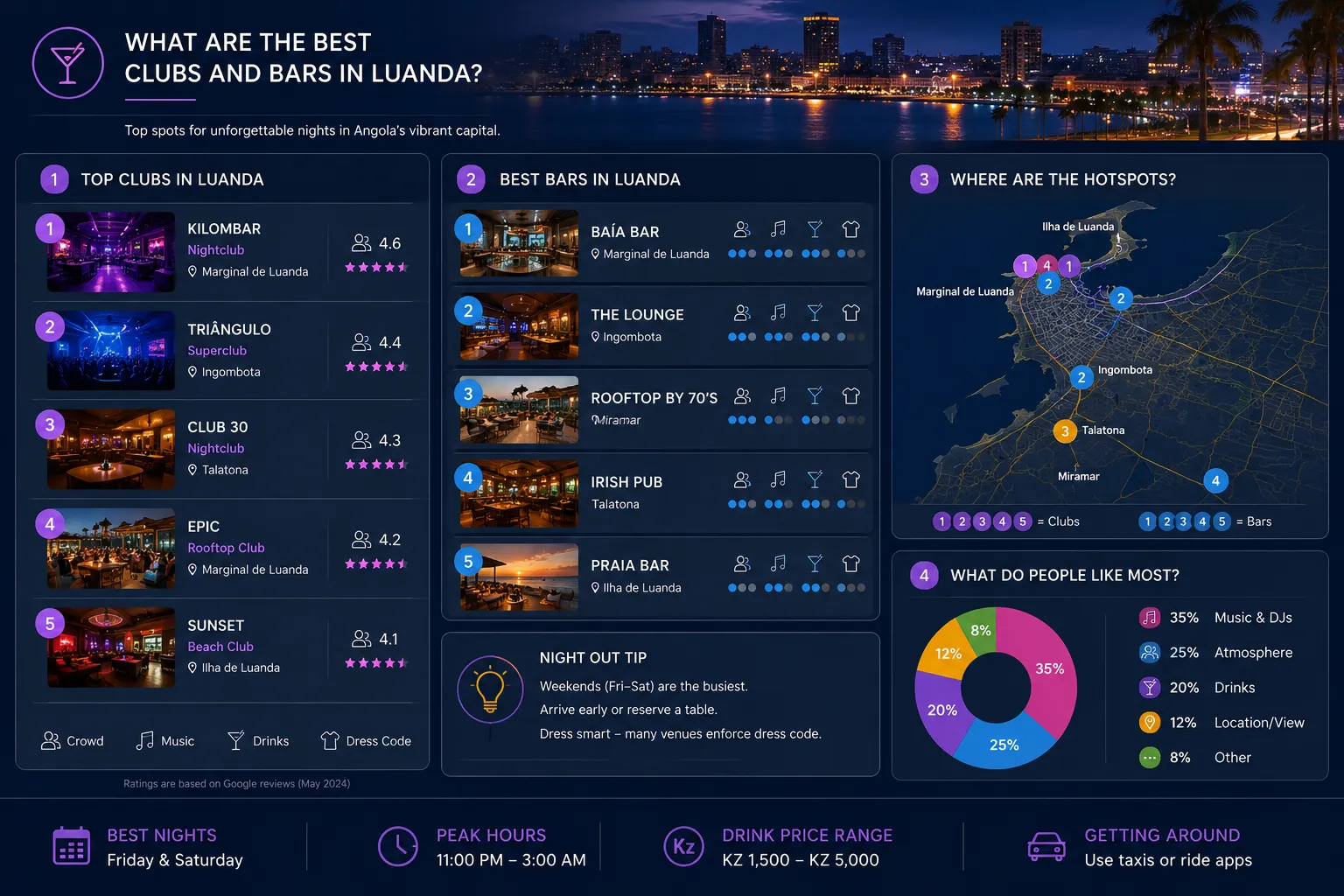
The best-known nightlife venues in Luanda cluster around Ilha do Cabo (the sandy peninsula facing the bay) and the Marginal/Ingombota area on the mainland. Ilha do Cabo is where you’ll find beach clubs, lounges and open-air restaurants that turn into dance floors after midnight. Ingombota holds the upscale hotel bars, rooftops and cocktail spots.
Long-running names that regularly appear in local and expat guides include Caminito (a landmark night club with a mixed crowd and late hours)[4], plus a rotating cast of beach clubs, lounges and hotel venues on Ilha do Cabo and along the Marginal.[1][2][5] Because venues in Luanda open, close and rebrand frequently, I’d rather point you at the districts than name a spot that may not exist next season. Ask your hotel concierge on the day, or check recent posts on local nightlife pages before heading out.
For deeper context on the city itself, see our full Luanda city guide and where to stay in Luanda.
Where Can I Find Live Music Venues in Angola?
Live music is the soul of angola nightlife. Semba (the ancestor of Brazilian samba), kizomba (slow, sensual partner dance) and kuduro (fast, electronic street sound) all originated here, and Luanda still has venues dedicated to hearing them played by actual musicians rather than DJs.
Look for bars and cultural spaces in Ingombota and along the Marginal that advertise “música ao vivo” or semba nights, typically Thursday through Saturday. Larger hotels sometimes host resident bands, and cultural centres occasionally run bigger concerts. For a real semba night, arrive around 10 p.m., order a Cuca beer, and don’t be surprised when strangers ask you to dance. If you want a primer on the sounds and steps before you go, our guide to the culture of Angola covers the music scene in more depth.
What’s the Nightlife Scene Like in Luanda Compared to Other African Cities?
Luanda’s nightlife is more Afro-Portuguese and lounge-driven than the mega-club energy of Johannesburg or the beach-party sprawl of Lagos or Cape Town. Think intimate kizomba lounges, upscale cocktail bars, and beach clubs, rather than 5,000-capacity warehouses.
Compared with other African capitals it’s smaller in scale, more expensive, and more dress-conscious. What it lacks in size it makes up for in authenticity: you’re hearing the music that shaped Portuguese-speaking Africa in the city that invented it.
How Late Do Clubs Stay Open in Luanda?
Most clubs in Luanda stay open until 4 a.m., 5 a.m., or sunrise on weekends. Nothing meaningful happens before 11 p.m. Locals typically eat dinner around 9 p.m., meet for drinks at a bar or lounge around midnight, and only move to a club after 1 a.m.[7][8]
A realistic Saturday timeline:
- 8:30-10:00 p.m. Dinner, ideally seafood along the Marginal or on Ilha do Cabo.
- 10:30 p.m.,12:30 a.m. Cocktail bar, rooftop or lounge.
- 12:30-4:00 a.m. Club or live music venue.
- 4:00 a.m. onwards Late food (grilled chicken, street snacks) or an after-party.
Show up at a club at 10 p.m. and you’ll be dancing alone.
What Should I Wear to Go Out at Night in Luanda?
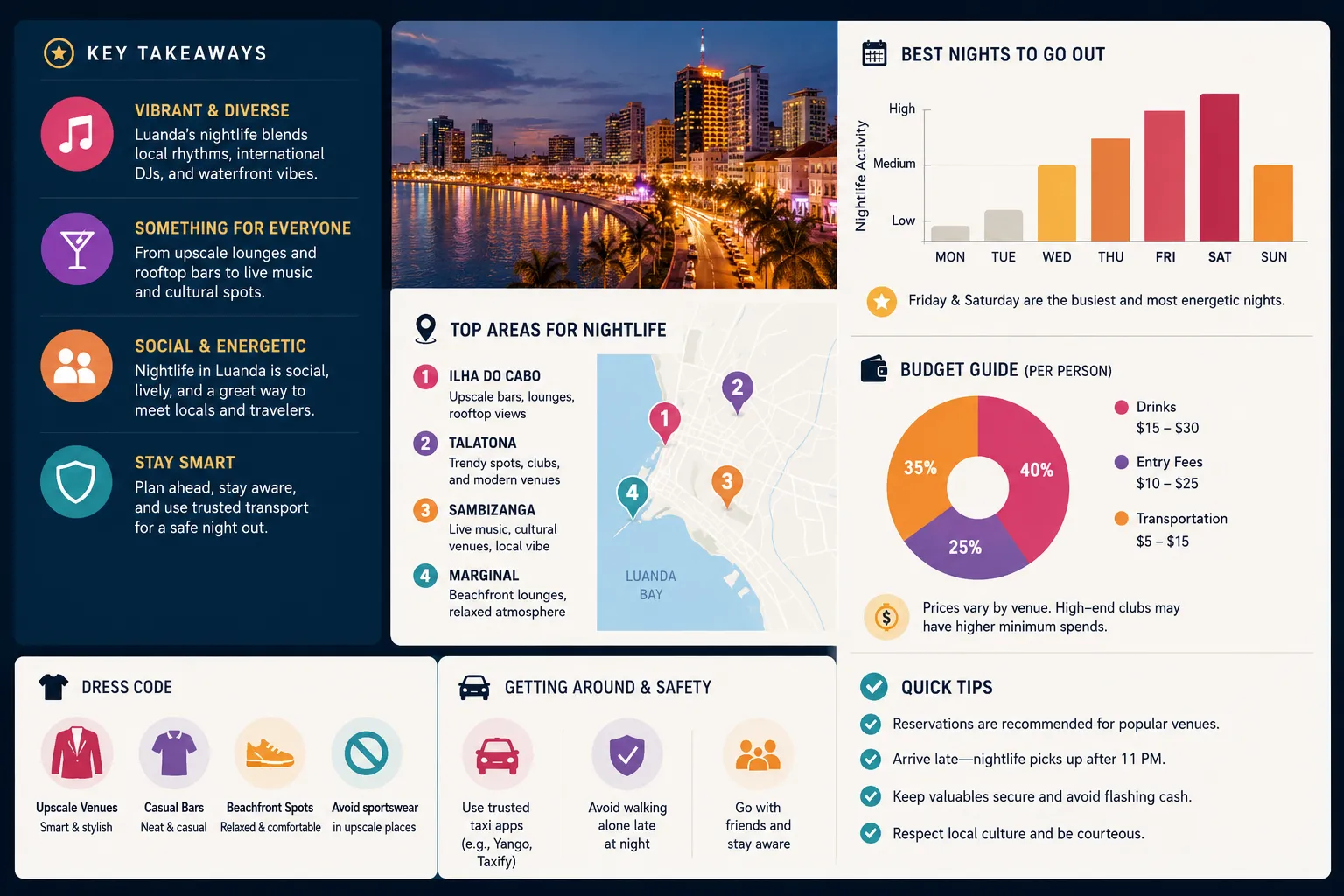
Luandans dress well. For upscale clubs and hotel bars, think smart-casual to elegant: collared shirt or nice top, dark jeans or trousers, closed leather shoes for men; dress, heels or smart flats and polished make-up for women. Avoid sportswear, flip-flops, cargo shorts and beach clothes after dark.
Decision rule: if you’d feel underdressed at a nice restaurant in Lisbon or Madrid, you’ll be underdressed in Luanda. Beach clubs on Ilha do Cabo are slightly more relaxed during the day, but even there the evening crowd upgrades.
For upscale venues, the unwritten dress code is “looking like you made an effort.” Doormen absolutely do turn people away.[5][7]
Are There Beach Clubs or Rooftop Bars in Luanda?
Yes. Ilha do Cabo is Luanda’s beach-club strip, a narrow sandy peninsula lined with restaurants, lounges and open-air venues that shift from lunch spot to sunset bar to late-night dance floor. It’s the closest thing Angola has to a Copacabana or Ipanema.
Rooftop bars are concentrated in upscale hotels and towers in Ingombota, offering skyline and ocean views over the Baía de Luanda. For a special first night, a sundowner on a rooftop followed by dinner on Ilha do Cabo is hard to beat. Nearby, the Mussulo peninsula offers daytime beach clubs that are worth combining with a weekend stay.
How Much Does It Cost to Go Out Clubbing in Angola?
Luanda has ranked for years among the world’s most expensive cities for expats, and nightlife reflects that. Prices change quickly with exchange rates, so treat these as ranges rather than fixed numbers and always verify locally.[1]
Rough spend levels reported in 2025-2026 guides:
| Level | Typical night | Estimated spend per person |
|---|---|---|
| Budget | Local bars, beer, street food | ~USD 20-40 |
| Mid-range | Cocktail bar + club entry + drinks | ~USD 50-120 |
| High-end / VIP | Bottle service, upscale club, tables | USD 150-500+ |
Source: nightlife cost overviews cited in 2025-2026 Angola travel guides.[1]
Cover charges at bigger clubs are common on weekends and often include a drink. Card acceptance is improving in upscale venues but carry some kwanza in cash as backup, especially for taxis and smaller bars. For currency practicalities, see our guide to money in Angola.
“You can have a great night in Luanda on a modest budget, but the moment you sit down at a VIP table on Ilha do Cabo, you’re in Paris or Dubai territory.”
What Neighborhoods Have the Best Nightlife in Luanda?
Three areas cover almost all of angola nightlife worth travelling for:
- Ilha do Cabo, beach clubs, seafood restaurants, lounges, late-night dance floors. Best for a full evening arc from sunset to sunrise.
- Ingombota (Baixa/Marginal), upscale bars, rooftops, hotel venues, cocktail spots. Best for a polished, safer-feeling night out close to central hotels.
- Talatona, newer residential and business district south of the centre, with modern clubs and lounges popular with a younger, well-off crowd.[7]
If it’s your first night, base yourself in Ingombota and taxi to Ilha do Cabo.
Is It Safe to Go Out at Night in Luanda?
Luanda is generally manageable at night if you take standard big-city precautions, but petty crime (pickpocketing, phone snatching, opportunistic theft) is a real risk, and walking between venues after dark is not recommended.
Practical rules I follow:
- Pre-arrange your rides. Use a hotel-booked taxi, a trusted driver or a ride-hailing app to get to and from venues. Do not hail on the street at 3 a.m.
- Carry only what you need. A little cash, one card, a phone. Leave your passport in the hotel safe (a photo on your phone is fine for ID).
- Stay with your group and keep drinks in sight.
- Avoid Cabinda for casual nightlife trips. Travel advisories for the exclave are often stricter than for the rest of the country. Check your government’s current advice before booking.
For up-to-date official guidance, check your government’s travel advisory before you go. Also see our overview: is Angola safe?
What’s the Dress Code for Upscale Clubs in Luanda?
For upscale clubs and hotel venues, dress code is smart to smart-elegant. Men: long trousers or dark jeans, a collared shirt or well-cut tee, leather shoes. Women: dress or elegant separates, heels or smart flats. Avoid athletic wear, flip-flops, beach shorts, and visibly worn sneakers.
Some venues explicitly enforce this at the door; others simply make you feel out of place. If in doubt, overdress. Nobody in Luanda has ever been turned away for looking too sharp.
When Do Most People Go Out Clubbing in Luanda?
Thursday, Friday and Saturday nights are the main clubbing nights, with Saturday the peak. Sunday brunches and beach-club afternoons on Ilha do Cabo are also a Luanda tradition. Weeknights (Monday to Wednesday) are quiet outside of a few bars and hotel lounges.
Peak arrival time at clubs is between 1 and 2 a.m. Dance floors typically don’t fill up until after midnight.[7][8]
Are There LGBTQ-Friendly Bars and Clubs in Luanda?
Angola decriminalised same-sex relations in 2021 and introduced anti-discrimination protections, which is progressive by regional standards. In practice, Luandan society remains socially conservative and there is no established openly LGBTQ nightlife scene comparable to Cape Town or Lisbon.
Some upscale international-facing bars, hotel venues and lounges in Ingombota are considered relatively relaxed and welcoming, and discreet socialising is common. LGBTQ travellers should exercise the same discretion they would in most of the region, and check current guidance from their own country’s foreign office before travelling.
What Kind of Music Do Clubs in Luanda Play?
Expect a mix of semba, kizomba, kuduro, Afro-house, Angolan hip-hop, Brazilian funk, and international pop and R&B.[7][10] Kizomba lounges skew slower and more romantic; kuduro and Afro-house venues are high-energy. Bigger clubs move between genres across the night.
If you want to prepare, listen to artists like Bonga (semba legend), Anselmo Ralph, Yola Semedo, Nagrelha and Titica before you go. You’ll recognise tracks on the dance floor and understand why Angolans take their music so personally.
Do I Need to Know Portuguese to Enjoy Nightlife in Luanda?
No, but a little Portuguese goes a long way. Staff at upscale hotels, restaurants and tourist-facing bars often speak some English, especially in Ingombota. Deeper into local venues, Portuguese is essential.
Learn a handful of phrases: boa noite (good evening), uma cerveja, por favor (a beer, please), quanto custa? (how much?), obrigado / obrigada (thank you, m/f), com licença (excuse me). More on the language in our Angola language guide.
Nightlife Beyond Luanda: What About Benguela?
Outside Luanda, Benguela and Lobito on the southern coast have the most active nightlife. Expect a smaller, more relaxed scene: beachfront bars along Praia Morena and Baía Azul, seafood restaurants that turn into music venues, and occasional live semba nights. It’s not a clubbing destination, but a lovely place to spend an evening if you’re travelling the coast. See our guides to Benguela and Lobito.
Getting Home Safely
Book your return before you leave. Options:
- Hotel-arranged taxi for pickup at a specific time.
- Ride-hailing apps (verify current availability on arrival, coverage varies).
- A trusted private driver for the whole evening, often the safest option for groups.
Agree the fare in advance if you’re using a metered or informal taxi. Keep the hotel address written down in Portuguese.
Practical Booking Tips
- Flights: TAAG Angola Airlines operates most international routes to Luanda.
- Hotels near nightlife: Base yourself in Ingombota for the shortest taxi rides to both Ilha do Cabo and rooftop bars.
- eSIM: A local eSIM makes ride-hailing and Google Maps far easier than roaming.
- Travel insurance: Non-negotiable. Confirm night-out incidents and medical evacuation are covered.
For the full planning picture, see travelling to Angola and best time to travel to Angola.
Conclusion
Angola nightlife rewards travellers who lean into the local rhythm: eat late, arrive at the club after midnight, dress the part, and always plan your ride home. Start with Ingombota for your first night, cross over to Ilha do Cabo when you feel the city’s beat, and don’t leave Luanda without hearing live semba at least once. If you can add a coastal detour to Benguela, even better.
Next steps:
- Read our Luanda city guide to pick a base neighbourhood.
- Check current visa and safety updates via the official Angola e-visa portal and your country’s travel advisory.
- Book flights, insurance and your first two hotel nights, then plan the nights out on arrival with fresh local intel.
Free help from our team in Angola
Going out in Luanda?
Getting home late is the tricky part. Tell us when you are in town and we arrange a driver for the evening.
- Local team in Angola
- No obligation, nothing to pay
- Reply by email or WhatsApp
Want to keep this guide? We email you the key points with a link to every section.
Frequently asked questions
Do clubs in Luanda have cover charges?
Yes, most bigger clubs charge entry on weekends, often including a drink. Amounts vary and change frequently, so ask at the door and expect to pay in kwanza or by card.
Can I pay with a credit card in Luanda nightlife venues?
Increasingly yes in upscale bars, hotels and clubs, but not everywhere. Carry some kwanza in cash as backup.
Is Luanda safe for solo female travellers at night?
Solo female travellers do go out in Luanda, but it's safer to go with a group, stick to upscale venues, and pre-book all transport. Avoid walking alone between venues.
What's the legal drinking age in Angola?
The legal drinking age in Angola is **18**. ID is not always checked at venues but can be.
When does the best nightlife happen during the year?
Nightlife runs year-round, but the dry season (May to October) is more comfortable weather-wise and coincides with several festivals and cultural events.
Are there dress codes for women that differ from men?
Standards are similar: dress up. Women tend towards dresses, heels and polished make-up; men towards collared shirts, trousers and leather shoes. Both should avoid beachwear and sportswear after dark.