Quick answer
Angola has exactly one inscribed UNESCO World Heritage Site: Mbanza Kongo, Vestiges of the Capital of the former Kingdom of Kongo, added to the World Heritage List in 2017 and located in Zaire province in the far north. Four other properties sit on Angola’s Tentative List, which is a shortlist of possible future nominations and carries no World Heritage status. If you have read that there are “13 UNESCO World Heritage Sites in Angola”, that figure is wrong, and it comes from mixing up separate UNESCO programmes.
Key takeaways
- Angola has one World Heritage Site, not 13. It is cultural, not natural.
- Mbanza Kongo was inscribed in 2017 under cultural criteria (iii) and (iv), recognising it as the political and spiritual capital of the Kingdom of Kongo.
- Angola has been a State Party to the World Heritage Convention since 1991.
- The Tentative List holds four properties: the Kwanza Corridor Cultural Landscape, Tchitundu-Hulu rock art, Cuito Cuanavale, and the Okavango river basin (submitted 2025).
- Quicama (Kissama) became Angola’s first UNESCO Biosphere Reserve in October 2025. A Biosphere Reserve is a different programme and is not a World Heritage Site.
- Kalandula Falls is not a UNESCO site, despite what many blogs claim.
- Mbanza Kongo is the only one of these places with reasonably straightforward visitor access from Luanda.
How many UNESCO World Heritage Sites are there in Angola?
There is one. The full inscribed name is Mbanza Kongo, Vestiges of the Capital of the former Kingdom of Kongo, and it is Angola’s sole entry on the World Heritage List. Angola has no inscribed natural sites and no mixed sites.
The inflated lists that circulate online almost always come from the same mistake: a scraped blog post has quietly merged four different things, namely the World Heritage List, the Tentative List, UNESCO’s Man and the Biosphere programme, and general “national heritage” designations made by Angolan authorities. Only the first of those produces a World Heritage Site.
Here is the honest picture:
| Site | UNESCO status | Province | Realistic to visit now? |
|---|---|---|---|
| Mbanza Kongo | Inscribed 2017 (cultural) | Zaire | Yes, with planning |
| Kwanza Corridor Cultural Landscape | Tentative List (2017) | Bengo, Cuanza Norte, Malanje | Partly, in sections |
| Tchitundu-Hulu rock art | Tentative List (2017) | Namibe | Difficult, remote |
| Cuito Cuanavale | Tentative List (2017) | Cuando Cubango | Difficult, very remote |
| Okavango river basin | Tentative List (2025) | Southeast Angola (transnational) | Not practically, Angolan side |
| Quicama (Kissama) | Biosphere Reserve, not World Heritage | Bengo and Luanda | Yes, easily |
Decision rule: if your goal is to stand inside an actual UNESCO World Heritage Site in Angola, you need to get to Mbanza Kongo. Everything else on that table is either a candidate or a different label.
Where is Mbanza Kongo, and why was it inscribed?
Angola’s first and so far only World Heritage inscription came in 2017, at the 41st session of the World Heritage Committee. Mbanza Kongo lies in Zaire province in northern Angola, close to the border with the Democratic Republic of the Congo, on a plateau at roughly 570 metres above sea level.
That elevation matters more than it sounds. The plateau gave the Manikongo, the king of Kongo, a commanding view over the surrounding plains, which is part of why the site became the political and spiritual centre of one of Central Africa’s most powerful precolonial states. From the late fifteenth century onward it was also the stage for the kingdom’s encounter with Portugal, including the adoption of Christianity by the Kongo elite.
Key features named in the inscription include:
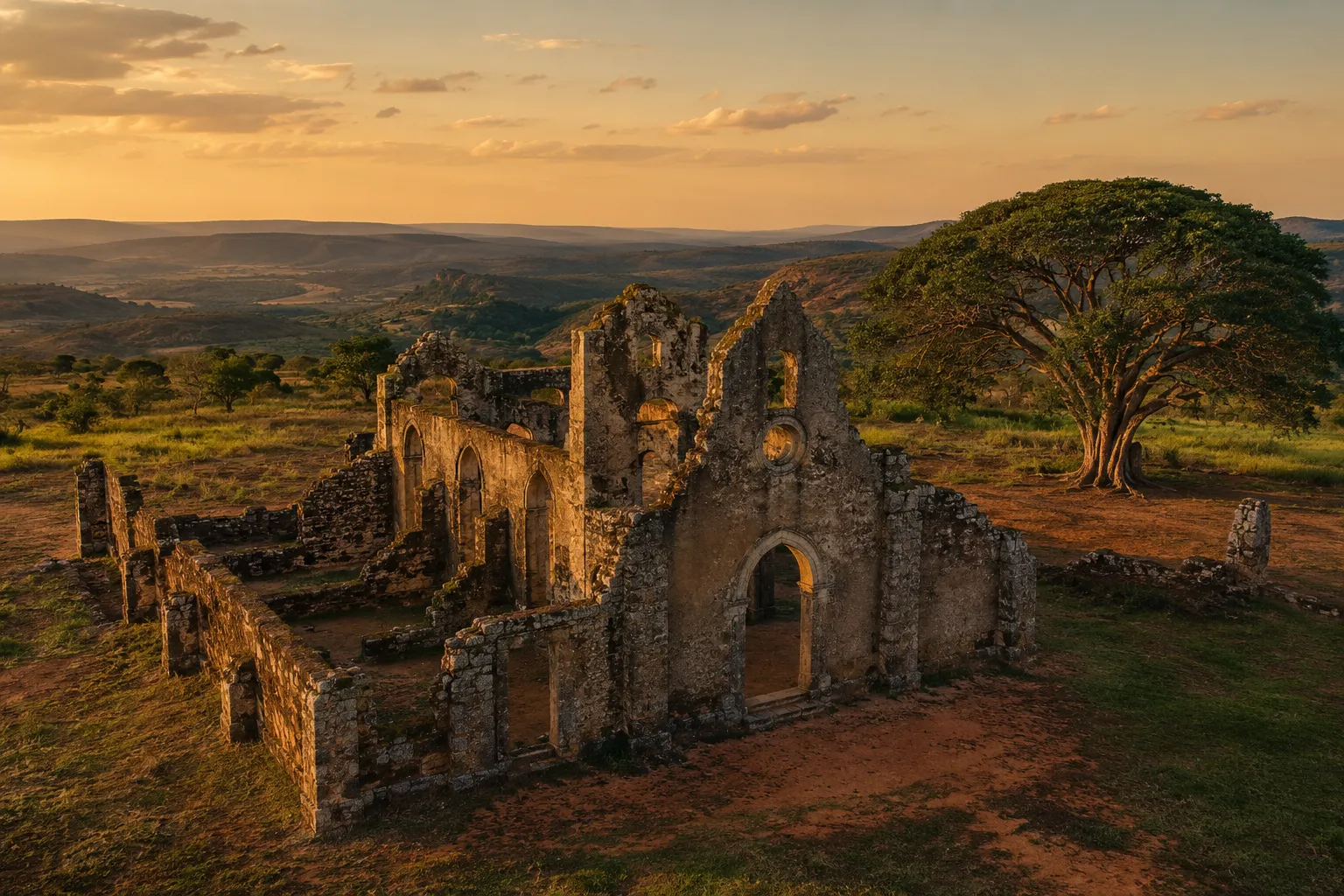
- The ruins of a sixteenth century cathedral, among the earliest church structures in sub-Saharan Africa
- The Manikongo’s judgement tree, where the king heard cases and issued rulings
- The royal burial ground of the Kongo kings
The site is unusual because so much of its significance is social and spiritual rather than architectural. You are reading a landscape of power, not just a pile of stones.
If the deeper background interests you, our overview of Angola’s history from the Kingdom of Kongo to independence sets the timeline you will be walking through.
What makes a site qualify as World Heritage?
A property qualifies only if a State Party nominates it and the World Heritage Committee agrees it has Outstanding Universal Value against at least one of ten criteria, plus adequate protection and management. Angola’s single site met two of them.
Mbanza Kongo was inscribed under criteria (iii) and (iv):
- Criterion (iii): it bears exceptional testimony to a cultural tradition or civilisation, in this case the Kingdom of Kongo.
- Criterion (iv): it is an outstanding example of a type of building, architectural ensemble or landscape illustrating a significant stage in human history.
The process is slow and bureaucratic, and that is the real reason a country of Angola’s size and depth has just one site. It runs roughly like this:
- The country ratifies the World Heritage Convention. Angola did so in 1991.
- It places candidate properties on its Tentative List. Nothing can be inscribed without spending time here first.
- It prepares a full nomination dossier, including legal protection, buffer zones and a management plan.
- Advisory bodies evaluate the dossier and the Committee decides.
Common mistake: assuming beauty is enough. Kalandula Falls is spectacular, but spectacle alone does not satisfy the criteria, and a natural nomination also demands documented integrity and management capacity.
World Heritage versus the other UNESCO labels
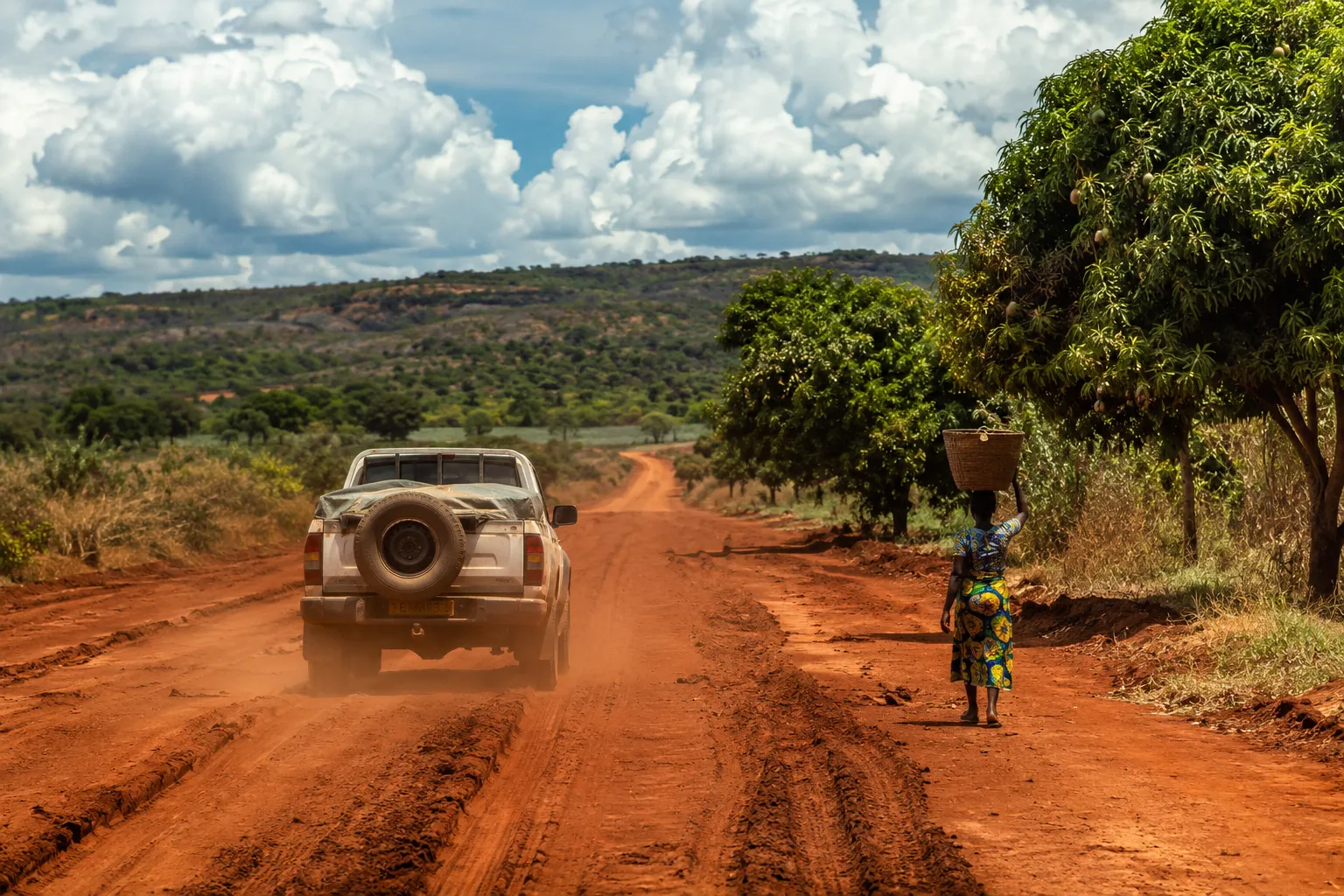
World Heritage is one UNESCO label among several, and only the World Heritage List creates a “World Heritage Site”. Angola currently sits in three different UNESCO baskets, which is exactly where the inflated site counts come from.
- World Heritage List: one site, Mbanza Kongo. Legally protected, monitored, and reported on by the State Party.
- Tentative List: four properties. This is a waiting room. It signals intent and confers no protection and no World Heritage status.
- Man and the Biosphere (MAB) programme: Quicama (Kissama) was approved in October 2025 as Angola’s first Biosphere Reserve. Biosphere Reserves are about balancing conservation with sustainable local use. They are a genuine international designation, but they are not World Heritage Sites.
- Intangible Cultural Heritage: a separate 2003 UNESCO convention covering living traditions such as music, dance and craft rather than places. If you are curious about the living side of the country, start with our guide to Angolan culture and traditions.
How the confusion happens: someone finds the Quicama biosphere announcement, adds the four tentative properties, throws in a few nationally protected monuments in Luanda, and publishes “13 UNESCO sites in Angola”. Every individual item may be real. The label glued on top is not.
For what Kissama actually offers a visitor, including wildlife expectations after the post-war restocking effort, see our Kissama National Park guide.
What is on Angola’s Tentative List?
The most recent addition is the Okavango river basin, submitted in 2025 as a transnational natural nomination covering the Cubango, Okavango, Cuando and Zambezi catchments. Angola’s Tentative List now holds four properties in total.
- Kwanza Corridor Cultural Landscape (submitted 2017). A cultural landscape following the Kwanza river across Bengo, Cuanza Norte and Malanje provinces, tying together river geography, colonial-era settlement and precolonial history.
- Archaeological Site of Tchitundu-Hulu (submitted 2017). Rock art and engravings on outcrops near Virei, inland from the coast in Namibe province.
- Cuito Cuanavale, site of liberation and independence (submitted 2017). In Cuando Cubango, associated with the decisive late-1980s battles of the wider southern African conflict.
- Okavango river basin (submitted 2025). A natural, cross-border nomination covering the upper catchments that feed the delta downstream in Botswana.
Be realistic about timing. Tentative listing is a first step, not a countdown, and properties can sit on these lists for decades. None of these four has been inscribed, and there is no published date by which any of them will be.
Can you visit these sites as a tourist?
Yes, Mbanza Kongo is genuinely visitable, and it is by far the most accessible of the sites discussed here. The tentative properties range from awkward to impractical for independent travellers.
Easiest to hardest:
- Mbanza Kongo (inscribed). A functioning provincial capital, so there is accommodation, fuel and food. The heritage core is compact and walkable. Practical details on routes and what to see are in our Mbanza Kongo travel guide.
- Kwanza Corridor (tentative). You will cross parts of it almost by accident on a Luanda to Malanje trip. There is no single entrance or unified visitor route, because it is a proposed landscape rather than a managed park.
- Tchitundu-Hulu (tentative). Deep in the Namibe interior on rough tracks. This needs a capable 4x4, local guidance and self-sufficiency in fuel and water. Our Namibe region guide explains what the wider desert province involves.
- Cuito Cuanavale (tentative). Very remote in the southeast, with long distances and minimal tourism infrastructure. Historical interest is high, visitor facilities are essentially absent.
- Okavango basin, Angolan side (tentative). Effectively an expedition, not a day trip.
Edge case worth flagging: parts of rural southeastern Angola still carry residual landmine risk from the civil war. Clearance has been extensive, but the standing advice is to stay on established tracks and follow local guidance. Check your own government’s current travel advisory before committing to remote routes.
How do you get to Mbanza Kongo from Luanda?
Two realistic options: fly to Mbanza Kongo’s airport on a domestic flight, or drive north from Luanda, roughly 500 km depending on the route and road conditions. Both need advance planning, and flight schedules to secondary Angolan cities change often, so confirm directly with the airline before you build an itinerary around them.
Flying. Domestic services have operated to Mbanza Kongo, and this is the low-effort choice if timings work. Verify current frequency close to your travel dates rather than trusting a schedule you read months earlier.
Driving. Northern Angola’s road quality is inconsistent. Budget generously for time, treat the drive as at least a full day, and avoid arriving after dark. A 4x4 or high-clearance vehicle is sensible, particularly in the rainy season from roughly November to April. Portuguese is essential outside hotels.
A sensible route shape: Luanda for two or three days, then Mbanza Kongo as a dedicated northern add-on, rather than trying to string it onto a southern loop through Lubango and Namibe. The north and south of Angola do not combine neatly in one short trip. For alternatives if the north does not fit, our roundup of the best things to do in Angola helps you weigh trade-offs.
Why is Kalandula Falls not a UNESCO site?
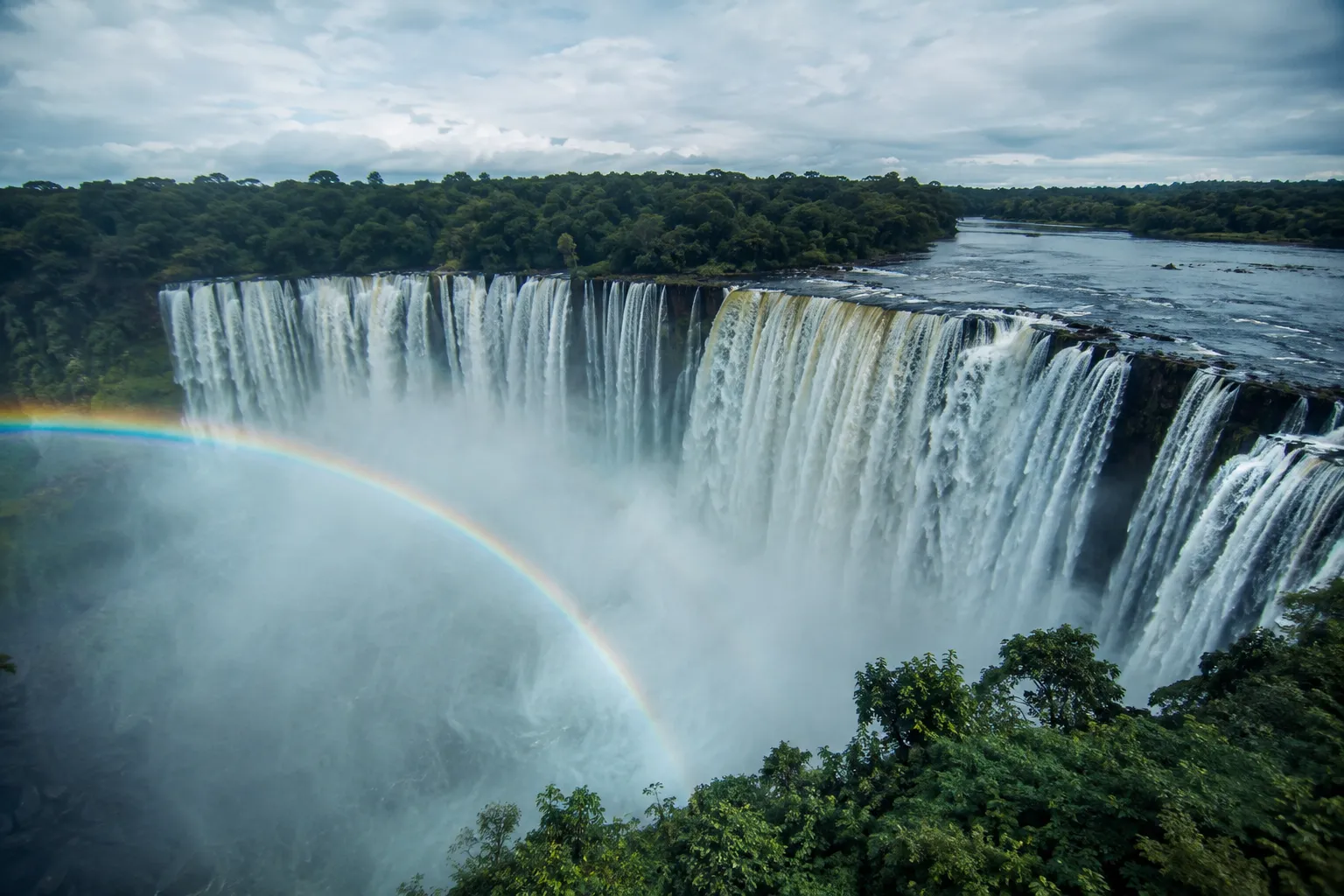
Kalandula Falls carries enormous national and symbolic weight, but it holds no UNESCO designation of any kind, and it is not on the Tentative List as a standalone property. Its importance is domestic and ecological rather than internationally inscribed.
The falls sit in Malanje province on the Lucala River, a tributary within the wider Kwanza system, and they rank among the largest waterfalls in Africa by width and volume. They function as Angola’s most recognisable natural landmark, appear constantly in national tourism imagery, and anchor the Malanje circuit alongside the Pungo Andongo rock formations.
Malanje is one of the three provinces covered by the proposed Kwanza Corridor Cultural Landscape. Whether the falls themselves would fall inside the boundary of any eventual nomination is not settled in the tentative documentation, so treat any claim that Kalandula “is being nominated” with caution.
Why the misinformation persists: the falls look exactly like what people expect a World Heritage Site to look like. Visual grandeur creates an assumption that the paperwork must already exist. It does not.
What should you know before visiting?
Plan for transport and accommodation to dominate your budget, not admission. This guide will not quote entry fees or opening hours for Mbanza Kongo, because these arrangements are managed locally and change without reliable public notice. Ask at your accommodation on arrival, and expect cash to be necessary.
Practical points that actually affect your visit:
- Language. Portuguese, with Kikongo widely spoken around Mbanza Kongo. English is rare outside Luanda hotels.
- Cash. Card acceptance is limited outside major cities. Carry kwanza.
- Season. The drier, cooler months from roughly May to October make northern roads far easier.
- Local guides. Worth arranging on the spot. Much of the site’s meaning is oral, tied to the judgement tree, the royal graves and the lineage of the Manikongo. Without that context you are looking at ruins.
- Border proximity. Mbanza Kongo is close to the DRC frontier. Carry your passport and be relaxed about document checks.
- Photography etiquette. Ask before photographing graves, ceremonies or people.
Costs to budget for instead of tickets: the domestic flight or vehicle hire, fuel, a driver or guide if you are not self-driving, provincial accommodation, and travel insurance that covers remote areas.
What challenges do these sites face?
The main pressures are limited conservation funding, urban growth over buried archaeology, and thin technical capacity for preparing nomination dossiers. These constraints explain both the fragility of Mbanza Kongo and the slow pace of new inscriptions.
- Urban encroachment. Mbanza Kongo is a living, growing city built directly over its archaeological layers. Every new building is a potential loss.
- Conservation resources. Stabilising sixteenth century masonry in a tropical climate is expensive and continuous.
- Post-war legacy. Decades of conflict until 2002 interrupted documentation, research and site management across the country.
- Capacity for nominations. Three of Angola’s four tentative properties have been waiting since 2017, which reflects how demanding a full dossier is.
- Visitor pressure is not yet the problem. Angola receives few heritage tourists. That will change, and early, well-managed tourism revenue is one of the more realistic funding paths for conservation.
Conclusion
Angola’s UNESCO story is small in number and large in meaning. One inscribed site, four candidates, and a first Biosphere Reserve is the accurate picture, and anyone telling you there are 13 is recycling a bad list.
Your next steps:
- Decide whether Mbanza Kongo justifies a dedicated northern leg. If you want to stand in an actual World Heritage Site in Angola, it is the only option.
- Confirm domestic flight availability directly with the airline before locking in dates.
- Read the background on the Kingdom of Kongo first. This site rewards preparation more than almost any other in Angola.
- Arrange a local Portuguese or Kikongo speaking guide on arrival for the judgement tree, cathedral ruins and royal burial ground.
- Treat the tentative properties as bonus material for a second, more adventurous trip.
- Check the official UNESCO World Heritage Centre country page before you travel, since Tentative List entries and inscription decisions do change.
Free help from our team in Angola
Want to visit Mbanza Kongo?
Tell us your dates and we arrange the transport from Luanda, a guide who knows the history of the Kingdom of Kongo and a place to stay.
- Local team in Angola
- No obligation, nothing to pay
- Reply by email or WhatsApp
Want to keep this guide? We email you the key points with a link to every section.
Frequently asked questions
How many UNESCO World Heritage Sites does Angola have?
One. Mbanza Kongo, Vestiges of the Capital of the former Kingdom of Kongo, inscribed in 2017. Angola has no natural or mixed World Heritage Sites.
Is Kalandula Falls a UNESCO World Heritage Site?
No. Kalandula Falls in Malanje province holds no UNESCO designation and is not listed individually on Angola's Tentative List, despite frequent claims online.
Is Kissama National Park a UNESCO World Heritage Site?
No. Quicama (Kissama) was approved in October 2025 as Angola's first UNESCO Biosphere Reserve under the Man and the Biosphere programme. That is a separate designation from the World Heritage List.
Does being on the Tentative List mean a site is protected by UNESCO?
No. The Tentative List is an inventory of properties a country may nominate in future. It grants no World Heritage status and no international protection.
Which UNESCO site in Angola is easiest for tourists to reach?
Mbanza Kongo, because it is a provincial capital with an airport, accommodation and a compact walkable heritage core. The tentative properties in Namibe and Cuando Cubango are far harder.
When did Angola join the World Heritage Convention?
Angola became a State Party in 1991, which is why its first inscription only came in 2017.
Why does Angola have so few World Heritage Sites?
Not for lack of candidates. A full nomination dossier demands legal protection, buffer zones, a management plan and years of technical work, and Angola's heritage institutions are still rebuilding after decades of civil war.