Quick Answer
Angola is one of Africa’s most visually stunning yet under-photographed countries. From the thundering Kalandula Falls to the surreal Miradouro da Lua, the red dunes of Iona, the surf breaks of Cabo Ledo, and the pastel streets of Luanda, these 25 angola pictures capture why travellers who make the trip come back obsessed. Below, I’ve paired each iconic sight with a short caption and a reason to add it to your route.
Key Takeaways
- Angola offers a rare mix of tropical waterfalls, Atlantic coast, desert, savannah, and Portuguese colonial architecture.
- The best time for photography is the dry season (May to October) with clear skies and softer light.
- Highlights include Kalandula Falls, Tundavala Gap, Serra da Leba, Miradouro da Lua, Iona, Mussulo, Cabo Ledo, Mbanza Kongo, and Pungo Andongo.
- Wildlife photography centres on Kissama National Park and the endemic giant sable antelope.
- Drone use is restricted; always check current rules and request permission.
- Street photography thrives in Luanda’s Marginal, Benguela’s colonial core, and rural markets.
- A yellow-fever vaccination is generally required; malaria prophylaxis is advised. Verify current rules before travel.
What are the most beautiful places to visit in Angola for photos?
The most photogenic places in Angola combine dramatic geology, water, and colour: Kalandula Falls, Tundavala Gap, Serra da Leba pass, Miradouro da Lua, Pungo Andongo (Black Rocks), Iona National Park, and Mussulo lagoon. Together they cover waterfalls, cliffs, desert, and coast within one country.
For a fuller trip plan, see our guide to Angola attractions and the overview of travel to Angola.
1. Kalandula Falls, Malanje
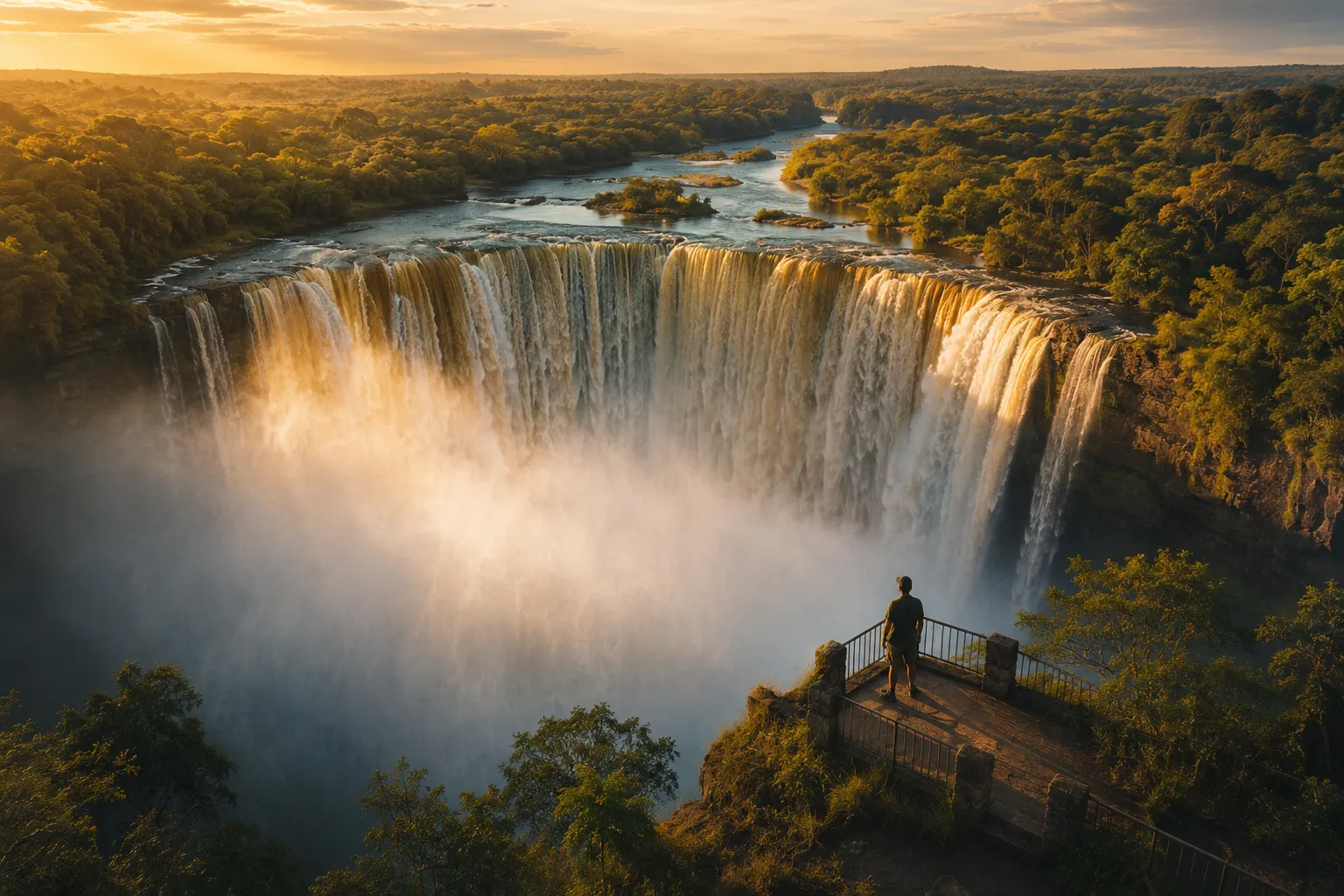
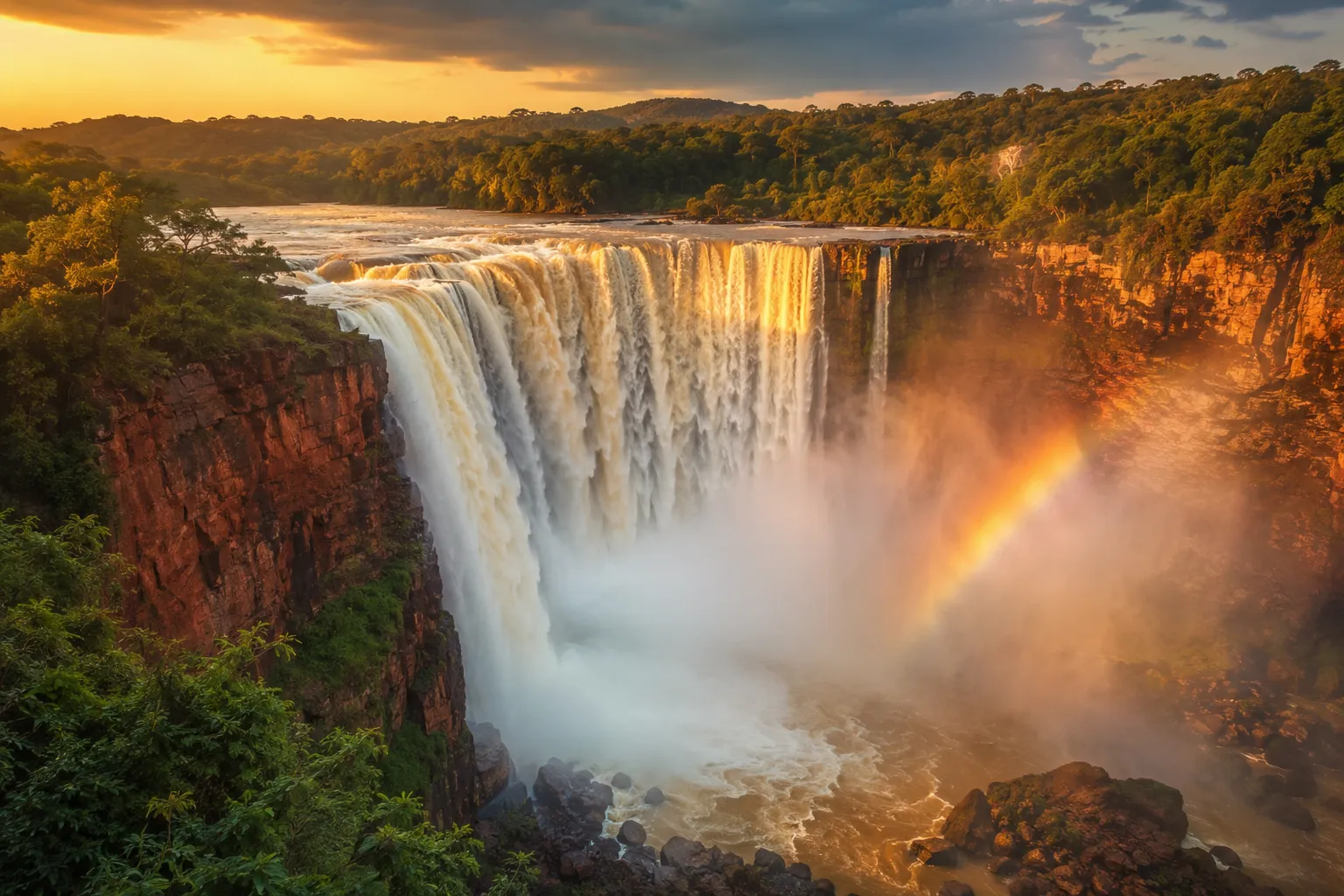
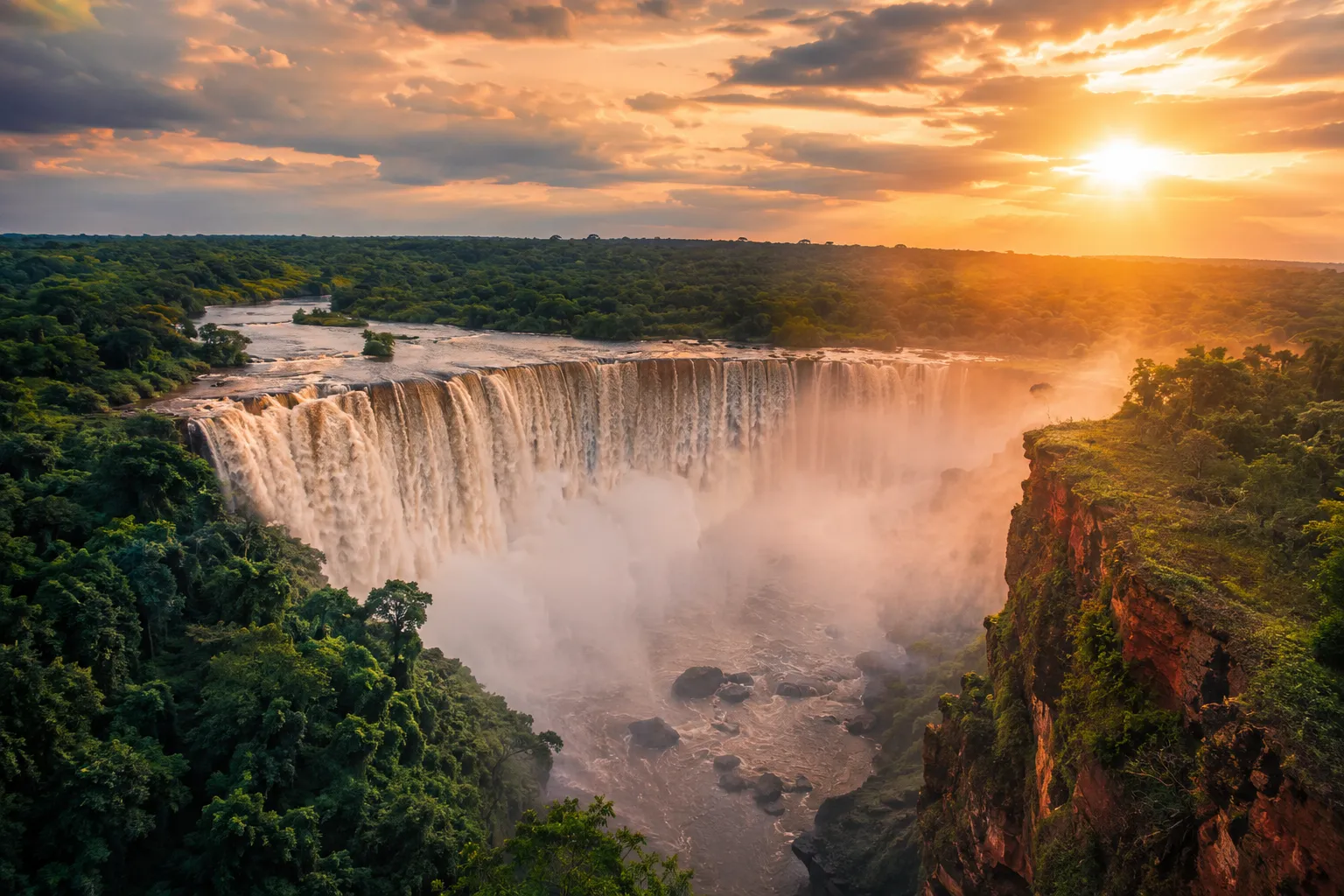
A horseshoe of white water more than 100 metres tall and around 400 metres wide. In the wet season the spray reaches you from the viewpoint. One of Africa’s largest falls and still delightfully quiet. More in our Kalandula Falls guide.
2. Tundavala Gap, Huíla
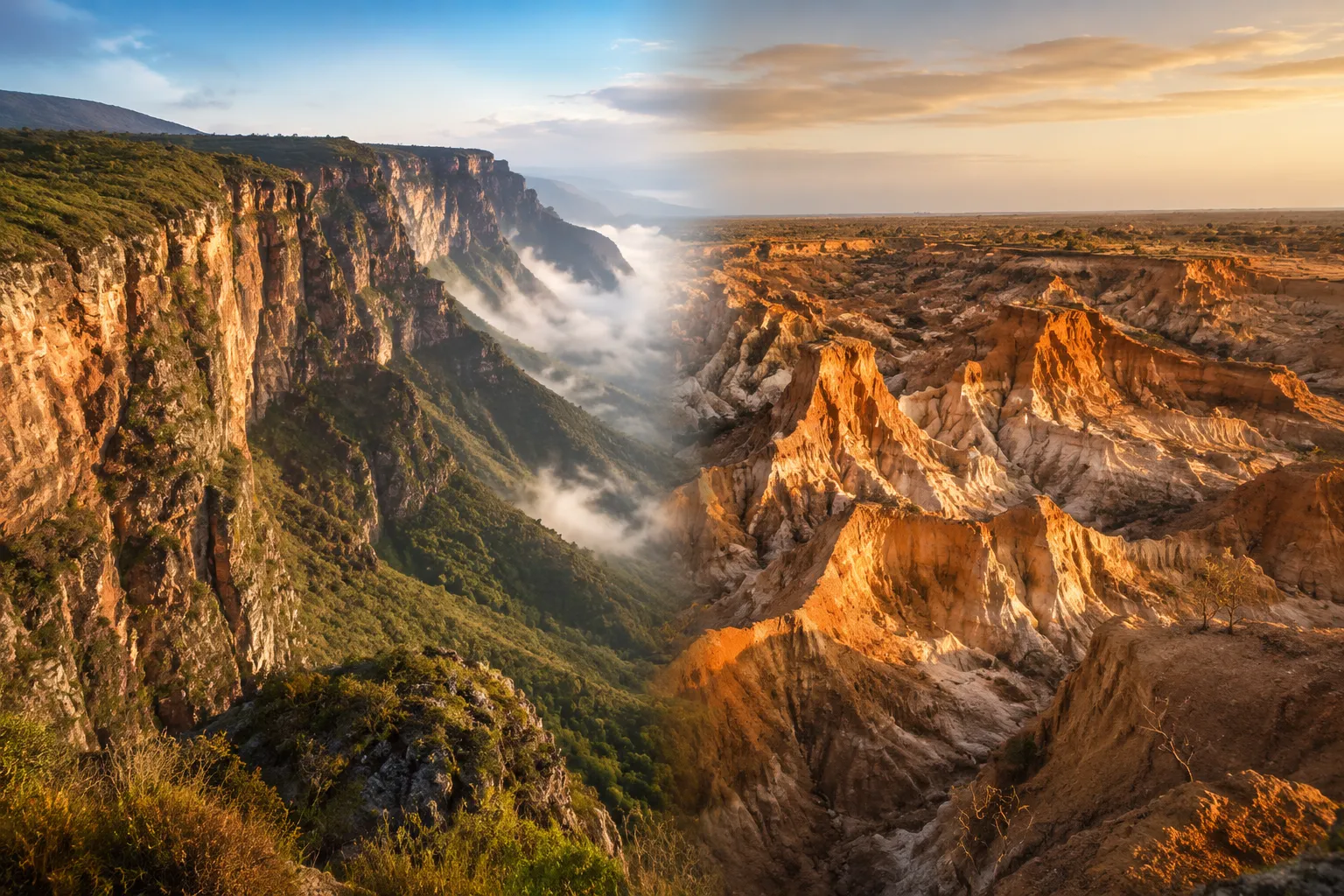
The escarpment drops roughly 1,000 metres to the plains below. Stand on the edge at sunset and clouds pour over the cliff like a slow waterfall.
3. Serra da Leba Pass
The switchbacks between Lubango and Namibe are an engineering icon. Shoot from the miradouro above to catch the ribbon of asphalt curling through green mountains.
4. Miradouro da Lua
South of Luanda, a cliff of eroded sandstone glows amber at golden hour. It looks like the moon fell into Angola.
5. Pungo Andongo (Pedras Negras)
Massive black rock monoliths rising out of the savannah near Malanje. Locals tie them to Queen Njinga legends, and the light at dawn is unreal.
What are the best photography locations in Angola?
The best photography locations in Angola are Kalandula (waterfalls), Tundavala and Serra da Leba (cliffs and roads), Iona National Park (desert and wildlife), Mussulo and Cabo Ledo (coast), and Luanda (urban and colonial architecture). Combine two or three regions on one trip for maximum variety.
6. Iona National Park, Namibe
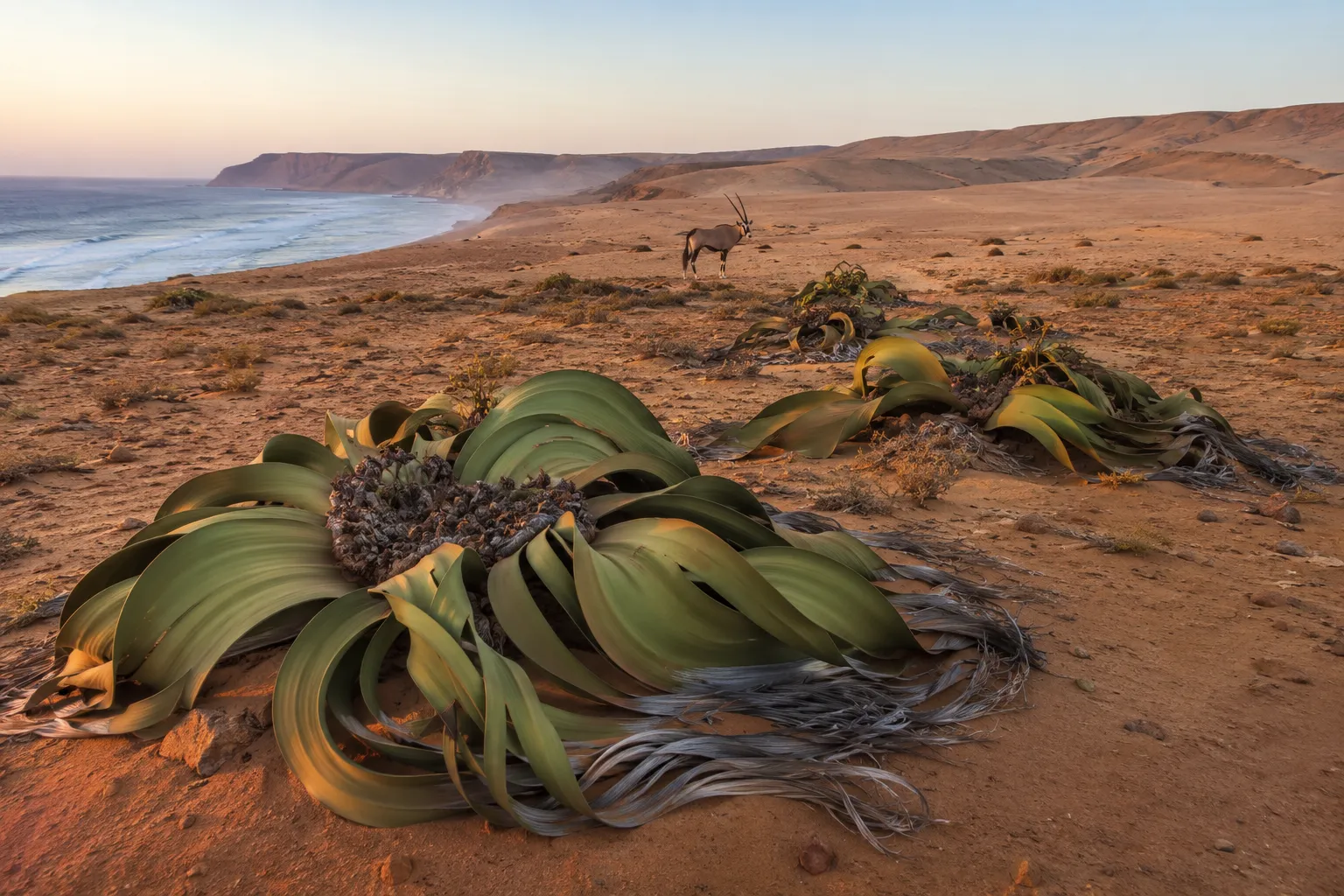
Angola’s largest park meets the Atlantic. Red dunes, fog rolling in from the Benguela current, and ancient welwitschia plants that live for over a thousand years.
7. Namibe Desert
An extension of the Namib. Endless gravel plains, isolated mountains, and skies so clear the Milky Way shows up on any decent camera.
8. Welwitschia mirabilis
A living fossil. Two leathery leaves that never stop growing, sprawled across the desert floor. Close-up macro photography here is genuinely otherworldly.
9. Mussulo Island
A sandy peninsula and lagoon just south of Luanda, reached by boat. Turquoise water, palm shade, and the city skyline in the distance. Perfect for drone-free aerial-style shots from a boat.
10. Cabo Ledo
Angola’s surf capital. Long left-hand waves, cliff-backed beaches, and warm evening light that surf photographers dream about.
What famous landmarks and monuments make great angola pictures?
Angola’s most photographed landmarks are the Fortaleza de São Miguel and Marginal promenade in Luanda, Cristo Rei in Lubango, the Mbanza Kongo heritage sites, and the colonial cores of Benguela and Lobito. These angola pictures anchor almost every travel feature about the country.
11. Fortaleza de São Miguel, Luanda
A 16th-century Portuguese fortress overlooking the bay. Whitewashed walls, cannons, and the best free view of the Luanda skyline.
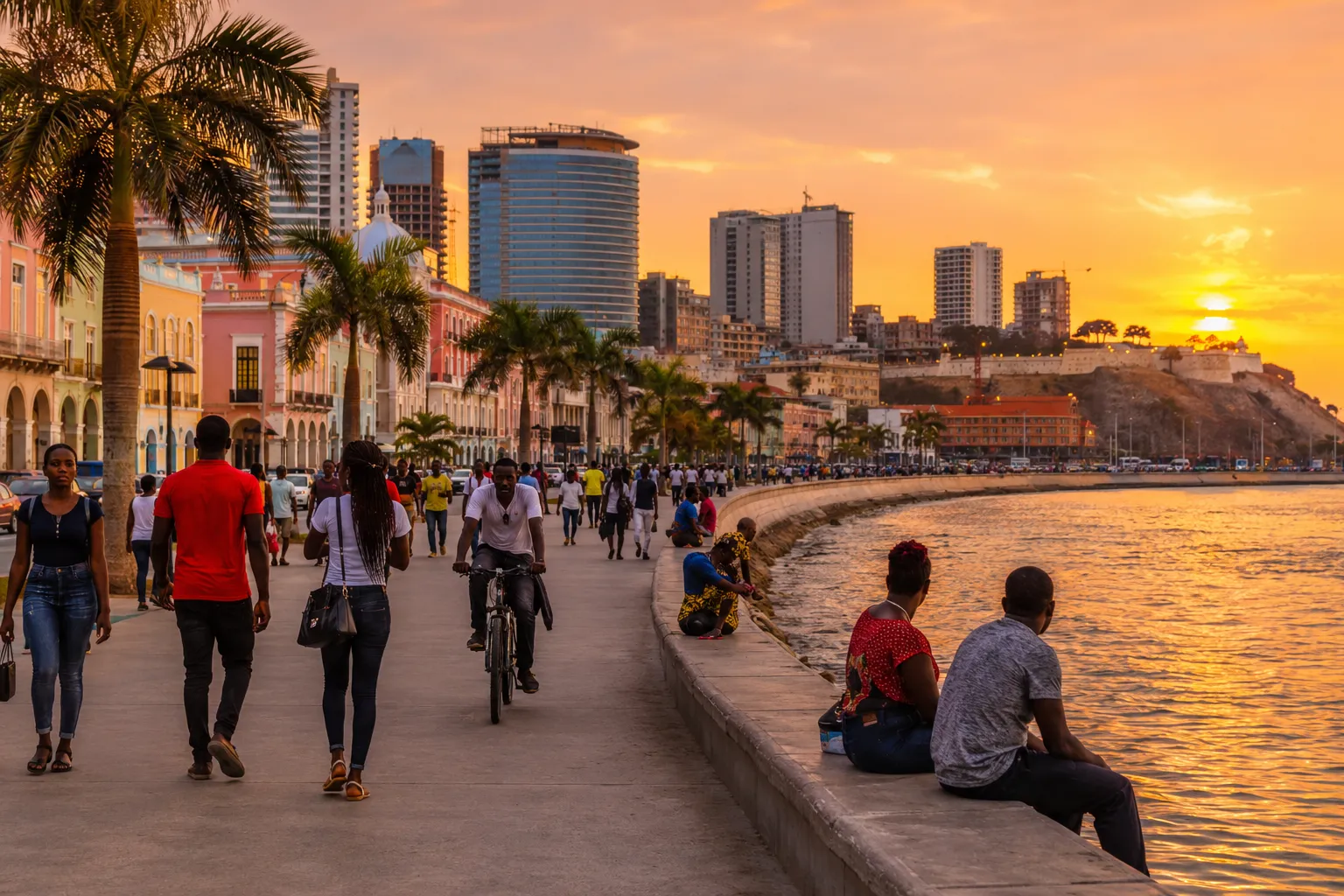
12. Marginal de Luanda
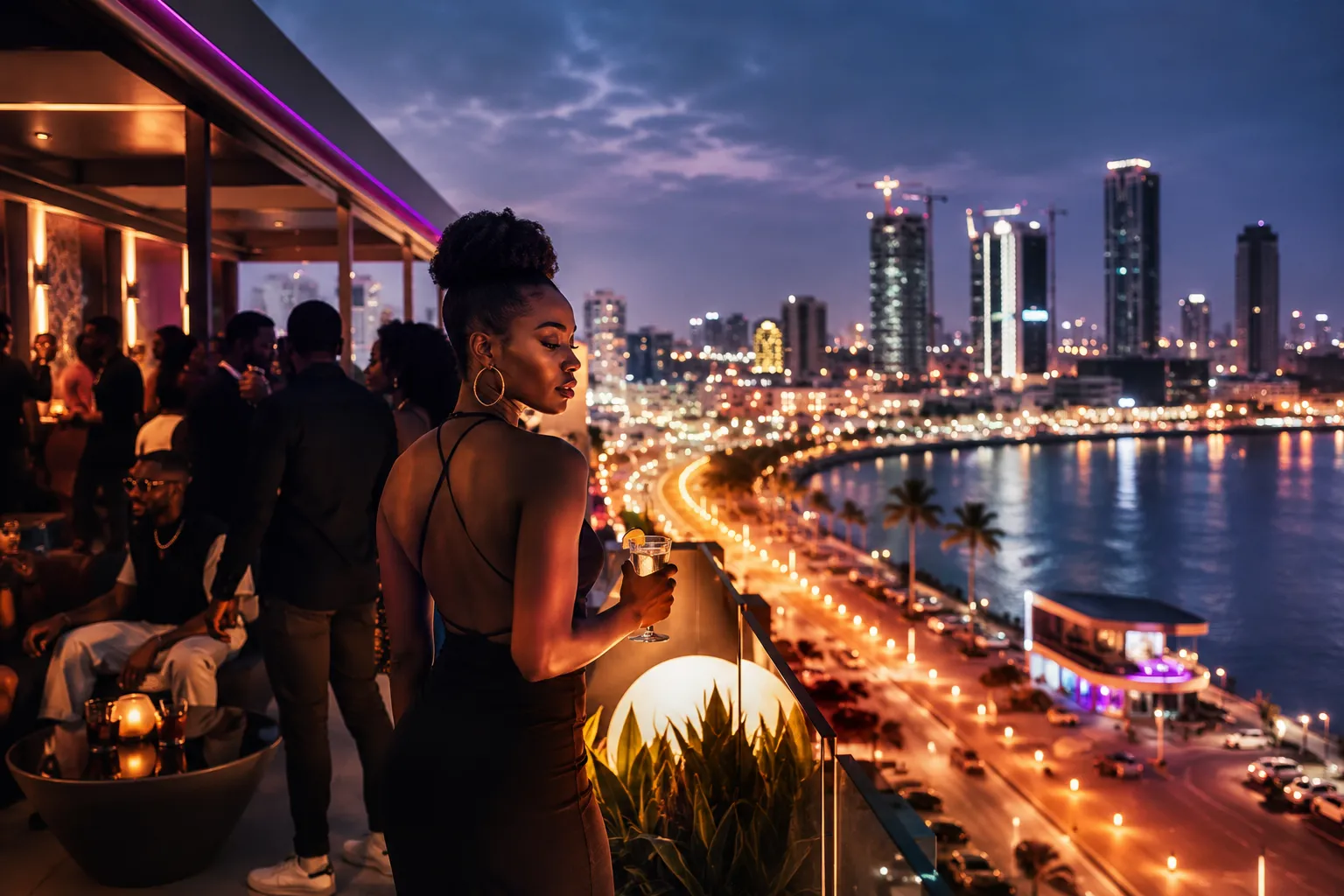
The palm-lined bayfront promenade. Joggers at sunrise, glassy skyscrapers, and colourful fishing boats all in one frame.
13. Cristo Rei, Lubango
A smaller cousin of Rio’s Christ statue, arms open over the highland city. Great at sunset with the mountains behind.
14. Mbanza Kongo
UNESCO-listed capital of the ancient Kongo kingdom. Weathered ruins, a cathedral shell, and deep history that most visitors have never heard of.
15. Benguela and Lobito
Pastel colonial townhouses, wide avenues of jacaranda, and the curving sandspit of Restinga do Lobito. See our Benguela and Lobito guides.
What do tourists photograph most in Angola?
Most travellers focus on Kalandula Falls, Luanda’s skyline and fortress, Miradouro da Lua, Serra da Leba, and the beaches around Mussulo and Cabo Ledo. Wildlife shots from Kissama and desert images from Iona come next.
16. Praia Morena, Benguela
A wide urban beach where locals gather at weekends. Football on the sand, ice-cold Cuca beer, and a horizon painted orange by Atlantic sunsets.
17. Baía Azul
Just south of Benguela, a curved bay of turquoise water framed by rocky headlands. Snorkel first, shoot second.
18. Ilha do Cabo, Luanda
The city’s original beach strip. Restaurants on stilts, palm trees, and the skyline curving around the bay behind you.
Angola wildlife and nature photography
For wildlife photography head to Kissama (Quiçama) National Park near Luanda, Cangandala and Luando reserves for the endemic giant sable antelope, and Iona for desert-adapted species. Expect scarcer game density than East Africa but far fewer other vehicles.
19. Kissama National Park
The most accessible park from Luanda, restocked in the early 2000s through Operação Arca de Noé. Elephants, antelope, and open savannah. Details in our Kissama National Park guide.
20. Palanca Negra Gigante
The giant sable antelope. Endemic, critically endangered, and Angola’s national symbol. Even a distant sighting is a career shot. See palanca negra.
21. Mayombe Rainforest, Cabinda
Dense equatorial jungle in the exclave. Emerald light through the canopy, endemic birds, and rarely visited by outsiders.
Angola street photography and culture
Street photography in Angola is at its best in Luanda’s markets and Marginal, in the colonial quarters of Benguela and Lobito, and in the fishing villages of Namibe. Musseque neighbourhoods offer strong human stories but require respect, permission, and ideally a local guide.
22. Roque Santeiro-style markets
Sprawling open-air markets full of colour, fabric, produce, and sound. Ask before you shoot people close up; a small conversation goes a long way.
23. Semba and kizomba nights
Angola invented kizomba. Evenings in Luanda’s clubs and cultural centres give you dance, sweat, and warm tungsten light. Read more in our culture of Angola guide.
24. Fishermen of Namibe
Wooden boats hauled onto the sand at dawn, nets drying in the wind, faces carved by sun and salt. Classic documentary territory.
25. Angolan food scenes
Steaming pots of muamba de galinha, funge being stirred over open fires, grilled fish on the coast. Food is culture on a plate.
Best time of year to photograph Angola
The best time to photograph Angola is the dry season from May to October. Skies are clear, humidity is lower, roads are passable, and light stays soft in the early morning and late afternoon. The green wet season (November to April) is dramatic for waterfalls but tough for road travel.
Quick season guide:
| Season | Months | Best for | Watch out for |
|---|---|---|---|
| Dry / cool | May to Oct | Wildlife, desert, coast, travel | Hazy afternoons inland |
| Wet / green | Nov to Apr | Waterfalls, lush landscapes | Muddy roads, storms |
| Shoulder | Apr / Oct | Fewer people, mixed light | Unpredictable rain |
More detail in our best time to visit Angola guide.
Angola landscape photography tips
Shoot the edges of the day, especially at Tundavala and Miradouro da Lua where the low sun rakes the rock. Bring a polariser for waterfalls and coast, a wide lens for cliffs, and a mid-tele for compressing the Serra da Leba switchbacks. Dust is constant in the south, so seal your bag and change lenses inside a vehicle.
Field checklist:
- Wide zoom (16-35mm equivalent) for cliffs, falls, and interiors
- Standard zoom (24-70mm) as your everyday lens
- Short tele (70-200mm) for wildlife and compressed landscapes
- Polariser and a 6-stop ND for waterfalls
- Lens cloths, blower, and a sealed dry bag
- Spare batteries: charging is patchy outside cities
- Offline maps (roads change fast)
Angola travel photography guide: how to get good photos
Plan around light, not just distance. Angola is huge and roads are slow, so pick two or three regions per trip and stay long enough to shoot morning and evening. Hire local drivers who know the viewpoints; they often save you hours of scouting.
A workable 10-day route for photographers:
- Luanda (2 days): Marginal, fortress, Ilha do Cabo.
- Cabo Ledo and Miradouro da Lua (2 days): surf, cliffs, sunsets.
- Kissama (1 day): wildlife on the way south or as a day trip.
- Fly or drive to Lubango (2 days): Tundavala, Cristo Rei, Serra da Leba.
- Namibe and Iona (3 days): desert, welwitschia, coast.
For itinerary ideas see our Angola itinerary article.
Angola photography safety tips
Angola is generally safer than its reputation suggests, but urban petty crime (especially in Luanda) and remote-area risks (former landmine zones, poor roads) are real. Keep gear low-key, never shoot government buildings, ports, airports, or military installations, and always ask before photographing people. Check the current travel advisory from your own government before you go, and read our is Angola safe overview.
Quick rules:
- Ask permission for portraits; a smile and a “posso?” opens doors.
- Avoid flashing expensive kit in crowded markets or at traffic lights.
- Do not photograph police, military, ports, or the presidential palace.
- Stay on marked tracks in rural areas because of residual landmine risk.
- Verify Cabinda-specific advisories before travelling there.
For official guidance, check your government’s travel advisory before you travel.
Drone photography rules in Angola
Drone use in Angola is restricted and generally requires authorisation from the civil aviation authority (INAVIC) and often the Ministry of Interior. Do not assume tourist drone flying is legal. Rules change; verify with the Angolan embassy or an official source before you fly, and expect confiscation at the airport if you arrive without permits.
Practical guidance:
- Never fly near airports, government buildings, ports, or military zones.
- Ask hotels and park authorities before launching on their property.
- Keep flights low-profile and short.
- Carry printed permits when possible.
Angola vs other African countries: photography comparison
Angola gives you fewer safari animals than Botswana or Kenya but far more geographic variety and almost no other tourists in your frame. Compared to Namibia, its desert scenery is similar but wetter and greener in the north, with added Portuguese colonial architecture and Atlantic surf culture.
| Country | Strength | Weakness for photographers |
|---|---|---|
| Angola | Variety, empty scenes, colonial + desert + coast | Logistics, high costs, few operators |
| Namibia | World-class desert and stars | Very touristy in peak spots |
| South Africa | Wildlife density, infrastructure | Crowded parks, safety in some cities |
| Morocco | Culture and medinas | Landscapes less dramatic |
Where to find professional Angola travel photos
For high-quality reference imagery, check Getty Images, Alamy, and specialist agencies like Panos Pictures for editorial work, plus National Geographic features on the giant sable antelope. Instagram hashtags like #angolatravel, #luanda, and #visitangola surface a growing community of Angolan photographers worth following before your trip.
Conclusion
Angola rewards photographers who show up with patience and curiosity. You trade some comfort for scenes almost no one else is shooting: horseshoe waterfalls without a tour bus in sight, red dunes meeting the Atlantic, and colonial cities warming in the afternoon light. Start with a two- or three-region plan, lock in your visa and vaccinations, and let the country surprise you.
Next steps:
- Read our travel to Angola starter guide.
- Check current visa and vaccination rules on official channels.
- Sketch a route around Luanda plus one southern region (Huíla or Namibe).
- Book flights and accommodation early; capacity is limited.
Free help from our team in Angola
Want to see these places in person?
Tell us which places you want to see and how much time you have. We plan a route that connects them.
- Local team in Angola
- No obligation, nothing to pay
- Reply by email or WhatsApp
Want to keep this guide? We email you the key points with a link to every section.
Frequently asked questions
Do I need a visa to visit Angola as a tourist?
Many nationalities, including EU, UK, US, and Canadian travellers, can now enter Angola visa-free for short tourist stays or via an e-visa. Rules change often, so verify with the official Angolan e-visa portal and our [Angola visa](/angola-visa/) guide before booking.
Is Angola safe for photographers?
Broadly yes, with common-sense precautions. Petty theft in Luanda is the biggest risk; the exclave of Cabinda usually carries a stricter advisory. Never photograph security-sensitive sites.
What vaccinations do I need for Angola?
A yellow-fever vaccination is generally required for entry, and malaria prophylaxis is strongly advised. Consult a travel clinic and check our [Angola vaccinations and health](/angola-vaccinations-health/) overview.
When are Kalandula Falls at their best?
For maximum water volume, visit at the end of the wet season (March to May). For easier road access and clearer photos, visit at the start of the dry season (May to July).
Can I fly a drone in Angola as a tourist?
Not without official authorisation. Assume drones are restricted, request permits well in advance, and be ready to leave the drone at home if paperwork is not confirmed.
How expensive is a photography trip to Angola?
Luanda ranks among the world's more expensive cities for visitors. Budget more than you would for Namibia or South Africa, especially for hotels, domestic flights, and 4x4 hire. See our [Angola trip cost](/angola-trip-cost/) budget notes.